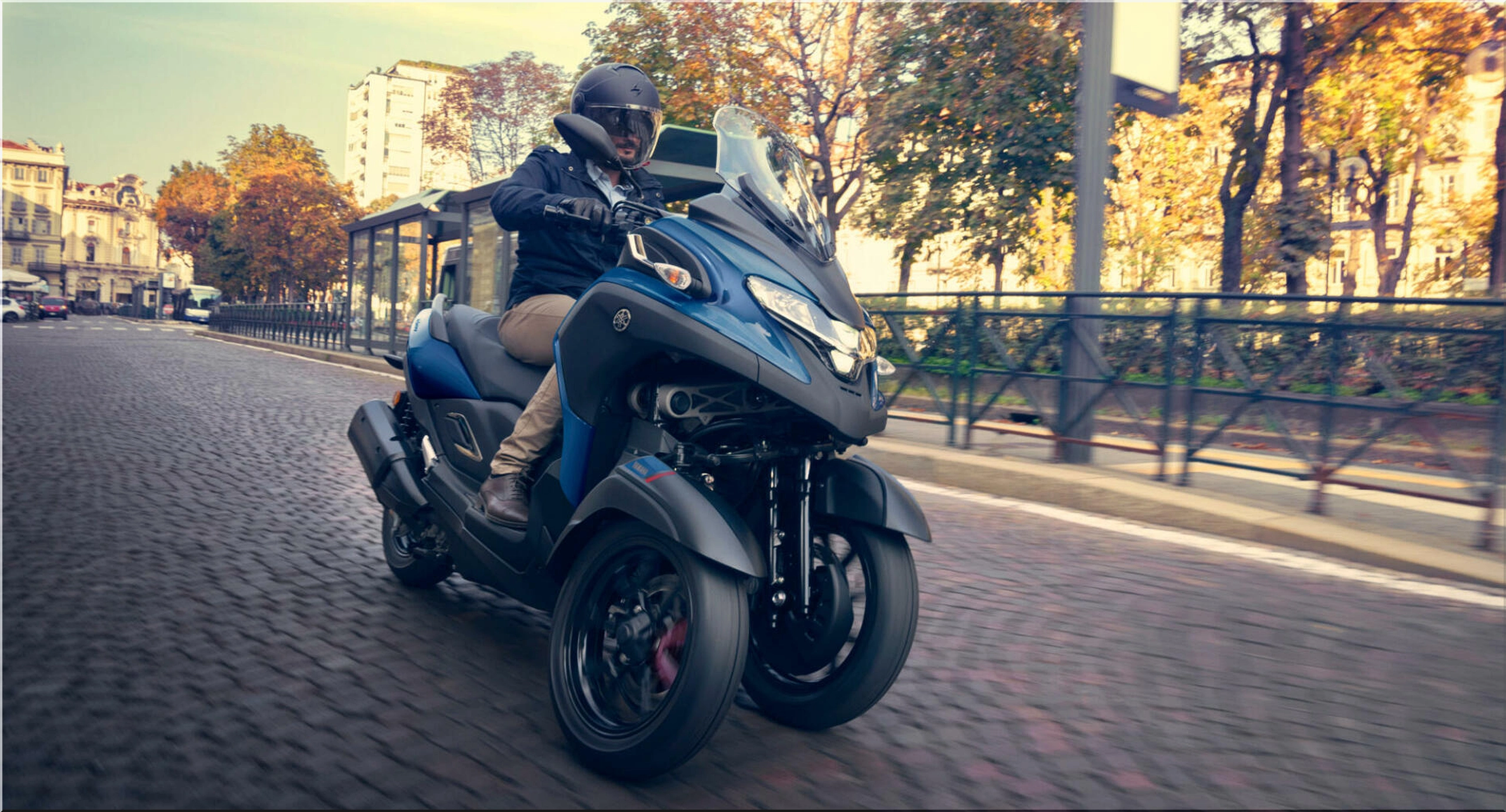
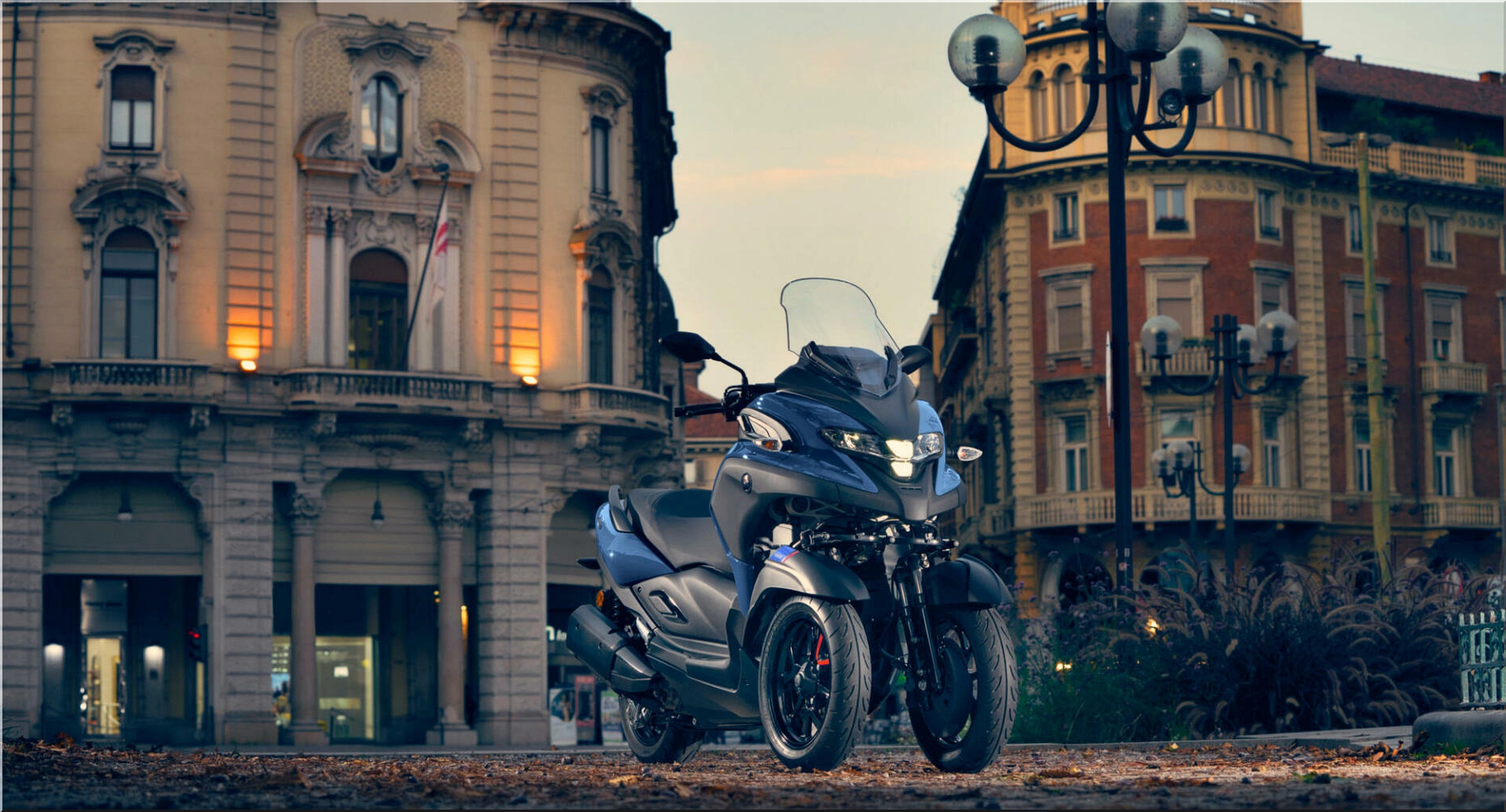
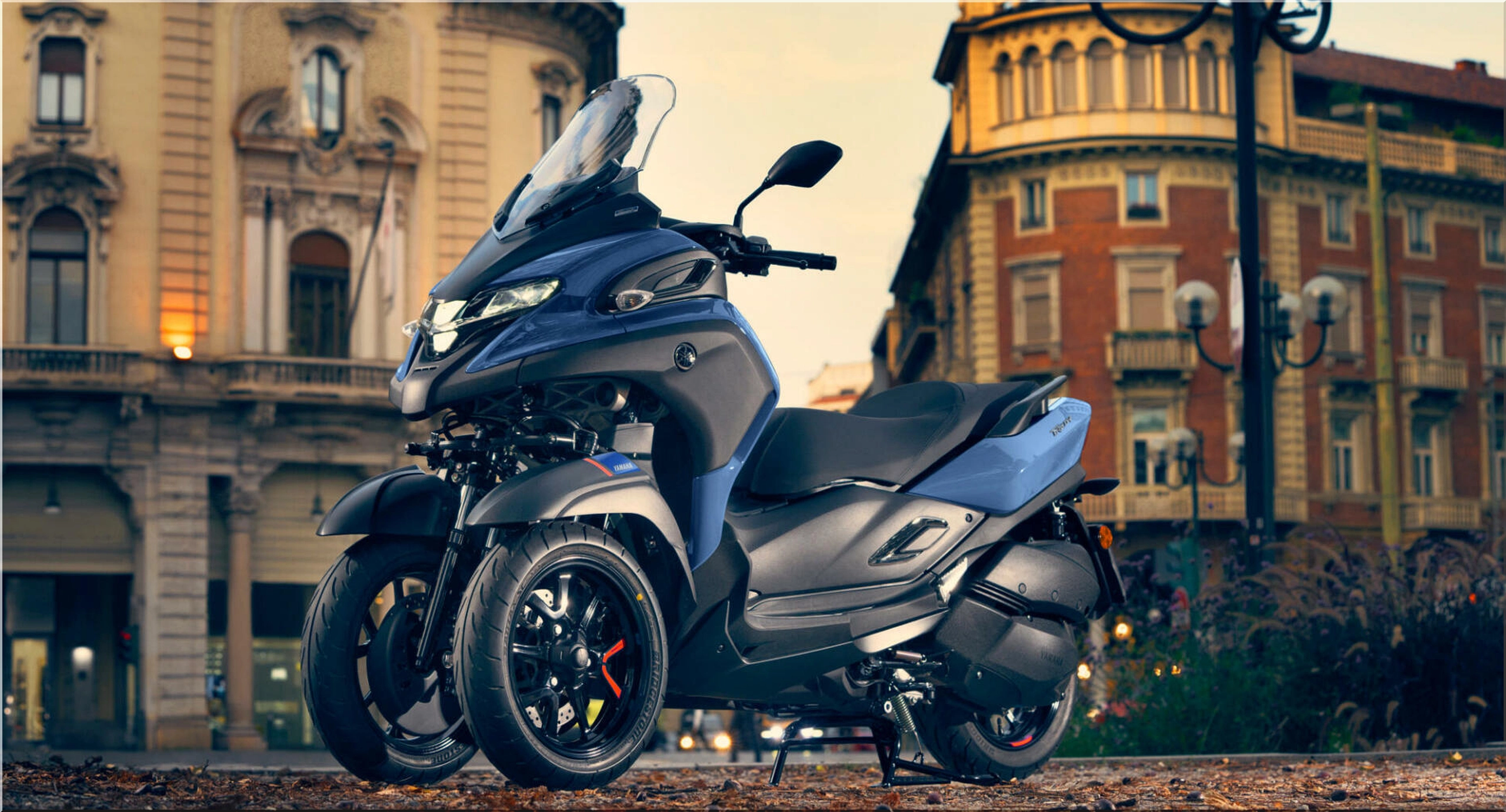
If you want a three-wheeled motorcycle that combines performance, comfort, and safety, you might want to check out the Yamaha Tricity 300. This innovative model is one of the best-selling three-wheelers in the market, and for good reason. We will explore the features, benefits, and drawbacks of the Yamaha Tricity 300 and compare it with some of its competitors.
What Is the Yamaha Tricity 300?
The Yamaha Tricity 300 is a leaning multi-wheel (LMW) scooter launched in 2020. It is powered by a 292 cc single-cylinder engine that produces 28 hp and 21 lb-ft of torque. It has a continuously variable transmission (CVT) delivers smooth and responsive acceleration. It also has a reverse gear that makes parking and maneuvering easier.
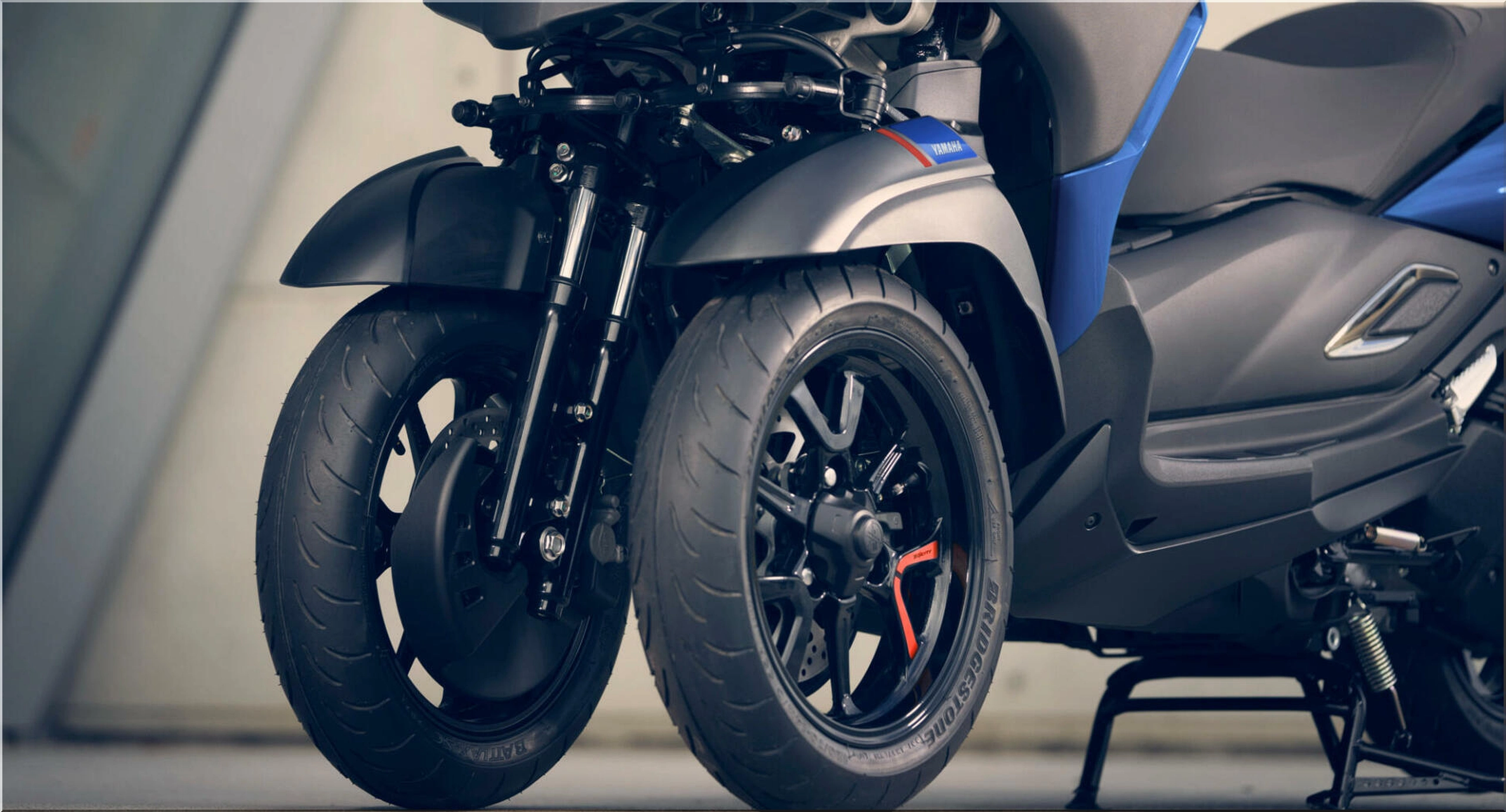
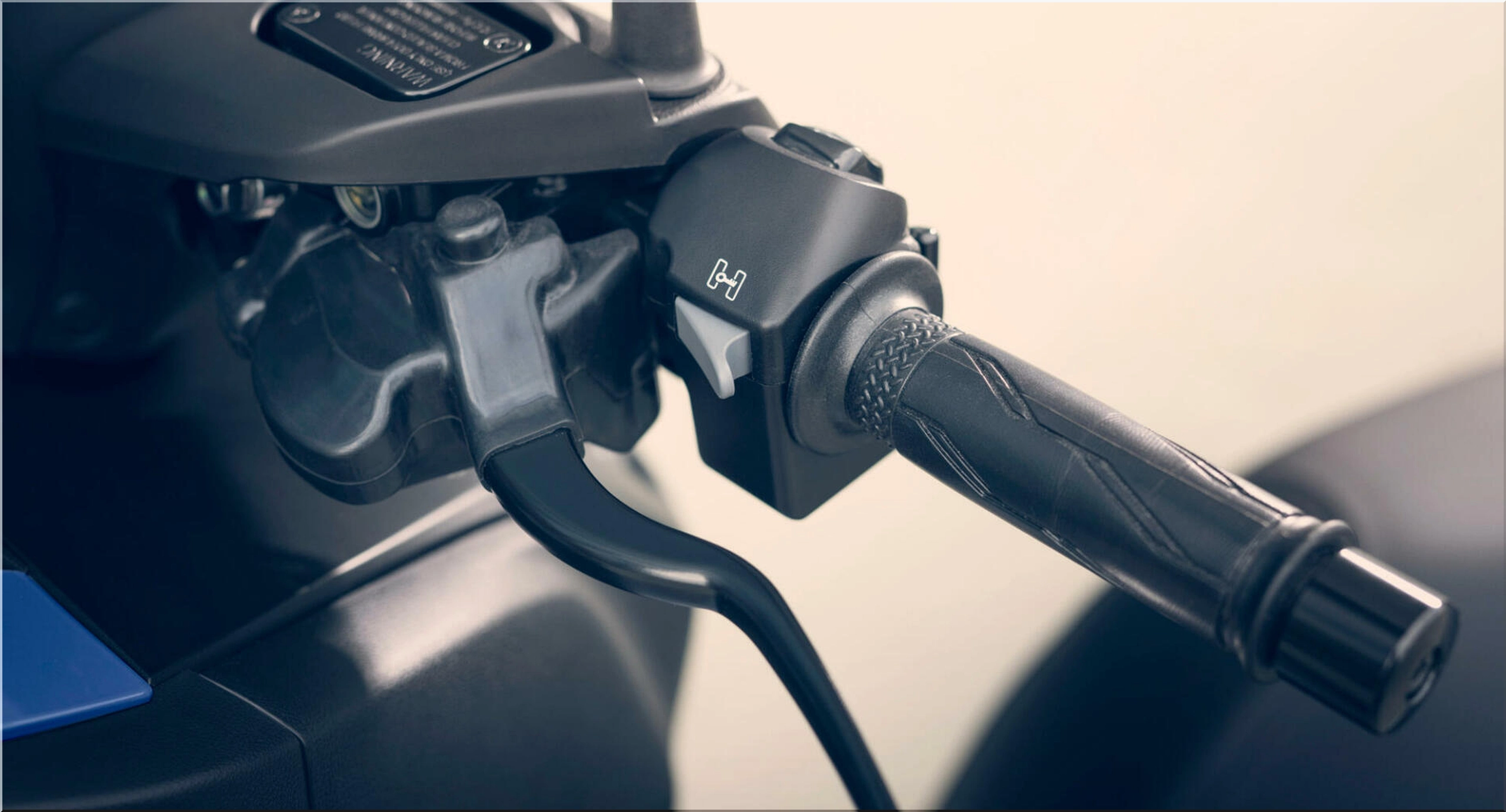
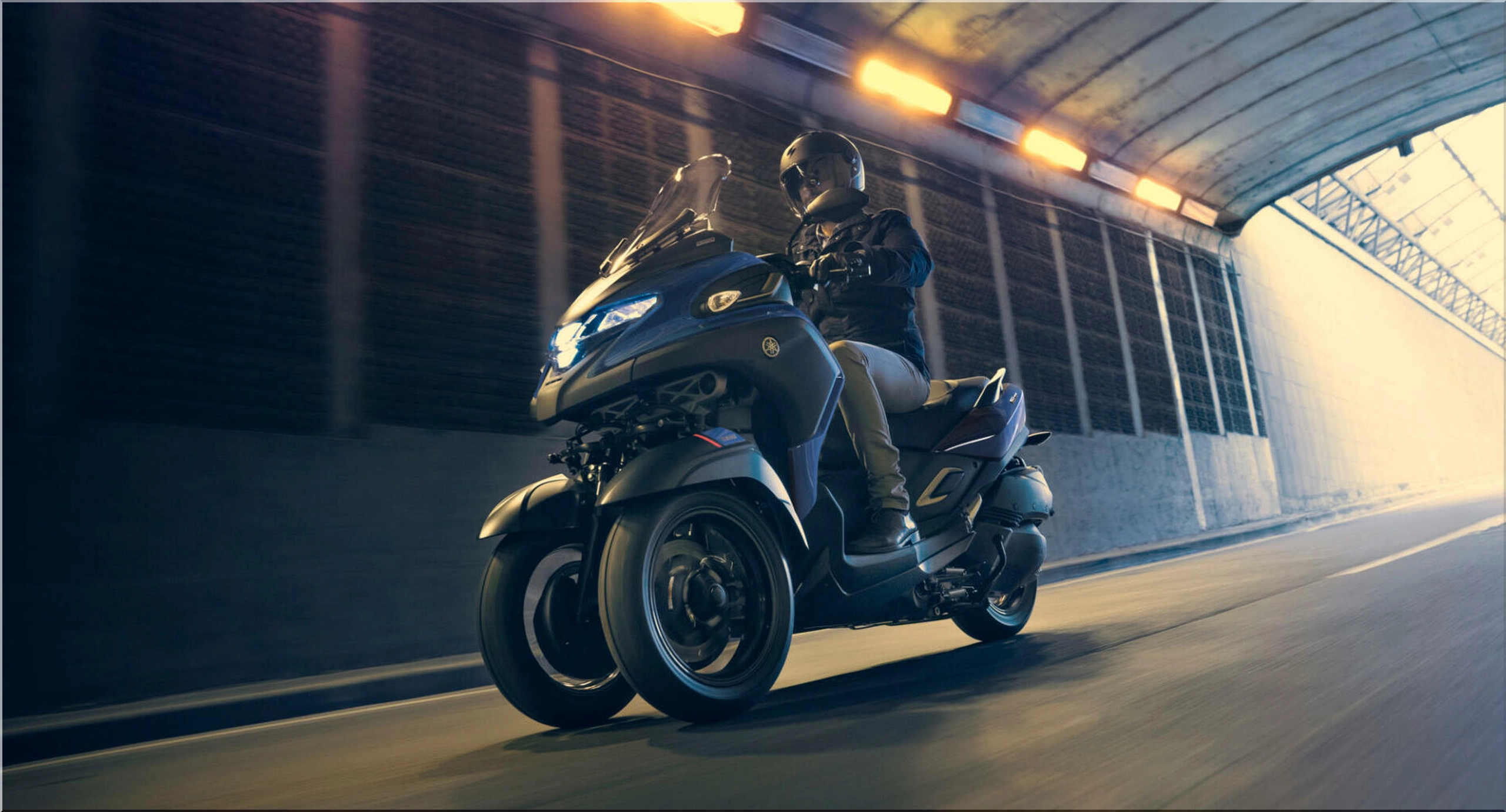
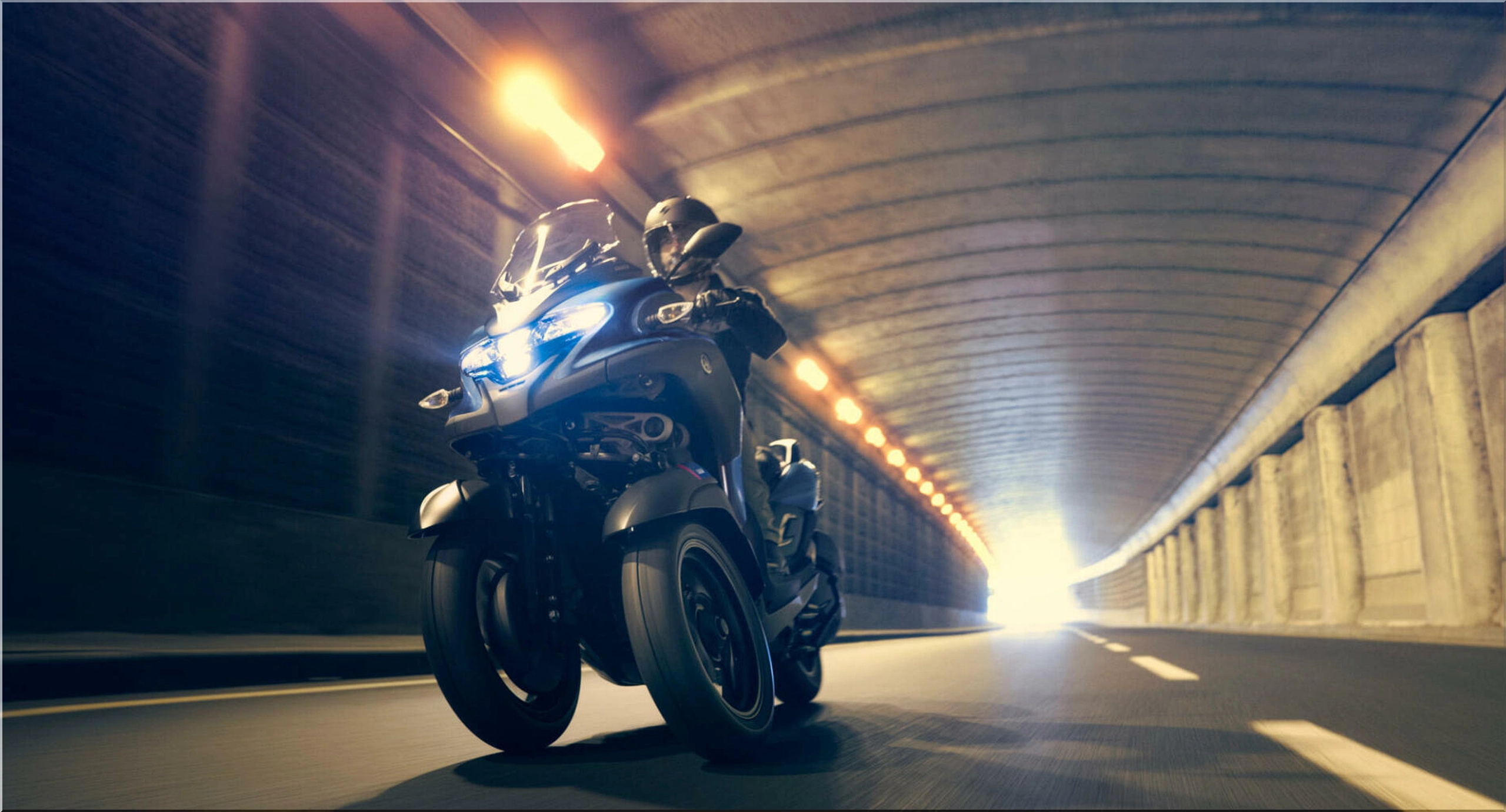
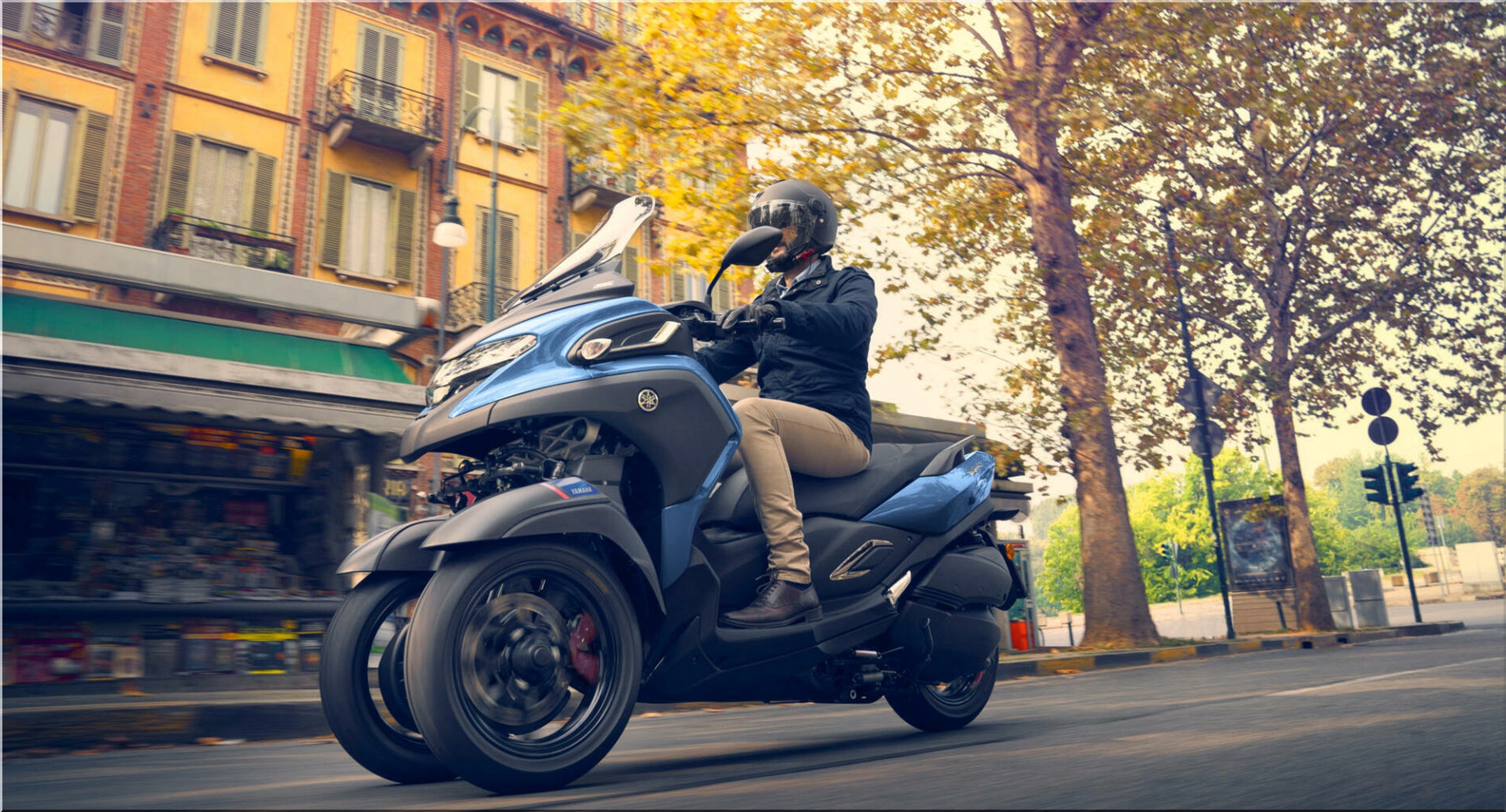
The most distinctive feature of the Yamaha Tricity 300 is its front suspension system, which allows the two front wheels to tilt independently up to 20 degrees. This gives the rider more confidence and stability when cornering, especially on wet or uneven surfaces. The front wheels also have a locking mechanism that keeps the scooter upright when stopped, without the need to put the feet down.
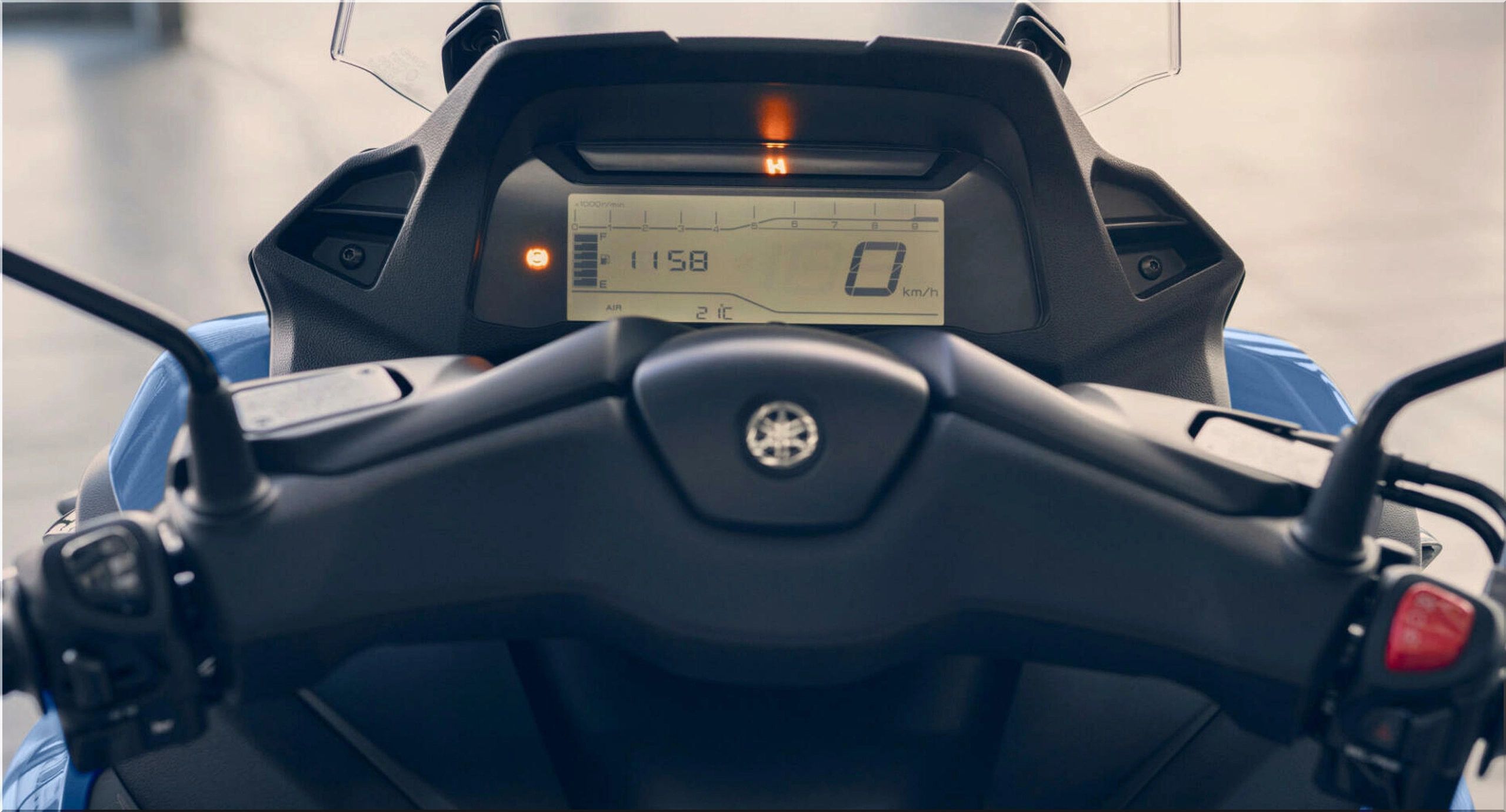
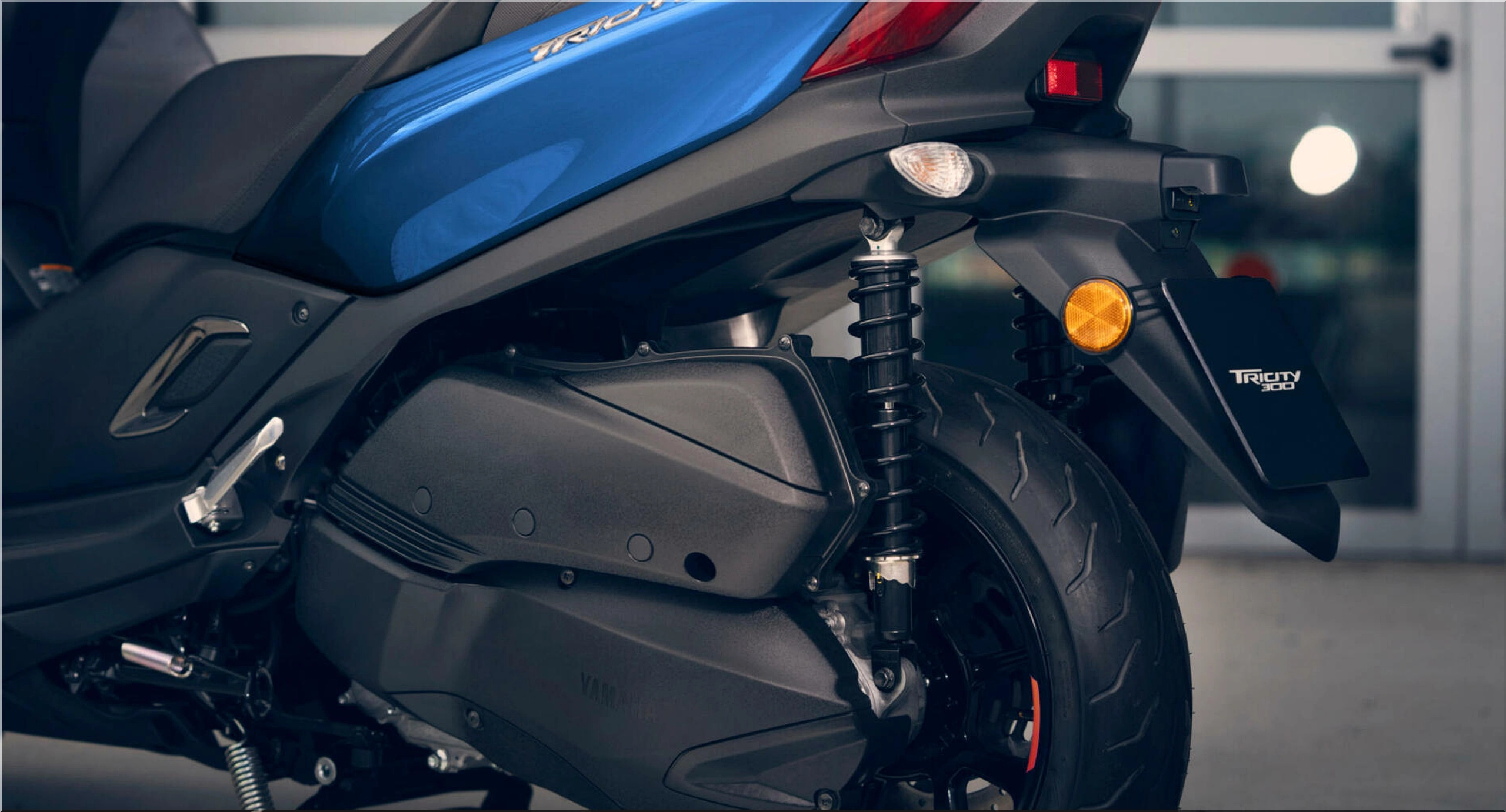
The Yamaha Tricity 300 has a sleek and modern design, a spacious and ergonomic seat, a large windscreen, and a digital instrument panel. It also has plenty of storage space, with a 43.5-liter under-seat compartment and a 7.2-liter glove box. The scooter has a curb weight of 527 lbs and a seat height of 31.3 inches. It has a fuel capacity of 3.4 gallons and a claimed fuel economy of 80 mpg.
What Are the Benefits of the Yamaha Tricity 300?
The Yamaha Tricity 300 offers several benefits to riders looking for a three-wheeled motorcycle. Some of these benefits are:
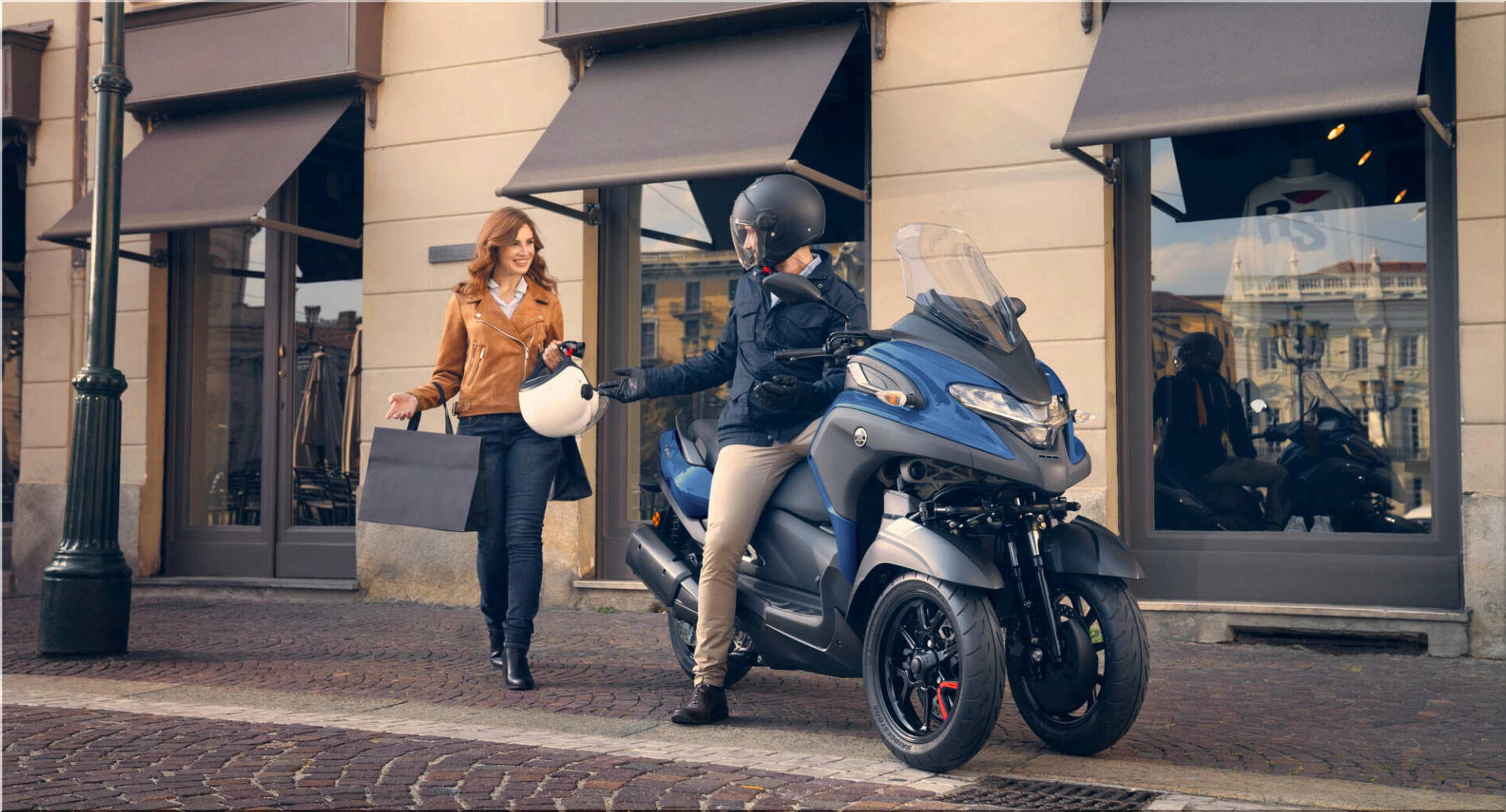
- Accessibility: The Yamaha Tricity 300 can be ridden with a car license in some countries, such as the UK, France, Spain, and Italy. This means that you don’t need to take a motorcycle test or have a motorcycle license to ride it. This makes it more accessible and convenient for people who want to switch from cars to motorcycles or for beginners who want to start riding.
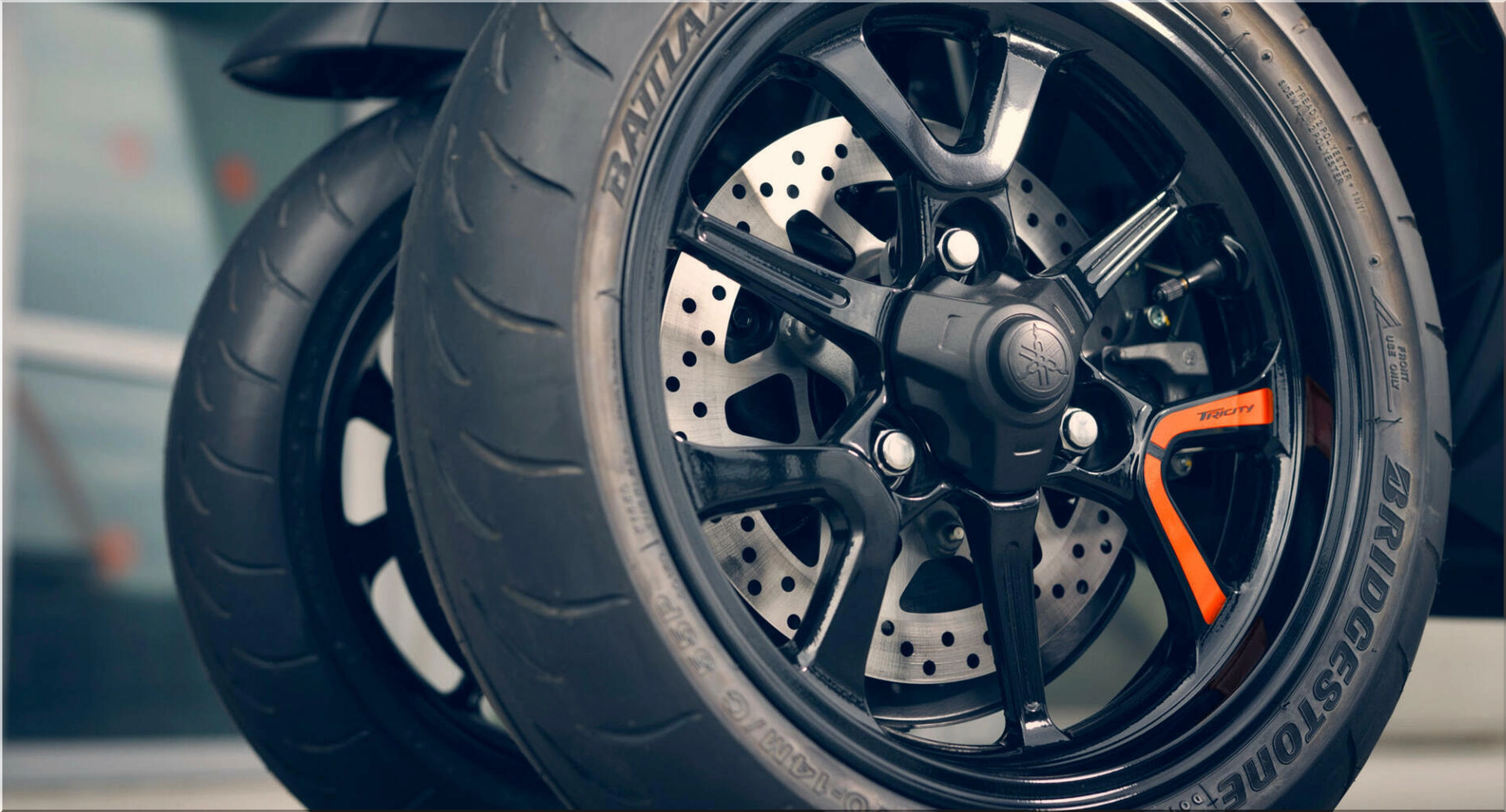
- Safety: The Yamaha Tricity 300 has a range of safety features that make it more secure and reliable than a conventional two-wheeler. It has an anti-lock braking system (ABS), traction control system (TCS), and unified braking system (UBS) that enhance the braking performance and prevent wheel lock-up or skidding. It also has a standing assist system that locks the front wheels when the scooter is stopped, preventing it from falling over. Additionally, the dual front wheels provide more grip and stability on the road, reducing the risk of losing control or tipping over.
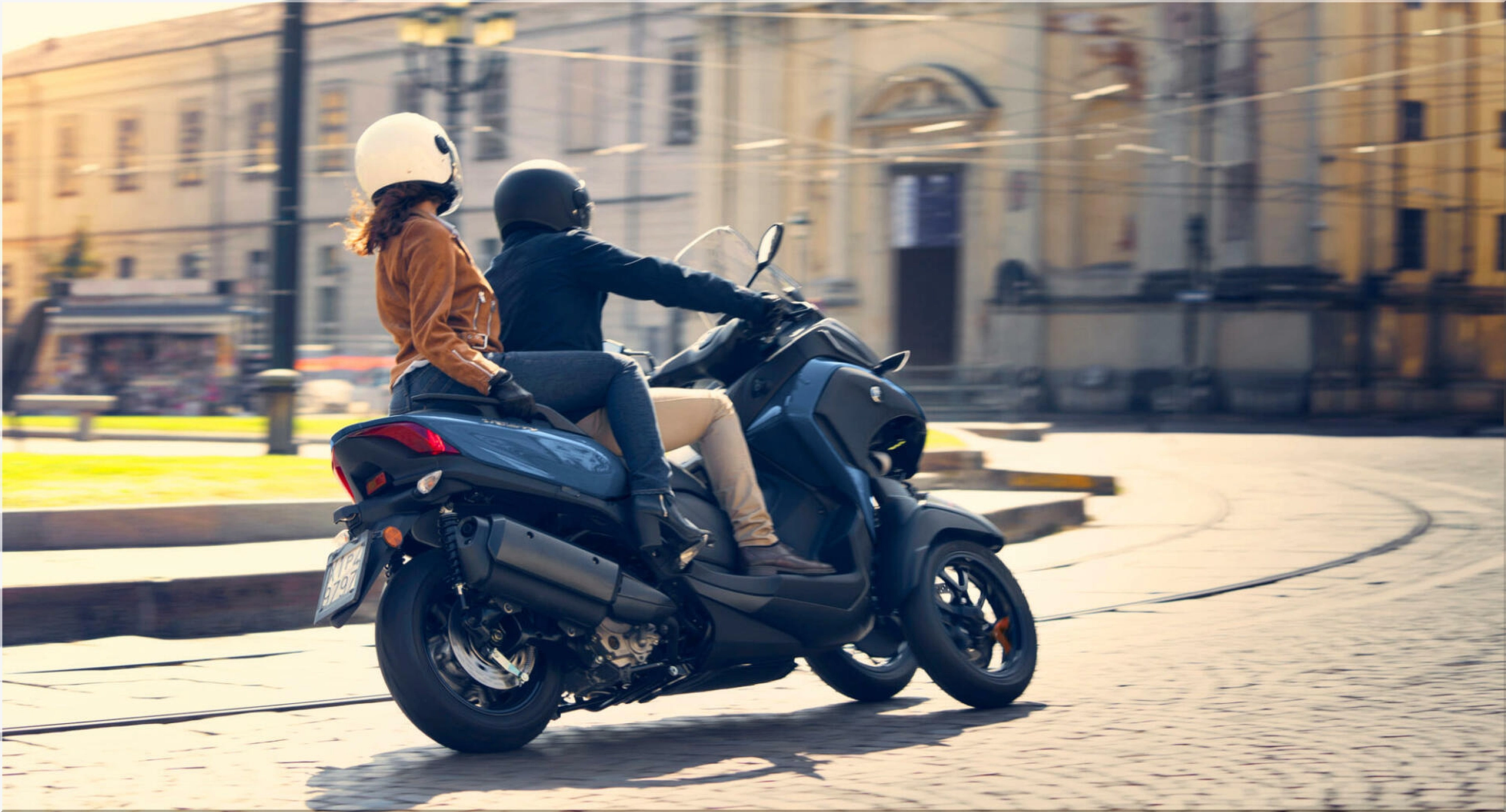
- Comfort: The Yamaha Tricity 300 has comfortable and spacious seats that can accommodate both the rider and the passenger. It also has a large windscreen that protects the rider from wind and rain. The scooter has a smooth and quiet ride, thanks to the CVT and the single-cylinder engine. The scooter also has a low center of gravity and a balanced weight distribution, which makes it easy to handle and maneuver.
- Performance: The Yamaha Tricity 300 has a powerful and efficient engine that delivers enough speed and acceleration for urban and highway riding. The scooter can reach a top speed of 89 mph and can cruise at 75 mph with ease. The scooter also has a good fuel economy, with a claimed 80 mpg and a range of over 270 miles on a full tank.
What Are the Drawbacks of the Yamaha Tricity 300?
The Yamaha Tricity 300 is not without its drawbacks, however. Some of these drawbacks are:
- Price: The Yamaha Tricity 300 is not a cheap scooter, starting at $9,999 in the US and £7,900 in the UK. This is significantly higher than some of its competitors, such as the Piaggio MP3 500, which starts at $9,199 in the US and £7,499 in the UK, or the Kymco CV3, which is expected to be around $8,000. The Yamaha Tricity 300 also has a higher maintenance cost due to the complex front suspension system and the dual front tires.
- Weight: The Yamaha Tricity 300 is a heavy scooter with a curb weight of 527 lbs. This makes lifting and moving around harder, especially in tight spaces or on uneven terrain. It also affects the acceleration and handling of the scooter, making it less agile and nimble than a two-wheeler. The weight also reduces the payload capacity of the scooter, which is limited to 397 lbs, including the rider, the passenger, and the luggage.
- Size: The Yamaha Tricity 300 is a large scooter with a length of 88.6 inches, a width of 30.7 inches, and a height of 55.5 inches. This makes it difficult to park and store in some places, such as narrow streets, small garages, or crowded parking lots. It also makes it less suitable for lane splitting or filtering, which are common practices for motorcycles in some countries.
How Does the Yamaha Tricity 300 Compare to Other Three-Wheelers?
The Yamaha Tricity 300 is not the only three-wheeler in the market. Other models offer similar or different features and benefits. Here is a comparison table of some of the most popular three-wheelers:
| Model | Engine | Power | Torque | Transmission | Weight | Price |
|---|---|---|---|---|---|---|
| Yamaha Tricity 300 | 292 cc single-cylinder | 28 hp | 21 lb-ft | CVT | 527 lbs | $9,999 |
| Piaggio MP3 500 | 493 cc single-cylinder | 44 hp | 33 lb-ft | CVT | 577 lbs | $9,199 |
| Kymco CV3 | 550 cc twin-cylinder | 53 hp | 38 lb-ft | CVT | 551 lbs | $8,000 (estimated) |
| Can-Am Ryker | 600 cc or 900 cc twin-cylinder | 47 hp or 82 hp | 35 lb-ft or 58 lb-ft | CVT | 616 lbs or 627 lbs | $8,999 or $10,999 |
| Harley-Davidson Freewheeler | 1,868 cc V-twin | 91 hp | 111 lb-ft | 6-speed manual | 1,085 lbs | $29,999 |
As you can see, the Yamaha Tricity 300 has a smaller and less powerful engine than some of its competitors, but it also has a lower weight and price. It also has a unique front suspension system that gives it more stability and confidence. The Yamaha Tricity 300 is a good option for riders who want a three-wheeler that is accessible, safe, comfortable, and efficient but not necessarily the fastest or the most agile.
- Add new comment
- 170 views