
Carrying heavy loads inside a truck bed always comes with some risk. Things like loose tools, long lumber, concrete blocks, or heavy trail gear can slide around fast when you hit the brakes or drive down steep slopes, slamming straight into the back of your cab. A hard hit can break your back window glass, crush the cab metal, or seriously hurt people inside the truck. Mounting a heavy-duty truck headache rack builds a strong barrier between your bed cargo and the rear cab glass.
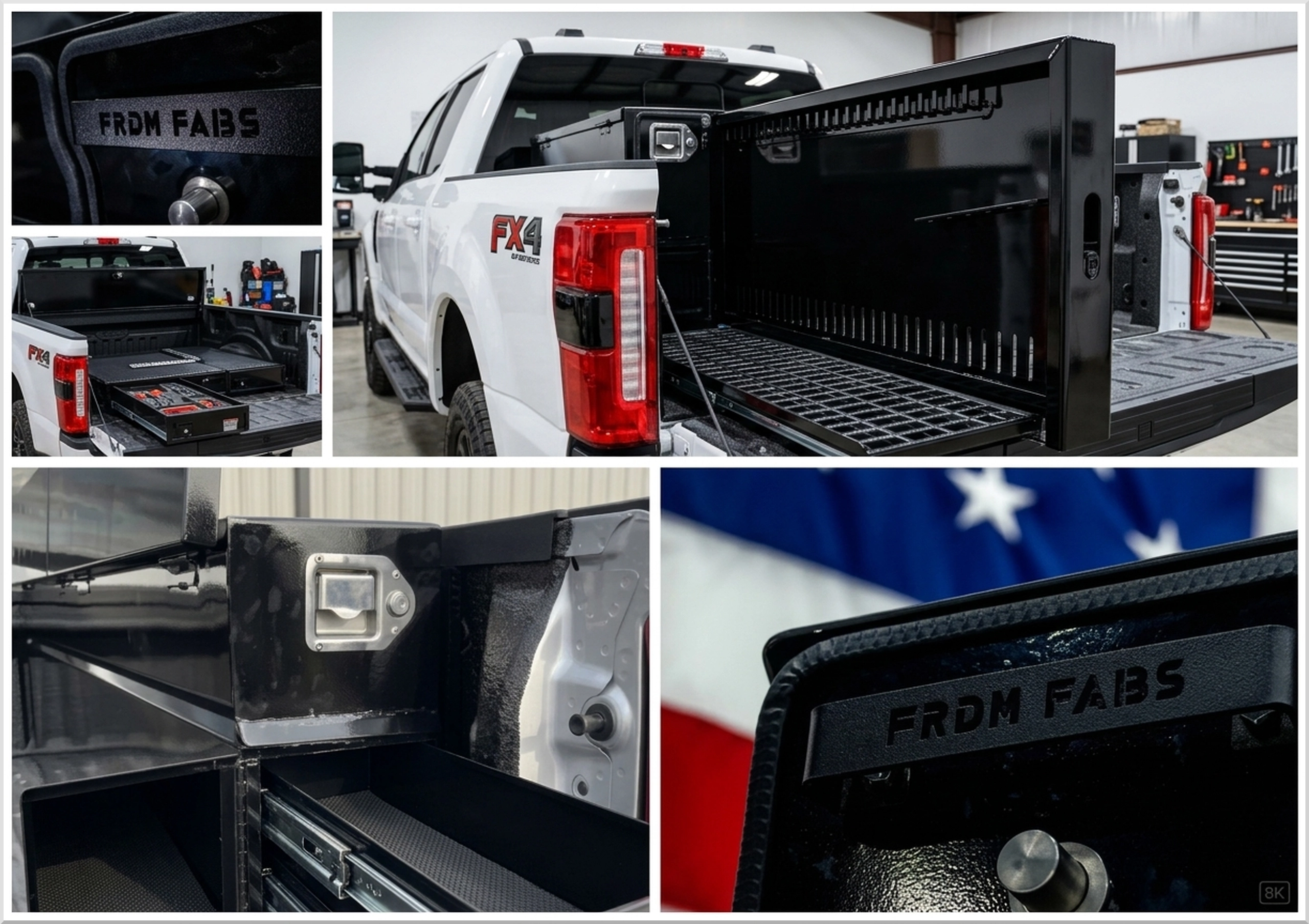
Besides keeping you safe, a headache rack also works as a very useful frame for adding extra work lights, tie-down points, ladder supports, and spare tires. When looking at different rack designs and strength levels, checking out fabricated frames from specialists like FRDM Fabs shows how welded steel tubes, CNC-cut louvers, and built-in grab handles bring solid cab defense together with everyday work utility. Once you understand how these racks work, keeping your truck safe from damage and organizing your cargo becomes much easier.
1. Primary Functions of a Truck Headache Rack
A headache rack is far more than just a tough-looking exterior accessory; it acts as an essential safety and work upgrade for active work trucks.
Cab and Rear Window Defense
The main job of any headache rack is stopping heavy items from crashing through your back window glass. Whether you carry firewood, job site supplies, or camping gear, the rack takes the hit from sliding loads before anything touches the cab sheet metal.
Sun Shade and Cab Cooling
Many headache racks come with angled metal slats or wire mesh built into the center opening. These slats block harsh sunlight from beaming through the back window, which helps keep the inside cab cool on hot workdays without blocking your view behind the truck.
2. Evaluating Design Styles: Mesh, Louvered, and Open Frames
Headache racks come in a few different frame setups depending on how much rear view, light, and protection you need.
HEADACHE RACK STYLE OPTIONS
[Full Mesh Screen] ➔ [Angled Louvers] ➔ [Open Frame Bar]
(Max Debris Protection) (Sun & Impact Shield) (Minimalist Tie-Down)
Full Mesh Insert Racks
Strong wire mesh screens run across the entire back glass area on these models. This design stops smaller flying objects—like gravel, wood chips, or loose tools—from hitting your glass while still letting plenty of air and light through for clear rear vision.
Louvered Racks
Louvered styles use flat steel or aluminum slats angled downward to block hot sun rays and big sliding items. They give trucks a neat, commercial style while cutting down cab heat quite a bit.
Open Frame Racks
Open-frame options just use a simple outer tube border with no mesh or slats in the middle. They stay light on weight, cost less money, and make great attachment points for tie-down straps, ladder extensions, and top-mounted work lights.
3. Utility Extensions and Lighting Integration
A good headache rack gives you a high, sturdy spot to attach important job site tools and extra safety lighting.
Functional Accessory Upgrades
- Auxiliary LED Work Lights: Mount rear-facing LED floodlights straight onto the top frame bar to light up your whole truck bed during night jobs.
- Top Beacon Brackets: Provide solid mounting tabs for yellow warning lights needed on highway work trucks and construction sites.
- High Tie-Down Anchors: Offer higher tie points for tall gear—like long ladders, kayaks, or tall equipment—that cannot be strapped down flat using bottom bed hooks.
- Grab Handles: Built-in side handles give you a solid grip when stepping up on the back tire to grab gear out of the bed.
4. Proper Installation and Structural Mounting
To give real protection during an impact, your headache rack must be bolted down tight to the strongest parts of the truck bed.
Installation Guidelines
- Stake Pocket Mounting: Well-made racks use thick steel legs that slide right into the factory bed stake holes, secured using high-strength Grade-8 bolts.
- Bed Rail Angle Iron Brackets: Long angle-iron mounting plates run along the top bed edges to spread out weight and impact force evenly across the bed structure.
- Check Tailgate and Bed Cover Compatibility: Always make sure the rack legs leave enough room for bed liners, side toolboxes, or folding tonneau covers to operate normally.
5. Headache Rack Style Feature Matrix
| Rack Configuration | Protection Level | Sun Blocking | Rear Visibility | Primary Utility Benefit |
| Full Mesh Screen | Maximum (Small & Large Items) | Low | High | Forestry, Firewood, Small Debris |
| Angled Louvers | High (Large Cargo Items) | High | Moderate | Construction, Commercial Rigs |
| Open Perimeter Frame | Moderate (Large Items Only) | None | Maximum | Ladder Support, Light Mounting |
Installing a heavy-duty headache rack shields your truck cab against costly damage, keeps the cabin cooler, and gives you a reliable setup to tie down cargo on every haul.
- Add new comment
- 15 views