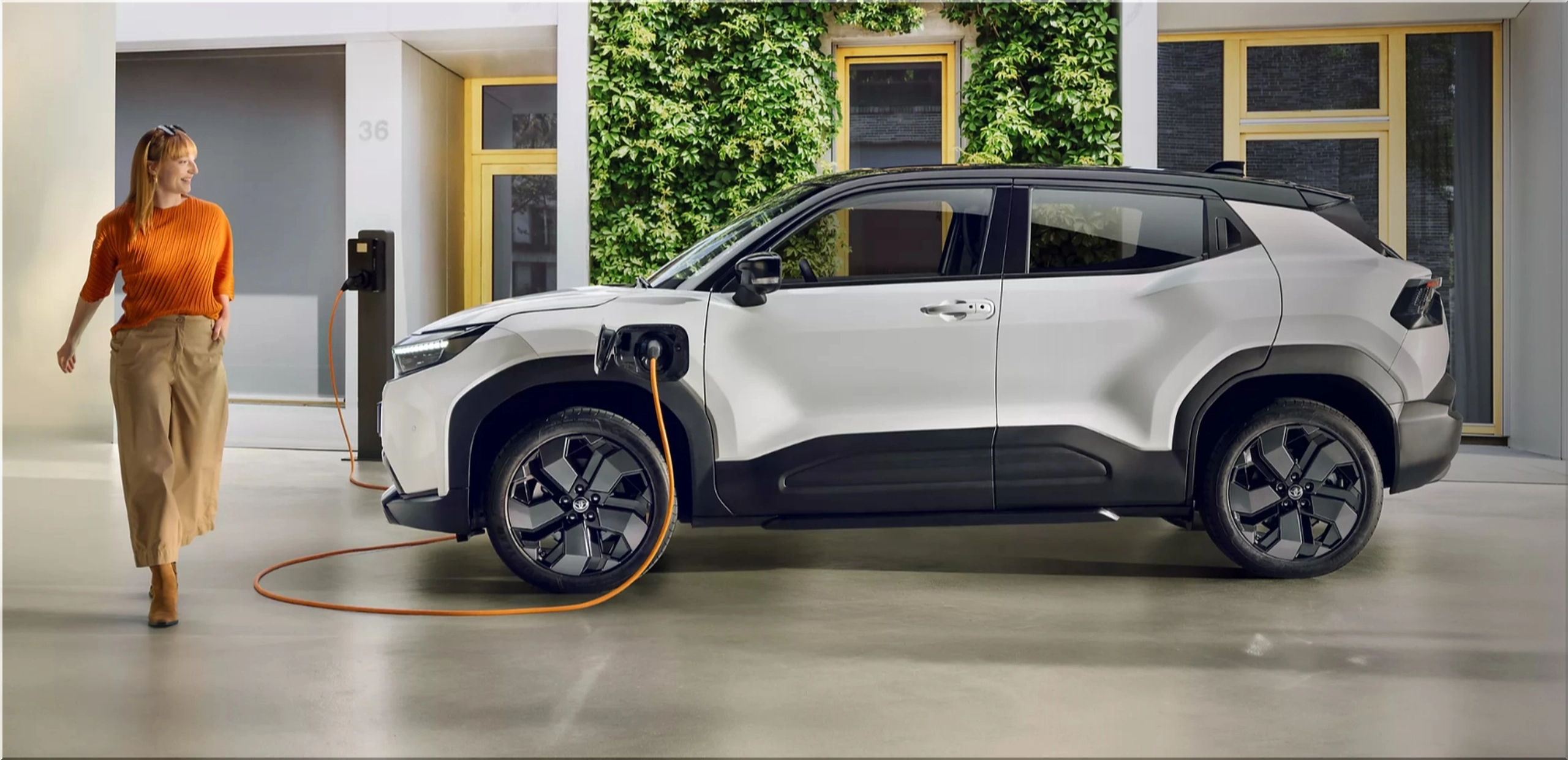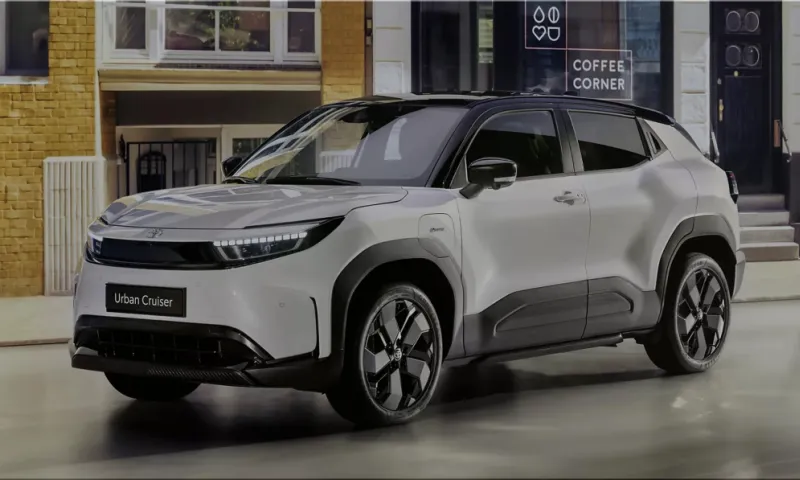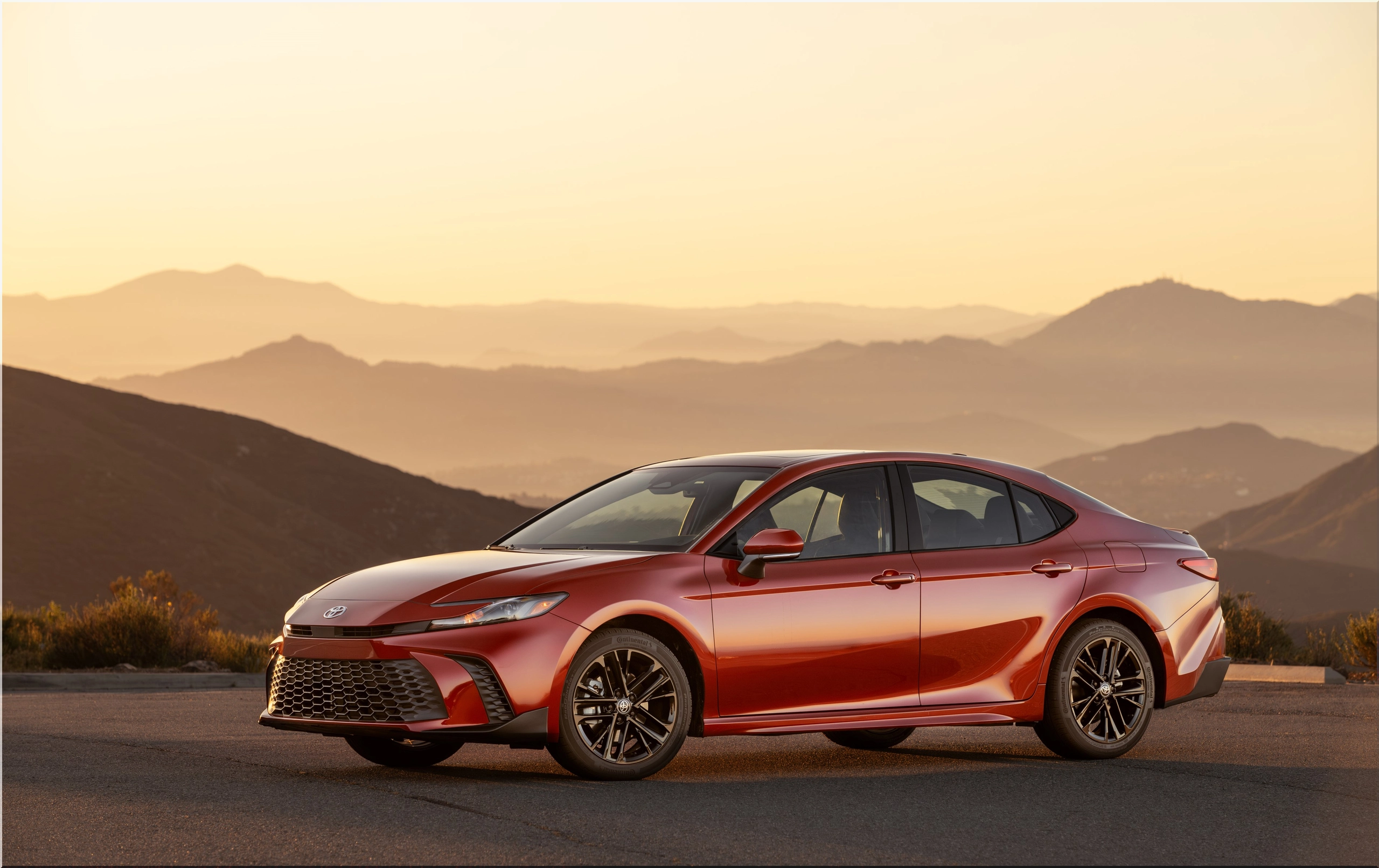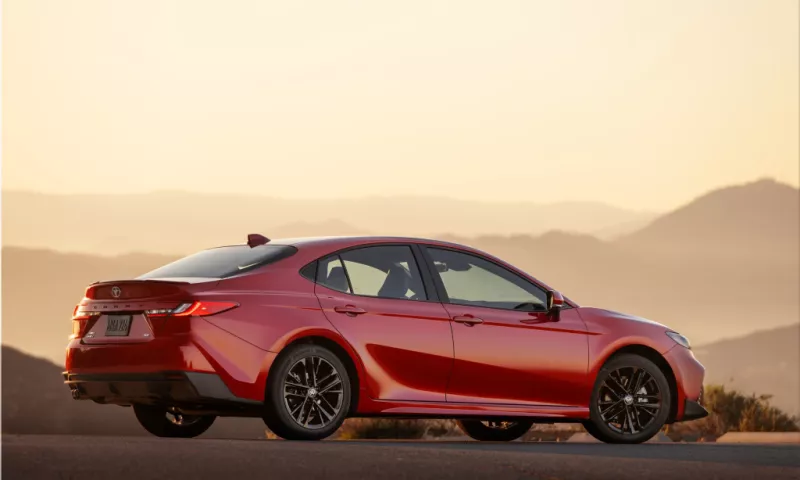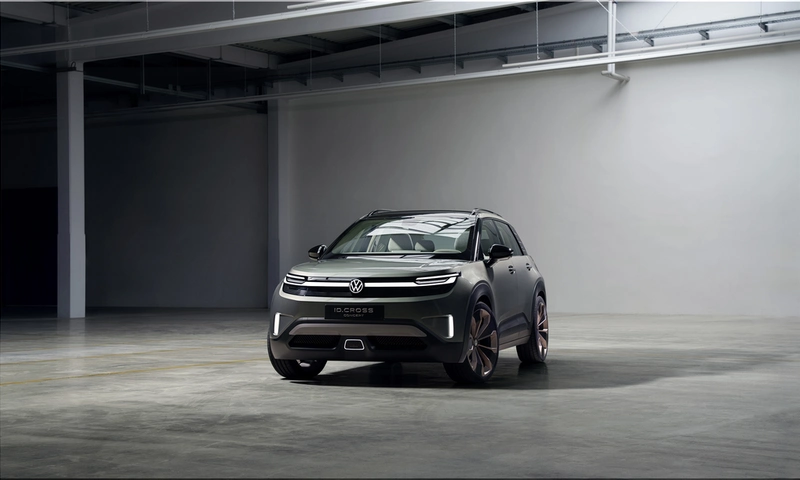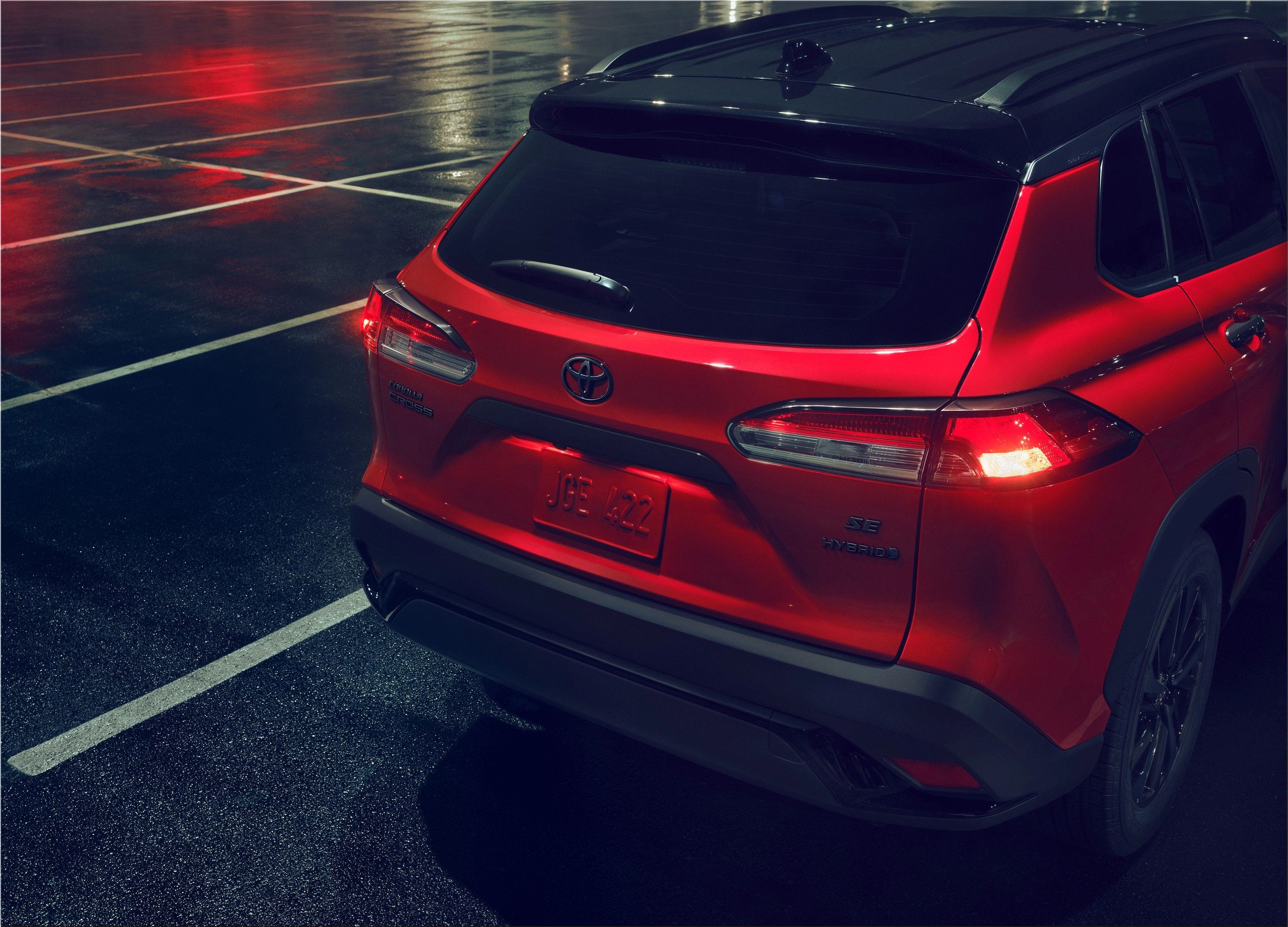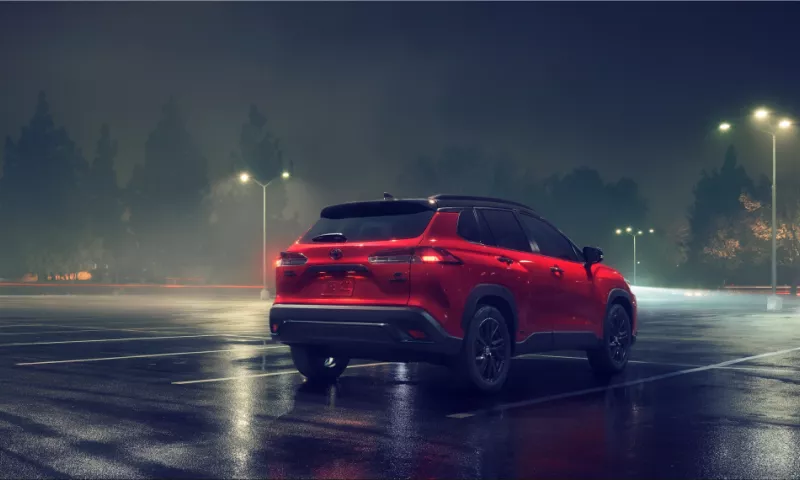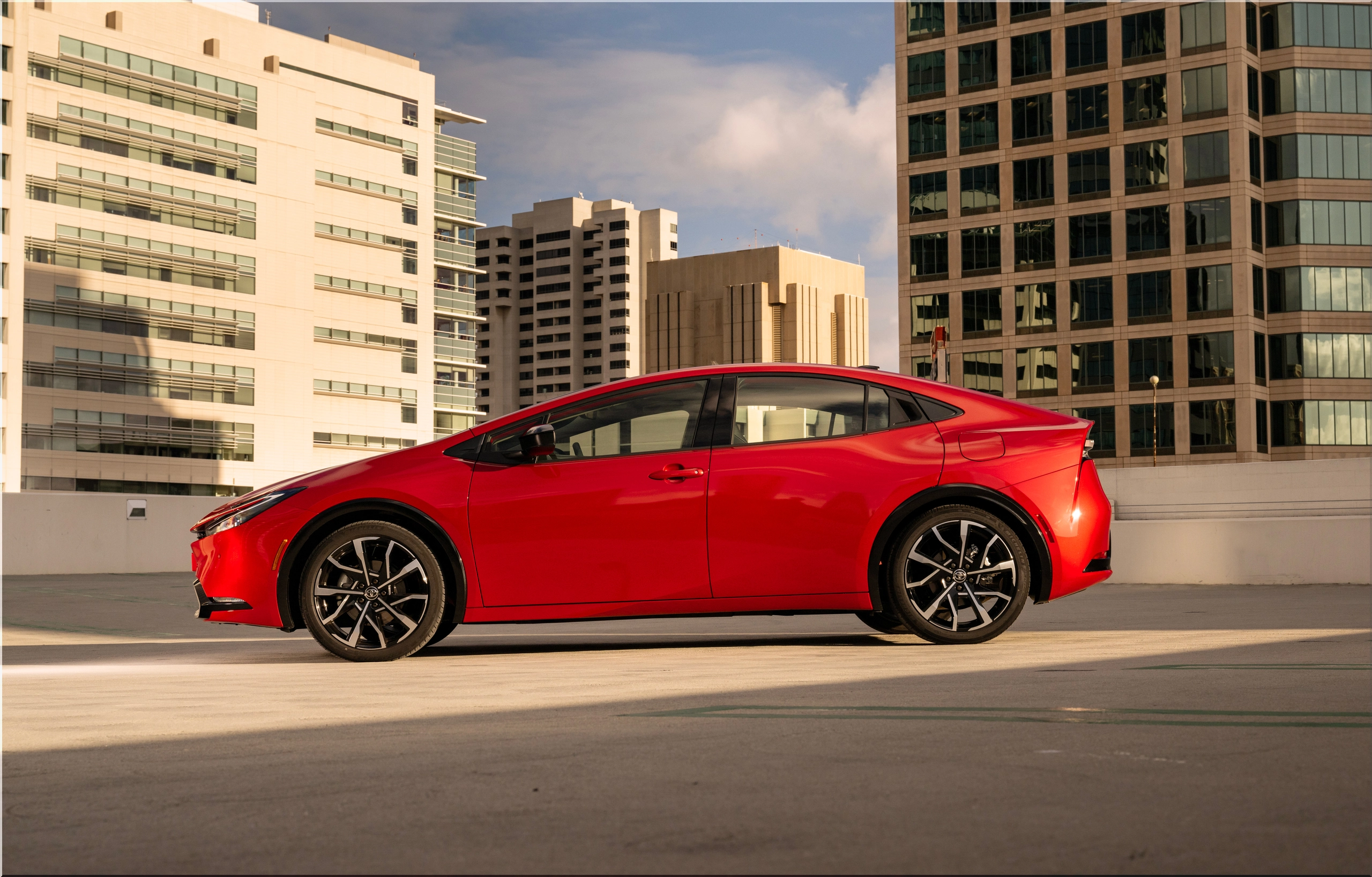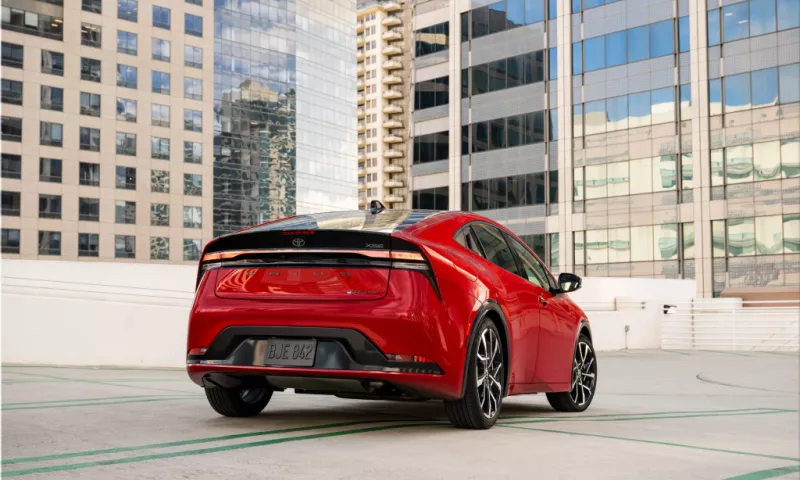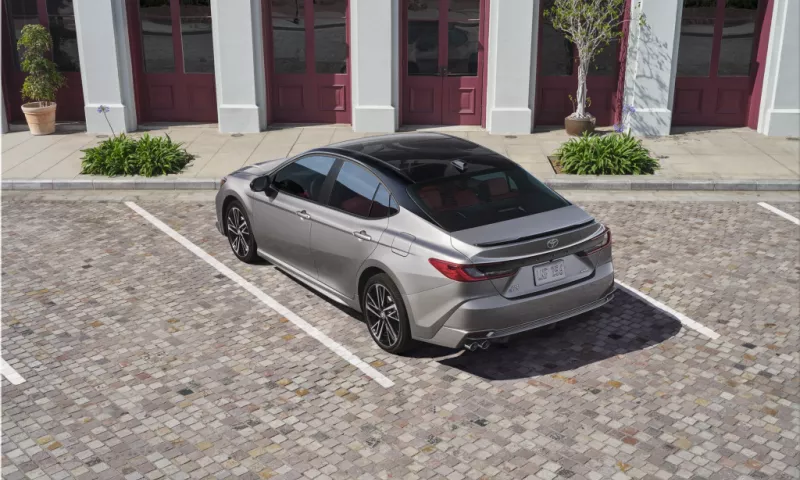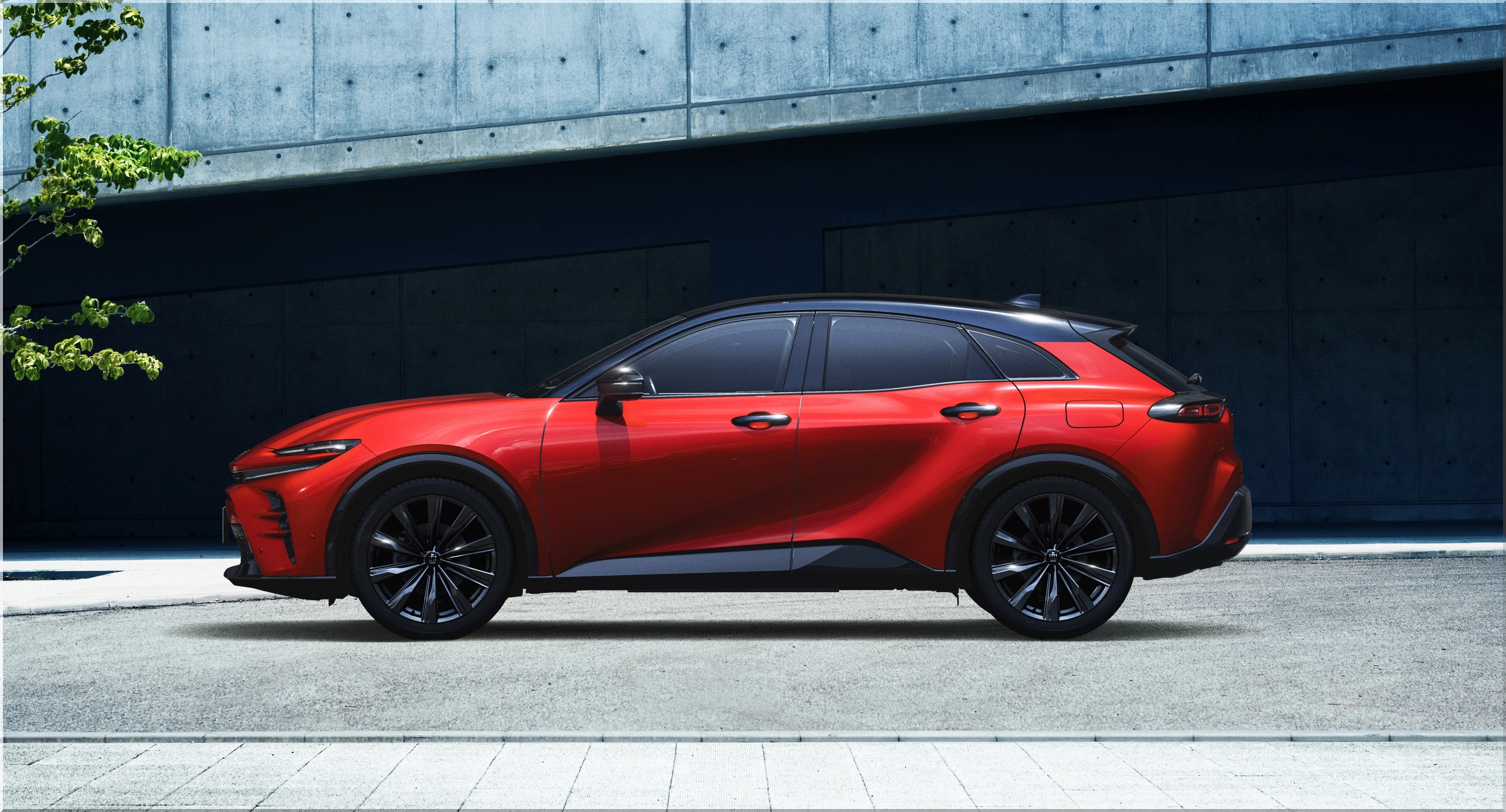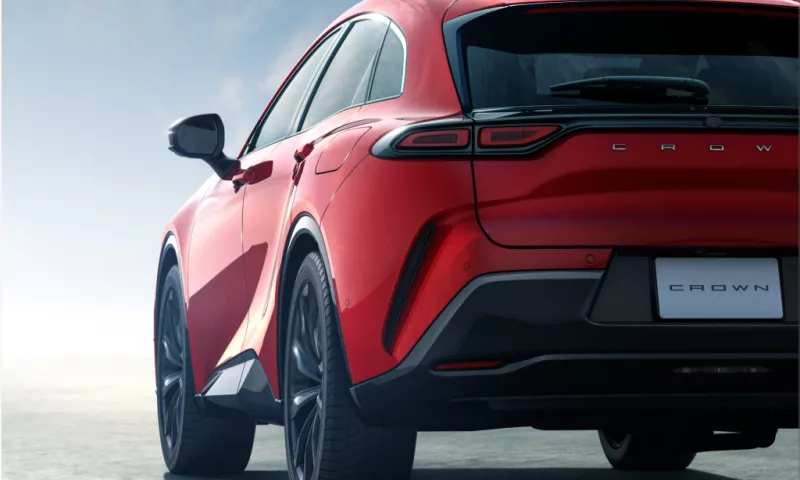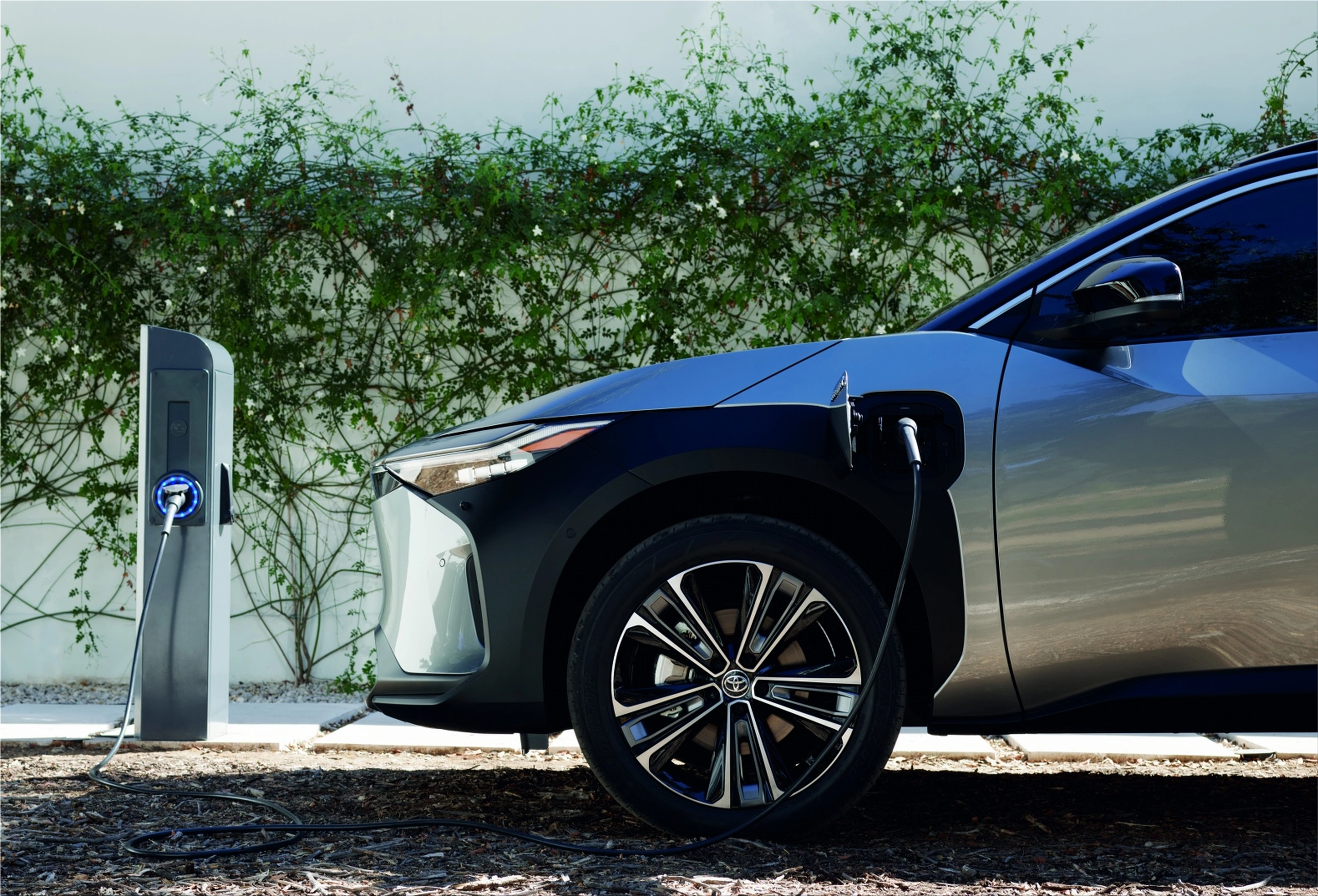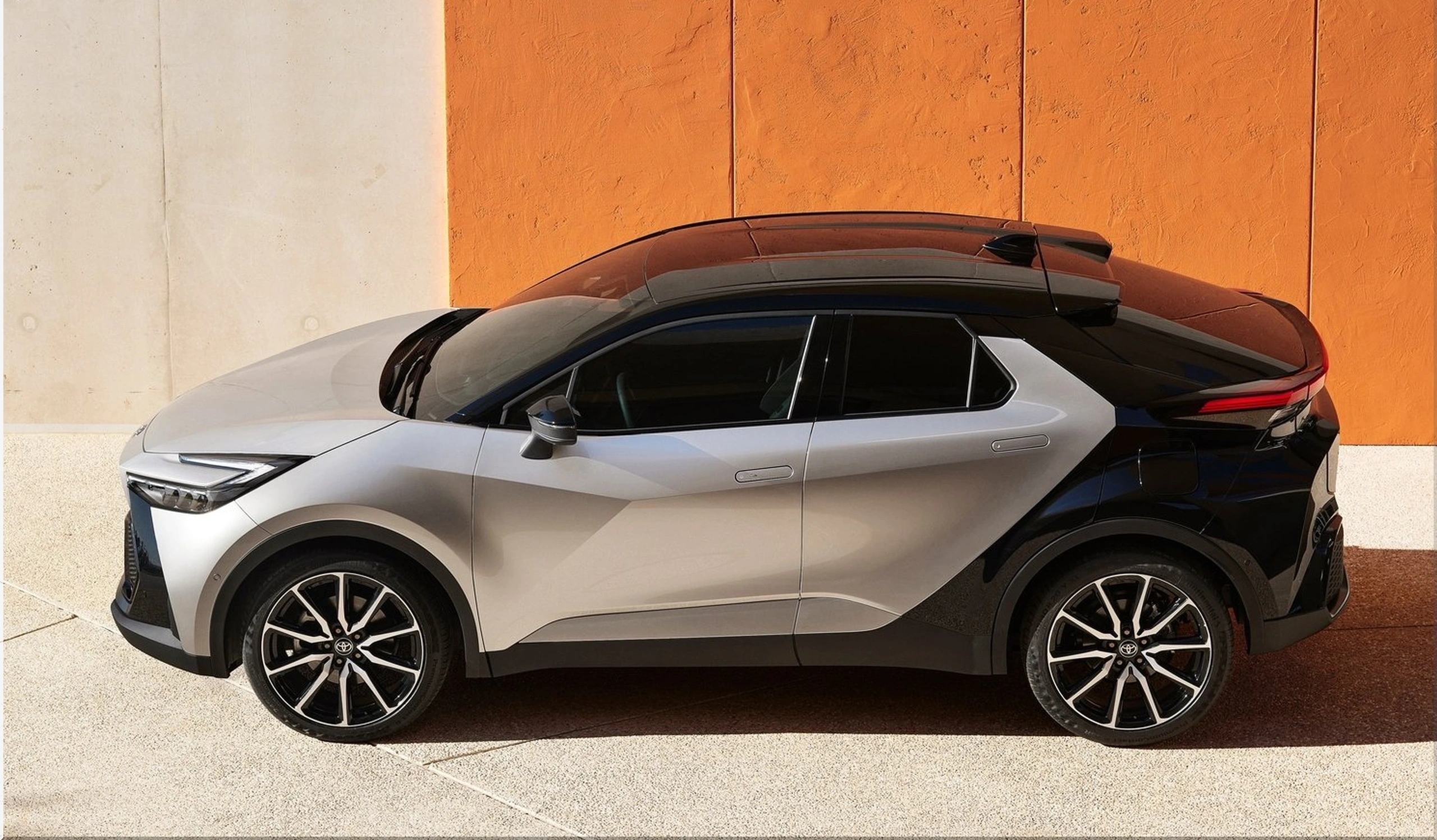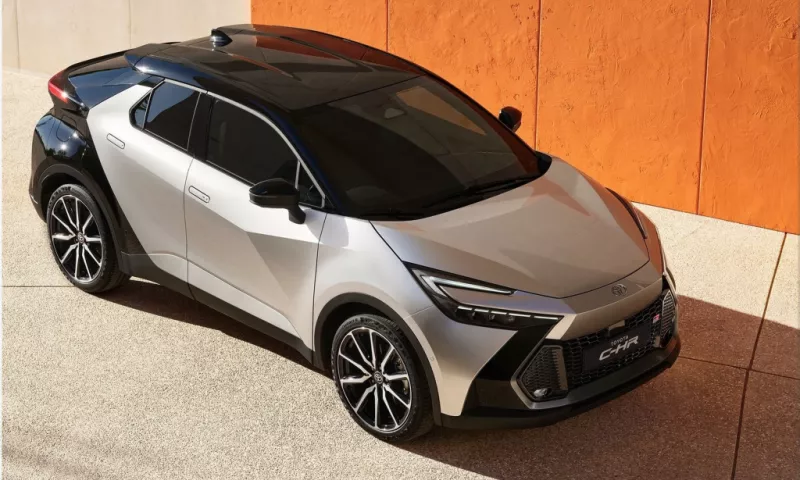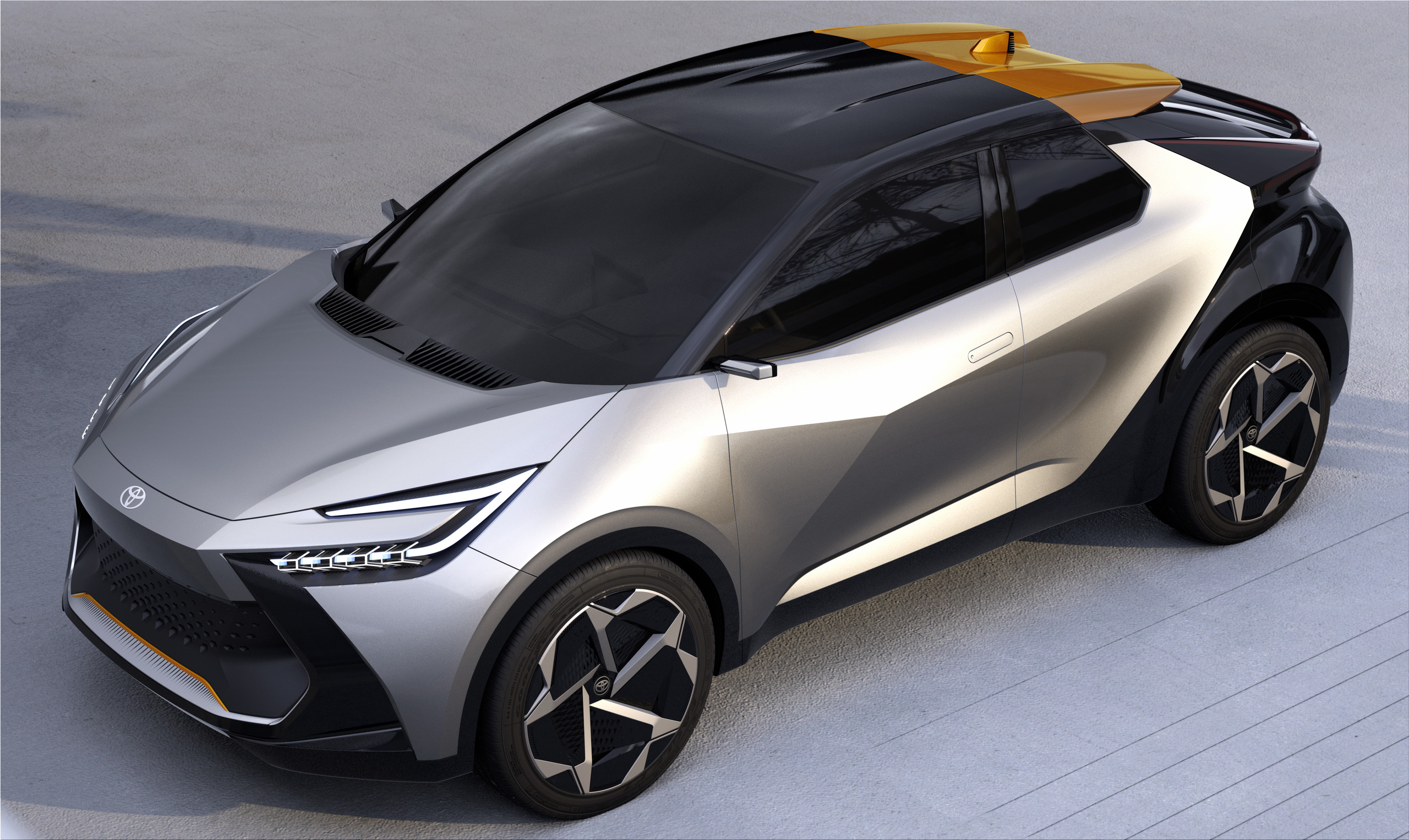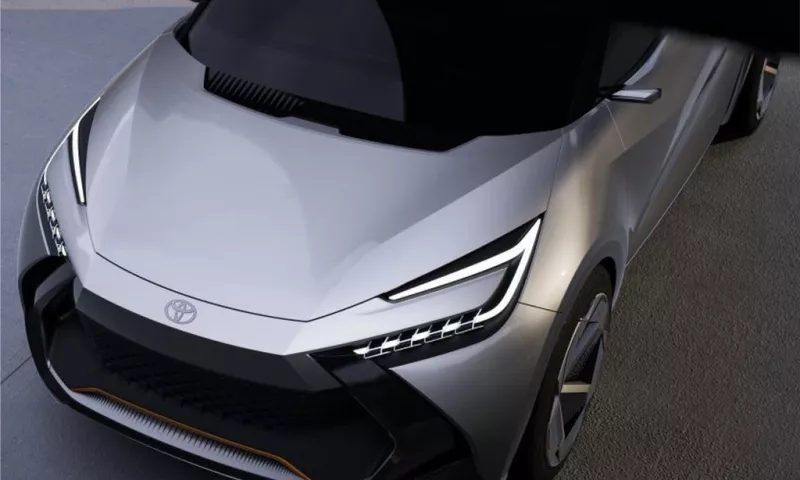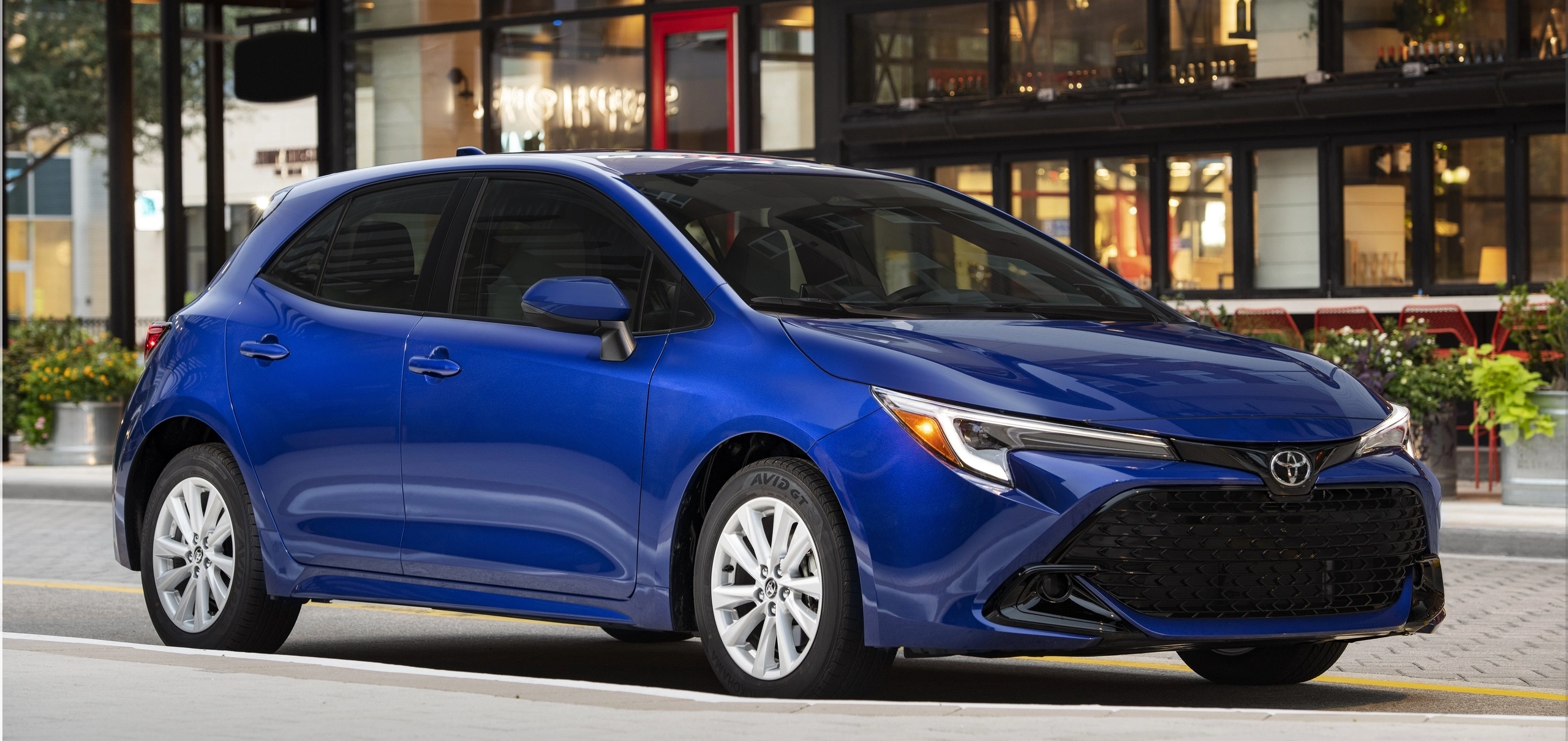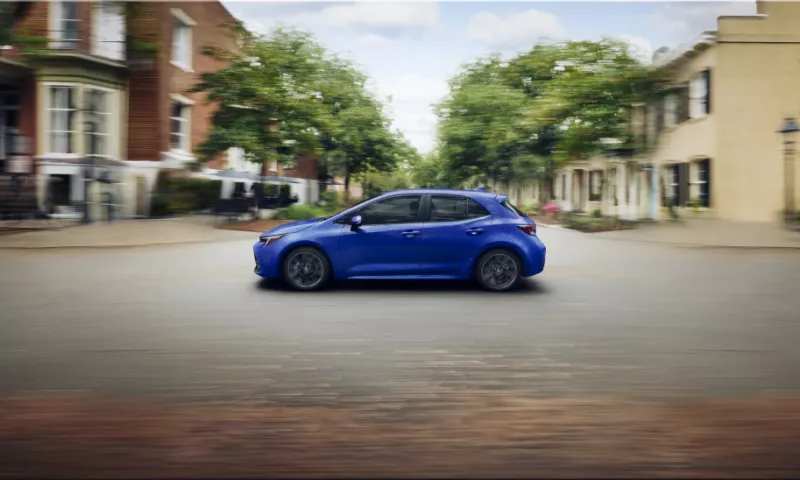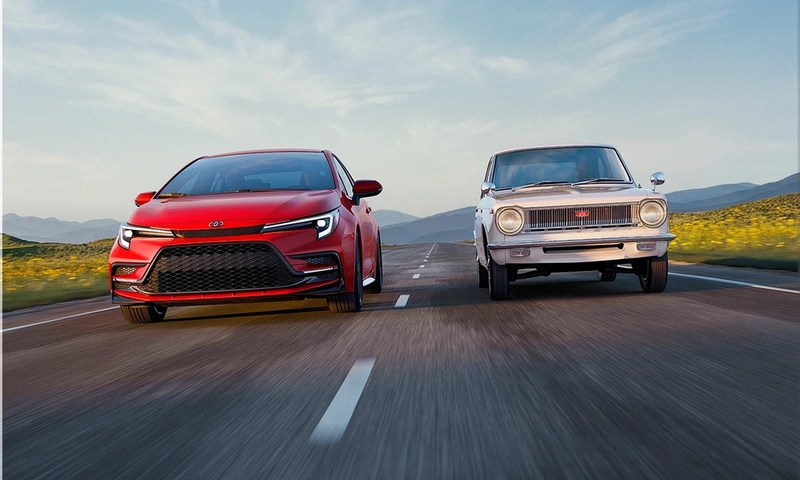
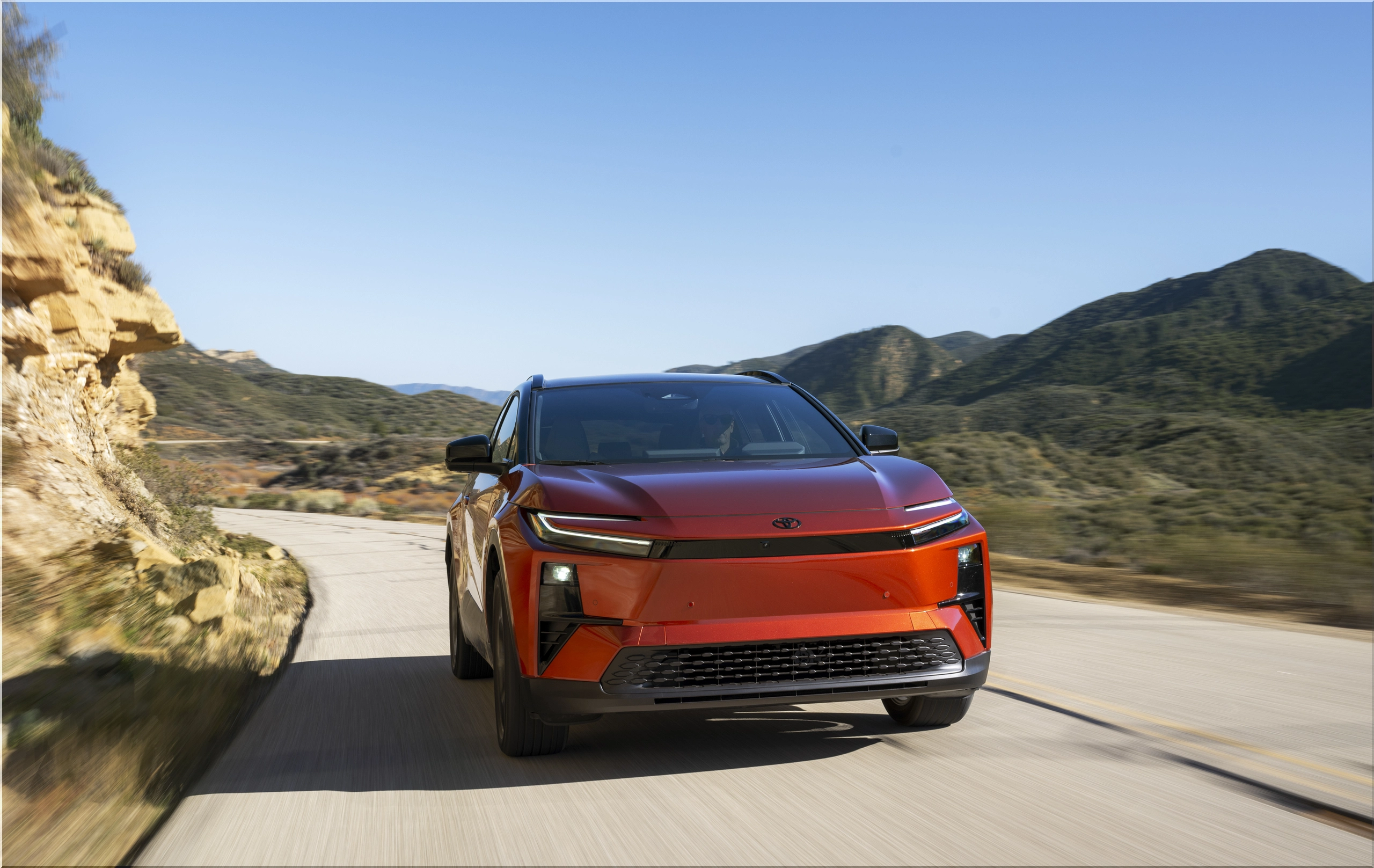
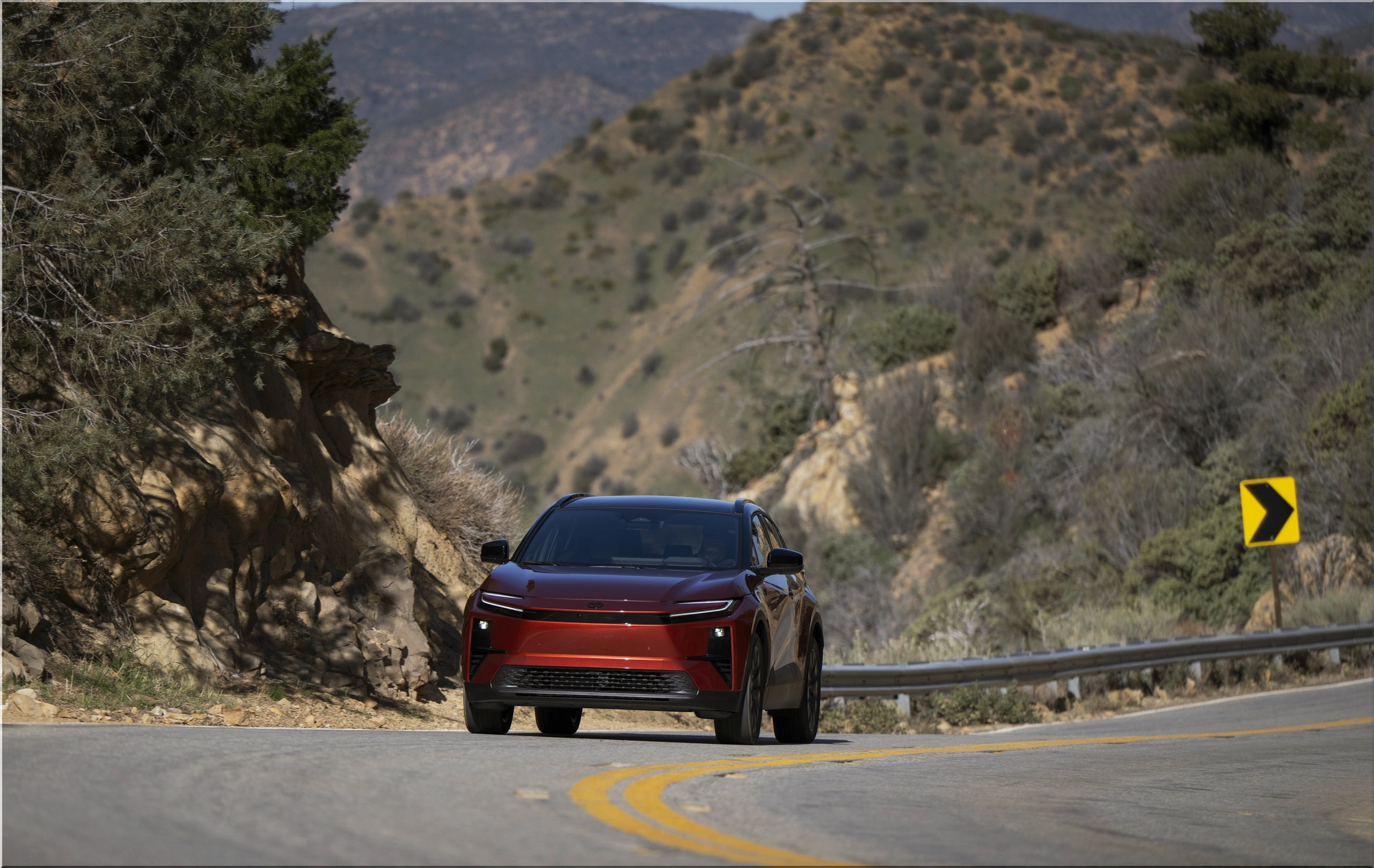
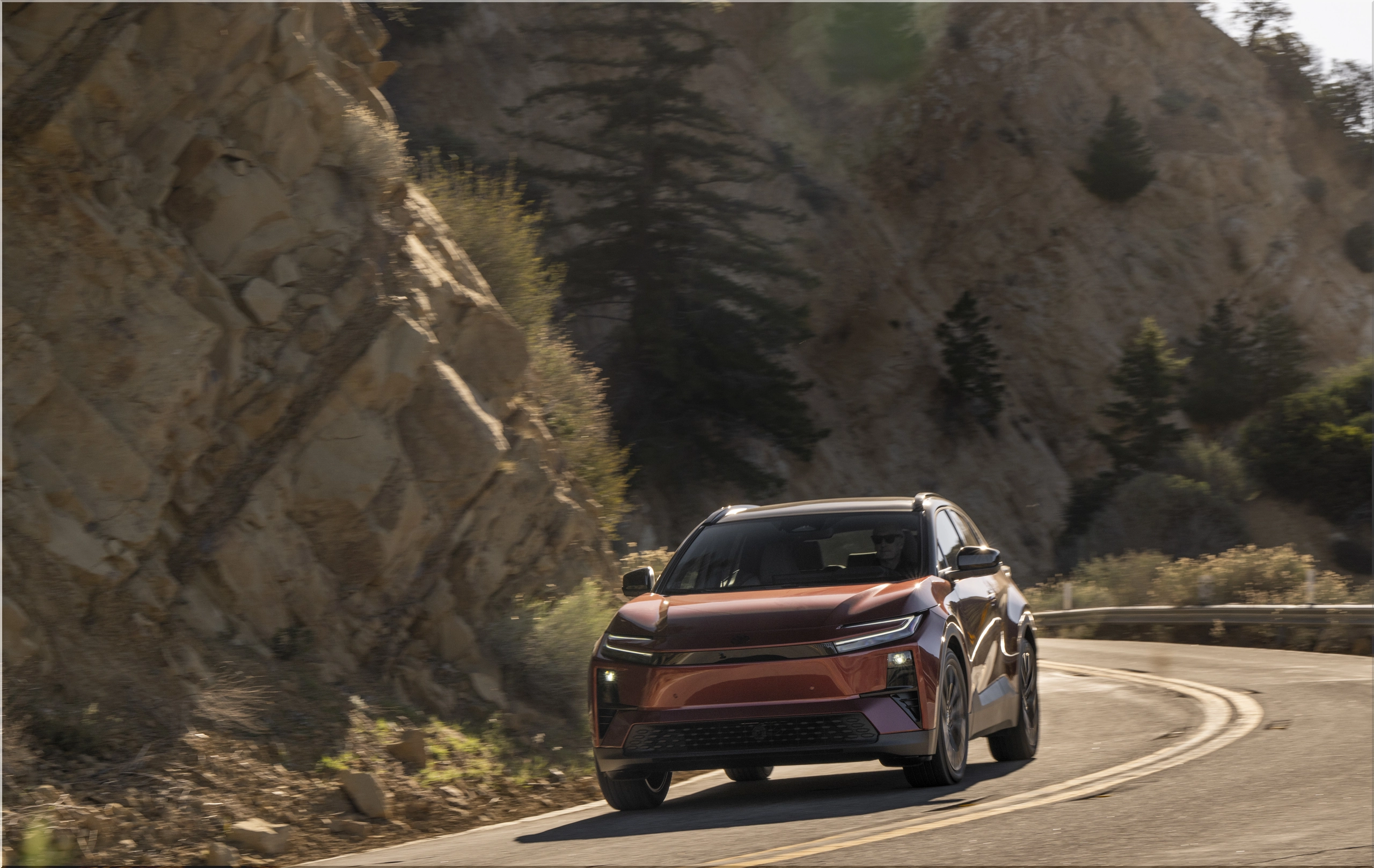
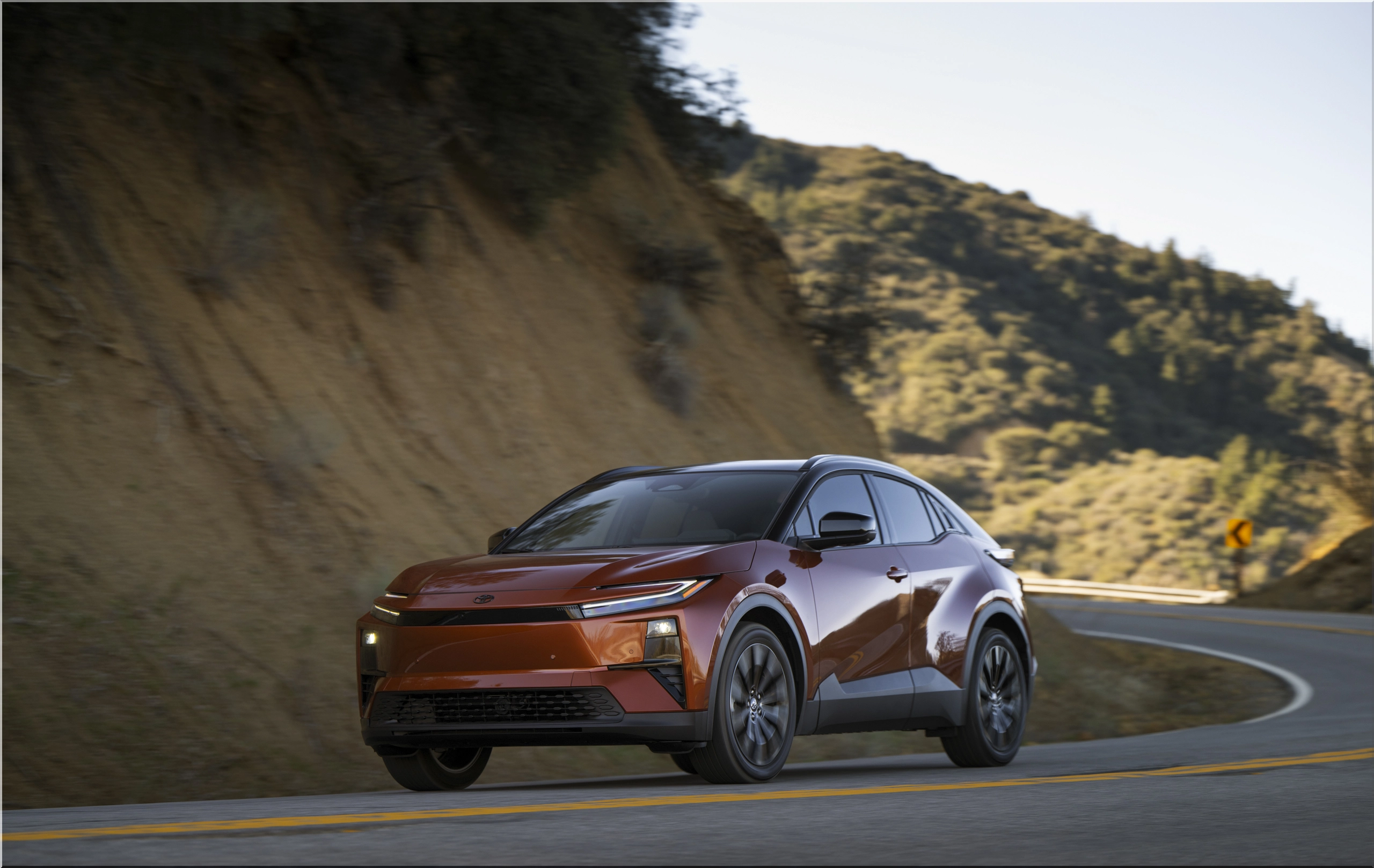
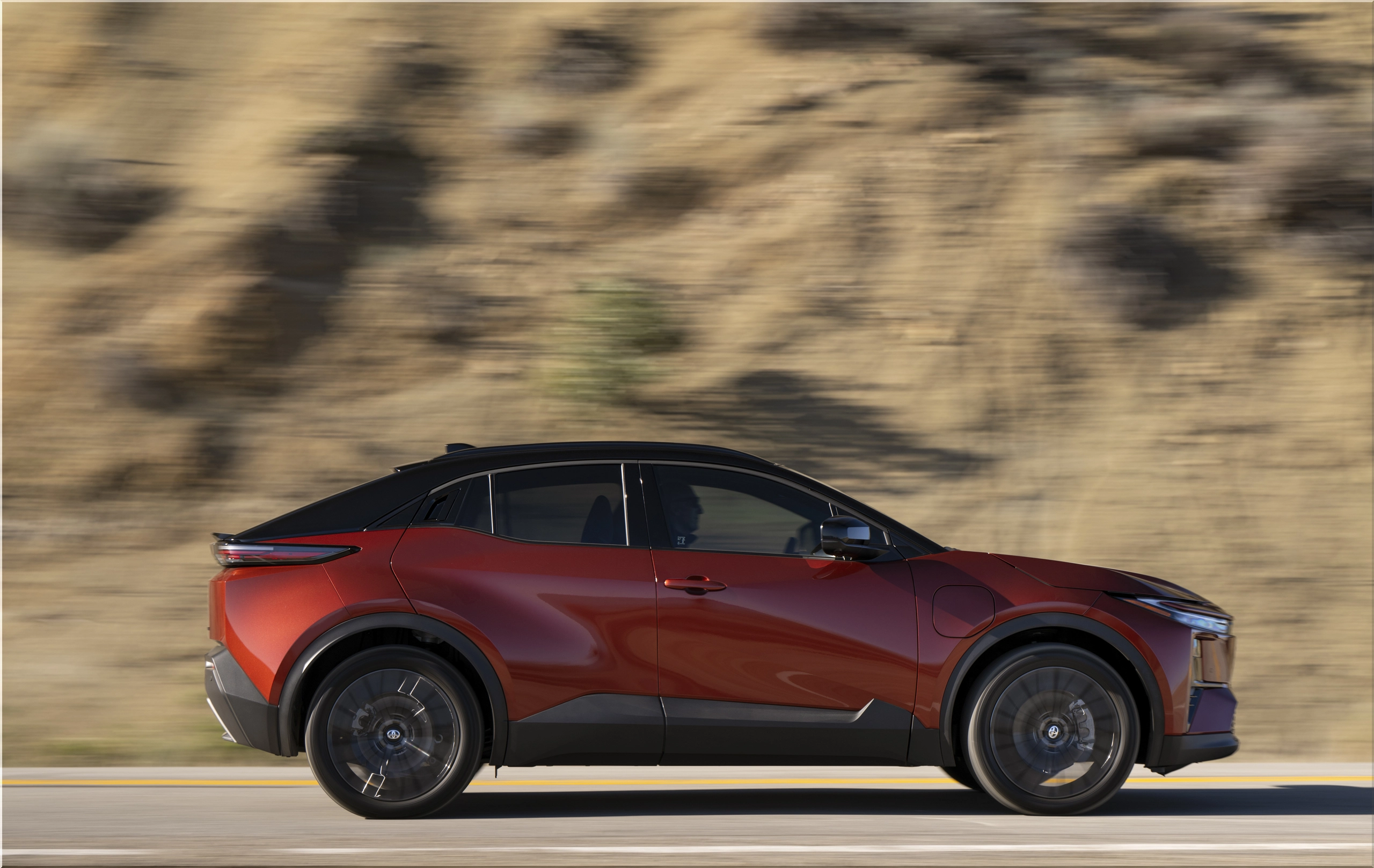
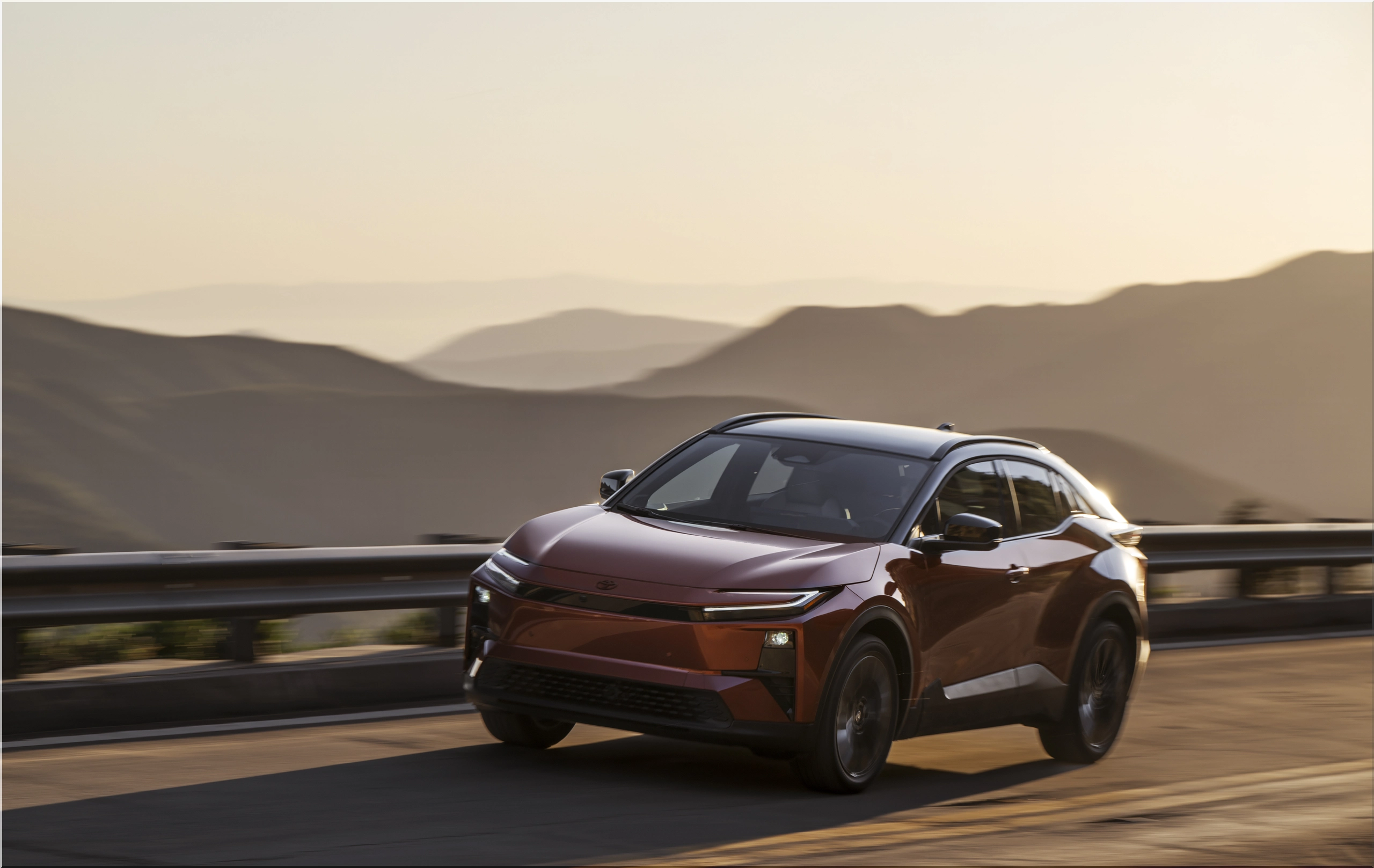
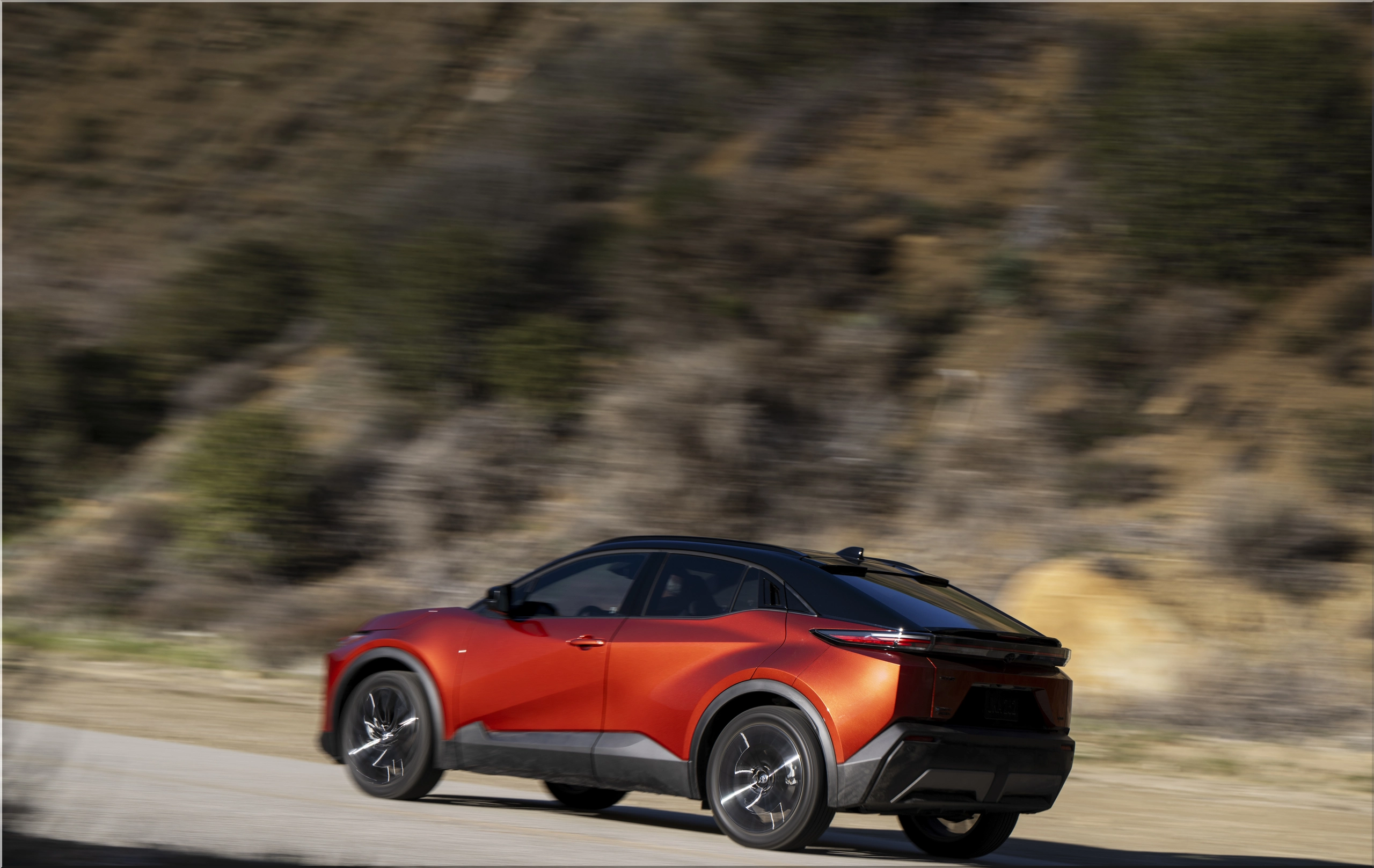
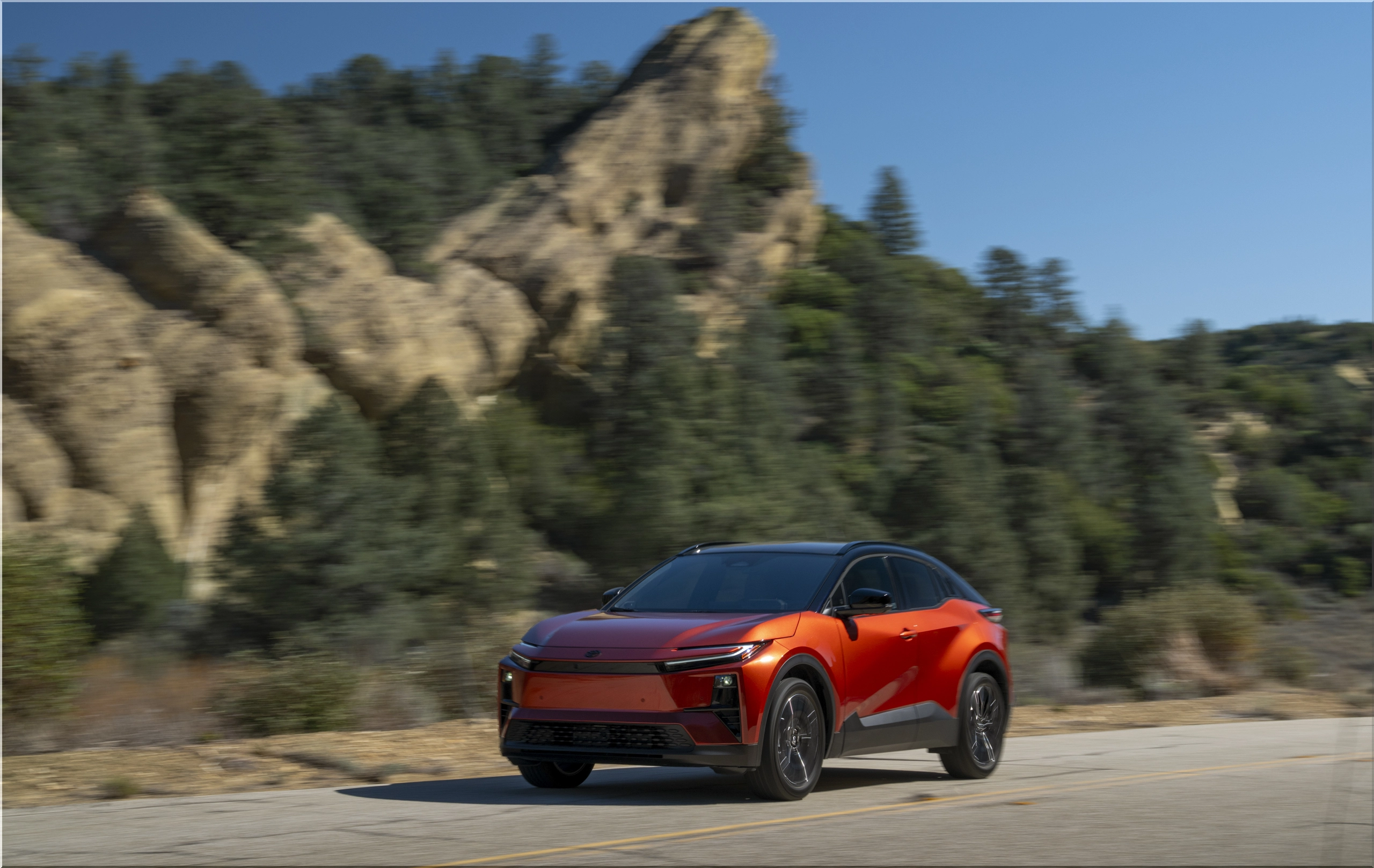
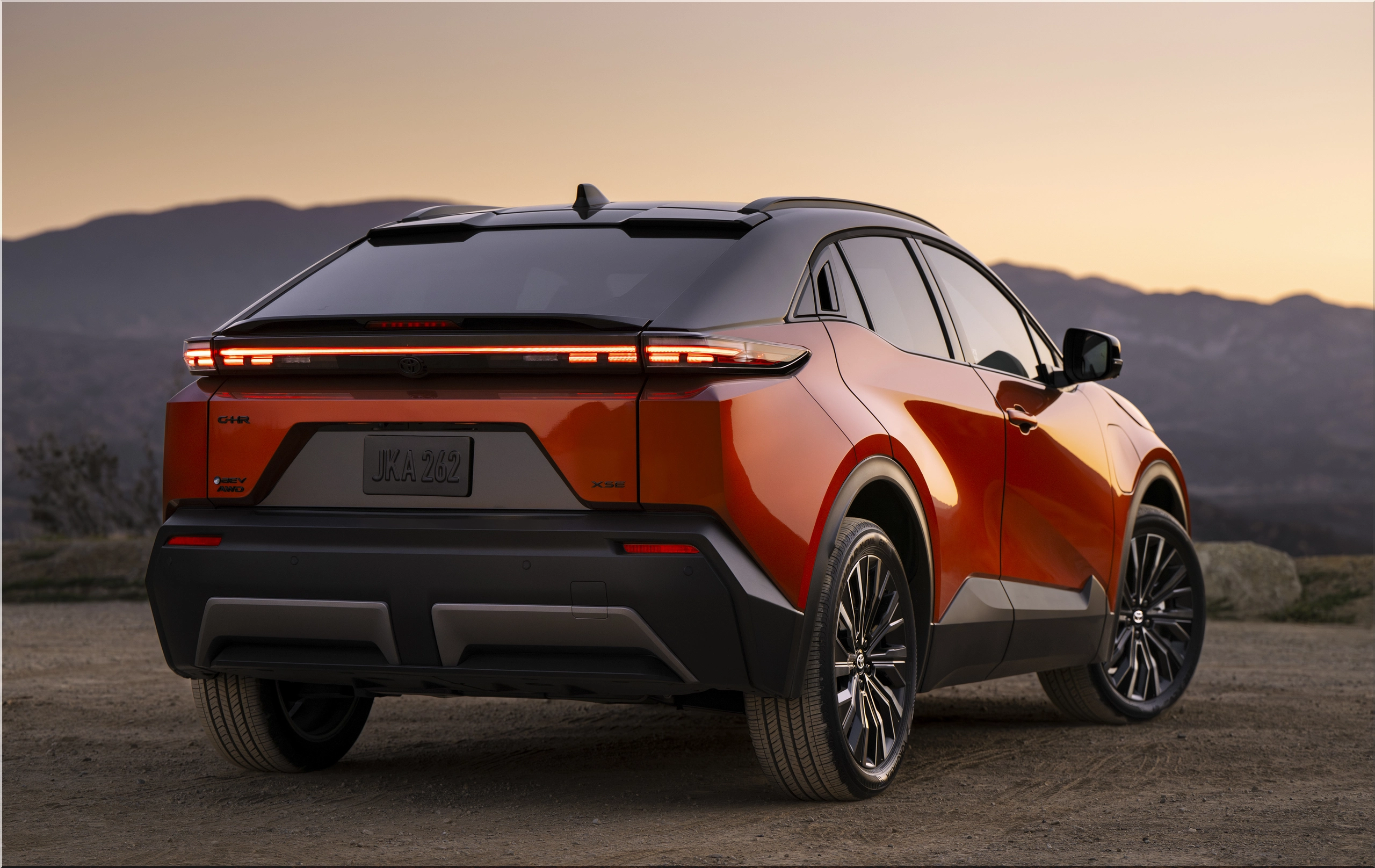
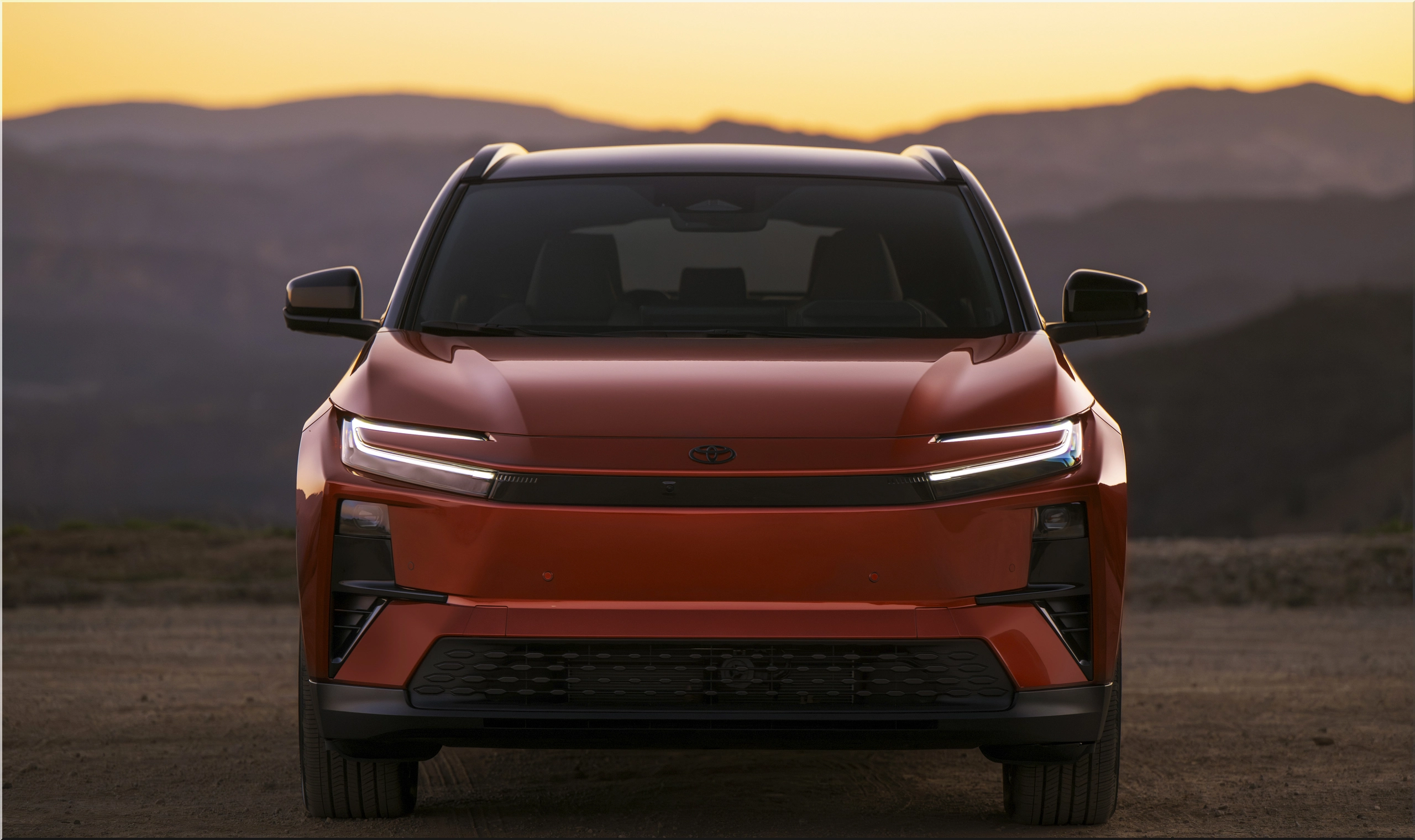
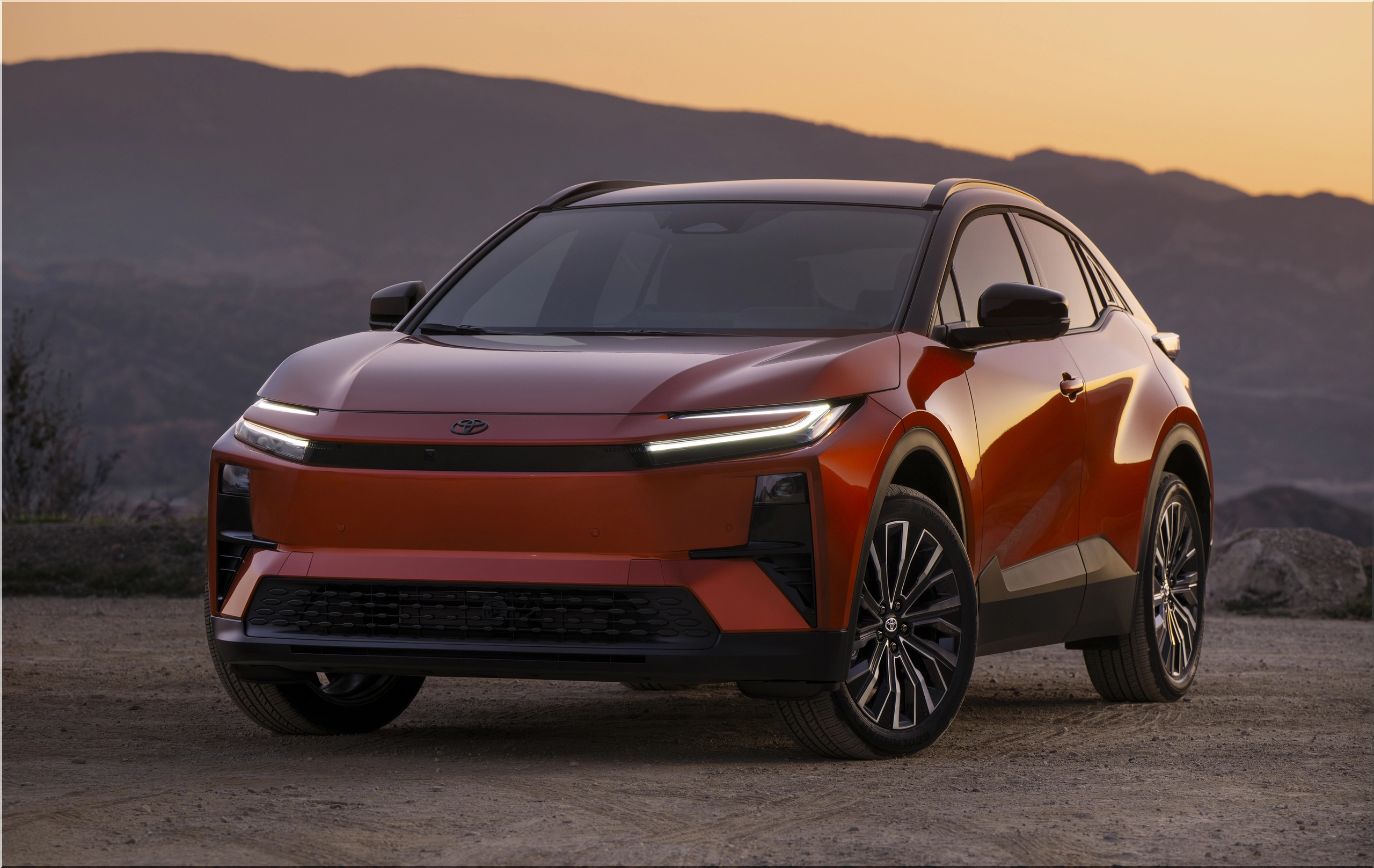
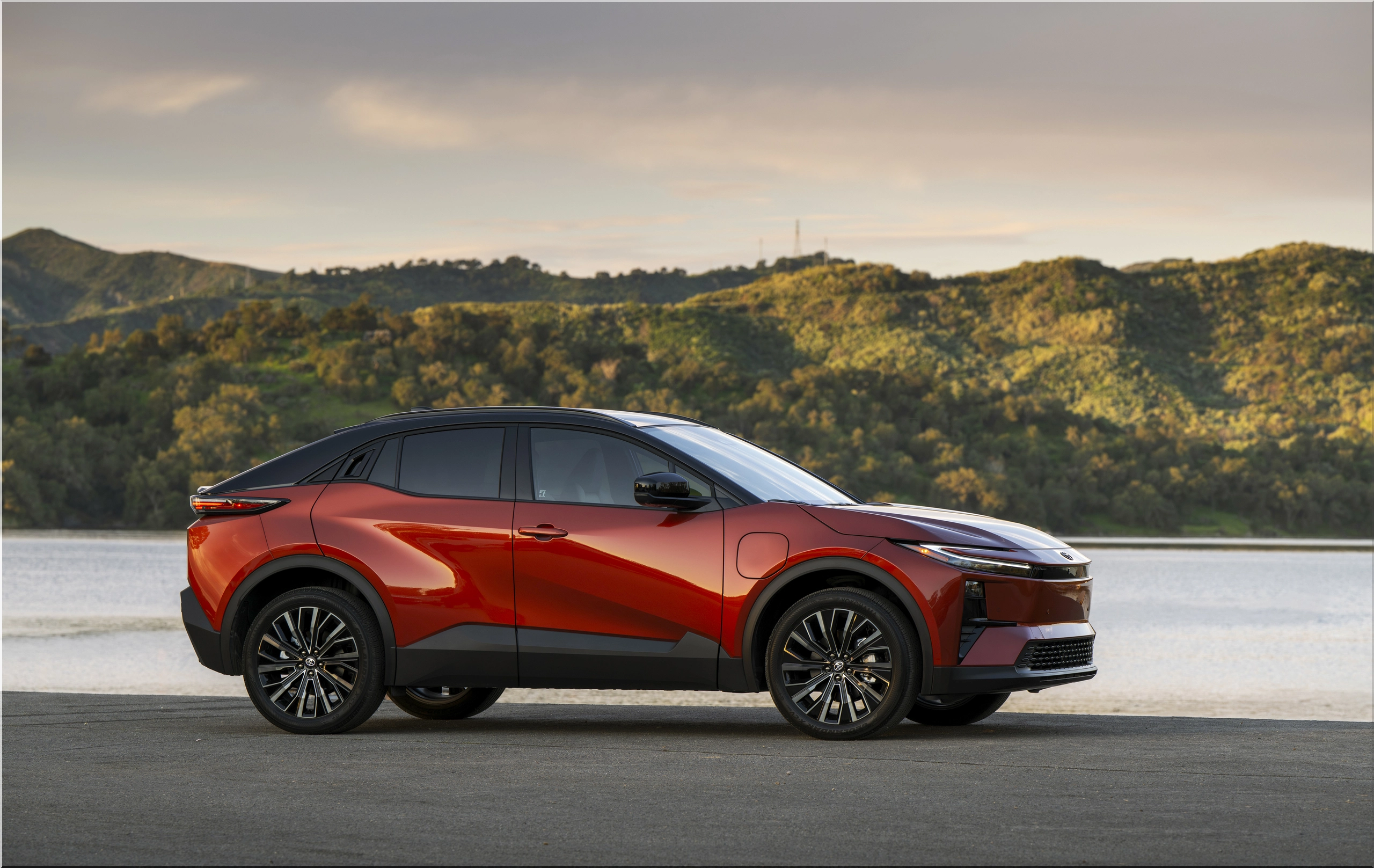
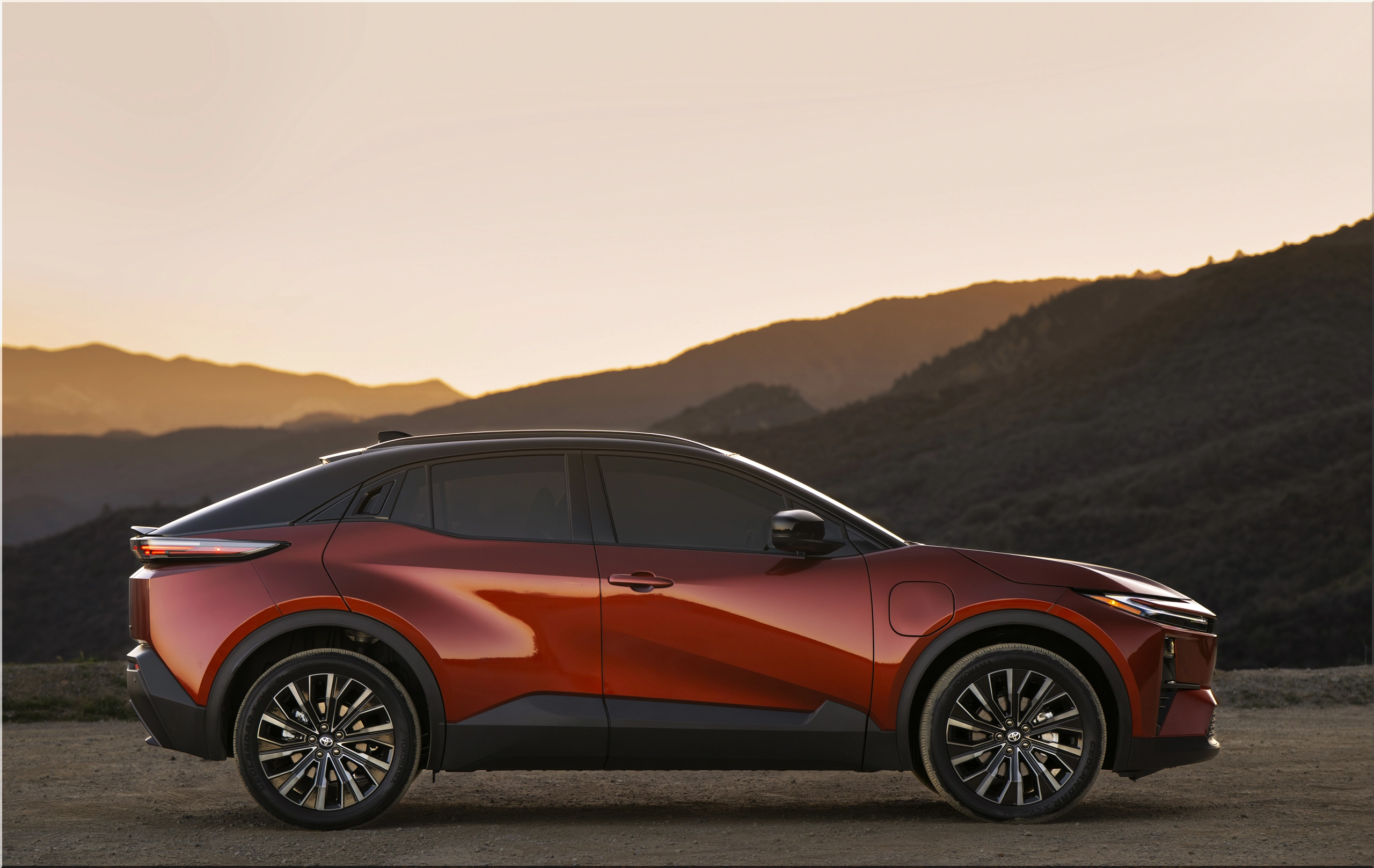
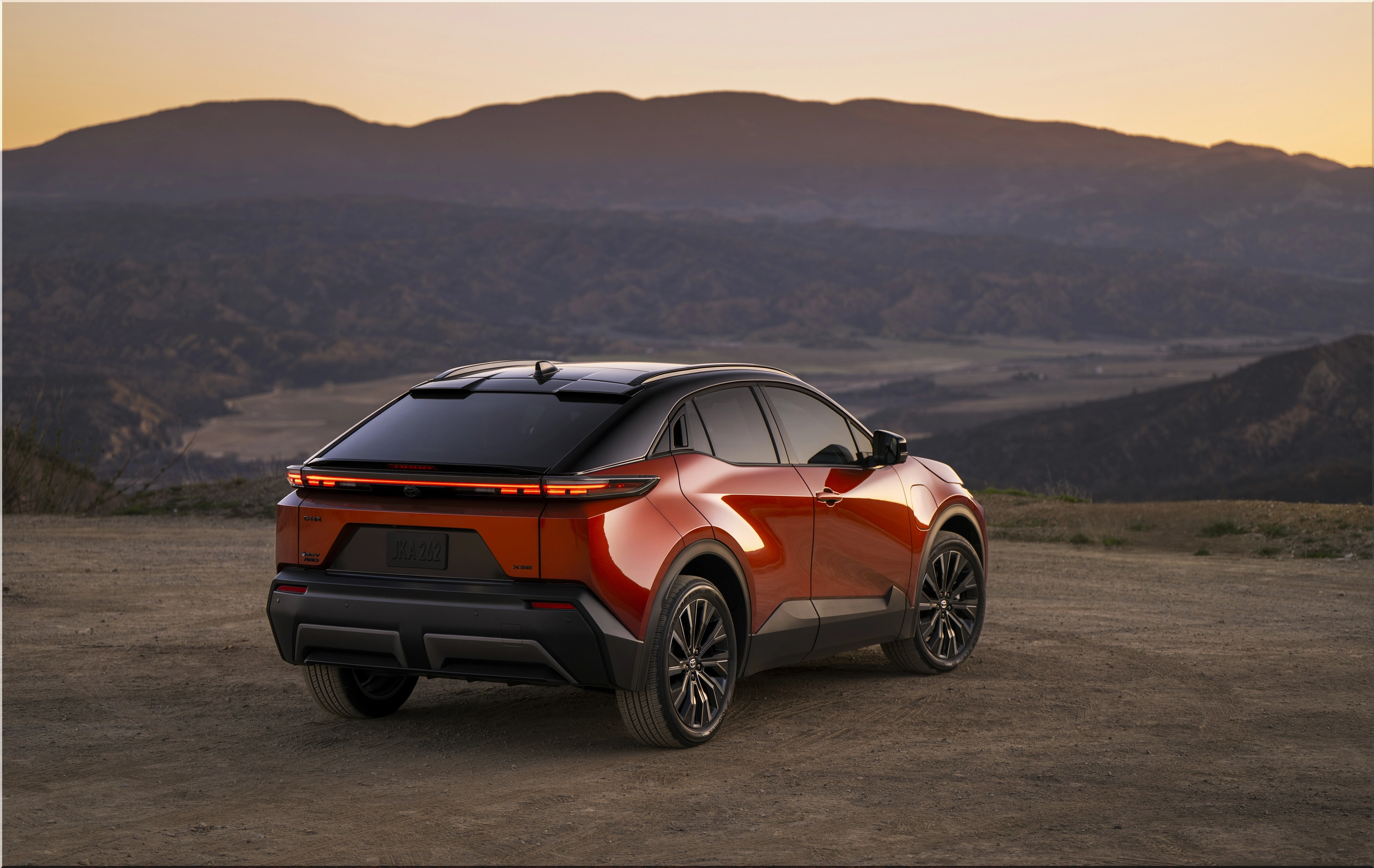
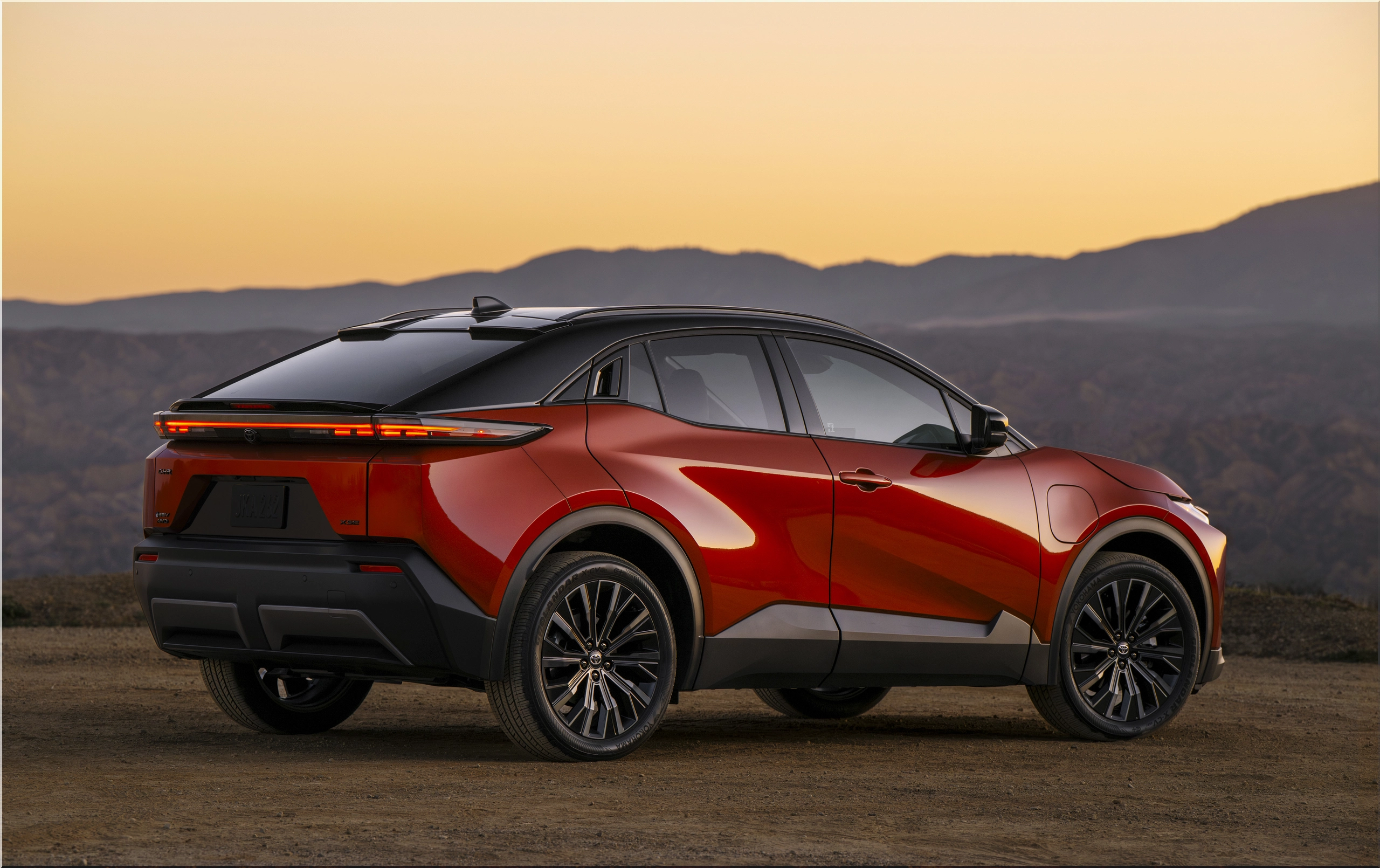
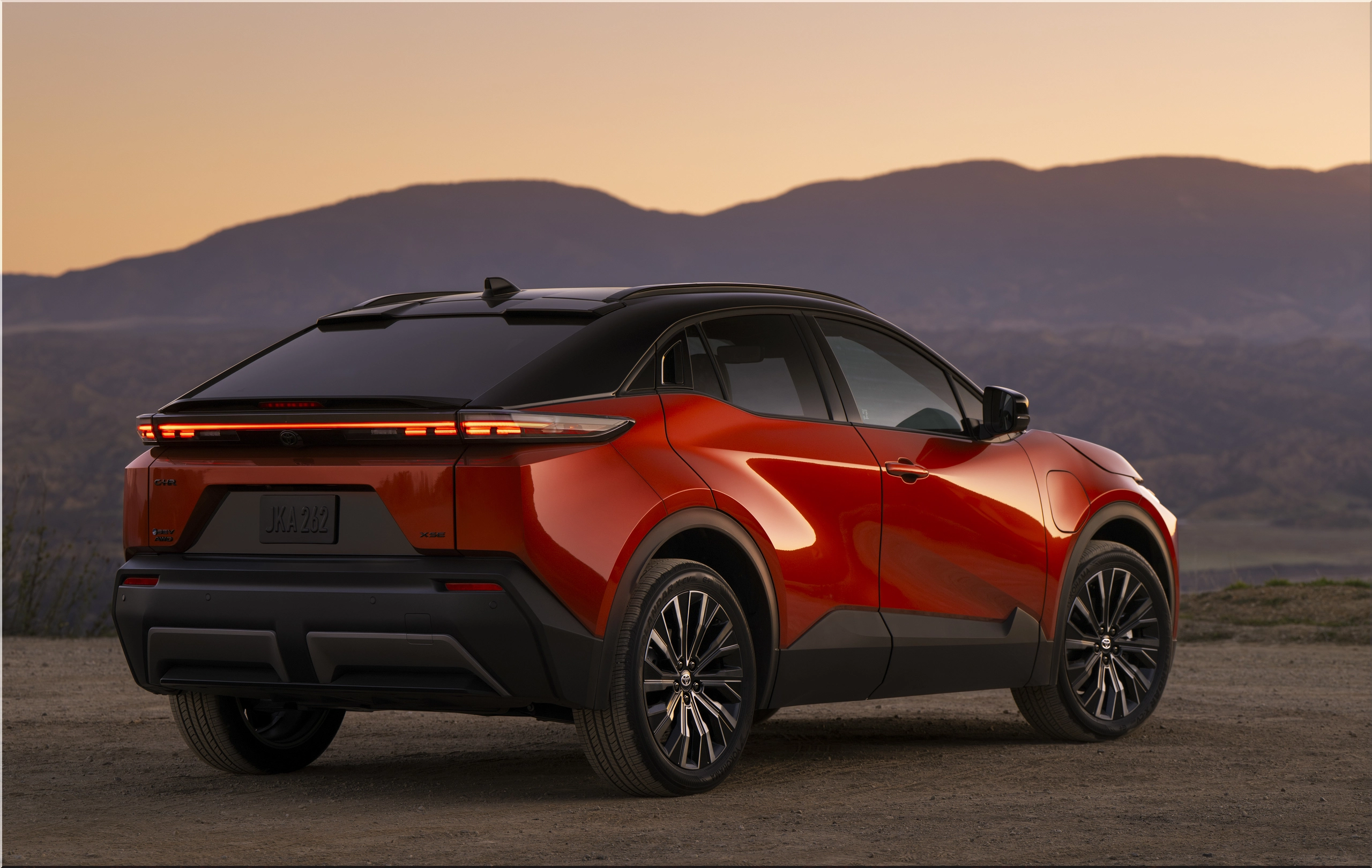
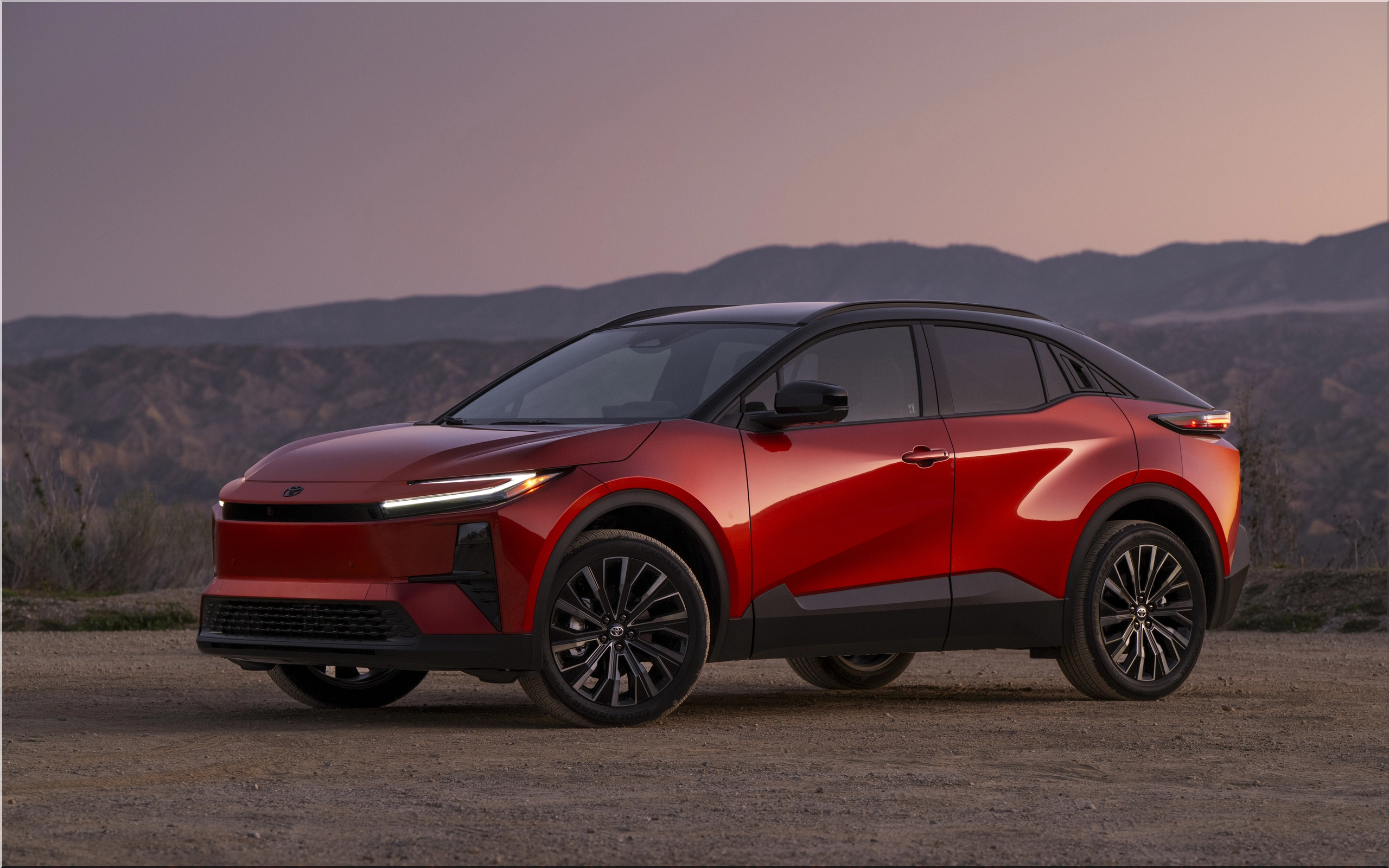
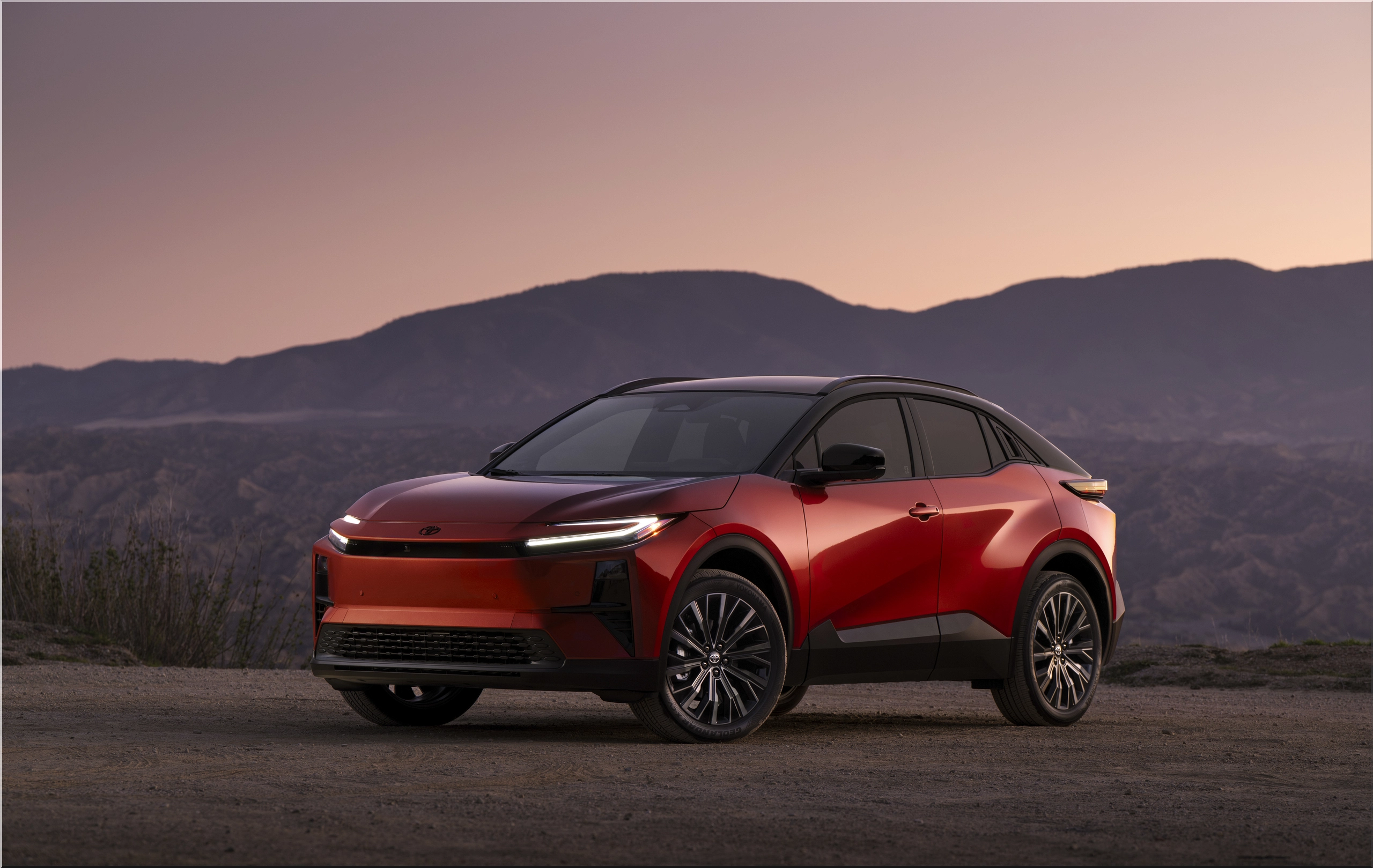
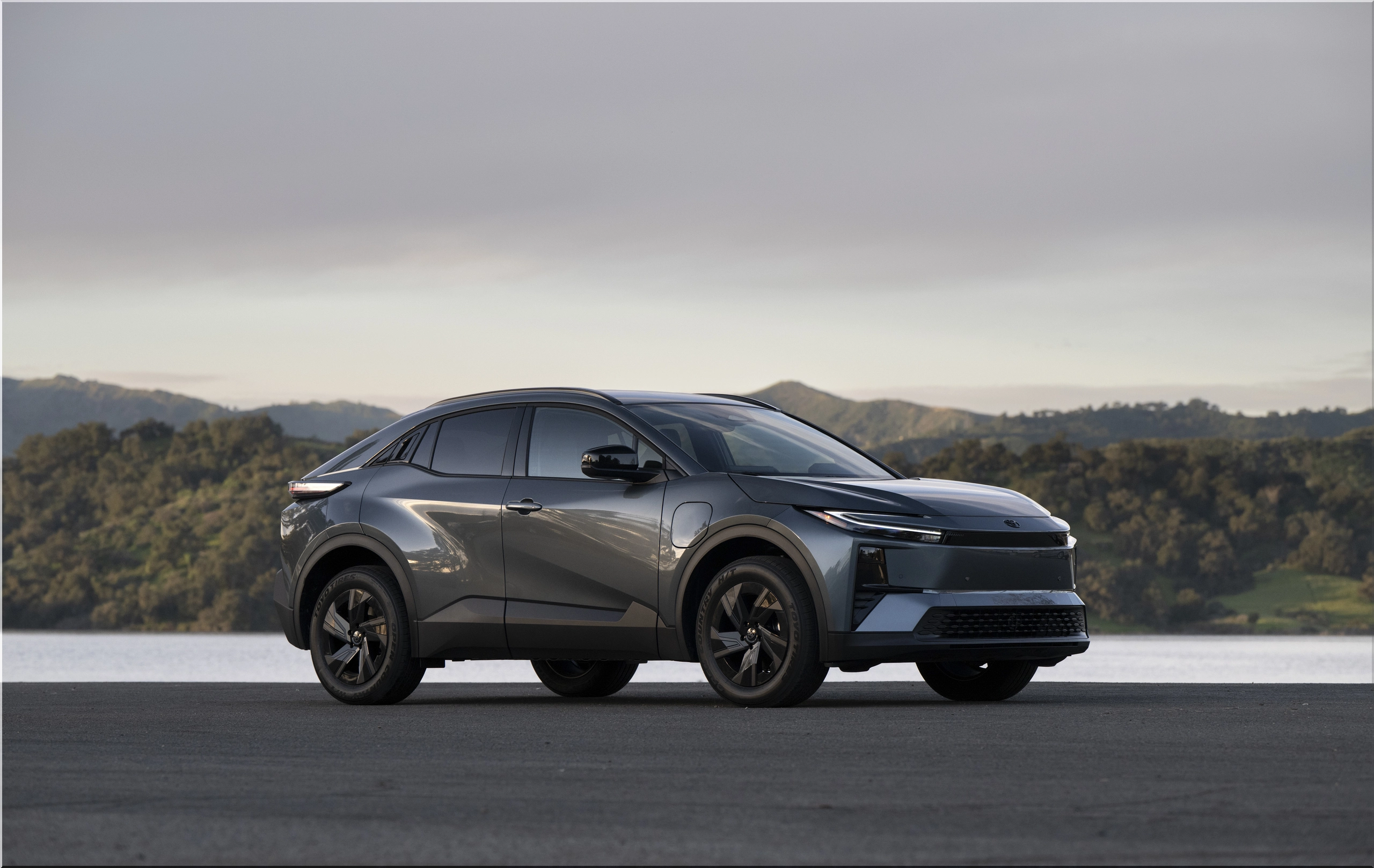
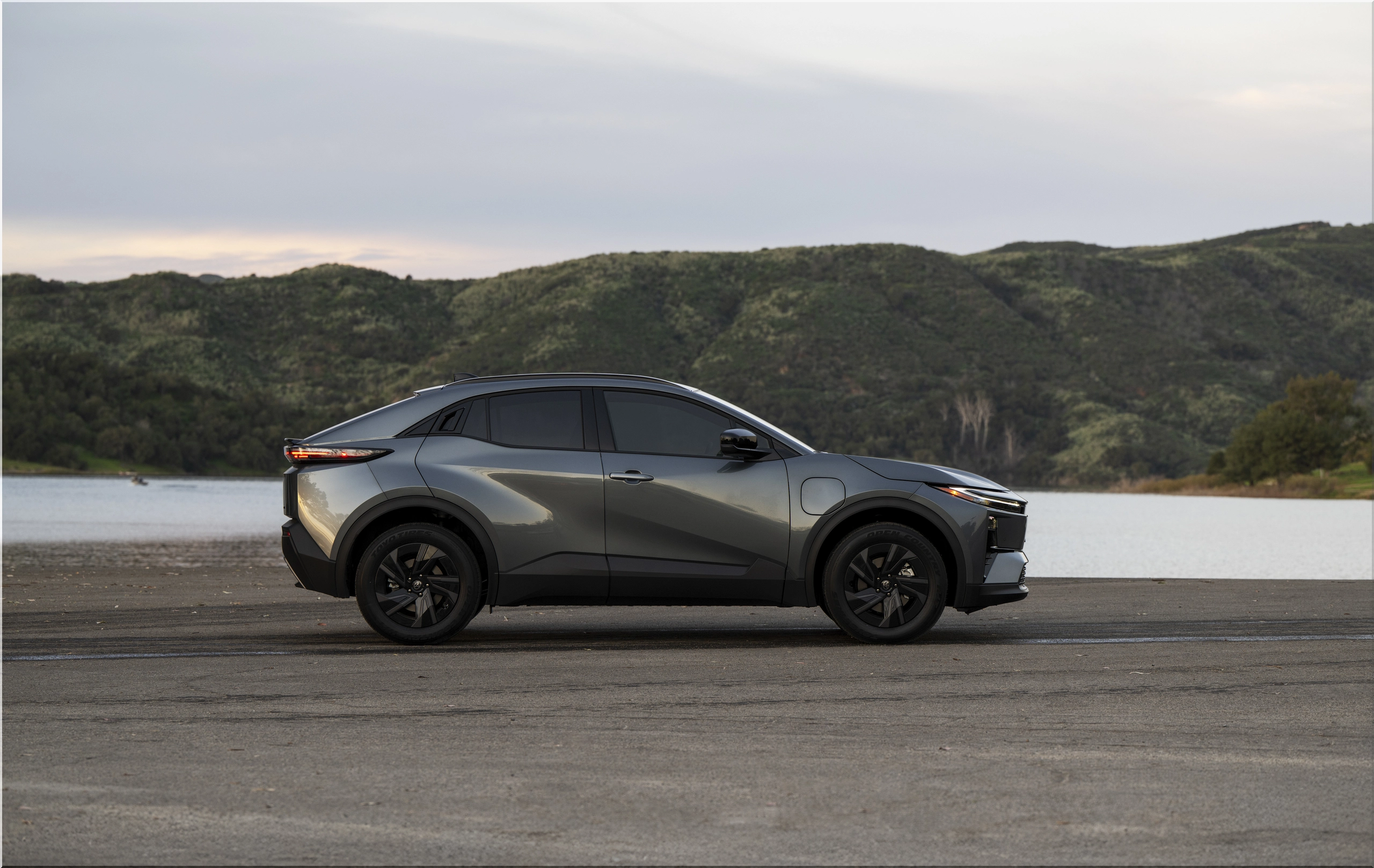
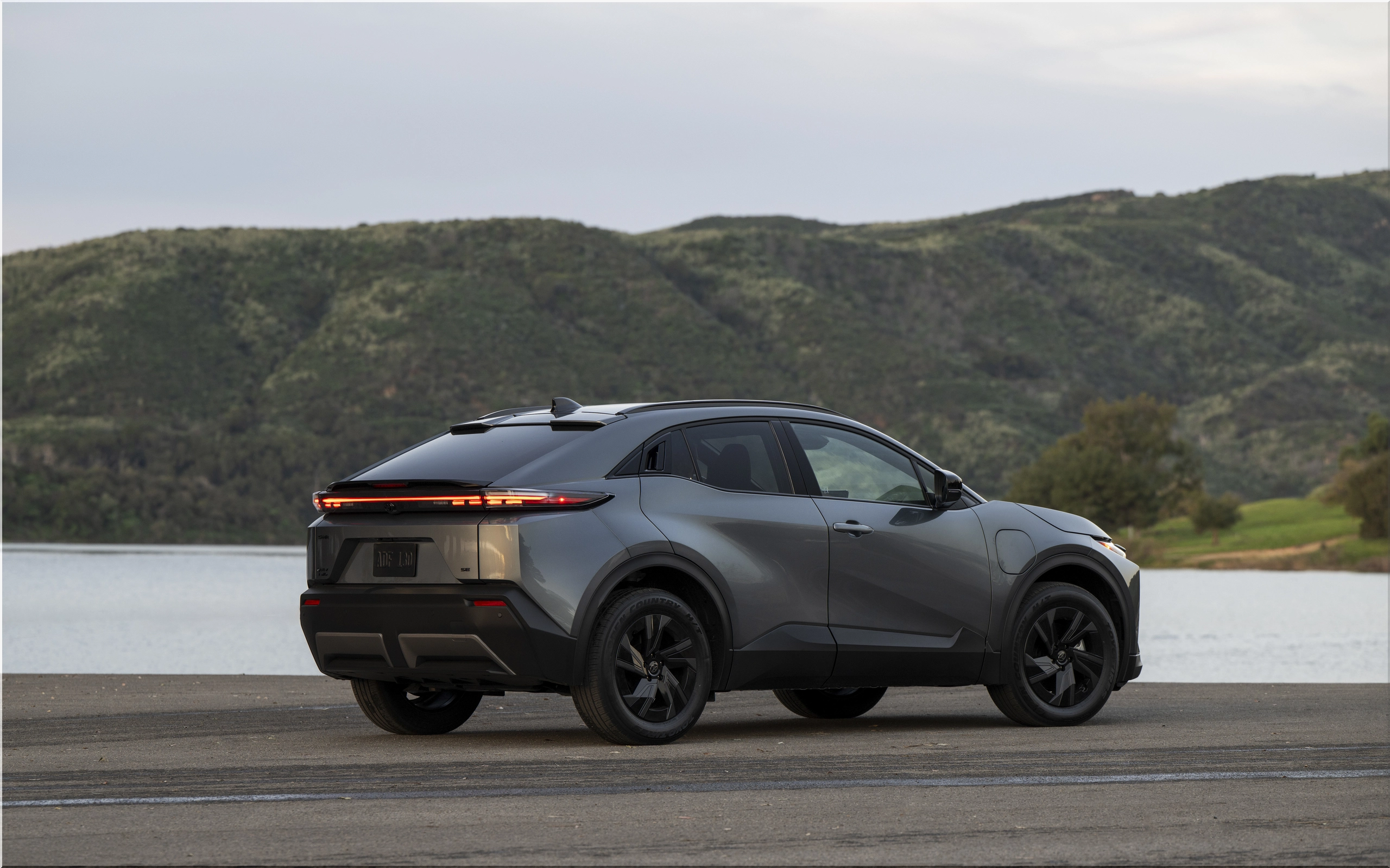
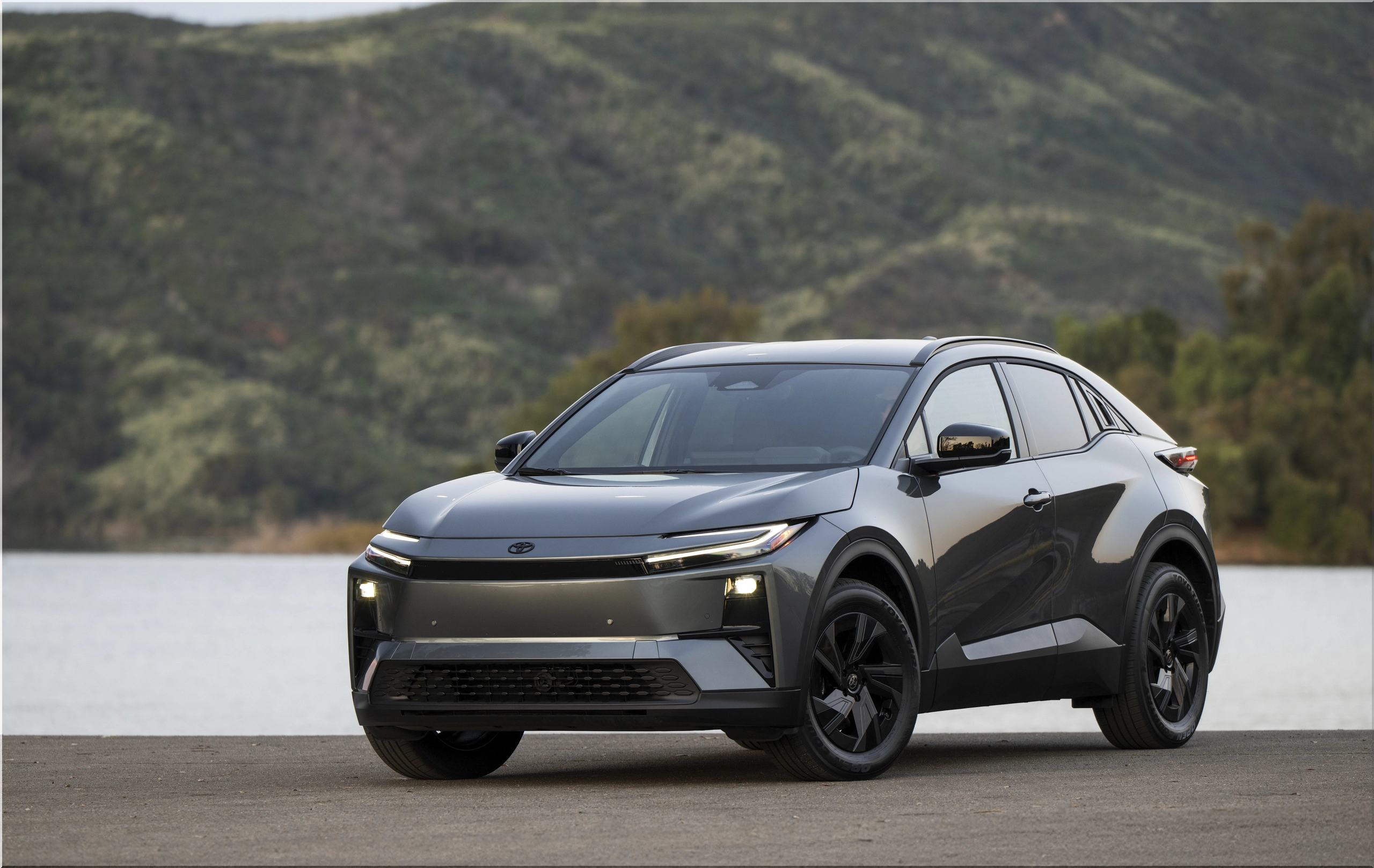
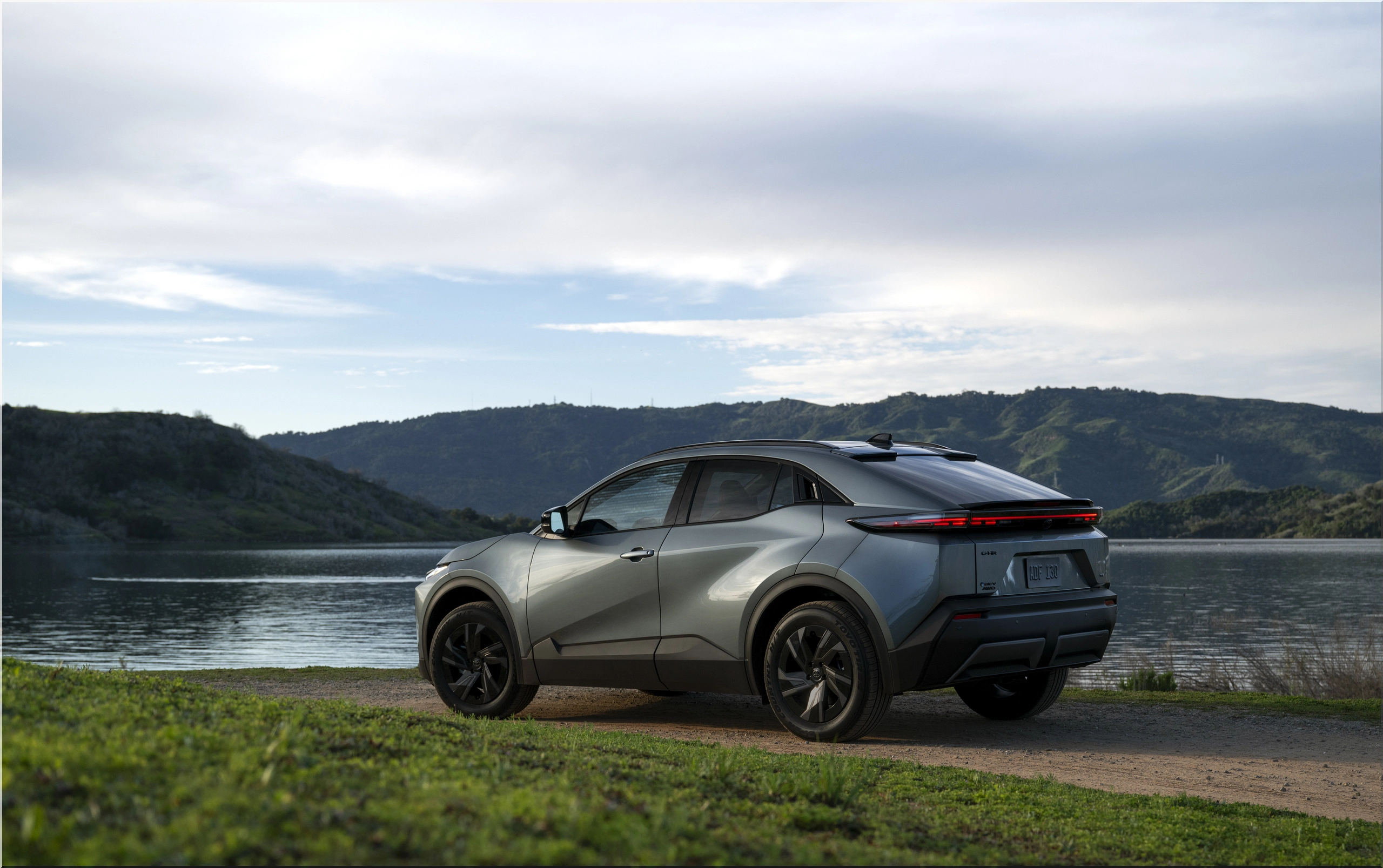
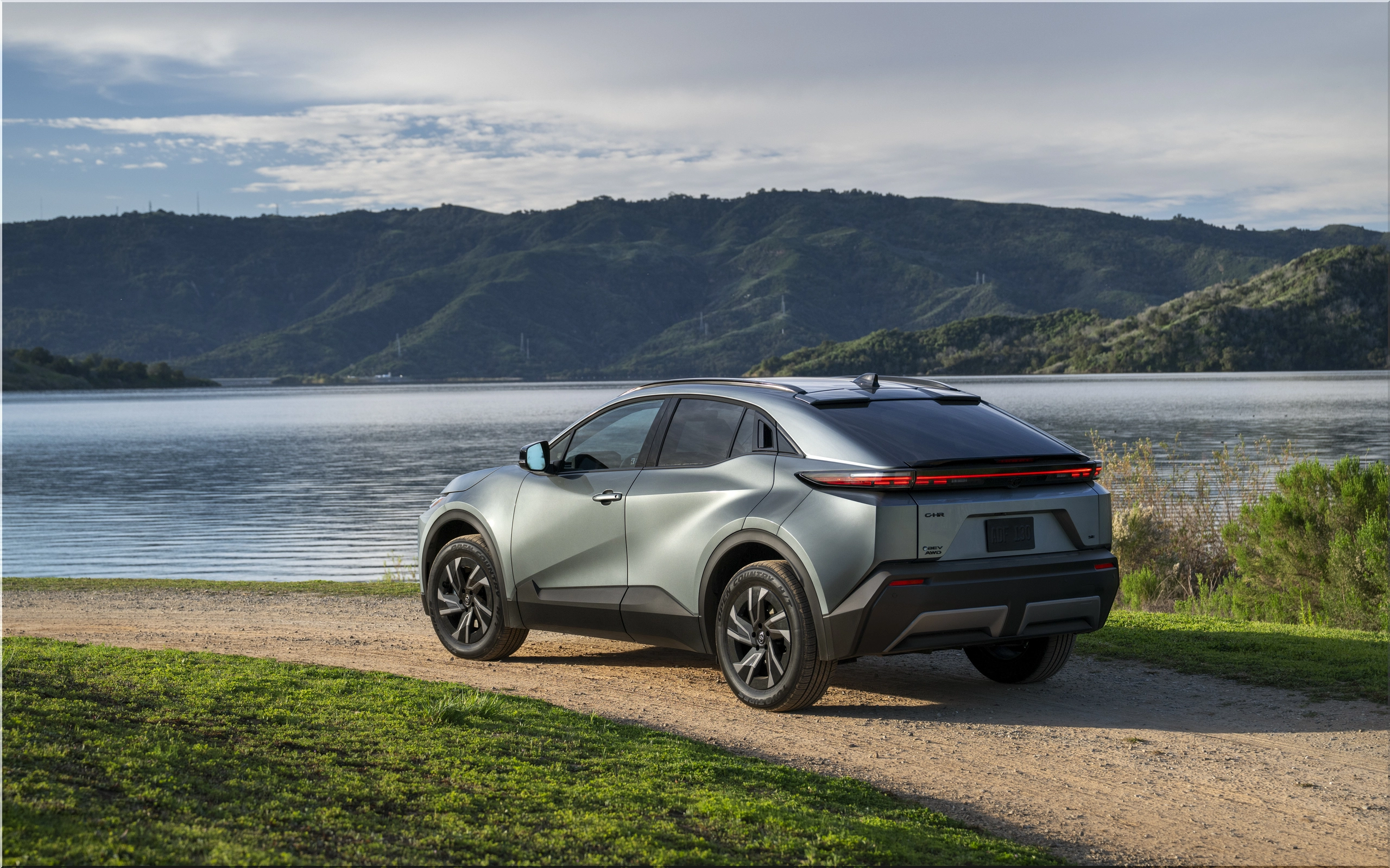
Toyota built the 2026 Toyota C-HR EV to land a specific punch: compact footprint, fast acceleration, and real-world range that does not require defensive driving or constant charger math. It runs dual electric motors, standard electronic all-wheel drive, and a 74.7-kWh lithium-ion battery. Toyota also packages a coupe-like roofline over a cabin that still holds usable cargo.
Image
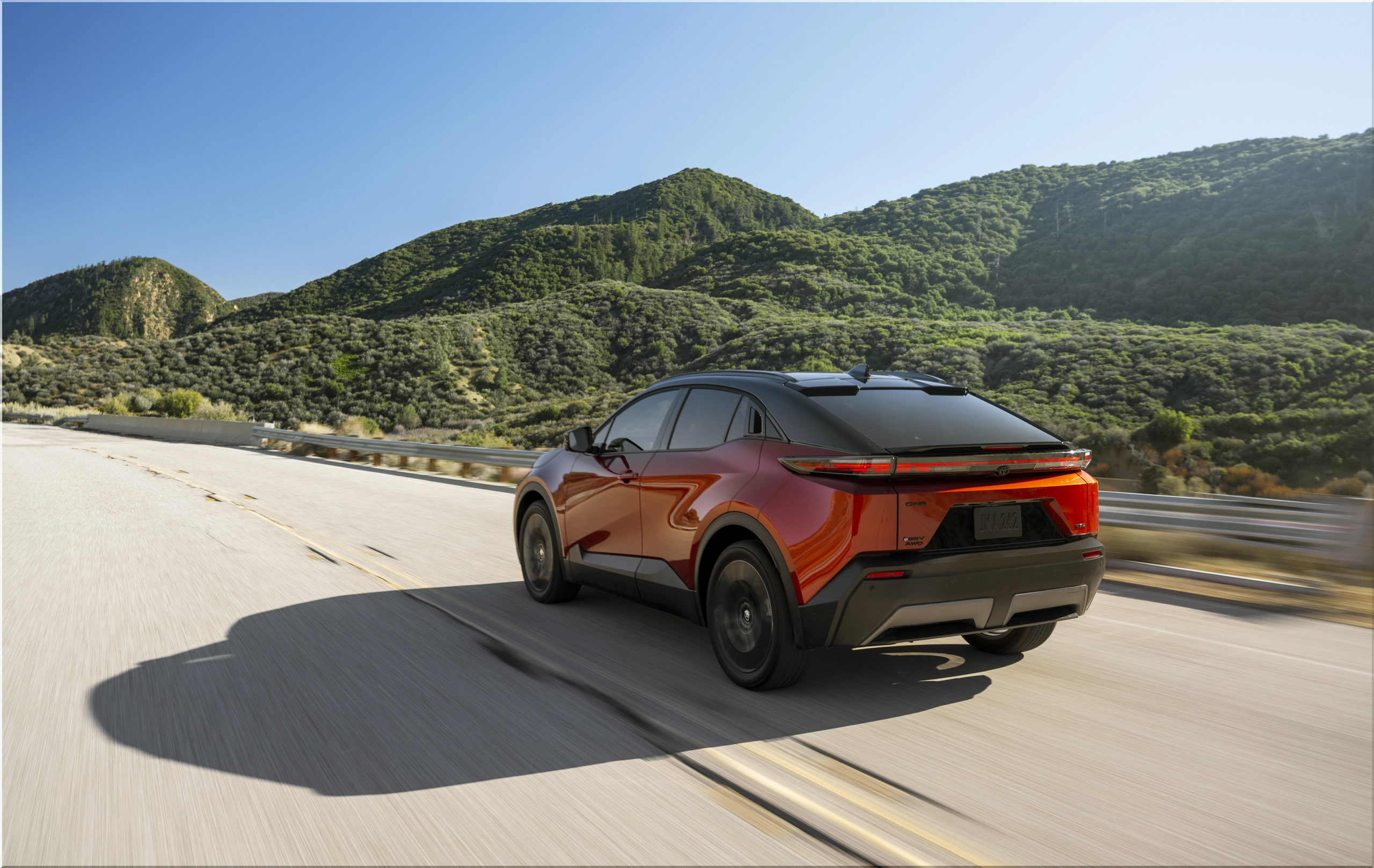
This approach targets buyers who want compact electric SUV efficiency without giving up straight-line pace. Looking at the data, the C-HR EV’s manufacturer-estimated 0 to 60 mph time of 4.9 seconds puts it in the quick lane for the segment. By comparison, many mainstream compact EV crossovers optimize for range first and acceleration second.
Toyota also made a strategic connector choice. Every 2026 Toyota C-HR EV uses a NACS charging port, which changes the ownership experience more than any single interior feature ever will.
Quick spec snapshot
You want the core numbers up front. Here they are.
- Powertrain: Dual-motor BEV, standard electronic AWD electric SUV setup
- Output: 338 combined system horsepower
- Motor torque: 198 lb-ft front, 125 lb-ft rear
- Battery: 74.7 kWh lithium-ion
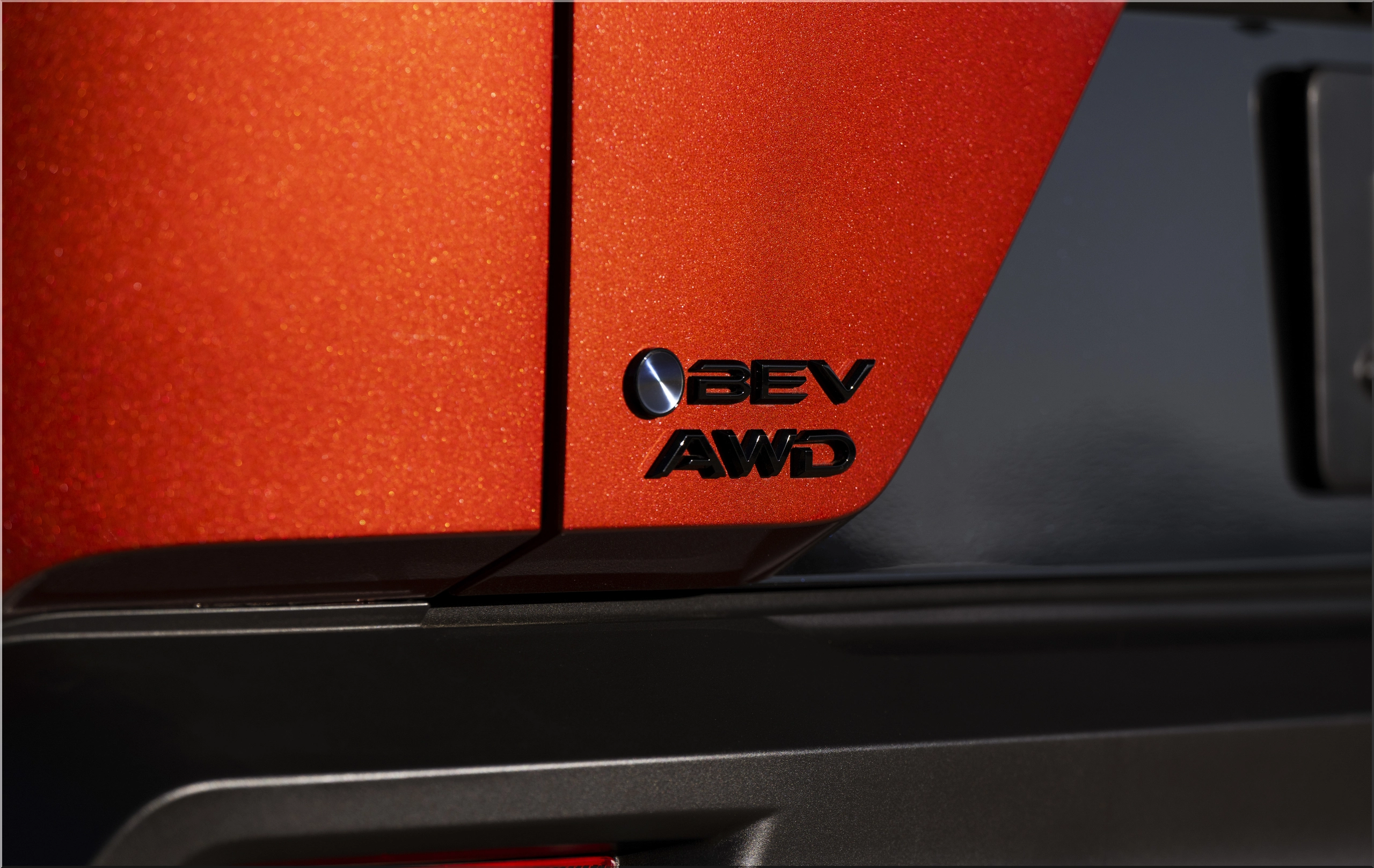
- Range: 287 miles (SE with 18-inch wheels), 273 miles (XSE with 20-inch wheels)
- Charging: 11-kW onboard AC charger, DC fast charge 10% to 80% in about 30 minutes (ideal conditions)
- Dimensions: 177.9 in length, 73.6 in width, 63.8 in height, 108.3 in wheelbase
- Cargo volume: 25.3 cu ft behind rear seats, 59.5 cu ft with rear seats folded
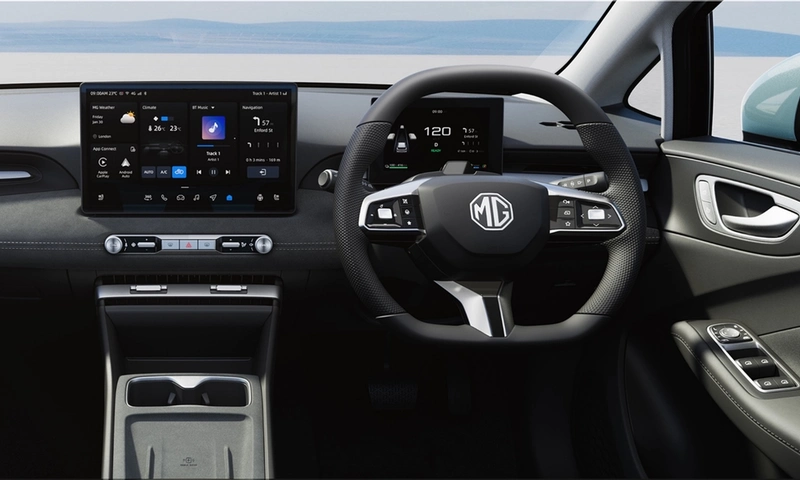
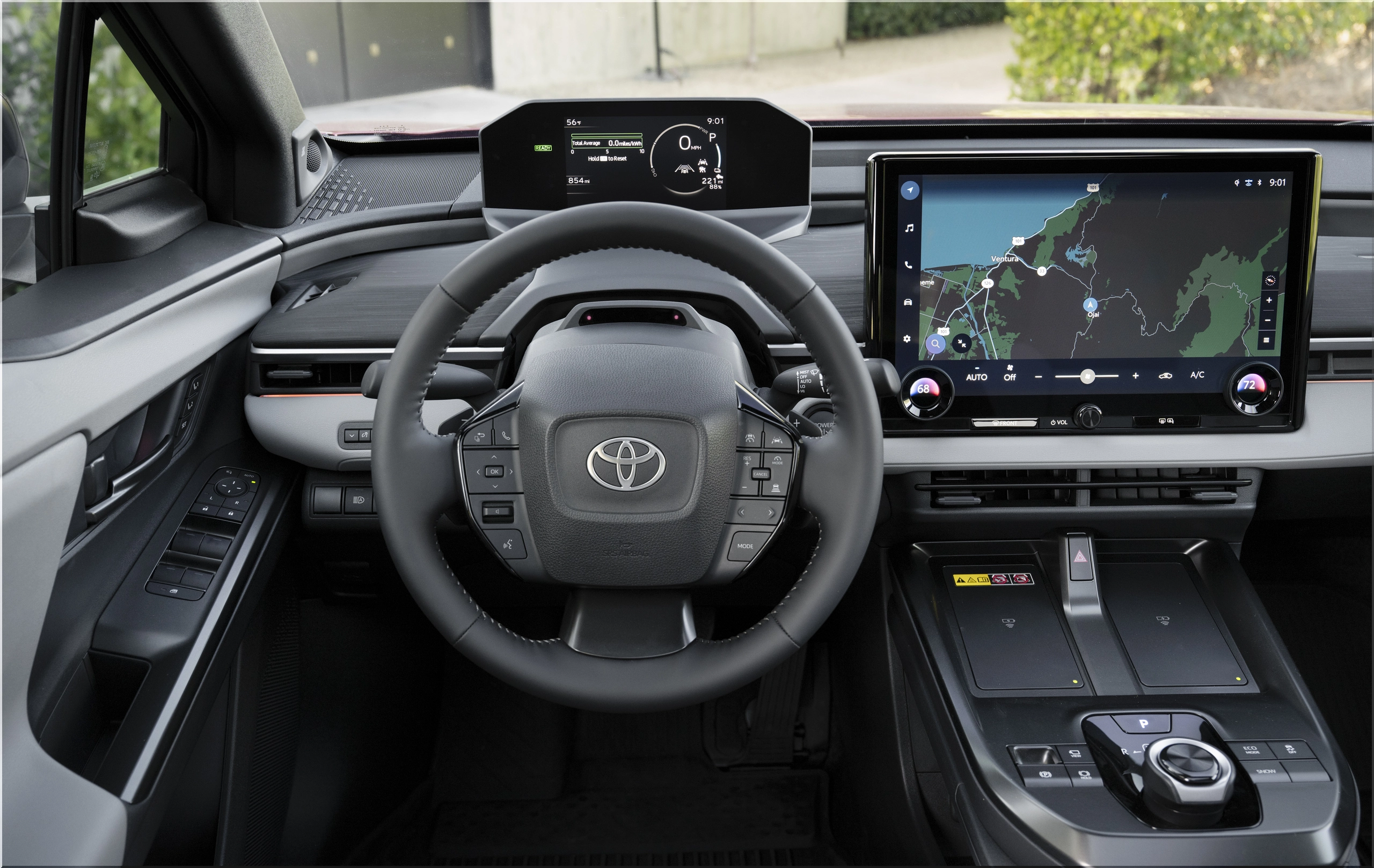
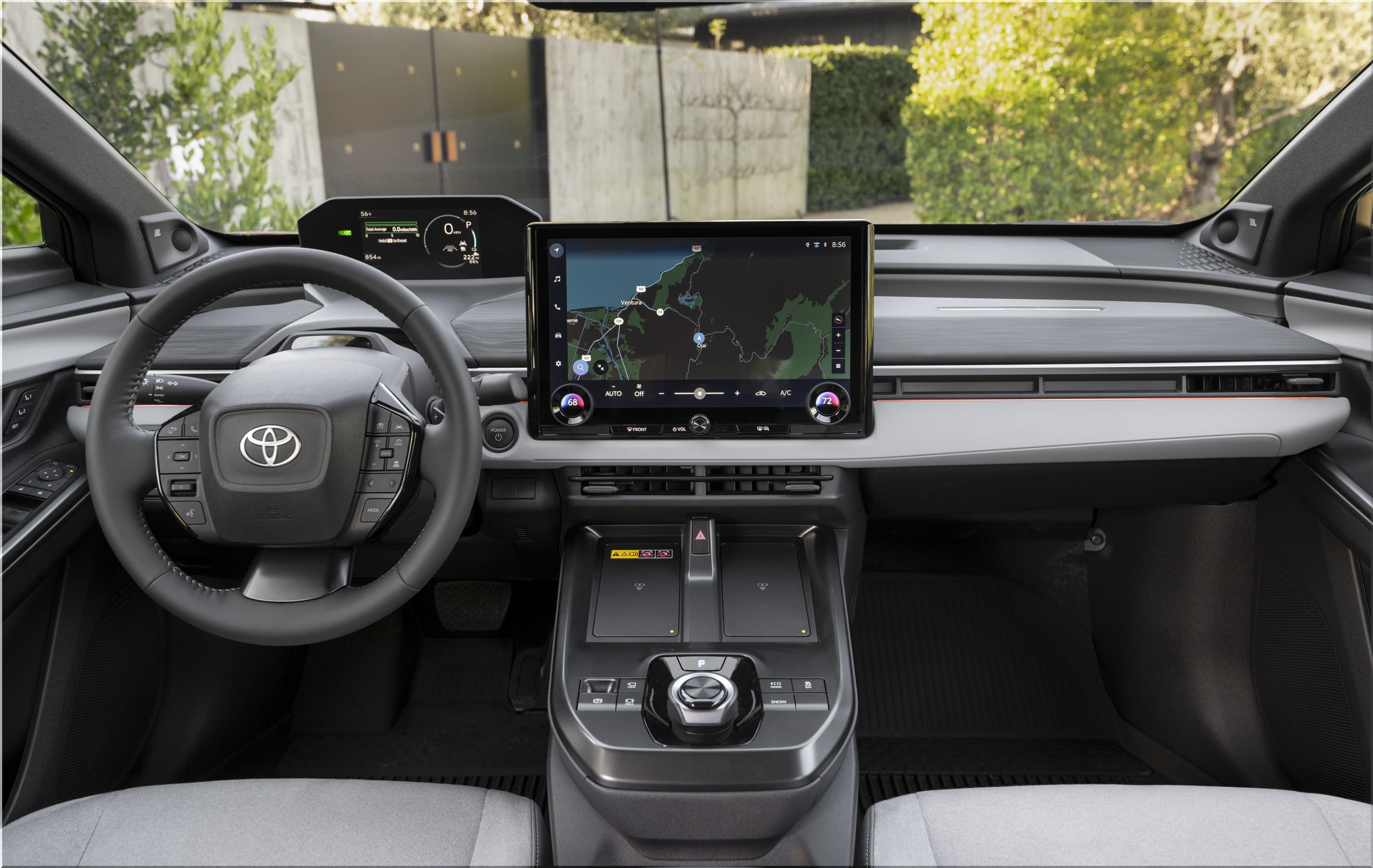
- Infotainment: 14-inch touchscreen standard
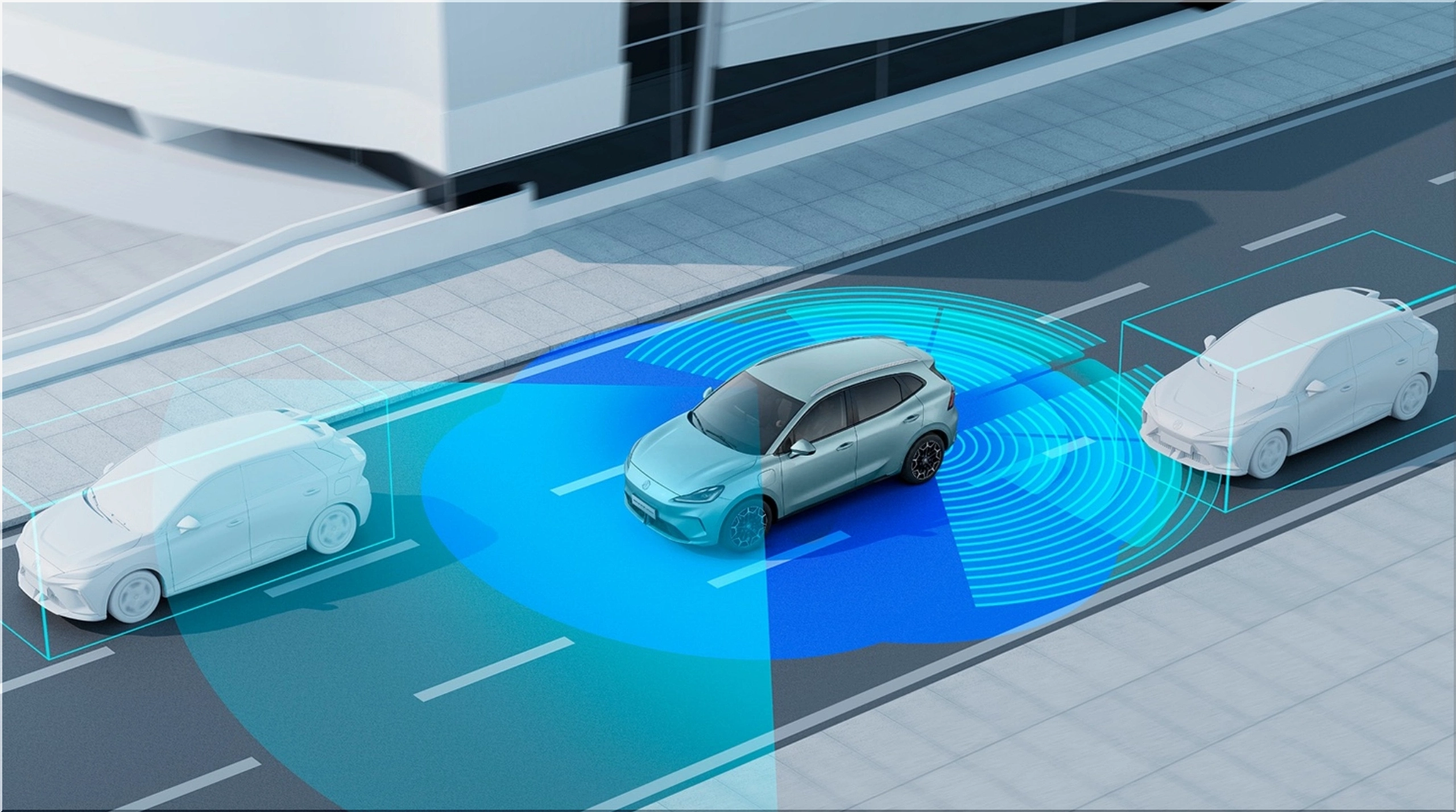
- Safety suite: Toyota Safety Sense 3.0 feature set plus additional driver assists
Where the 2026 Toyota C-HR EV fits in Toyota’s EV plan
Toyota positions the C-HR EV as part of a growing U.S. battery-electric lineup, alongside the revised bZ and the bZ Woodland. Specifically, Toyota continues its multi-pathway approach across the broader lineup, offering a mix of BEV, hybrid, plug-in hybrid, and fuel cell options in different regions.
That context matters because it shapes the engineering. A brand that commits to one single propulsion type often tunes every vehicle around one mission. Toyota tunes the C-HR EV to feel like a sporty crossover first, then layers range, charging access, and safety tech to support daily use.
e-TNGA platform basics and the low center of gravity advantage
Toyota builds the C-HR EV on its dedicated e-TNGA battery-electric platform. That platform choice sets the physical layout: the battery lives under the floor, and the electric drive units live at the axles. Consequently, Toyota can keep mass low and spread it across the wheelbase, which changes how the vehicle responds to steering, braking, and quick lane changes.
Toyota also surrounds the underfloor battery pack with a cross-framing structure to improve overall rigidity. A stiffer body structure does not exist for marketing. It exists to give the suspension predictable mounting points, so the dampers and anti-roll bars can do their job without the body twisting around them.
Definitions: eAxle and why it matters
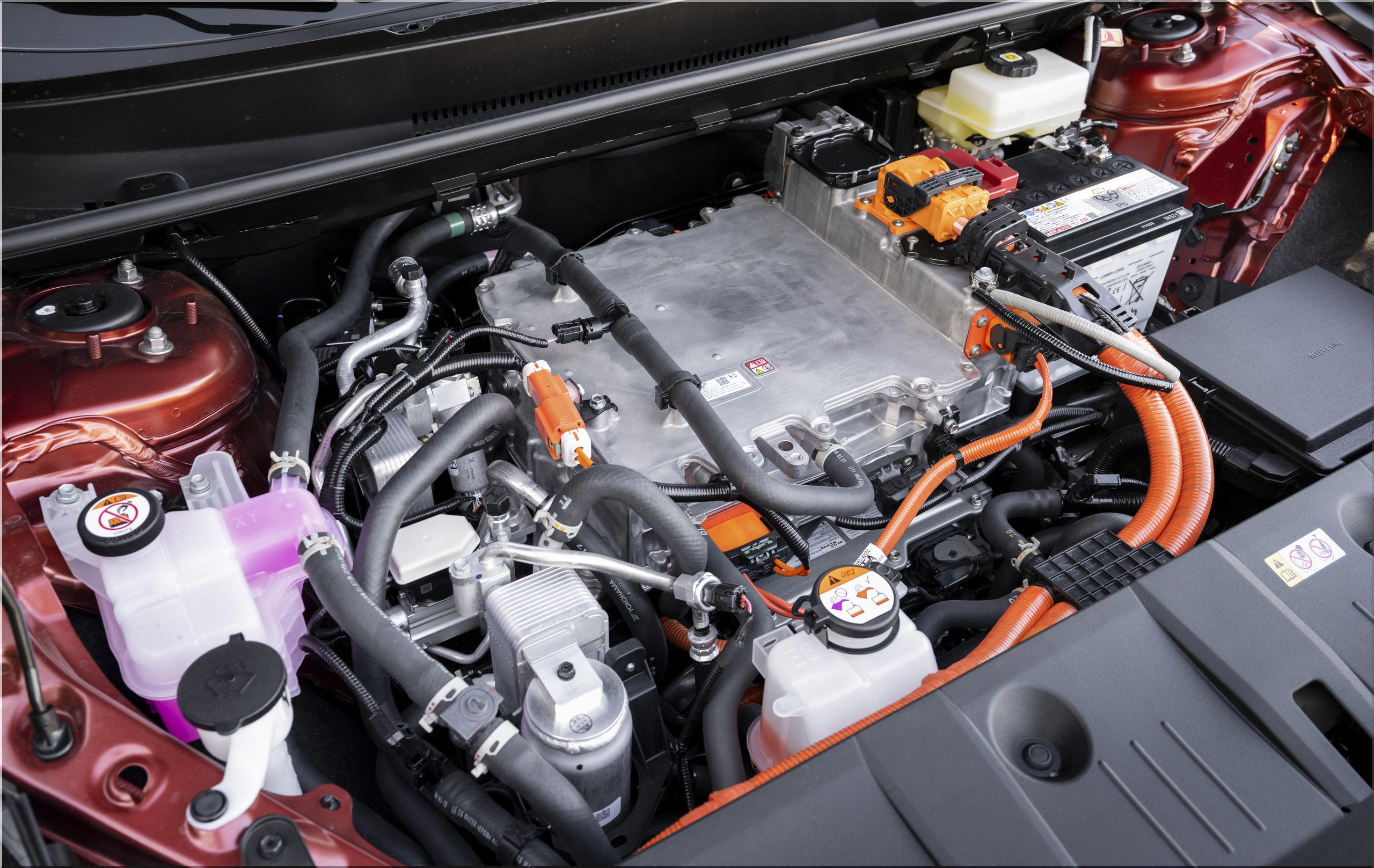
eAxle means Toyota integrates the electric motor, reduction gearing, and related hardware into a compact drive unit at the axle. That packaging reduces complexity versus routing power through long mechanical driveline components. It also supports fast torque delivery because the system does not wait on gear shifts or torque converter behavior.
Video file
Video title
Toyota C-HR EV 2026
Performance: 338 horsepower and what torque numbers tell you
Toyota quotes 338 combined system horsepower with electric motors housed in the front and rear eAxles. It also lists motor torque at 198 lb-ft front and 125 lb-ft rear.
Those torque numbers serve as a directional clue rather than a full torque curve. Electric motors deliver peak torque quickly, then taper as motor speed rises and the system shifts from torque-limited to power-limited operation. From an expert perspective, the front-heavy torque split suggests Toyota tunes the C-HR EV for predictable, stable traction at everyday speeds, then uses the rear motor to add grip and rotate the vehicle under load when conditions demand it.
Image
Why 0 to 60 mph in 4.9 seconds changes the segment conversation
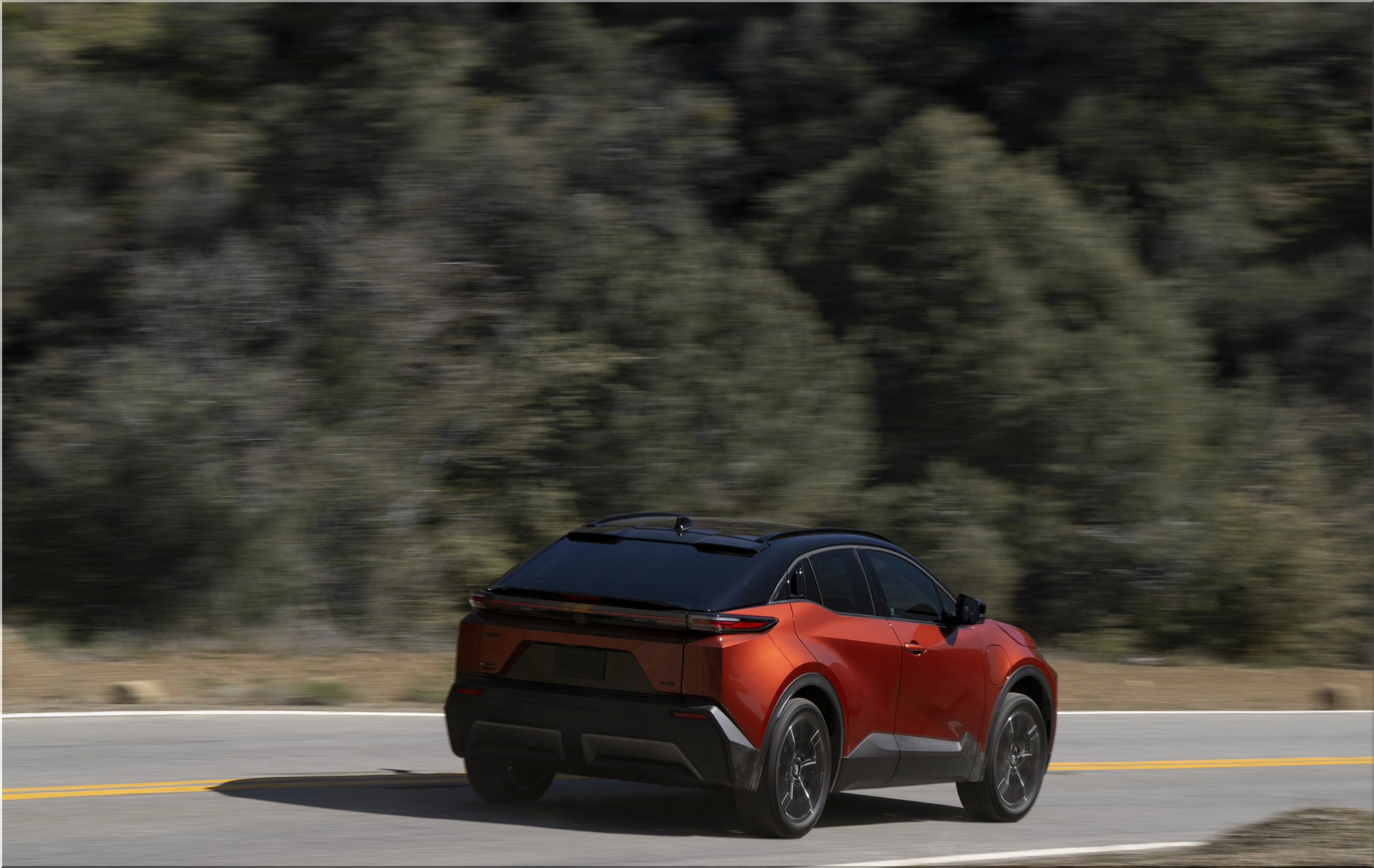
A 4.9-second 0 to 60 mph time pushes the C-HR EV into “quick commuter” territory. That matters in three real scenarios:
- Short on-ramps: You merge at speed without burying the accelerator for a full ramp length.
- Two-lane passing: You complete passes with less time spent in the oncoming lane.
- Weather traction: AWD and instant torque help the vehicle move cleanly from a stop on wet pavement.
Toyota pairs that pace with suspension tuning focused on spring and damper performance and anti-roll bar stiffness. That detail signals intentional chassis calibration rather than a generic “EV softness” setup.
Dimensions and packaging: inches, millimeters, and what they mean in the real world
Toyota gives full exterior measurements, and those numbers help you picture how the C-HR EV will park, maneuver, and fit in a garage.
- Overall length: 177.9 in (4518.7 mm)
- Overall width: 73.6 in (1869.4 mm)
- Overall height: 63.8 in (1620.5 mm)
- Wheelbase: 108.3 in (2750.8 mm)
A wheelbase over 108 inches in a vehicle under 178 inches long typically supports decent cabin space because the wheels push toward the corners. By comparison, shorter wheelbases often force tighter rear legroom and less stable highway tracking.
Cargo volume: the coupe roofline does not kill usability
Toyota lists:
- 25.3 cu ft behind the 60/40 split-folding rear seats
- 59.5 cu ft with the rear seats folded flat
That second number matters most. It means the C-HR EV supports real cargo missions like boxed furniture, airport runs, and weekend gear, even with a more aggressive roofline than a traditional upright crossover.
Battery and range: 74.7 kWh, wheel size penalties, and why Toyota offers two range figures
Toyota uses a 74.7-kWh lithium-ion battery and quotes two EPA-estimated ranges tied to wheel size and grade:
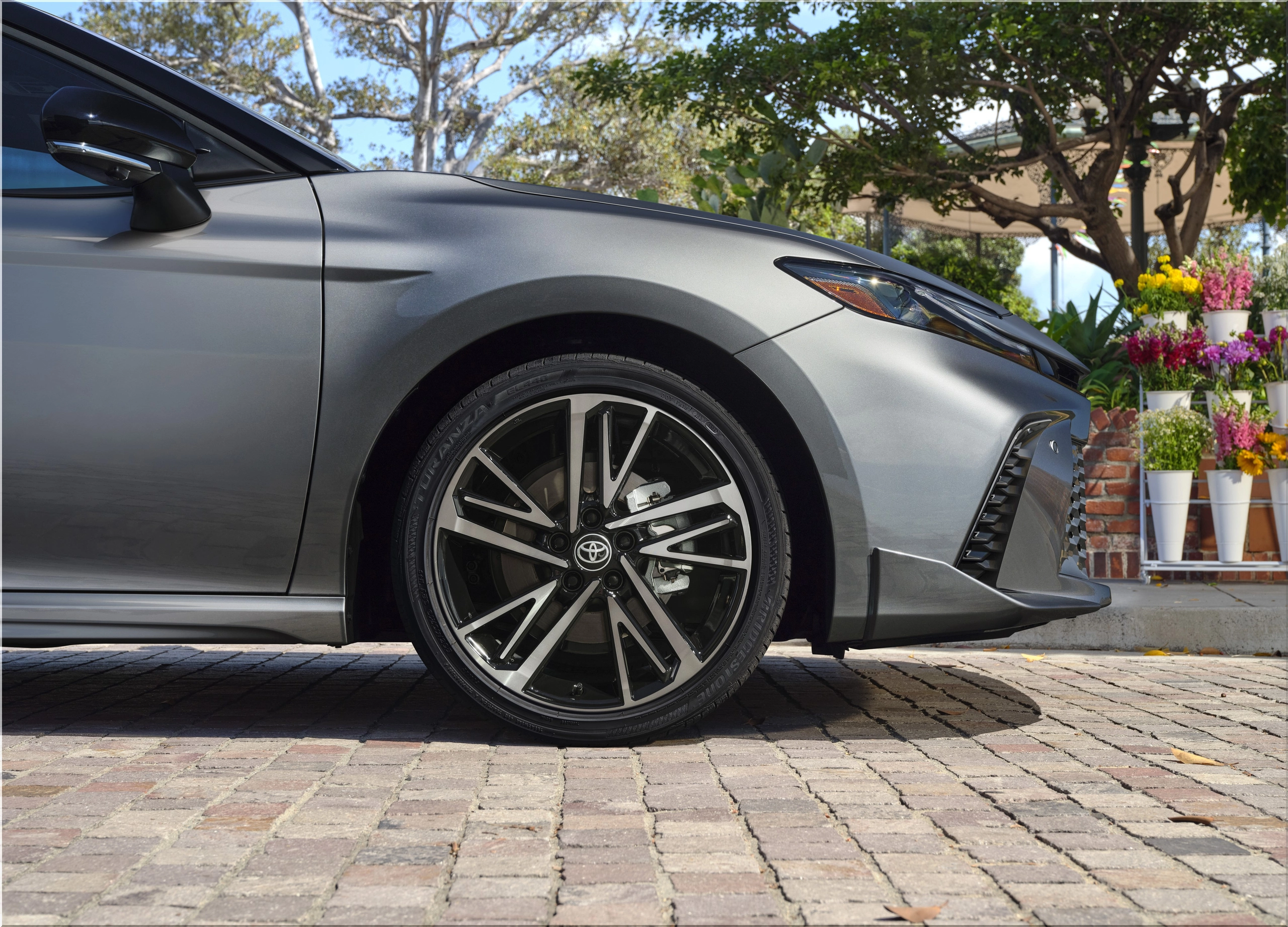
- SE with 18-inch wheels: 287 miles
- XSE with 20-inch wheels: 273 miles
Bigger wheels typically reduce range for three reasons:
- Mass: Larger wheel and tire packages often weigh more, which raises energy demand during acceleration.
- Rolling resistance: Wider performance-focused tires can increase rolling losses.
- Aerodynamics: Wheel design and tire width can increase drag.
Looking at the data, the 14-mile spread between SE and XSE reads like a typical wheel-and-tire efficiency trade.
Pro-Tip: Use wheel size as a range lever
If you prioritize highway range consistency, start with the 18-inch wheel configuration. If you prioritize stance, grip, and sharper turn-in, the 20-inch setup fits that mission. Treat it as a dial, not a mistake.
Charging: NACS access, 11-kW AC charging, and the 10% to 80% claim
Toyota installs an 11-kW onboard AC charger and a NACS charging port capable of Level 3 DC fast charging.
Toyota states the C-HR EV can charge from 10% to 80% in around 30 minutes under ideal conditions. DC fast charging performance depends on battery temperature, charger power, and the pack’s charge curve. Consequently, Toyota also includes battery preconditioning to bring the pack to an optimal temperature for DC fast charging.
Battery preconditioning: the engineering logic
Fast charging generates heat inside the battery cells. Cold cells also resist rapid charging. Preconditioning warms or stabilizes the pack to a temperature window that supports higher charging power without stressing the chemistry. That improves charging speed consistency and supports better road-trip pacing.
Toyota allows manual activation through settings or automatic activation when you route navigation to a fast-charging station, depending on connected services status.
Regenerative braking control: paddles and four levels
Toyota adds steering wheel-mounted paddle shifters that adjust regenerative braking across four levels. Regenerative braking converts vehicle kinetic energy into electrical energy stored back in the battery. In daily driving, regen level choice impacts both efficiency and pedal feel:
- Higher regen can reduce brake pedal use in traffic.
- Lower regen can improve smoothness at highway speeds.
Pro-Tip: Match regen level to your route
- City stop-and-go: use higher regen for energy recovery and reduced brake wear.
- Wet roads: reduce regen if you feel abrupt deceleration at lift-off.
- Highway commuting: use a moderate regen level for predictable coasting behavior.
Trim strategy: SE vs XSE and what changes with the upgrade
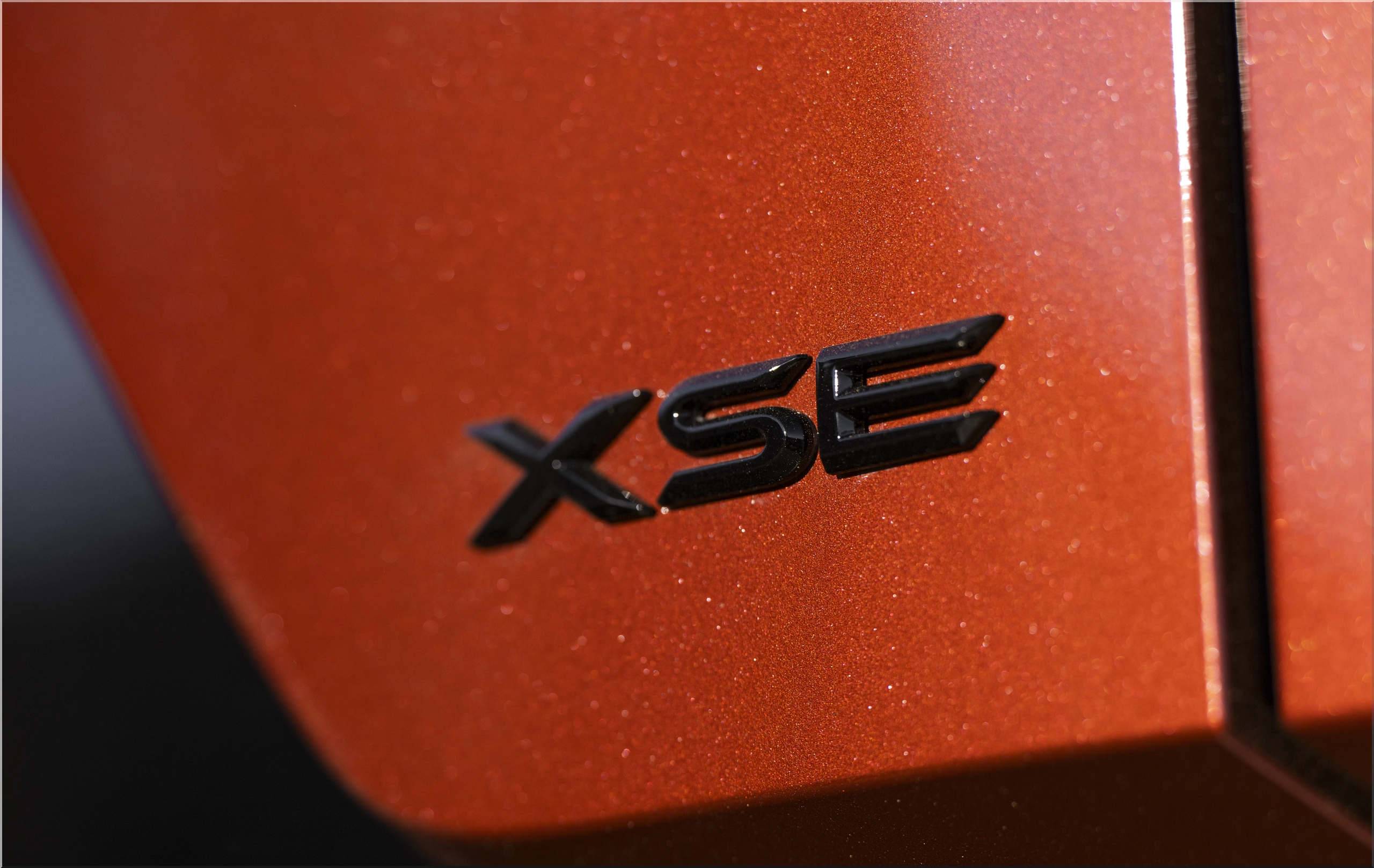
Toyota offers two grades: SE and XSE. Both carry the core hardware, including AWD, battery size, the 14-inch touchscreen, and key safety systems. The XSE adds equipment that targets convenience, camera coverage, and driver assist depth.
Image
Trim comparison table: 2026 Toyota C-HR EV SE vs XSE
| Spec or Feature | C-HR EV SE | C-HR EV XSE |
|---|---|---|
| EPA-estimated range | 287 miles | 273 miles |
| Wheels | 18-inch with black inserts | 20-inch gunmetal-finished |
| Powertrain | Dual-motor AWD, 338 hp | Dual-motor AWD, 338 hp |
| Battery | 74.7 kWh | 74.7 kWh |
| AC charging | 11-kW onboard | 11-kW onboard |
| Touchscreen | 14-inch | 14-inch |
| Wireless chargers | Two front Qi chargers | Two front Qi chargers |
| USB ports | Four USB-C total | Four USB-C total |
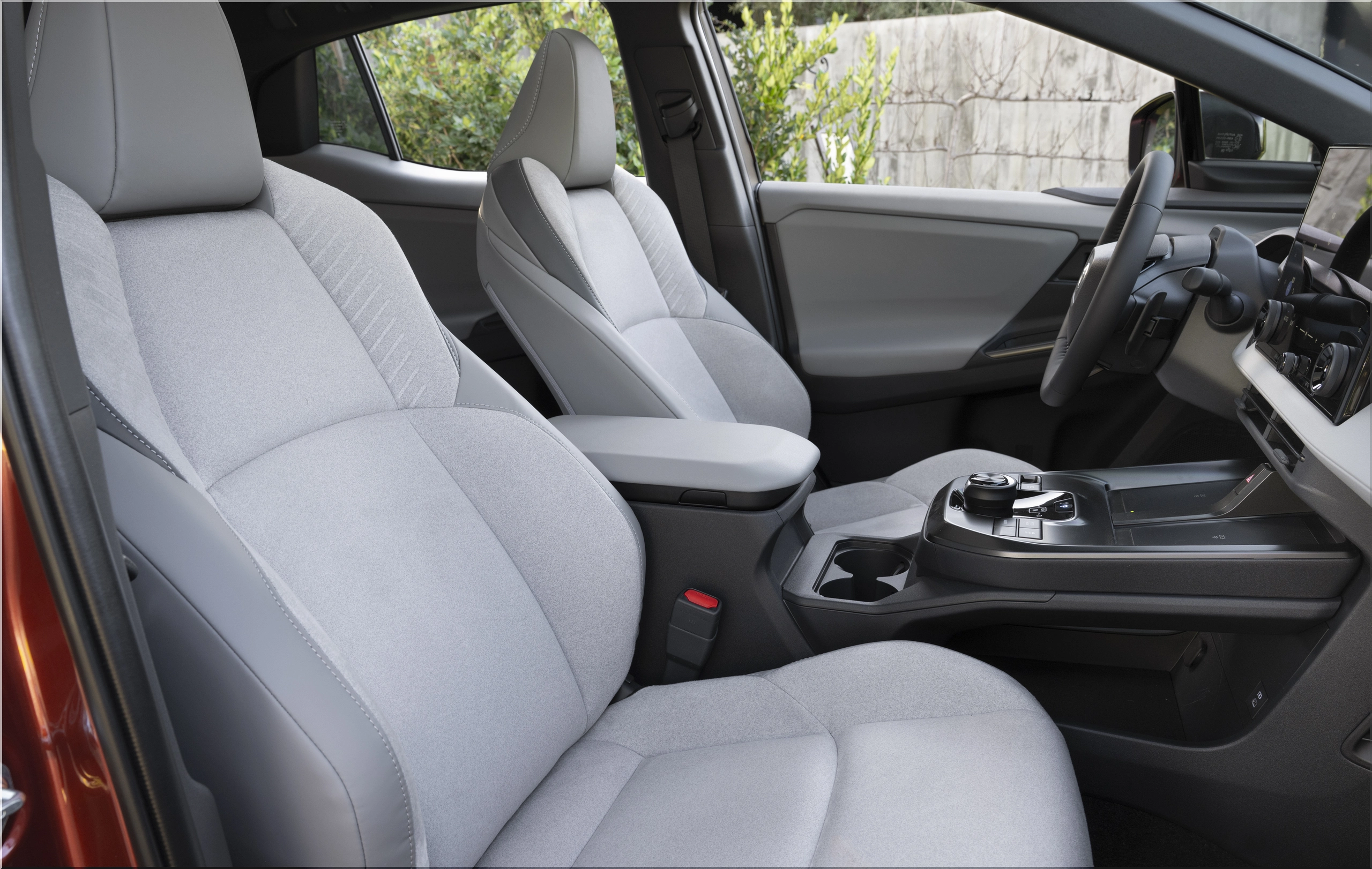
| Seat trim | Fabric and SofTex mix | SofTex plus synthetic suede |
| Front passenger power seat | Manual | 8-way power |
| Driver memory | Not listed | Included |
| Camera tech | Not listed | Panoramic View Monitor |
| Driver assist additions | Core suite | Traffic Jam Assist, Lane Change Assist |
What the grade split really signals
Toyota uses SE to deliver the best range figure and a full tech baseline. Toyota uses XSE to sell a more premium cabin and add higher-level driver assistance and camera support. That pattern matches how many EV buyers shop: they pick the range number first, then decide how much driver assist and cabin finish they want.
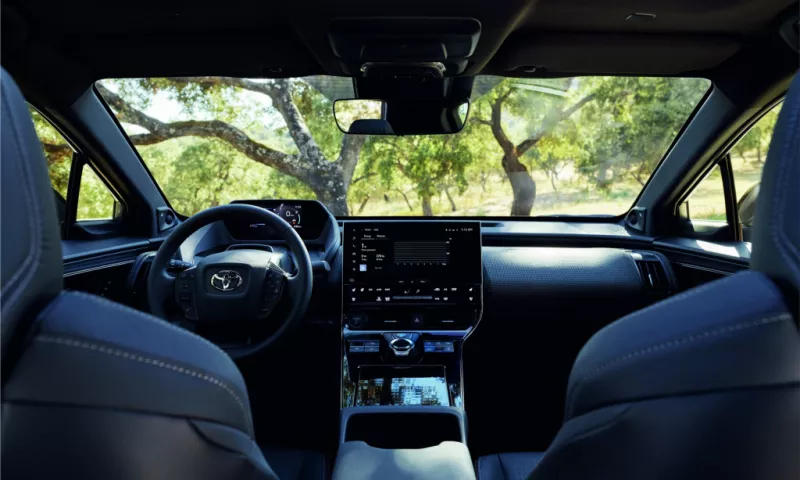
Interior and infotainment: 14 inches standard and a cabin built around charging-era habits
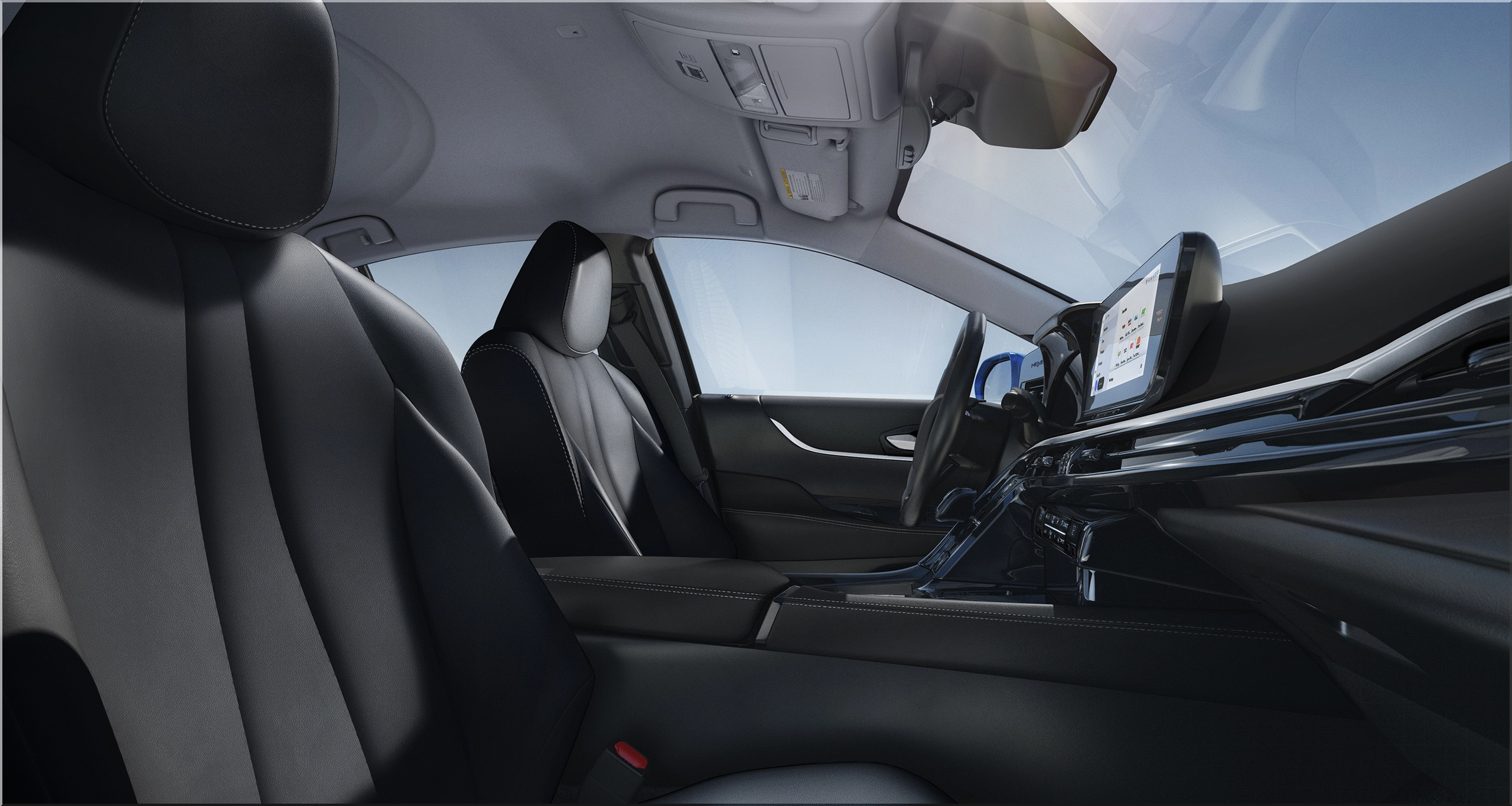
Toyota designs the cabin with a slim driver display and an easy-to-access center console. It also adds customizable ambient lighting, which does not add performance but does change perceived refinement at night.
Toyota also builds the interior around device charging and passenger power needs:
- Two wireless smartphone chargers up front
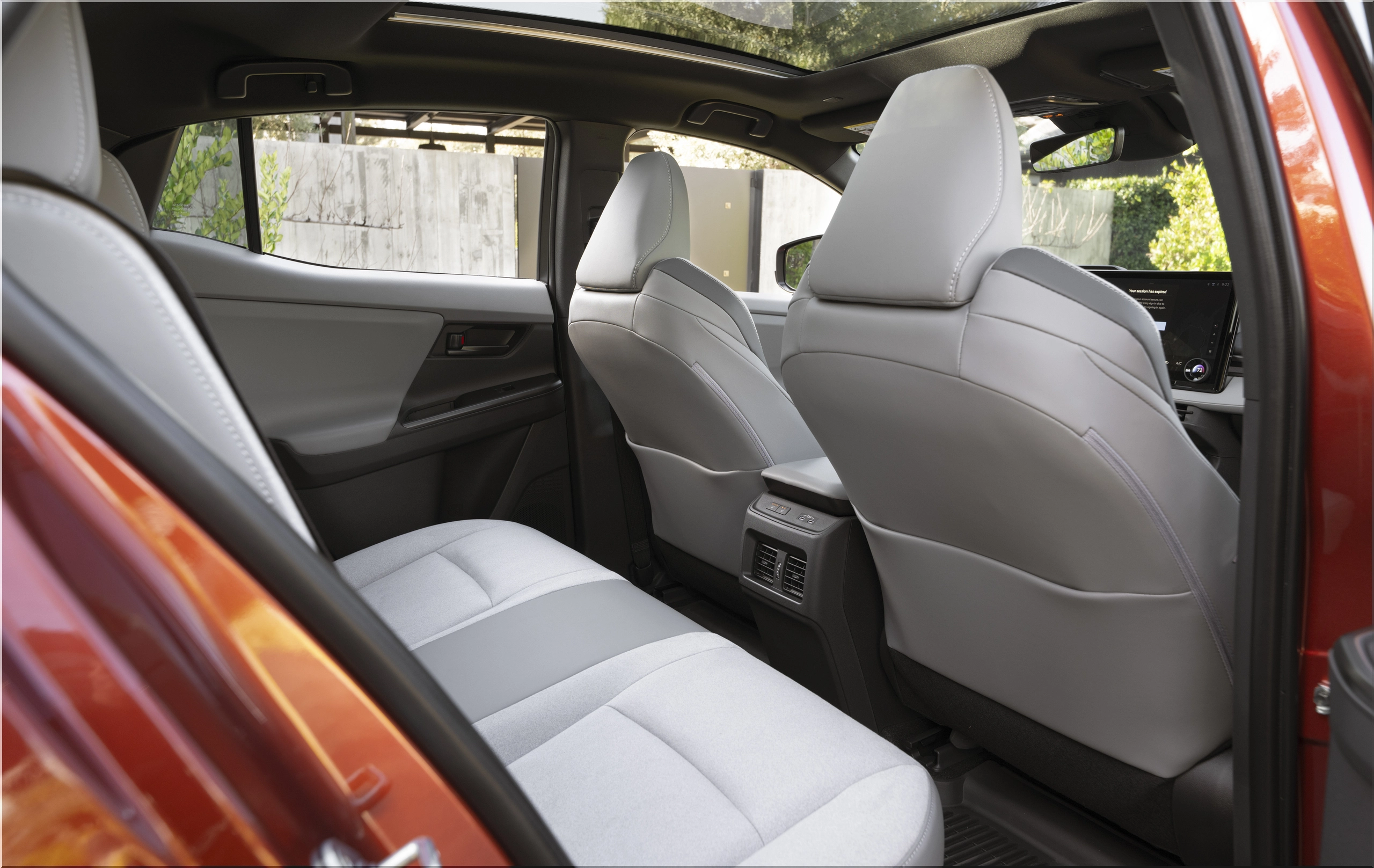
- Rear cabin USB ports
- Rear cabin air conditioning controls
- Available panoramic roof for more light across the cabin
Connected services and voice control
Toyota bundles a connected services trial that supports voice activation, cloud-based navigation, destination assistance, and remote app functions. The practical value comes down to two tasks:
- You route to chargers and points of interest without fiddling with your phone.
- You manage charging status and cabin climate remotely when the vehicle sits plugged in.
Audio and phone integration
Toyota fits a six-speaker audio system standard and offers a premium audio upgrade on XSE with an external amplifier and subwoofer. The infotainment system supports wireless smartphone integration for major phone platforms and dual Bluetooth phone connectivity.
Safety and driver assistance: what comes standard and what it actually does
Toyota includes a broad active safety and driver assist feature set, plus additional systems like Blind Spot Monitor with Rear Cross-Traffic Alert and Safe Exit Alert. It also includes a stability and traction system suite.
Here’s what matters for daily driving dynamics:
- Pre-collision braking support helps reduce severity in forward-impact scenarios.
- Adaptive cruise control manages distance on highways.
- Lane support features reduce drift and support lane centering when conditions allow.
- Proactive assist behaviors can add gentle braking or steering support in select situations.
Toyota also lists multiple battery safety measures, including redundant monitoring of voltage, current, and temperature, plus thermal management design details aimed at maintaining battery temperature and reducing risk during high-load driving and rapid charging cycles.
Definitions: Plug and Charge
Plug and Charge allows the vehicle to identify itself at supported charging networks and begin a charging session without repeated app logins and payment handoffs. It streamlines public charging when the network supports the protocol.
Warranty and maintenance coverage: how Toyota frames EV ownership risk
Toyota includes:
- A basic new-vehicle warranty at 36 months or 36,000 miles
- Additional coverage for powertrain and corrosion terms
- EV driving components coverage, including the traction battery, at 8 years or 100,000 miles
- A ToyotaCare plan that covers scheduled maintenance for 2 years or 25,000 miles and roadside assistance for 3 years
That set of terms helps reduce perceived risk for first-time EV buyers. It also supports resale confidence because coverage often remains transferable within warranty limits.
Competitive landscape: where the C-HR EV wins and where it gives up ground
The compact electric SUV field stays crowded. Brands chase range, price, or performance, and very few hit all three. The C-HR EV enters with a clear angle: standard AWD and 338 hp in a compact footprint, paired with a modern charging connector choice.
To ground the comparison, here is a segment-level table against three high-volume nameplates that shoppers cross-shop for price, range, and practicality.
Competitor comparison table: performance, battery, and range
| Model | Drivetrain focus | Power (hp) | Battery (kWh) | EPA-estimated range (mi) |
|---|---|---|---|---|
| 2026 Toyota C-HR EV (SE) | Standard AWD | 338 | 74.7 | 287 |
| Chevrolet Equinox EV (FWD configuration) | Value range play | 220 | 85 | 319 |
| Hyundai Kona Electric (long-range trims) | Efficiency + compact size | 201 | 64.8 | 261 |
| Kia Niro EV | Practical FWD commuter | 201 | 64.8 | 253 |
Win/loss metrics that matter to buyers
Win: Straight-line performance
The C-HR EV’s 338 hp and 4.9-second 0 to 60 mph claim outmuscles the mainstream FWD-focused options in this set. That shows up every time you merge or pass.
Win: Standard AWD positioning
Many rivals sell AWD as a higher trim or skip it entirely on certain configurations. Toyota bakes AWD into every C-HR EV, which simplifies shopping and supports traction in mixed weather regions.
Win: Connector strategy
The NACS charging port matters because it expands access to fast-charging locations and reduces connector friction over the ownership cycle.
Loss: Max range headline
The Equinox EV’s 319-mile figure in FWD form beats the C-HR EV’s 287-mile SE rating. If you shop purely by the biggest range number per dollar, some configurations from competitors will pull you in.
Loss: Published detail depth
Toyota has not published every granular spec buyers often demand at launch time, such as curb weight, drag coefficient, ground clearance, and charging peak power. That does not negate the product, but it limits apples-to-apples engineering comparison until Toyota releases full spec sheets.


Buying logic: how to pick the right 2026 Toyota C-HR EV configuration
You only have two grades, so selection becomes cleaner than many EV lineups.
Video file
Video title
Toyota C-HR EV 2026
Choose SE if you want the best range-per-charge
SE delivers the highest EPA-estimated range figure at 287 miles with 18-inch wheels. It also includes the 14-inch touchscreen, wireless chargers, heated front seats, heated steering wheel, parking assist with automatic braking, and core driver assist tech.
Choose XSE if you want the feature depth that changes daily convenience
XSE trades 14 miles of estimated range for 20-inch wheels, upgraded seat materials, a power passenger seat, driver memory, and additional driver assist and camera coverage. If you park in tight lots or rely on camera views for urban driving, that upgrade will feel tangible every day.
Pro-Tip: Map your charging reality before you pick a trim
If you charge at home most nights, wheel size and trim choice matter less than you think. If you road-trip often, the SE’s added range and smaller wheel efficiency can reduce charging stops over long distances.
What now: actionable next steps for shoppers
Use this checklist to move from interest to a smart purchase plan.
- Decide your priority: performance, range, or feature depth. The C-HR EV offers all three, but trim choice changes the balance.
- Estimate your real range need: compare your weekly mileage to the 287-mile SE figure and leave buffer for cold weather and highway speed.
- Plan home charging: pair the vehicle with a Level 2 setup to take advantage of the 11-kW onboard charger.
- Validate your public charging routes: build a few test routes to chargers you actually use, not chargers that exist on paper.
- Pick your regen strategy early: practice with the four regen levels so the vehicle matches your driving style instead of fighting it.
- Shop warranty and insurance together: EV component coverage helps, but insurance pricing can vary by region and repair network.
Bottom line: Toyota built a compact EV that aims at drivers, not spreadsheets
Toyota gave the 2026 C-HR EV a clear brief: compact size, serious power, standard AWD, and a charging connector strategy that reduces friction. The range figures stay competitive, and the cabin tech covers modern expectations without forcing a luxury price tier.
If you want a Toyota C-HR EV that drives with urgency, charges with less connector drama, and still hauls real cargo, the C-HR EV fits the brief. The SE grade reads like the rational pick. The XSE grade reads like the daily-life pick.
- Add new comment
- 63 views