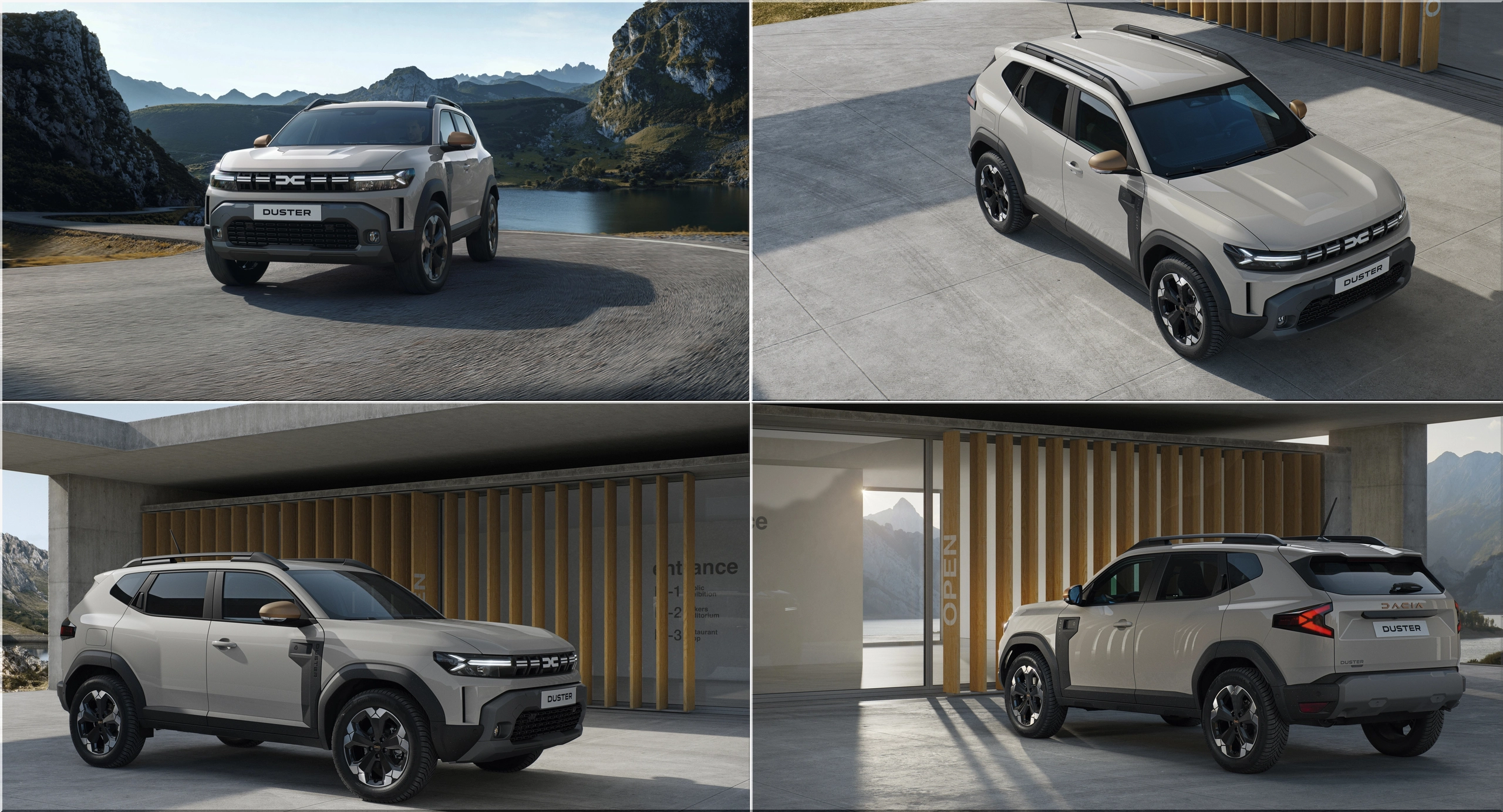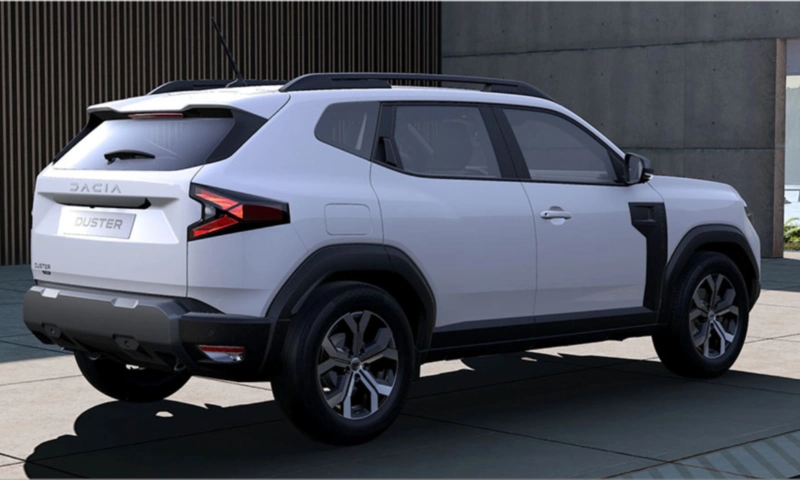
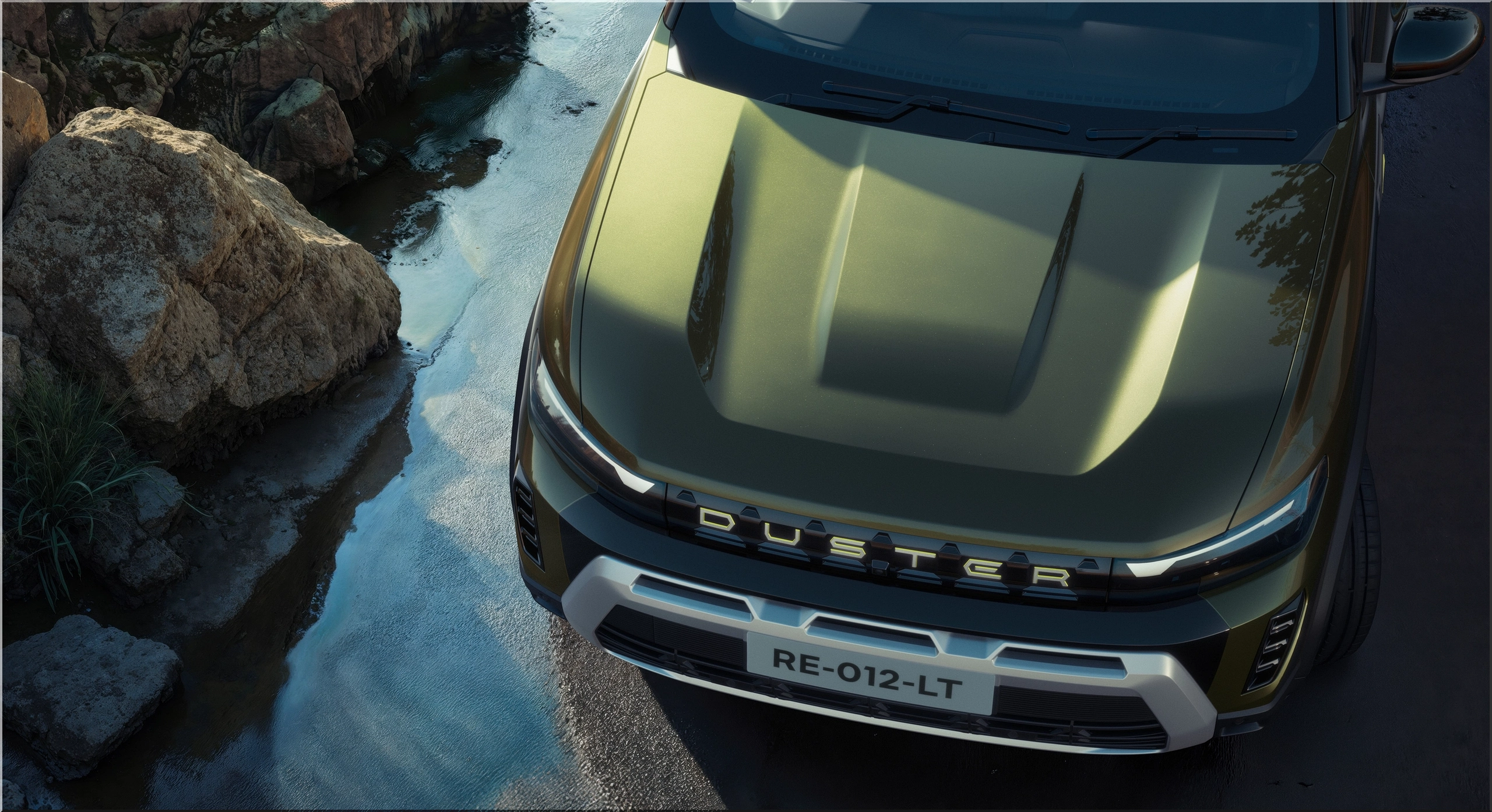
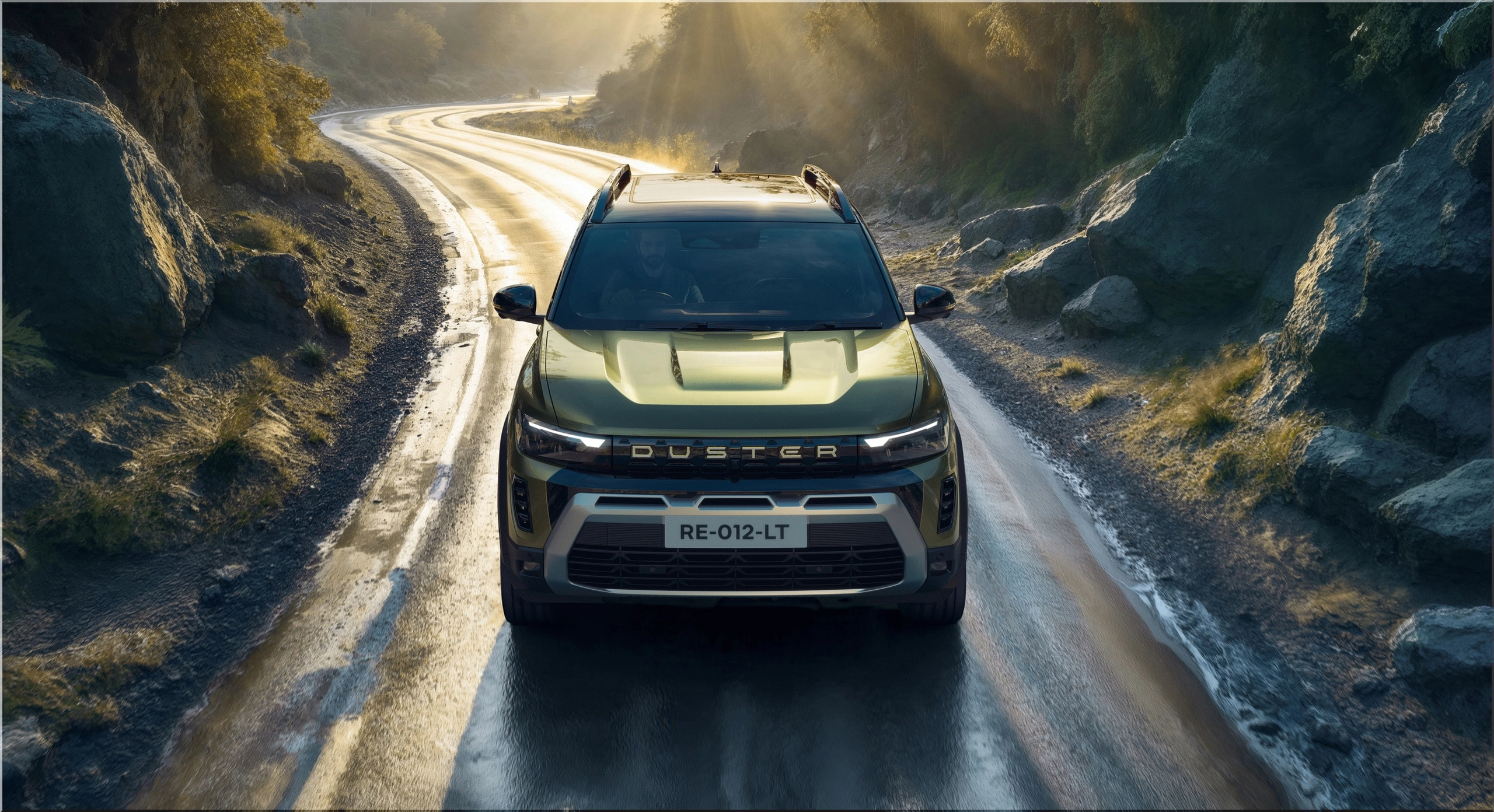
The 2026 Renault Duster represents a deliberate correction in the compact SUV market. Renault rebuilt the model to address clear buyer pain points: rising fuel costs, shrinking interior space, and crossovers that abandoned real SUV capability.
This new generation launches in India in spring 2026, followed by South Africa and Gulf markets. Renault designed it as a global product, not a region-specific experiment. Every specification reflects that intent.
Image
Why Renault Rebuilt the Duster Instead of Refreshing It
Compact SUVs now dominate global passenger vehicle demand. In India, SUVs account for roughly 55 percent of new car sales, up from 12 percent just over a decade ago. Buyers migrated toward vehicles that promise clearance, presence, and flexibility.
The original Duster helped start that shift. Over two million units sold globally since 2010. Renault lost momentum as rivals added features and powertrain options faster.
The 2026 Renault Duster resets that equation. Renault moved away from incremental updates and focused on fundamentals: platform scalability, electrification readiness, and physical usability.
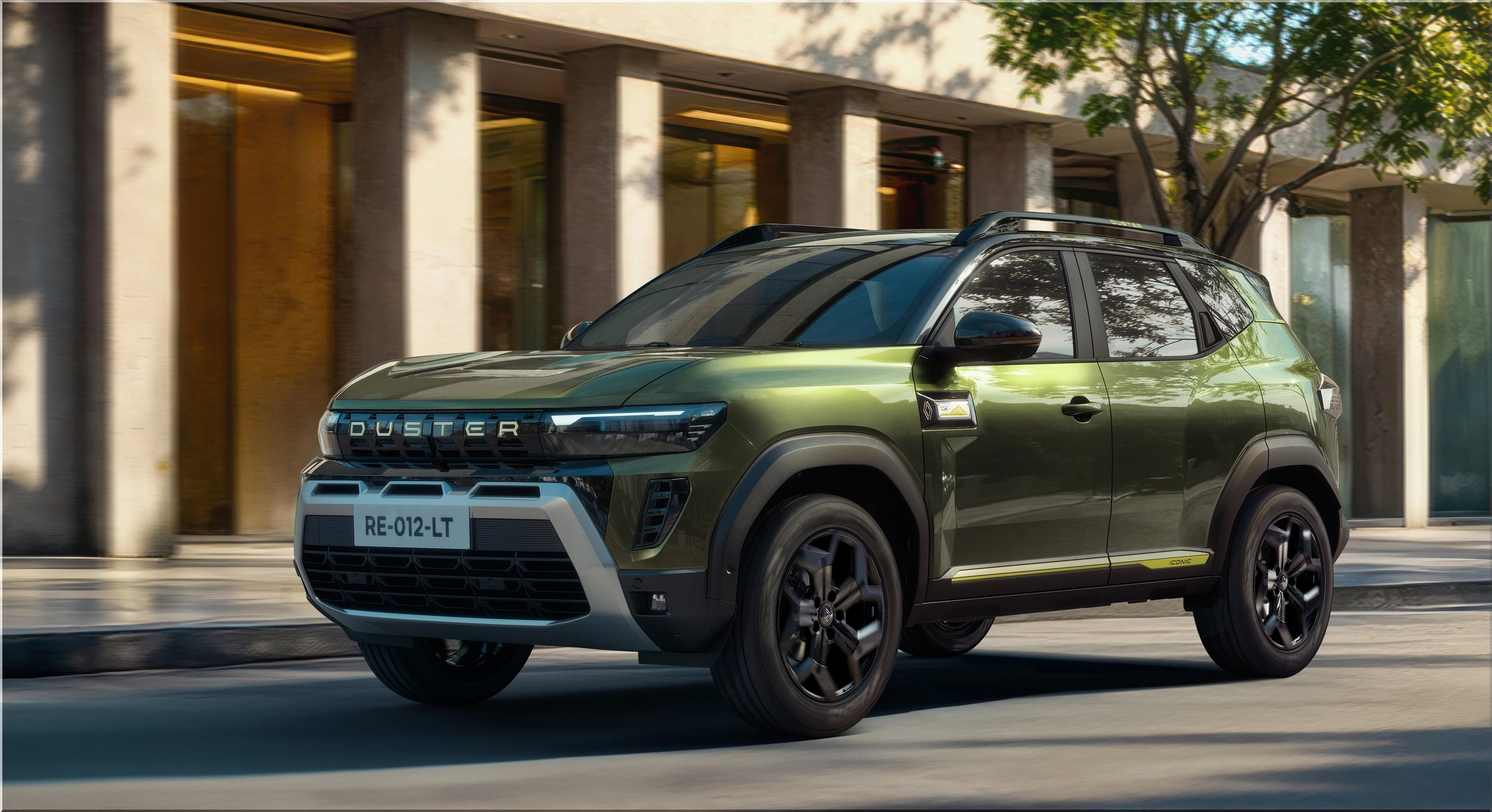
Exterior Dimensions and Geometry Favor Function Over Styling
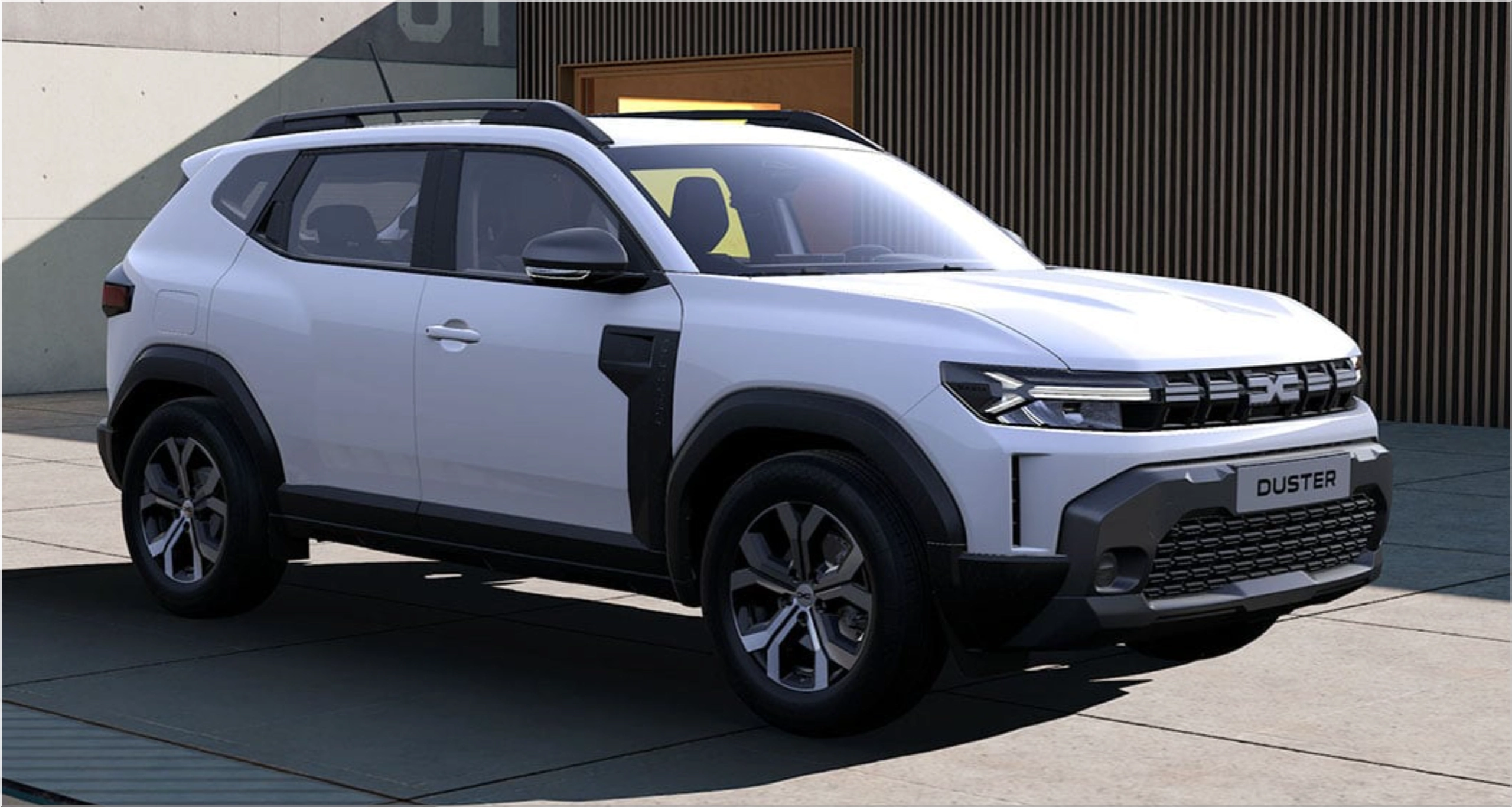
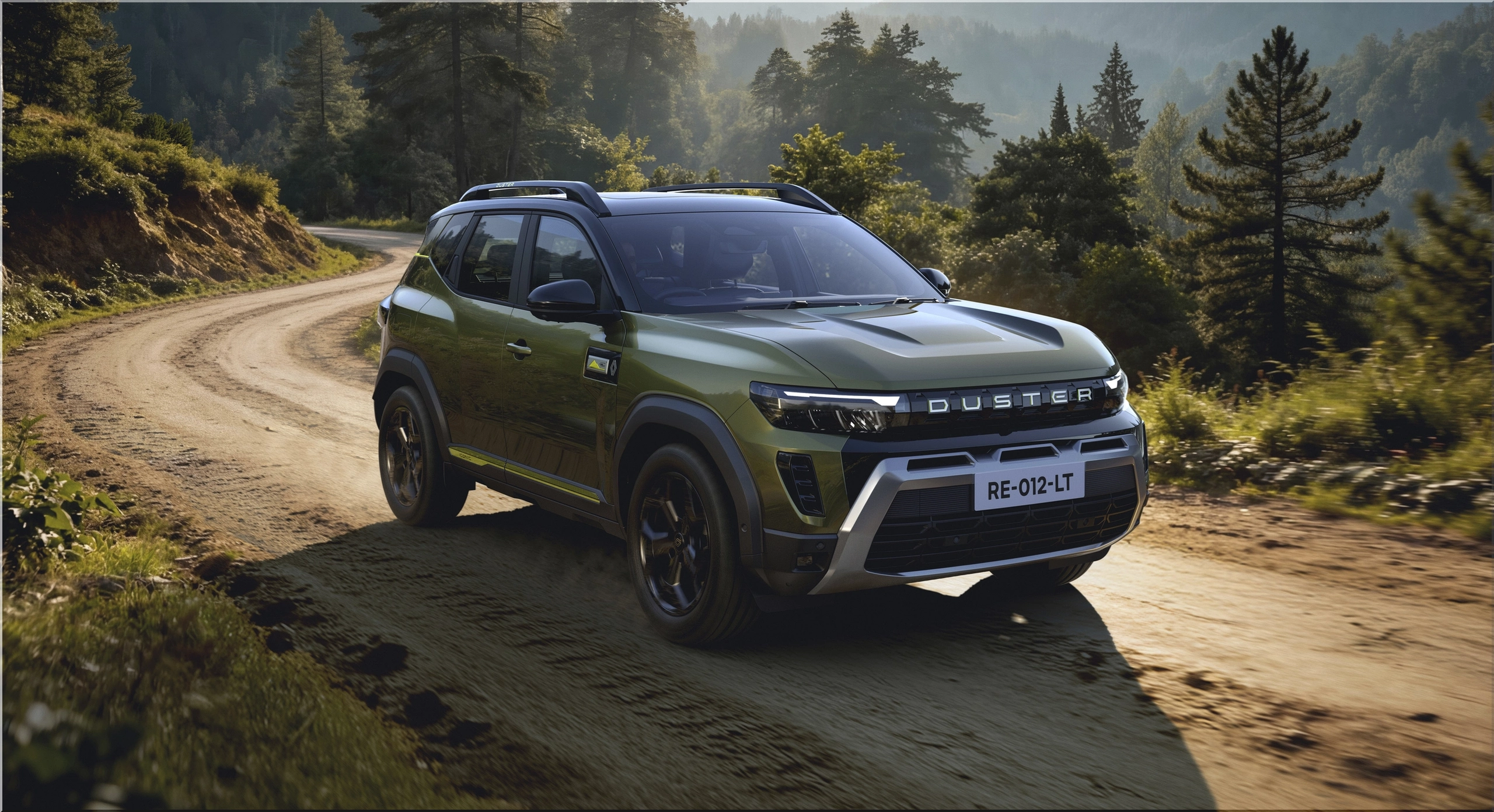
The new Duster keeps proportions practical rather than fashionable.
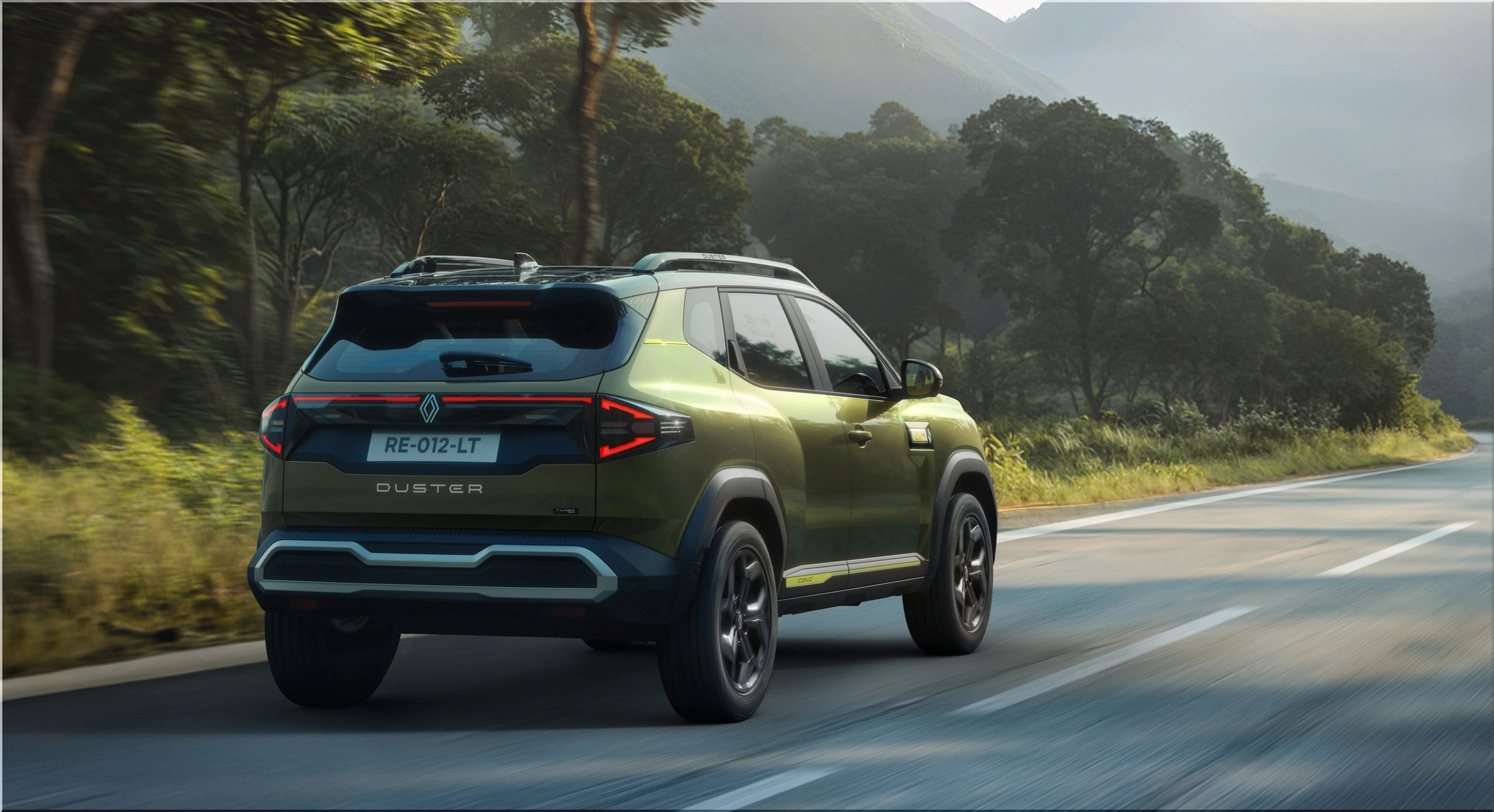
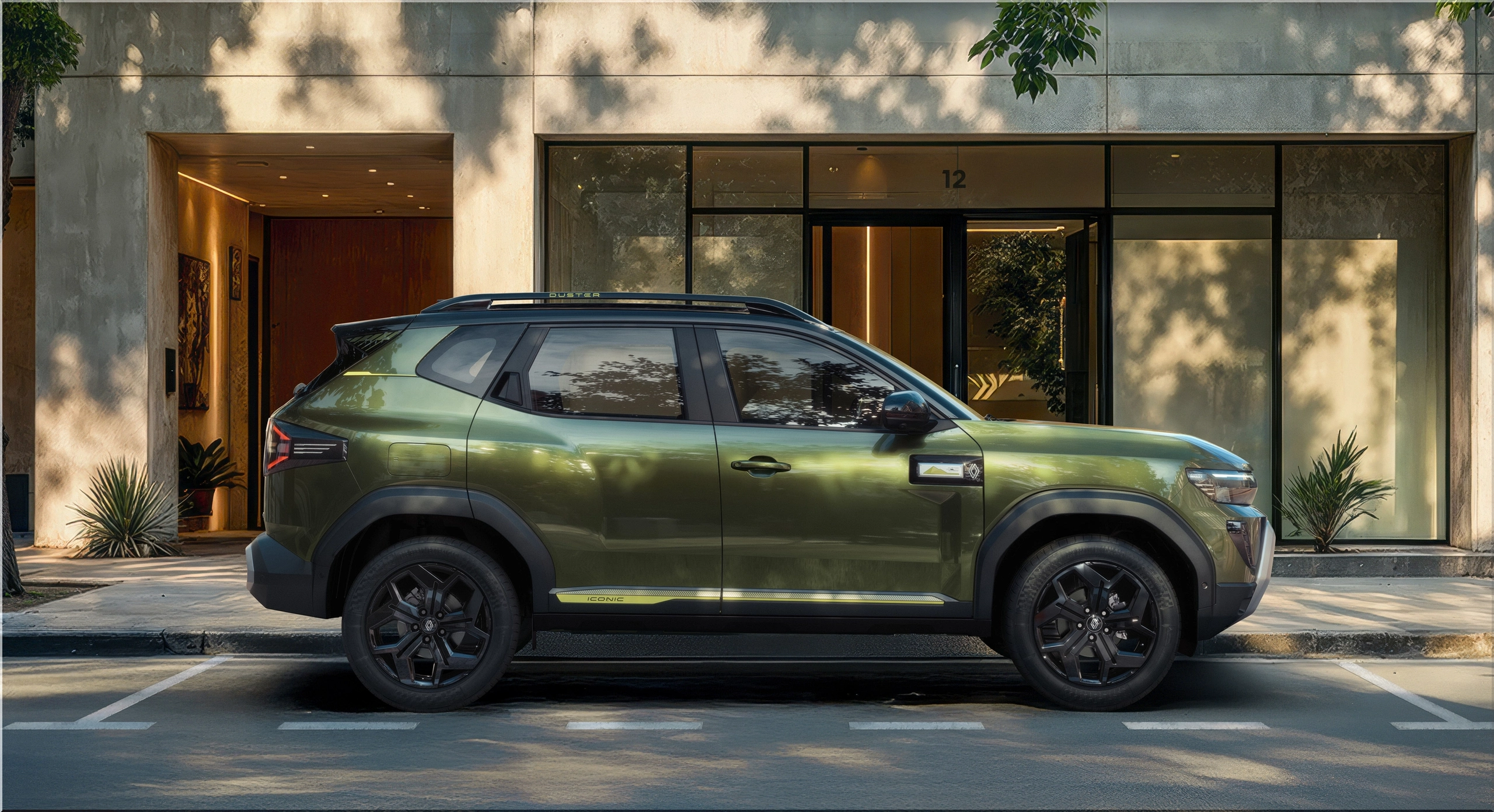
Overall dimensions measure 4,343 mm in length, 1,813 mm in width, and 1,659 mm in height, supported by a 2,657 mm wheelbase. That wheelbase directly improves rear passenger knee room and ride stability.
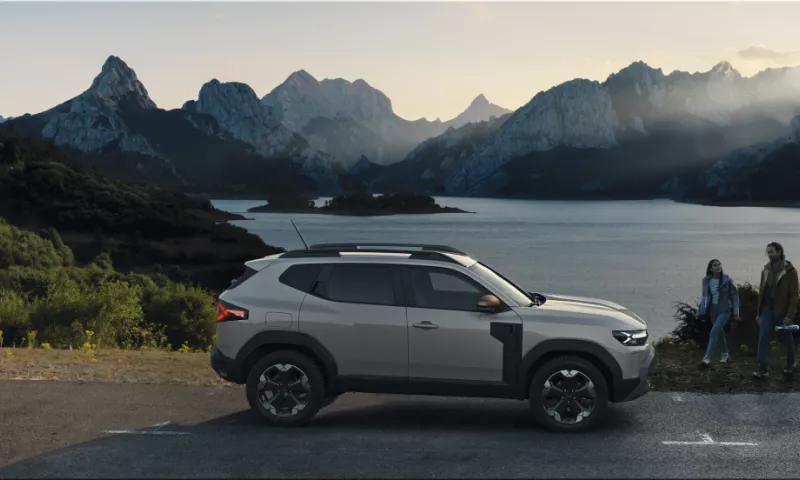
Ground clearance stands at 212 mm, a figure that places the Duster above most compact rivals. Approach and departure angles measure 25.7 degrees and 29.2 degrees, respectively. Those numbers matter for uneven roads, steep ramps, and unpaved surfaces.
Design elements support durability:
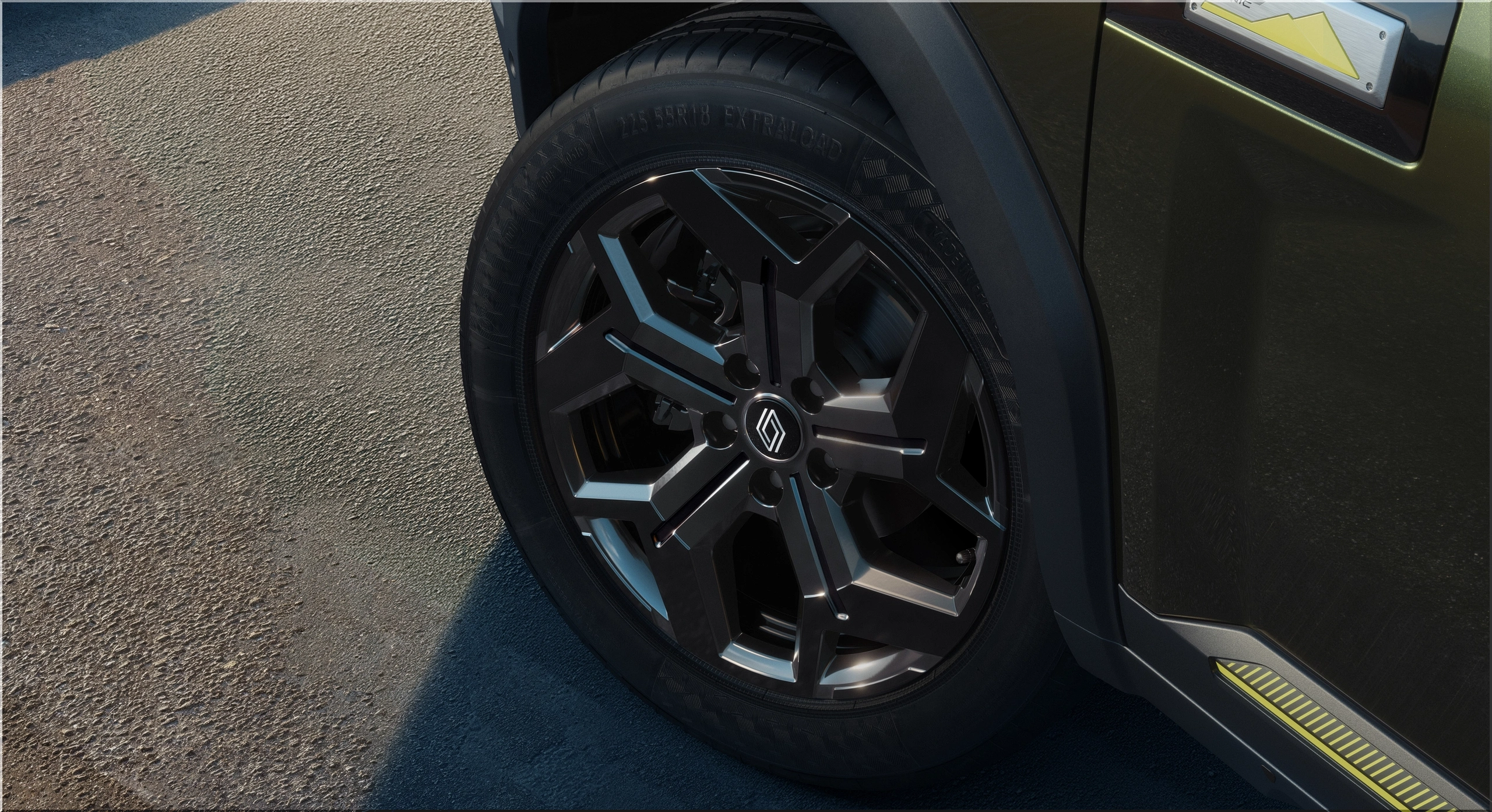
- Reinforced skid plates
- Upright hood and roofline
- Wide wheel arches for suspension travel
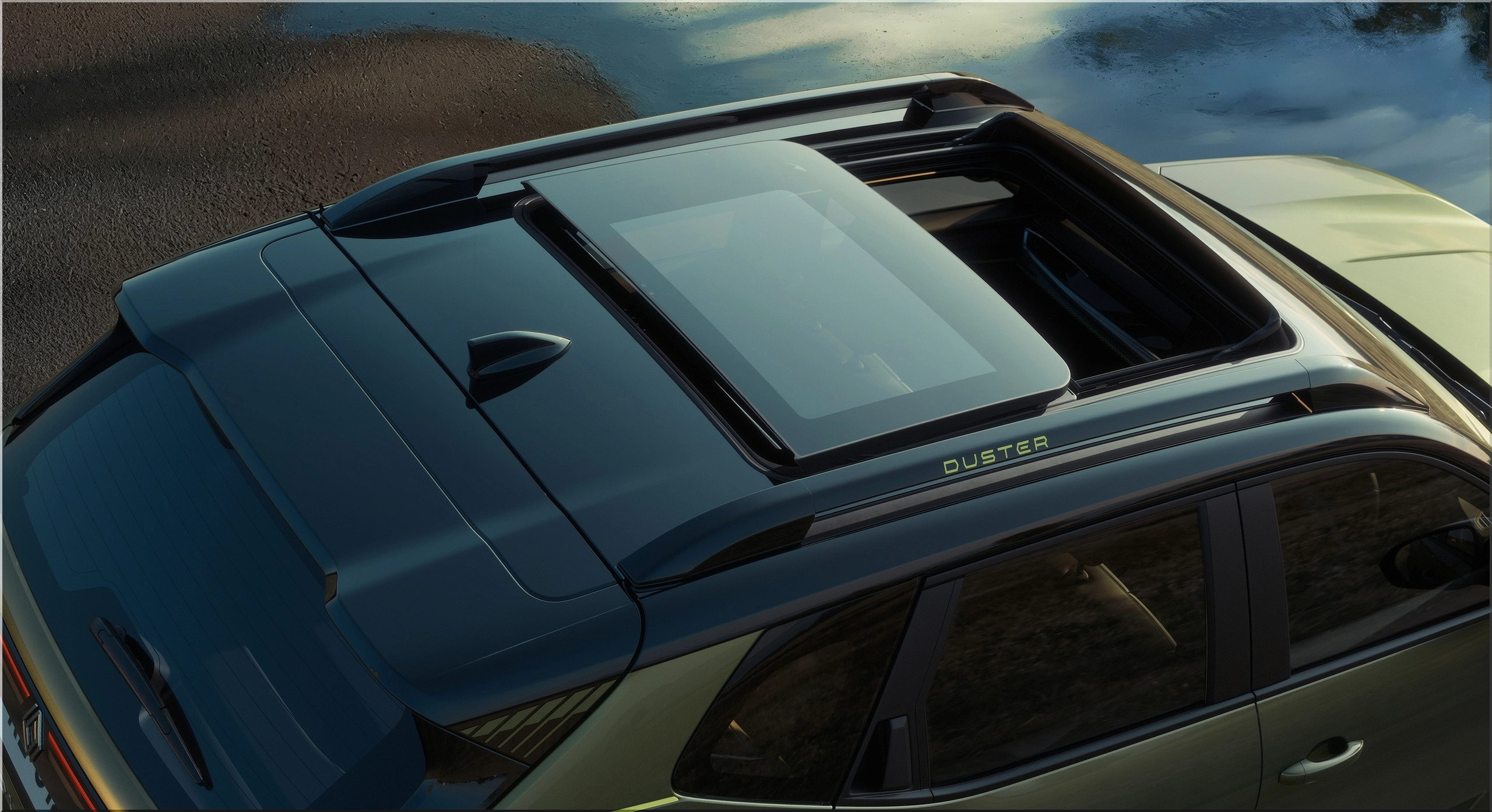
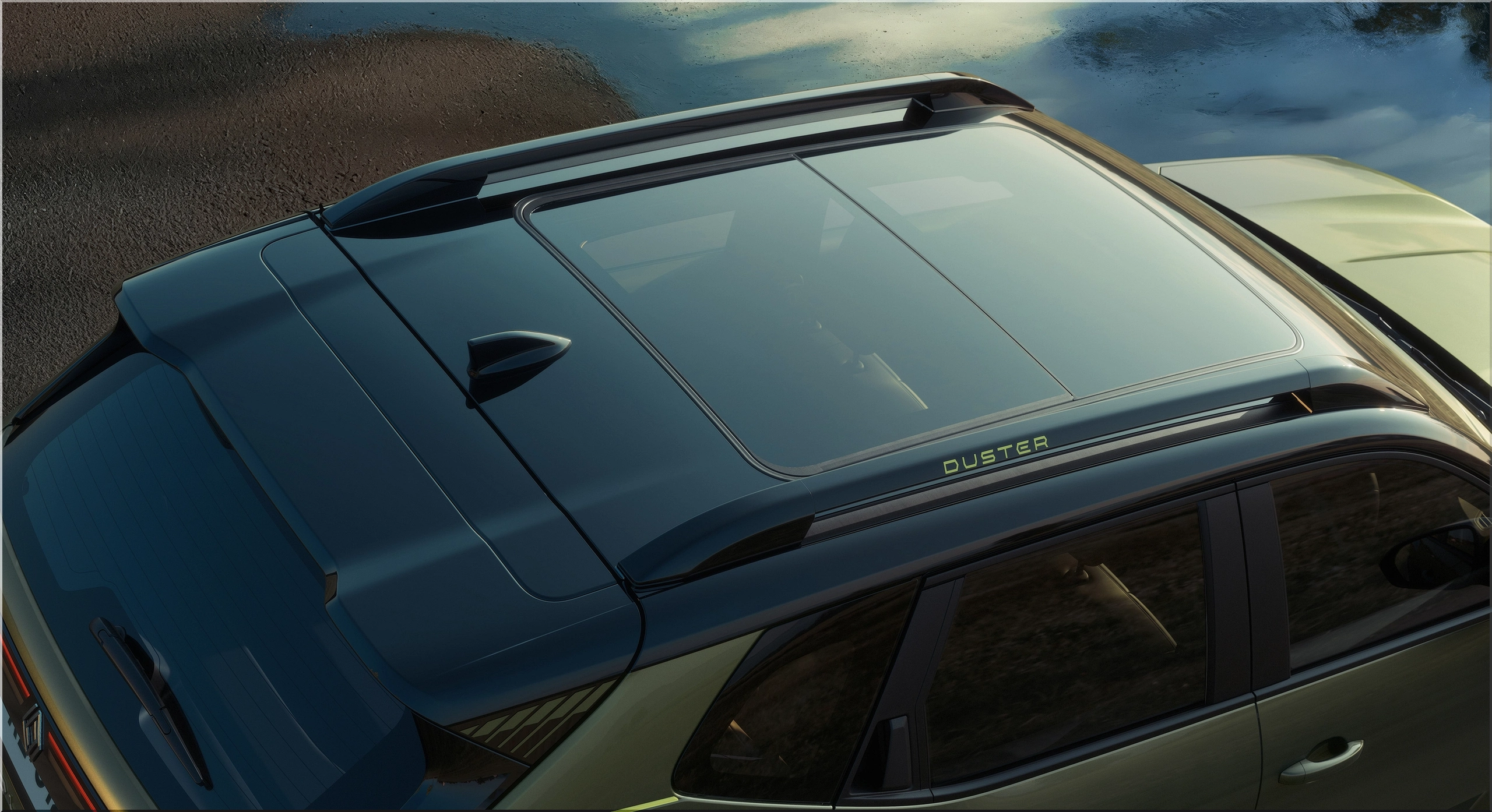
- Roof rails rated for real load use
Renault avoided coupe rooflines and oversized wheels. Visibility, clearance, and tire sidewall depth took priority.
Image
Cabin Architecture Focuses on Cognitive Load and Daily Use
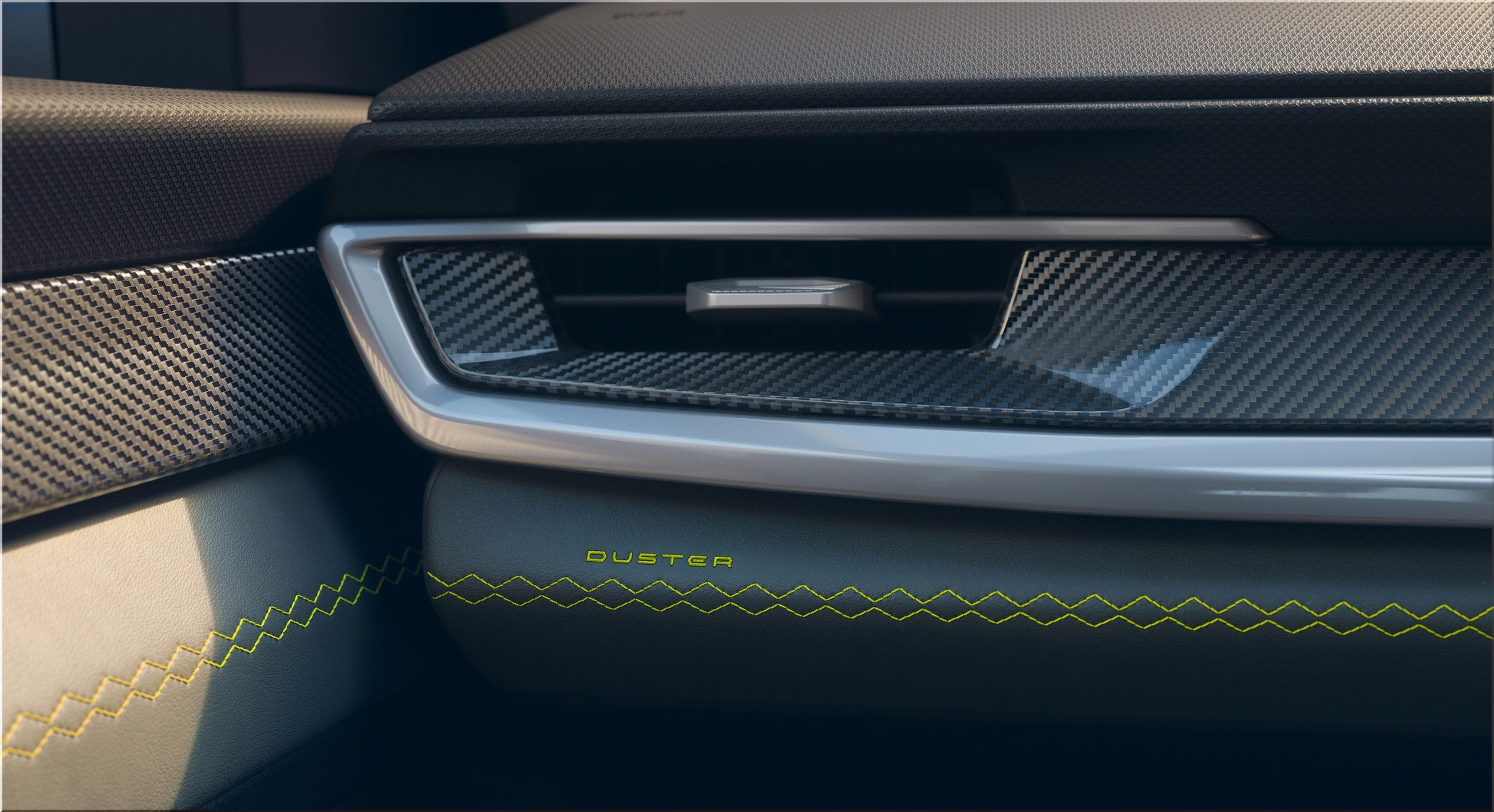
Renault redesigned the interior around reduced distraction and faster information access.
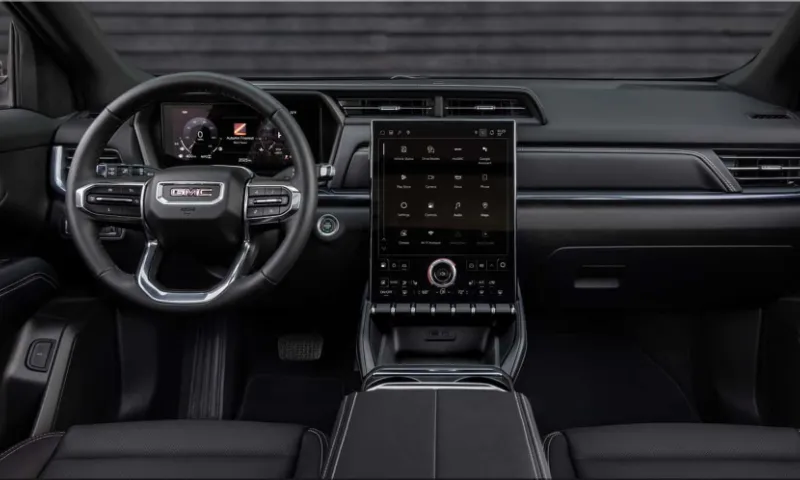
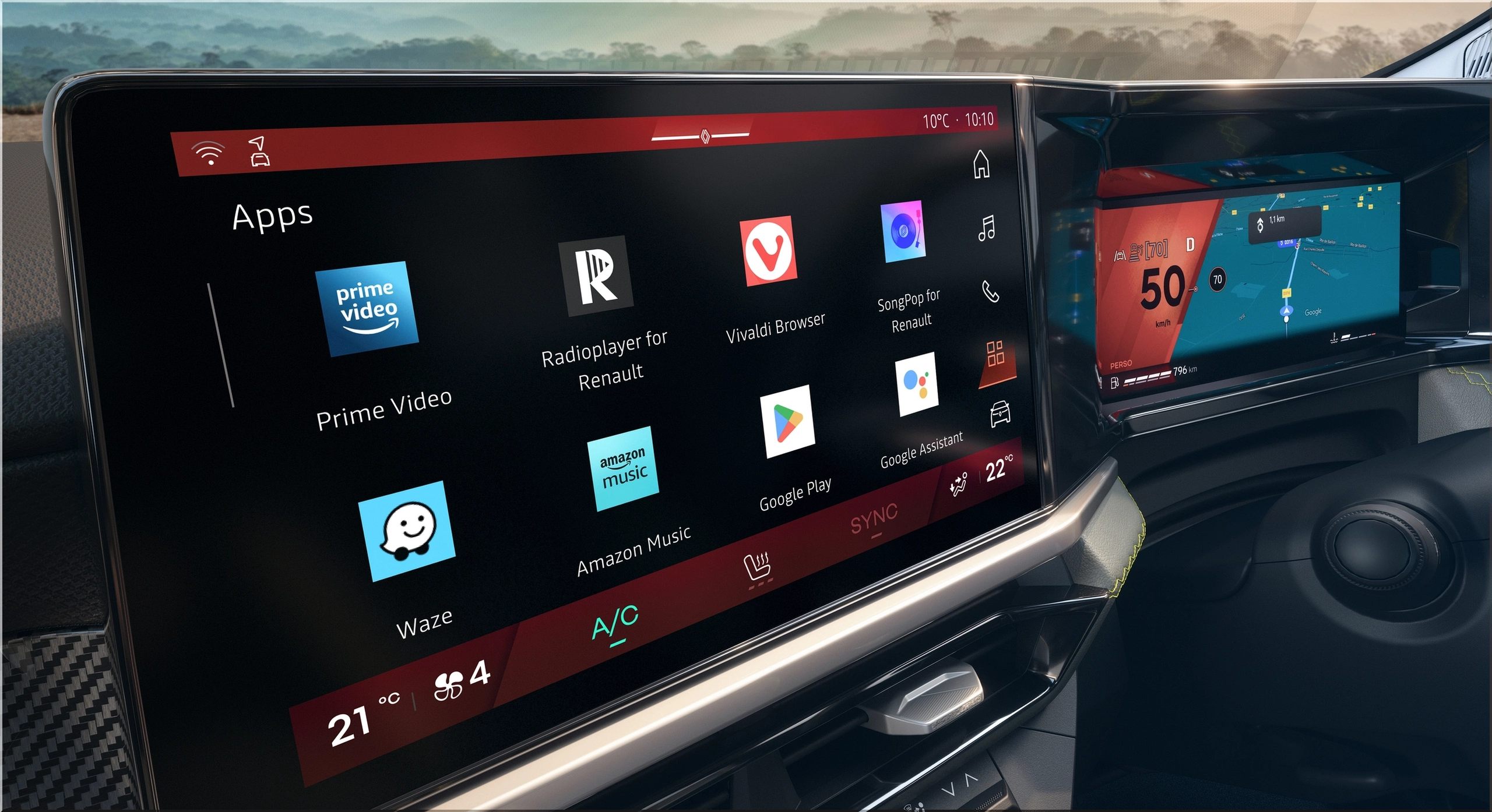
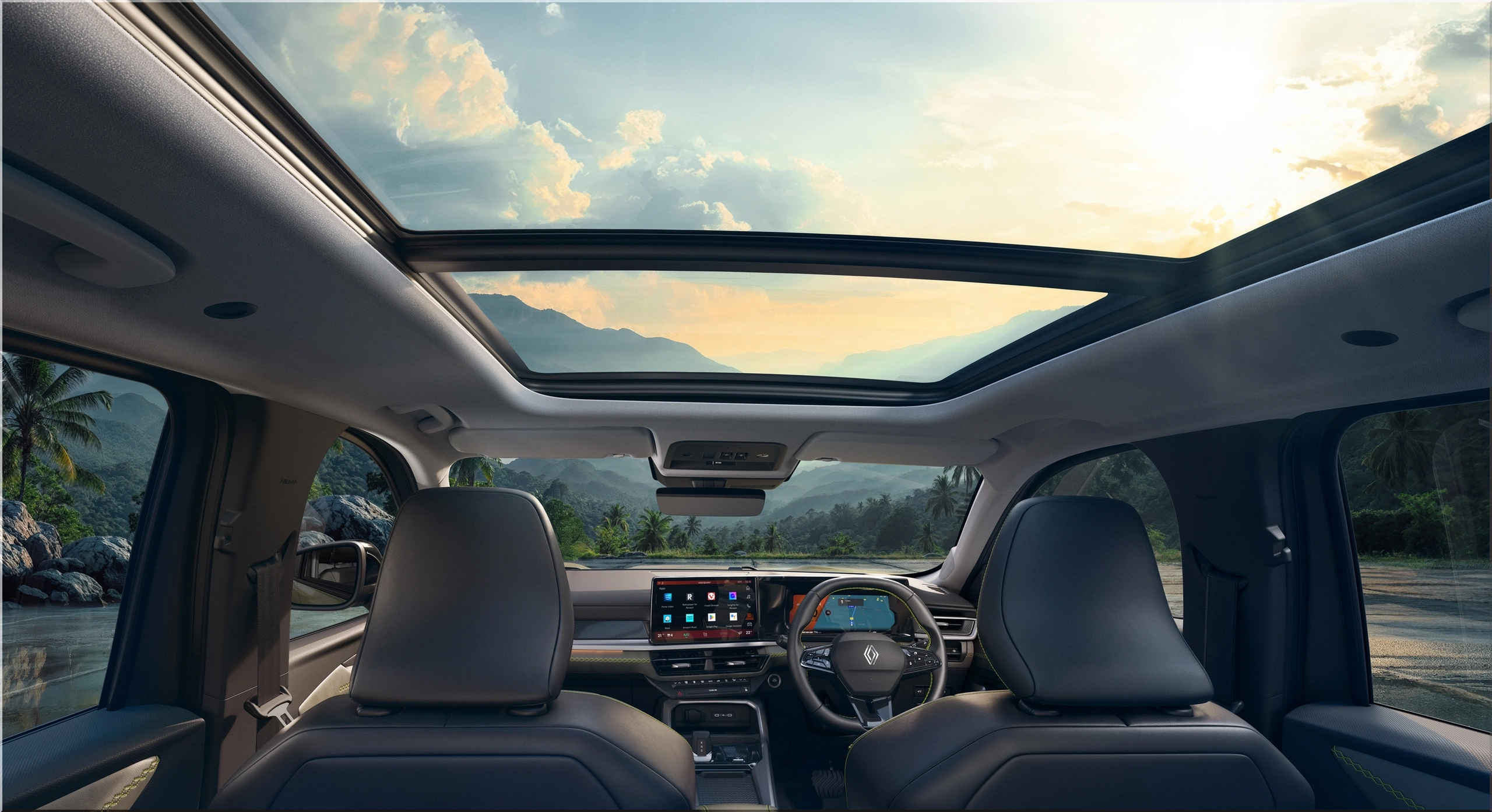
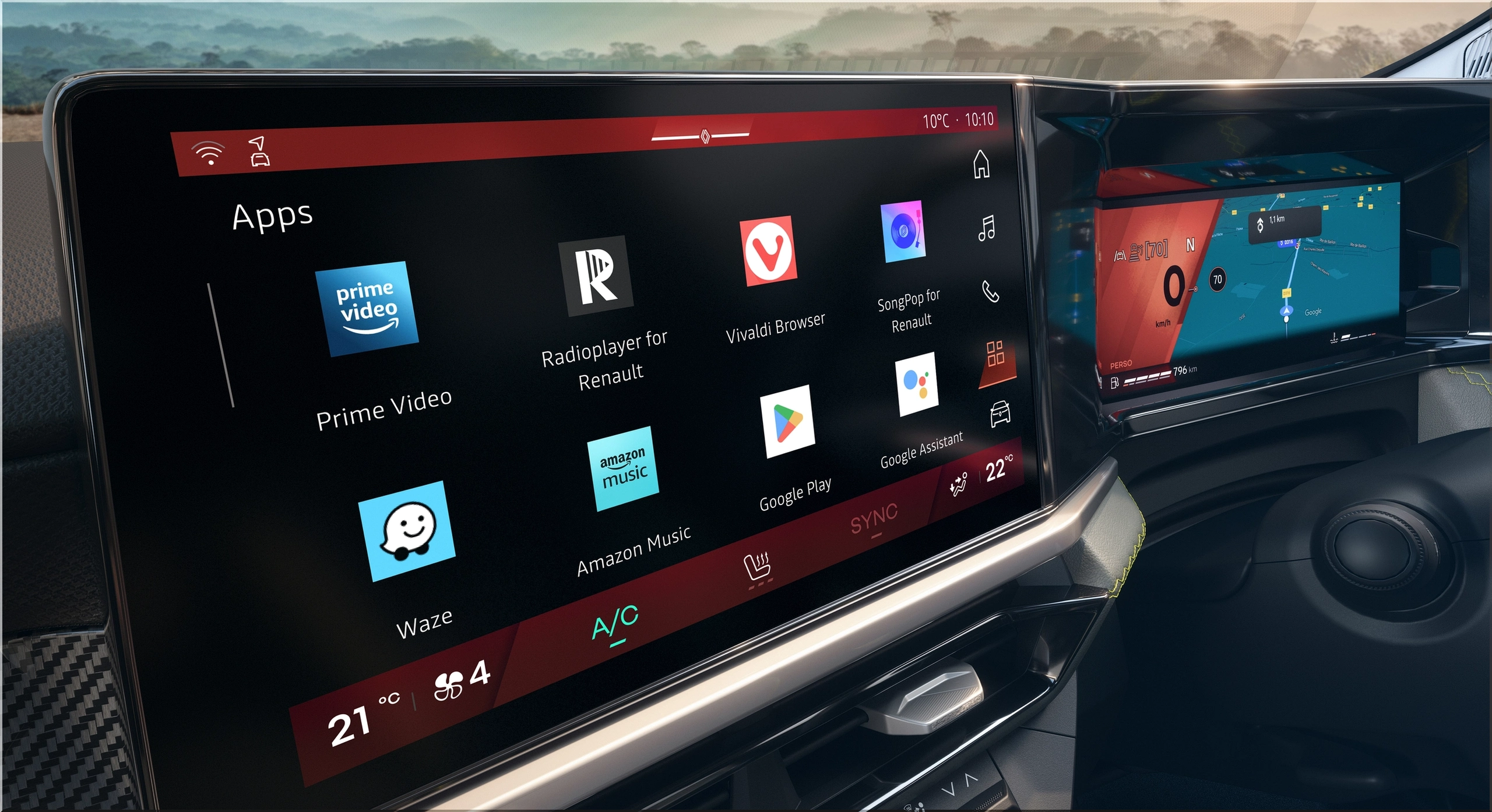
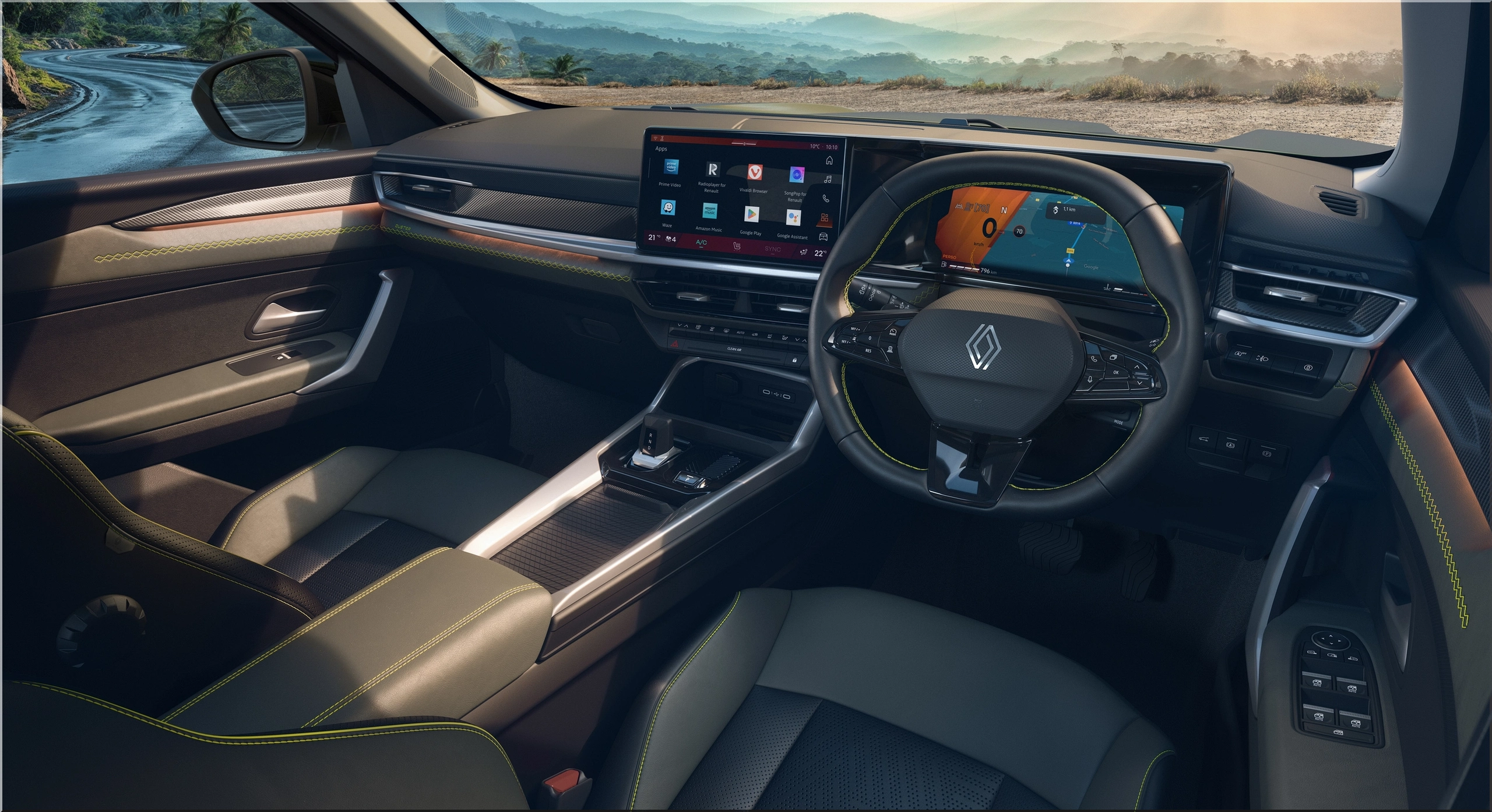
The OpenR dashboard integrates two digital displays:
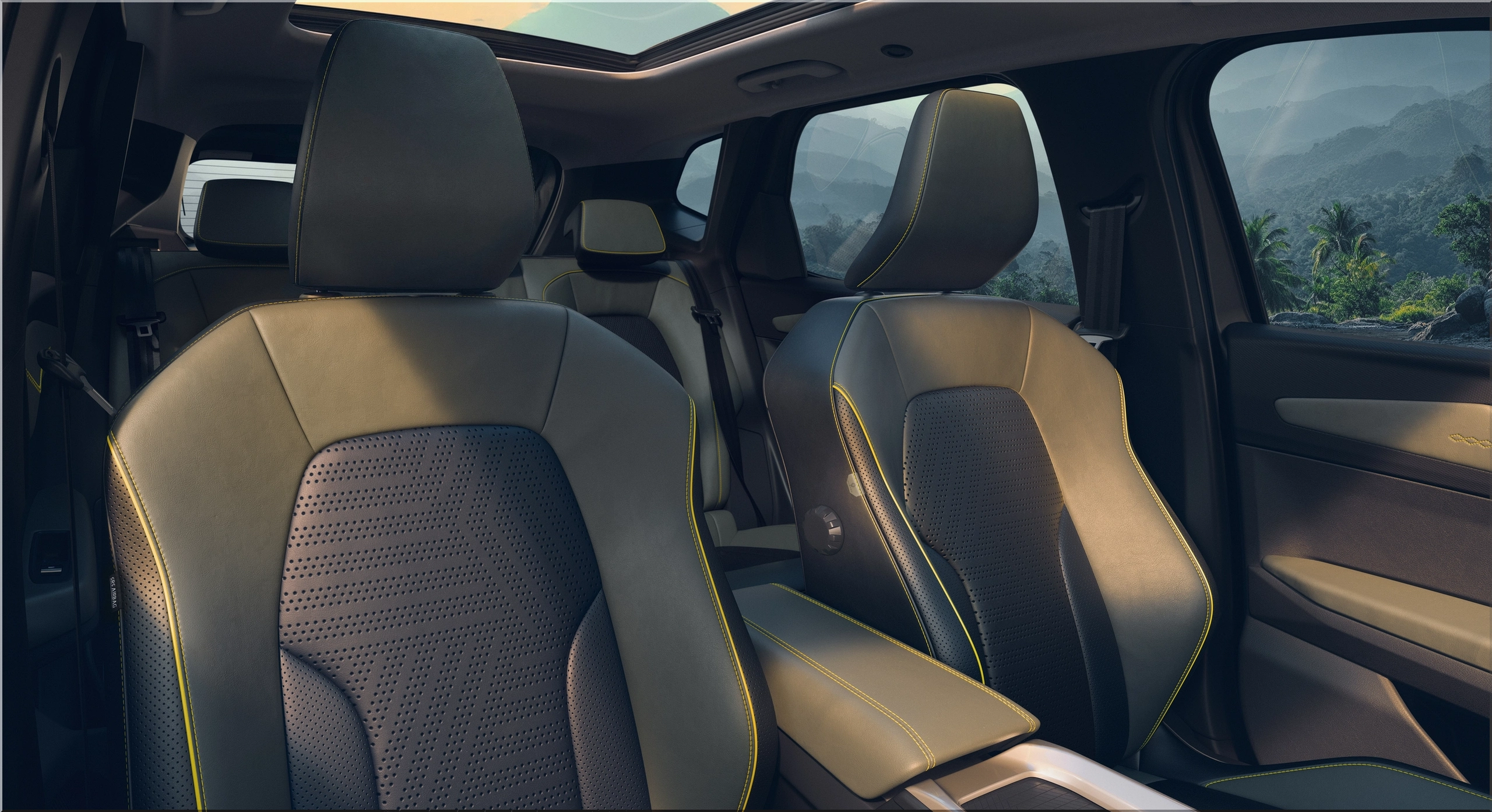
- Up to 10.25-inch driver instrument cluster
- 10.1-inch central touchscreen
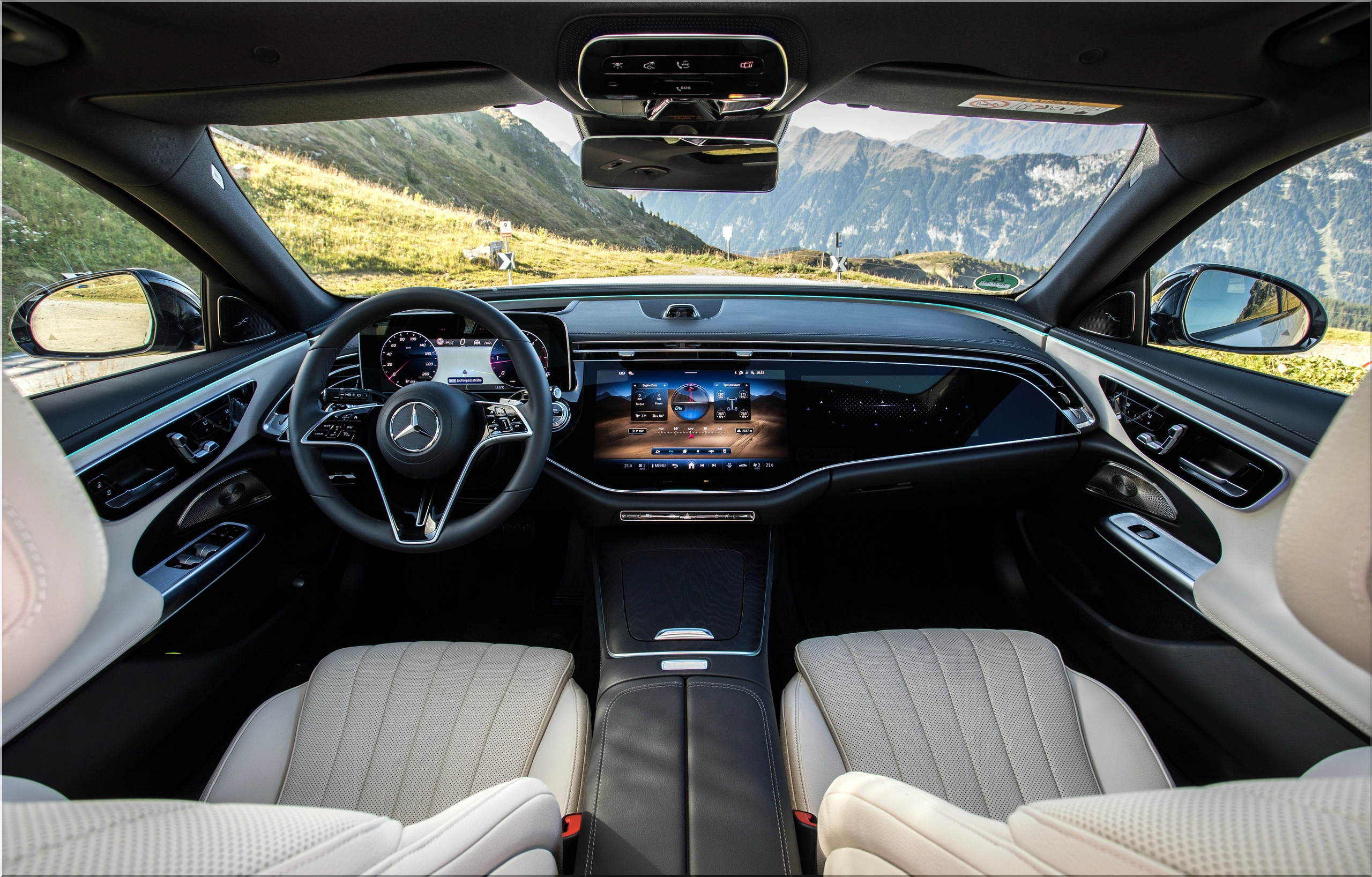
Both screens sit high on the dash to minimize eye movement. The system runs Google Automotive Services natively, which removes dependence on phone projection. Navigation, voice commands, and downloadable apps work without external devices.
Comfort and usability features include:
- Dual-zone climate control with PM2.5 air filtration
- Ventilated front seats on upper trims
- Wireless charging and USB-C ports front and rear
- 33 liters of total cabin storage
- Panoramic sunroof spanning both seating rows
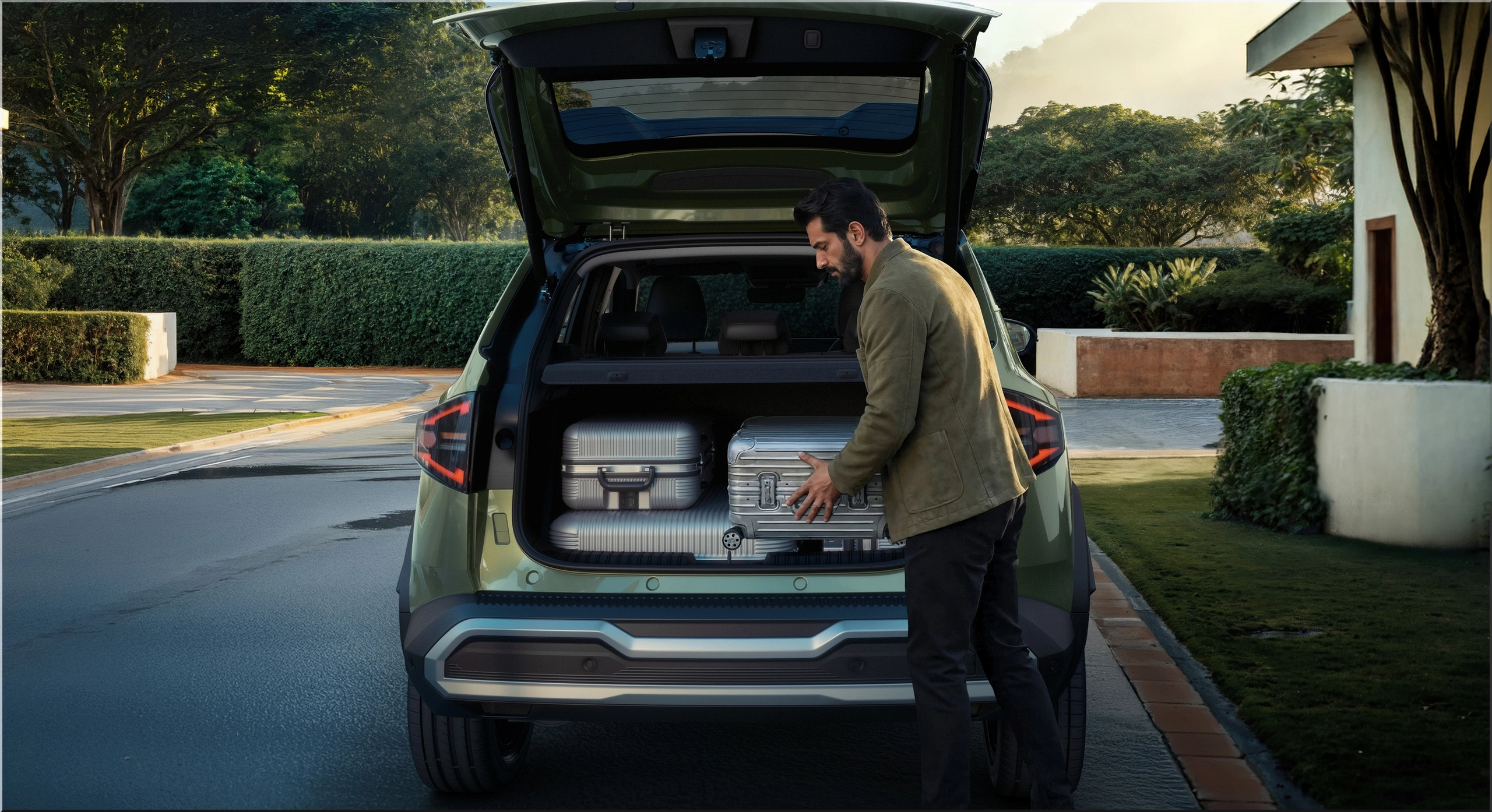
Rear knee room measures 190 mm, placing the Duster near the top of the segment for passenger space.
Cargo volume supports family and travel use:
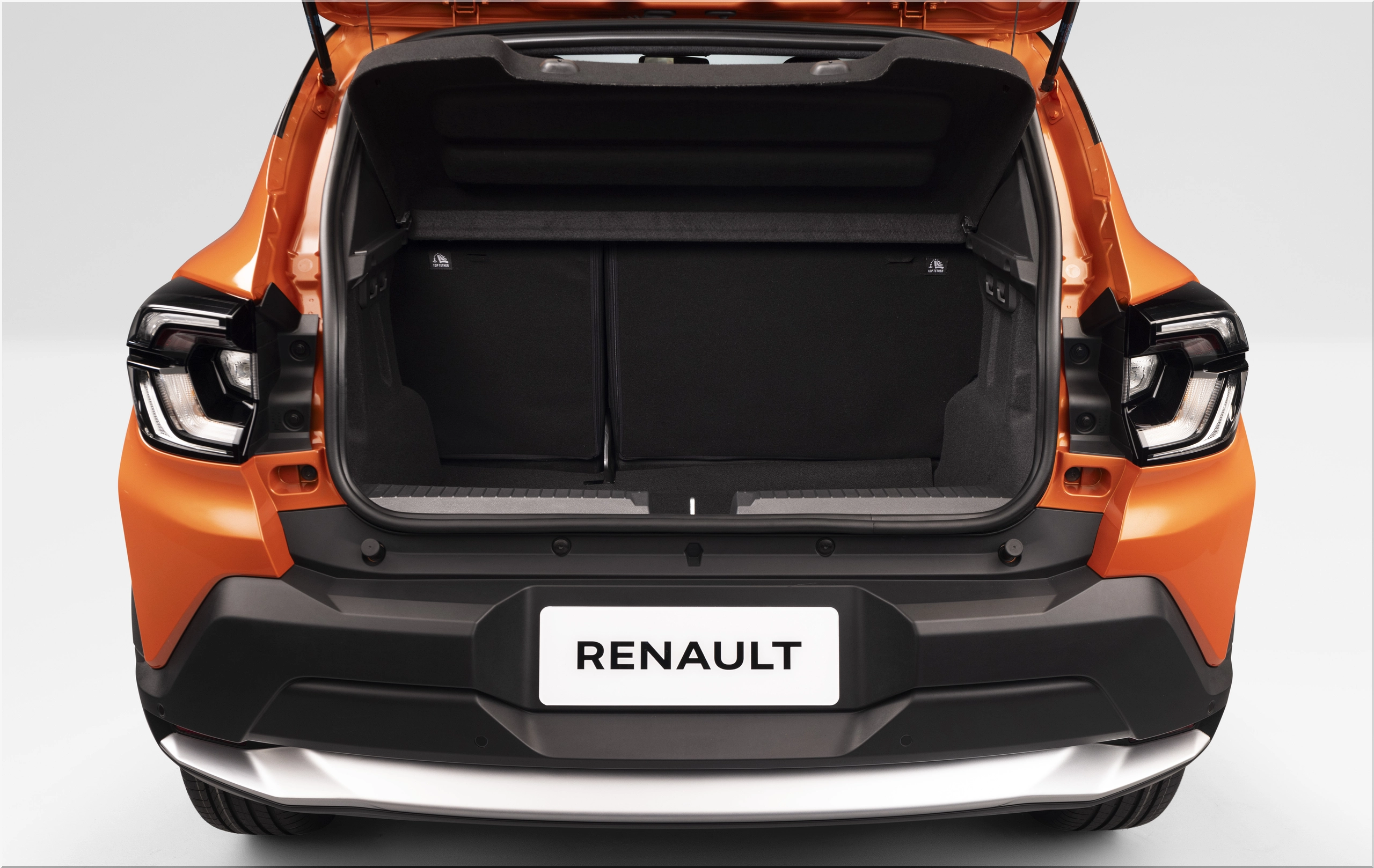
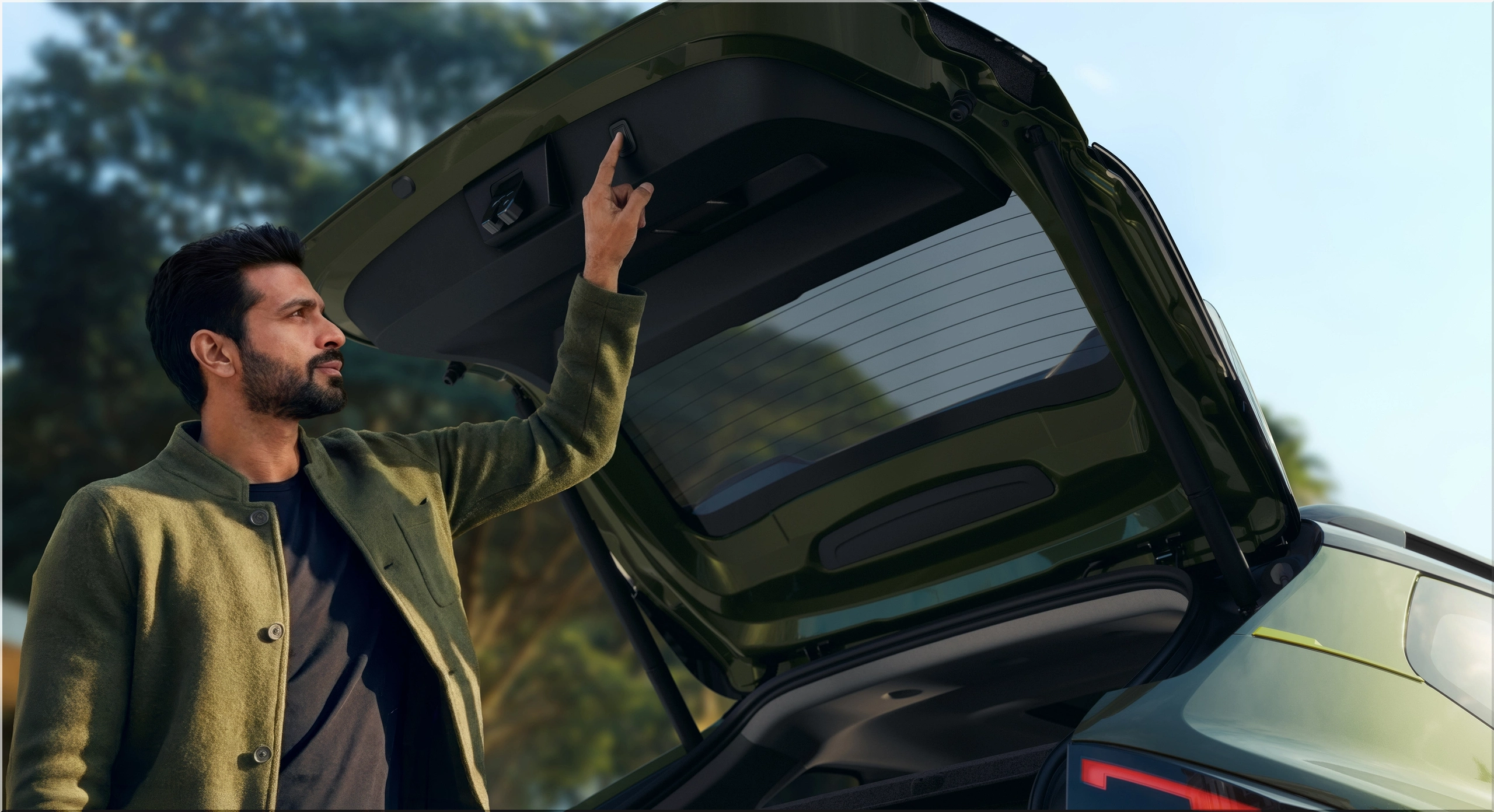
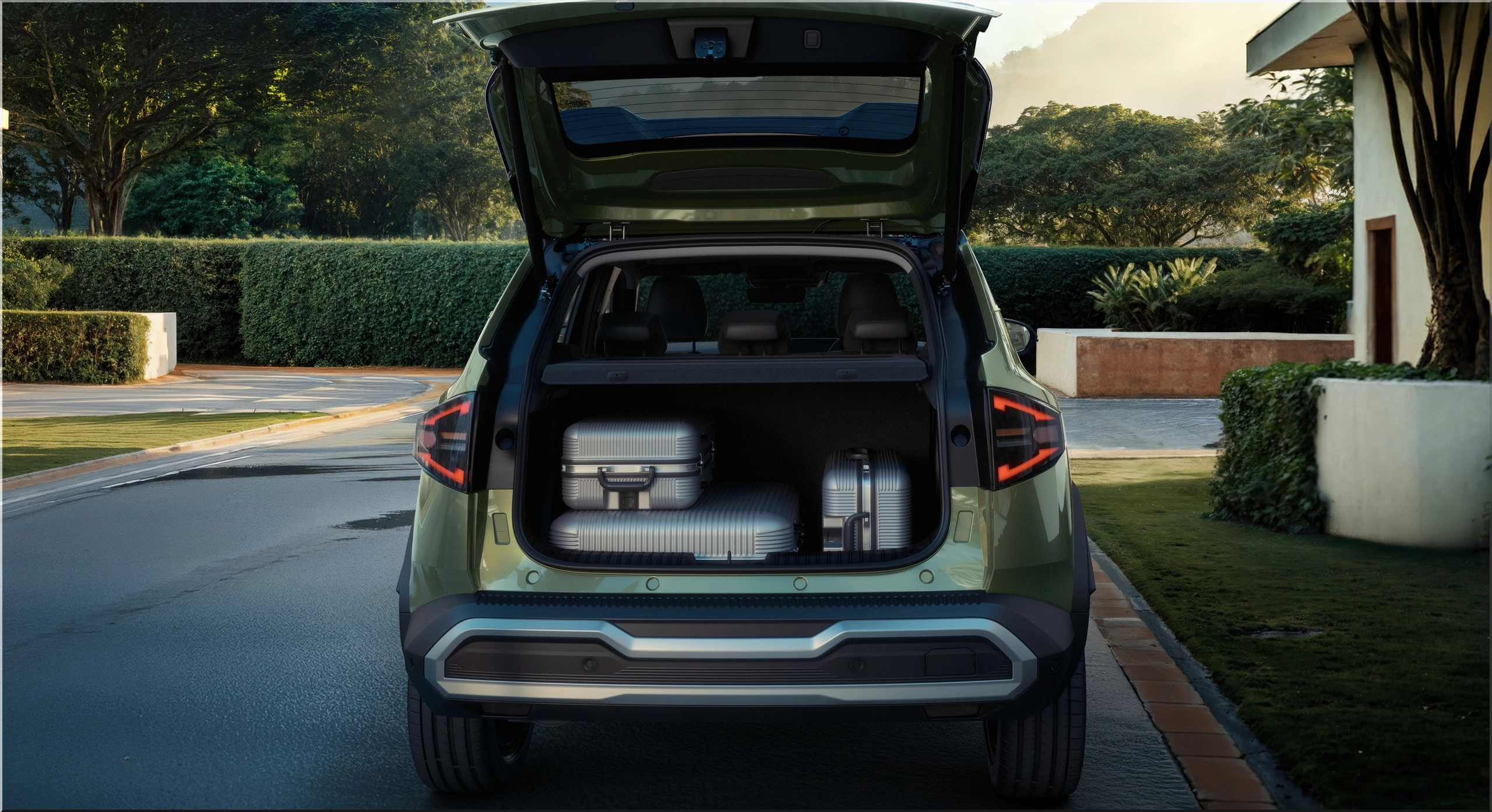
- 518 liters with rear seats upright
- 1,789 liters with seats folded
A powered tailgate reduces loading effort in daily use.
Hybrid Powertrain Targets Fuel Cost Sensitivity
The most significant upgrade sits under the hood.
Renault introduces the full hybrid E-Tech 160 system, previously used in larger Renault models. This marks its first application in a compact SUV for India.
Full Hybrid E-Tech 160 Powertrain
- 1.8-liter four-cylinder petrol engine
- Atkinson cycle operation for efficiency
- Two electric motors
- Multimode automatic gearbox with 15 operating states
- 160 hp total output
- 172 Nm of torque
- 1.4 kWh battery operating at 280V
In urban driving, Renault estimates electric-only operation up to 80 percent of the time. Fuel consumption drops by as much as 40 percent compared with conventional petrol engines. Total driving range reaches 1,000 km under mixed conditions.
The system manages transitions automatically. Drivers do not need to select modes or alter driving behavior.
Turbo Petrol Engines Address Price and Simplicity
Renault retains conventional petrol options to maintain accessibility.
Turbo TCe 100
- 1.0-liter three-cylinder
- 100 hp
- 160 Nm of torque
- Six-speed manual transmission
This engine targets city use, lower acquisition cost, and fleet demand. It favors simplicity and predictable running costs.
Turbo TCe 160
- 1.3-liter four-cylinder
- 160 hp
- 280 Nm of torque
- Six-speed manual or six-speed wet dual-clutch transmission
This version suits highway driving and higher payloads. Peak torque arrives at low engine speeds, reducing the need for frequent downshifts.
Chassis Tuning Reflects Road Reality
The platform balances comfort with control rather than chasing sporty feel.
Front suspension uses McPherson struts. The rear employs a torsion beam setup tuned for rough and inconsistent surfaces. Renault calibrated damping and spring rates to manage potholes, broken pavement, and speed bumps without harshness.
High-speed stability remains strong. The Duster maintains predictable behavior during lane changes and emergency braking, even on uneven roads.
Driver Assistance Systems Reduce Fatigue and Risk
The 2026 Renault Duster includes 17 advanced driver assistance systems, a figure that places it near vehicles from higher segments.
Key systems include:
- Adaptive cruise control with stop-and-go
- Lane keeping assist and lane departure warning
- Automatic emergency braking for vehicles and pedestrians
- Blind spot monitoring
- Traffic sign recognition
- Driver attention monitoring
- 360-degree camera with dynamic views
- Side obstacle detection at low speeds
Drivers can adjust or deactivate systems via a dedicated control. Safety defaults reactivate at each startup.
Competitive Positioning in the Compact SUV Segment
The Duster competes in one of the most crowded segments globally. Hardware differentiates it.
| Model | Ground Clearance | Hybrid Option | Cargo Volume |
|---|---|---|---|
| Renault Duster 2026 | 212 mm | Yes | 518 L |
| Hyundai Creta | ~190 mm | No | ~433 L |
| Kia Seltos | ~190 mm | No | ~433 L |
| Toyota Corolla Cross | ~161 mm | Yes | ~487 L |
The Duster leads on clearance and off-road geometry while matching hybrid efficiency offered by Toyota.
Production Strategy and Market Intent
Renault assembles the Duster locally at its Chennai plant. Local production supports cost control and faster supply. The model anchors Renaults lineup above Kiger and Triber.
The modular platform supports future updates, including additional electrified variants. Renault positioned the Duster as a long-term growth product rather than a short-cycle refresh.
What This Version Changes for Buyers
The 2026 Renault Duster corrects three common compromises:
- It restores real SUV geometry in a compact footprint.
- It delivers hybrid efficiency without driver complexity.
- It adds cabin technology without inflating size or price class.
Buyers who prioritize clearance, range, and durability over styling trends now have a clear option.
- Add new comment
- 186 views