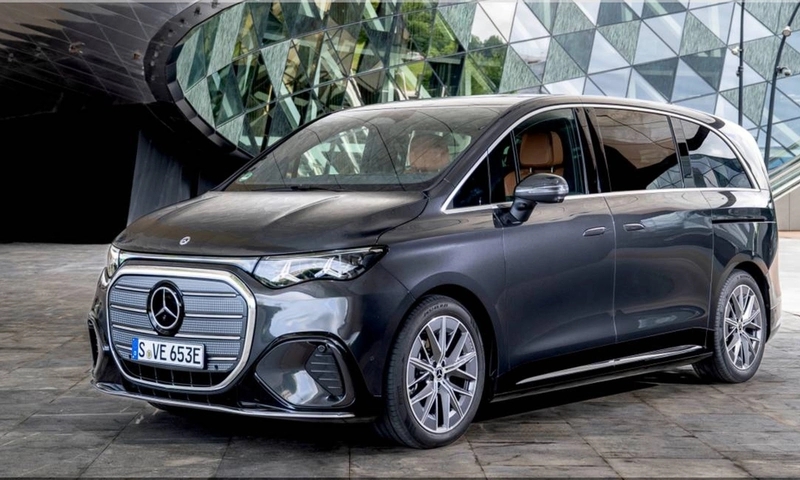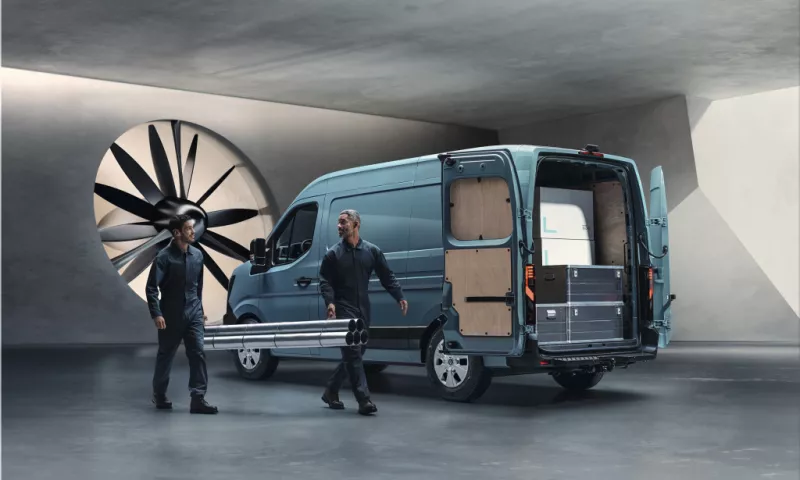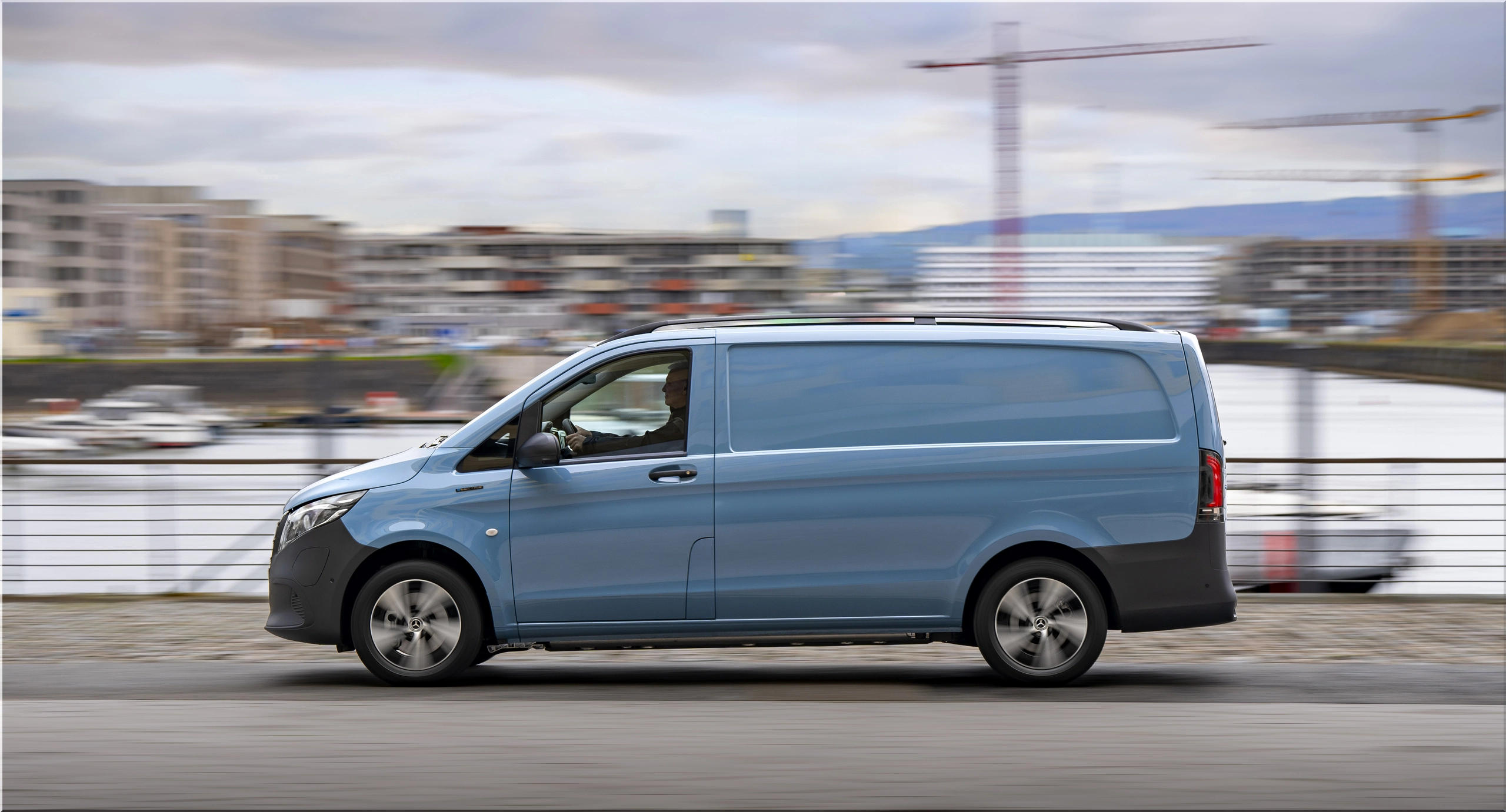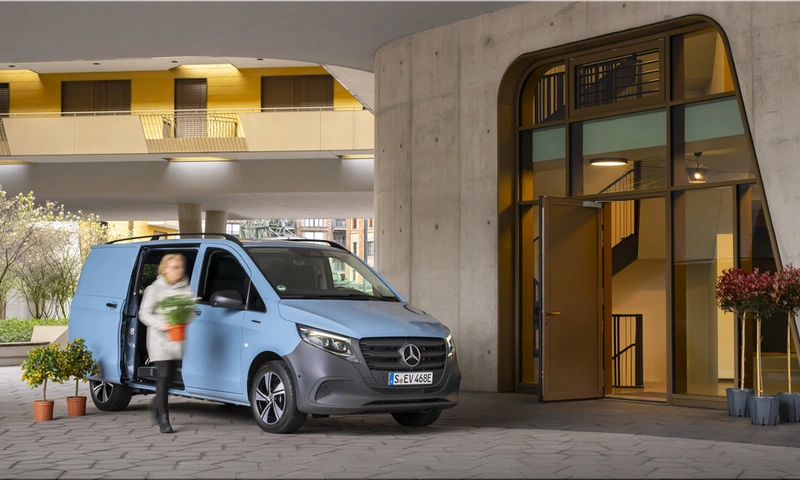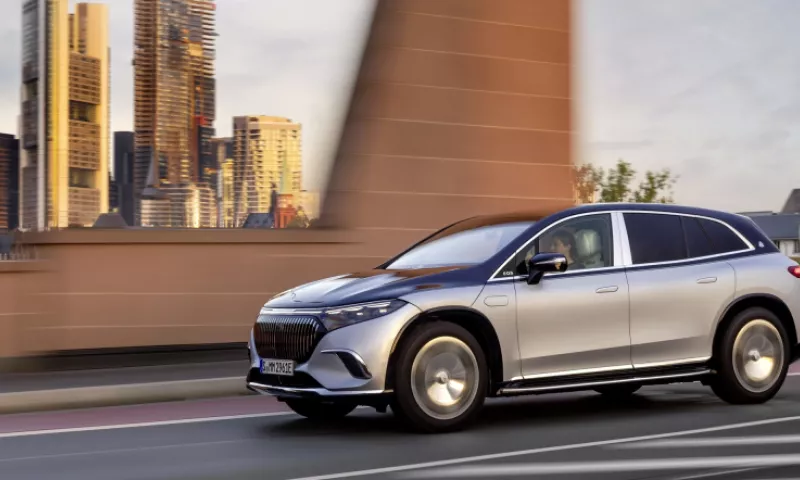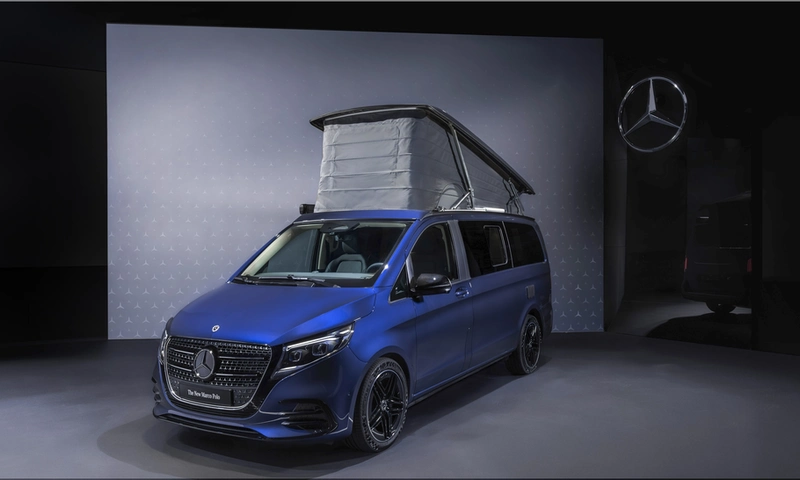
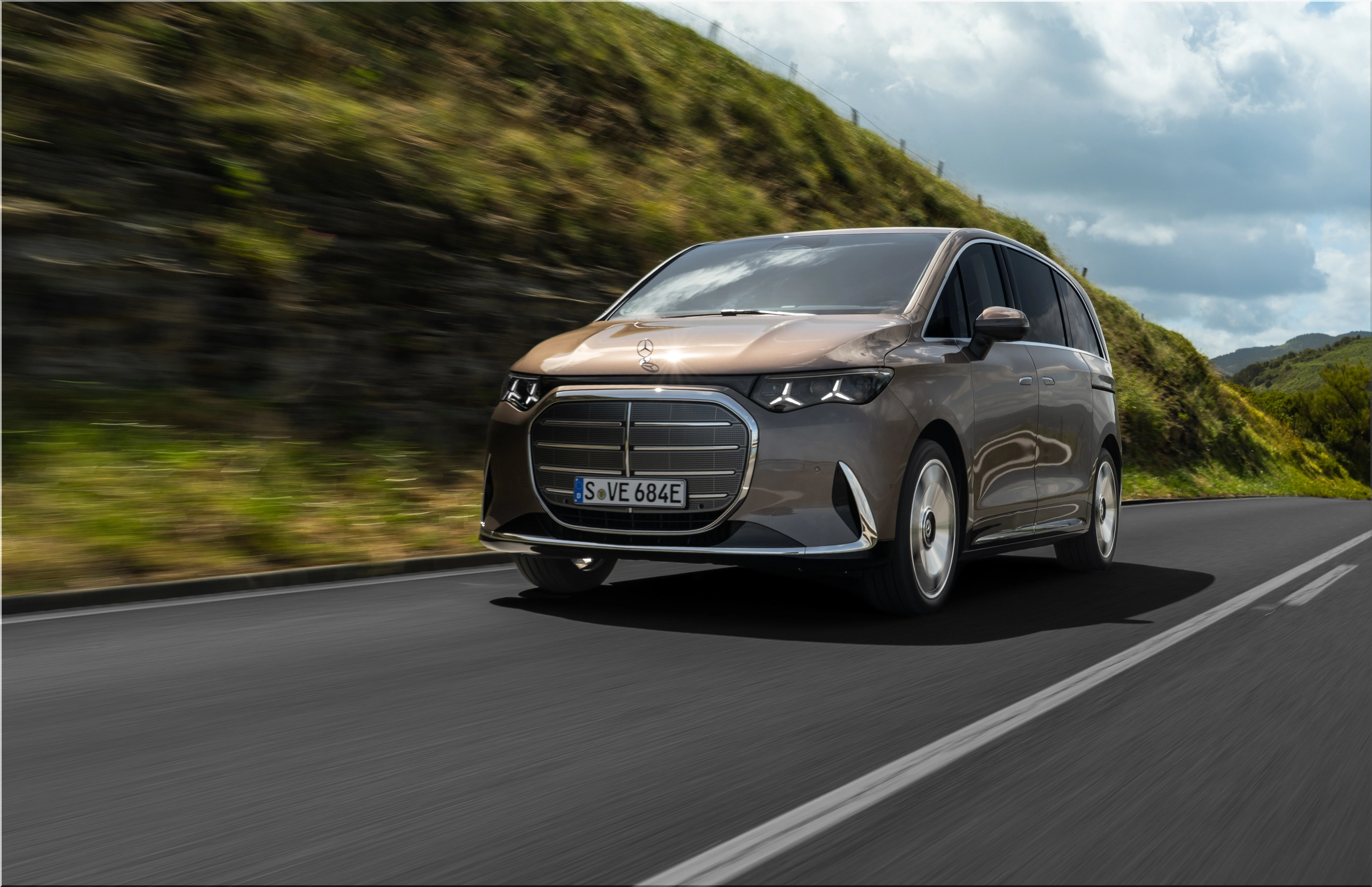
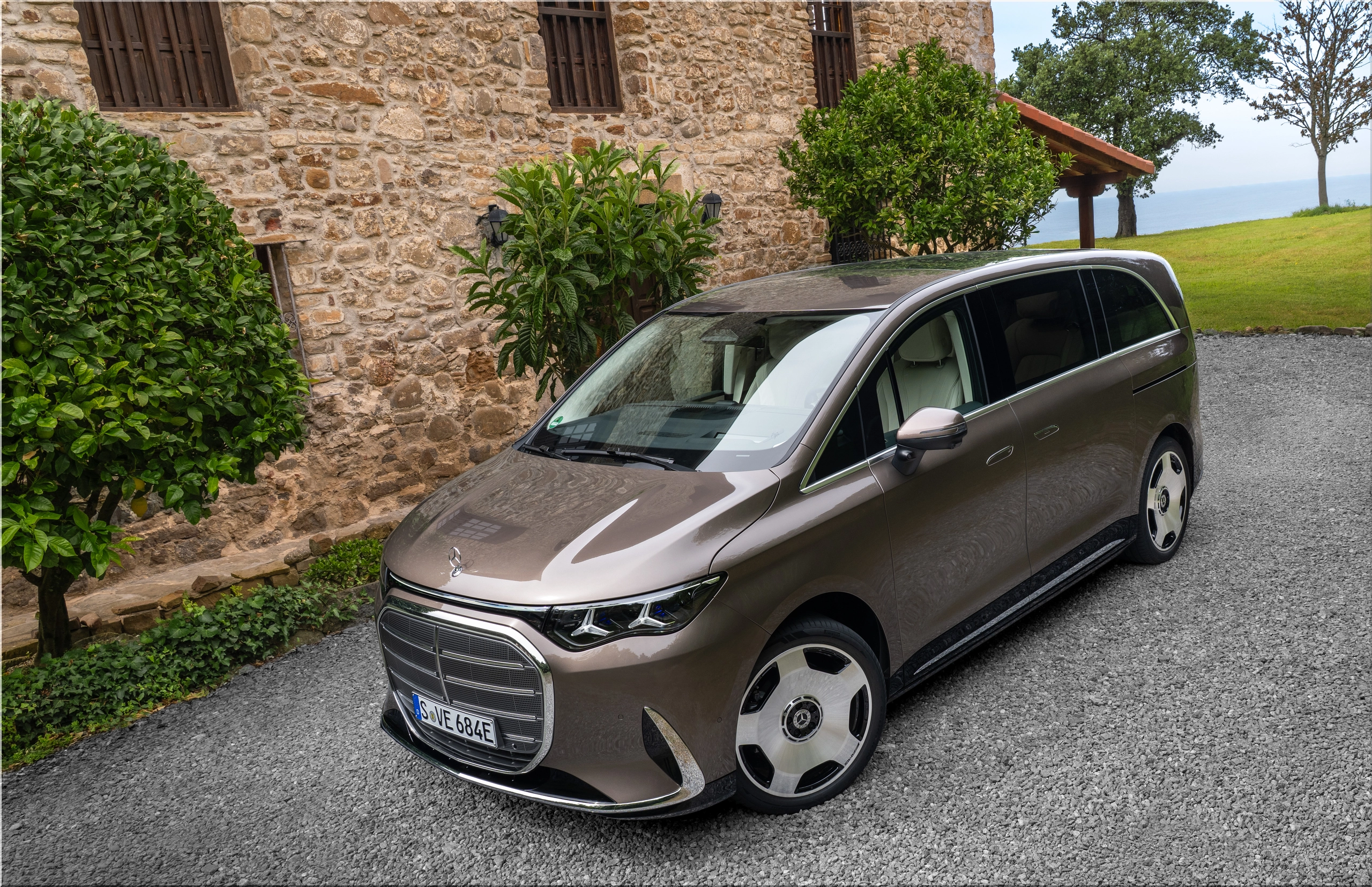
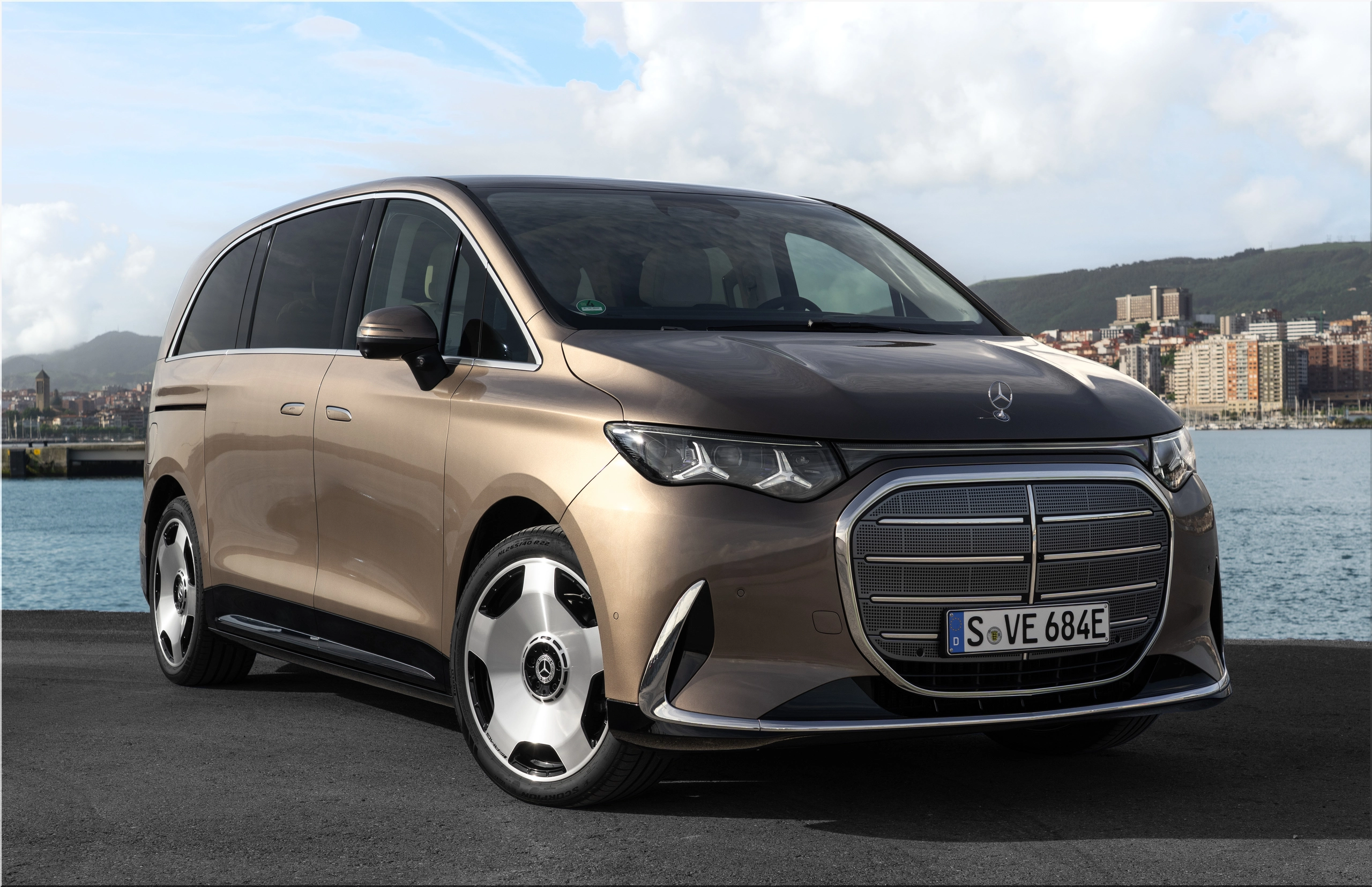
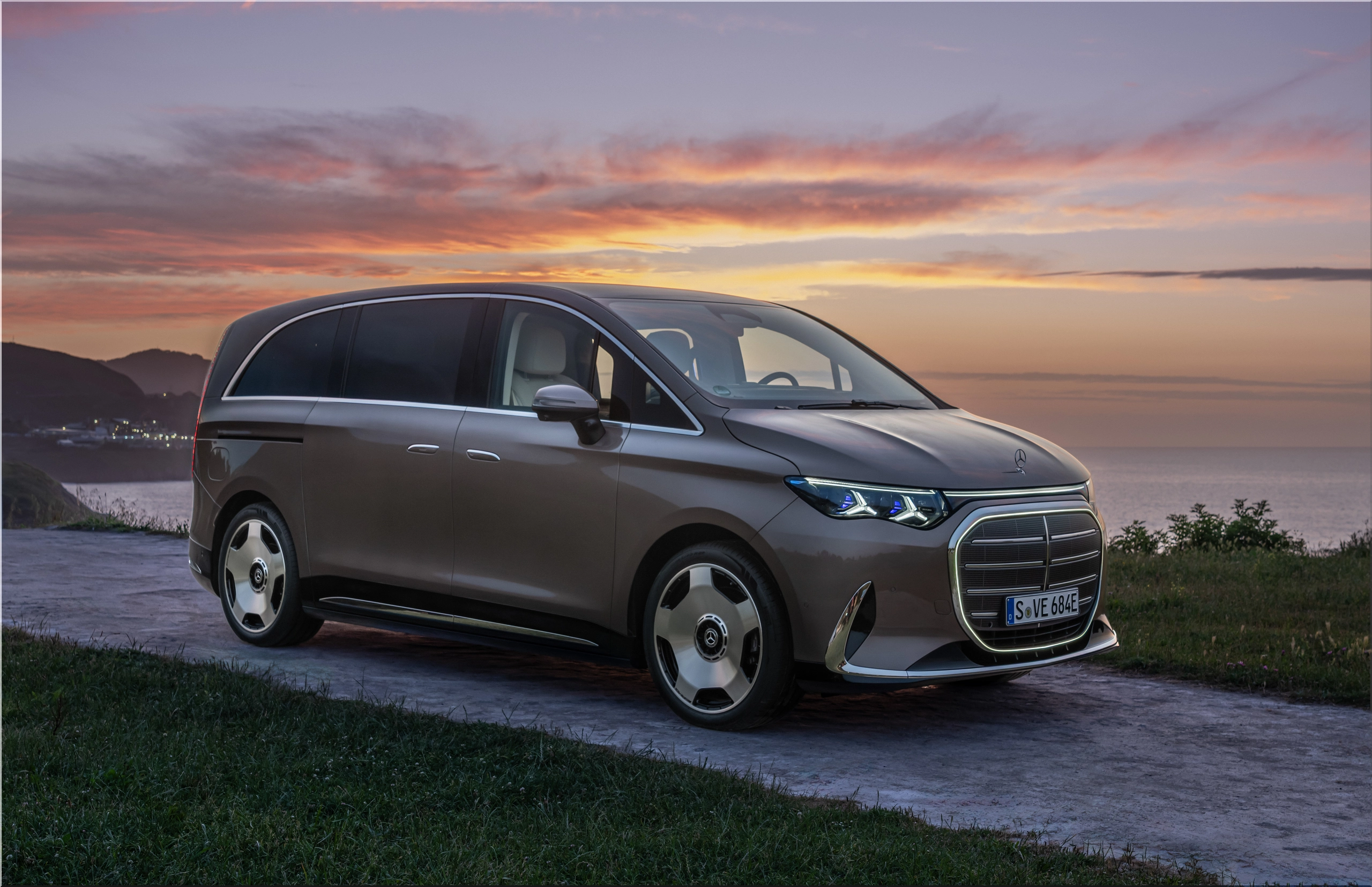
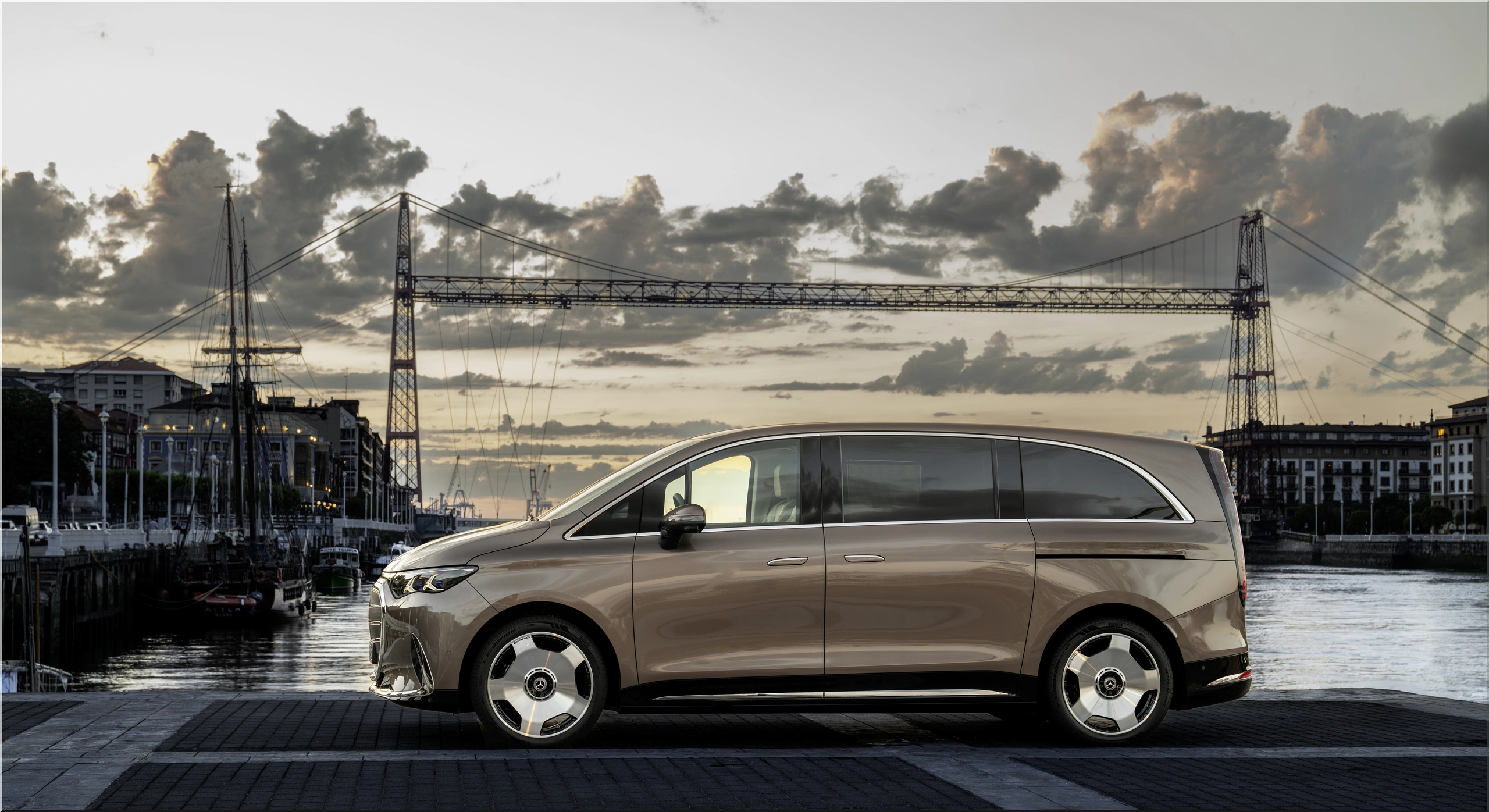
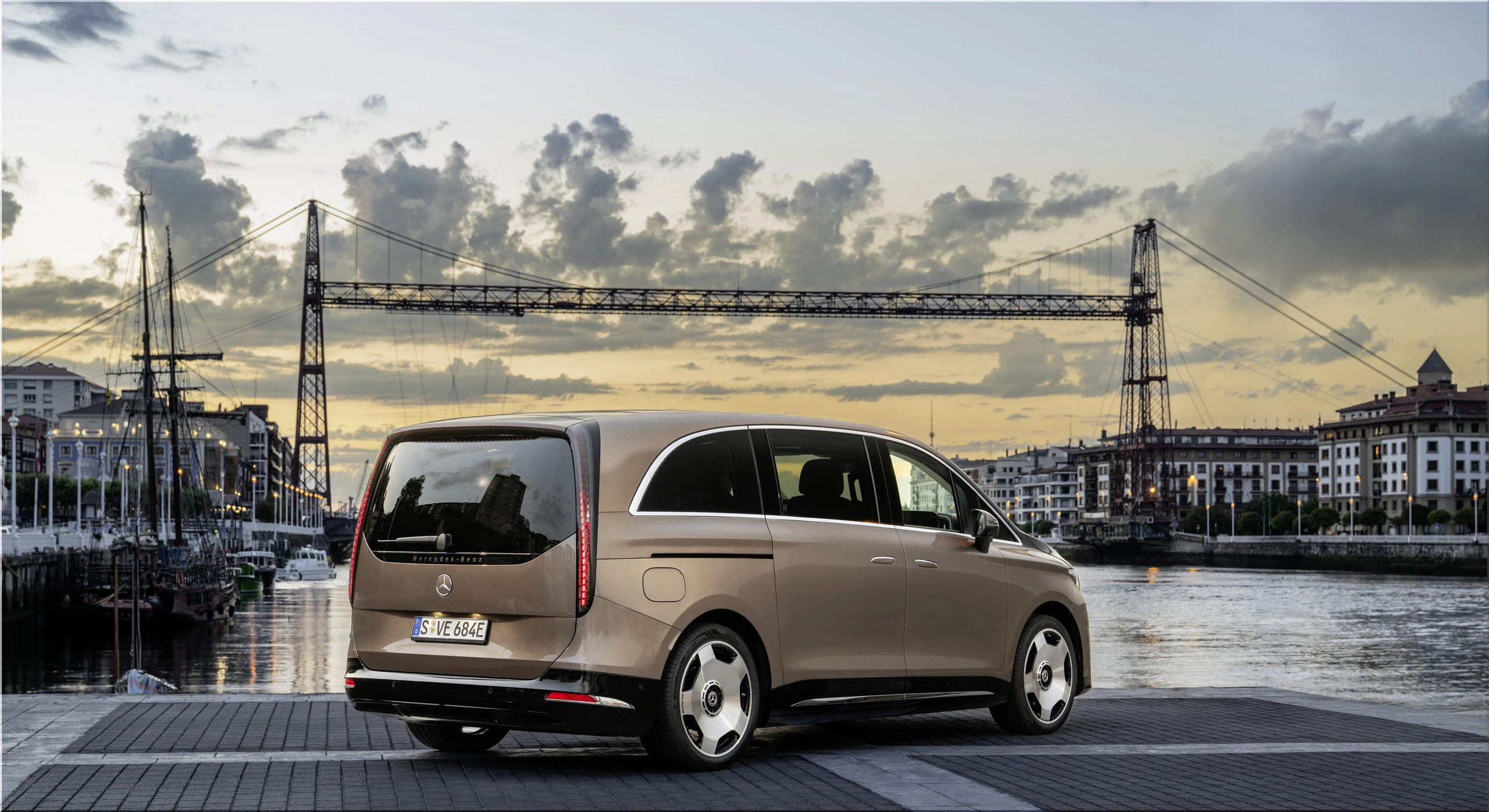
The Mercedes-Benz VLE lands at a useful moment for Europe. Buyers want electric range without SUV packaging penalties, private shuttle operators want quiet cabins without diesel image risk, and families still need space that a three-row crossover often pretends to have. The Mercedes-Benz VLE electric van targets that gap with up to eight seats, 800-volt charging, and a new VAN.EA electric architecture.
Image
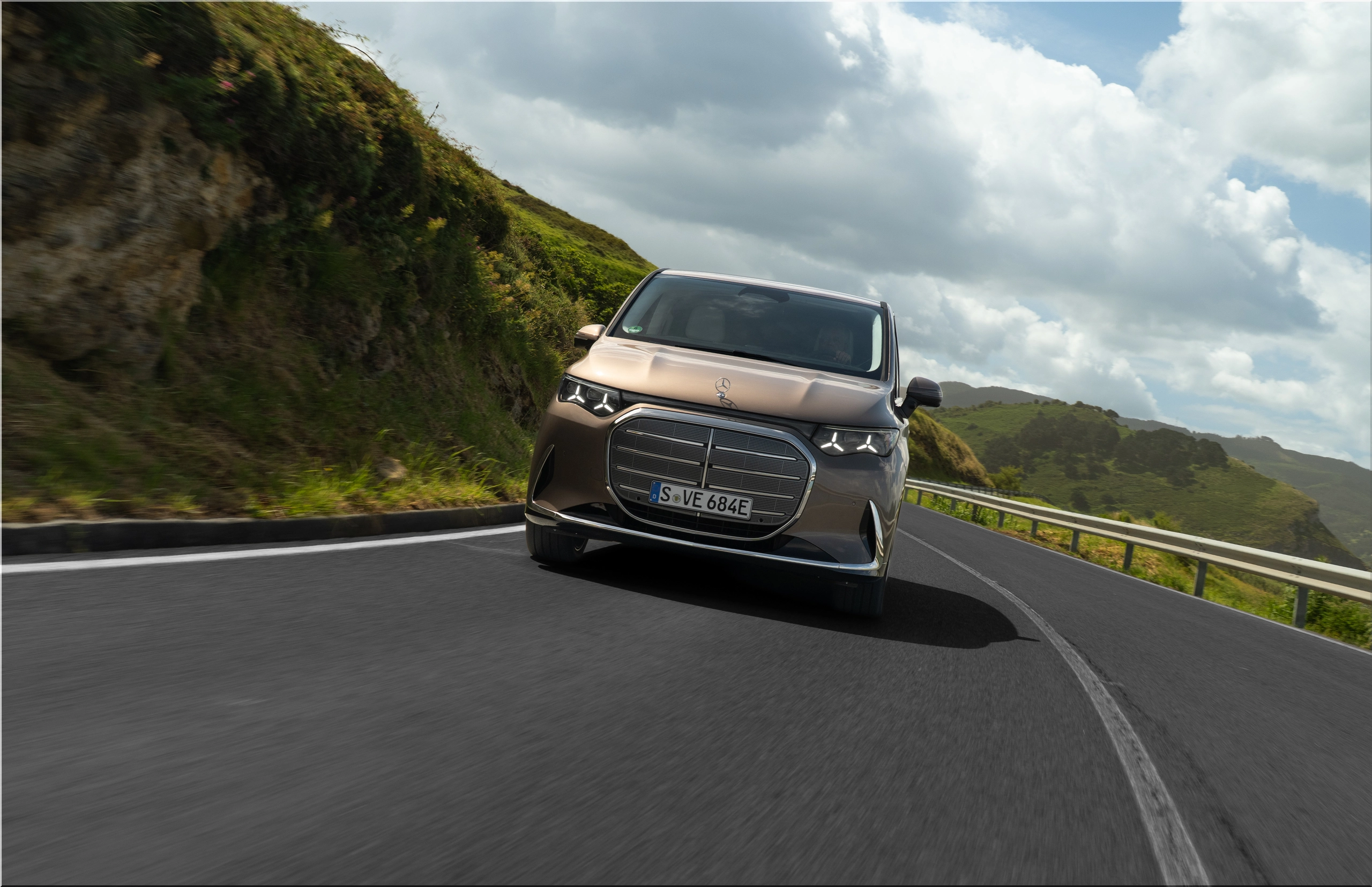
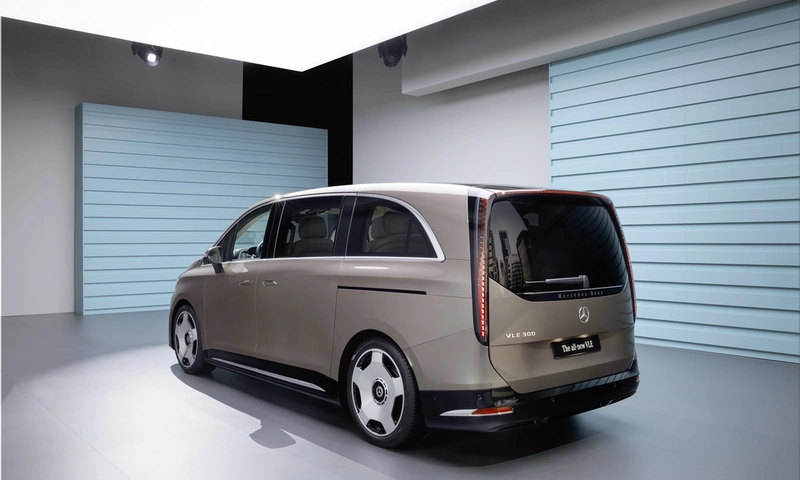
The first production model, the Mercedes-Benz VLE 300, starts the rollout from the Vitoria plant in Spain. It uses a large usable battery, a front electric motor, air suspension, rear-axle steering, and a cabin layout that can change from executive transport to airport-run luggage hauler without drama.
Mercedes-Benz VLE 300 Specs: Range, Battery, Charging And Size
Looking at the data, Mercedes aimed the VLE at long-distance duty first. The headline numbers put it well ahead of the outgoing EQV and directly into premium electric shuttle territory.
| Mercedes-Benz VLE 300 data point | Figure |
|---|---|
| Platform | VAN.EA electric van architecture |
| Battery | 115 kWh usable NMC pack |
| Electrical system | 800 volts |
| Peak DC charging | Up to 300 kW |
| Added WLTP range in 15 minutes | Up to 355 km |
| WLTP range | More than 700 km, up to 713 km by configuration |
| Power | 203 kW, about 276 PS |
| Drive | Front-wheel drive |
| Seating | 5, 6, 7, or 8 seats |
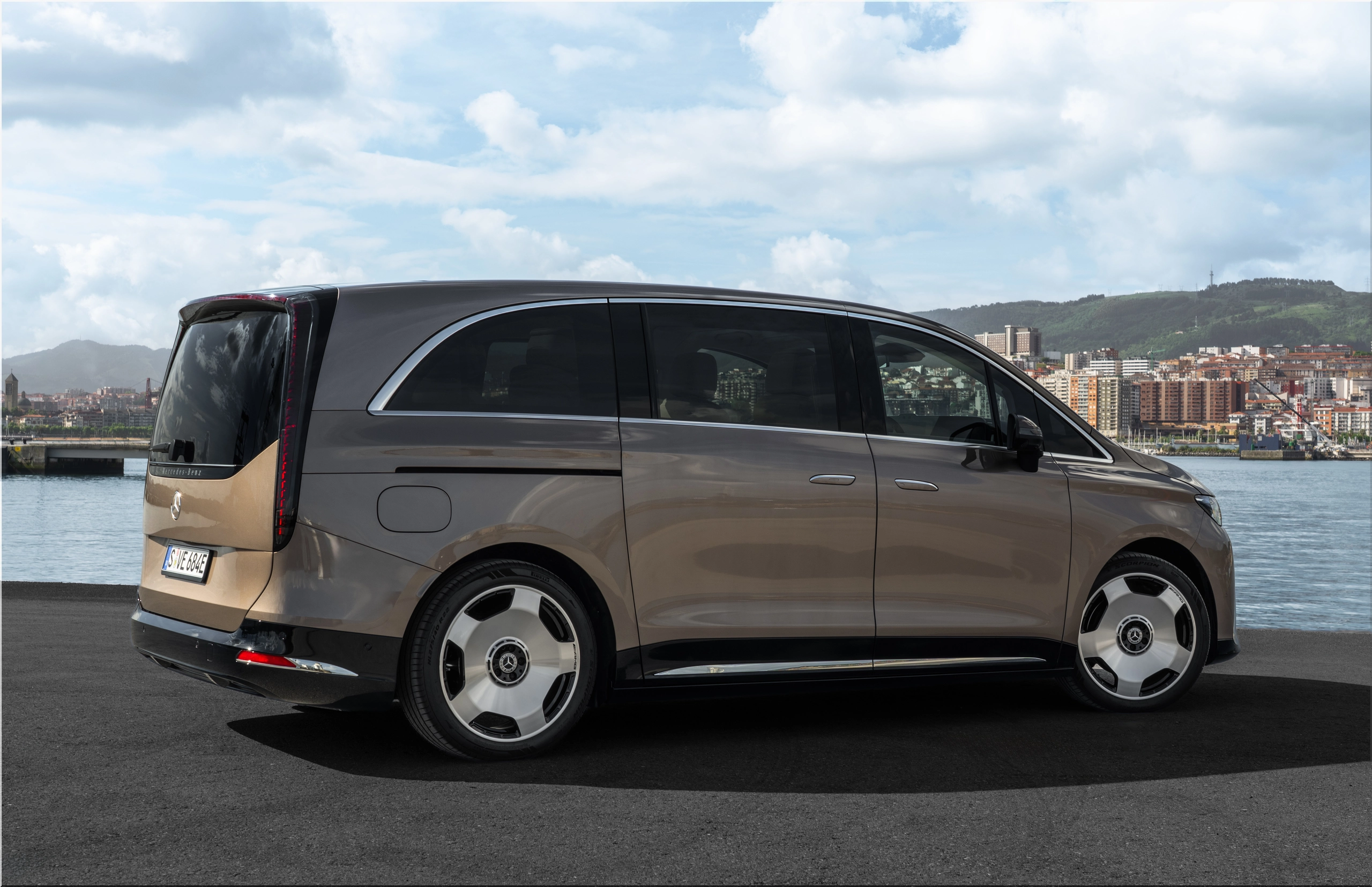
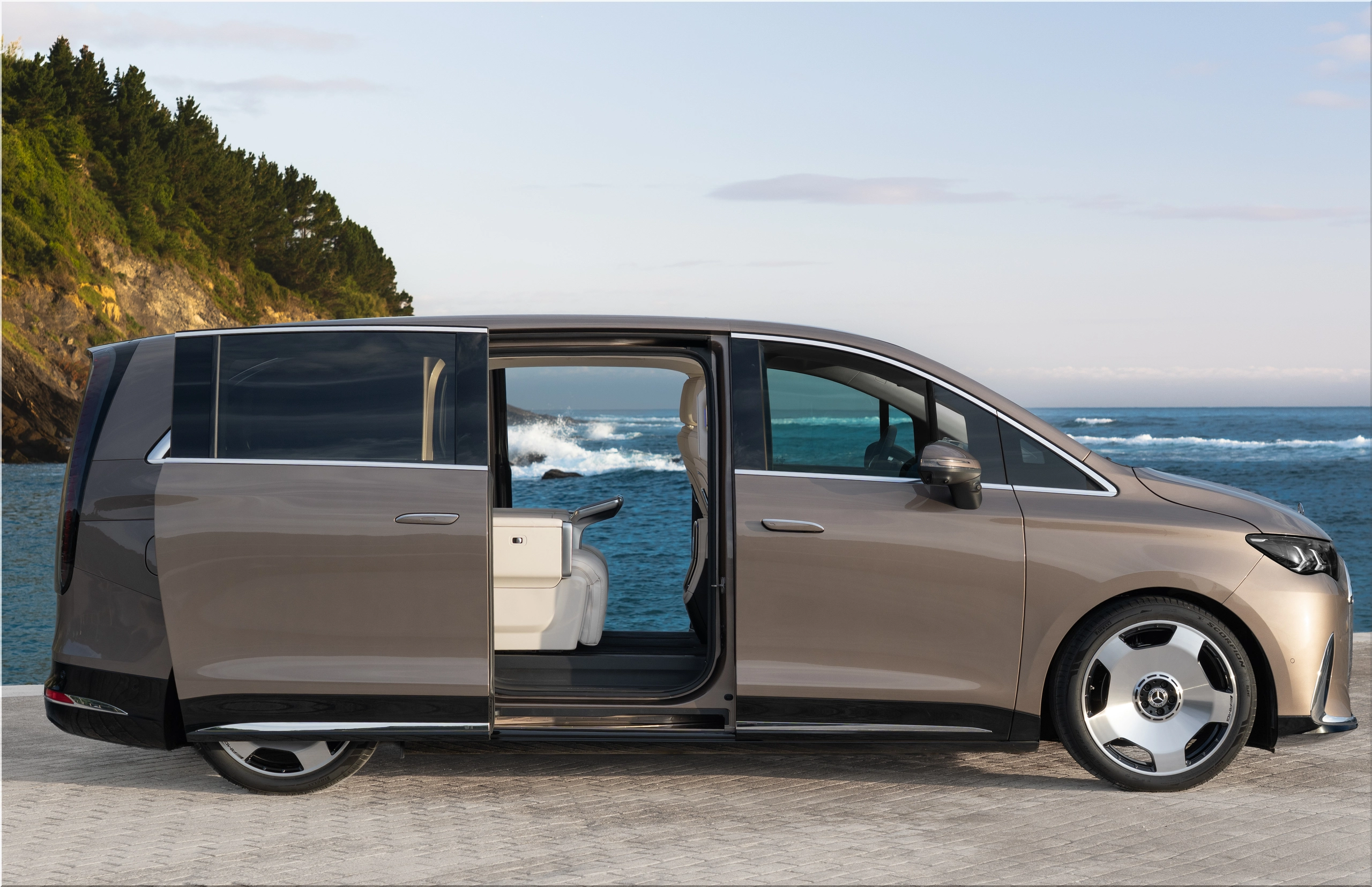
| Standard body length | 5,309 mm / 209.0 in |
| Long body length | 5,484 mm / 215.9 in |
| Width | 1,999 mm / 78.7 in |
| Height | 1,943 mm / 76.5 in |
| Wheelbase | 3,343 mm / 131.6 in |
| Cargo volume with seats removed | Up to about 4,300 litres / 152 cu ft |
Specifically, the 115 kWh battery gives the VLE enough usable capacity to work as a true long-range electric MPV, not a short-hop city shuttle. At a claimed sub-20 kWh/100 km efficiency target, the van uses its aerodynamic work and 800-volt system to reduce charging stops rather than relying only on battery size.
Image
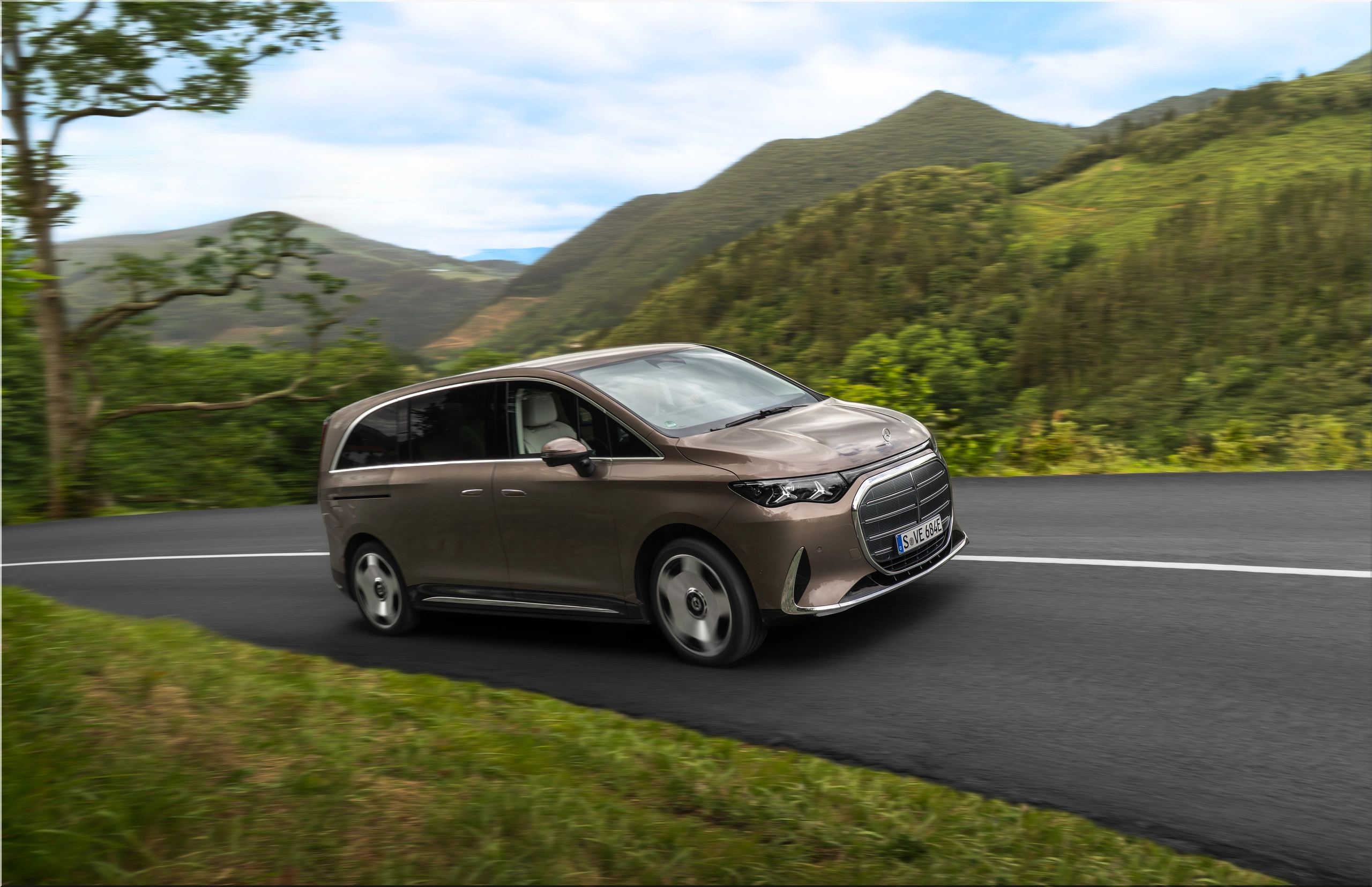
Why The 800-Volt System Matters
The 800-volt electric architecture carries a simple business case: it cuts downtime. A 300 kW peak charging rate can add up to 355 km of WLTP range in 15 minutes under ideal conditions. That makes a lunch stop, hotel transfer gap, or motorway break far more useful.
Consequently, the VLE suits private hire firms, luxury hotels, diplomatic fleets, and larger families who cover serious distance. A 400-volt van with slower DC charging can still work in a city, but it loses time on cross-border runs from Amsterdam to Munich, Paris to Geneva, or Brussels to Milan.
Image
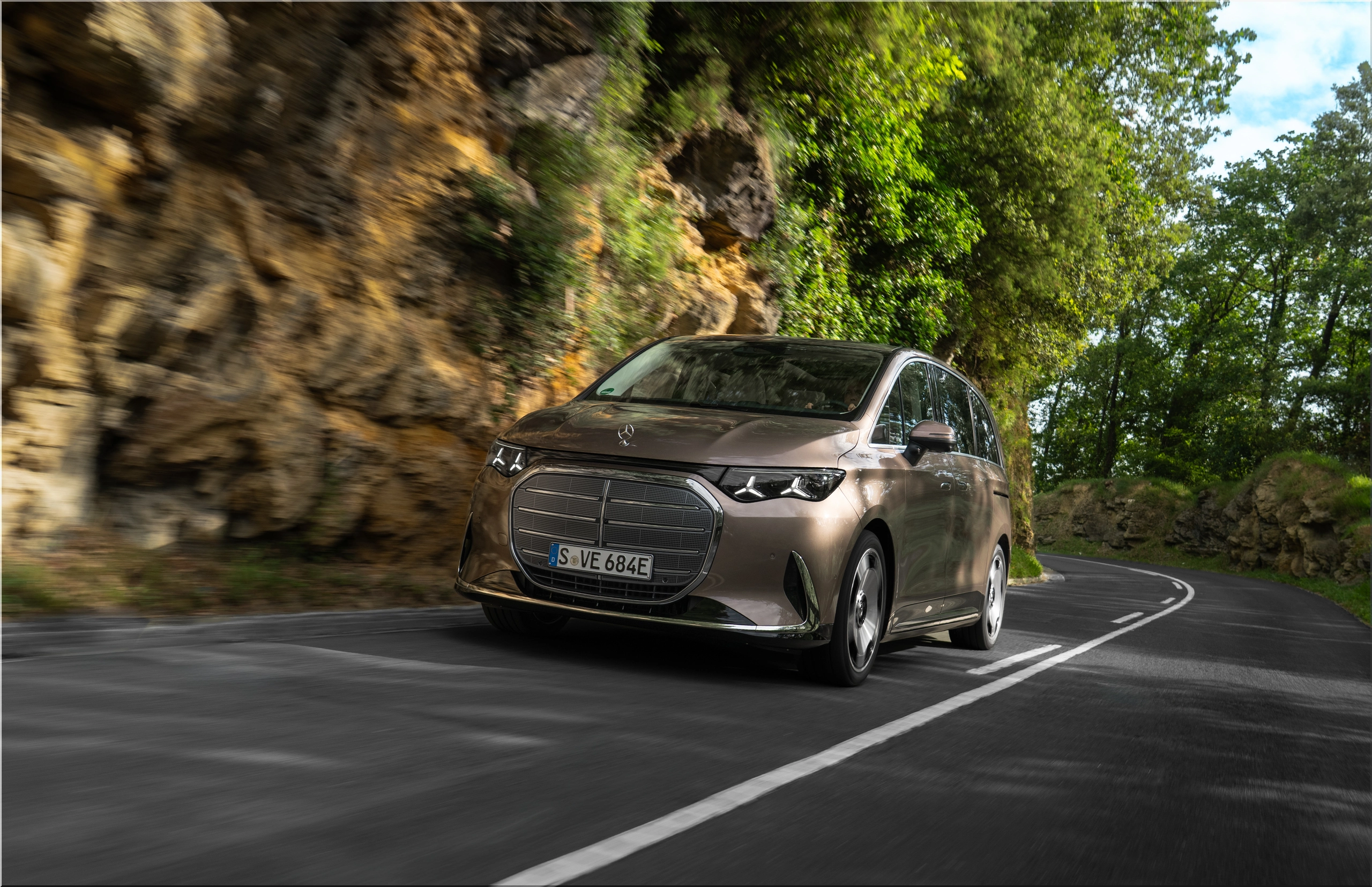
Ride And Handling: The Limousine Logic
Mercedes gives the VLE 300 electric hardware that targets comfort and low-speed control. AIRMATIC air suspension manages body movement and ride height, while rear-axle steering turns the rear wheels by up to seven degrees. In tight car parks, that rear-steer system matters more than another huge screen.
By comparison, a conventional long van can feel awkward because the driver must manage wheelbase, rear overhang, and weight at low speed. The VLE reduces that issue by shrinking its turning behaviour and using adaptive damping to keep the cabin calm when passengers, luggage, and road surfaces change.
Image
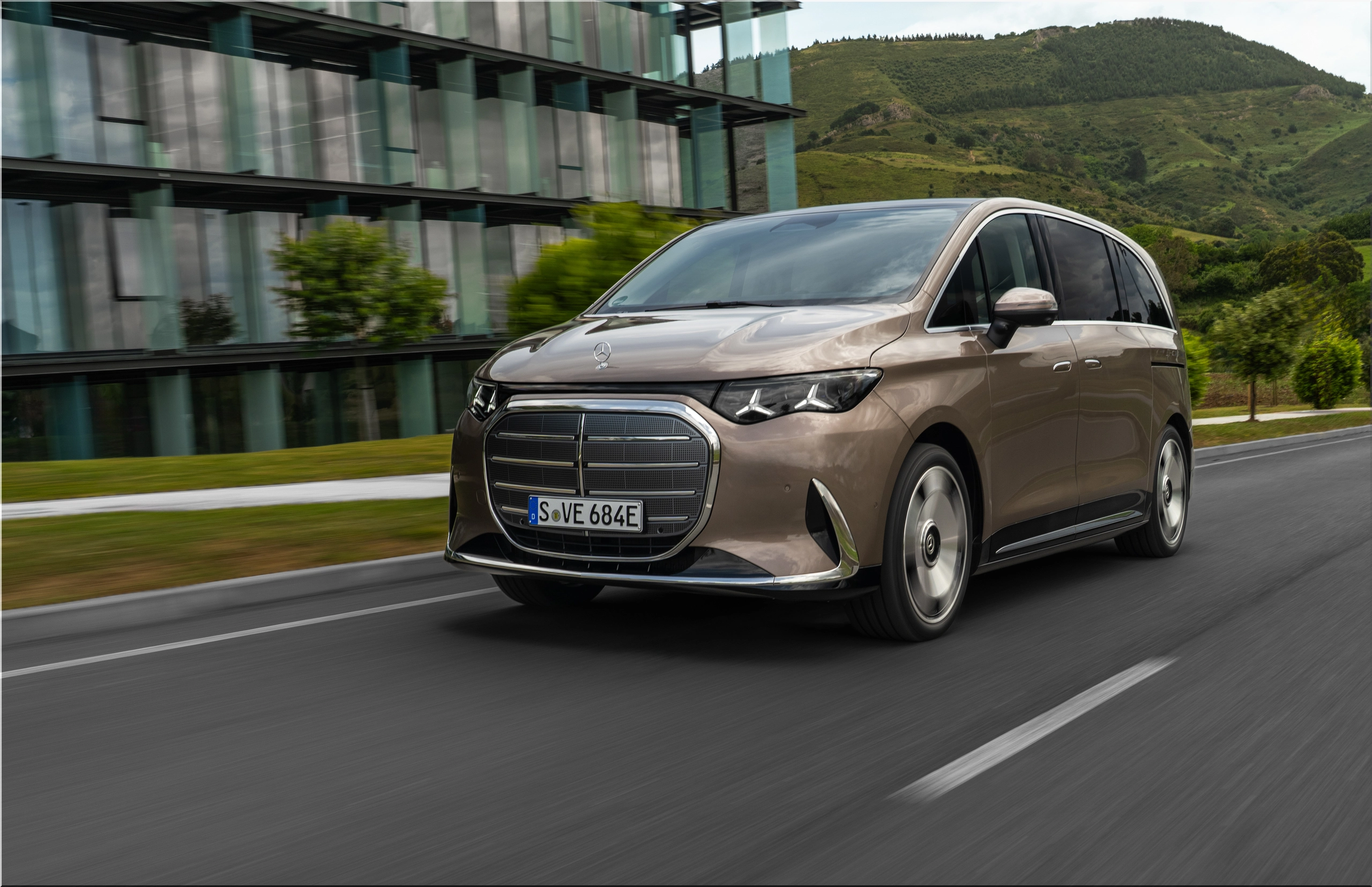
Pro-Tips For Buyers
- Choose rear-axle steering if you drive in city centres, hotel drop-off zones, or multi-storey car parks.
- Pick the 300 kW DC charging capability only if your route gives access to high-power chargers.
- Choose six-seat layouts for executive use, seven or eight seats for family and shuttle duty.
- Wait for VLE 400 4MATIC if you often drive in snow, mountains, or wet rural areas.
Video file
Video title
Mercedes-Benz VLE 300 electric van
Interior: Eight Seats, Sliding Rails And A Rolling Living Room
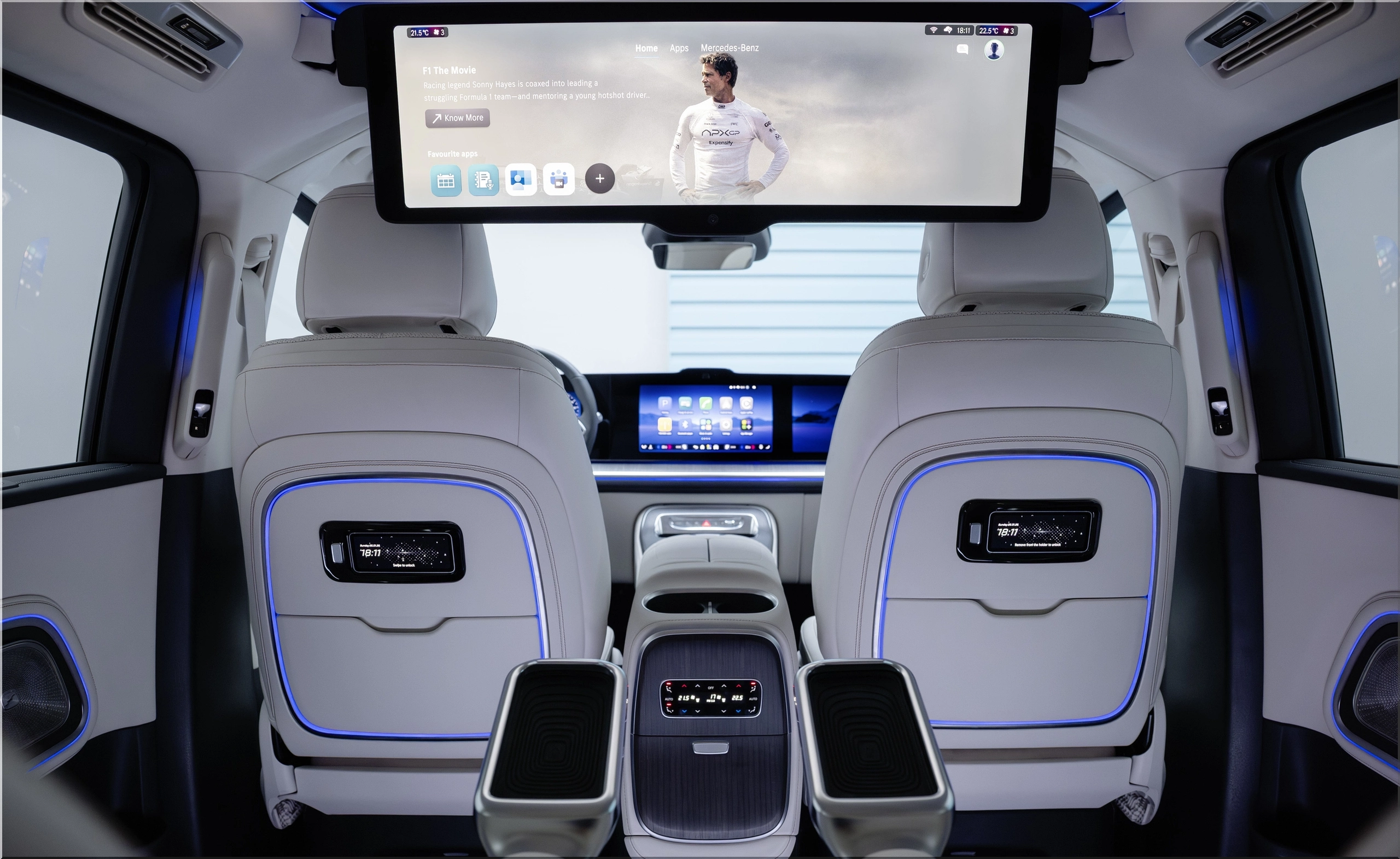
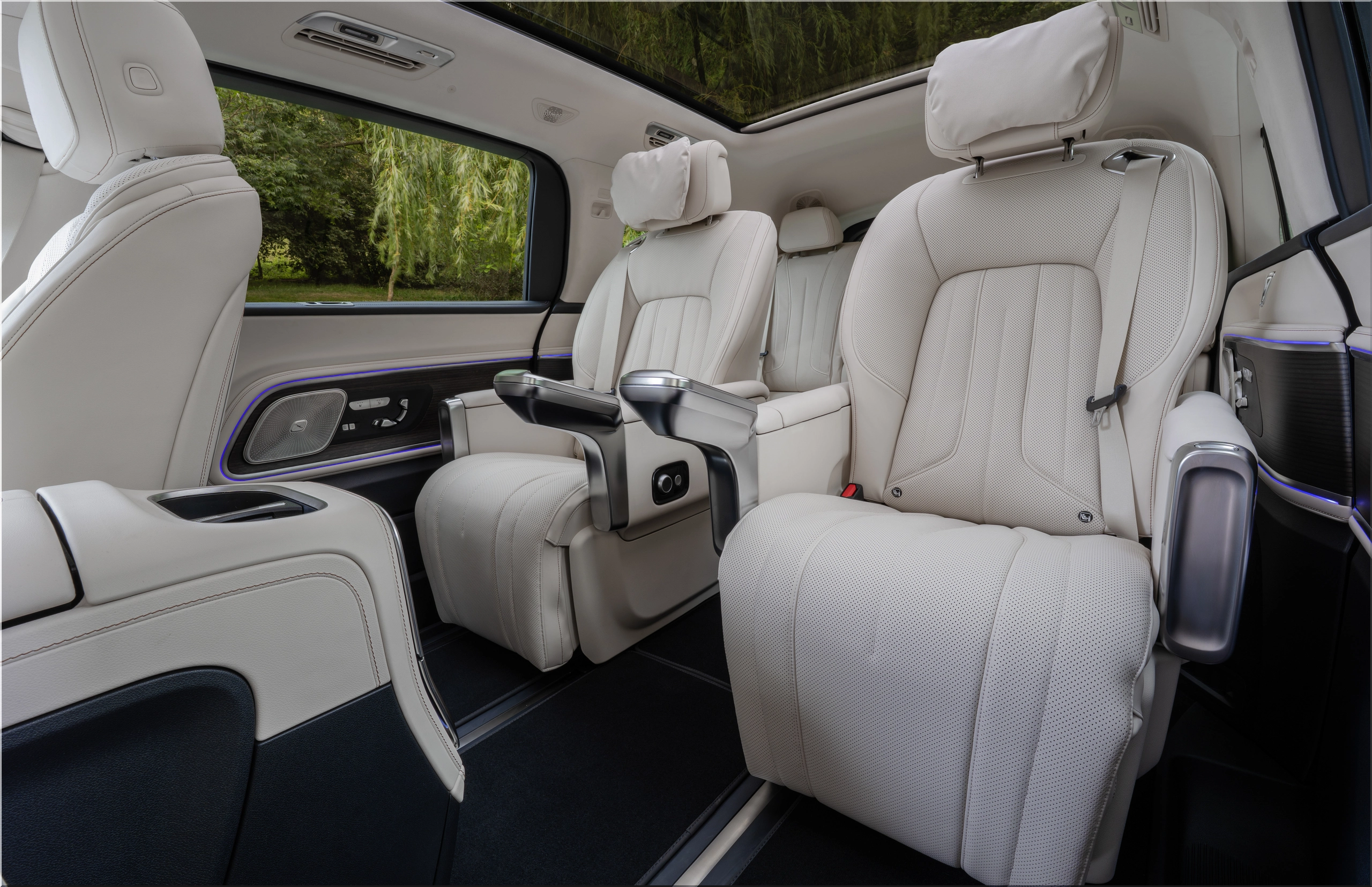
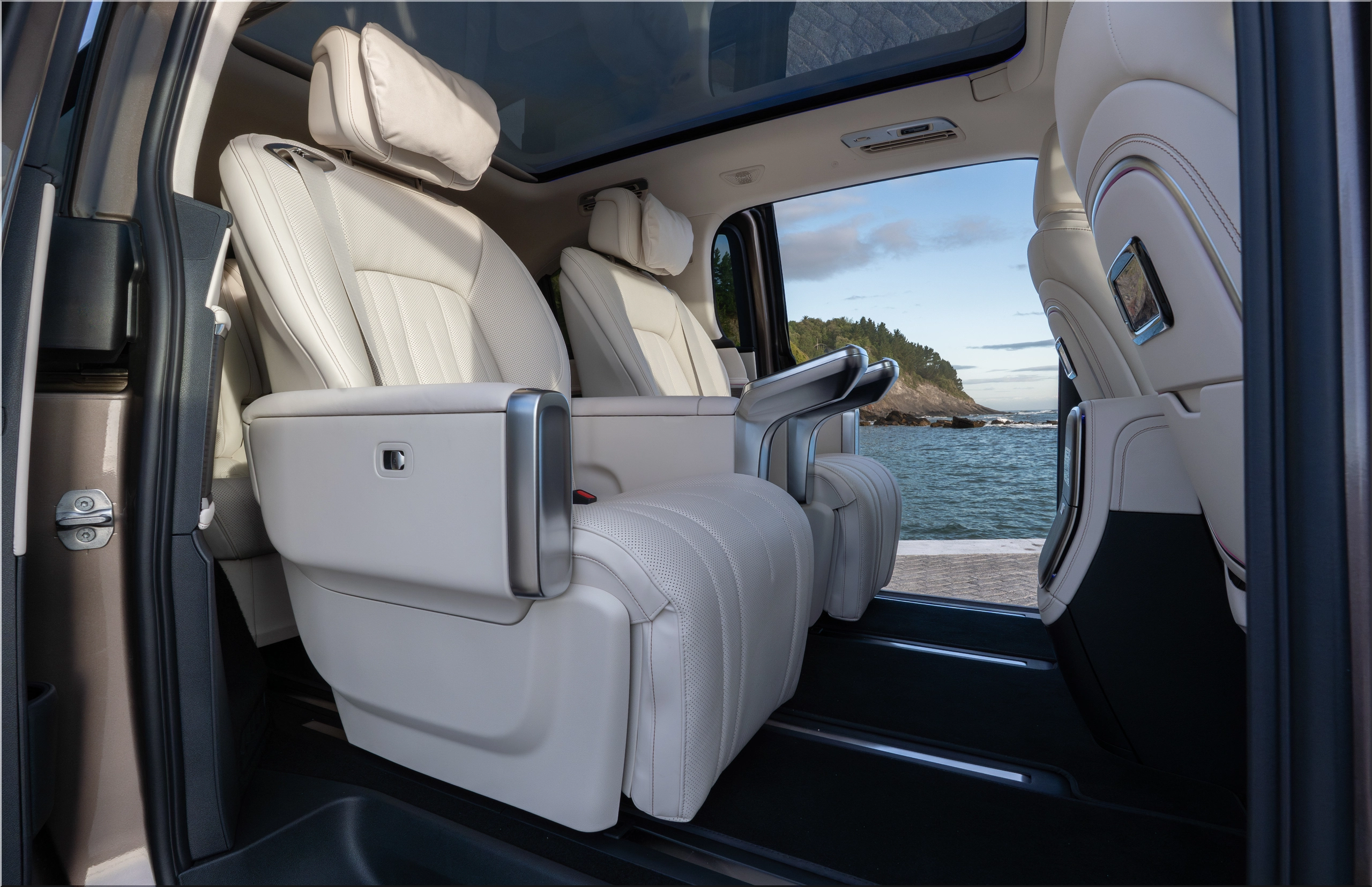
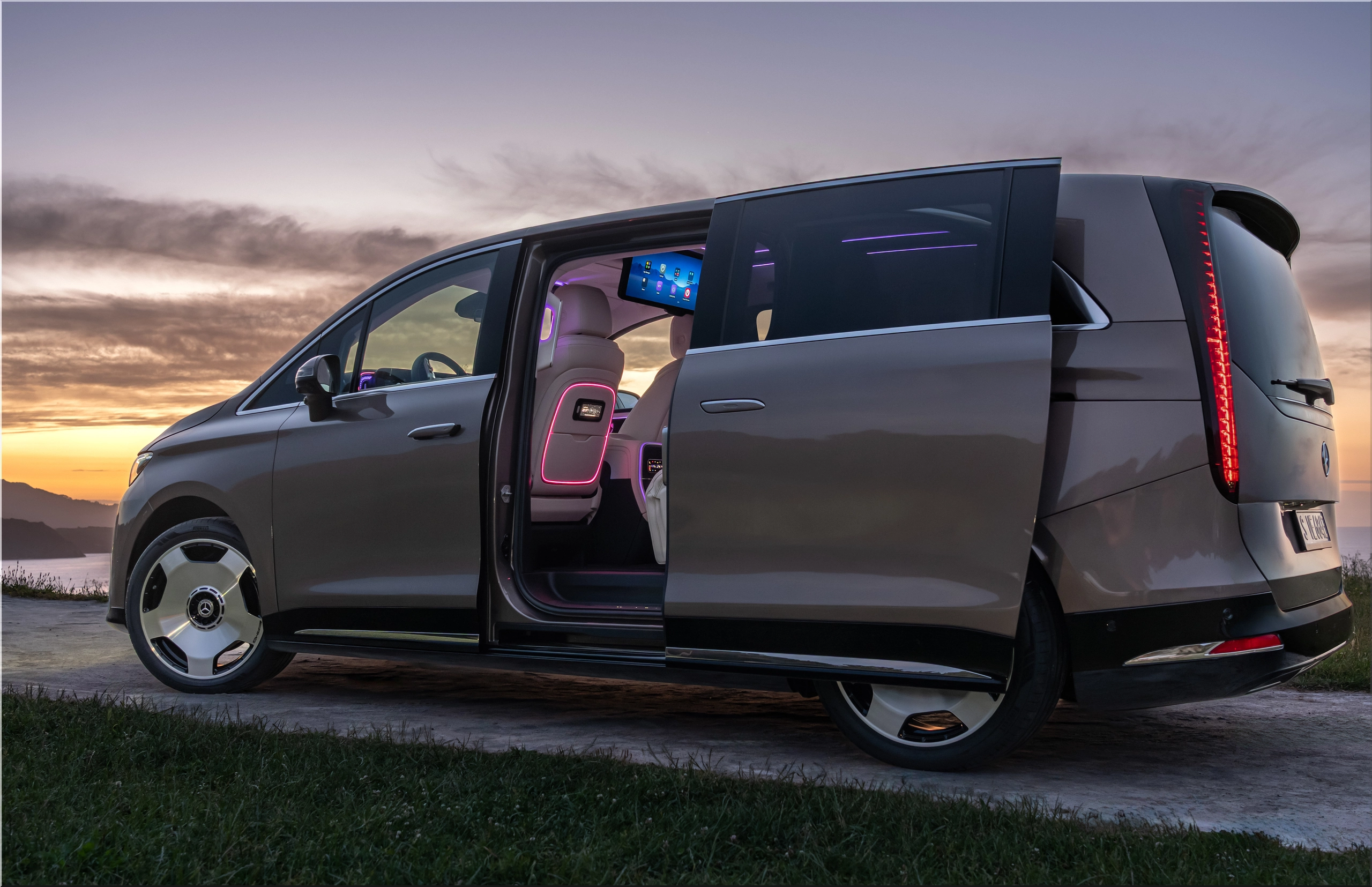
The VLE cabin carries the main sales pitch. The rear seats run on rails, and the Roll & Go system lets owners slide, fold, or remove manual seats with integrated wheels. That cuts the usual pain of moving heavy van chairs and gives the VLE a practical edge over many luxury SUVs.
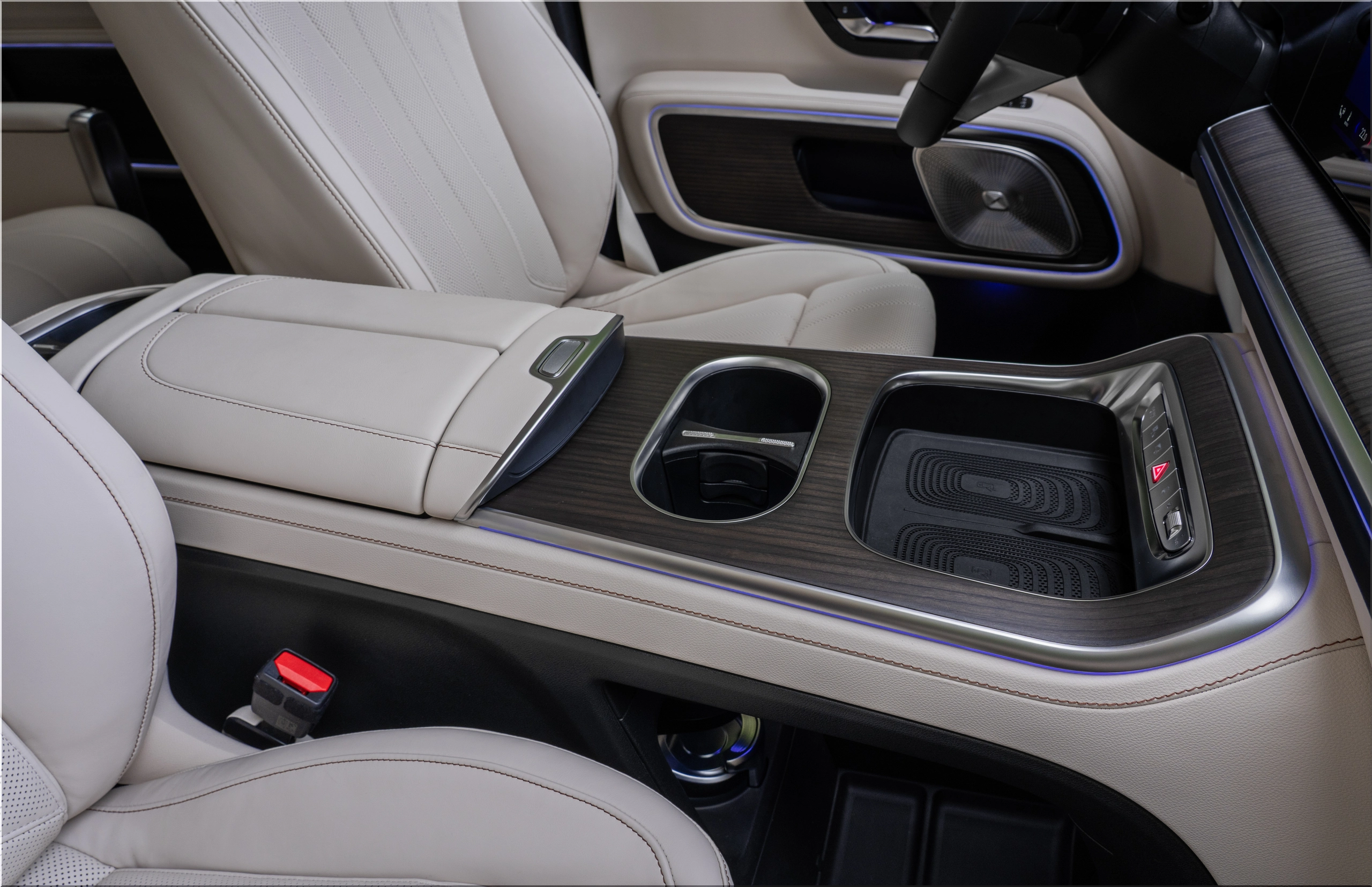
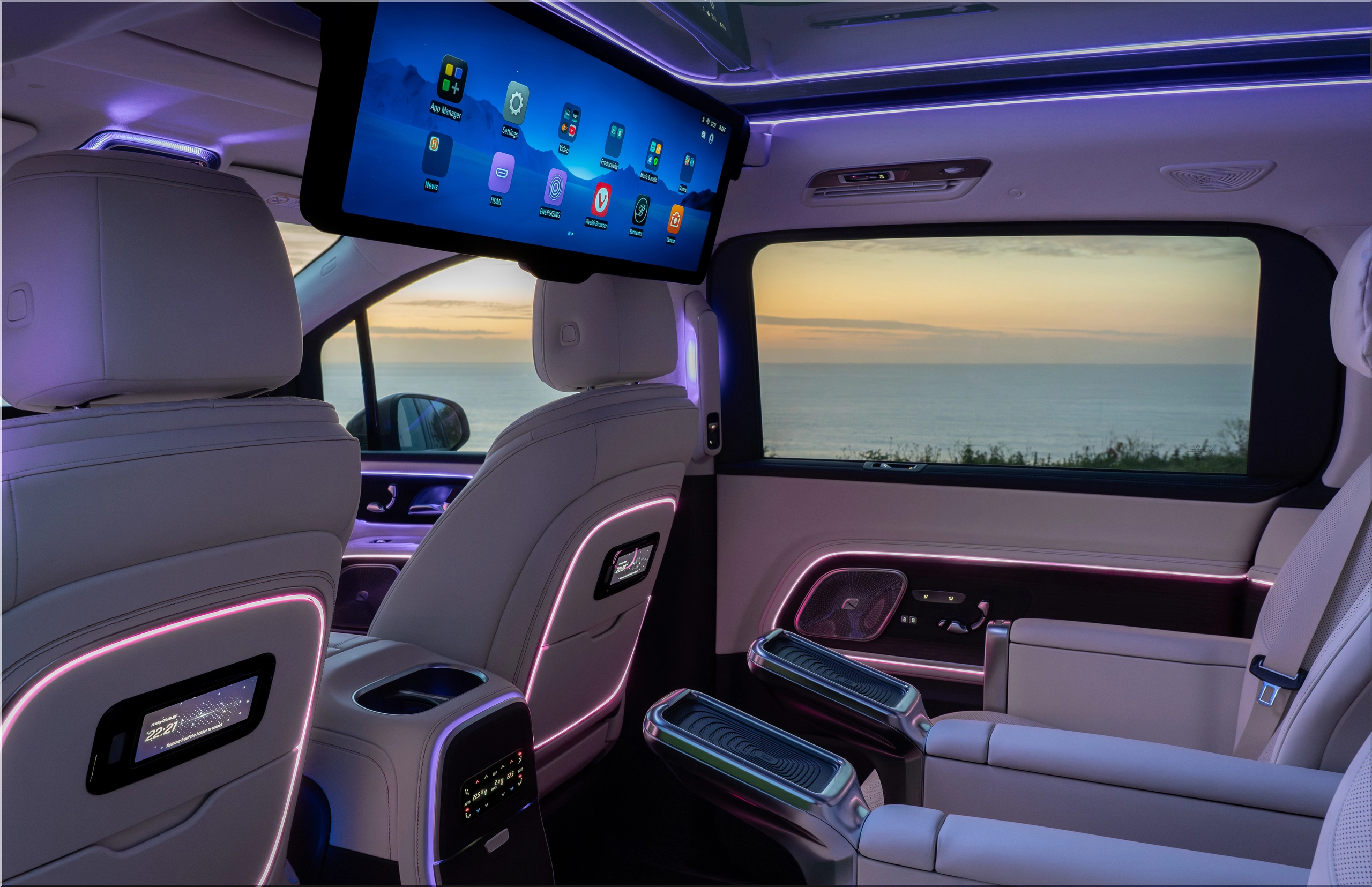
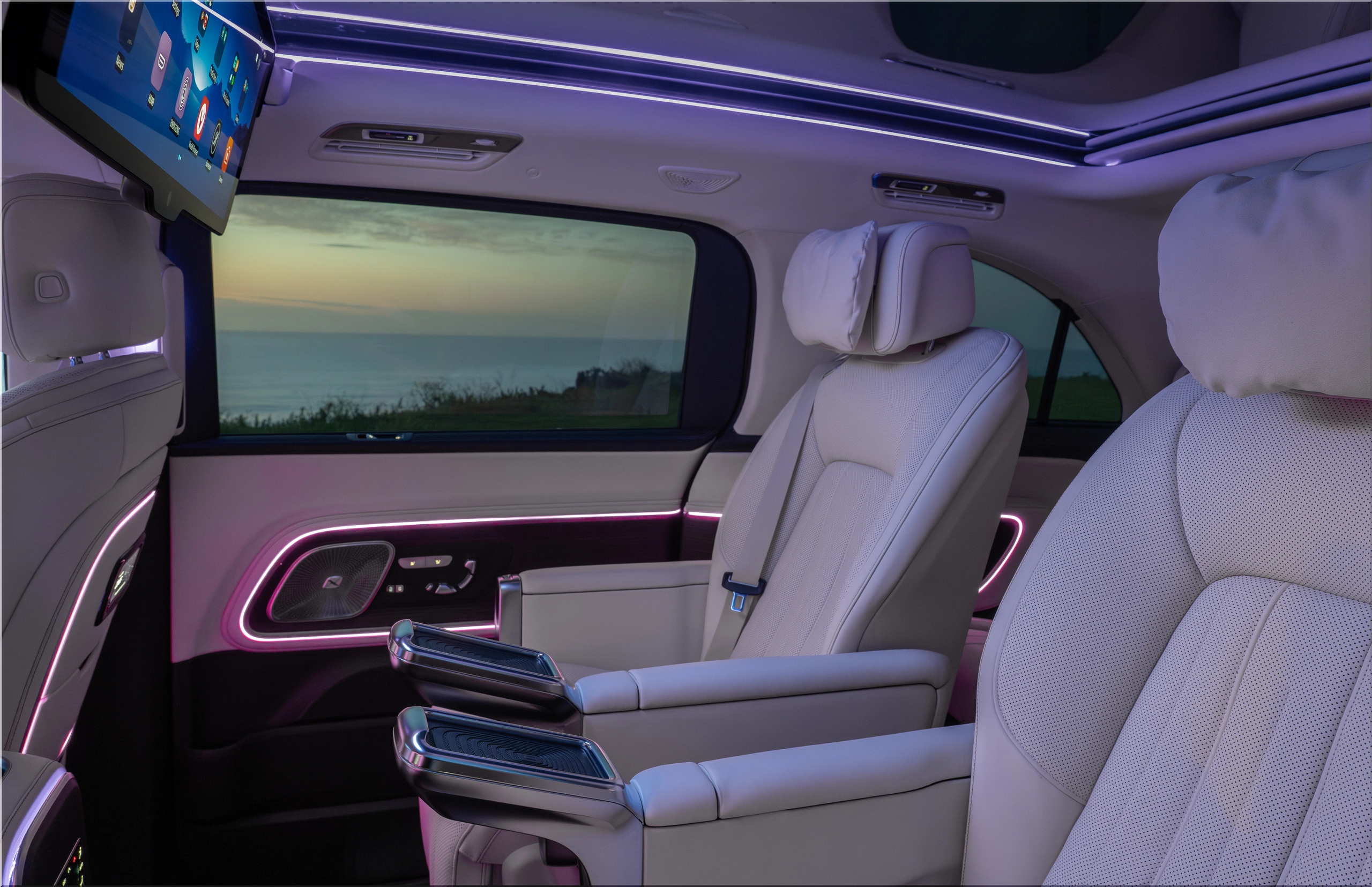
In addition, higher trims add Grand Comfort Seats with massage, calf support, cupholders, extra cushions, wireless phone charging, and electric adjustment. Remote Variable Rear Space lets occupants alter cabin layouts through vehicle controls or the app, with presets for luggage, executive legroom, mixed use, and standard passenger placement.
Image
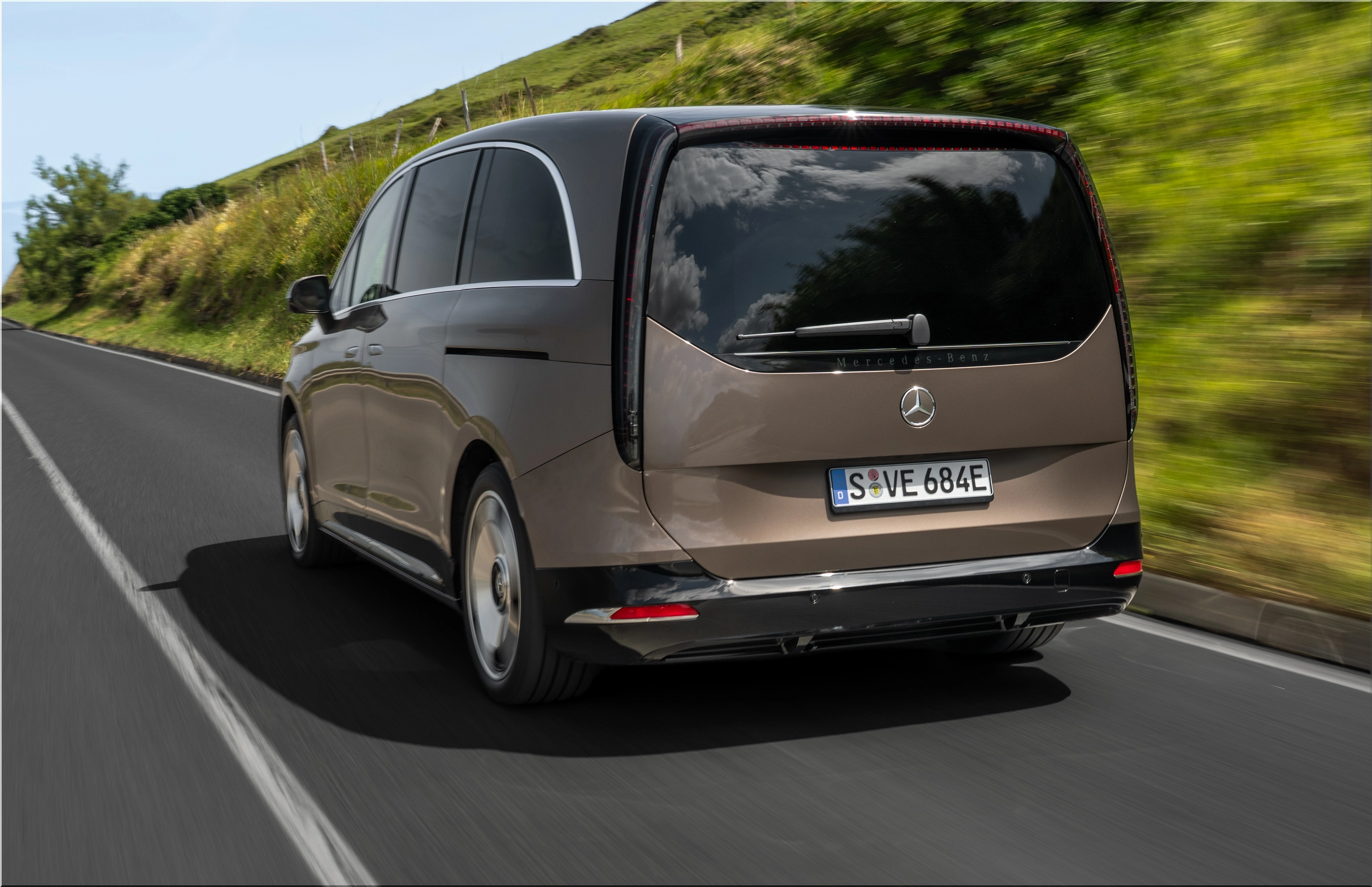
Digital Cabin And Driver Assistance
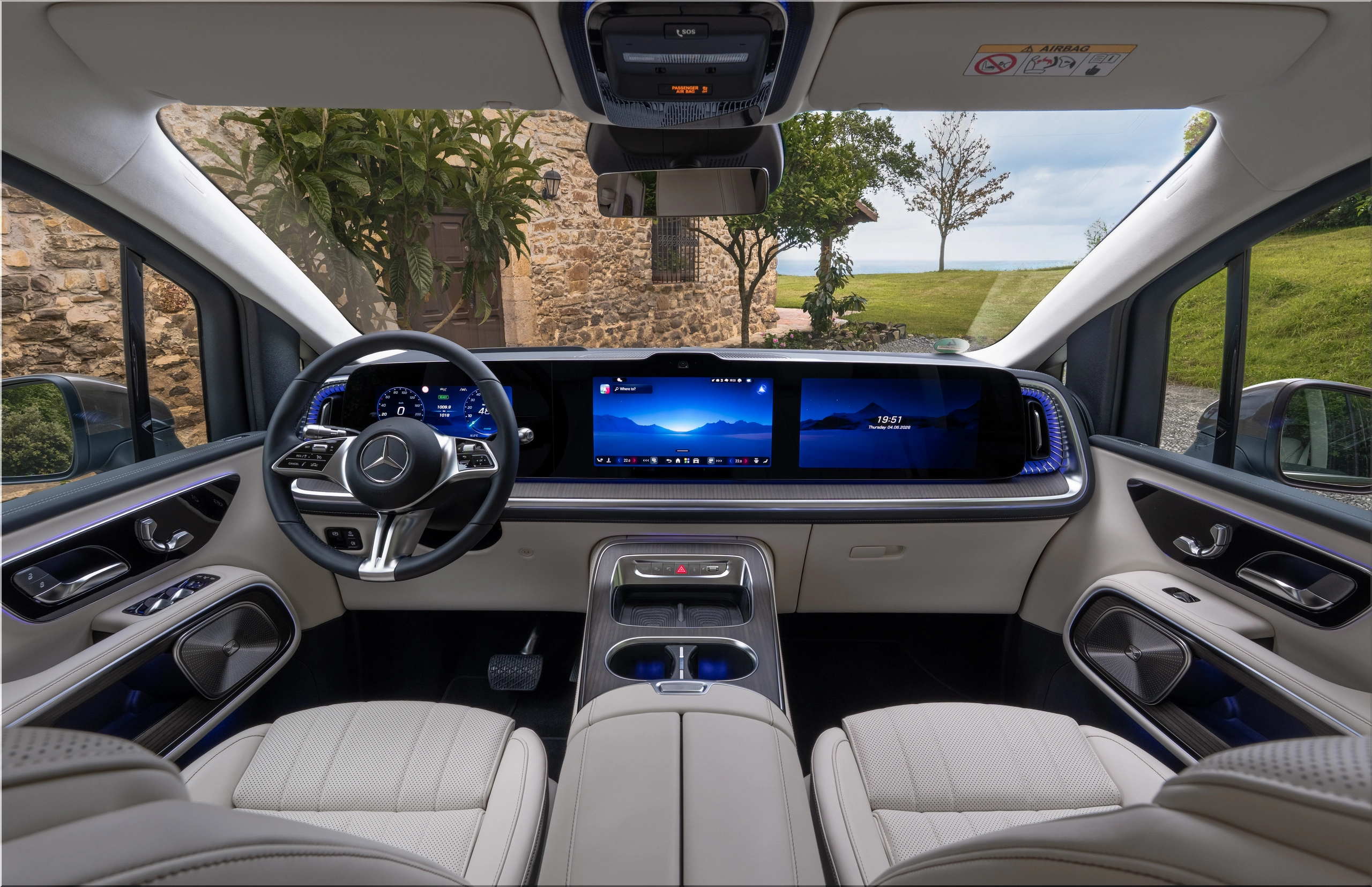
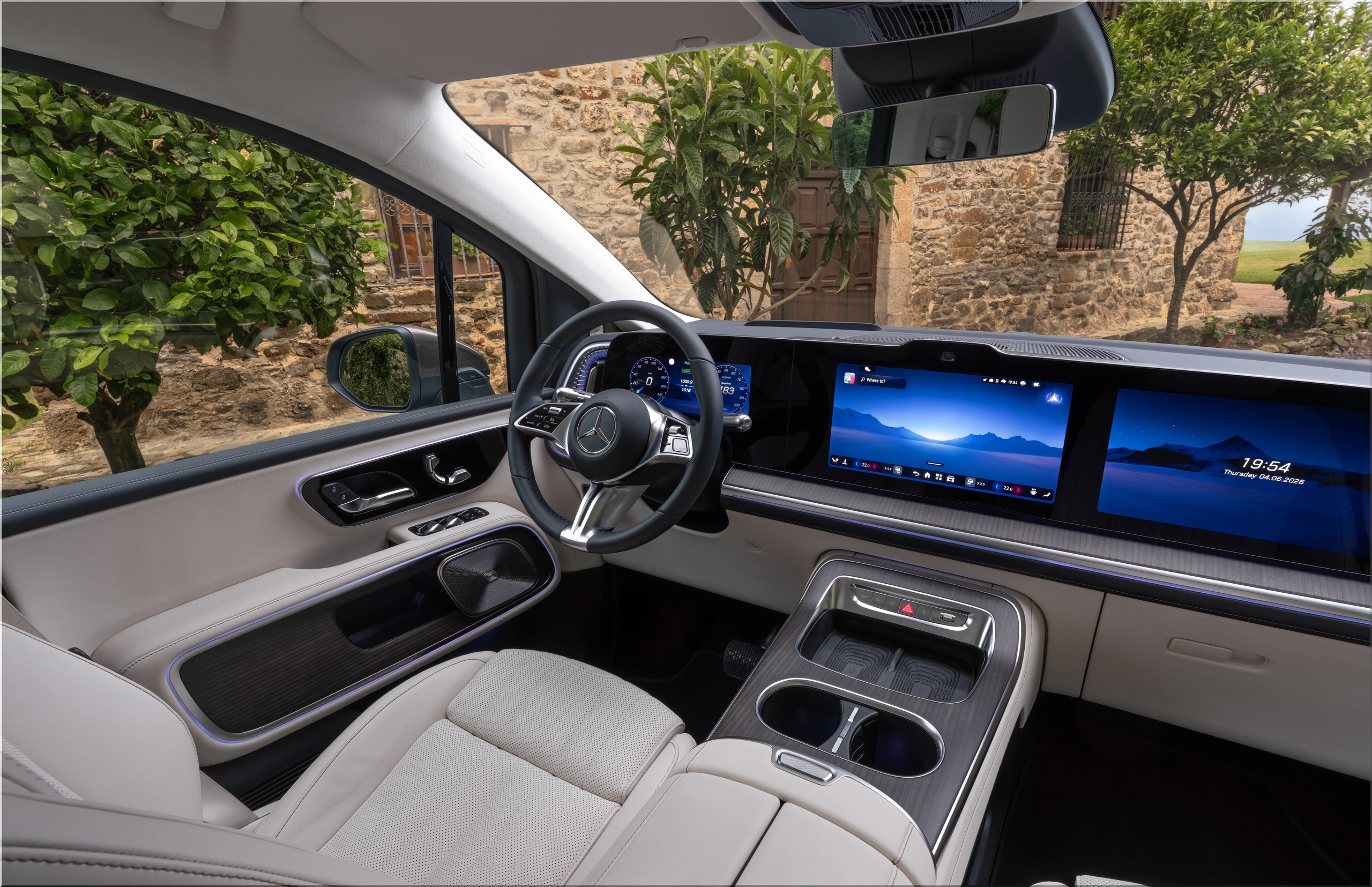
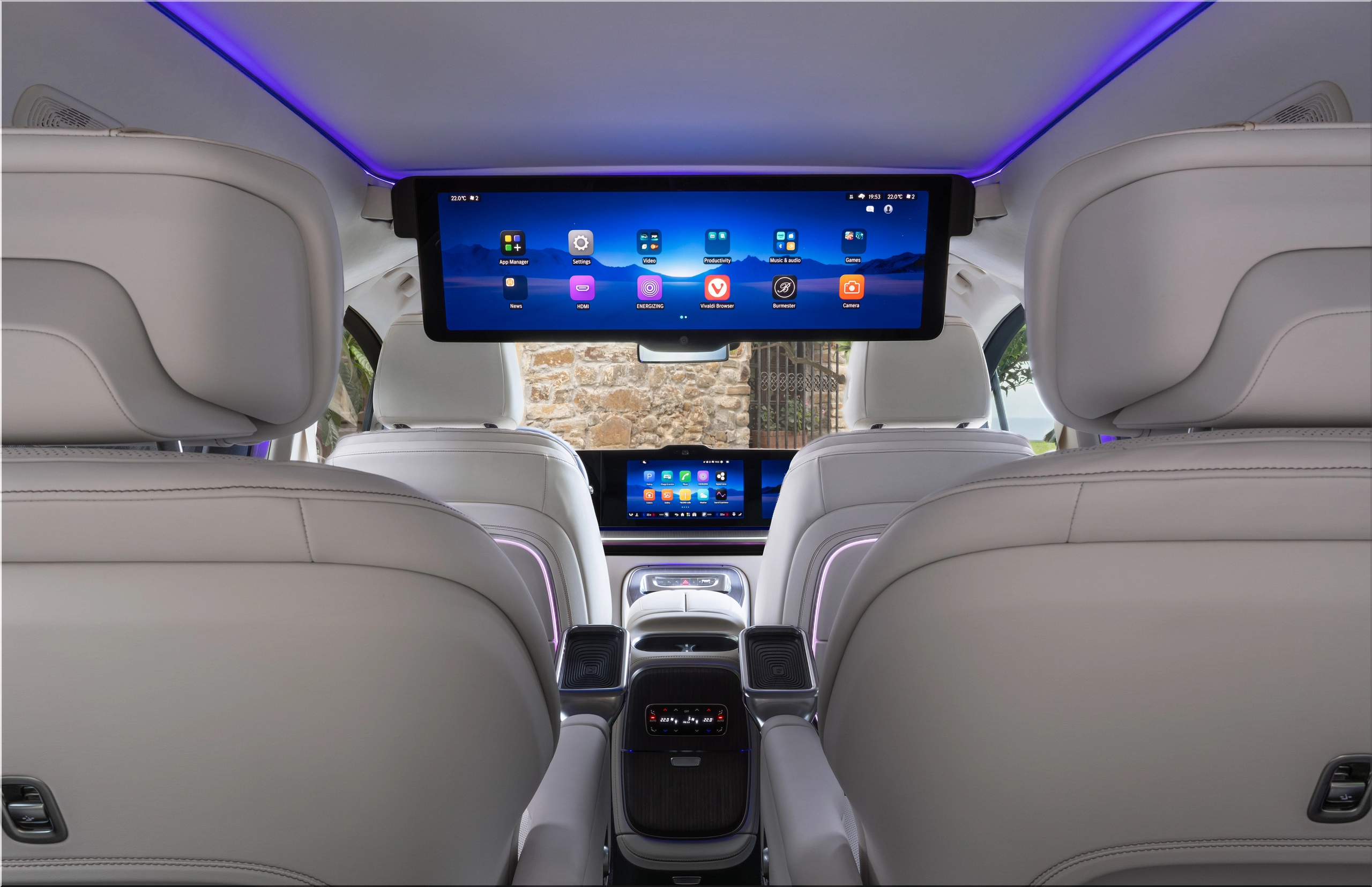
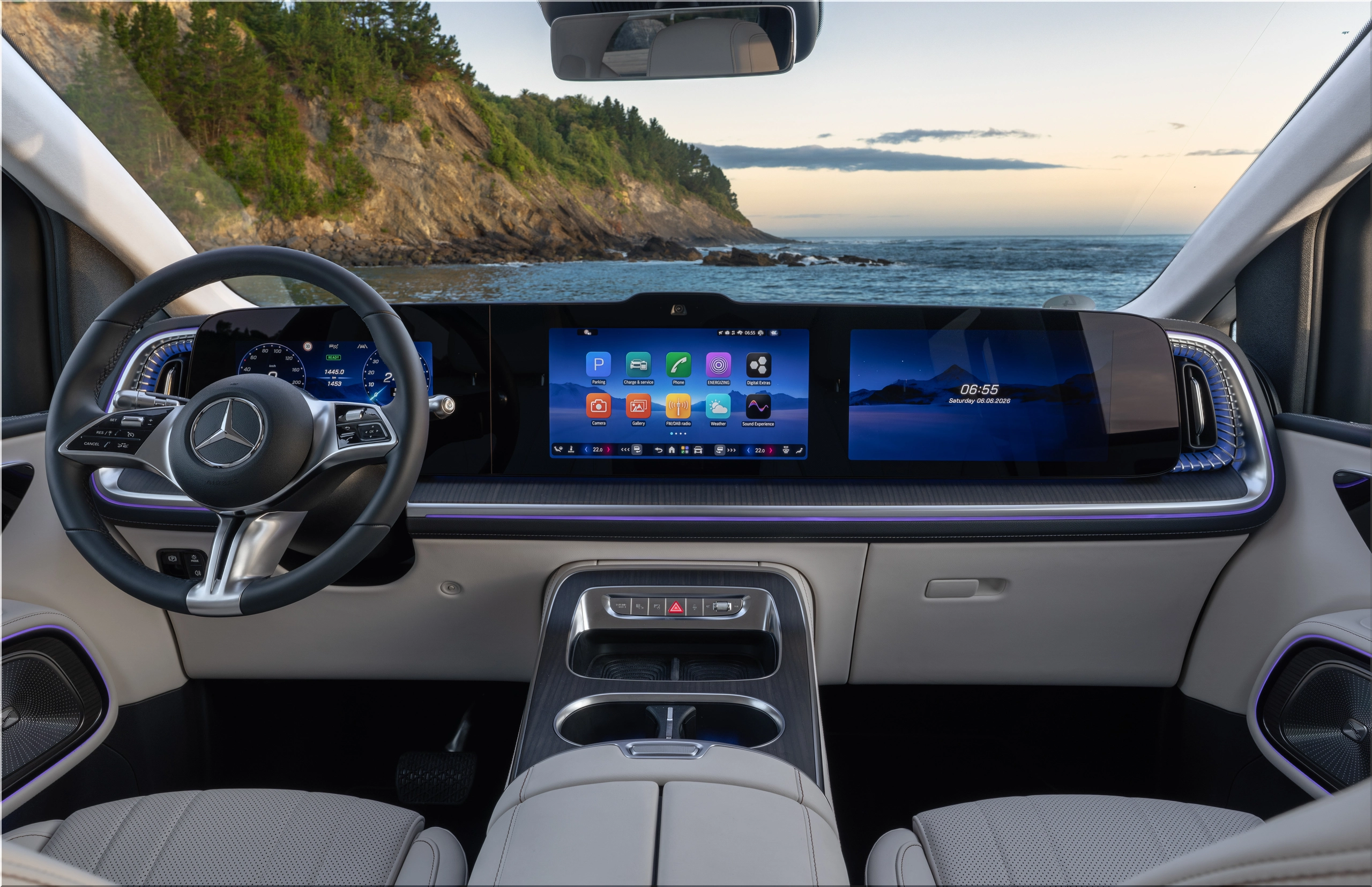
The VLE pushes Mercedes passenger-car tech into van packaging. The optional MBUX Superscreen combines a 10.25-inch driver display, 14-inch central screen, and optional 14-inch passenger display under one glass surface. Rear passengers can get a 31.3-inch 8K roof screen with split-screen use, streaming, gaming, video meetings, and an 8 MP camera.
| Cabin and safety tech | Mercedes-Benz VLE feature |
|---|---|
| Front display setup | 10.25 in driver, 14 in centre, optional 14 in passenger |
| Rear display | 31.3 in 8K roof-mounted screen |
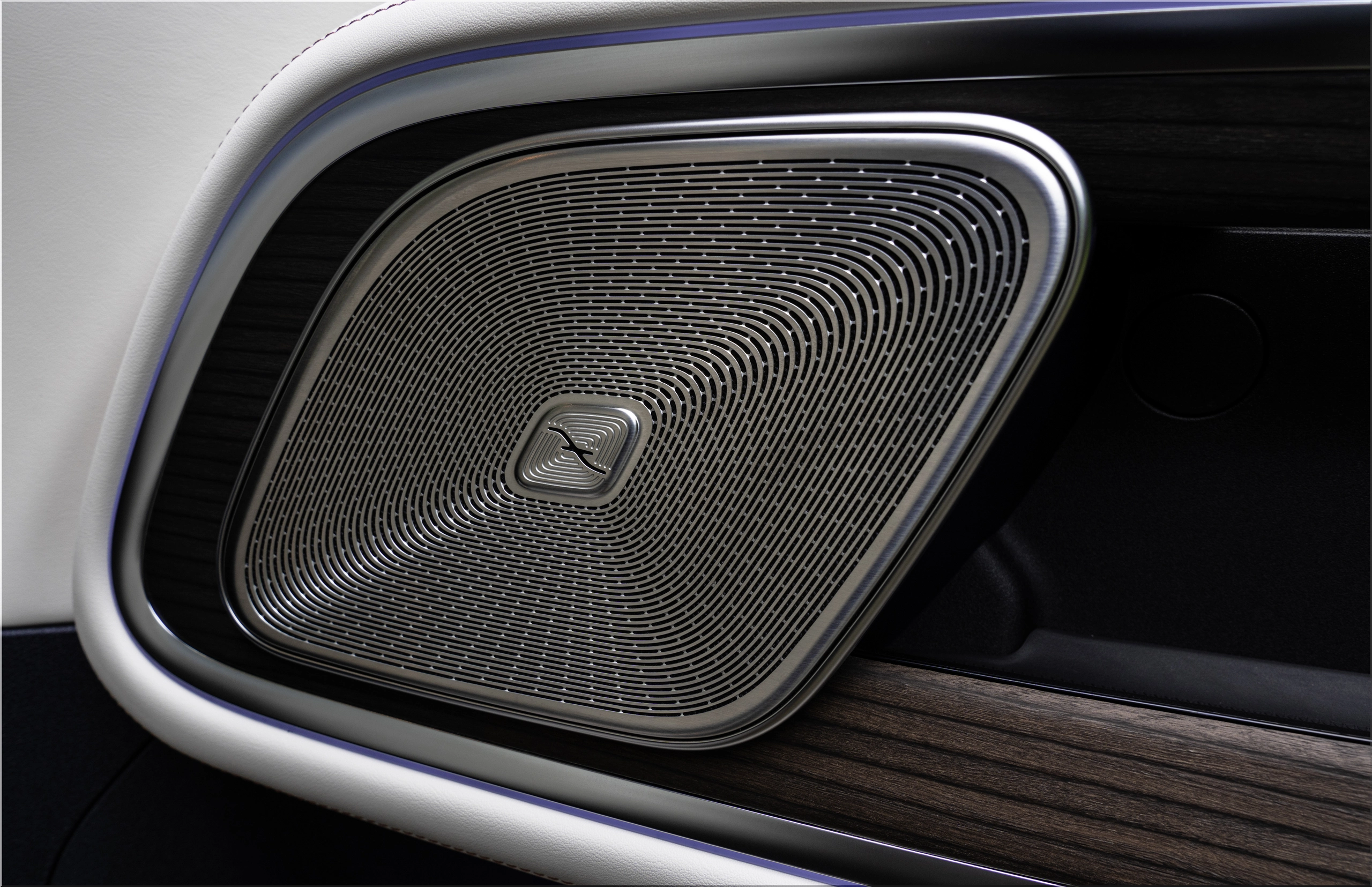
| Audio | Burmester 3D system, 22 speakers, Dolby Atmos |
| Cameras | 10 |
| Radar sensors | 5 |
| Ultrasonic sensors | 12 |
| Processor | Up to 254 TOPS |
| Parking support | 360-degree camera, automated parking, reverse route assist |
| Reverse memory distance | Up to 149 m / 490 ft |
From an expert perspective, the sensor and compute package gives Mercedes room for software upgrades during ownership. That matters for fleets because driver assistance, parking tools, and infotainment can improve vehicle use without replacing the van.
Image
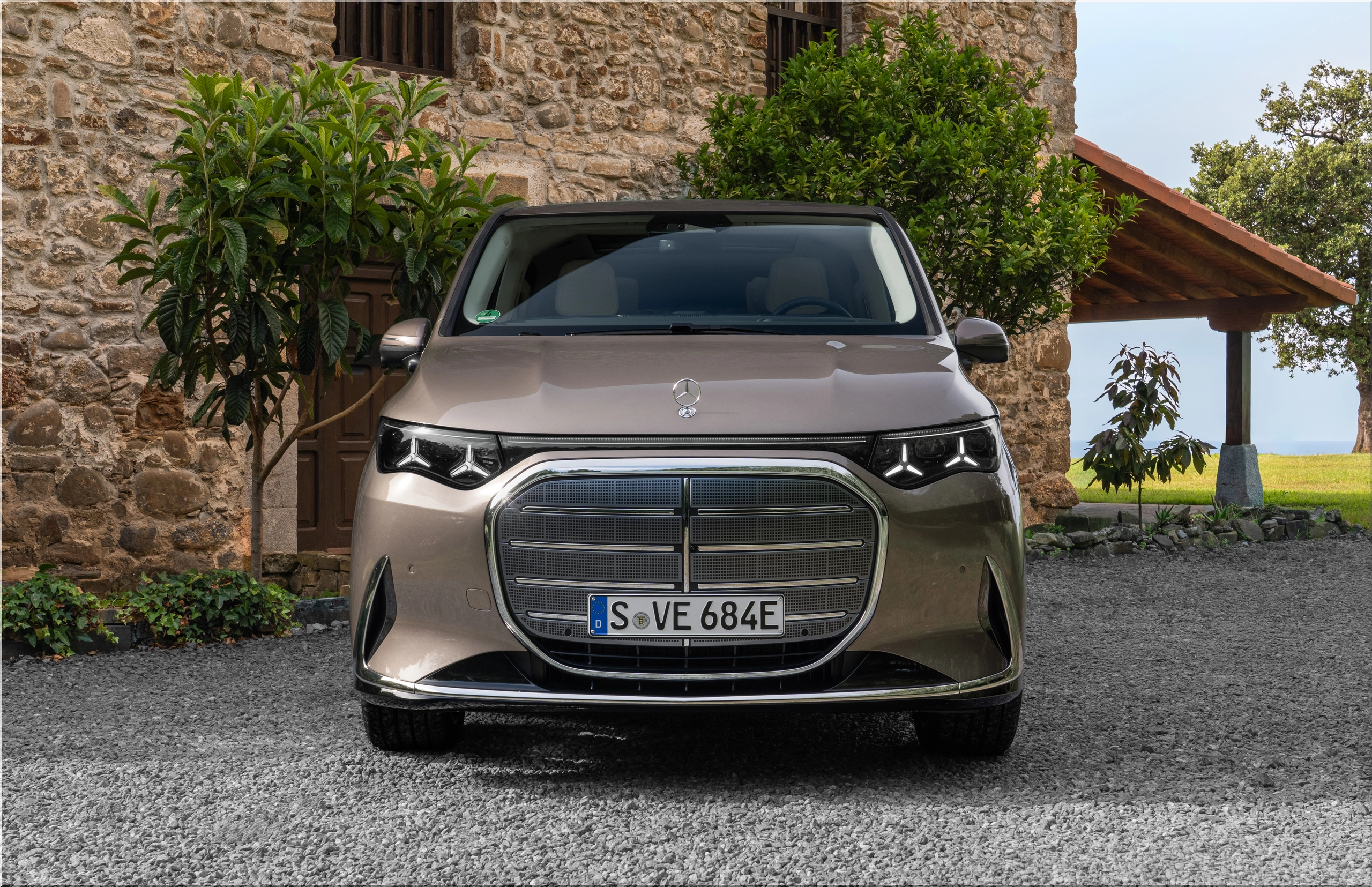
Mercedes-Benz VLE Vs Electric MPV Rivals
The VLE faces two types of rivals: European practical EVs and Chinese premium MPVs with heavy battery firepower. The Volkswagen ID. Buzz brings retro appeal and strong European availability. The Volvo EM90 and Zeekr 009 show how far premium electric MPVs have moved in China and selected export markets.
| Model | Seats | Battery | Range claim | DC charging | Main VLE win or loss |
|---|---|---|---|---|---|
| Mercedes-Benz VLE 300 | Up to 8 | 115 kWh usable | More than 700 km WLTP | Up to 300 kW | Wins on range, charging speed, and seating count |
| Volkswagen ID. Buzz 7-seat | Up to 7 | 86 kWh net | Up to 293 miles WLTP | Up to 200 kW | VW costs less, VLE travels farther |
| Volvo EM90 | 6 | 116 kWh | Up to 738 km CLTC | 10-80% under 30 min | Volvo feels lounge-like, VLE offers broader seating use |
| Zeekr 009 | 6 | 116 kWh | Up to 604 km WLTP | 10-80% in 30 min | Zeekr has huge power, VLE has stronger Europe fit |
The comparison shows Mercedes did not chase only luxury. It chased range, charge speed, modular seating, and European production credibility. That mix matters because electric vans must carry people, not spec-sheet theatre.
Should You Buy The VLE 300 Or Wait For The VLE 400 4MATIC?
Choose the Mercedes-Benz VLE 300 if range, cabin space, charging speed, and efficiency matter most. The front-drive setup keeps complexity lower, and the 203 kW output gives enough shove for motorway merging with a full cabin.
Wait for the VLE 400 4MATIC if traction and power sit higher on your list. The dual-motor model will suit alpine routes, Nordic winters, and high-end shuttle buyers who want stronger acceleration with passengers aboard.

Verdict: The Electric Van Europe Needed
The Mercedes-Benz VLE 300 turns the electric van into a serious premium alternative to oversized SUVs. It brings up to 713 km of WLTP range, 300 kW charging, up to eight seats, air suspension, rear-axle steering, and a cabin that can serve family, hotel, shuttle, and executive transport roles.
The key win sits in use-case logic. A luxury SUV may carry status, but the VLE carries people, luggage, battery capacity, and business value with fewer compromises. For Europe, that makes the new VLE one of the most important electric people movers of 2026.
- Add new comment
- 97 views