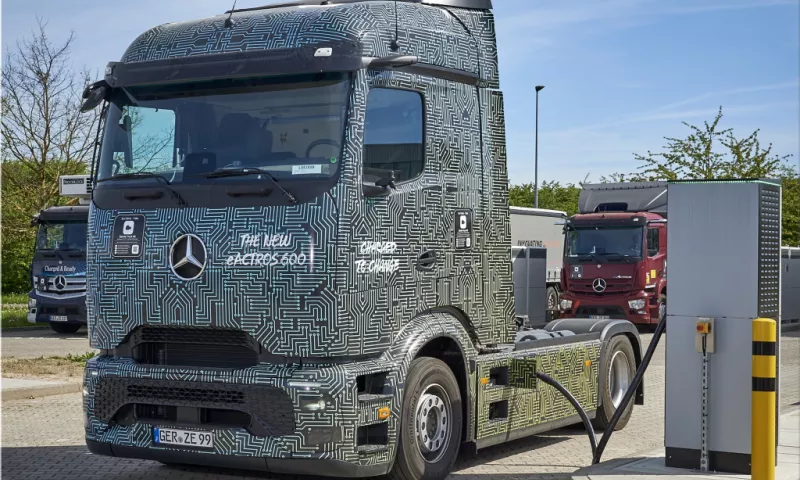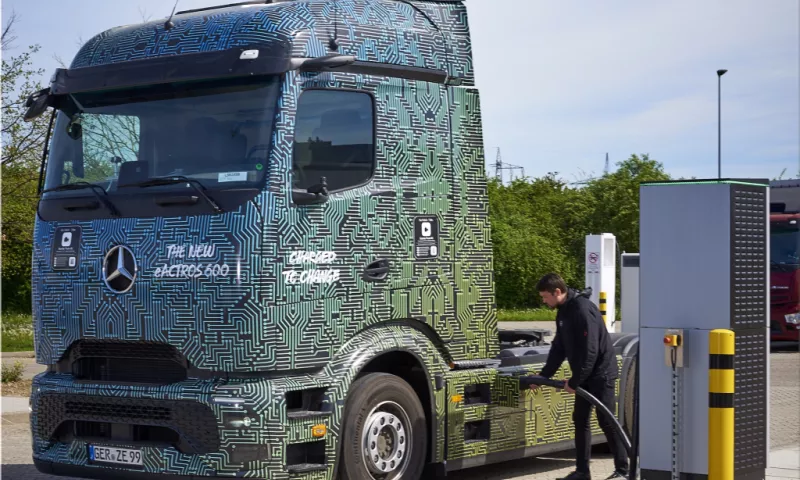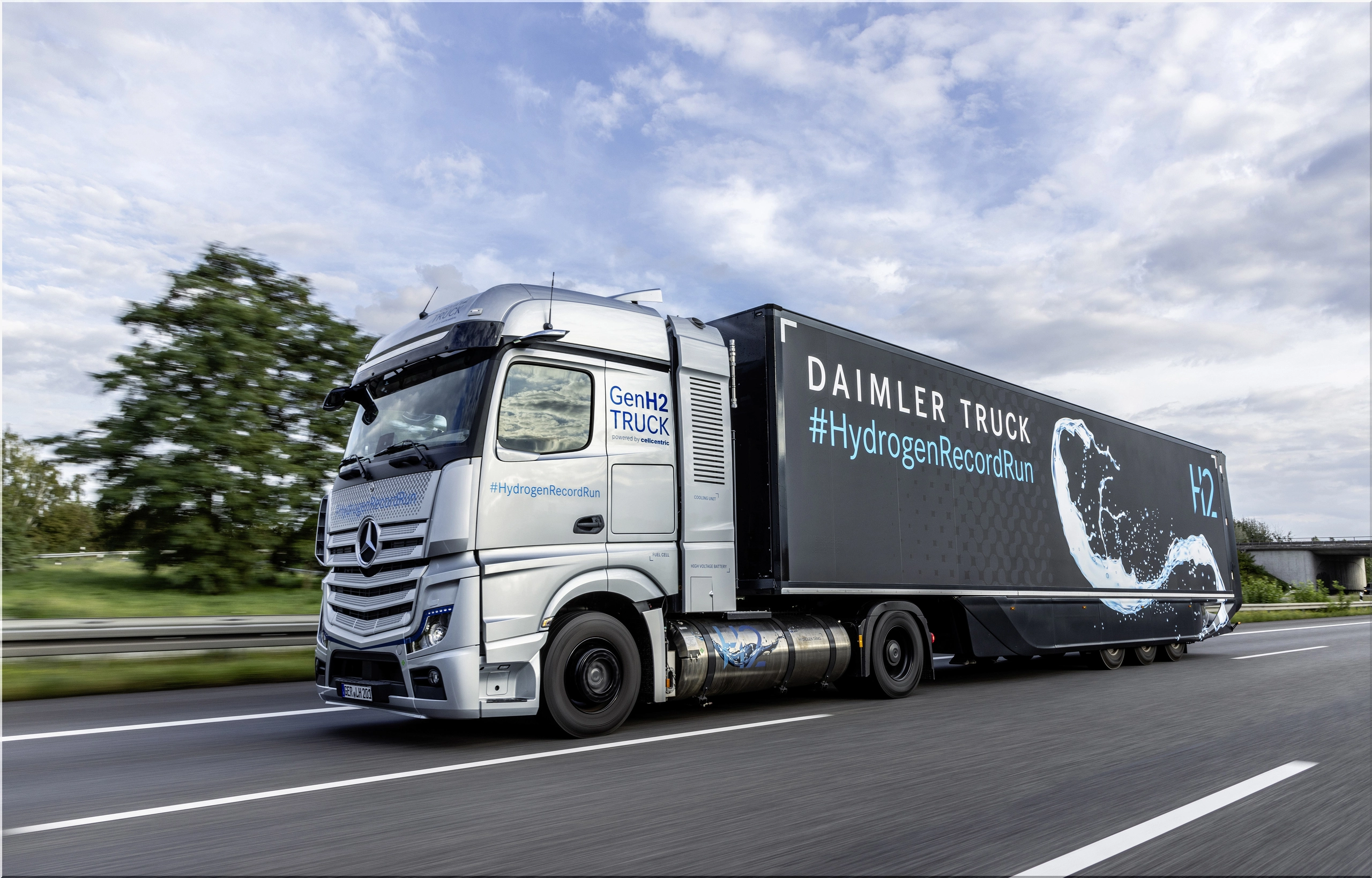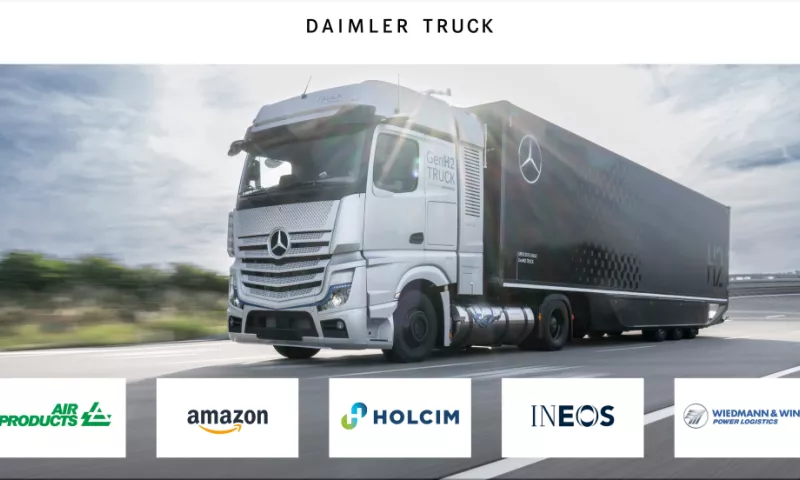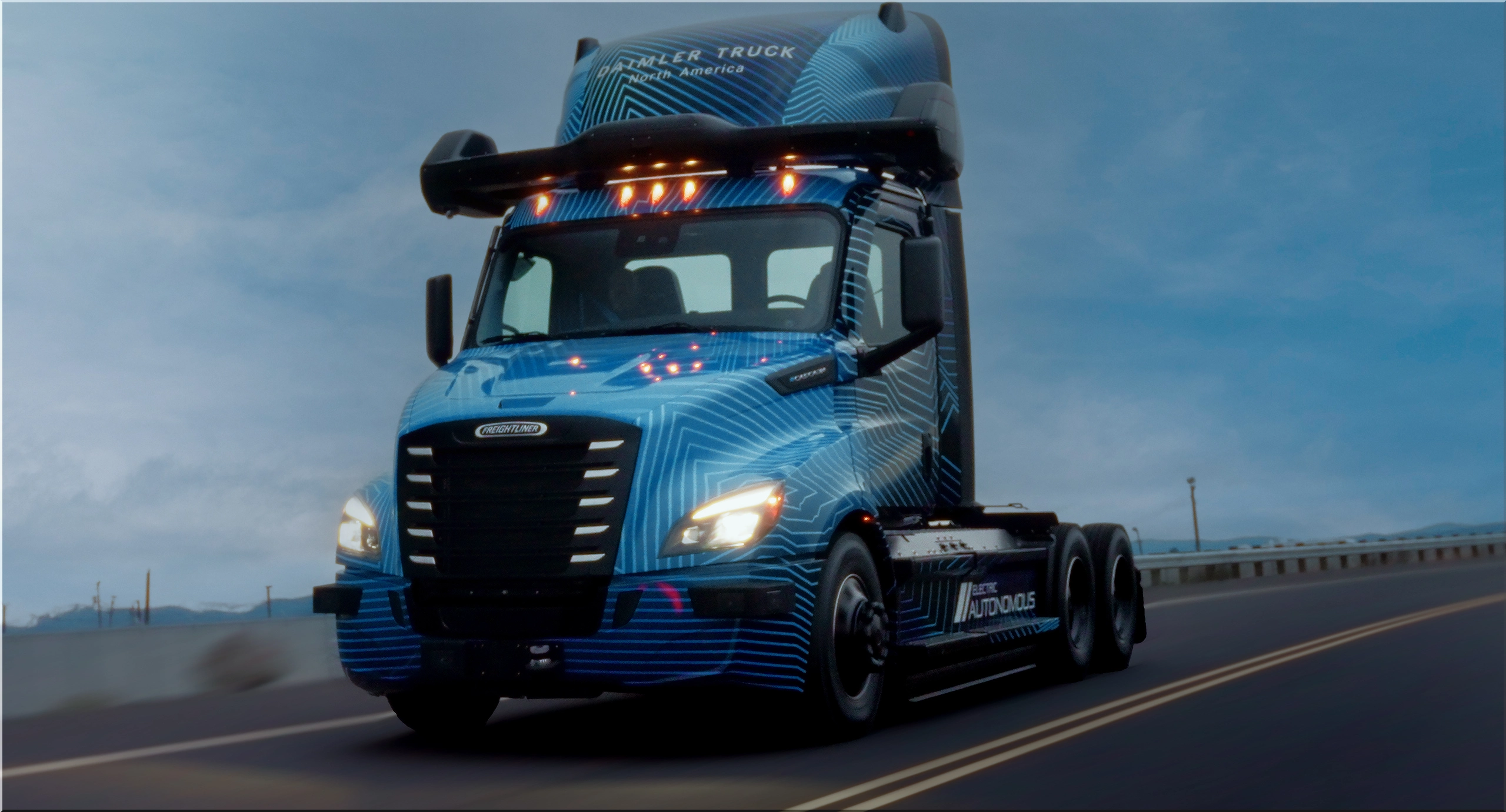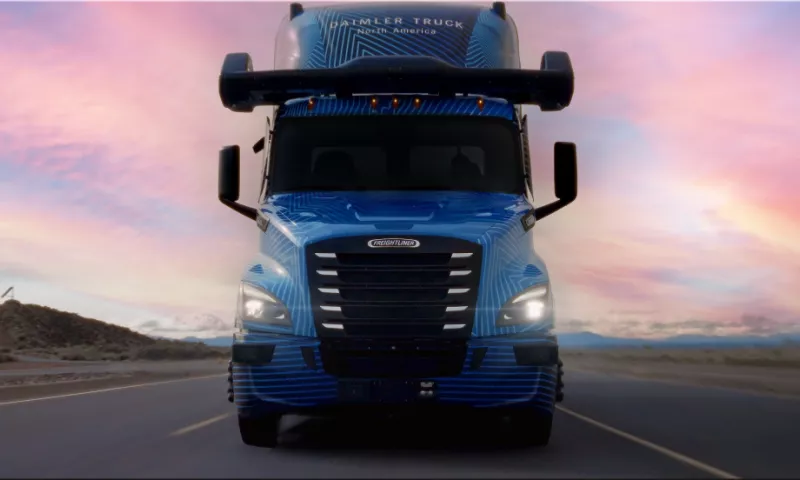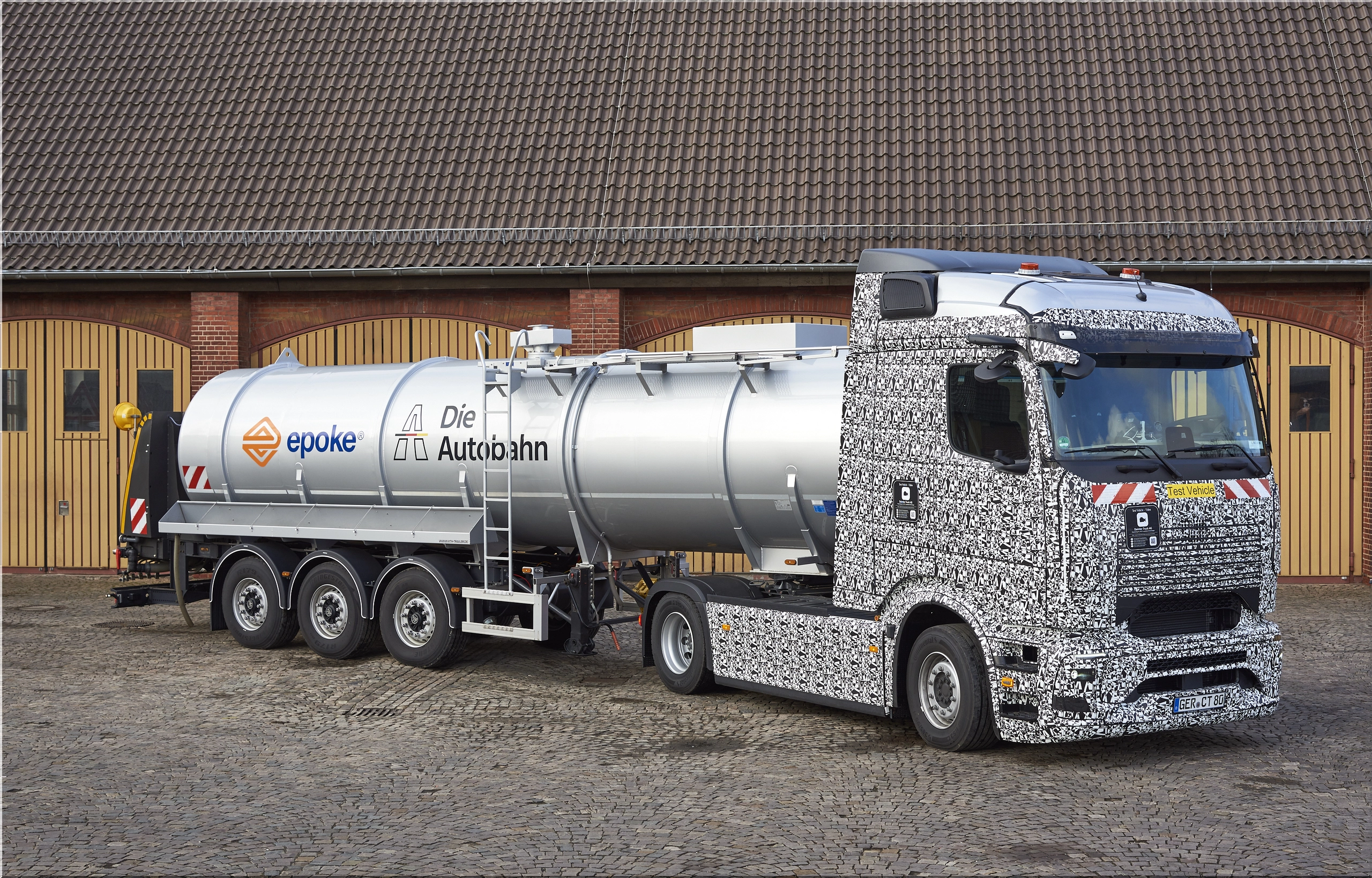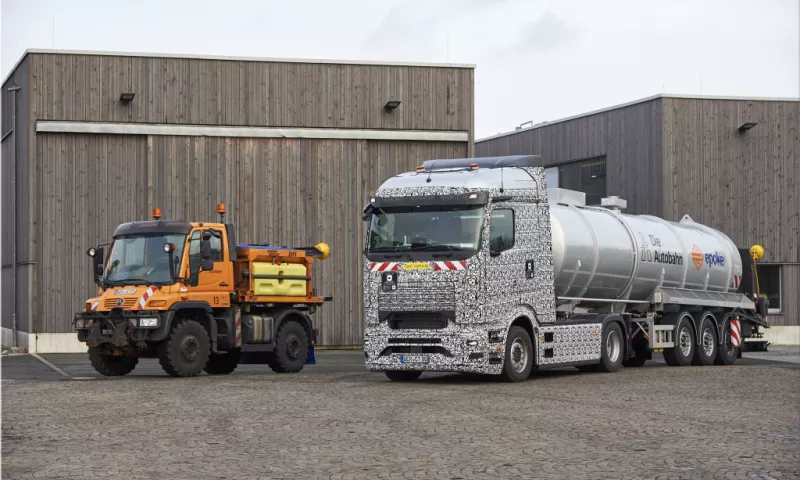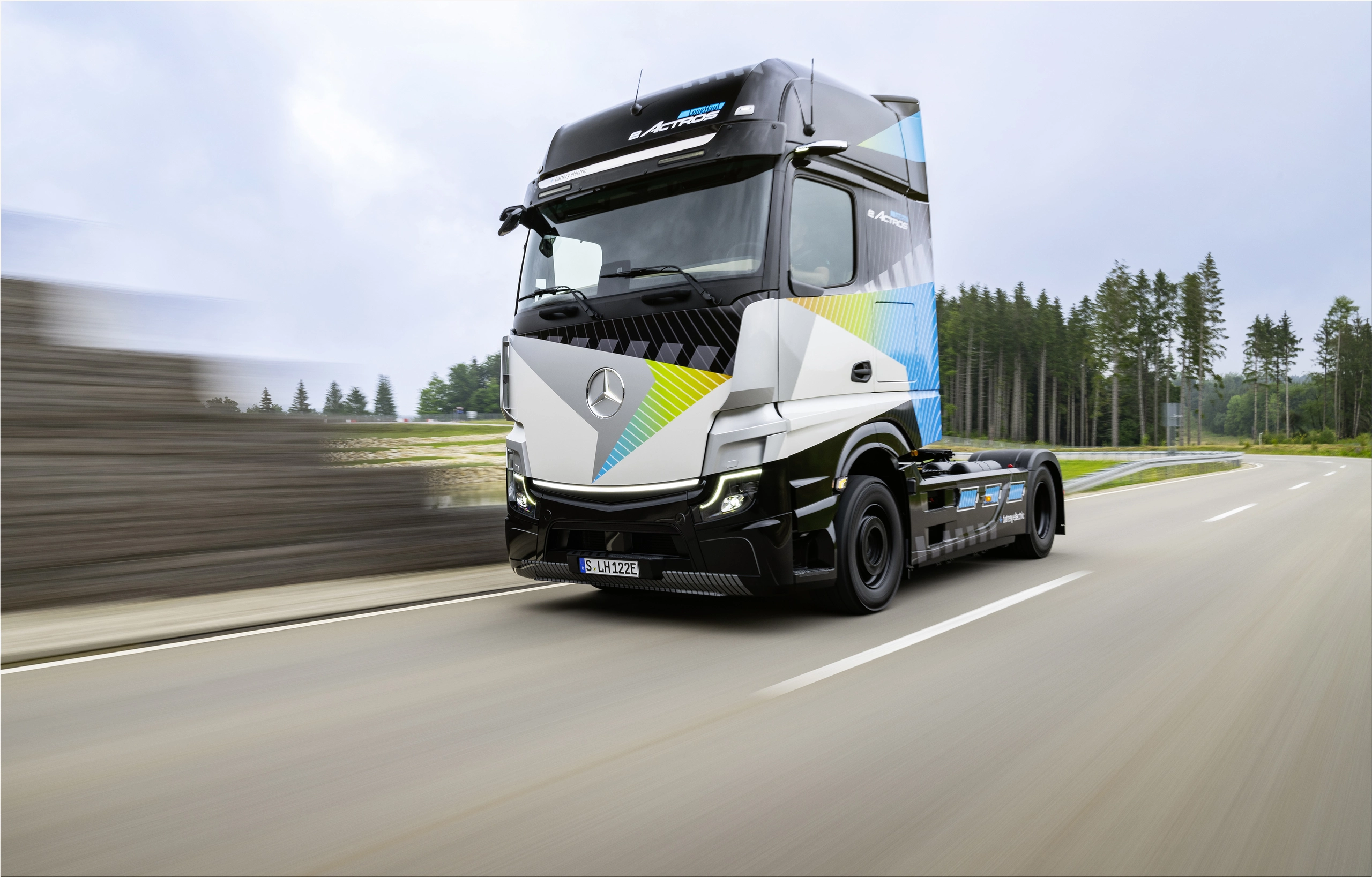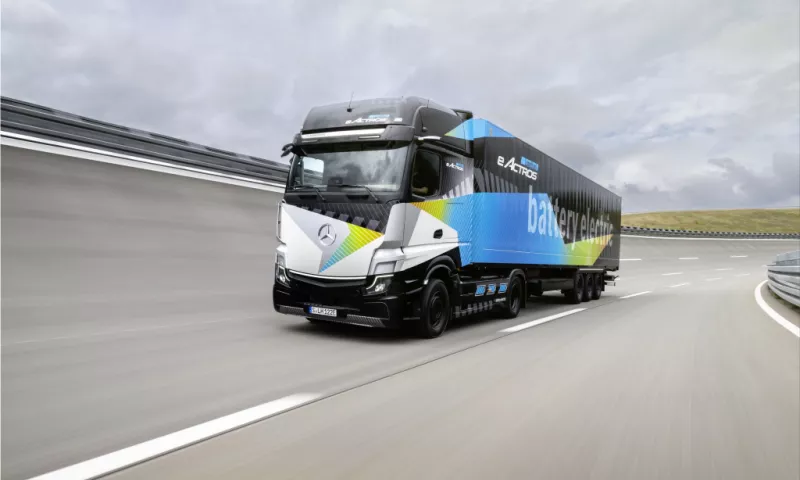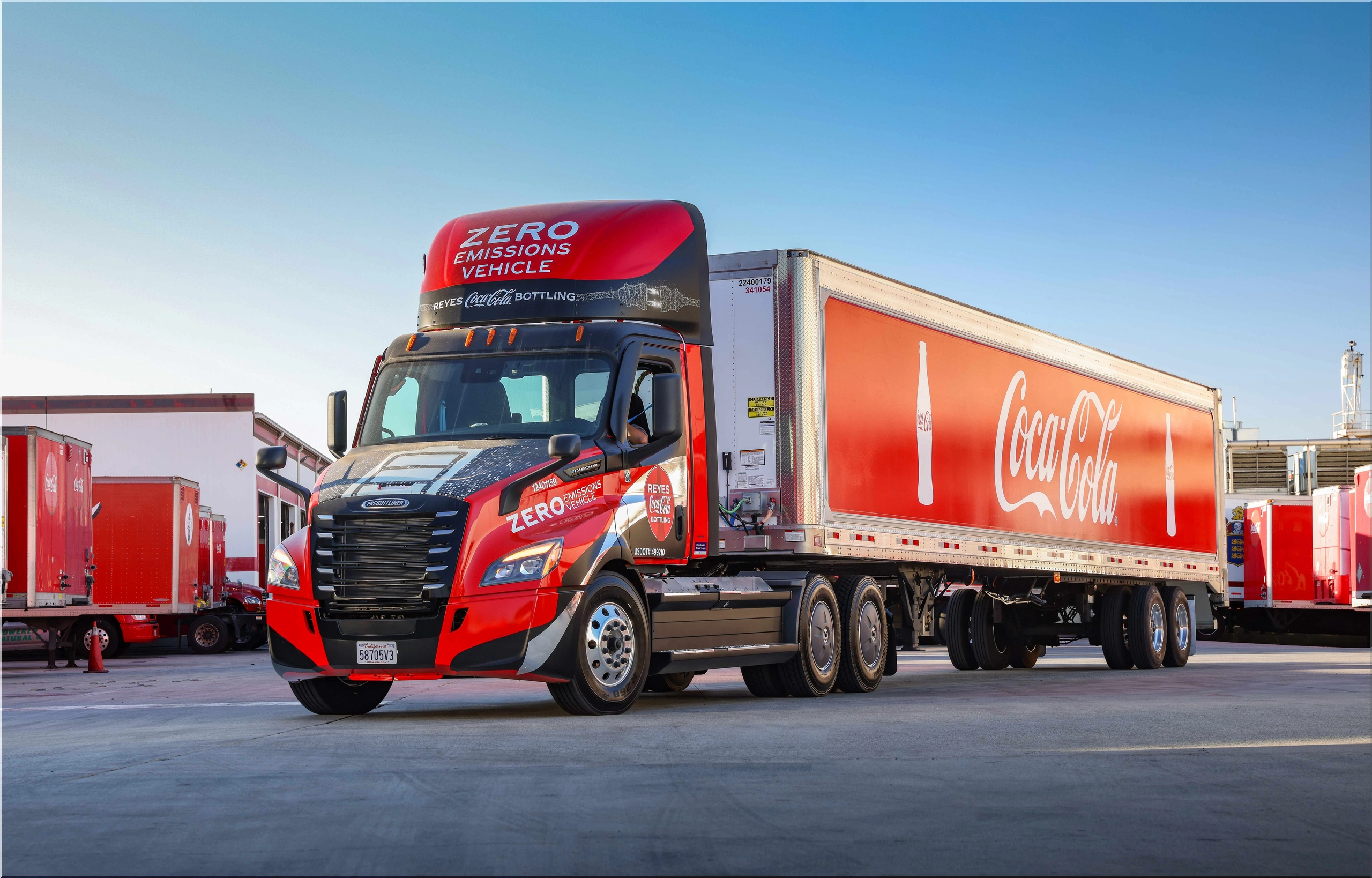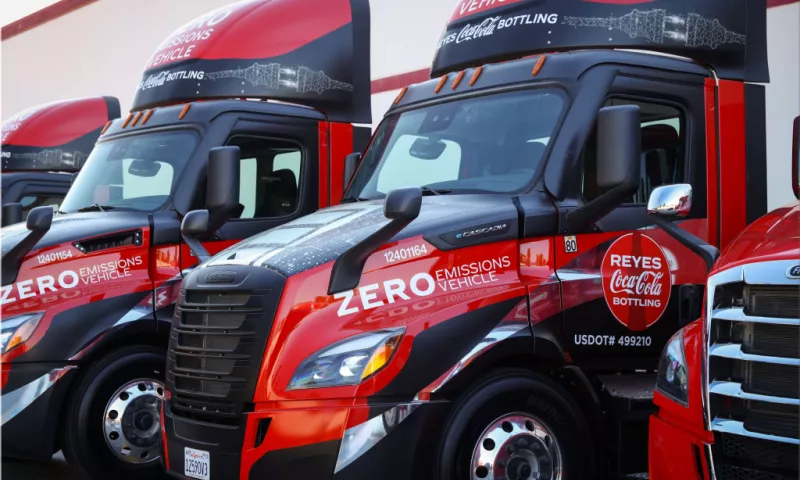
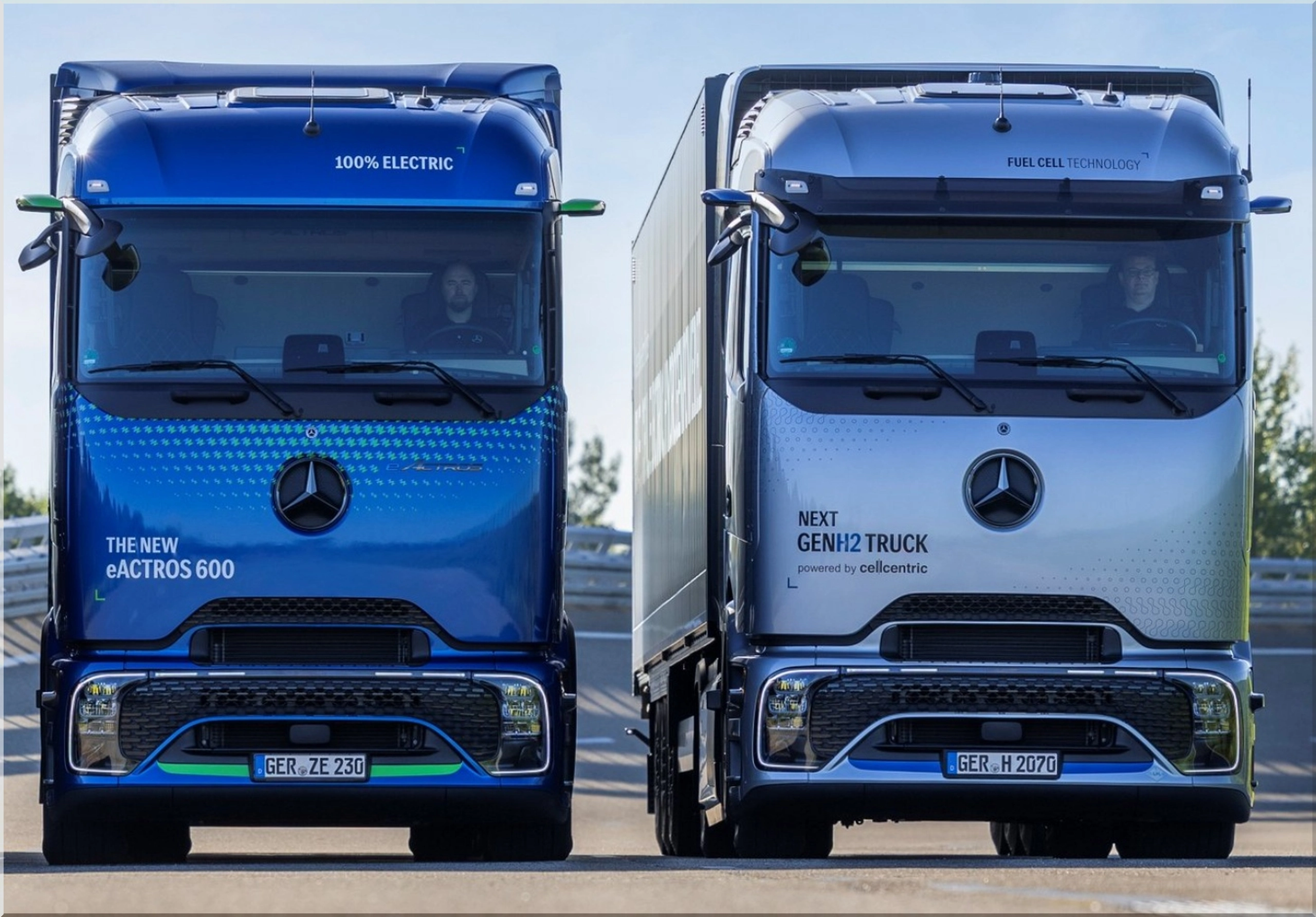
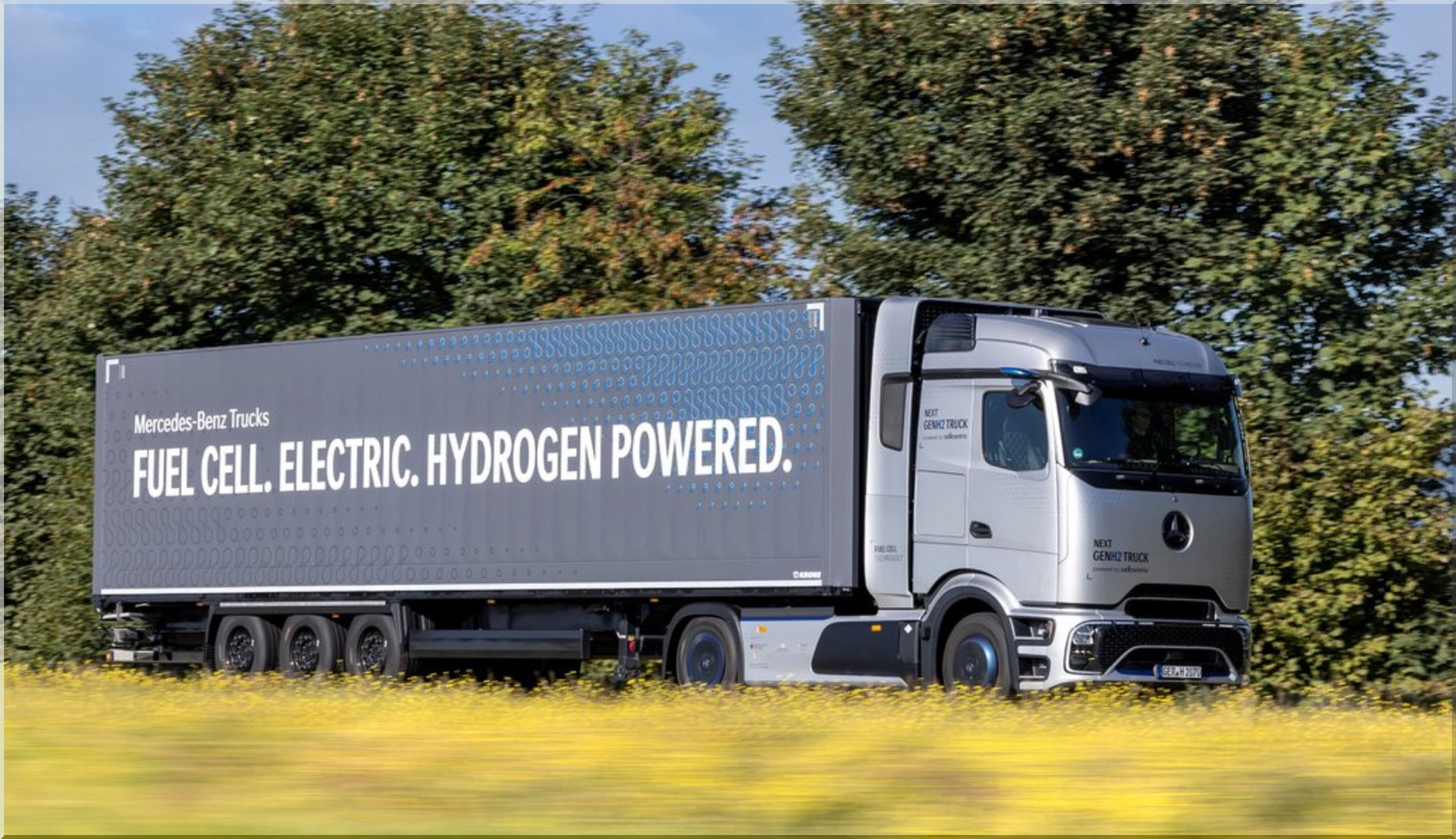
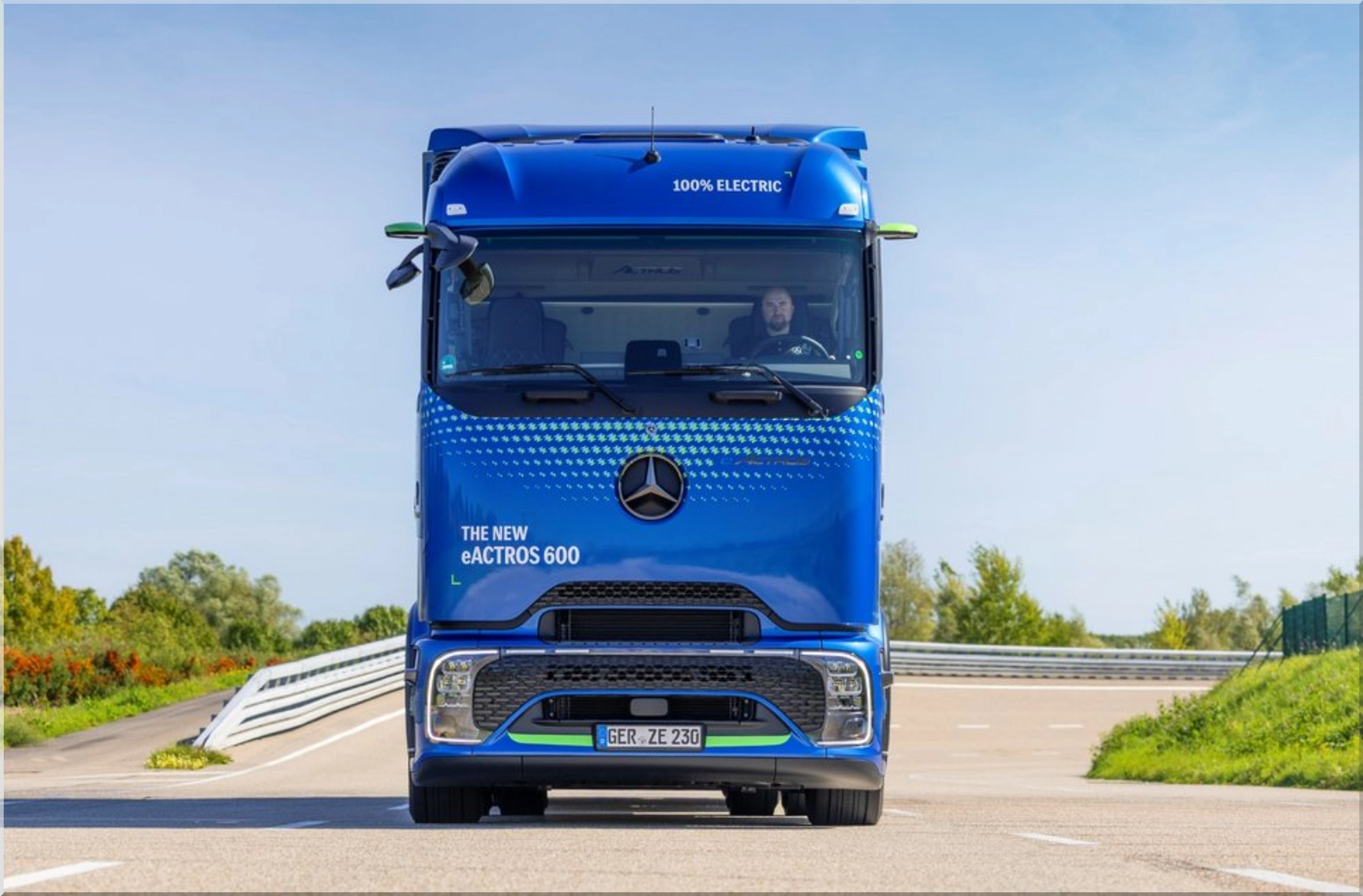
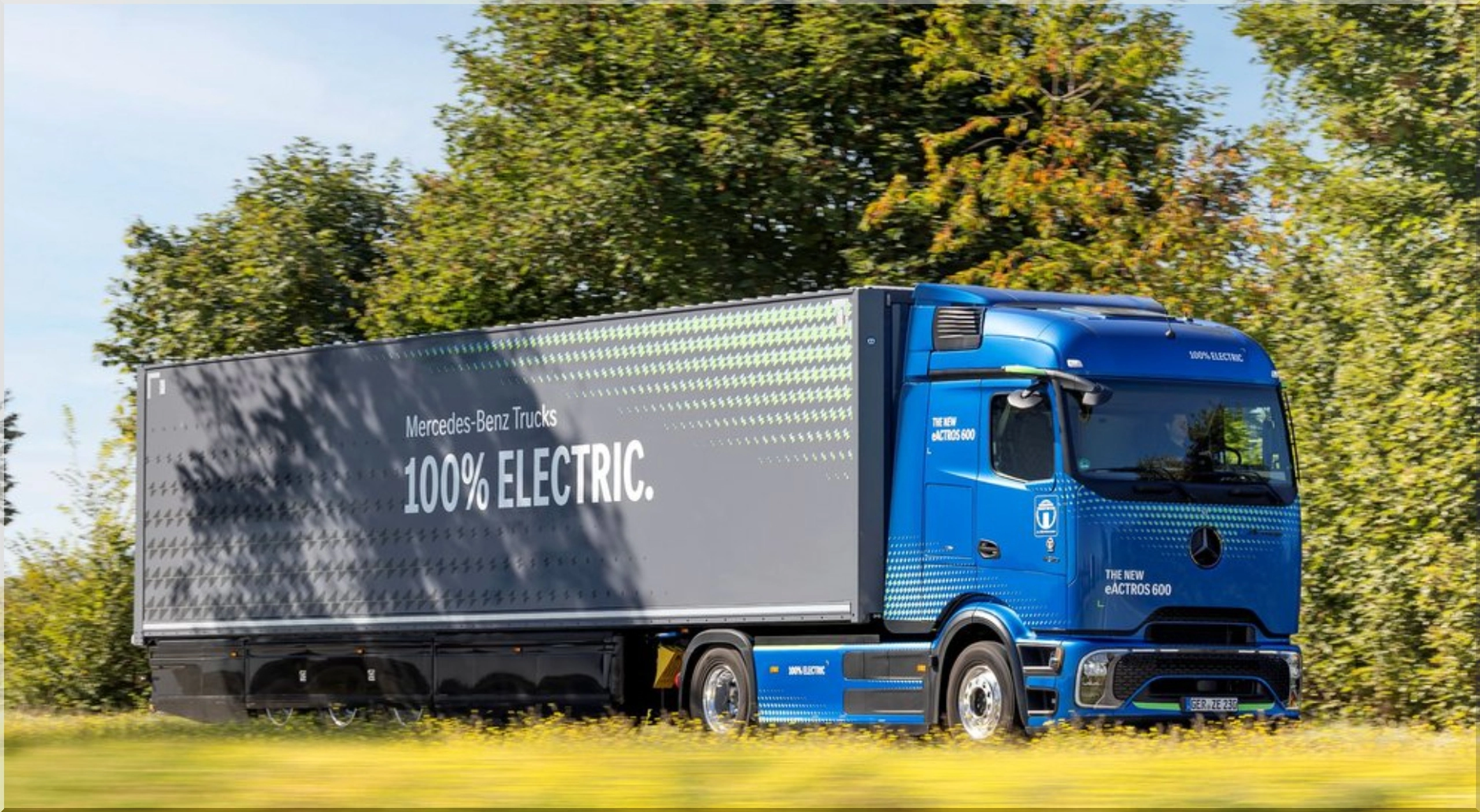
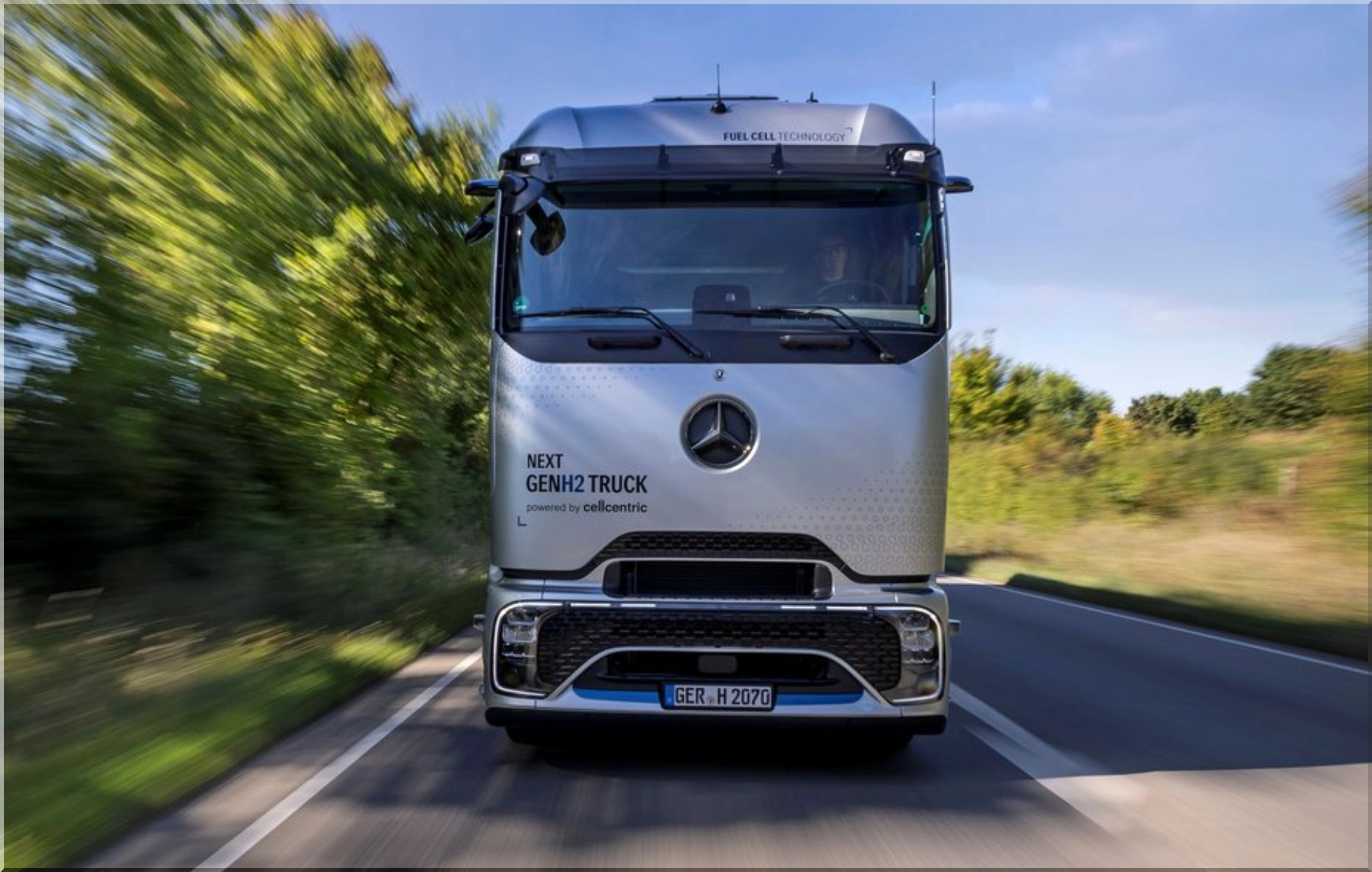
Battery-electric and hydrogen fuel cell trucks share far more hardware than their labels suggest. Mercedes-Benz Trucks proves it with the series-production eActros 600 and developing NextGenH2 Truck. Both use the same integrated electric axle, recover braking energy and deliver immediate torque.
The difference sits upstream of that axle. The eActros 600 carries electricity in three battery packs. The NextGenH2 converts liquid hydrogen through two fuel-cell units and uses a smaller battery for power peaks. This split changes range, replenishment time, infrastructure and fleet economics.
One Electric Driveline, Two Energy Paths
In both trucks, current reaches an integrated eAxle between the rear wheels. Mercedes-Benz Trucks packages two motors, power electronics and a four-speed transmission into one unit. The gearbox keeps the motors in an efficient operating band during loaded starts, motorway cruising and steep climbs.
Shared architecture reduces engineering duplication and gives workshops a common service base across battery-electric trucks and fuel cell trucks. In addition, both systems reverse current during deceleration, turning the traction motors into generators that return energy to an onboard battery.
Shared components include:
- The integrated electric axle and four-speed transmission
- The aerodynamically developed ProCabin
- Multimedia Cockpit Interactive 2
- High-voltage and electronic architecture
- Active Brake Assist 6, Front Guard Assist and Active Sideguard Assist 2
- Regenerative braking, low exterior noise and zero tailpipe CO2 emissions
Core Specifications Side by Side
| Data point | Mercedes-Benz eActros 600 | Mercedes-Benz NextGenH2 Truck |
|---|---|---|
| Primary energy carrier | Grid electricity | Liquid hydrogen |
| Main onboard storage | 3 LFP packs | 2 insulated hydrogen tanks |
| Installed battery capacity | 621 kWh | 101 kWh buffer battery |
| Battery pack capacity | 207 kWh each | Single power-oriented buffer |
| Usable battery share | More than 95% | Not stated |
| Hydrogen capacity | None | Up to 85 kg |
| Hydrogen temperature | Not applicable | -253 degrees Celsius |
| Fuel-cell output | None | 300 kW total, 2 x 150 kW |
| Drive output | 400 kW continuous, 600 kW peak | 340 kW Economy, 370 kW Power |
| Claimed range at full load | 500 km | Well over 1,000 km |
| Energy stop | 20-80% in about 30 minutes with MCS | 10-15 minutes with sLH2 |
| Current status | Series production since 2024 | 100-truck deployment from late 2026 |
How the eActros 600 Stores and Uses Electricity
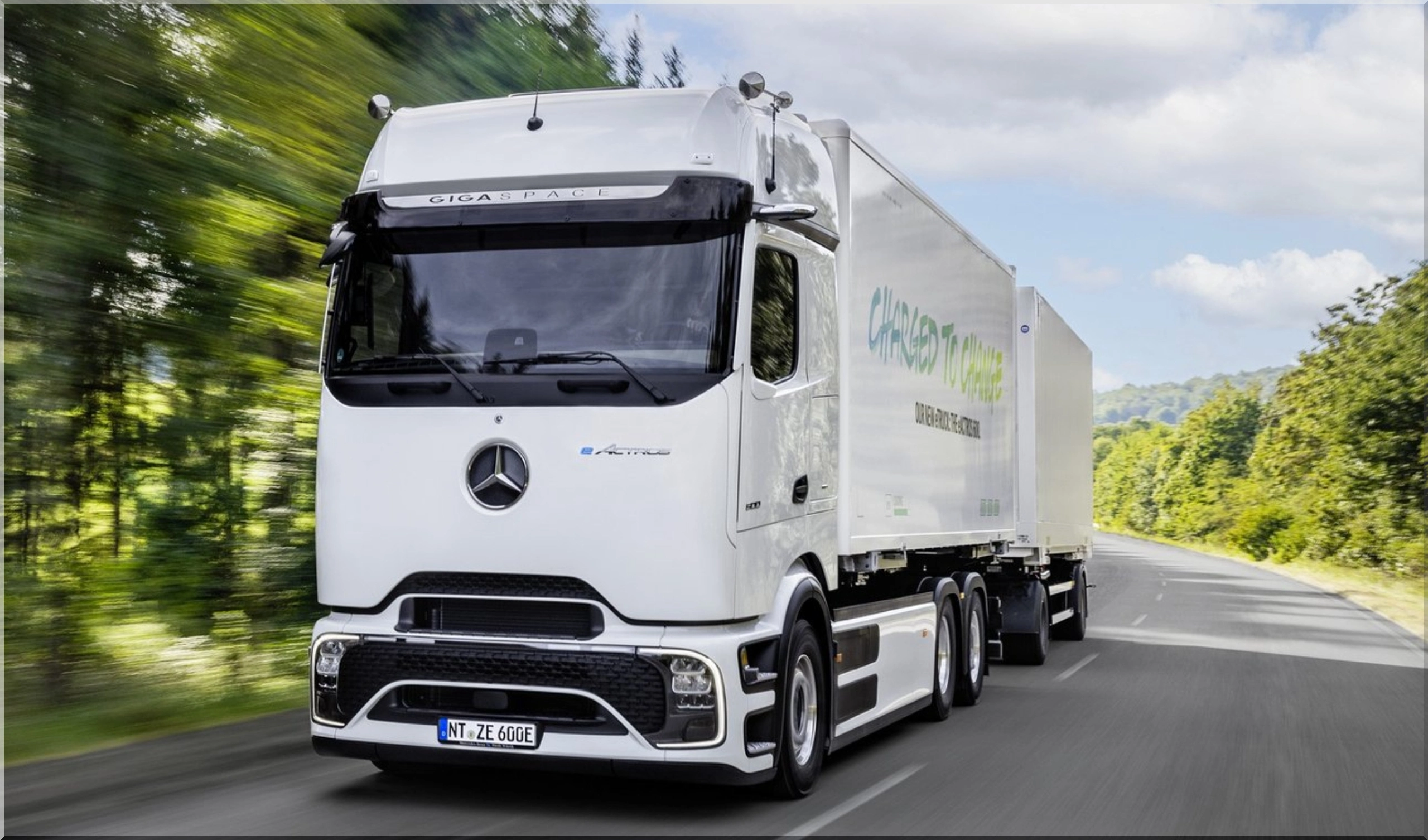
The eActros 600 battery system carries 621 kWh across three 207 kWh lithium iron phosphate packs. LFP cells avoid nickel and cobalt, support long life and release more than 95% of installed capacity. That usable share equals roughly 590 kWh and supports a 500 km target at about 40 tonnes.
Looking at the data, using 590 kWh across 500 km implies about 1.18 kWh per kilometre. Speed, weather, gradients, trailer aerodynamics and auxiliary loads alter that figure. Refrigeration or winter heating raises demand.
The 800-volt axle delivers 400 kW continuously and 600 kW at peak. Five recuperation levels manage downhill speed, while optional one-pedal control reduces service-brake use. Predictive Powertrain Control reads topography, road geometry and traffic signs, then times acceleration, coasting and gear changes.
Charging Fits Regulated Driver Breaks
The truck accepts up to 400 kW through CCS. Its Megawatt Charging System targets 20-80% in about 30 minutes from a suitable one-megawatt charger. That 60% window represents 372.6 kWh, enough for a substantial second driving leg during a statutory break.
This model favours fixed routes, depot returns and reserved charging. Mercedes says roughly 60% of its European customers' long-distance trips cover less than 500 km. Consequently, many operators can charge overnight and avoid public energy stops.
How the NextGenH2 Produces Electricity Onboard
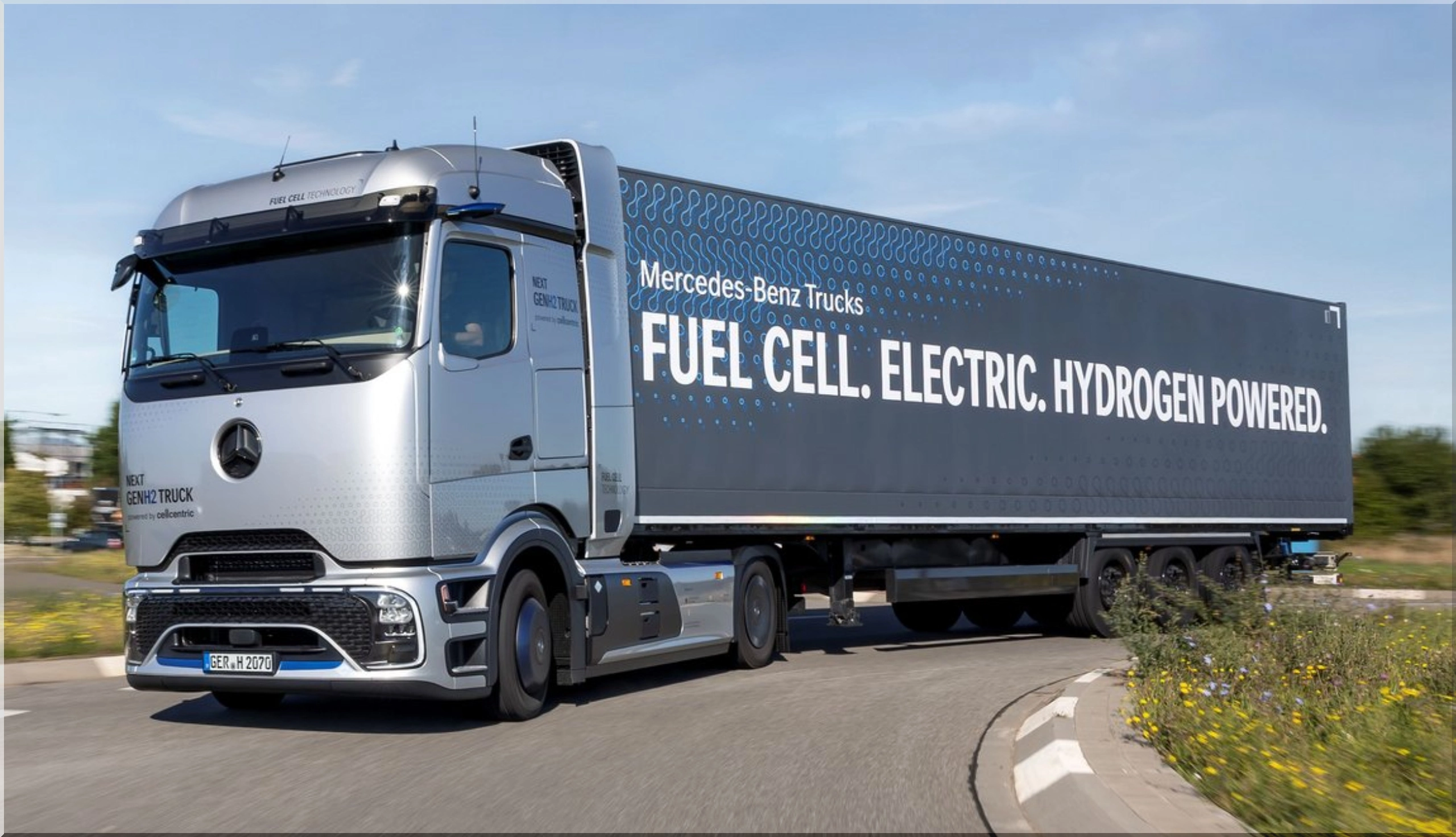
The NextGenH2 Truck carries 85 kg of liquid hydrogen in two linked, insulated tanks. At -253 degrees Celsius, the fuel has far greater volumetric density than compressed hydrogen. Drivers can refuel from either side through the sLH2 standard in 10 to 15 minutes.
Two cellcentric BZA150 fuel-cell modules sit under the cab and deliver 150 kW each. They combine hydrogen with oxygen, producing electricity for the eAxle and water vapour. The 101 kWh LFP battery captures braking energy and supports acceleration or long climbs.
Specifically, the truck supplies 340 kW in Economy mode and 370 kW in Power mode. The battery covers demand spikes, letting the fuel cells run near a steady load. GenH2 customer trials recorded 5.6-8.0 kg/100 km at gross weights from 16 to 34 tonnes.
Those rates give 85 kg a theoretical span of 1,063-1,518 km before reserves. Load, altitude, temperature and speed narrow the spread. A 40-tonne GenH2 prototype still travelled 1,047 km on one fill.
Packaging and Thermal Control Define the Hydrogen Truck
Hydrogen hardware demands extra space. Daimler places boil-off controls, cooling circuits and support equipment in a Tech Tower behind the cab. Engineers shortened the wheelbase by 150 mm to 4,000 mm, improving semitrailer compatibility under EU length rules.
The Tech Tower controls pressure and heat under high thermal loads. Sensors monitor leakage, while side panels with crash structures protect the tanks. Its management system supports enclosed parking, and the cab retains two beds.
The ProCabin cuts drag coefficient by 9% against the previous cab in Daimler's 40-tonne motorway simulation. On the eActros 600, an 80 mm longer nose, sealed front, underbody panels and extended rear flaps reduce turbulence. Every saved kilowatt-hour protects range and charging time.
Operational Fit and Cost Drivers
| Fleet decision factor | Battery-electric truck advantage | Fuel cell truck advantage |
|---|---|---|
| Daily route | Predictable lanes below about 500 km | Variable lanes above 500 km |
| Energy access | Depot or destination charging | Dedicated liquid-hydrogen station |
| Stop duration | About 30 minutes for 20-80% with MCS | About 10-15 minutes for a full fill |
| Energy conversion | Direct grid-to-battery path | Hydrogen-to-electricity conversion adds stages |
| Infrastructure maturity | Growing truck-charging network | Early-stage liquid-hydrogen network |
| Energy cost unit | Price per kWh | Price per kg of hydrogen |
| Scheduling strength | Planned breaks absorb charging time | Fast stops protect dispatch flexibility |
| Best use case | Depot-based regional and planned long haul | High-utilisation, flexible long haul |
| Technology maturity | Customer service and series production | Limited customer fleet from late 2026 |
From an expert perspective, direct electricity gives the eActros 600 a simpler energy chain. Grid power enters the battery, an inverter controls current and the eAxle creates motion. Hydrogen production, liquefaction, transport and fuel-cell conversion add losses, making clean hydrogen cost decisive.
By comparison, hydrogen buys time and range. An 85 kg fill in 10-15 minutes implies 5.7-8.5 kg per minute. A haulier running irregular cross-border work may value that speed, provided stations serve the required corridors.
Pro-Tips for Fleet Managers
- Model routes from telematics before choosing hardware. Use daily kilometres, dwell time, gradients, payload and depot return frequency.
- Price energy at the point of delivery. Include demand charges, grid upgrades, charger utilisation, hydrogen delivery and storage losses.
- Test worst-case winter and summer shifts. Heating, cooling, wind and refrigeration can change the required reserve.
- Match replenishment to paid downtime. A charger used during loading or a legal break costs less operationally than an unplanned stop.
- Keep a 10-20% route reserve in early deployment models, then refine it with measured consumption.
- Compare maintenance, tolls, finance, residual value and payload revenue across the full holding period.
Which Zero-Emission Truck Should a Fleet Choose?
Choose a battery-electric heavy truck for predictable routes, base returns and charging during existing downtime. The eActros 600 offers 500 km at full load, around 22 tonnes of payload and a 44-tonne technical combination limit. Mercedes targets 1.2 million km over ten years with battery health above 80%.
Choose a hydrogen fuel cell truck when flexibility, very long range and short stops carry greater financial weight. The NextGenH2 exceeds 1,000 km, refuels in 10-15 minutes and uses common trailers through its 4,000 mm wheelbase. Its 100-truck customer deployment starts in late 2026; large-scale production targets the early 2030s.
Duty cycle decides, not powertrain fashion. Battery-electric technology leads market readiness and energy-chain efficiency. Fuel cells target hard long-haul schedules where time, range and variability justify added conversion steps.
The Engineering Verdict
These trucks share the driven hardware: one electric axle, similar controls and regenerative braking. They differ in storage: 621 kWh of direct battery capacity against 85 kg of liquid hydrogen feeding a 300 kW fuel-cell system and 101 kWh buffer.
Daimler's two-track strategy divides the work. The eActros 600 covers planned routes with scheduled charging. The NextGenH2 targets longer, less predictable assignments where a 10-minute energy stop protects utilisation. Fleet data will choose route by route.
- Add new comment
- 78 views