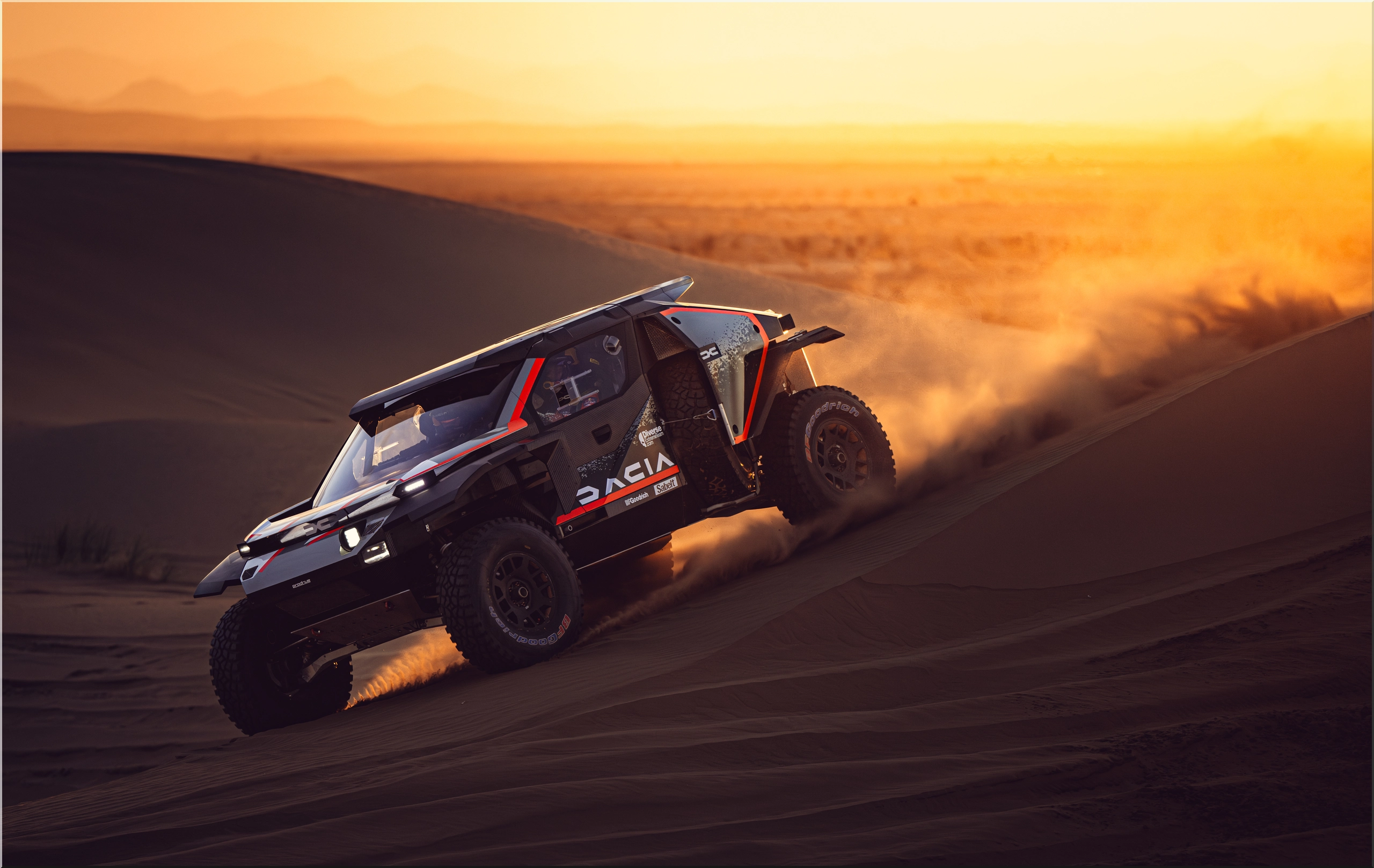
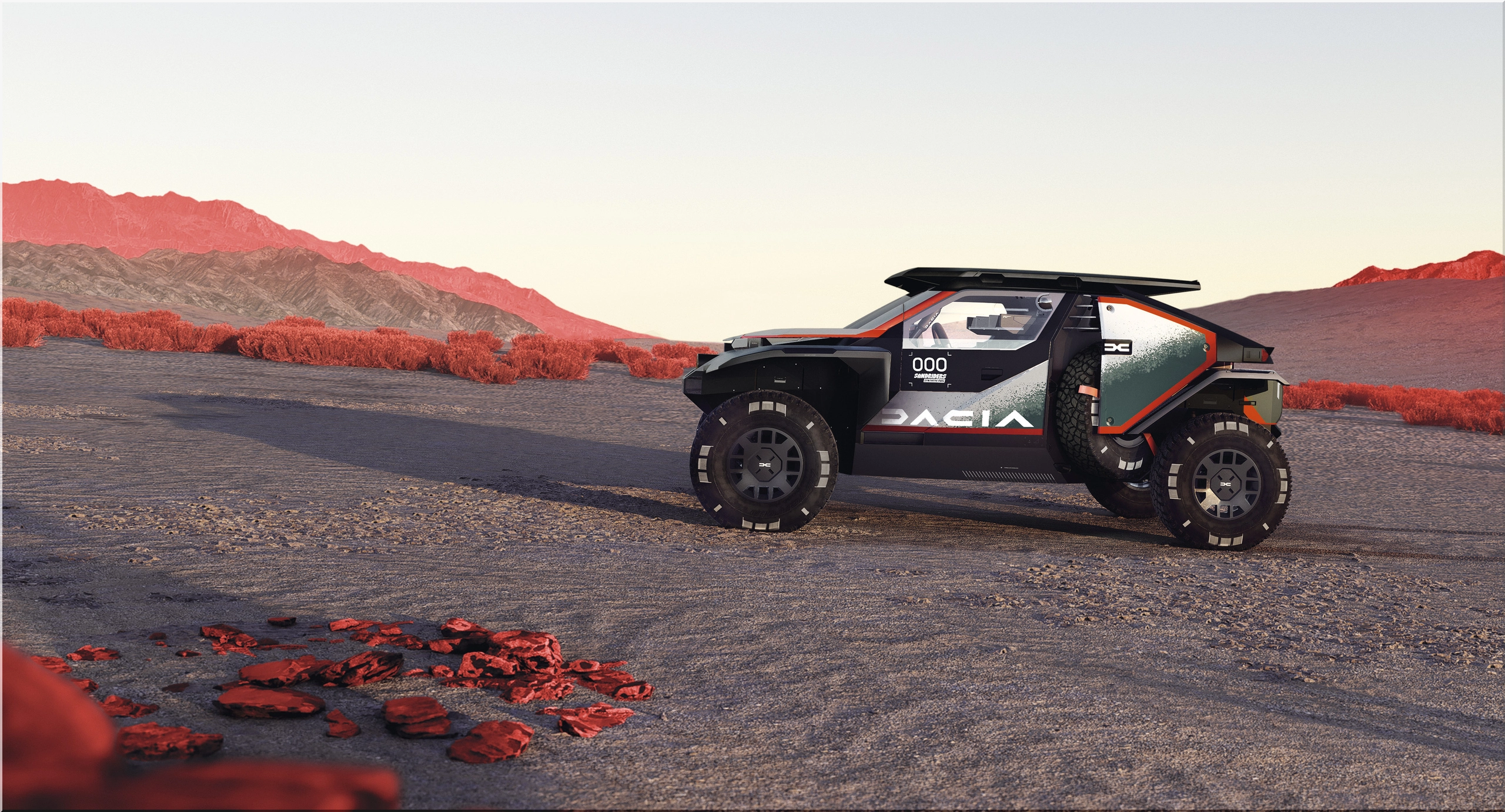
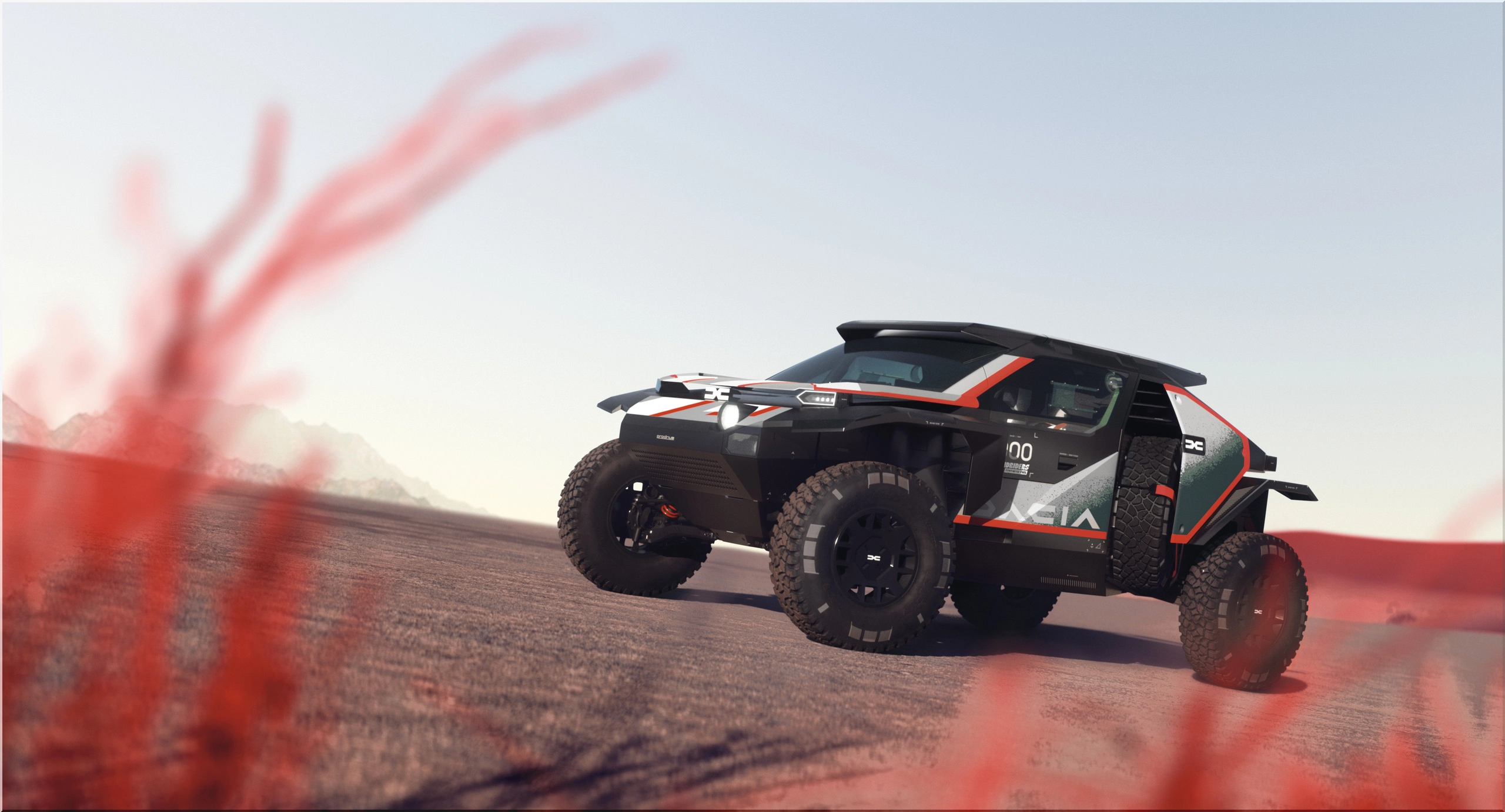
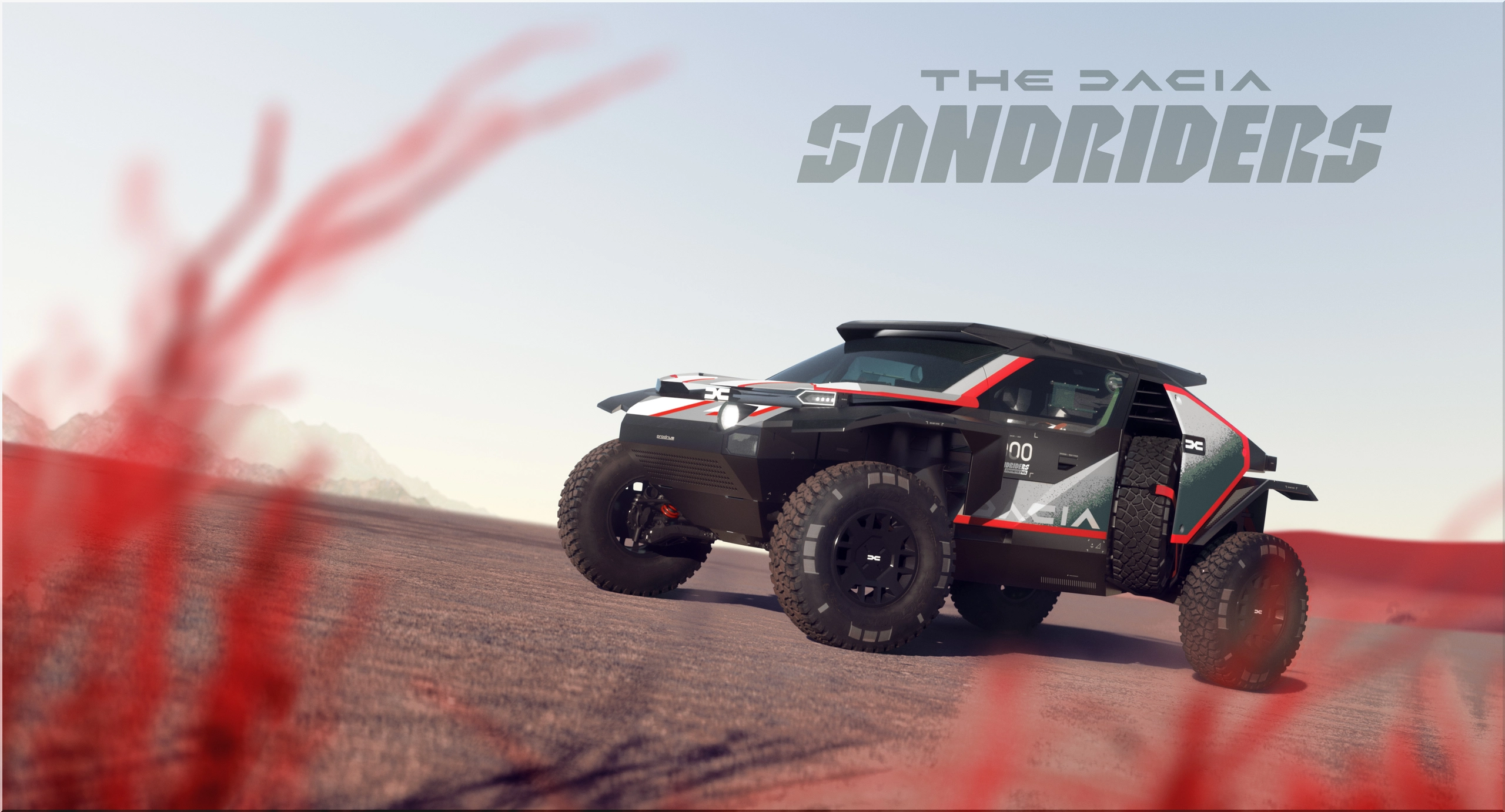
Dacia enters the world of rally-raid with a bold and ambitious project: the Sandrider. This prototype, inspired by the Manifesto concept car, is designed to compete in the Ultimate T1+ category of the Dakar Rally and the World Rally-Raid Championship (W2RC) from 2025.
The Sandrider is a result of a collaboration between Dacia, Renault Group, and Prodrive, a British company specializing in motorsports. It combines Dacia's essentialist philosophy with its partners' expertise and innovation. The Dacia aims to create a vehicle that can perform well on the toughest terrains while being affordable and environmentally friendly.
What is the Dakar Rally and the W2RC?
The Dakar Rally is the most famous and challenging off-road race in the world. It started in 1978 as a rally from Paris to Dakar, Senegal, crossing the Sahara desert. Since then, it has evolved and moved to different locations, such as South America and Saudi Arabia. The Dakar Rally is open to amateurs and professionals who compete in different categories of vehicles, such as cars, bikes, trucks, quads, and SSVs. The race consists of one stage per day, with at least one timed special section, where the competitors have to follow a course marked by waypoints. The total distance covered is several thousand kilometers, and the race lasts for about two weeks.
The World Rally-Raid Championship (W2RC) is a new series co-sanctioned by the FIA and FIM and promoted by the Amaury Sport Organisation (ASO), the same organizer of the Dakar Rally. The W2RC aims to unify the existing cross-country rallies into a single world championship, with five rounds in different continents. The W2RC follows the same format and rules as the Dakar Rally but with shorter distances and durations. The W2RC started in 2022, with the Dakar Rally being the first round of the season.
What is the Ultimate T1+ category?
The Ultimate T1+ category is the top class for rally raid vehicles. It allows for more freedom and creativity in the design and construction of the vehicles compared to the other categories. The vehicles in this category are prototype cross-country cars with four-wheel drive, a minimum weight of 1,800 kg, and a maximum engine capacity of 3.5 liters. The vehicles can use any type of fuel, including synthetic fuel, which is a sustainable alternative to fossil fuels. The Ultimate T1+ category attracts some of the most prestigious and competitive teams and drivers in the rally raid scene, such as Audi, Toyota, Mini, Nasser Al-Attiyah, Carlos Sainz, and Sebastien Loeb.
What are the features and specifications of the Sandrider?
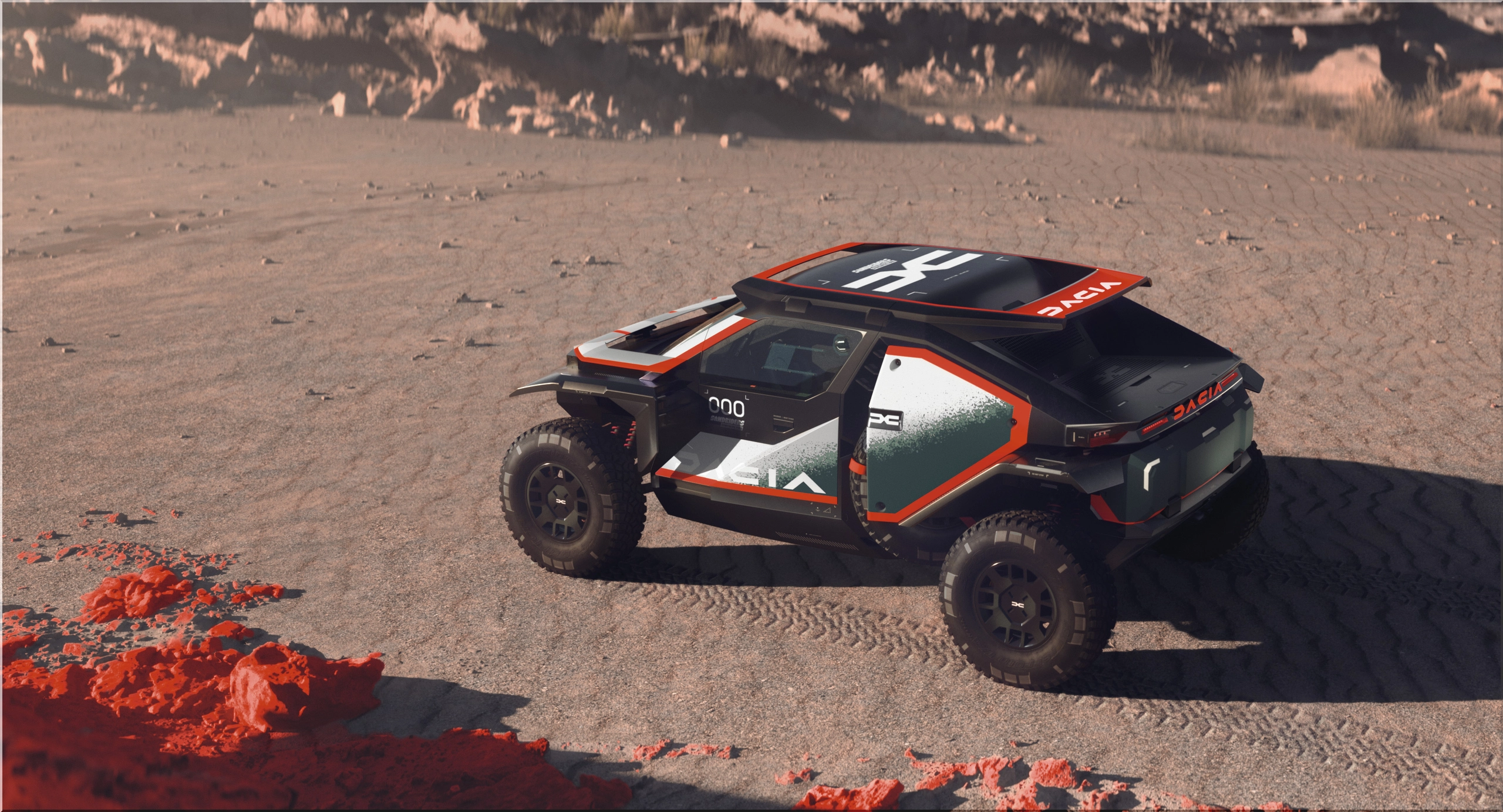
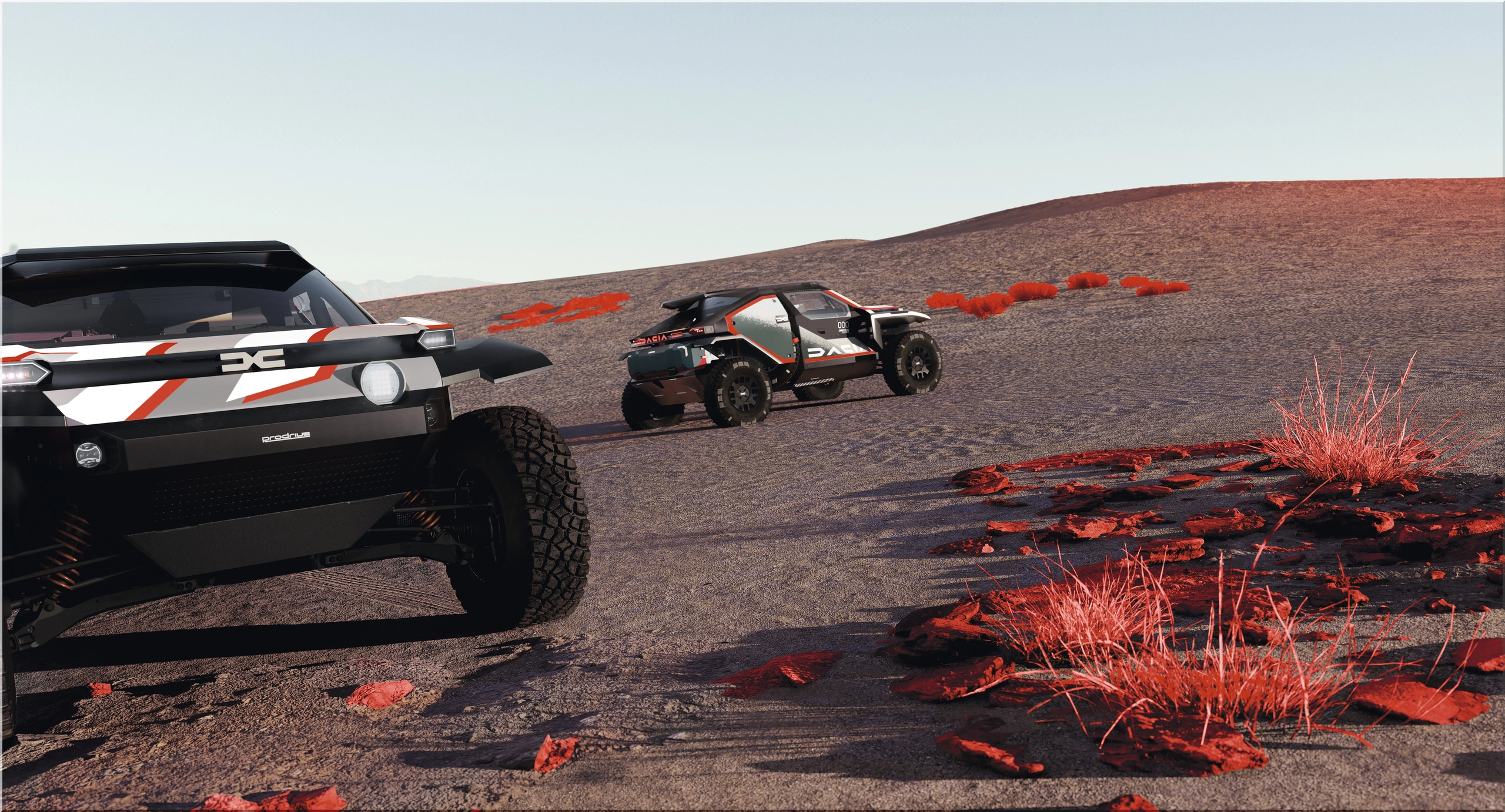
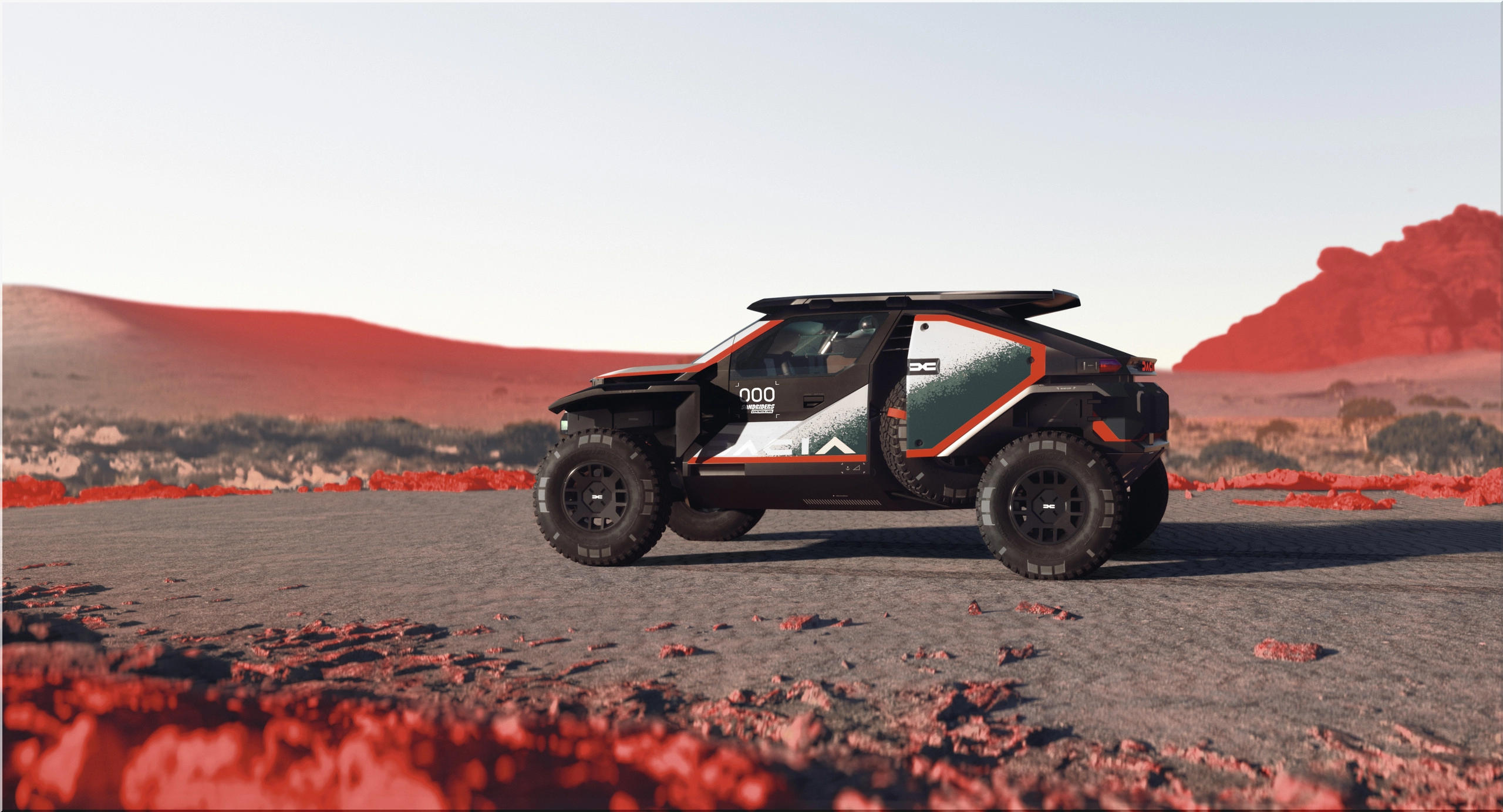
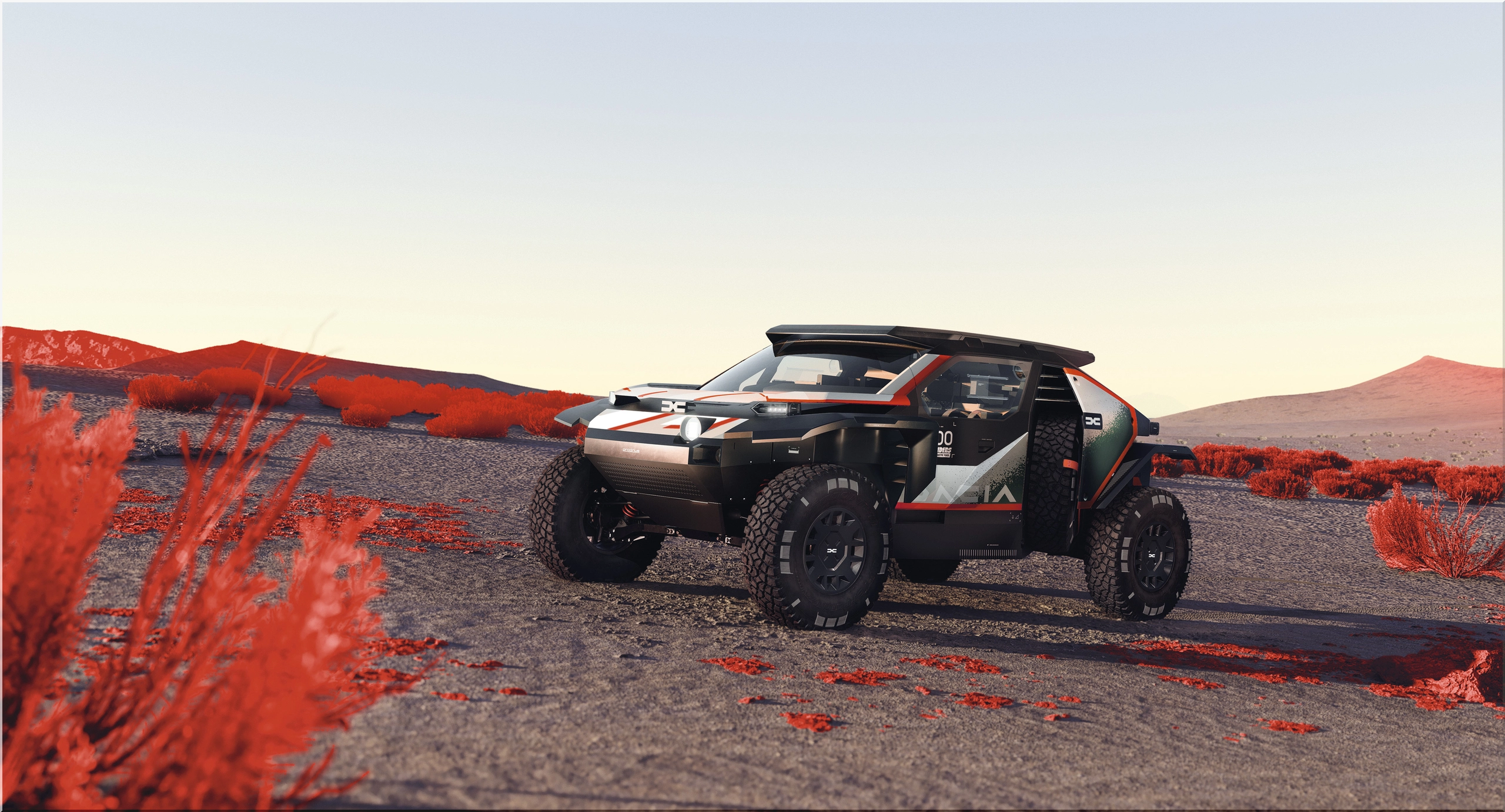
The Dacia Sandrider is a four-wheel drive buggy powered by a 3.0-liter twin-turbocharged V6 engine with direct injection, producing a maximum power output of 360 hp and a maximum torque of 539 Nm. The engine runs on synthetic fuel made by Aramco, the official partner of the Dakar Rally and the W2RC. The synthetic fuel is derived from renewable sources, such as biomass or waste, and has a lower carbon footprint than conventional fuels. The Sandrider also has a hybrid system, which recovers energy from braking and uses it to boost acceleration and performance.
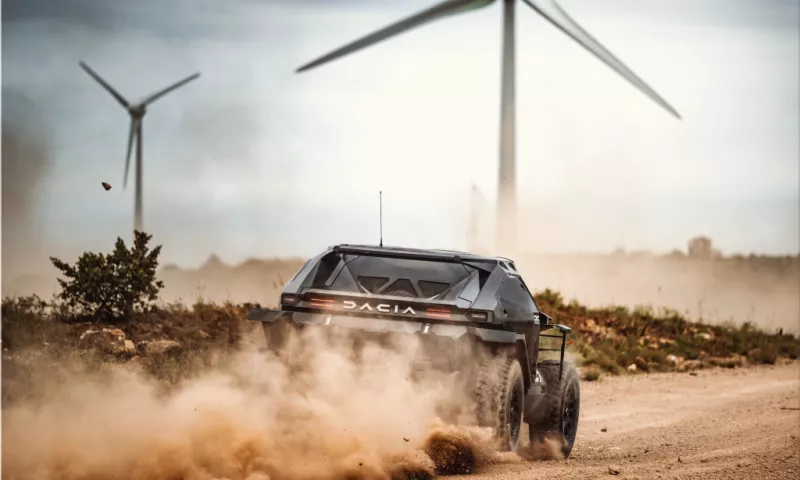
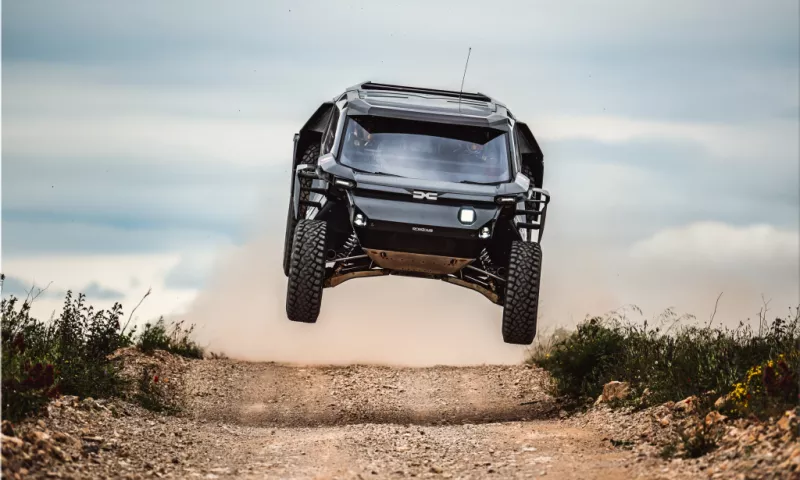
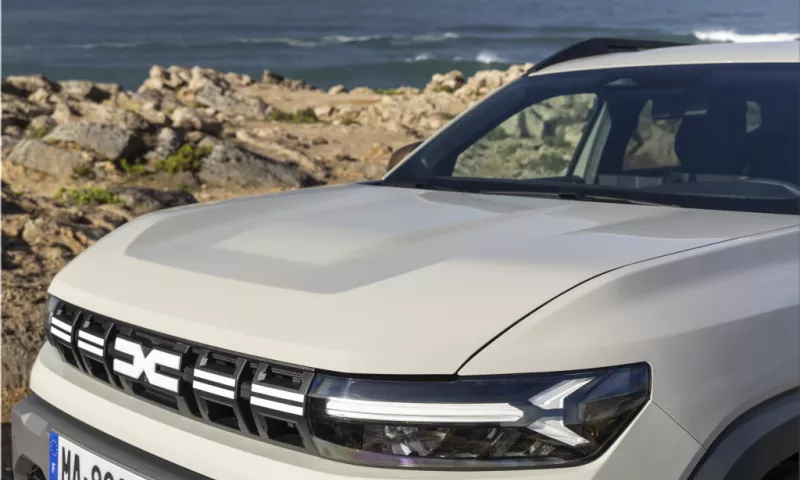
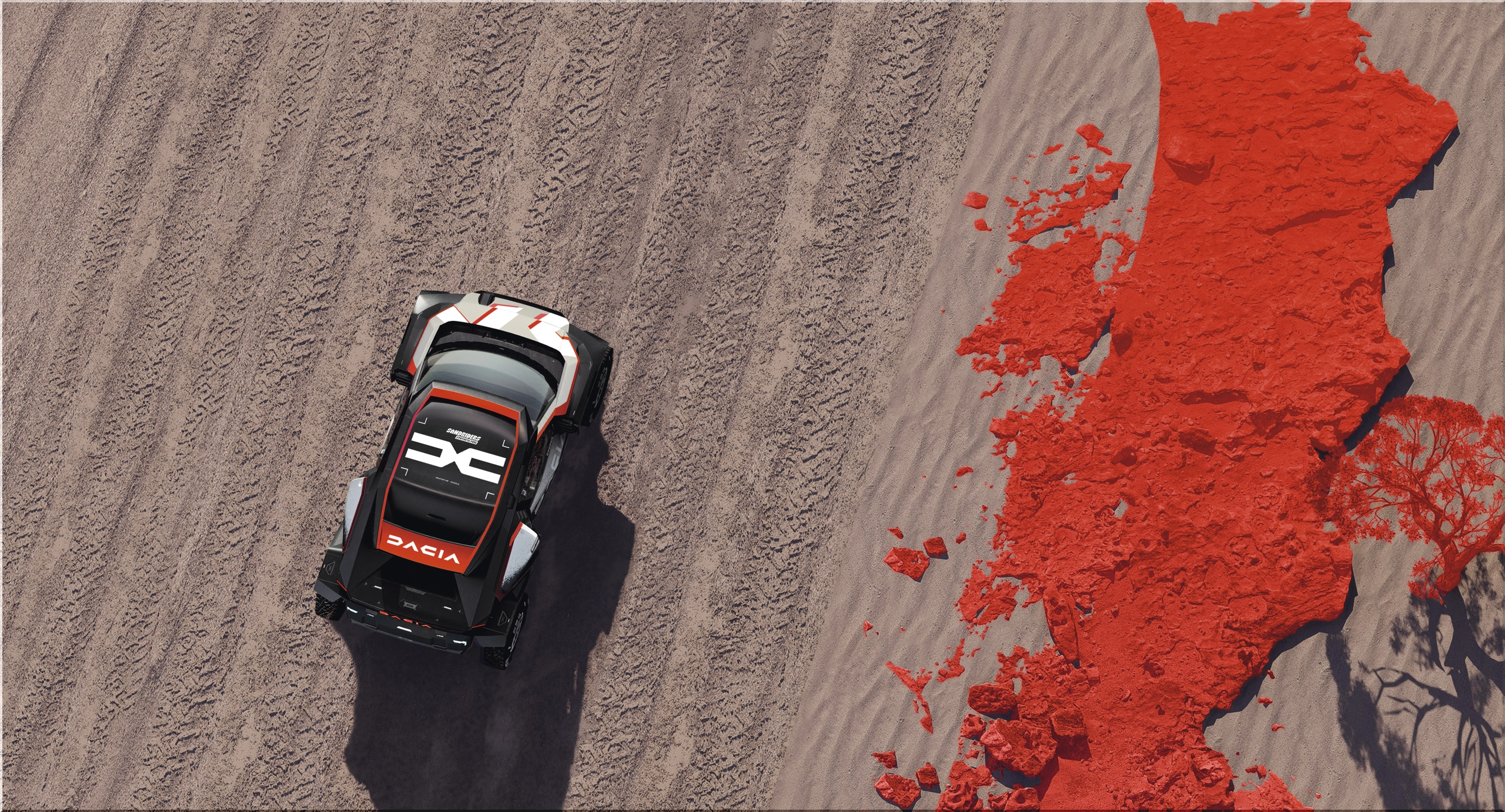
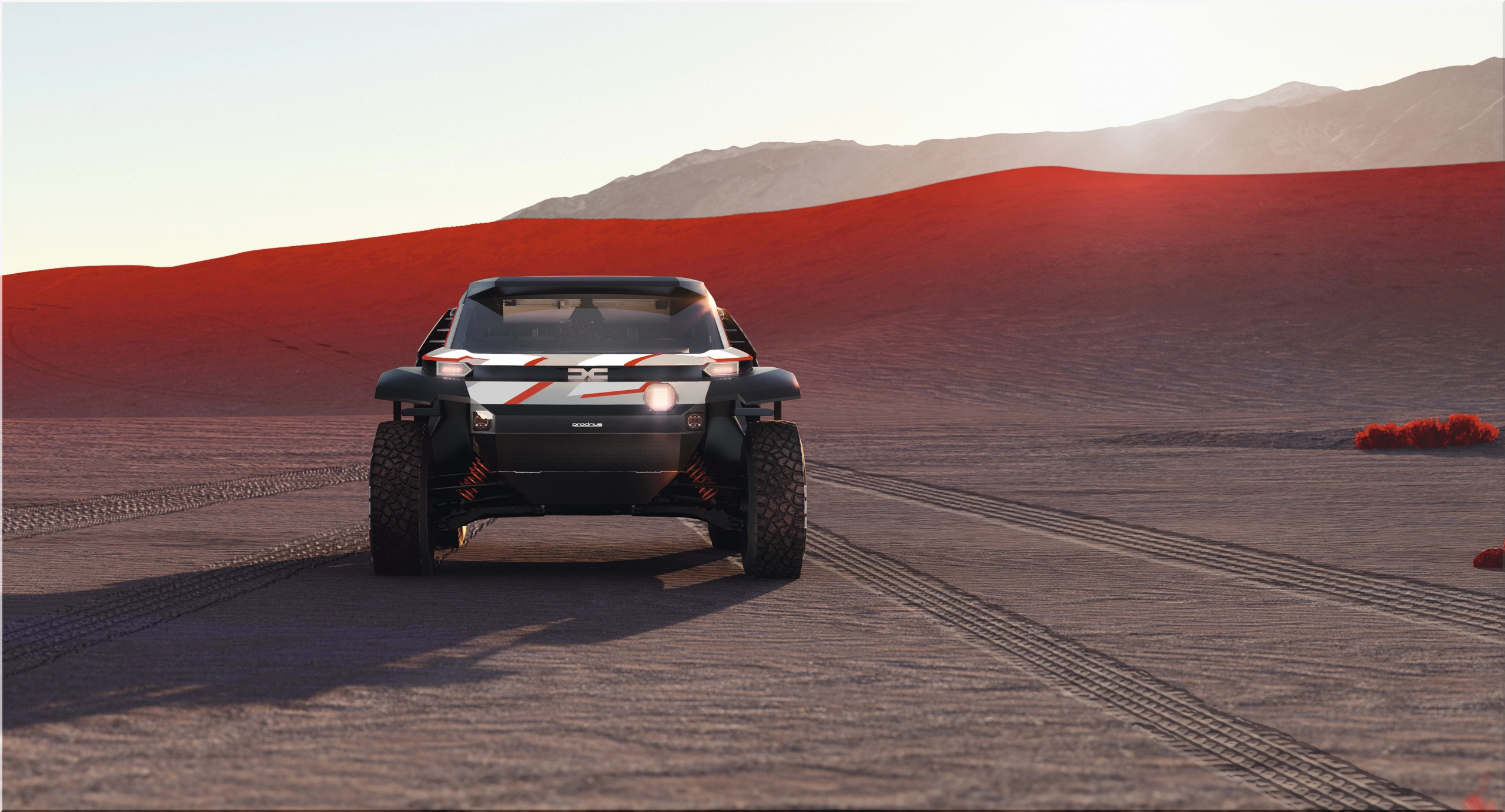
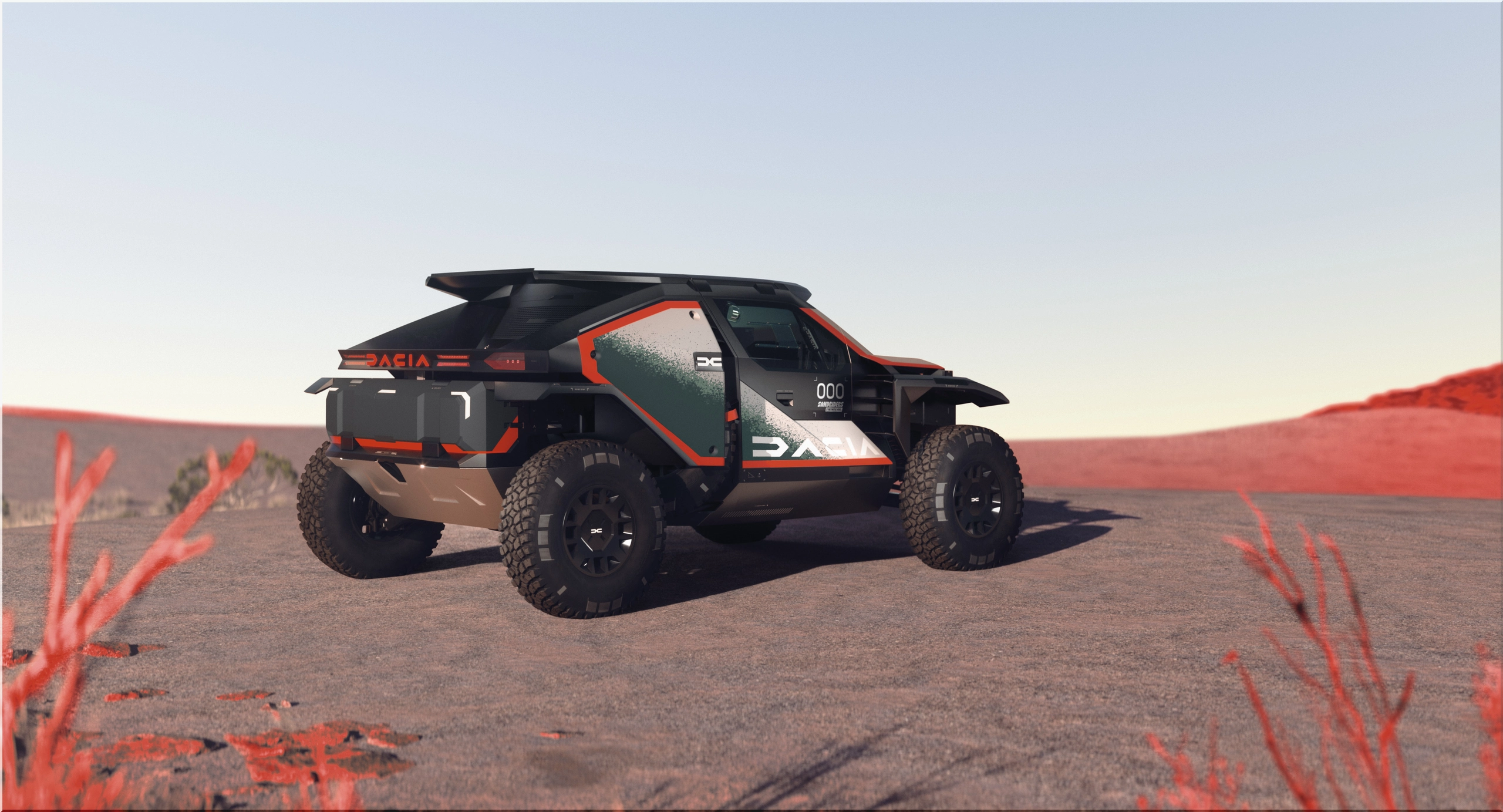
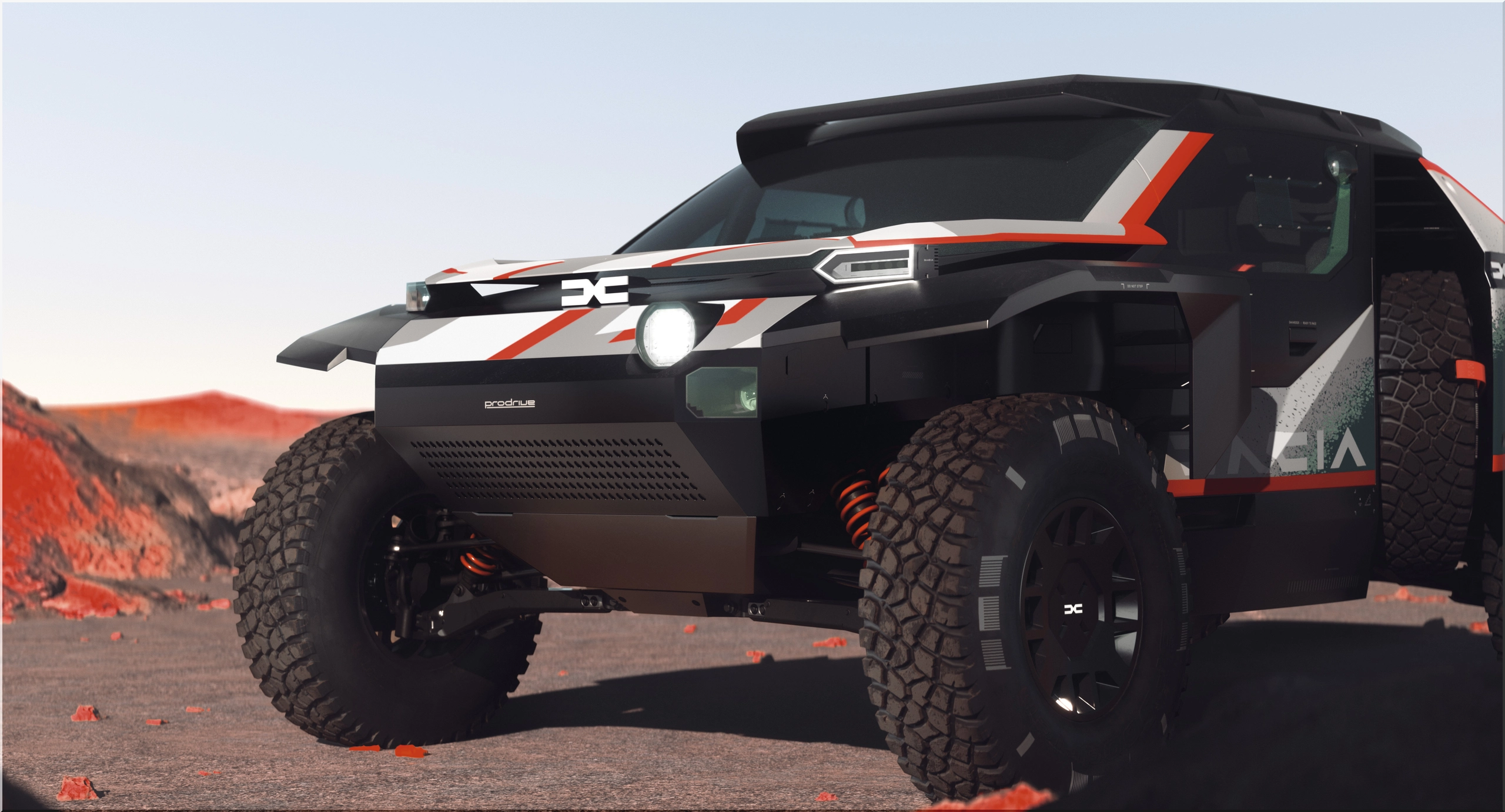
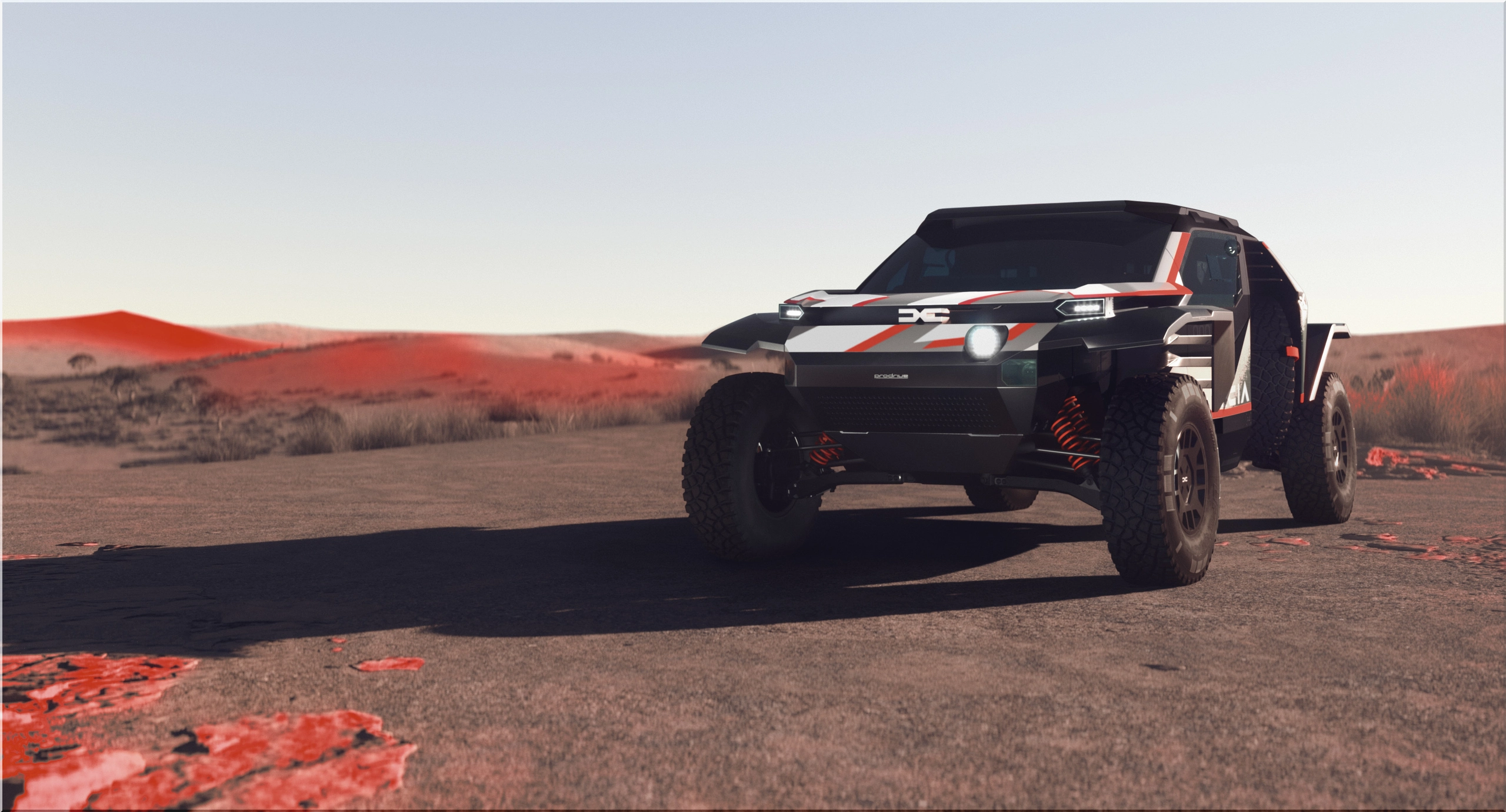
The Sandrider has a tubular chassis made of high-strength steel and bodywork made of carbon fiber. The bodywork is minimal and functional, with no decorative or superfluous parts. The design is inspired by the Dacia Manifesto concept car, which was unveiled by Dacia in 2022, as a laboratory for new ideas. The Sandrider has a short and raked bonnet, which improves the visibility and aerodynamics of the vehicle. The front and rear overhangs are also very short, which enhances the agility and stability of the vehicle. The Sandrider has a single front fog light, which is a signature element of the Dacia brand.
The Sandrider has a double-wishbone suspension system, with coil springs and dampers, which can cope with the rough terrain and shocks typical of rally raid. The vehicle has a ground clearance of 300 mm and a wheelbase of 2,900 mm. The wheels are 17 inches in diameter, and the tires are 245/80 R17, with a run-flat system. The brakes are ventilated discs with six-piston calipers at the front and four-piston calipers at the rear. The Sandrider has a six-speed sequential gearbox with a mechanical limited-slip differential at the front and rear axles. The vehicle has a fuel tank capacity of 400 liters, which allows for long-range and autonomy.
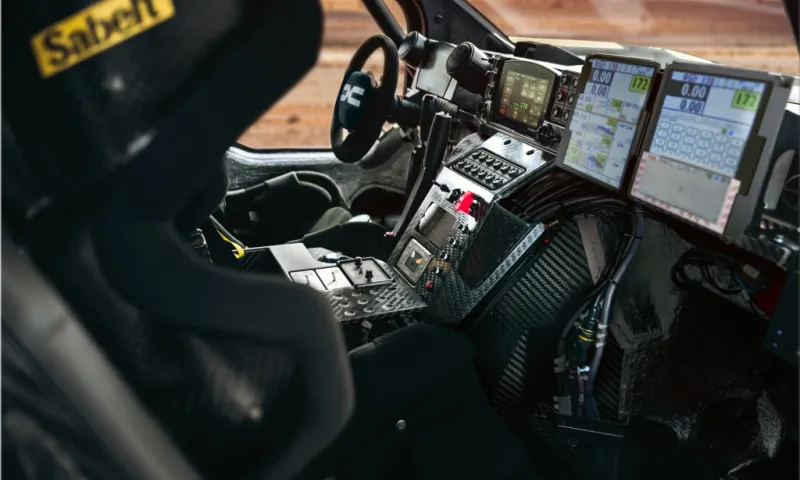
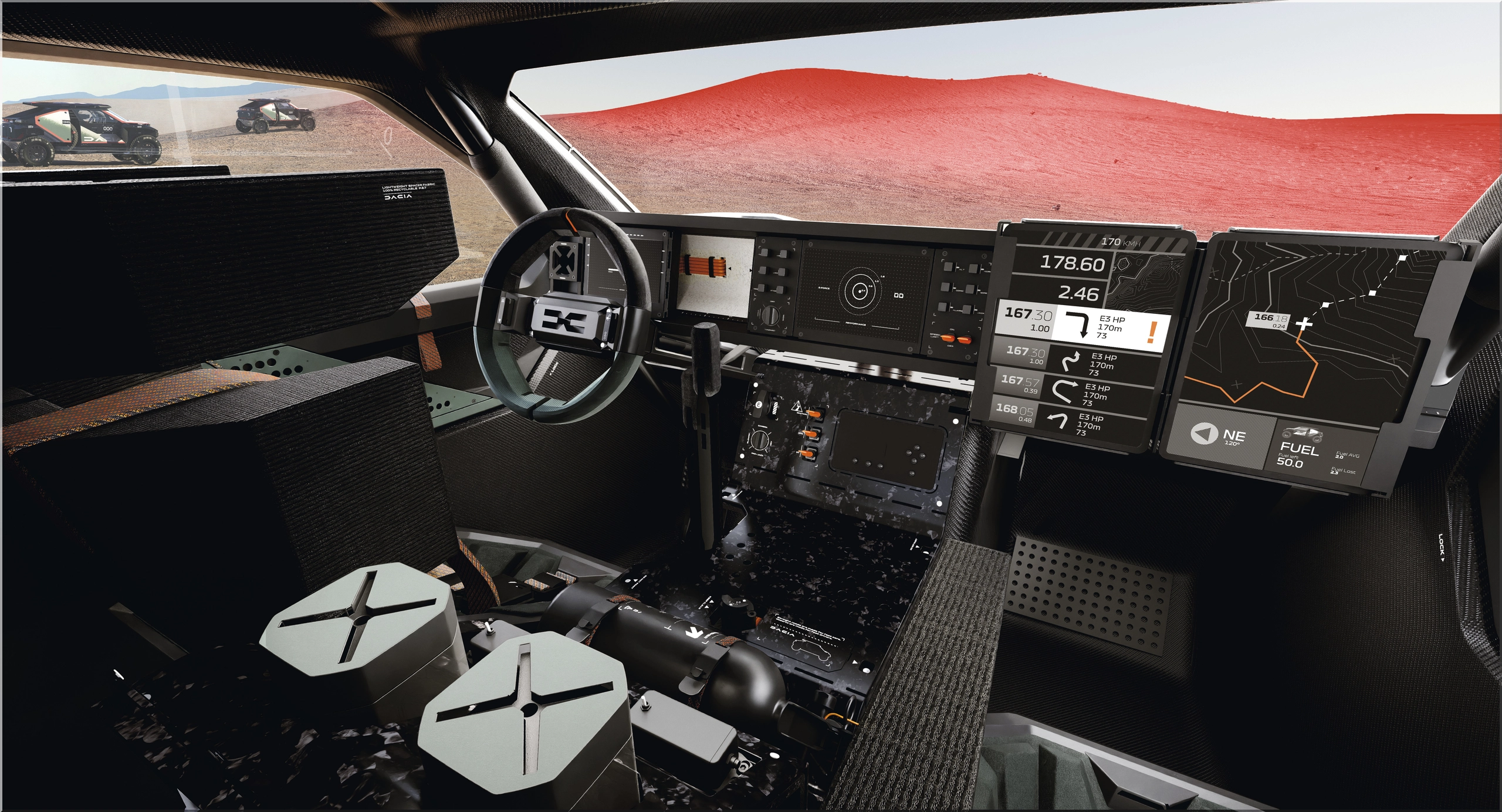
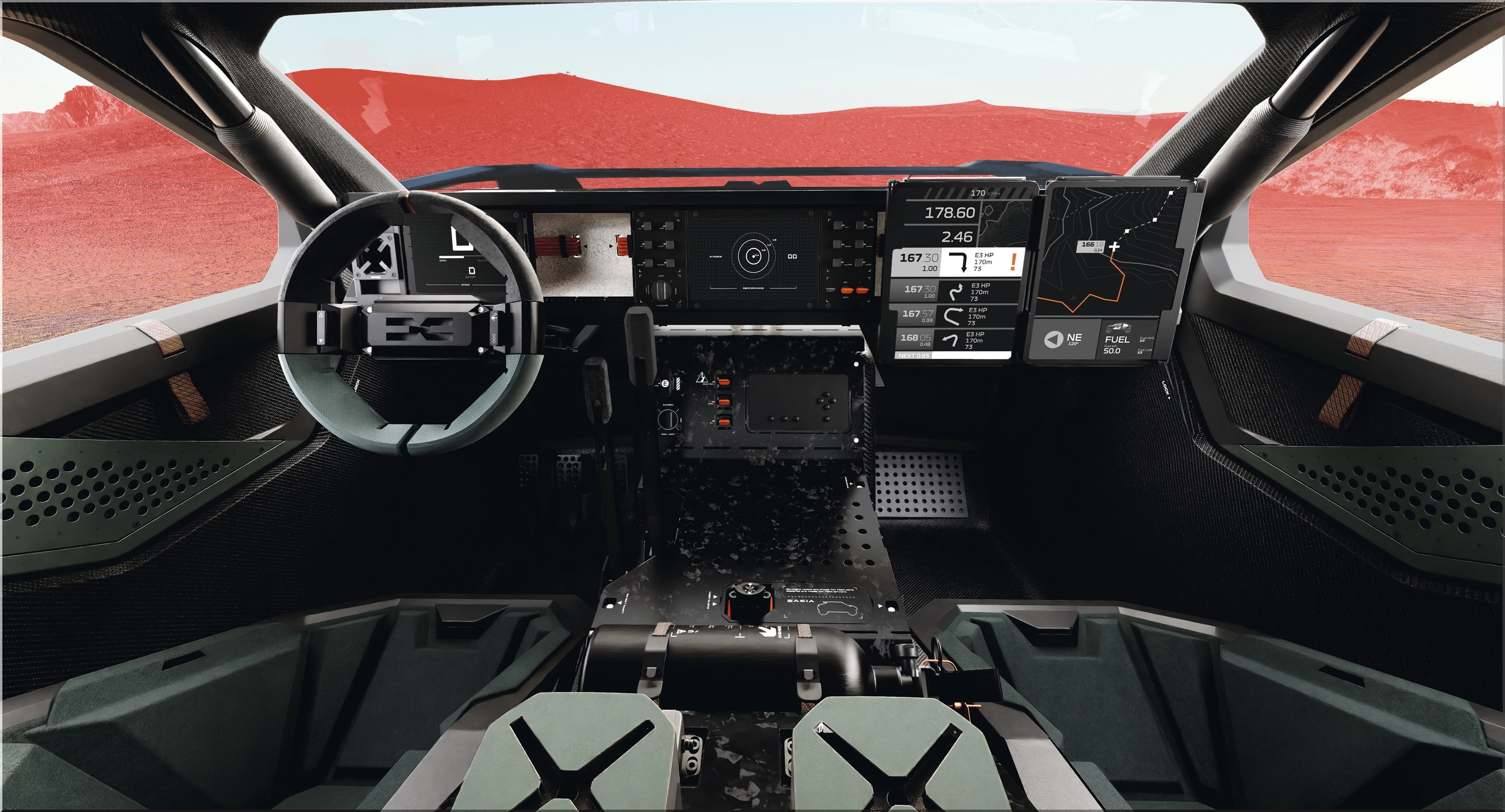
The Dacia Sandrider has a two-seater cockpit with a modular dashboard, which can be customized according to the driver's and co-driver's preferences and needs. The cockpit is equipped with a digital display, a navigation system, a radio, and a safety system, which includes a roll cage, a fire extinguisher, and a distress beacon. The cockpit also has some innovative features, such as anti-infrared pigments in the paint, which reduce the heat absorption and the vehicle's thermal signature, and magnetic elements, which hold the tools and spare parts securely in place.
What are the goals and expectations of the Sandrider project?
The Dacia Sandrider project is a bold and ambitious challenge for Dacia, which aims to prove its capabilities and values in the world of rally raid. Dacia wants to show that it can create a vehicle that can compete with the best teams and drivers in the Ultimate T1+ category while being affordable and environmentally friendly. Dacia also wants to use the rally raid as a testing ground for its approach of essentialism, which focuses on the core needs and expectations of the customers without compromising on quality and reliability.
The Sandrider project is also a way for Dacia to connect with its fans and customers, who share the same spirit of adventure and passion for motorsport. Dacia has created a dedicated team for the rally raid, called The Dacia Sandriders, which includes some of the most experienced and talented drivers and co-drivers in the discipline. The team is composed of:
- Nasser Al-Attiyah and Mathieu Baumel: The Qatari-French duo is one of the most successful and respected in the rally raid scene. They have won the Dakar Rally three times, in 2011, 2015, and 2019, and have also won several other cross-country rallies. They have joined the Dacia Sandriders team after leaving Toyota Gazoo Racing at the end of 2024.
- Sebastien Loeb and Daniel Elena: The French-Monegasque duo is one of the most legendary and decorated in the history of motorsport. They have won the World Rally Championship nine times, from 2004 to 2012, and have also competed in other disciplines, such as circuit racing, rallycross, and endurance racing. They have joined the Dacia Sandriders team after working with Prodrive on the Hunter project, which was discontinued in 2024.
- Cristina Gutierrez and Francois Cazalet: The Spanish-French duo is one of the most promising and talented in the rally raid scene. They have won the Dakar Rally in the Challenger (T3) category in 2024, becoming the first female driver and the first Spanish driver to do so. They have joined the Dacia Sandriders team after leaving Red Bull Off-Road Team USA at the end of 2024.
The Dacia Sandrider project is still in its early stages, and the vehicle will undergo extensive development and testing throughout 2024 before making its debut in the Rallye du Maroc in October. The first attempt at the Dakar Rally will be in January 2025, followed by a full campaign in the W2RC. The Sandrider project is a long-term and ambitious vision that aims to make Dacia a competitive and respected player in the rally raid scene.
- Add new comment
- 310 views