Why Dacia is Rethinking the Electric Car
The electric car market has followed a clear path for years: bigger, heavier, more expensive. As technology advances, vehicles gain size, weight, and features — and their price tags rise. The average price of a new car in Europe jumped 77% between 2010 and 2024, far outpacing incomes. This has priced many buyers out of the electric future.
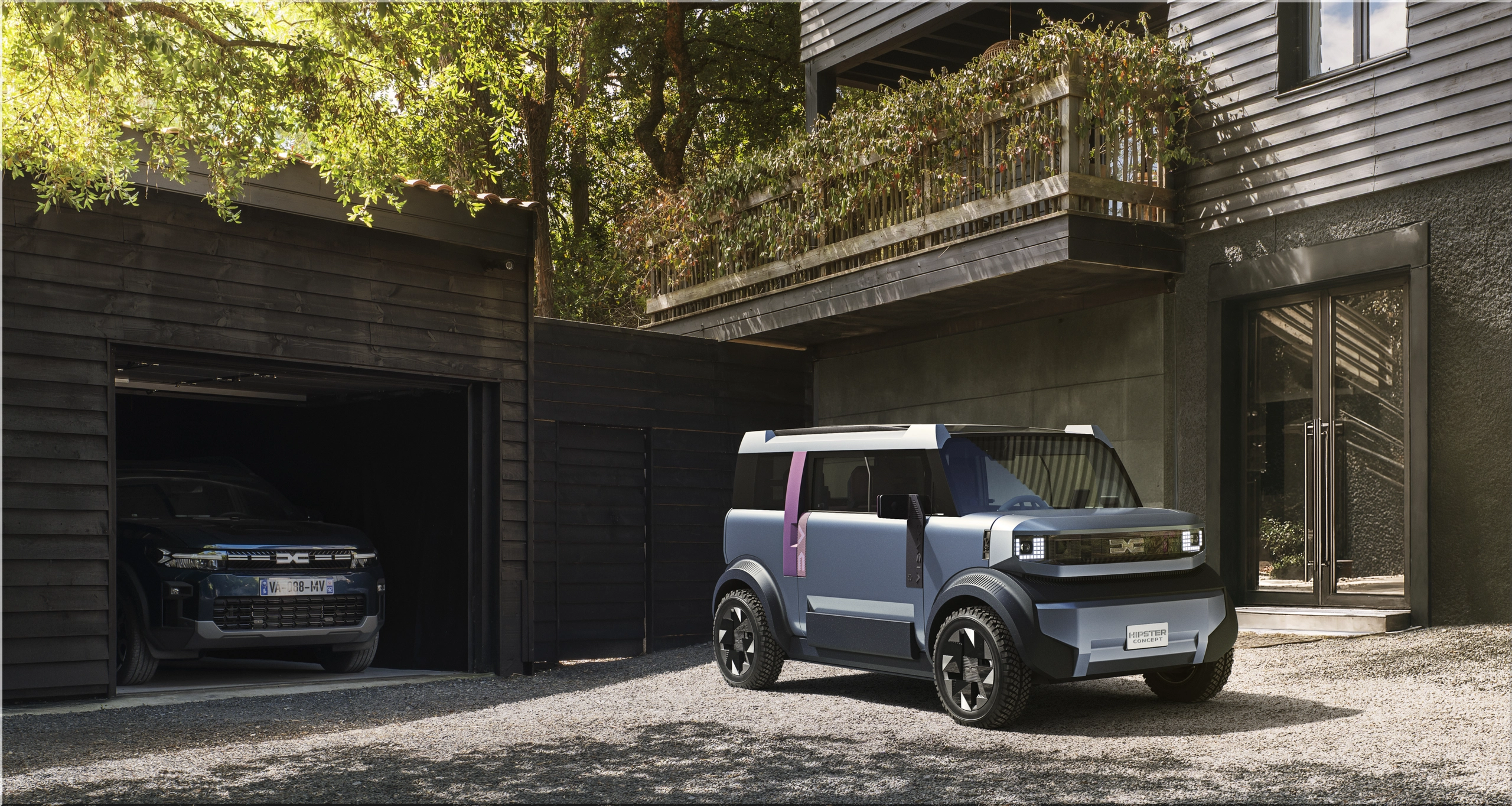
Dacia is challenging that direction. Its Hipster Concept shows how a compact, ultra-affordable electric car can meet real needs without excess. The goal is simple: deliver essential electric mobility to the widest possible audience.
The Mission: A True People's EV
Dacia built the Hipster Concept from a blank sheet. It asked one question: What do drivers truly need every day?
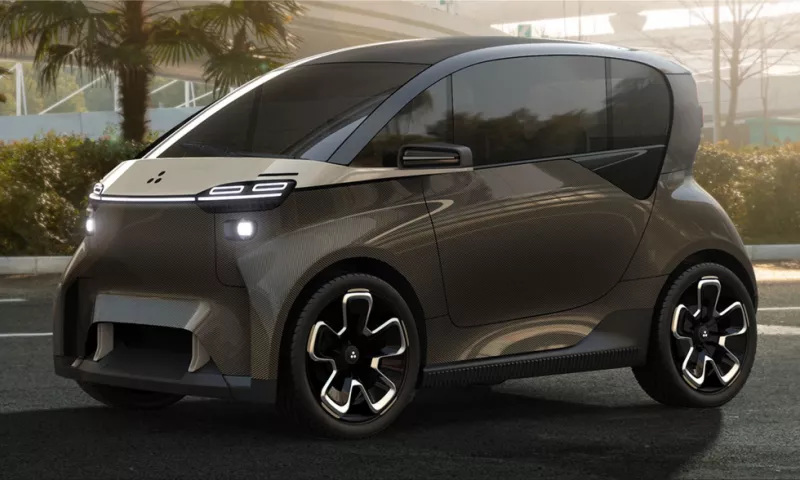
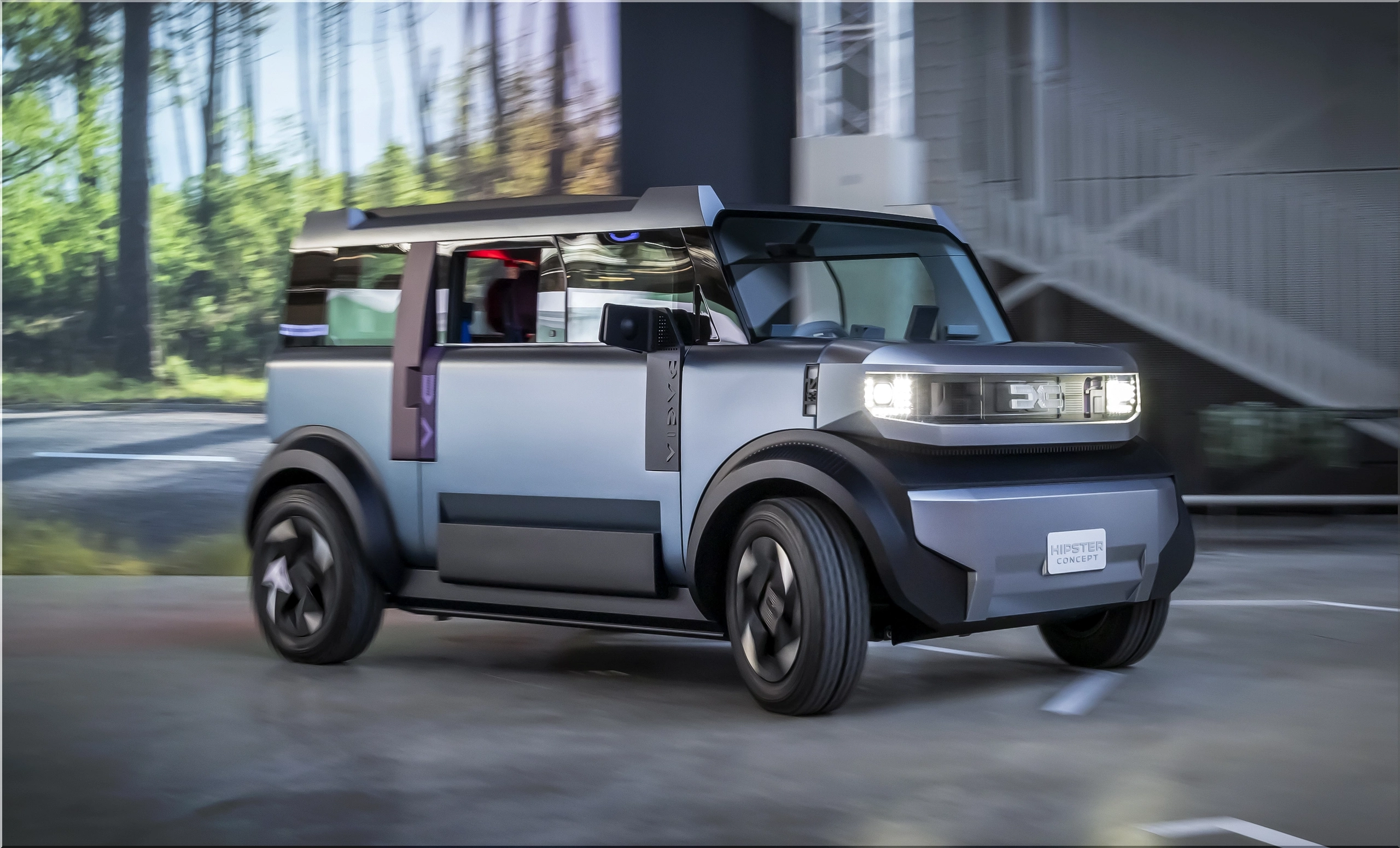
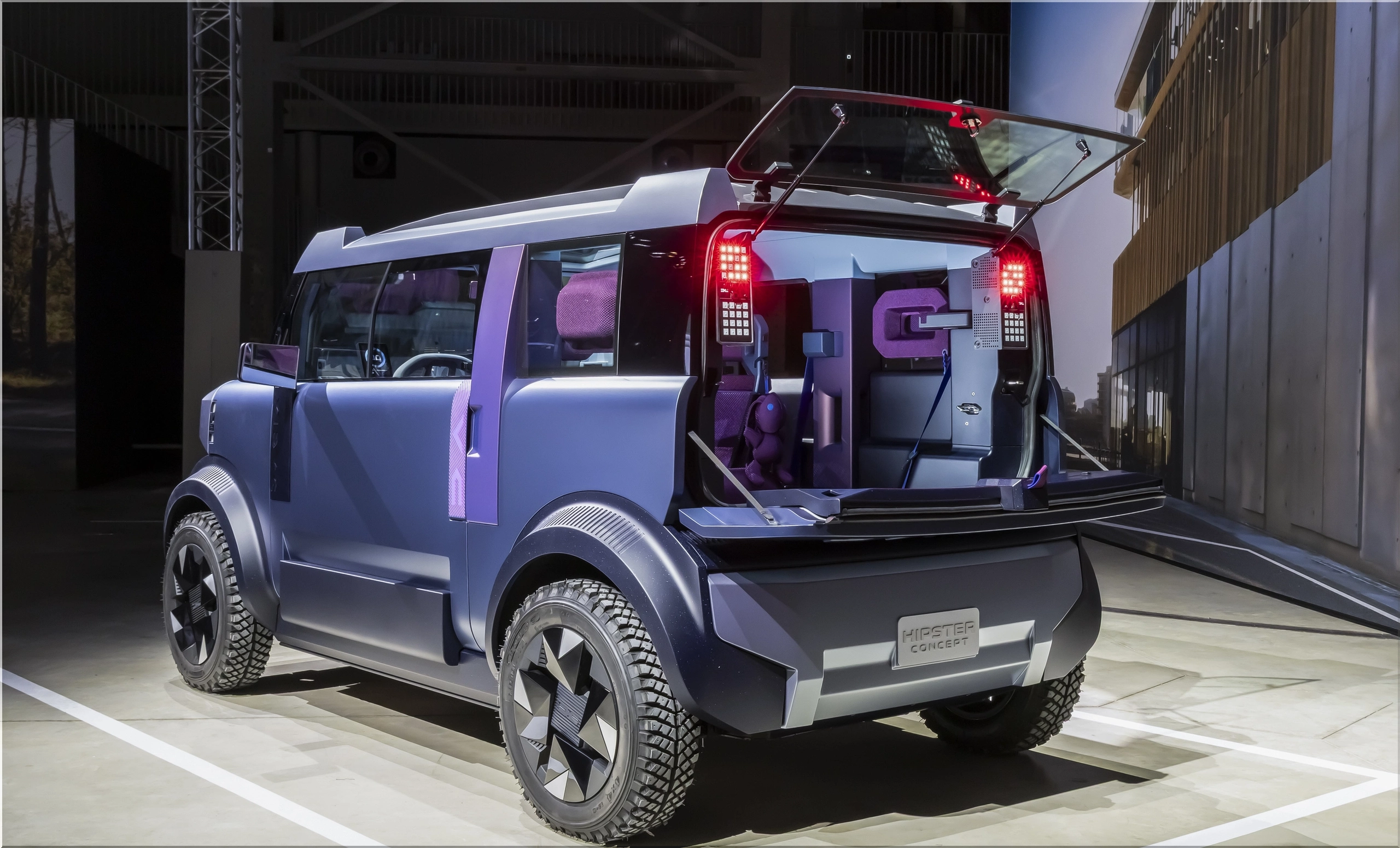
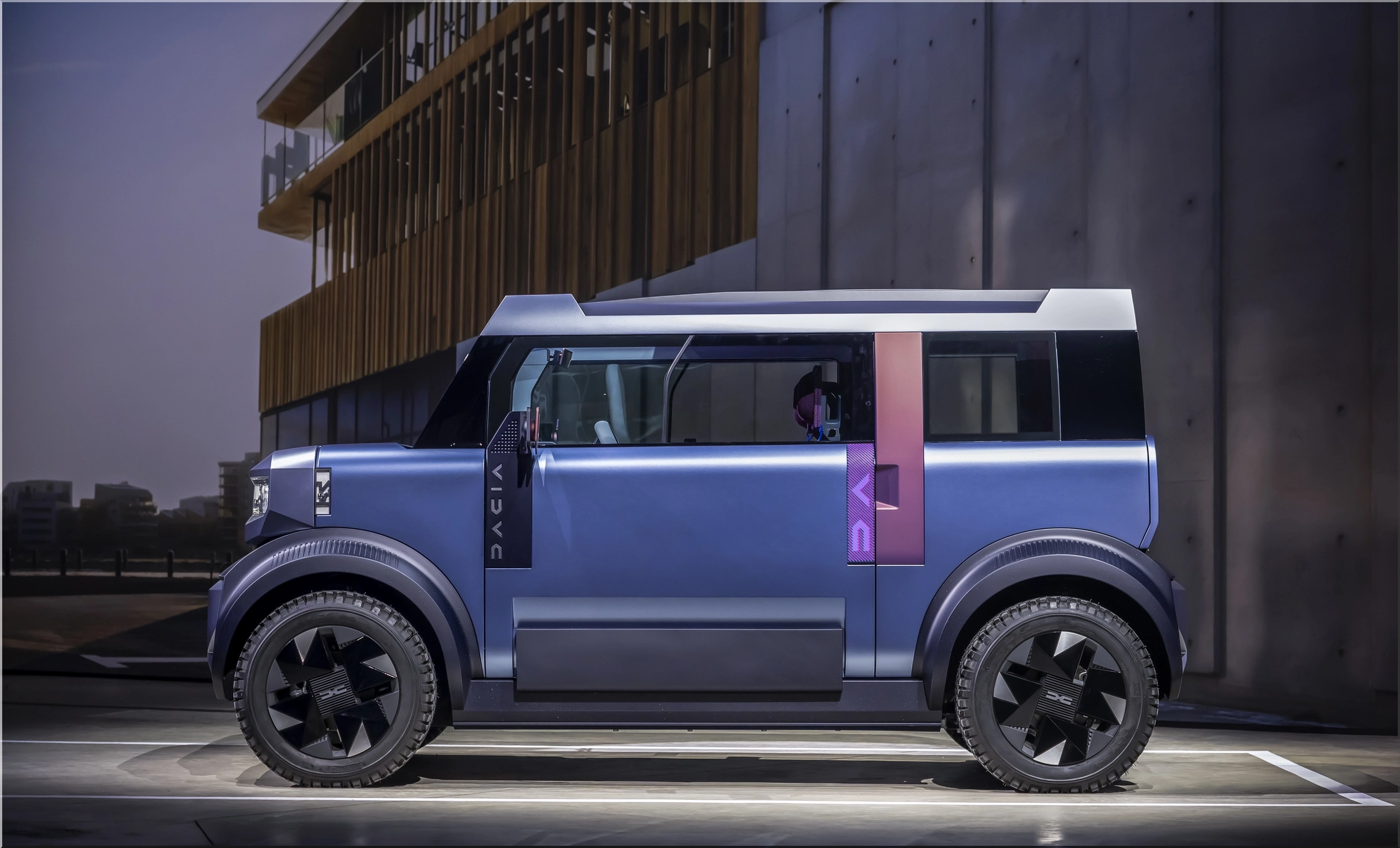
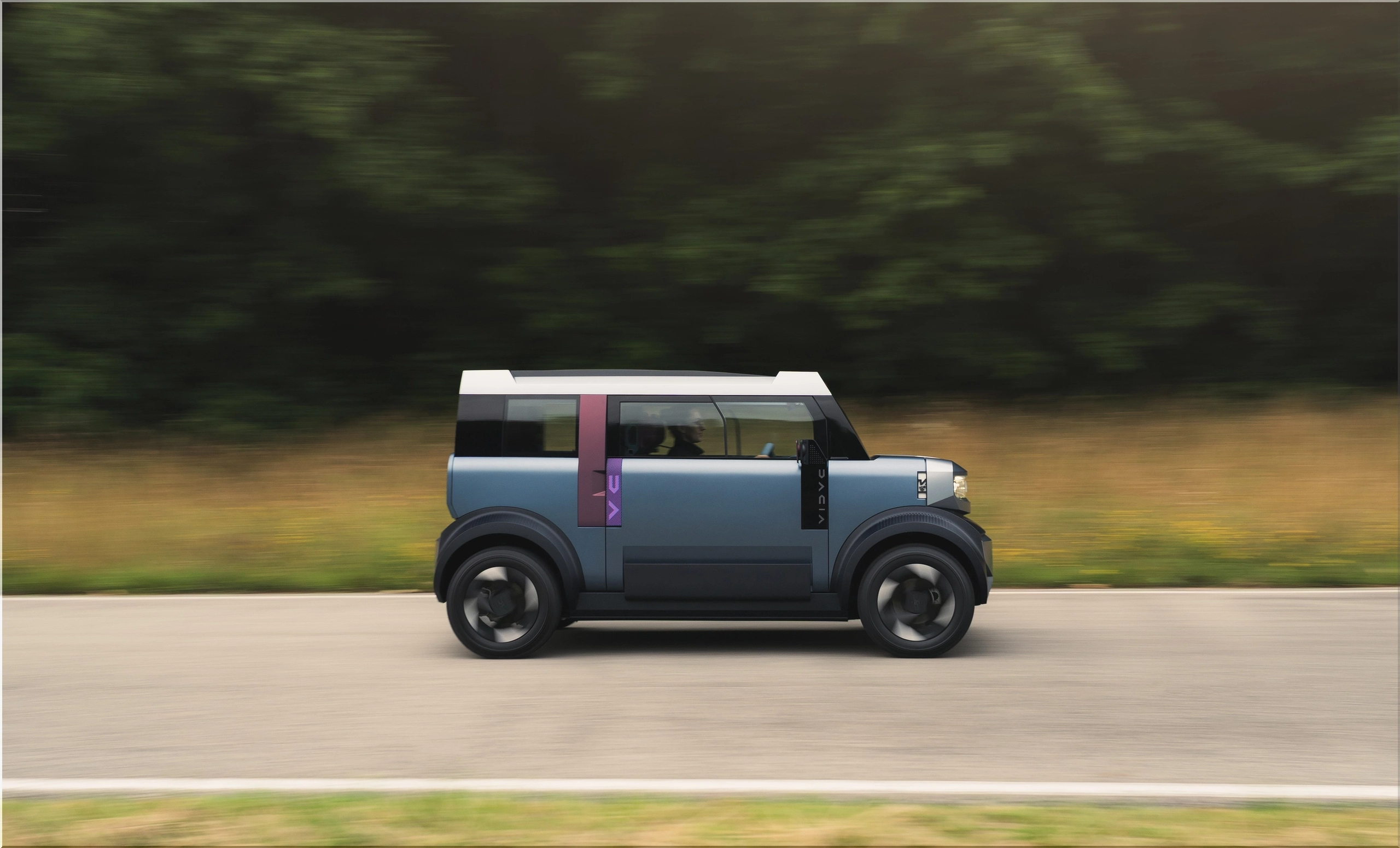
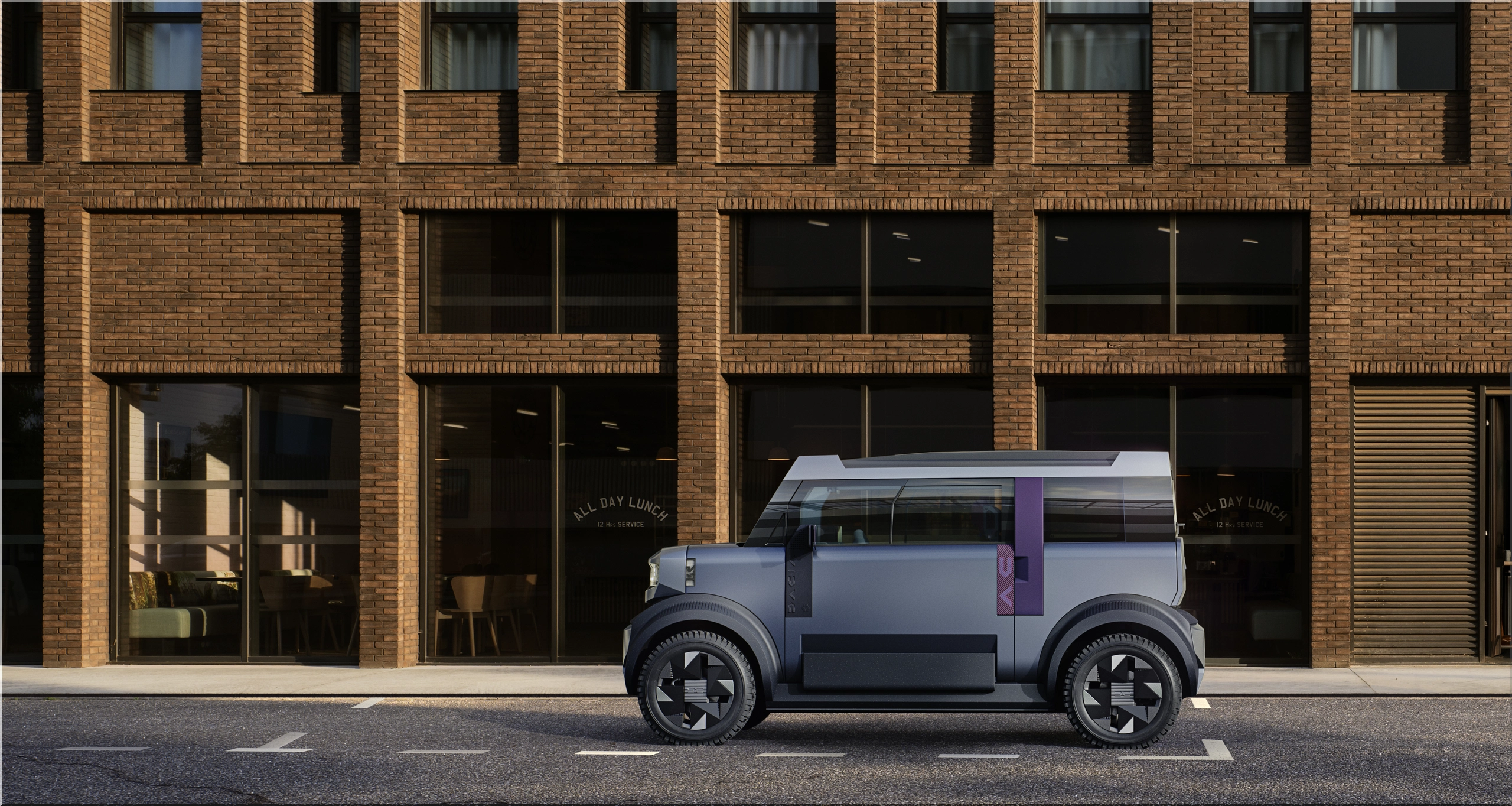
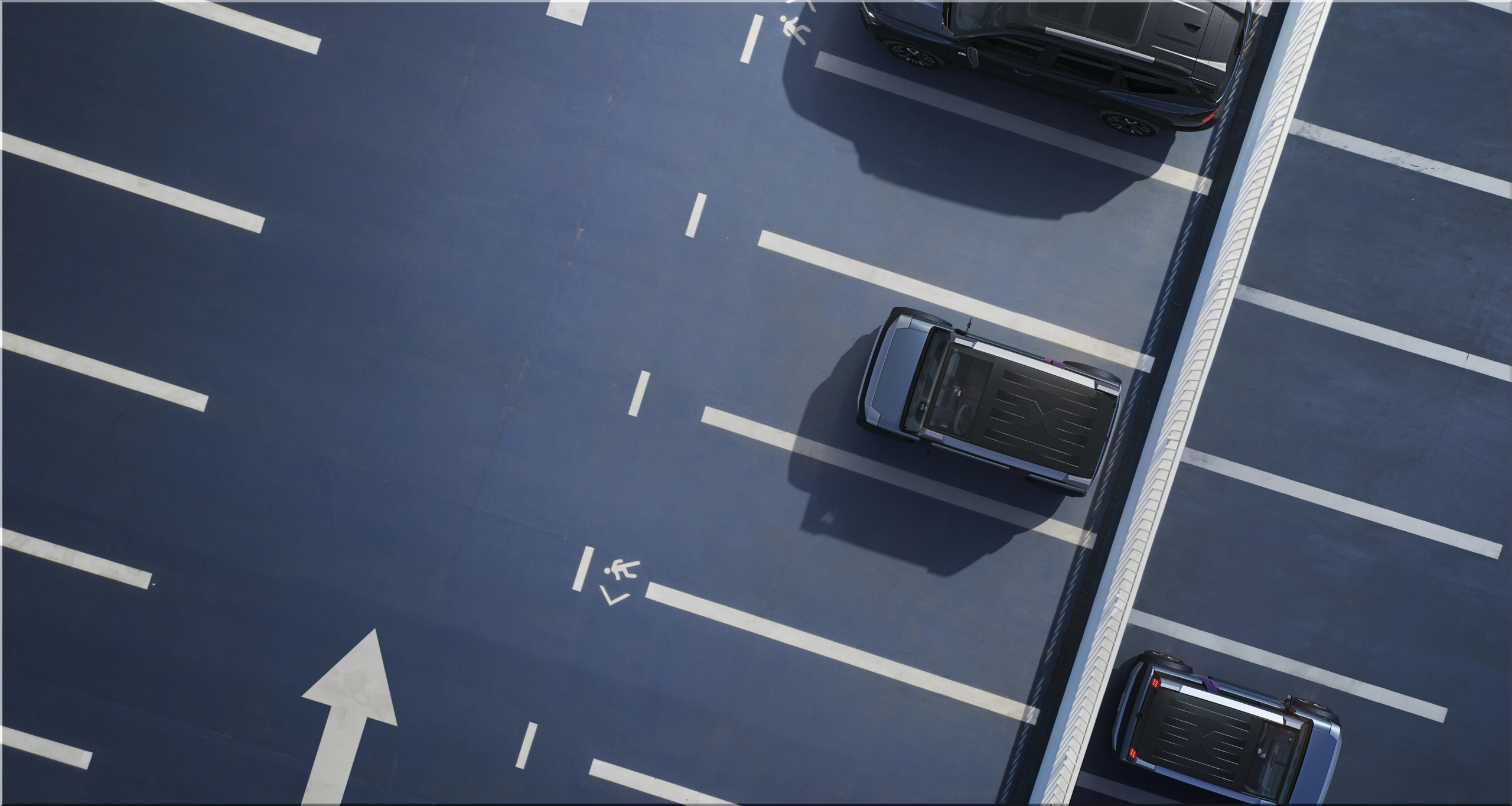
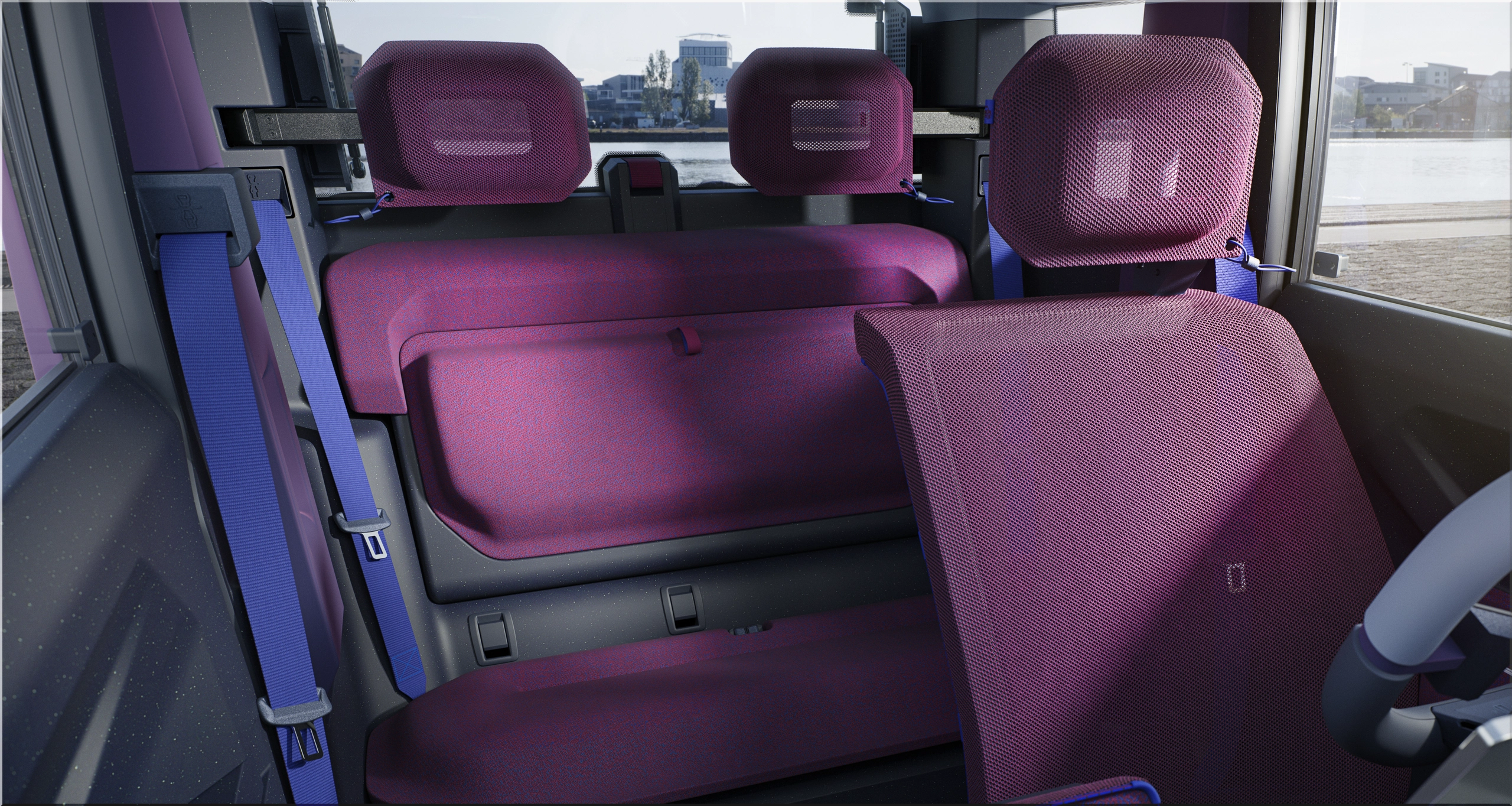
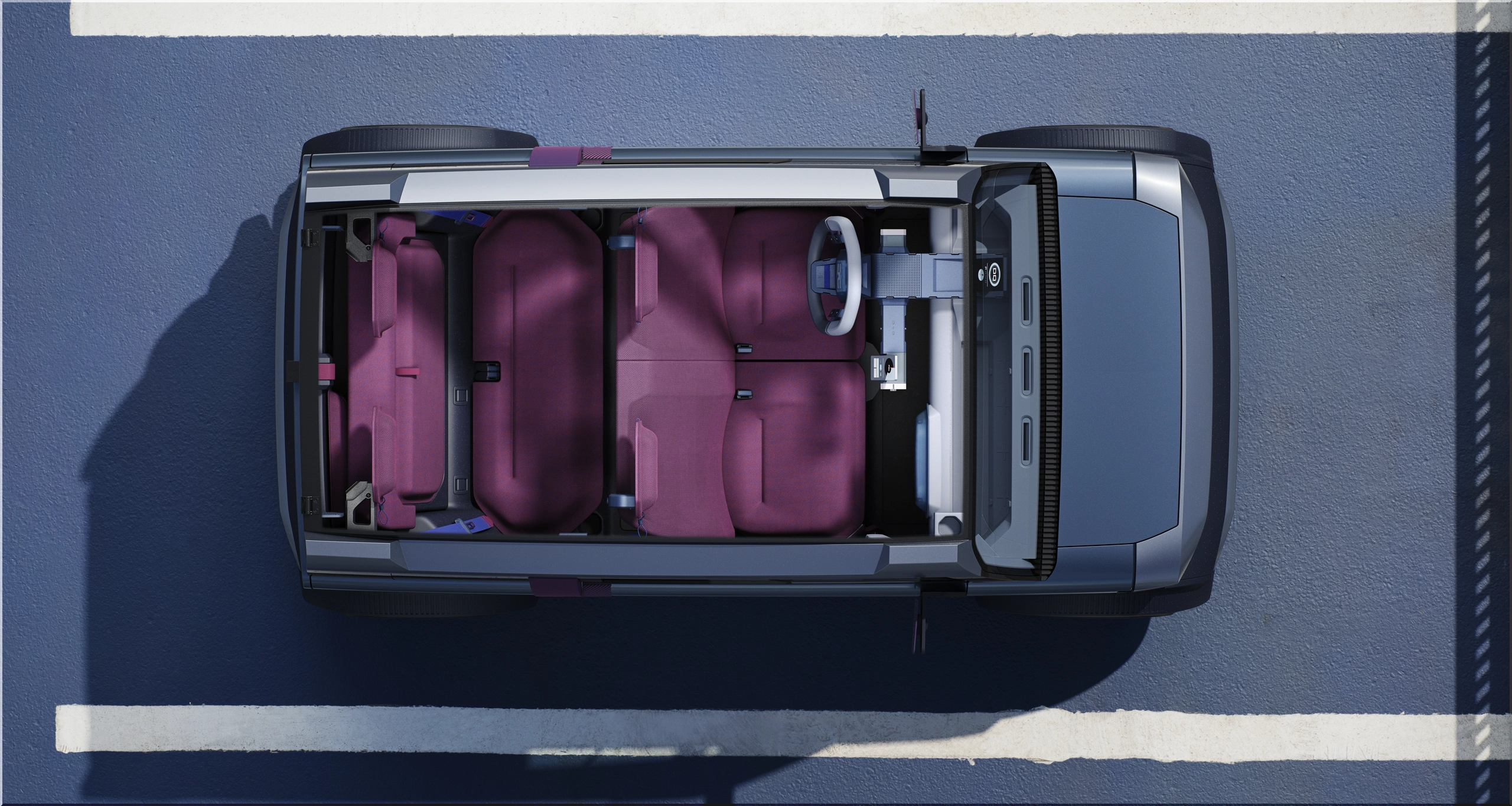
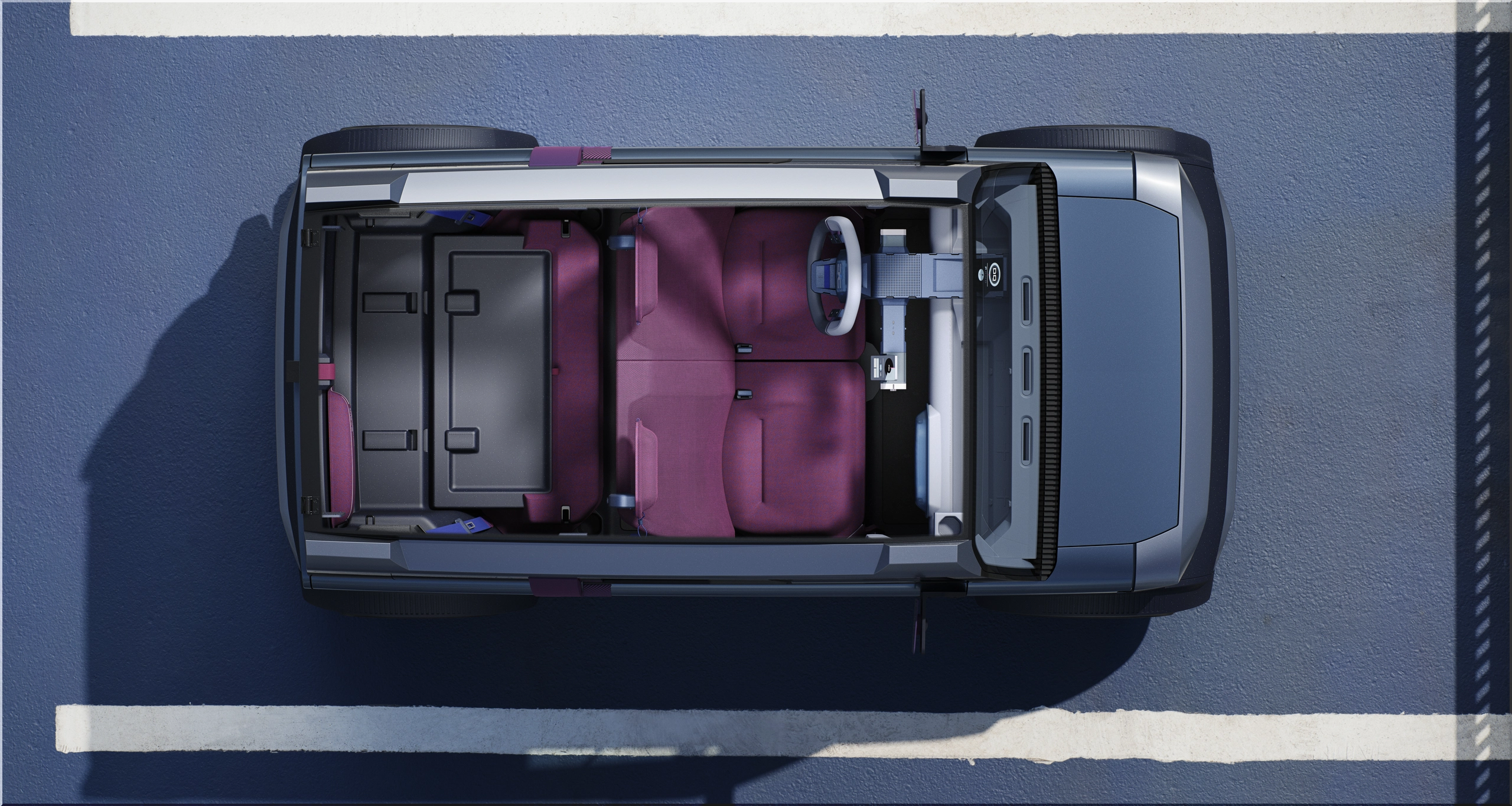
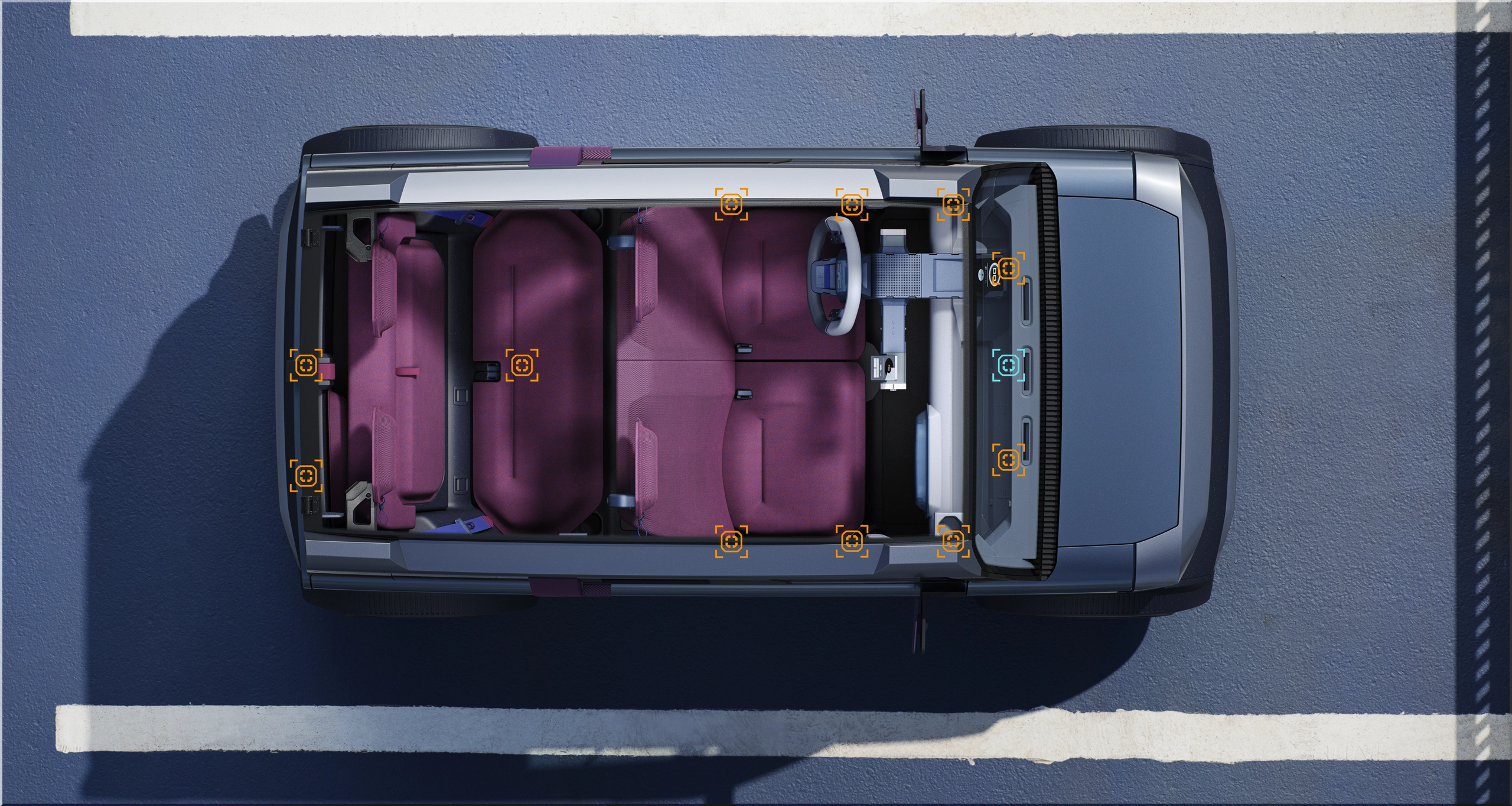
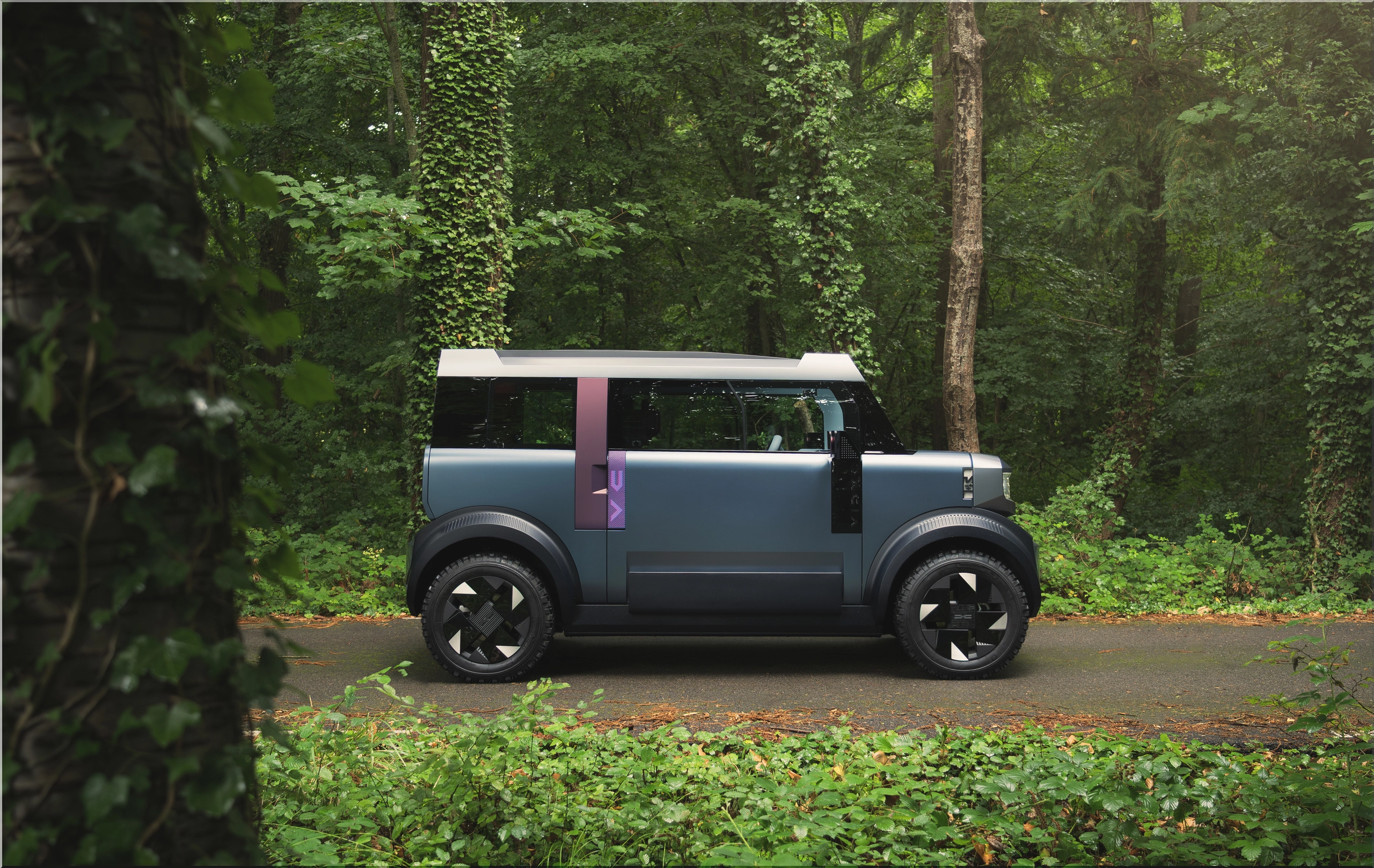
The result is a car stripped of unnecessary complexity. It measures just 3 meters long, 1.53 meters high, and 1.55 meters wide, yet fits four real seats and a boot expandable from 70 to 500 liters. That means space for passengers and groceries without urban parking problems.
The concept takes Dacia’s cost-focused approach further. It is 20% lighter than the Spring, the brand’s current budget EV. Less weight means:
- Less material and energy in manufacturing
- Less mass to move, so lower energy use
- A smaller carbon footprint — targeted at 50% less over the vehicle’s life cycle compared with today’s electric cars
For most drivers, this covers real-world needs. In France, 94% of motorists drive under 40 km per day. With just two charges a week, the Hipster Concept handles daily commuting, errands, and short trips without range anxiety.
Designed for Simplicity and Purpose
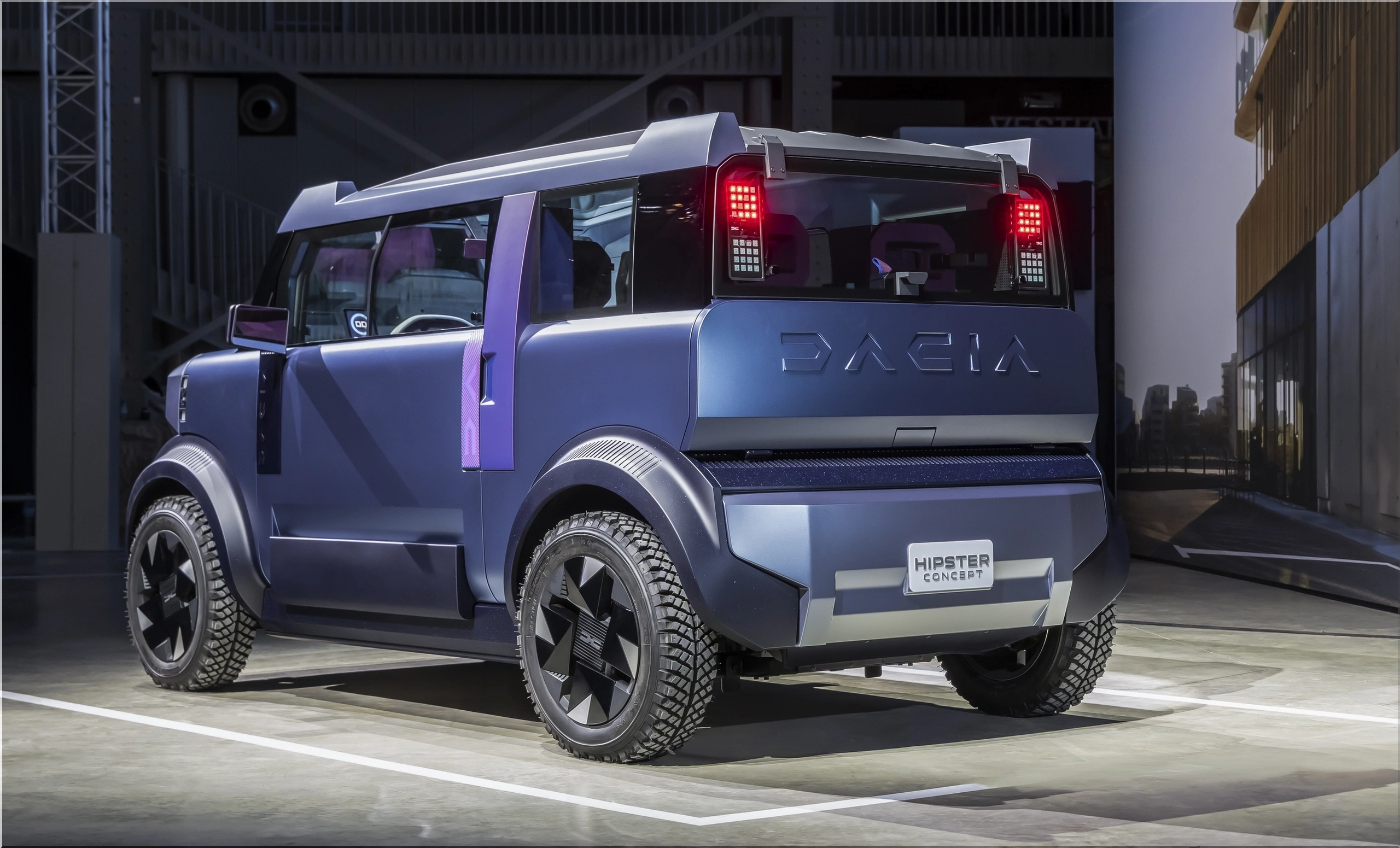
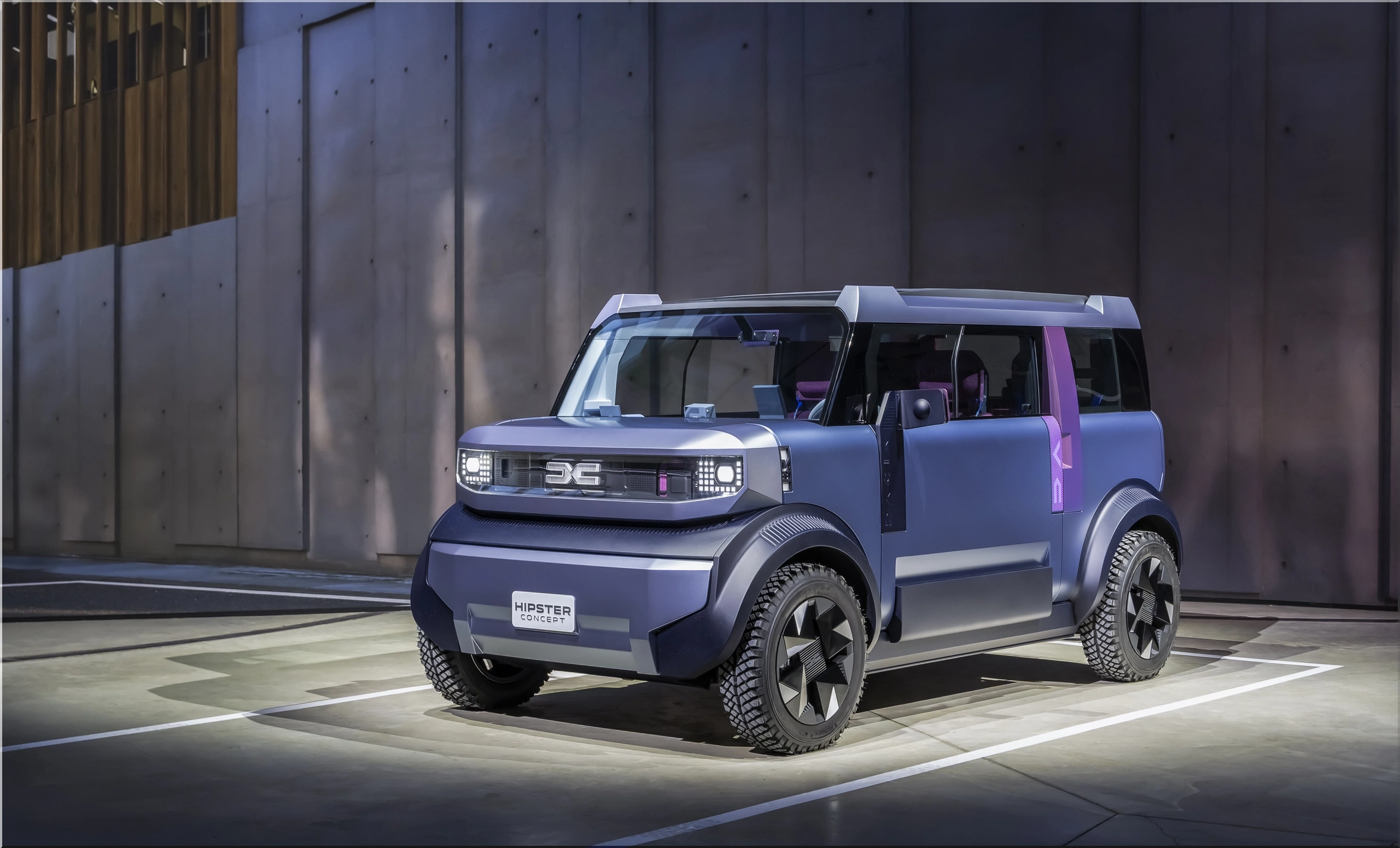
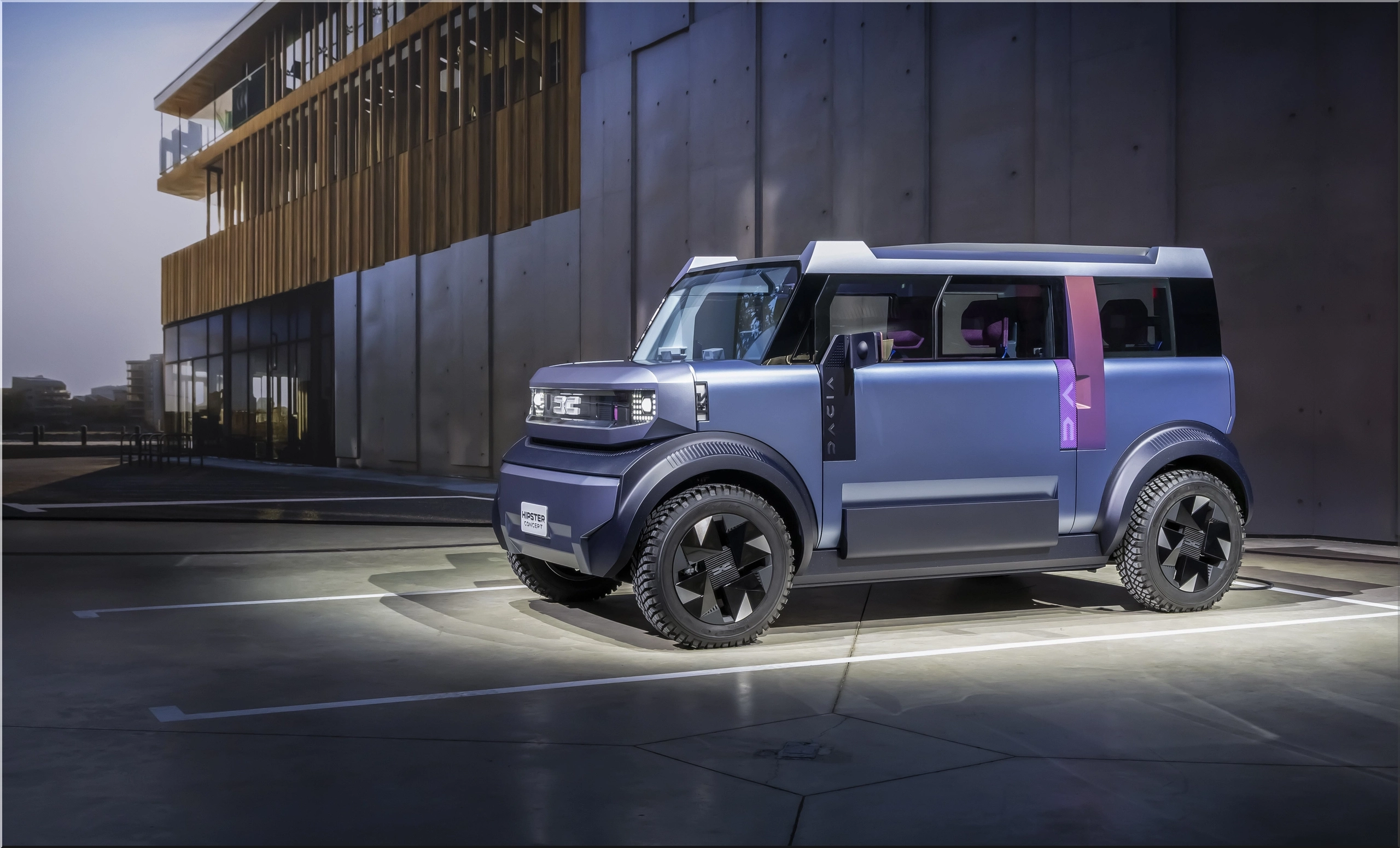
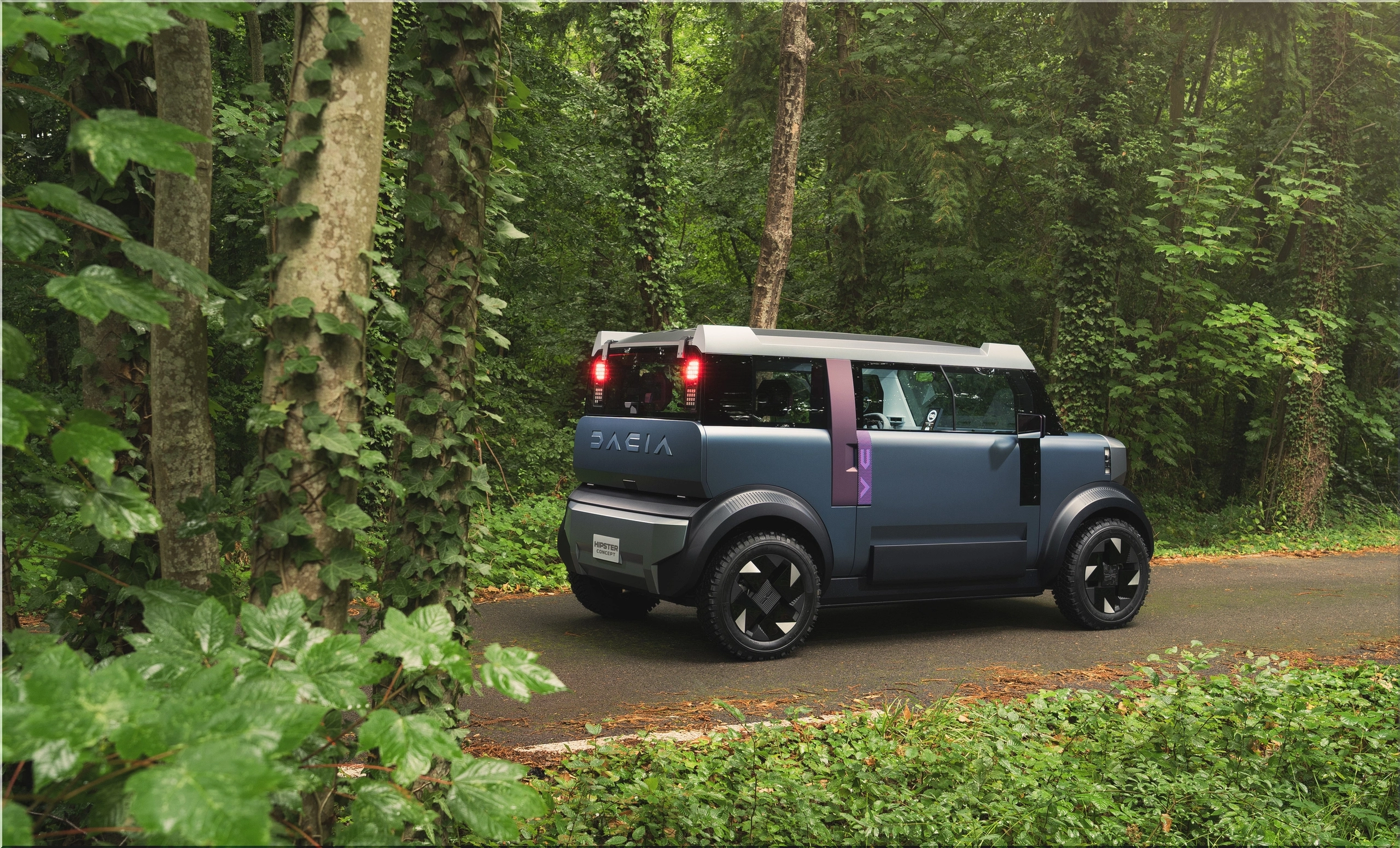
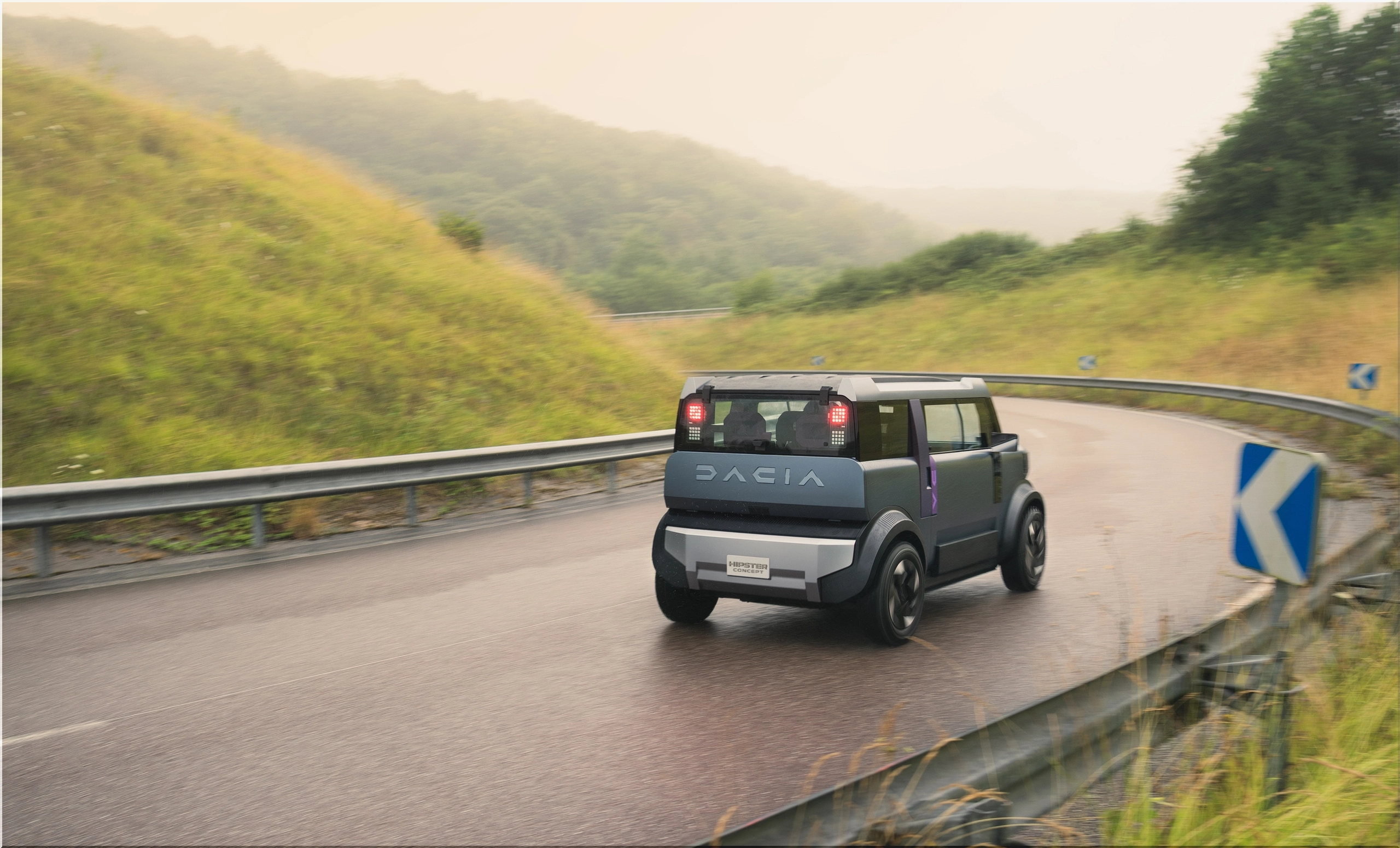
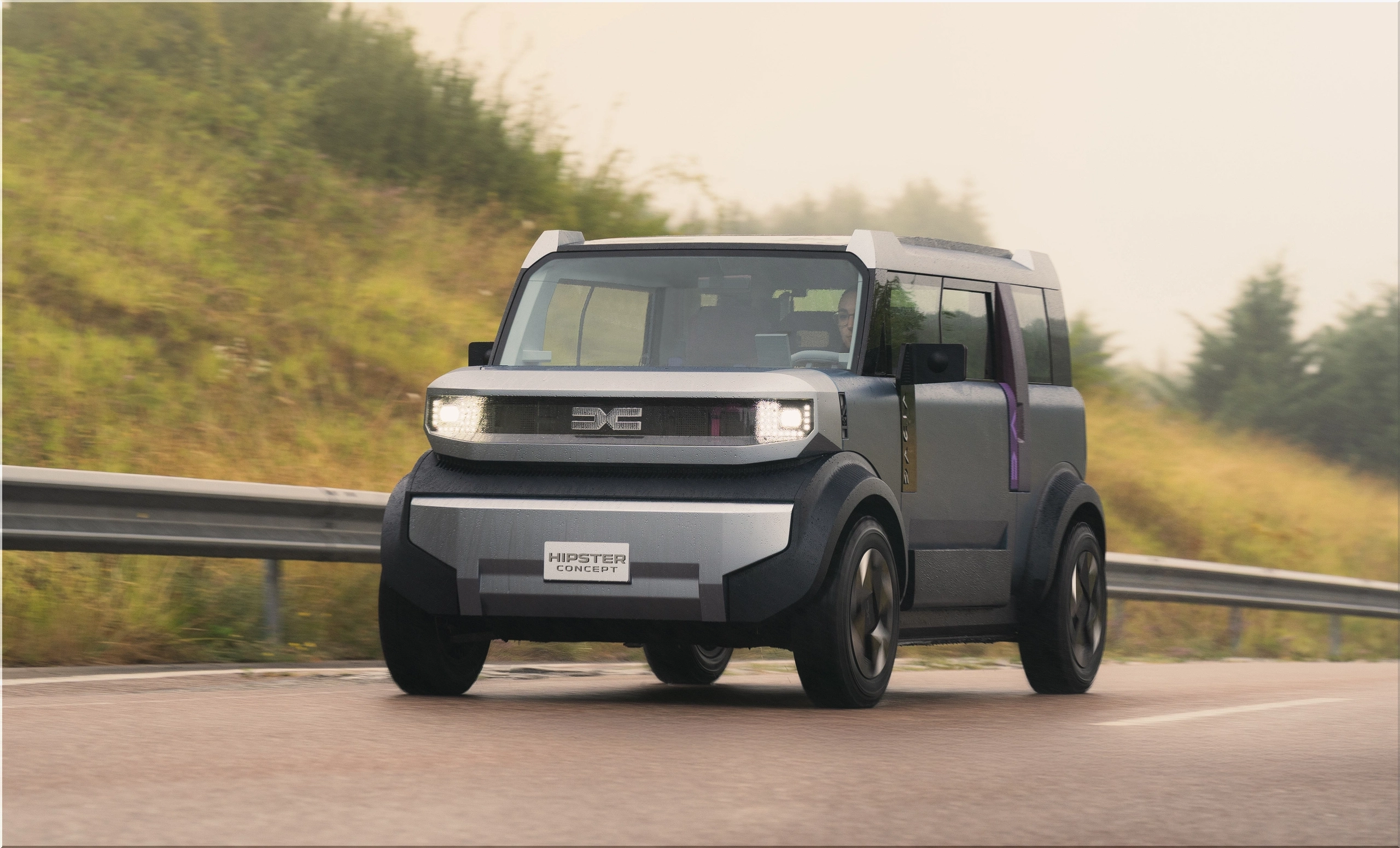
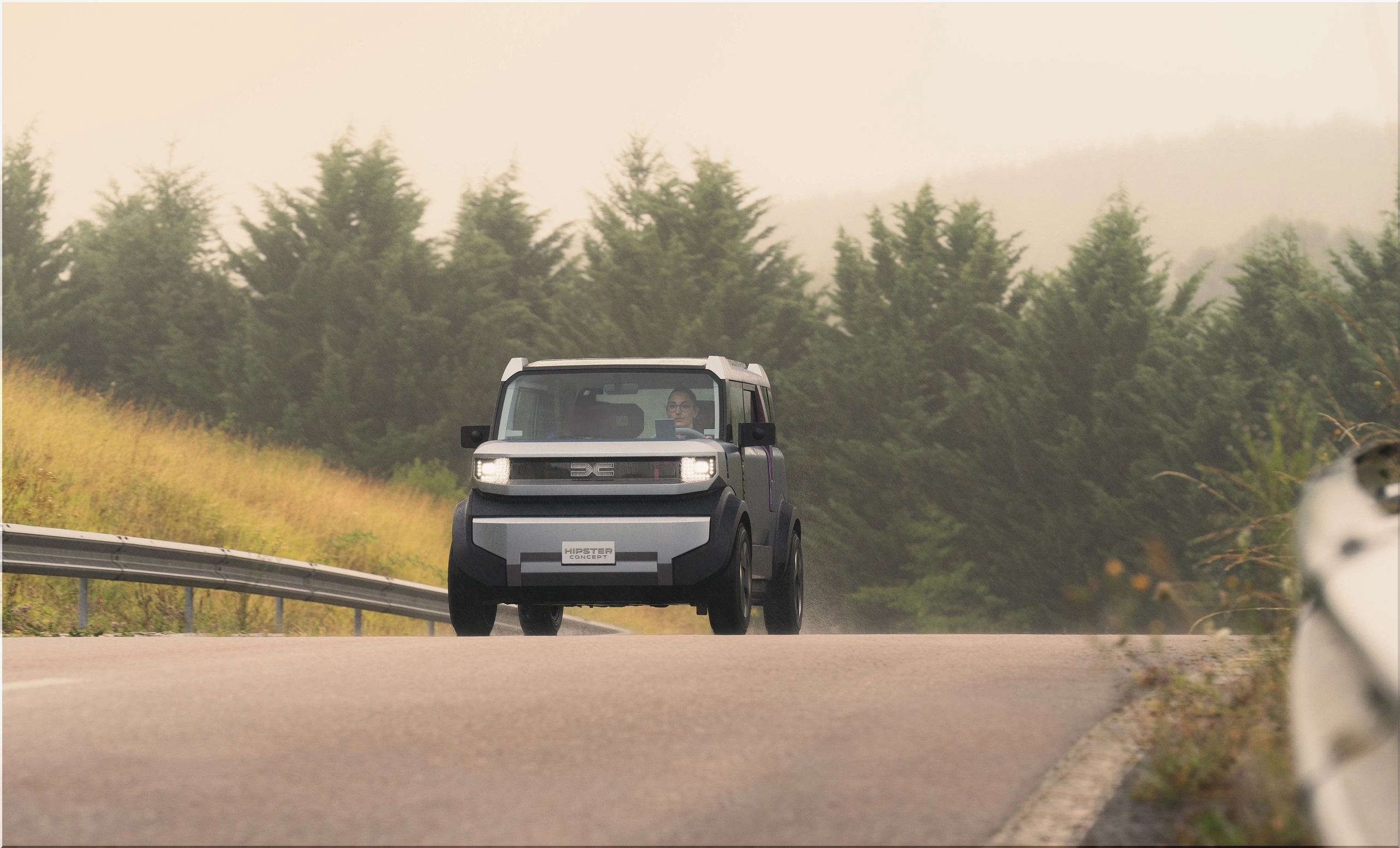
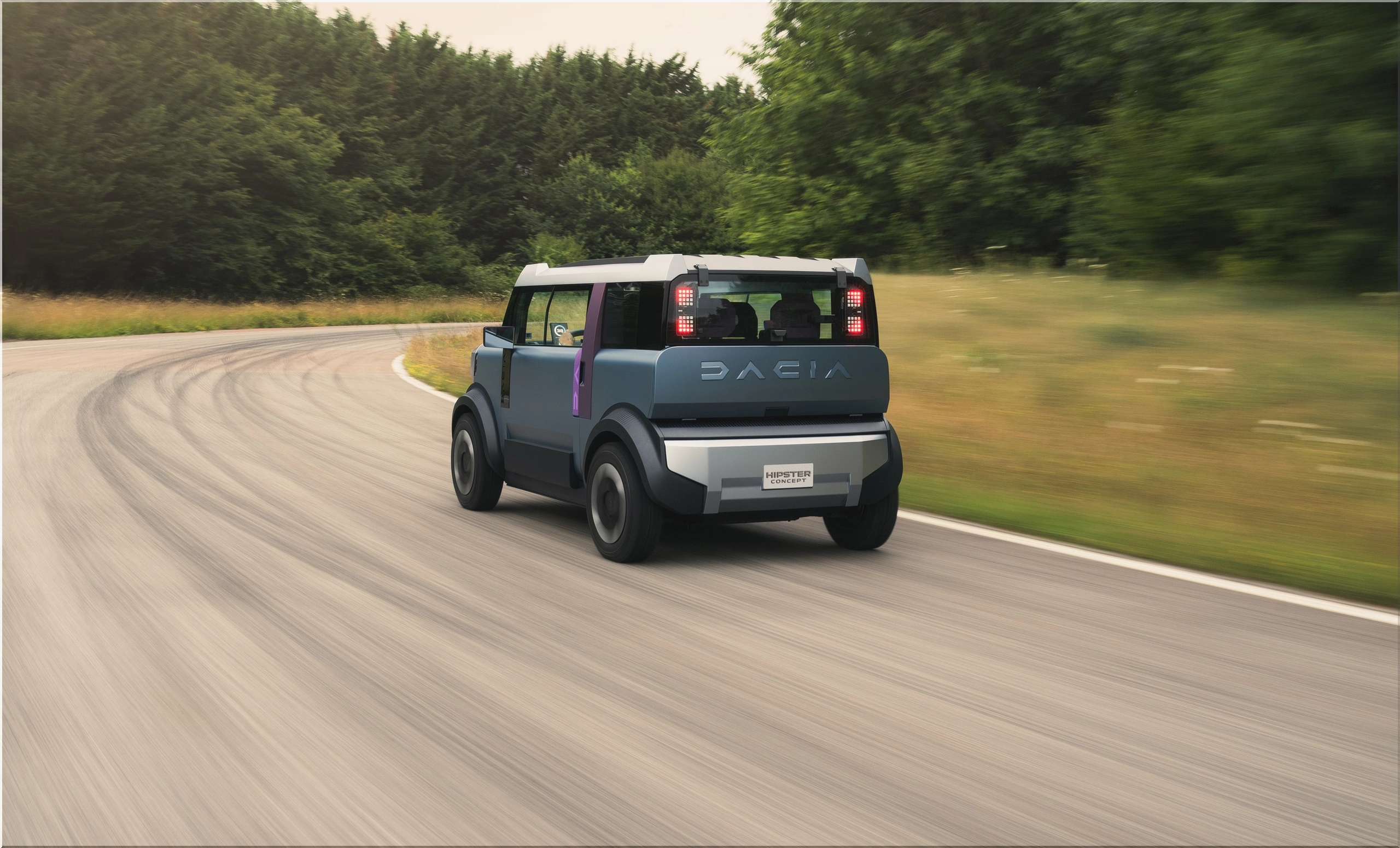
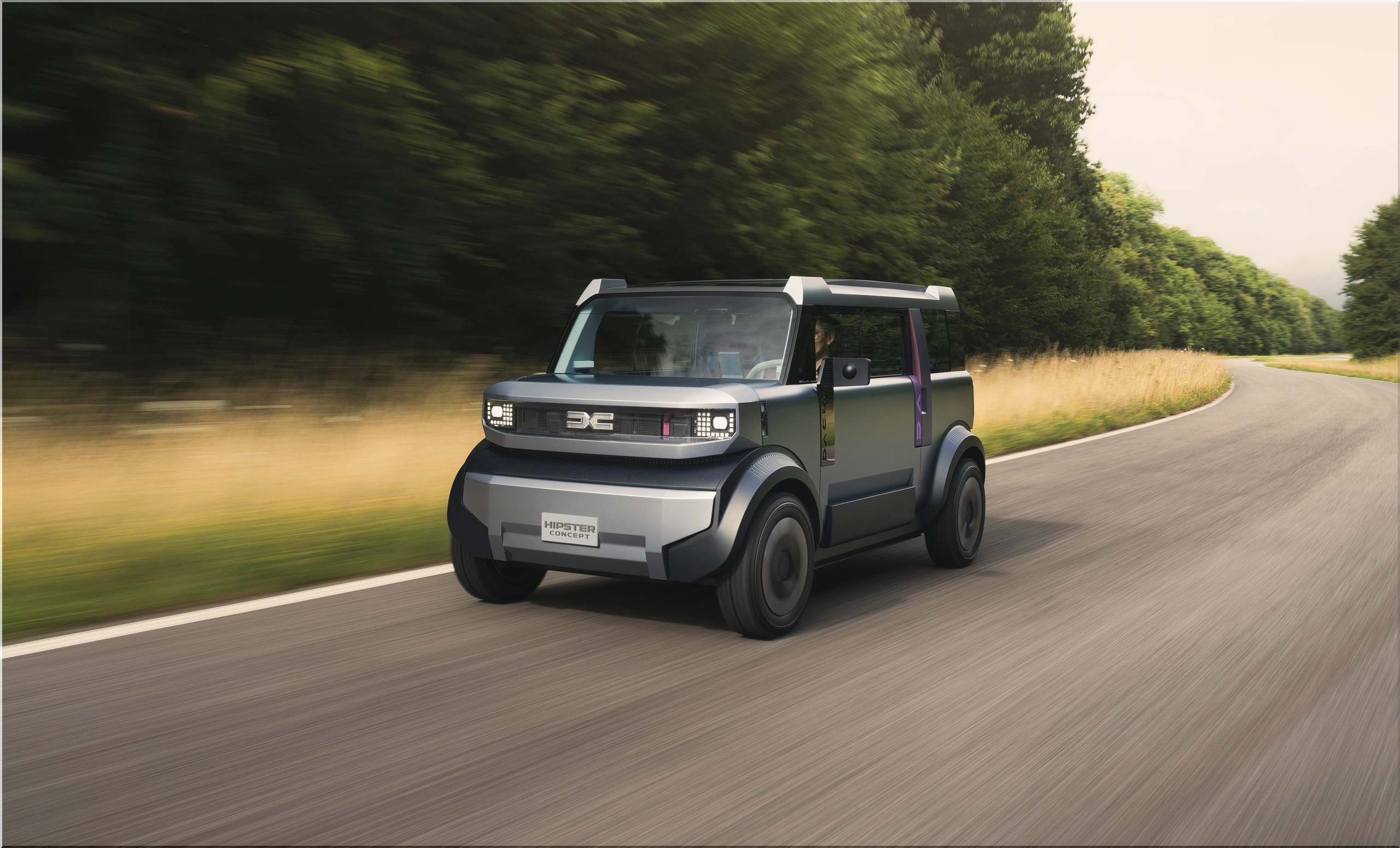
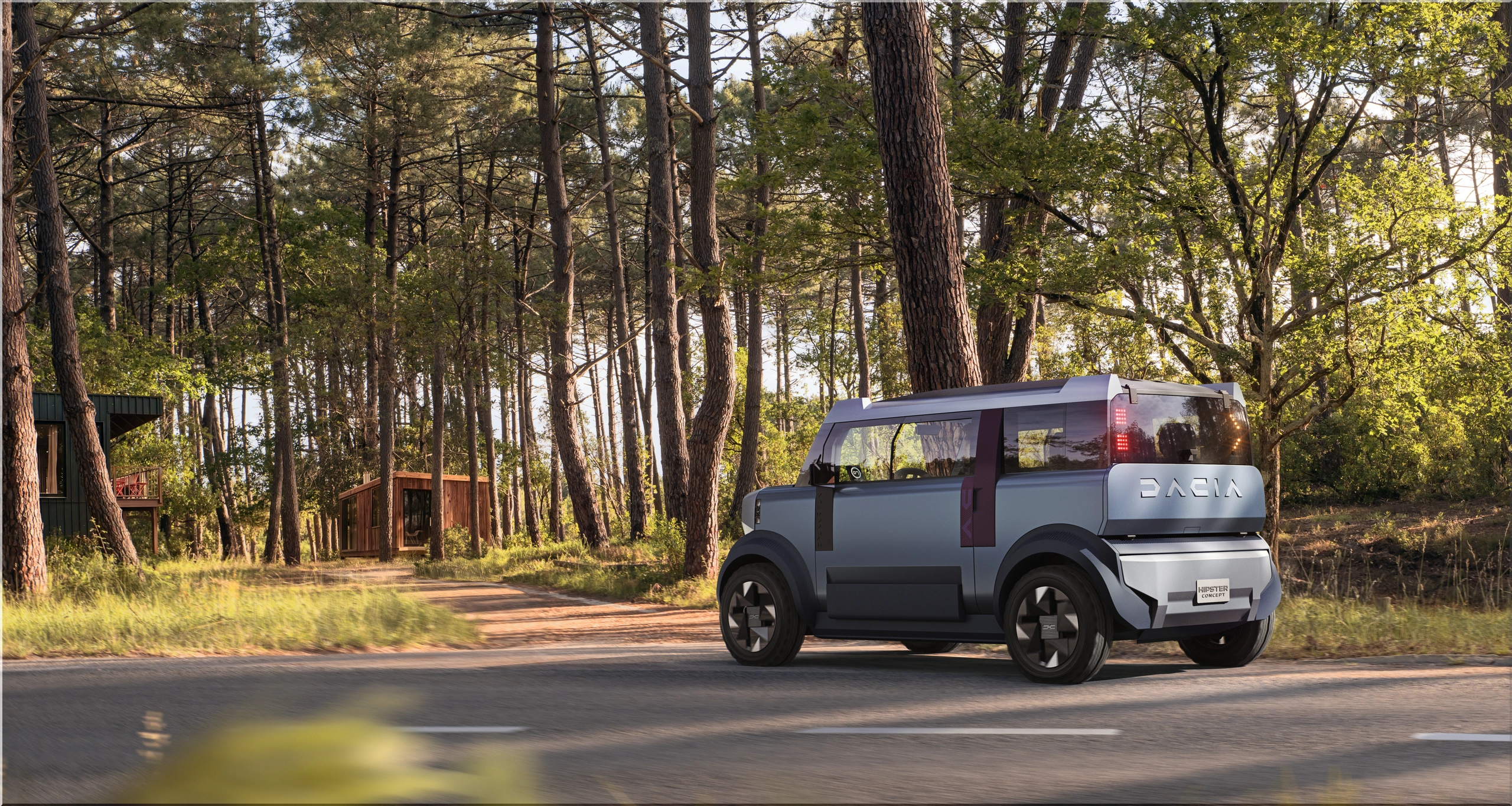
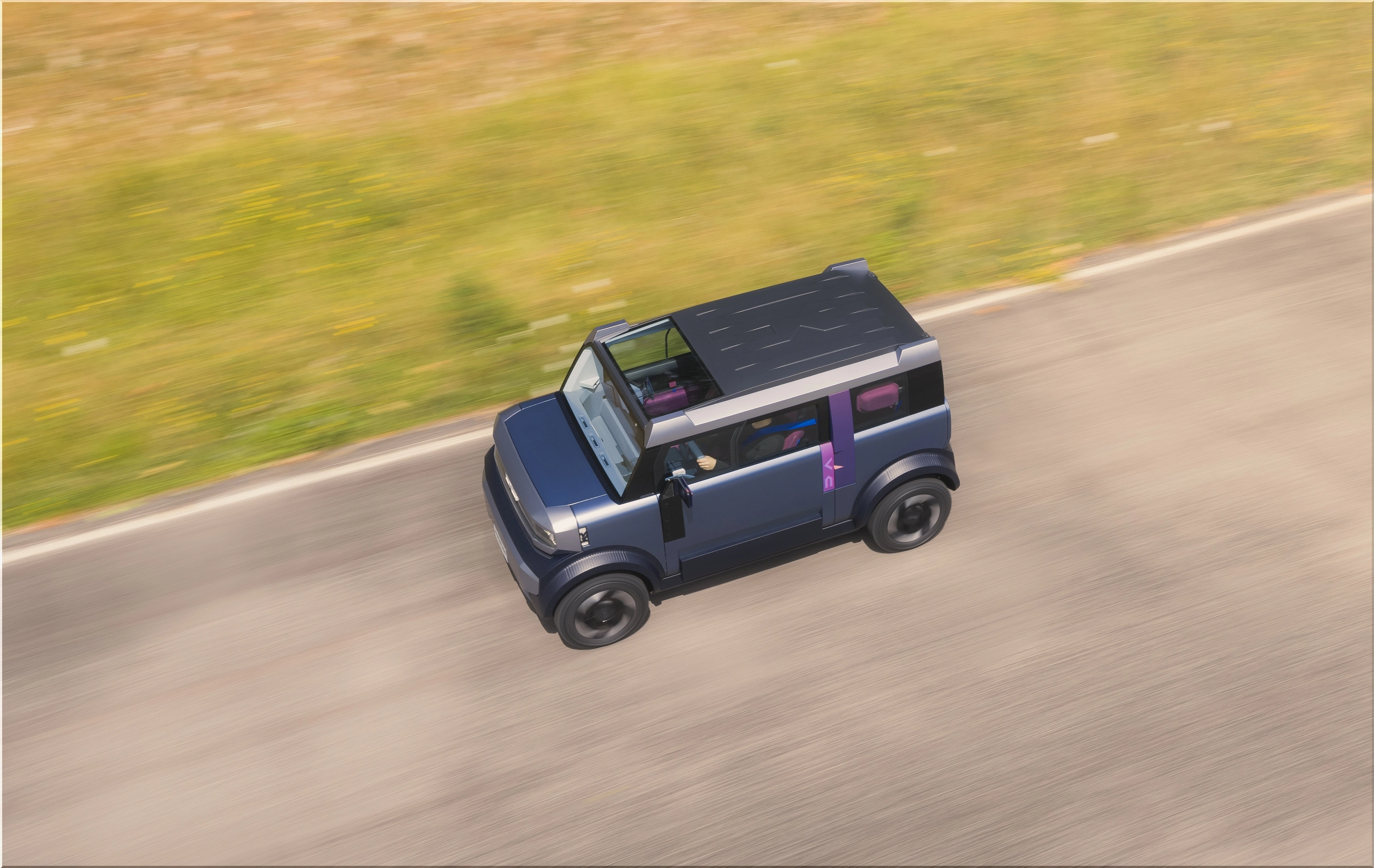
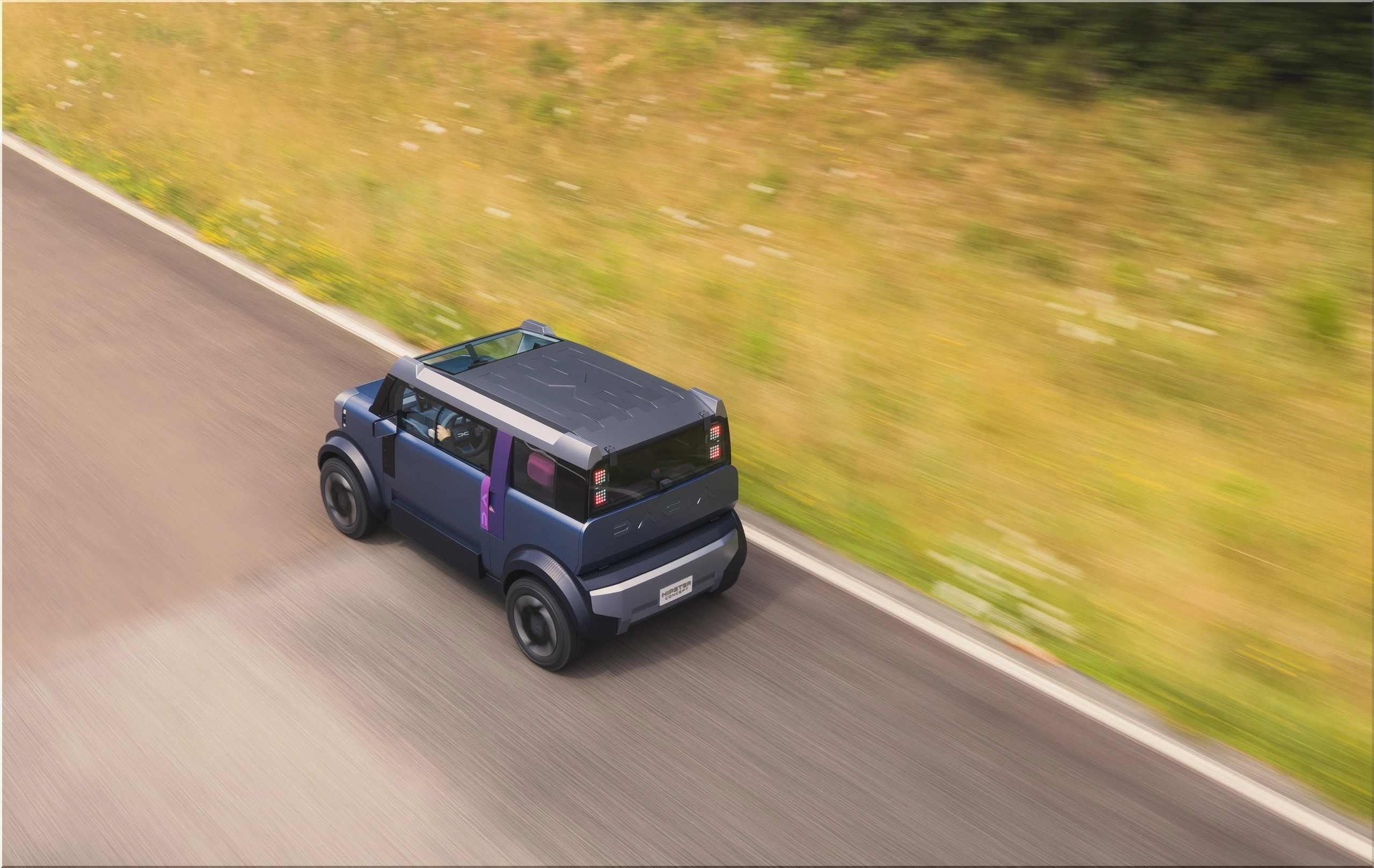
The Hipster Concept rejects styling excess. Its design is simple, robust, and functional. It’s a box on four wheels with zero overhangs, giving maximum cabin space within a tiny footprint.
Key exterior features include:
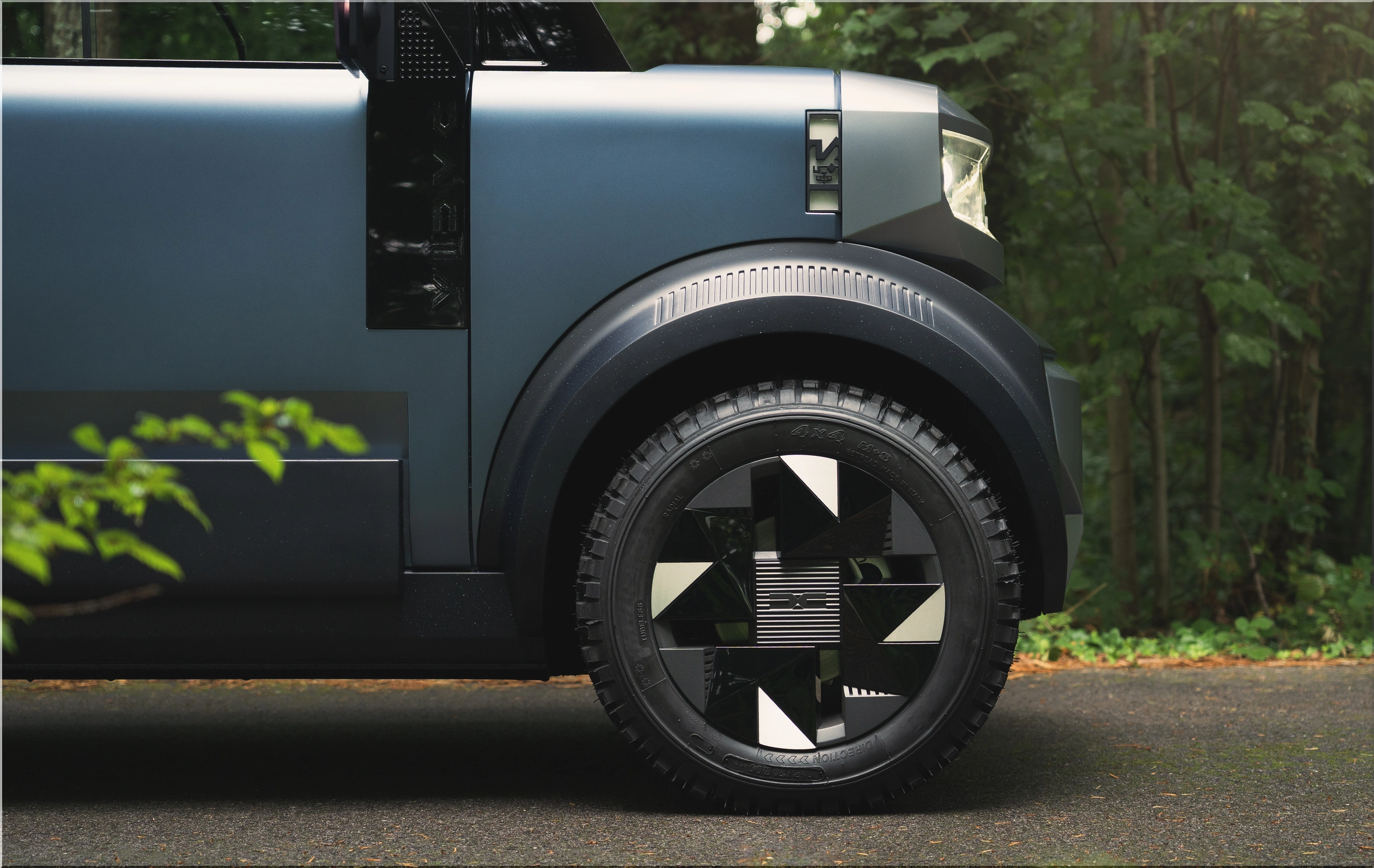
- Horizontal front end with slim, friendly headlights
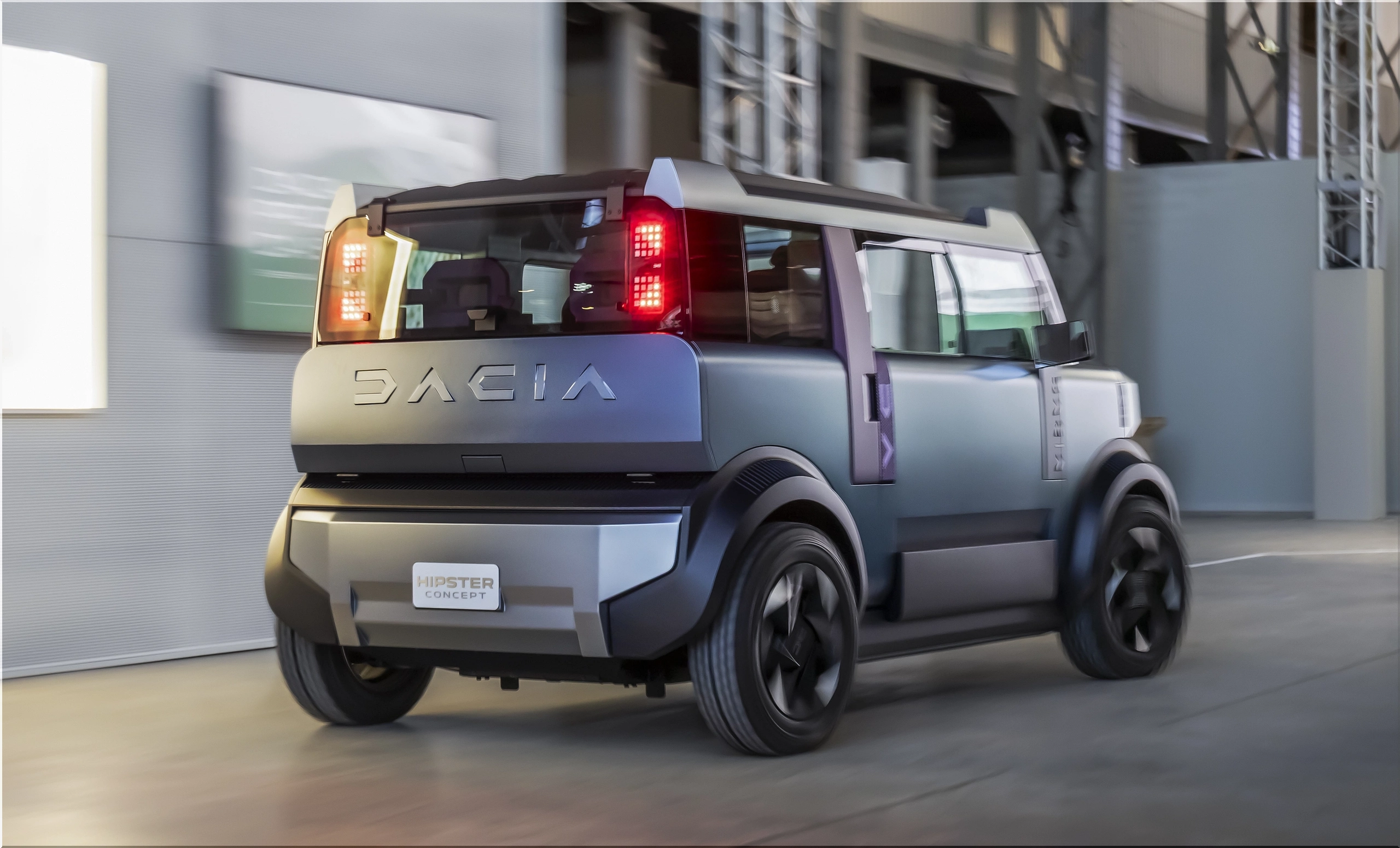
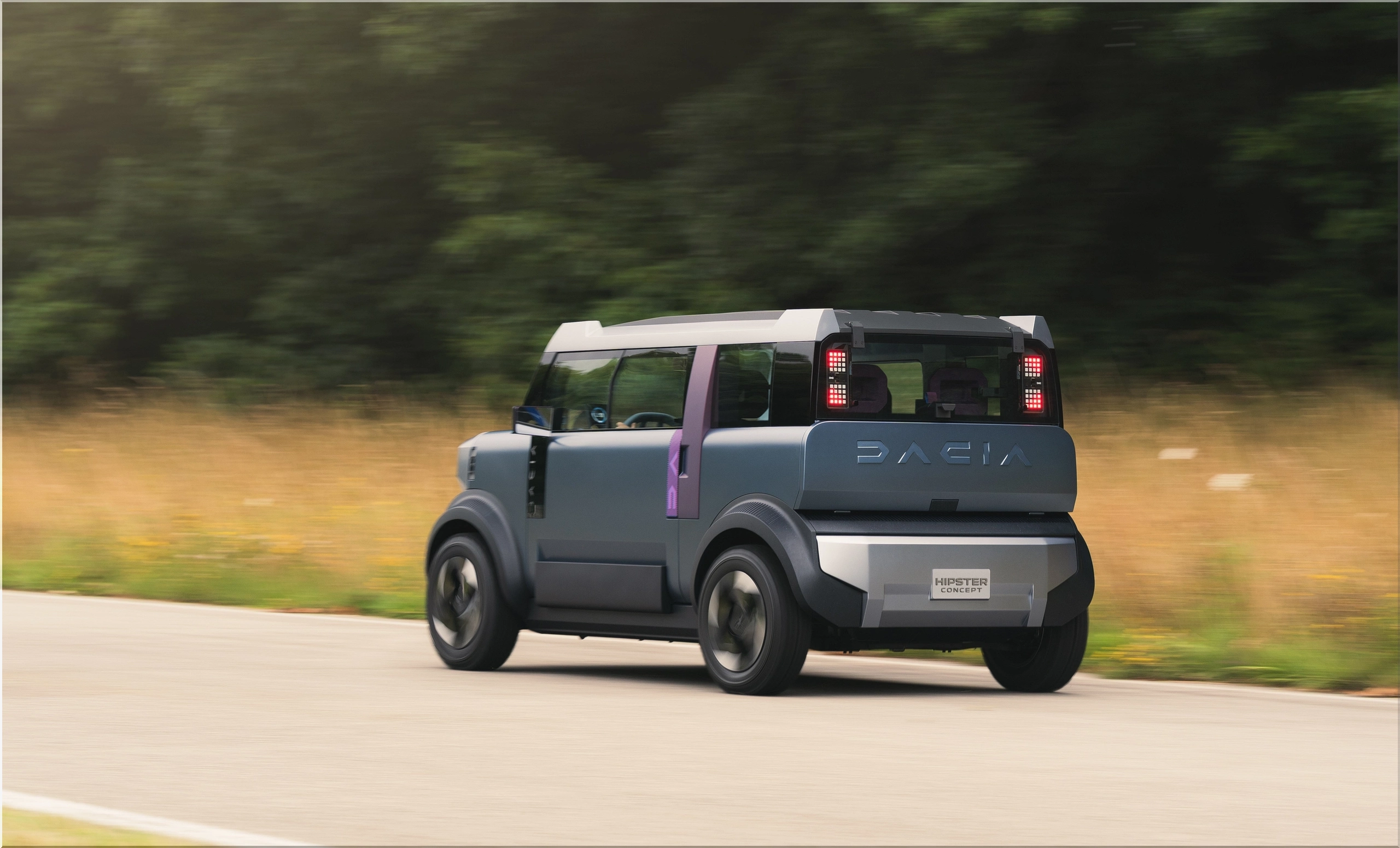
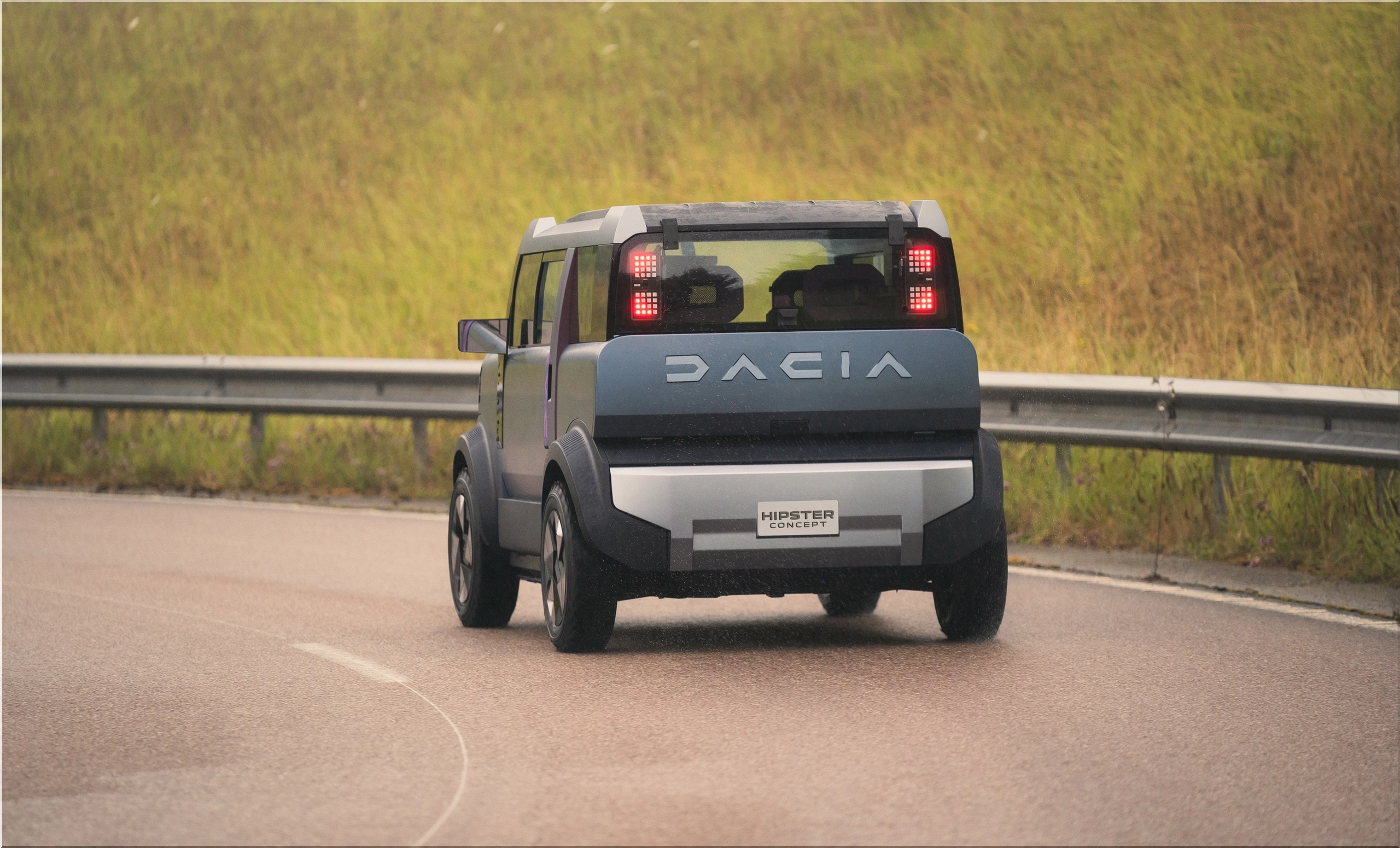
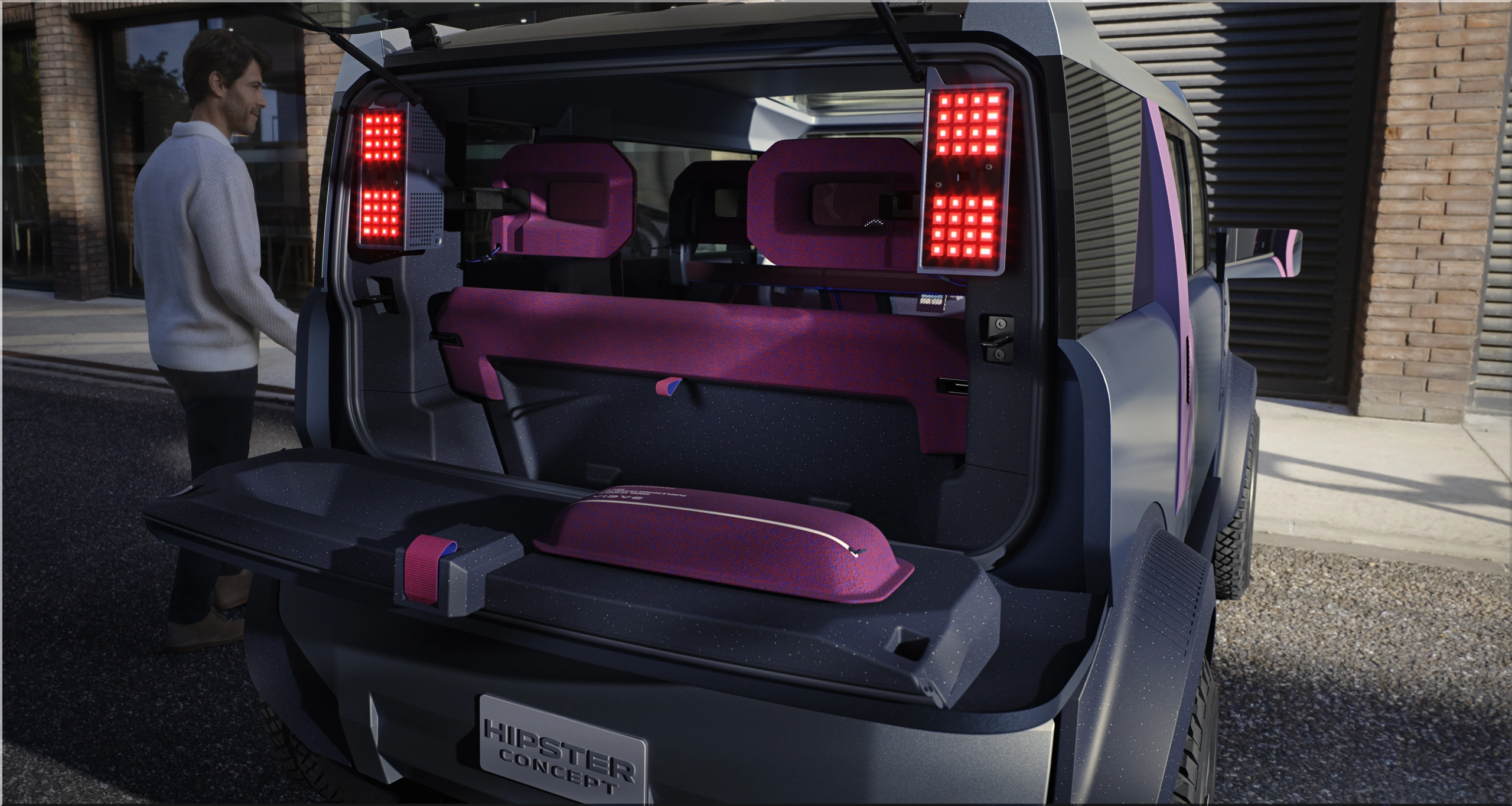
- Two-part tailgate spanning the car’s width for easy loading
- Rear lights integrated behind the tailgate glass, reducing cost and parts
- Generous side cladding made from Starkle, a partially recycled material
- Mass-dyed front and rear skis for durability and lower production impact
- Strap door handles — lighter, cheaper, and just as practical as traditional ones
This functional approach makes the Hipster Concept feel deliberate and honest — a tool for mobility, not a gadget on wheels.
Space Where It Matters
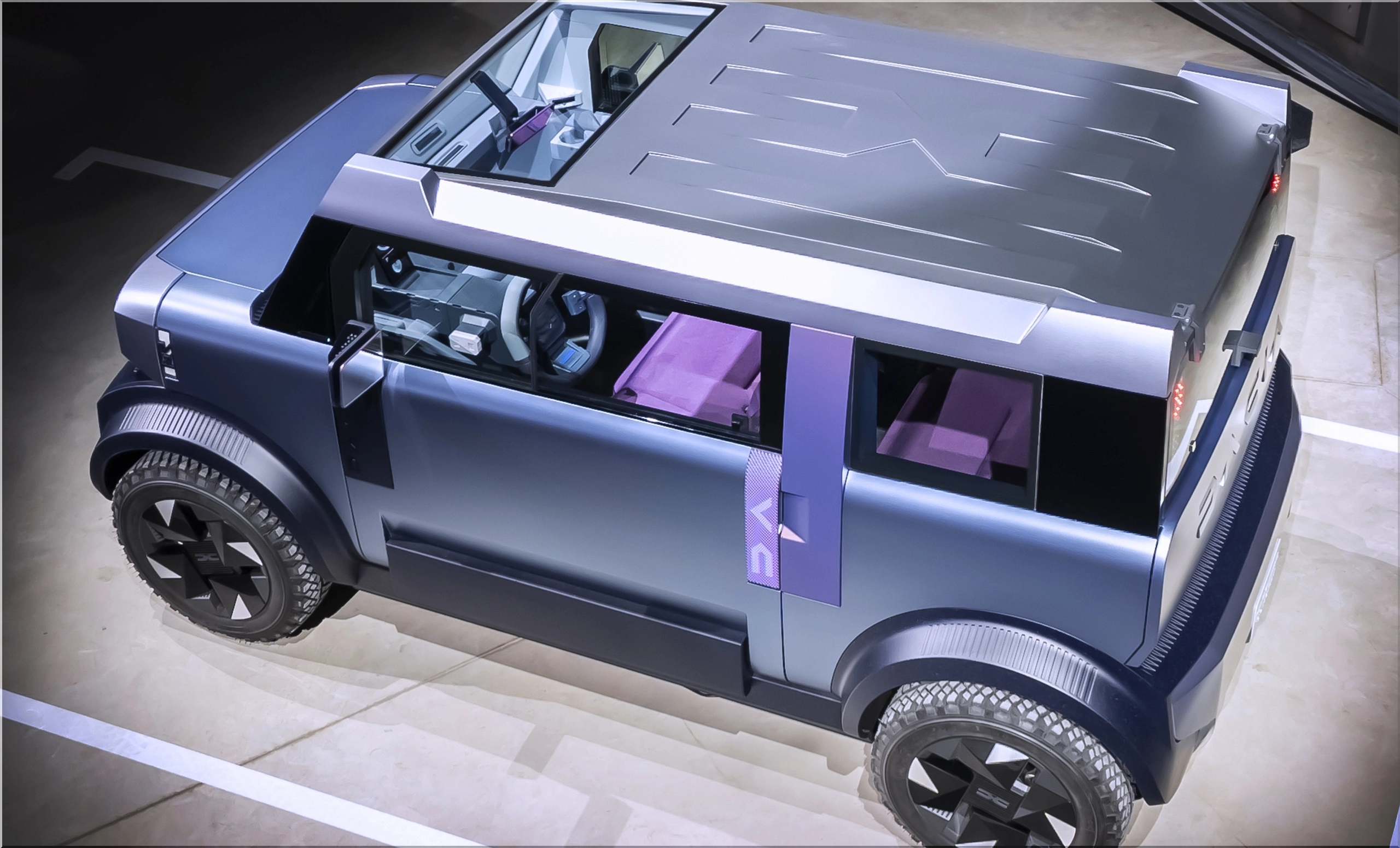
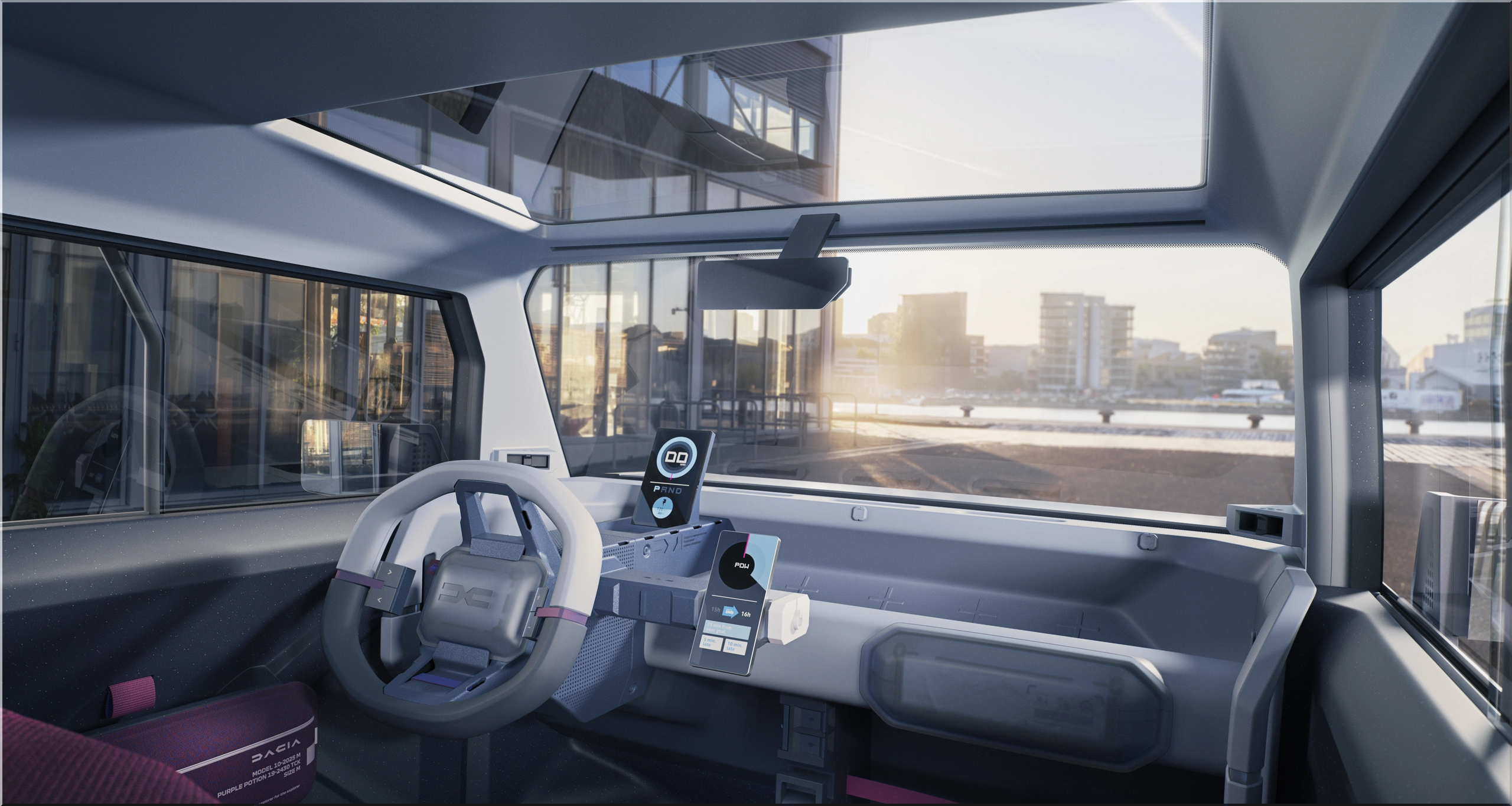
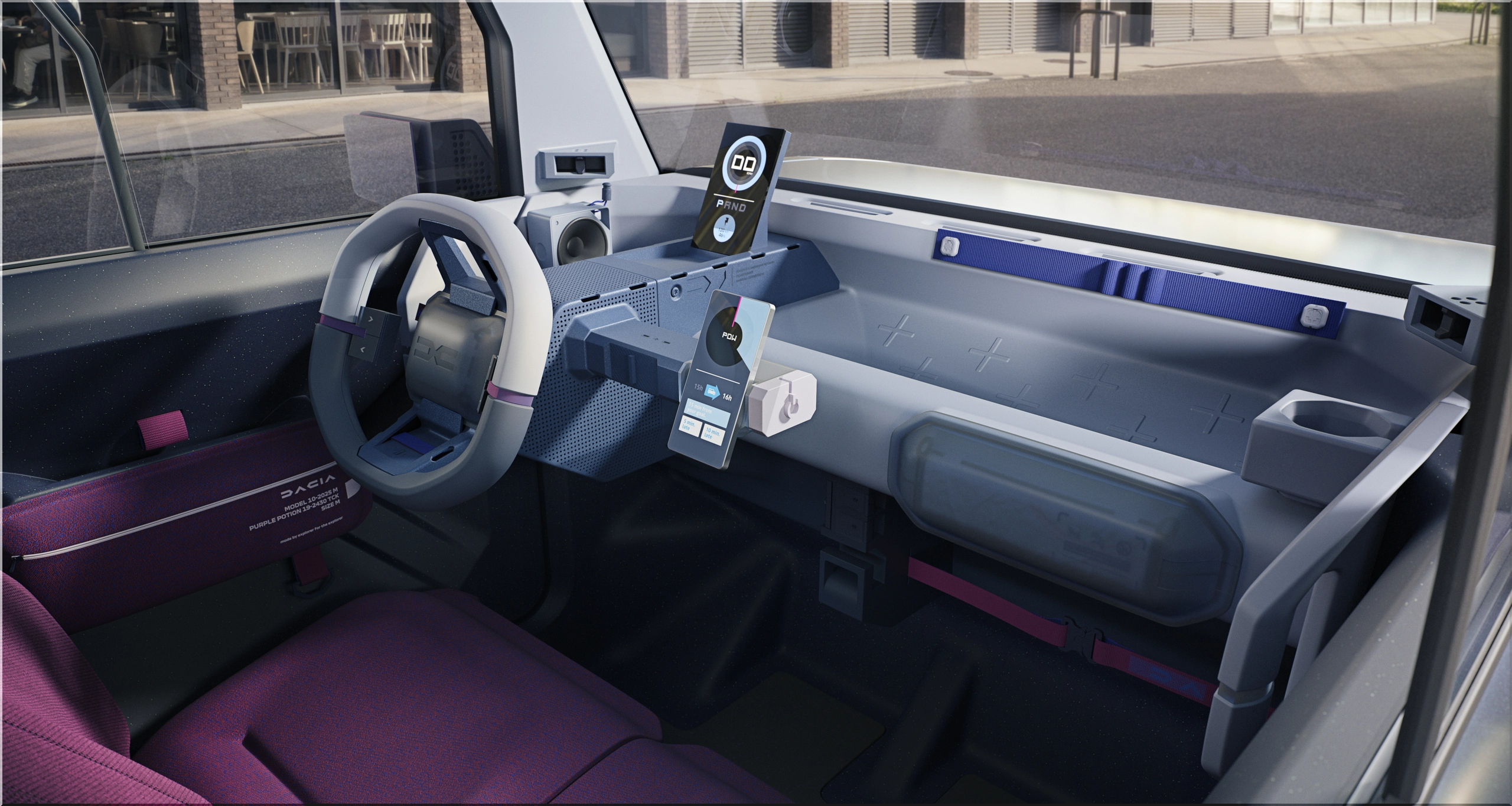
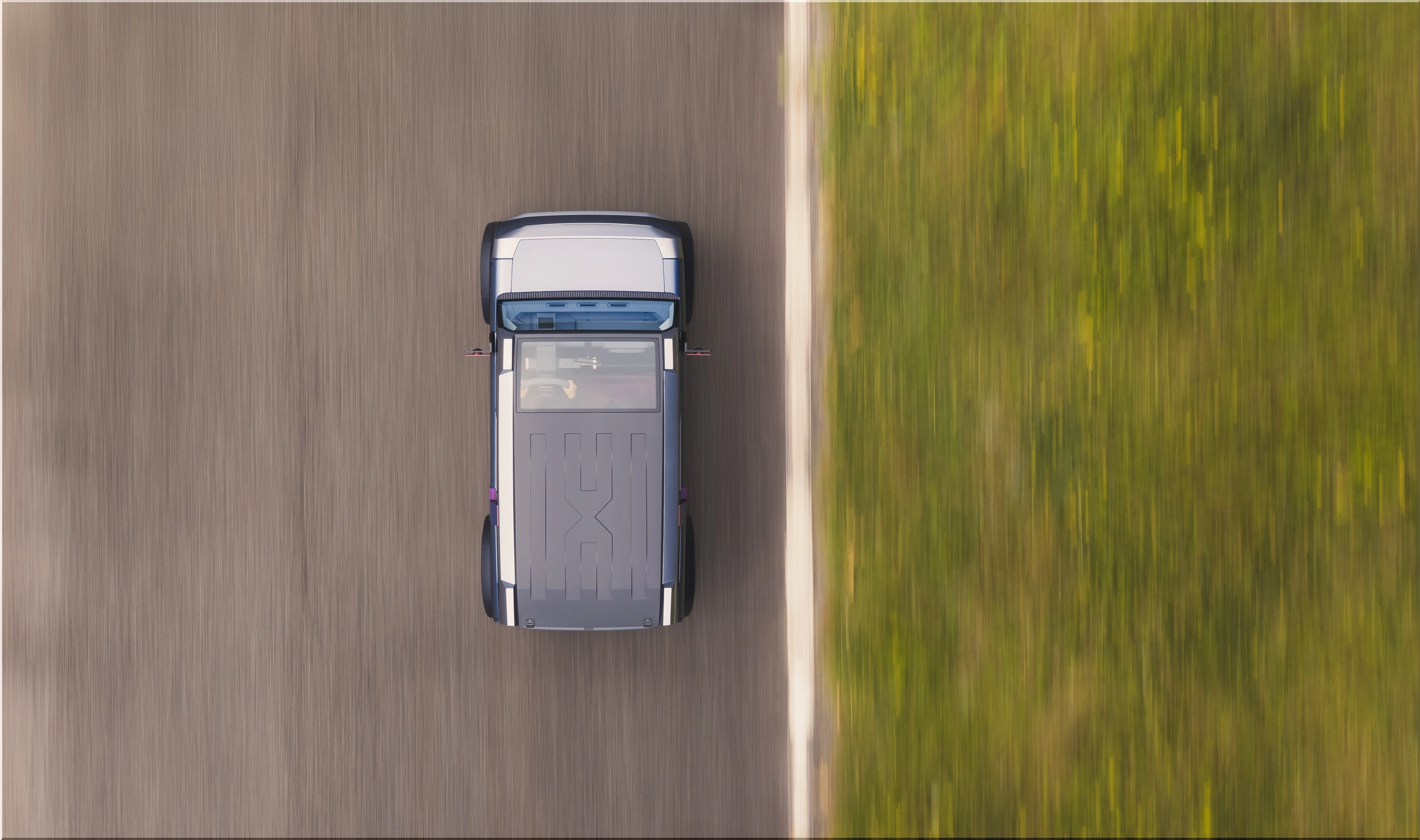
Despite its small size, interior space is generous. Vertical windows and a steep windscreen maximize room. A glazed roof section brings light into the cabin, enhancing the sense of space.
Inside, simplicity and practicality guide every decision:
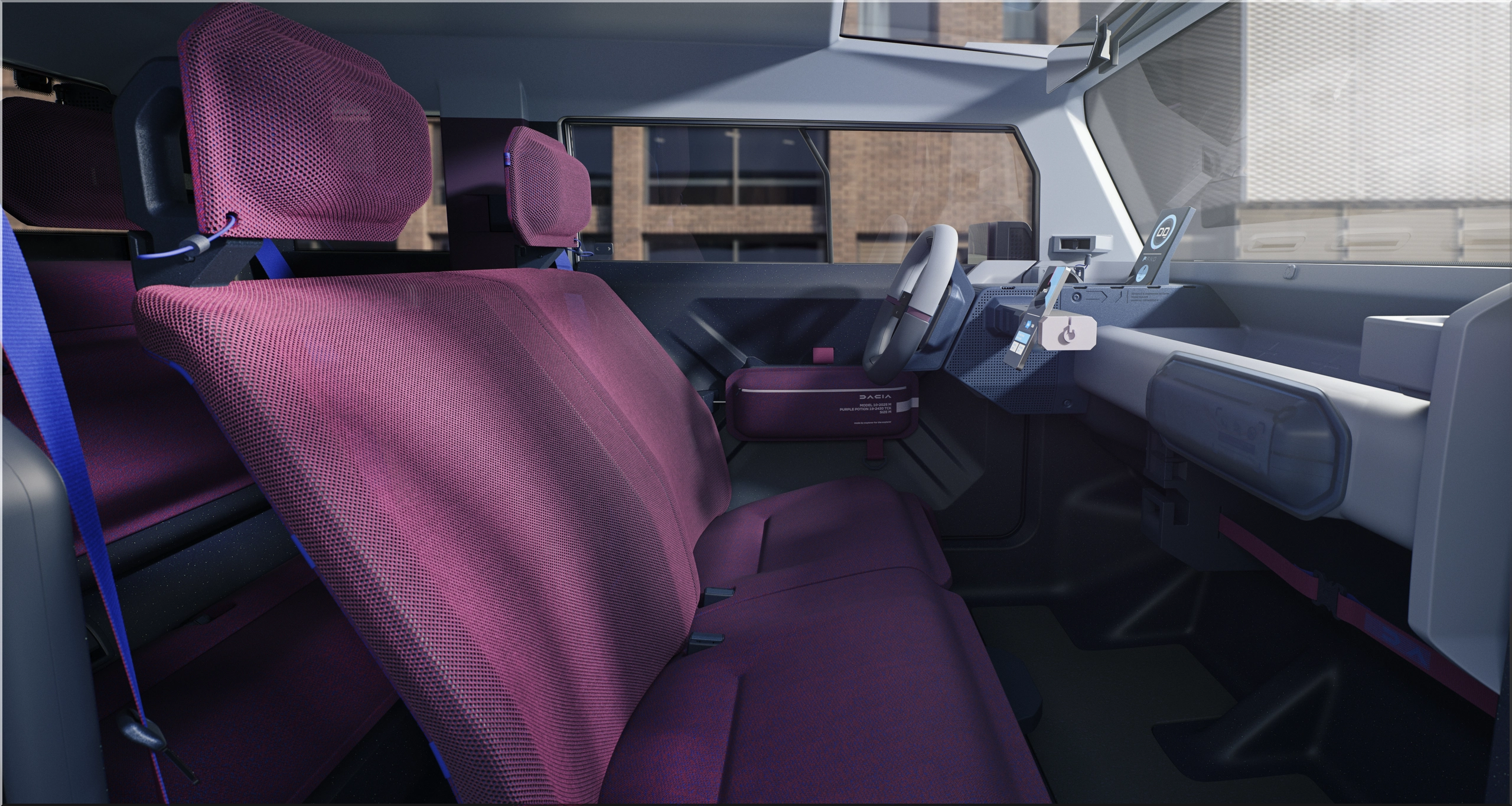
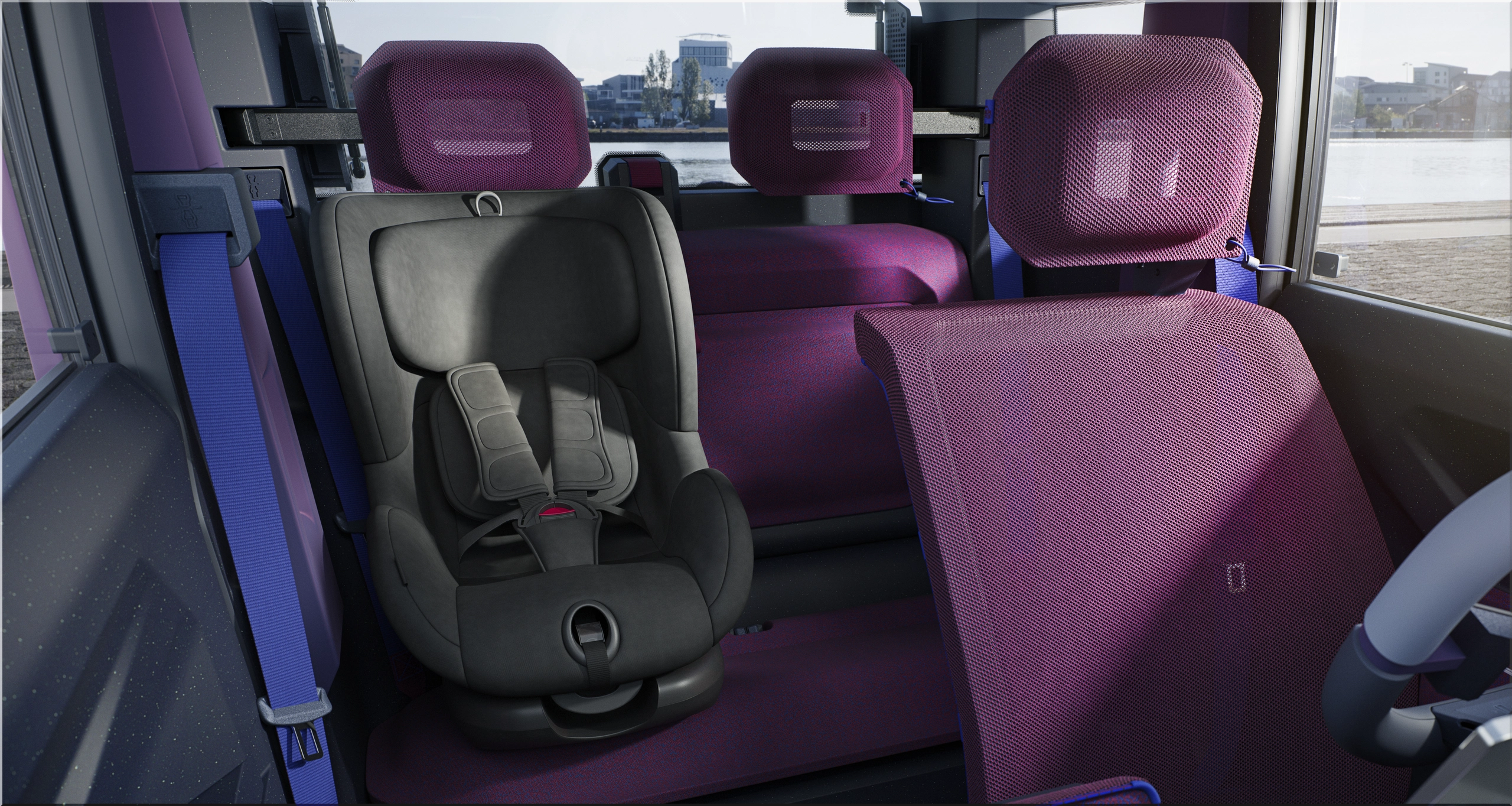
- Four adults can sit comfortably
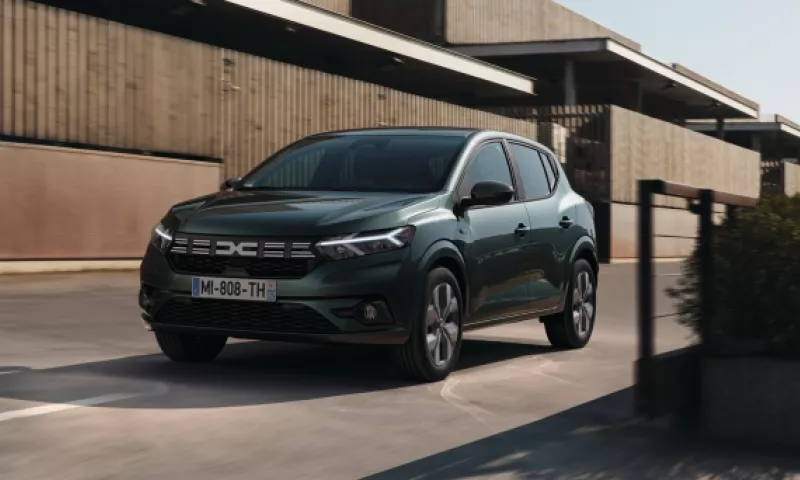
- The driver’s seat offers the same height and visibility as a Dacia Sandero
- A sliding side window system cuts cost and weight
- Folding rear seats expand boot space from 70 to 500 liters
- Two airbags protect front passengers
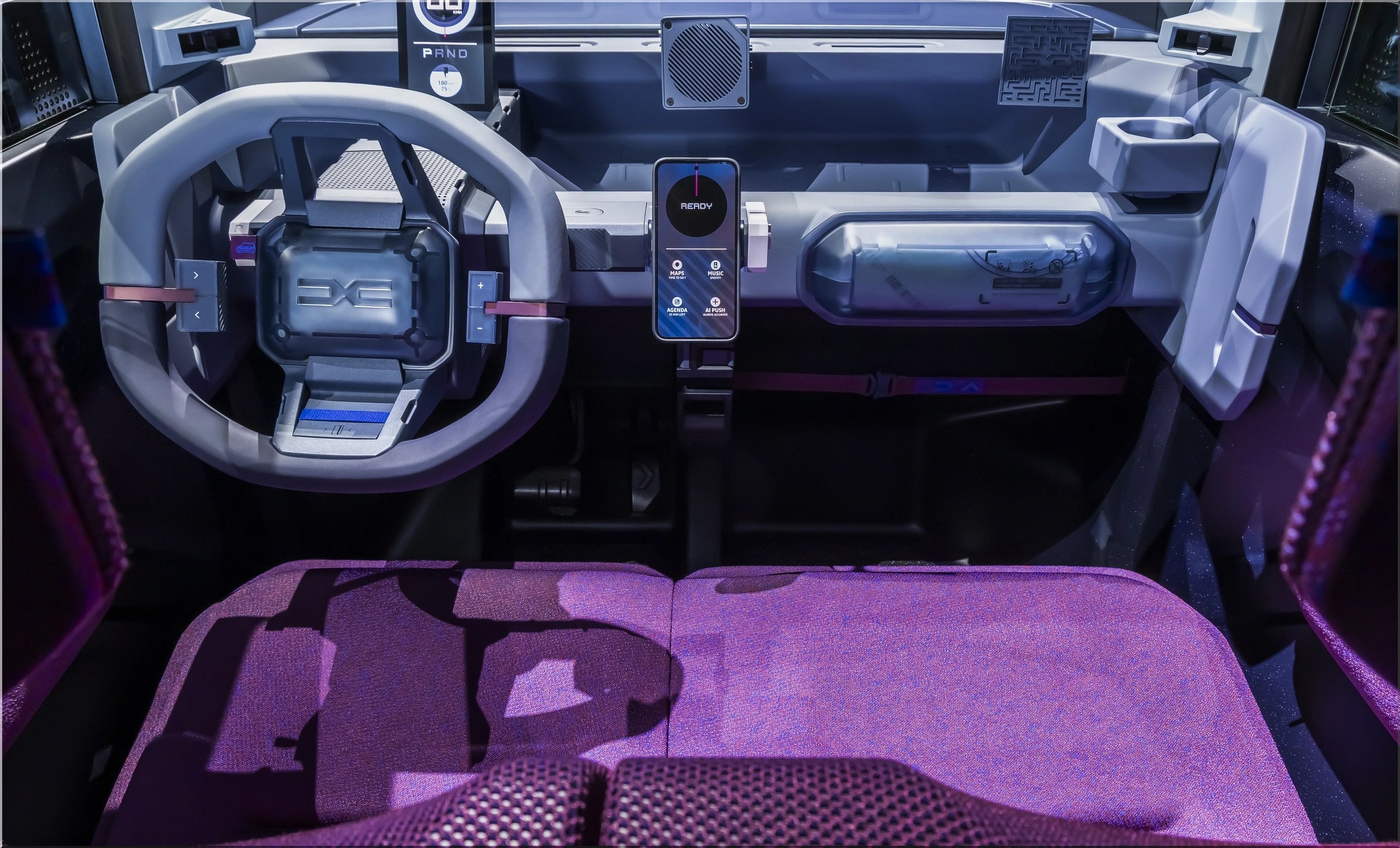
- YouClip mounting points (11 total) let owners add accessories such as cupholders, lights, or armrests
Dacia even simplified the seats. Their visible frames reduce cost, while a mesh fabric keeps weight low. Open headrests and a bench-style front seat save further mass while adding a retro touch.
Digital by Design, Not by Excess
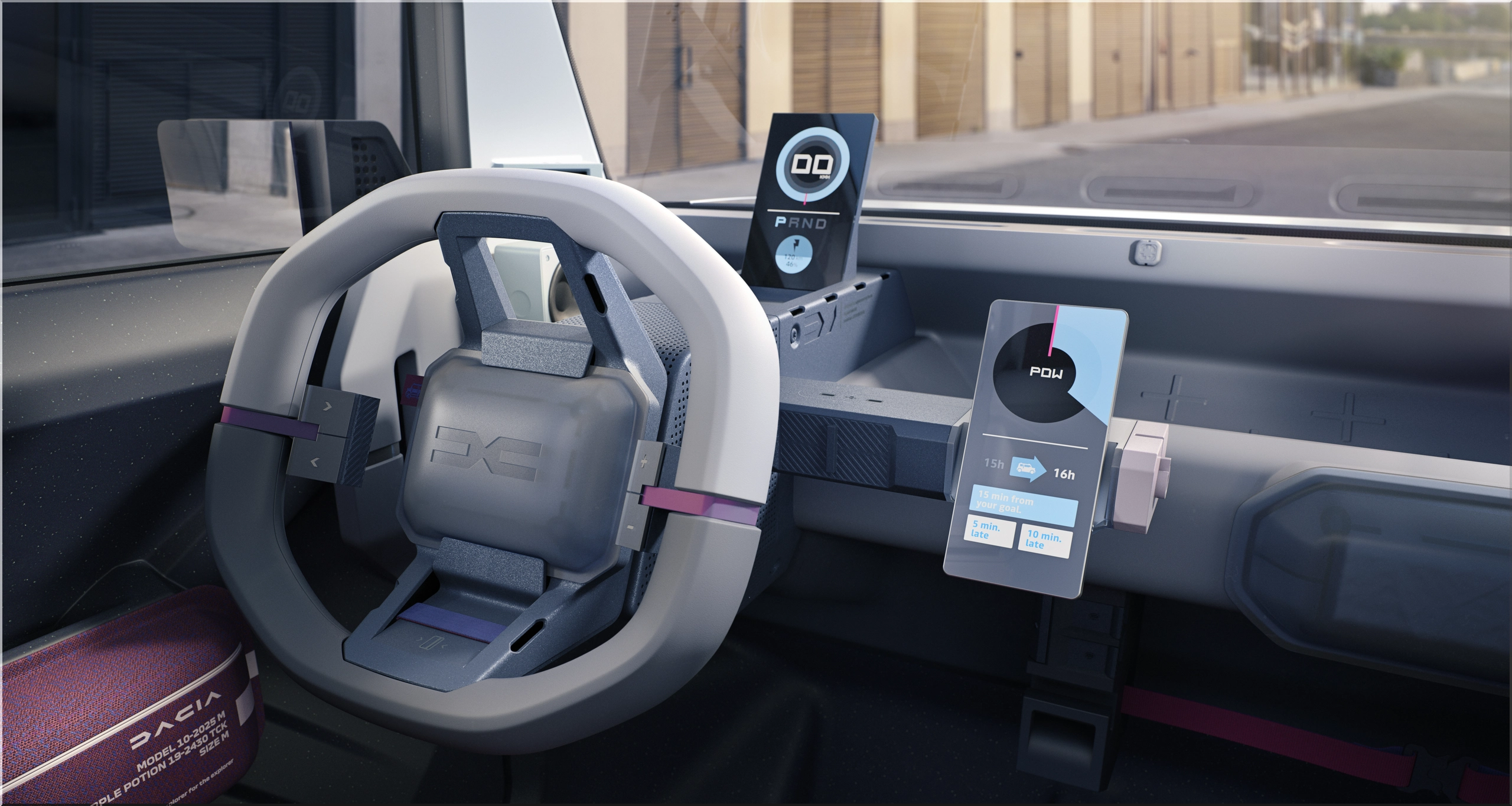
Dacia continues its BYOD (Bring Your Own Device) philosophy. Instead of expensive built-in infotainment systems, the Hipster Concept uses the driver’s smartphone for connectivity, navigation, and entertainment.
Key digital features:
- Smartphone docking station — connects devices and acts as the media hub
- Digital key — unlock and start the car with your phone
- Bluetooth speaker — portable and compatible with YouClip mounting points
This approach cuts costs while giving drivers a flexible, upgradable tech experience.
Efficiency and Sustainability at the Core
The Hipster Concept isn’t just small — it’s designed to cut emissions and resource use across its life cycle. Dacia targets a 50% reduction in carbon footprint compared with existing EVs.
Here’s how:
| Feature | Benefit | Impact |
|---|---|---|
| 20% lighter than Spring | Less energy in motion | Improved range and efficiency |
| Recycled materials (Starkle) | Lower resource demand | Reduced manufacturing footprint |
| Fewer painted parts | Simpler production | Less waste and emissions |
| Two charges per week | Lower energy demand | Cost-effective daily use |
By focusing on what matters most, Dacia reduces complexity and maximizes sustainability without raising costs.
Designed for Real-World Use Cases
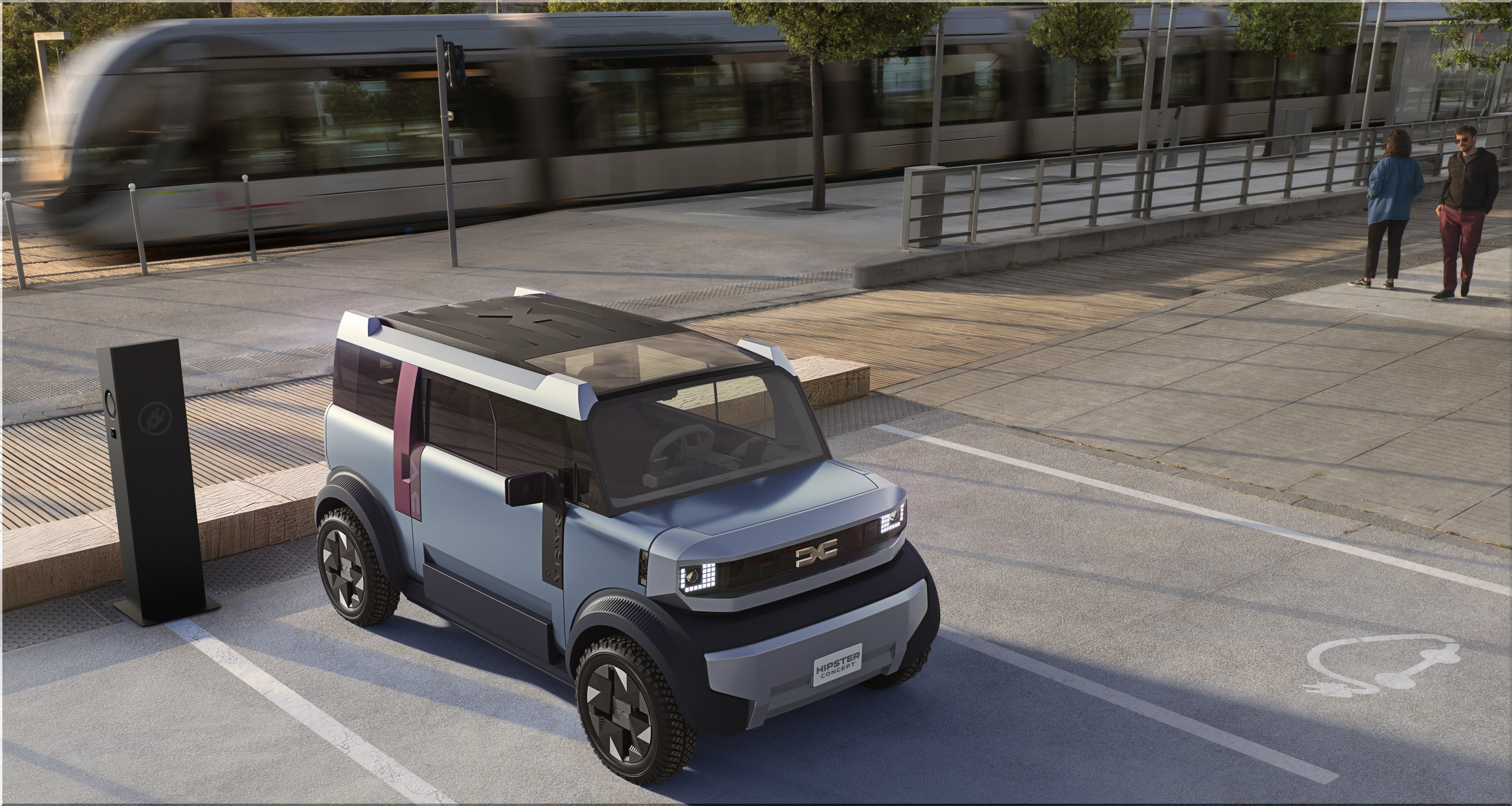
The Hipster Concept targets urban and suburban drivers. It’s ideal for:
- Daily commutes under 40 km
- Shopping and errands
- School runs
- Short weekend trips
Its size makes parking easy. Its low weight keeps operating costs low. And its simple interior and BYOD setup make ownership straightforward and affordable.
Video
Video file
Video title
Dacia Hipster Concept
Targeting the Price Barrier
Dacia wants to make electric cars accessible to millions who can’t afford current models. With average EV prices still above $35,000, many buyers remain priced out of the market. The Hipster Concept aims for a significantly lower cost, potentially entering the market near $20,000–$22,000, based on Dacia’s pricing history and cost-cutting approach.
This price range would open the door for first-time EV buyers and households seeking a second city-focused car.
What It Means for the Market
The Hipster Concept’s real significance lies in its philosophy. It challenges the assumption that progress means bigger, faster, and more complex vehicles. Instead, it shows that affordable electric mobility is possible when manufacturers prioritize essentials.
If Dacia brings this concept to production, it could reshape the entry-level EV segment. It would push competitors to focus on cost, efficiency, and real-world utility rather than tech gimmicks and luxury features.
Conclusion: A Back-to-Basics Future for EVs
The Dacia Hipster Concept represents a fundamental rethink of the electric car. It focuses on what drivers actually need — affordable ownership, everyday practicality, and low environmental impact. It strips away the excess that has inflated costs and complexity, showing how electric mobility can be simple, sustainable, and widely accessible.
If this concept becomes reality, it could be one of the most influential vehicles of the decade — not because of speed or luxury, but because of accessibility and purpose. Dacia is betting that the future of electric mobility won’t be defined by what cars add, but by what they leave out.
- Add new comment
- 638 views