
Heavy-duty construction vehicles
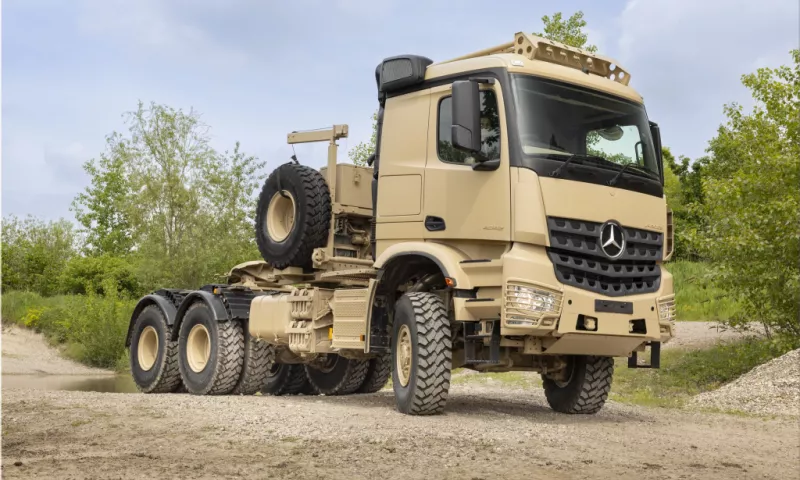
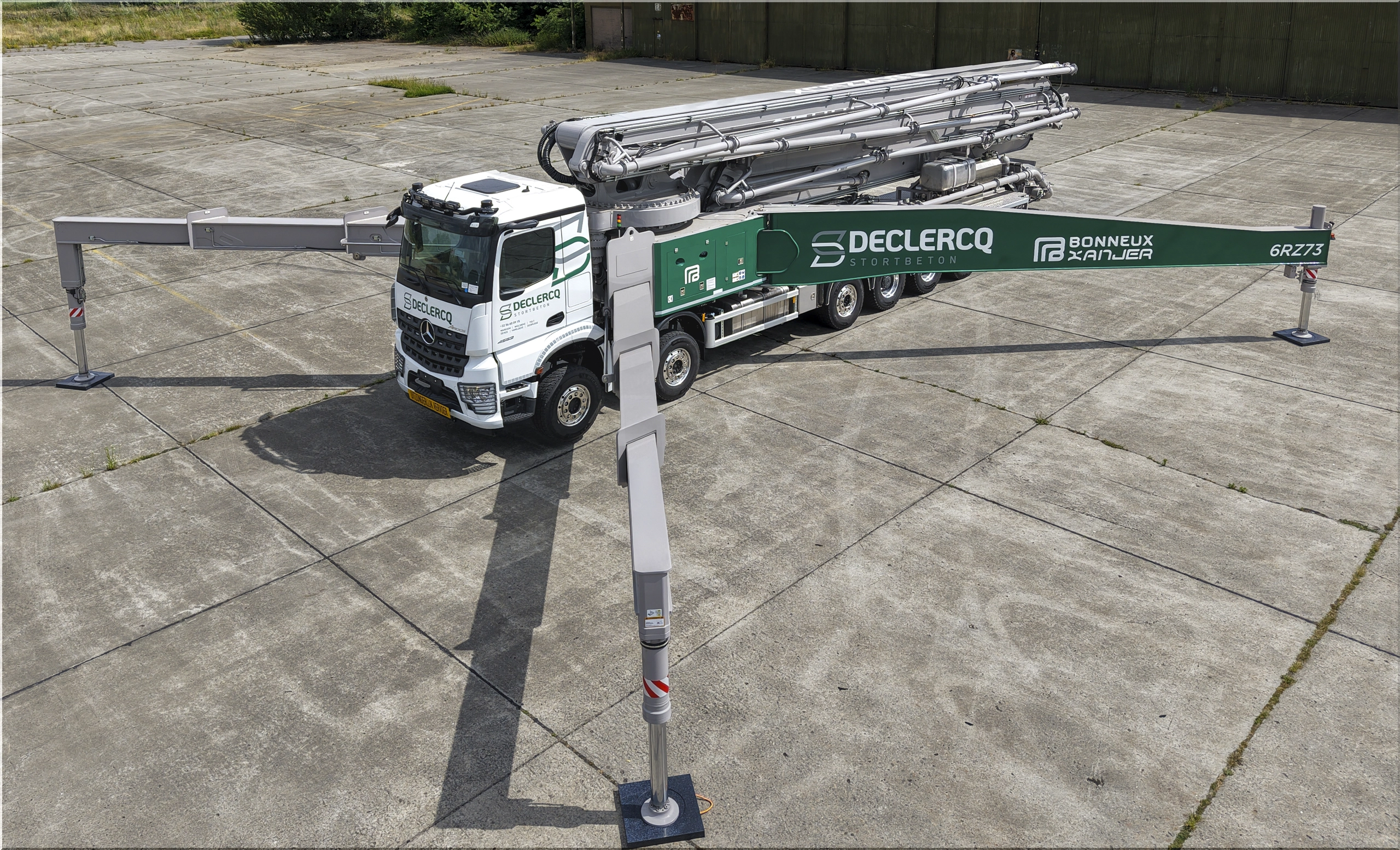
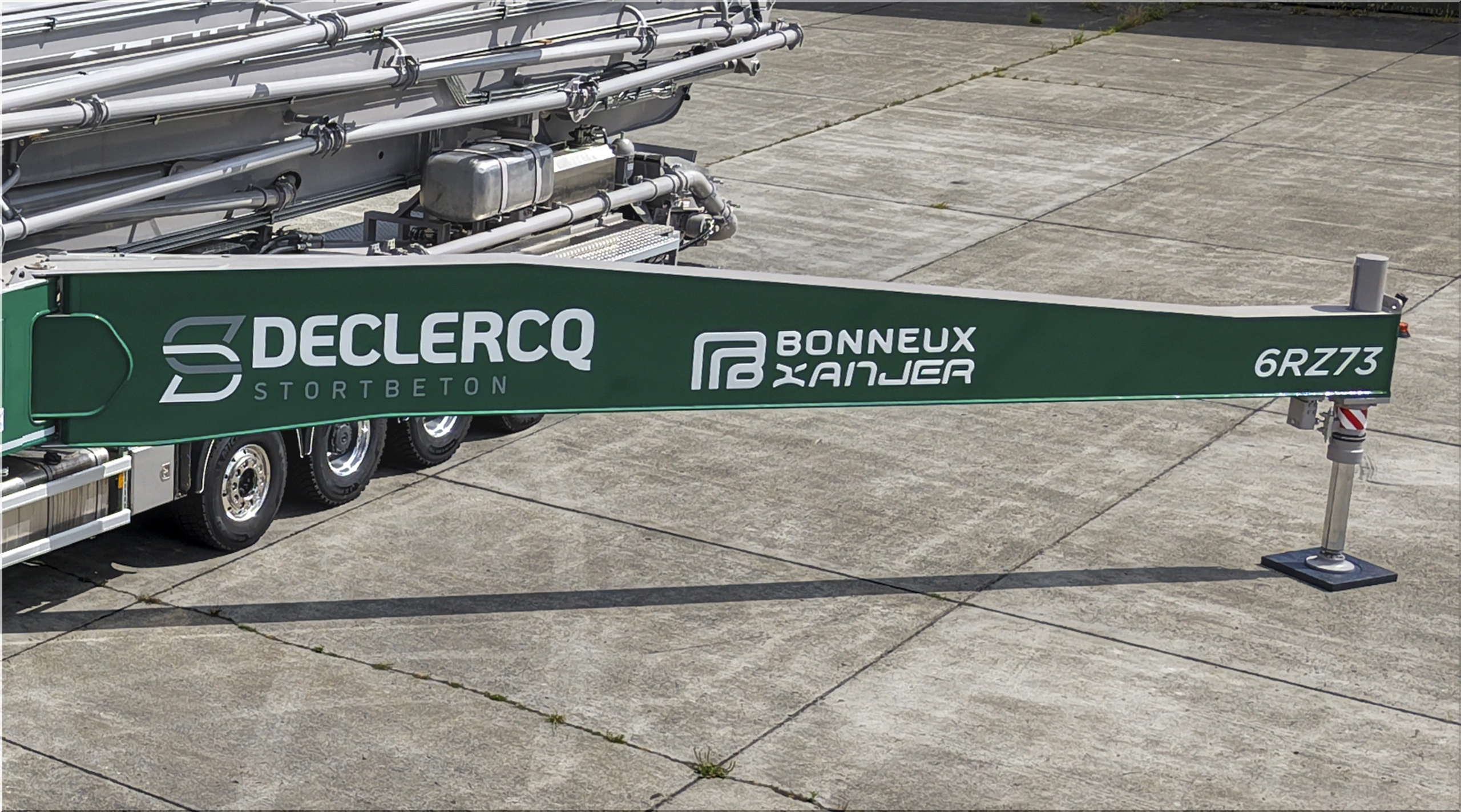
The 2025 Mercedes-Benz Arocs 4553K, equipped with the Bonneux Xanjer 6RZ73 concrete pump, made its European debut in Belgium as one of the most advanced heavy-duty vehicles ever built for the construction industry. With a reach of up to 73 meters and a purpose-built 7-axle configuration, this truck is engineered to tackle complex projects that traditional systems cannot handle.
The collaboration between Bonneux Machinery, Daimler Truck Belgium/Luxembourg, and Dutch specialist ESTEPE has produced a vehicle designed for precision, power, and versatility. Every component serves a single purpose: maximizing operational efficiency in demanding environments.
Key technical specifications of the Arocs 4553K 6RZ73
| Specification | Value |
|---|---|
| Vehicle base | Mercedes-Benz Arocs 4553K |
| Pump type | Bonneux Xanjer 6RZ73 |
| Boom reach | Up to 73 meters |
| Vehicle length | 18 meters |
| Total weight | 66 tons |
| Axles | 7 (5 steered) |
| Chassis load capacity | Up to 70 tons |
| Axle load capacity | 10 tons per axle |
| Control | Wireless radio remote |
| Stability system | Intelligent vibration damping |
Engineered for high-performance construction work
The Bonneux Xanjer 6RZ73 sets a new standard in concrete delivery. Its six-arm boom unfolds with spider-like precision, enabling the truck to place concrete in confined urban sites or across wide construction zones without repositioning.
With a reach of 73 meters, the system can deliver concrete to heights and distances that conventional pumps cannot match. This reach minimizes downtime, reduces repositioning needs, and shortens project timelines.
- Extended reach reduces setup changes on tall structures.
- Wireless control improves safety and operator visibility.
- Bionic boom design increases structural strength without extra weight.
- Advanced vibration damping stabilizes operations even under full load.
Purpose-built chassis for extreme loads
The base Arocs truck underwent significant transformation. A standard 4-axle chassis was converted into a 7-axle platform capable of supporting up to 70 tons. Each axle can carry 10 tons, providing consistent weight distribution and operational safety.
Five of the seven axles are steerable, a rare feature in the heavy construction segment. This allows the 18-meter truck to navigate tight urban construction sites with precision typically reserved for smaller vehicles. Maneuverability is critical on constrained job sites, and this system offers an advantage in both safety and speed.
Three-country collaboration brings innovation to market
The Arocs 4553K project is the result of coordinated engineering across Europe:
- Bonneux Machinery: Developed the high-capacity 6RZ73 pump.
- Daimler Truck Belgium/Luxembourg: Provided the base Arocs chassis.
- ESTEPE (Netherlands): Engineered the multi-axle conversion and reinforced chassis system.
Competitive advantage on complex construction sites
Large-scale infrastructure projects demand equipment that can reduce time, improve safety, and cut operational costs. The Arocs 4553K delivers measurable benefits in all three areas:
1. Extended reach for high-rise construction
- Delivers concrete across 73 meters horizontally or vertically.
- Reduces the need for intermediate pumps or cranes.
2. Enhanced safety and operator control
- Wireless remote operation provides real-time feedback and precision control.
- Stabilization systems allow continuous pumping in challenging terrain.
3. Lower total cost of operation
- Fewer repositioning stops reduce labor time.
- Improved reach cuts auxiliary equipment costs.
- Extended boom lifespan decreases maintenance frequency.
Impact on the European construction market
The European construction sector faces rising demand for taller structures, denser urban projects, and shorter build times. Equipment like the Mercedes-Benz Arocs 4553K with the 6RZ73 pump directly addresses these challenges.
- Contractors can accept more complex projects with fewer machines.
- High-reach solutions open new possibilities for urban infill and infrastructure builds.
- Reduced downtime improves project profitability.
Operational use cases
The Arocs 4553K 6RZ73 targets large-scale, technically demanding projects where traditional pumping systems struggle:
- High-rise construction: Efficient delivery at height without crane support.
- Bridges and infrastructure: Precise placement across long spans.
- Urban development: Tight-space maneuverability with maximum reach.
- Industrial plants: Rapid concrete placement in complex geometries.
Future outlook for heavy-duty construction vehicles
Heavy-duty trucks like the Arocs 4553K point to a larger shift in the construction industry. As labor costs rise and urban job sites become more complex, demand for highly specialized, high-performance vehicles will increase. Manufacturers are responding with machines designed for specific operational roles rather than one-size-fits-all solutions.
The Mercedes-Benz Arocs 4553K with the Bonneux 6RZ73 is part of this trend. It combines heavy payload capacity, unmatched reach, and advanced control systems into a single platform. This approach reduces costs per cubic yard of concrete delivered and improves return on investment for contractors.
Key takeaways
- The 2025 Mercedes-Benz Arocs 4553K with Bonneux 6RZ73 is one of the most advanced concrete pump trucks in Europe.
- 73-meter boom reach and 7-axle chassis offer unmatched operational range and stability.
- Five steerable axles allow a 66-ton truck to maneuver in tight construction zones.
- Wireless control, vibration damping, and bionic boom design enhance precision and safety.
- Cross-border collaboration produced a machine built for the future of construction.
The launch of this model shows how far heavy-duty construction vehicles have progressed in engineering focus. Instead of incremental improvements, the Arocs 4553K 6RZ73 represents a complete rethinking of how to deliver concrete faster, farther, and more safely. For contractors competing in Europe's growing infrastructure market, the message is clear: advanced tools are no longer optional — they are a competitive necessity.
- Add new comment
- 118 views