
The Powertrain That Drove Audi Forward
Audi will mark 50 years of the five-cylinder engine in 2026. The company introduced the layout in the 1976 Audi 100 to raise output and strengthen its market position. The design pushed past the limits of four-cylinder units at the time. It also avoided the packaging and weight issues that ruled out an inline-six.
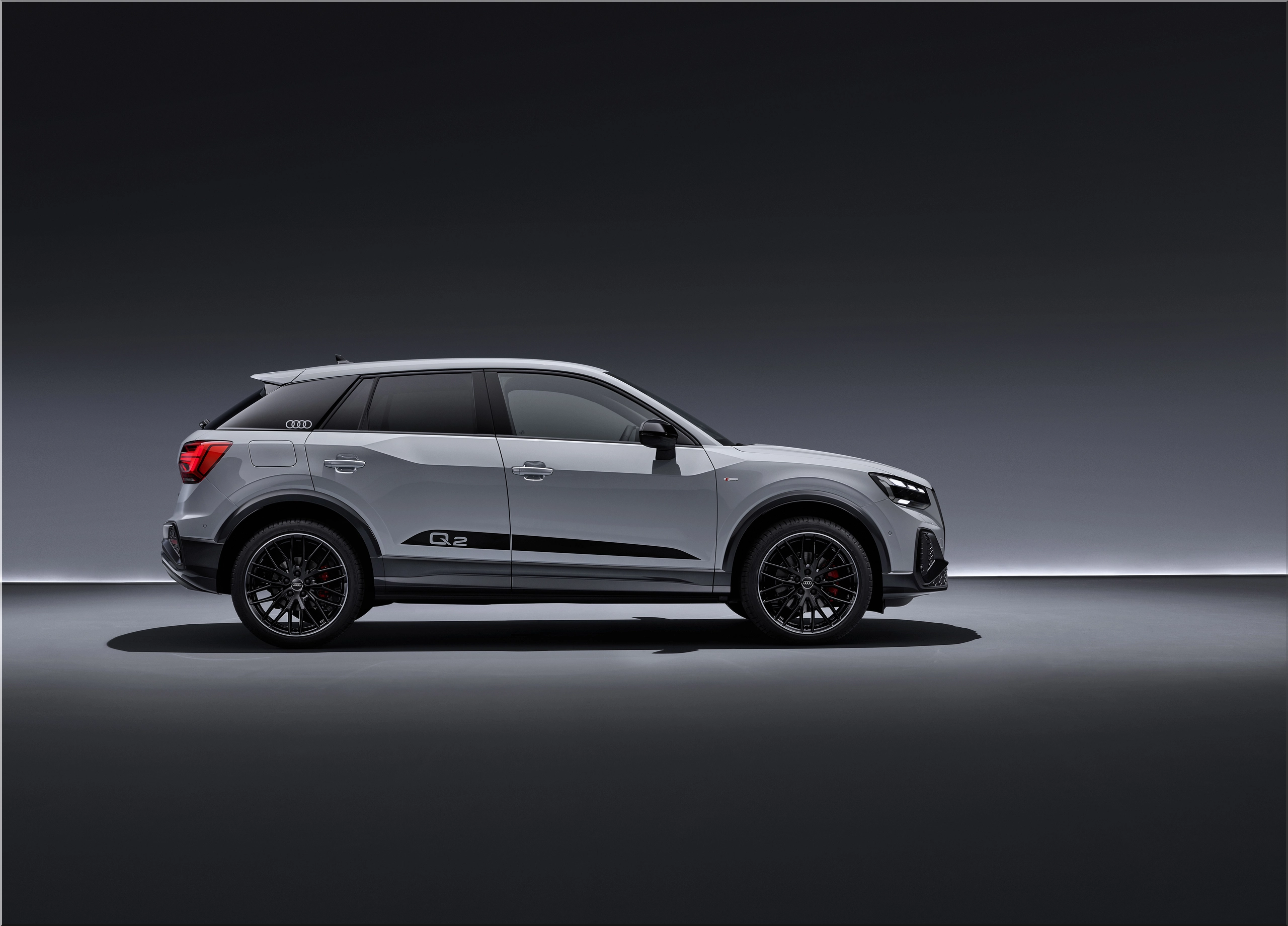
The engine delivered a direct response, a compact footprint, and a sound pattern that drivers recognized instantly. These traits helped Audi build a reputation for strong performance in both production cars and motorsport. Today, Audi still assembles its 2.5 TFSI by hand in Győr. The unit powers the RS 3, producing 394 HP and 369 lb-ft of torque for the U.S. market.
Why Audi Selected Five Cylinders
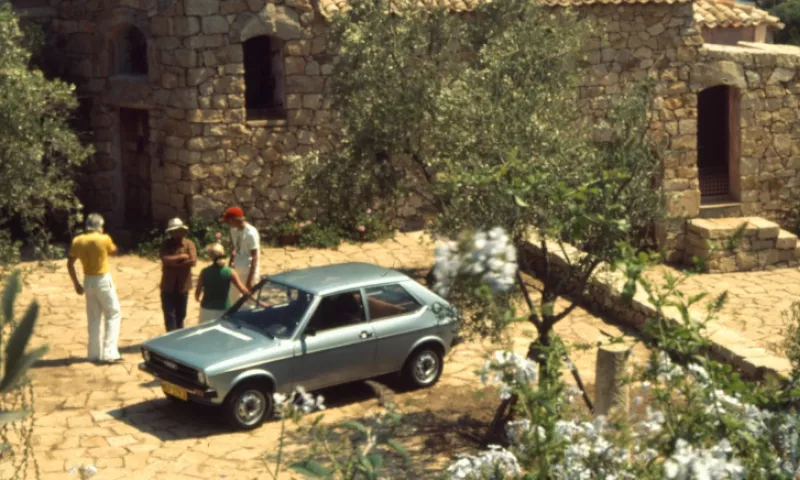
Audi engineers wanted more power without compromising packaging. The first unit displaced 2,144 cc and produced 136 PS, equal to roughly 134 HP. This step gave the Audi 100 the torque and efficiency needed to compete in higher segments.
The layout created a stable balance between smoothness and output. It avoided the vibration issues common to older four-cylinder designs. It also weighed less than a six-cylinder, improving front-axle load and steering response.
Key reasons Audi committed to the layout included:
- Strong torque from a compact block
- Smooth operation with fewer NVH issues
- Space savings in transverse and longitudinal setups
- Lower weight than six-cylinder alternatives
Early Gains in Output and Turbocharging
Audi advanced the engine quickly. By 1978, the company added a diesel version with 51 kW. A year later, Audi delivered a major jump in output with the turbocharged Audi 200 5T, which reached 125 kW and 265 Nm. That engine helped set the foundation for Audi's performance strategy.
Then came the breakthrough: the 1980 Audi quattro. It used turbocharging, intercooling, and permanent all-wheel-drive. Output reached 147 kW, equal to 200 PS. This powertrain gave Audi the strength to win the 1982 World Rally Championship and secure the 1983 drivers' title.
Audi tightened the formula again in 1983 with the Sport quattro, producing 225 kW, equal to 306 PS. It became the most powerful German road car of its era. A Group B rally variant produced 331 kW, or 450 PS, from a 2.1-liter inline-five.
Image
Performance on Track and Hill Climbs
The five-cylinder engine expanded Audi's racing footprint through the 1980s. In 1987, Walter Röhrl used the Sport quattro S1 (E2) to win the Pikes Peak hill climb with 440 kW (598 PS).
The engine continued to deliver strong results in the Trans-Am series and IMSA competition. In 1988, Hurley Haywood took the Trans-Am title with a 2.1-liter unit making 375 kW, or 510 PS. In 1989, an IMSA GTO version reached 530 kW (720 PS). These gains came from small displacement paired with advanced turbocharging and compact packaging.
A Pause, Then a Full Return
Audi phased out the five-cylinder in the mid-1990s. V6 engines replaced them in the A4, A6, and S6. The layout returned in 2009 in the Audi TT RS. The updated turbocharged 2.5-liter engine produced 250 kW, or 340 PS. Later updates increased output to 265 kW.
The engine then moved into the RS 3 Sportback, RS Q3, and other high-output compact models.
The Modern 2.5 TFSI: Compact, Strong, and Efficient
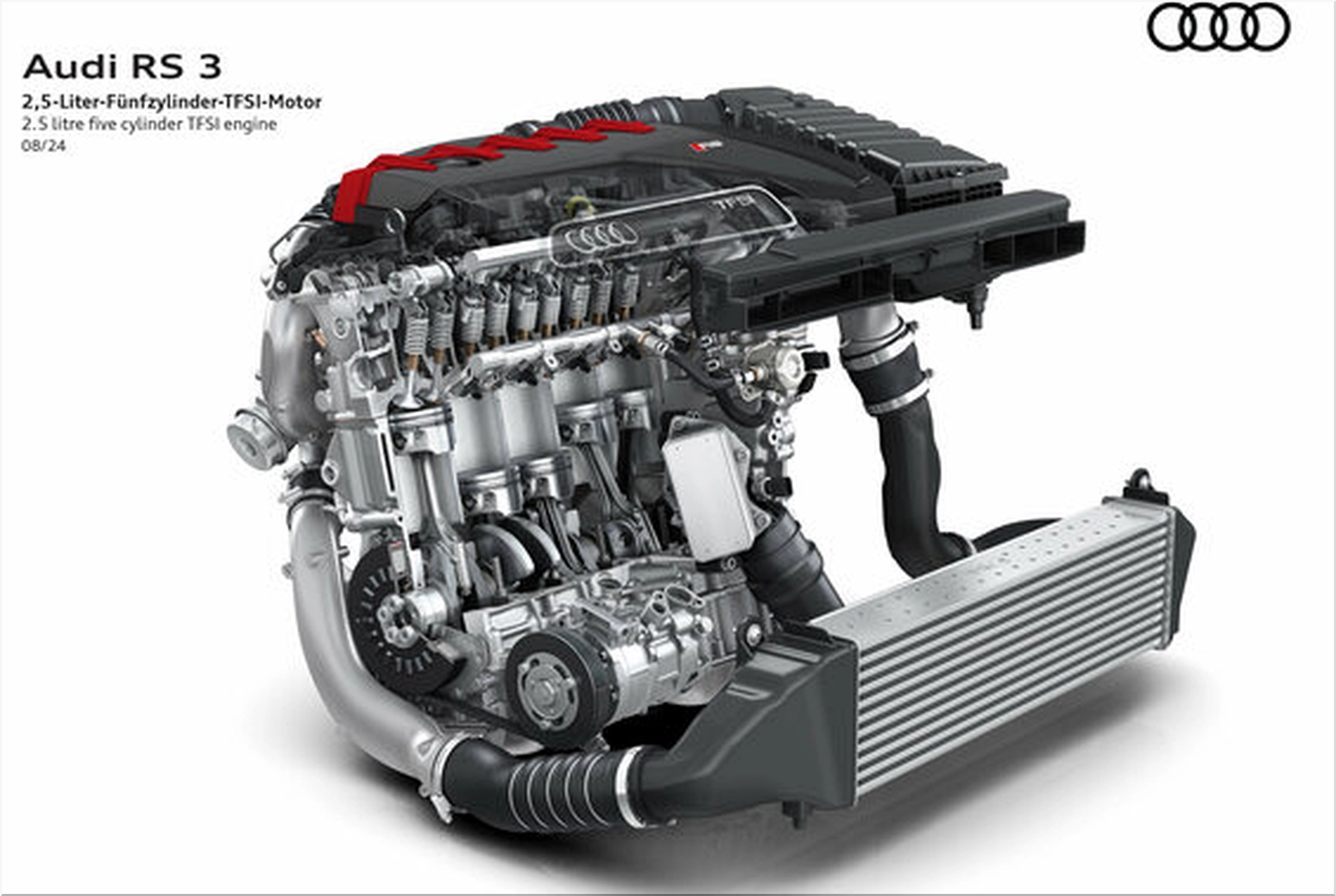
The modern 2.5 TFSI entered production in 2016. Audi focused on output and weight reduction. The unit produces 400 PS and 500 Nm of torque. In the RS 3, it delivers:
- 0–100 km/h in 3.8 seconds
- Top speed up to 290 km/h with the performance package
Audi strengthened combustion efficiency with:
- Turbocharging and direct injection
- Dual injection that manages fuel delivery at 250 bar
- Audi valvelift system for variable exhaust valve control
- A lightweight aluminum crankcase
- A hollow-bored crankshaft
- Magnesium and aluminum components to reduce mass
Total weight reaches only 160 kg, supporting fast throttle response and improved handling.

Why the Sound Still Matters
The five-cylinder produces a signature rhythm due to its 1-2-4-5-3 firing order. The sequence creates alternating pulses that sound distinct at all loads. Audi shaped exhaust gas flow through precise manifold geometry. The RS 3 adds variable exhaust flaps to widen the range of tones in performance modes.
Many drivers see the sound as part of the car's character. Audi maintains this as a key advantage because it adds feedback without complex electronic sound management.
Hand Assembly and Quality Control
Audi builds the engine by hand at the Győr facility. Workers assemble each engine across 21 stations. Every step includes torque checks and mechanical validation. After assembly, each engine undergoes:
- A cold test with fluids
- A hot test under load
- Electronic system checks
- Manual verification of rotation and sealing
The process ensures consistent output and durability under a full range of conditions.

A Powertrain with Staying Power
Fifty years of use reflect strong engineering and steady development. Audi built the engine to solve practical design limits, then turned it into a signature technology. The current 2.5 TFSI holds one of the highest specific outputs in its class. It also keeps the layout relevant as performance cars face tighter emissions rules and more competition from hybrid systems.
Audi plans to keep the five-cylinder as part of its top performance models. The layout remains compact, durable, and fast to respond. That combination keeps demand strong among drivers who want clear feedback and measurable results from a compact performance engine.
- Add new comment
- 138 views