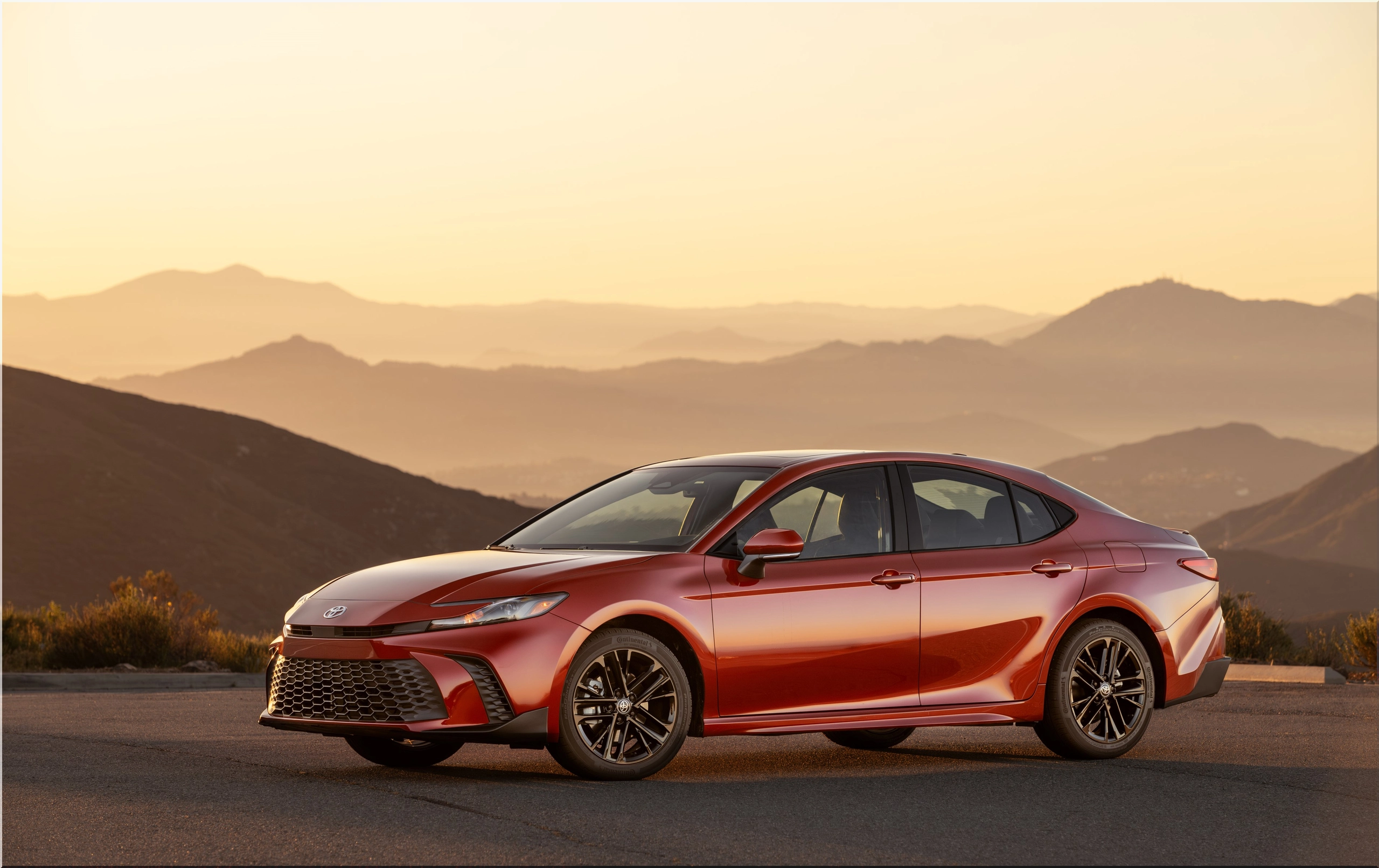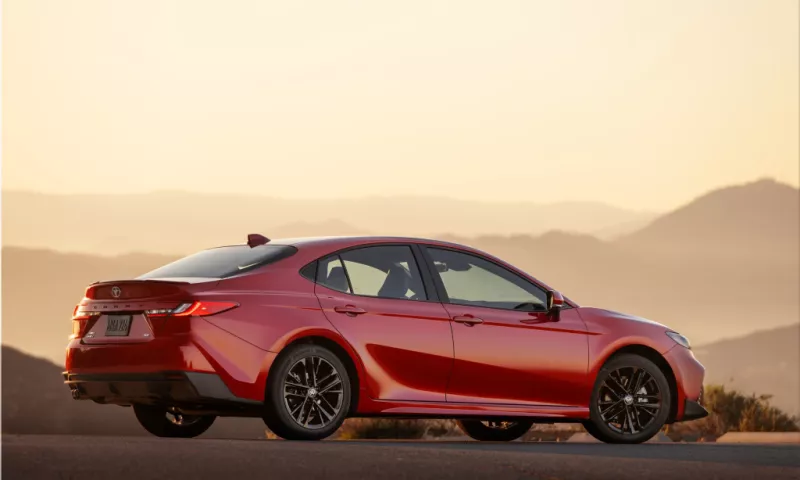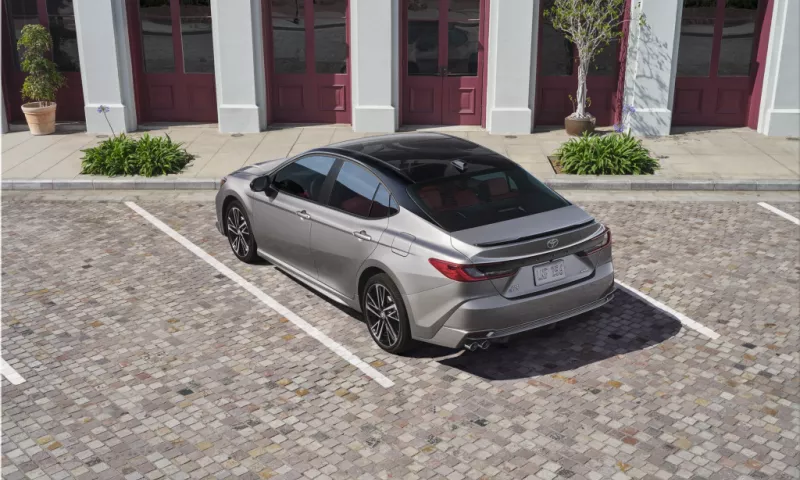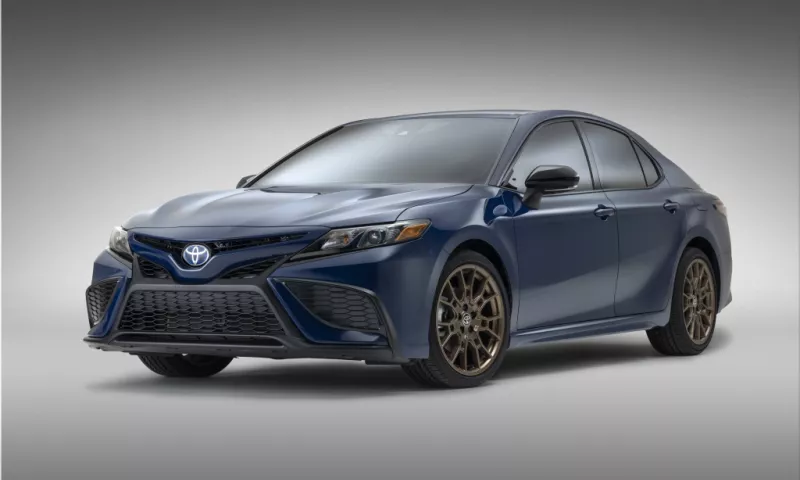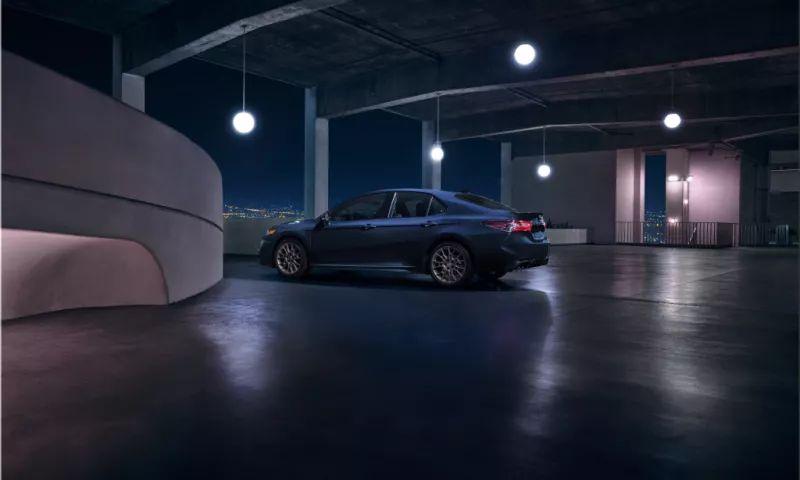
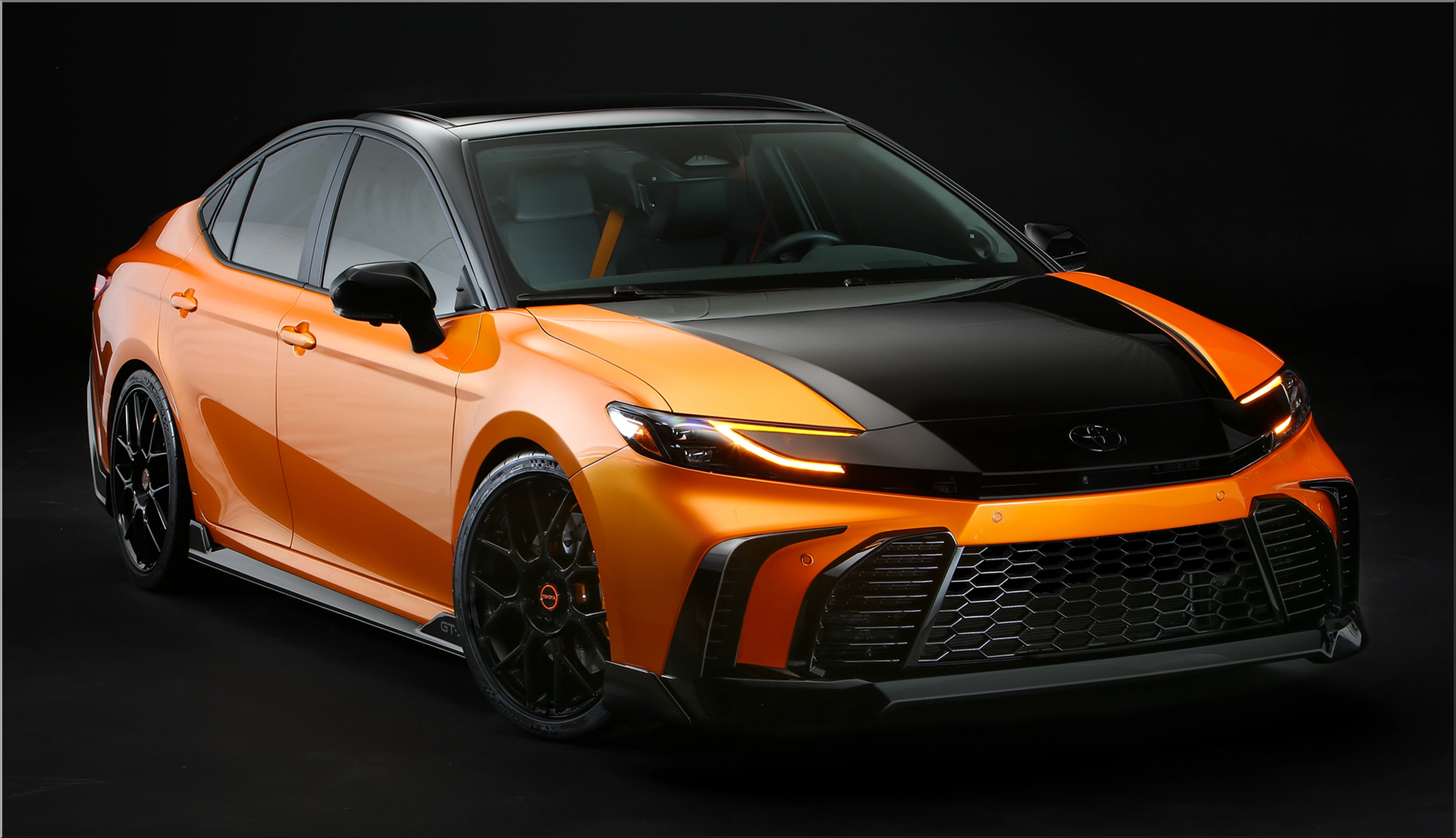
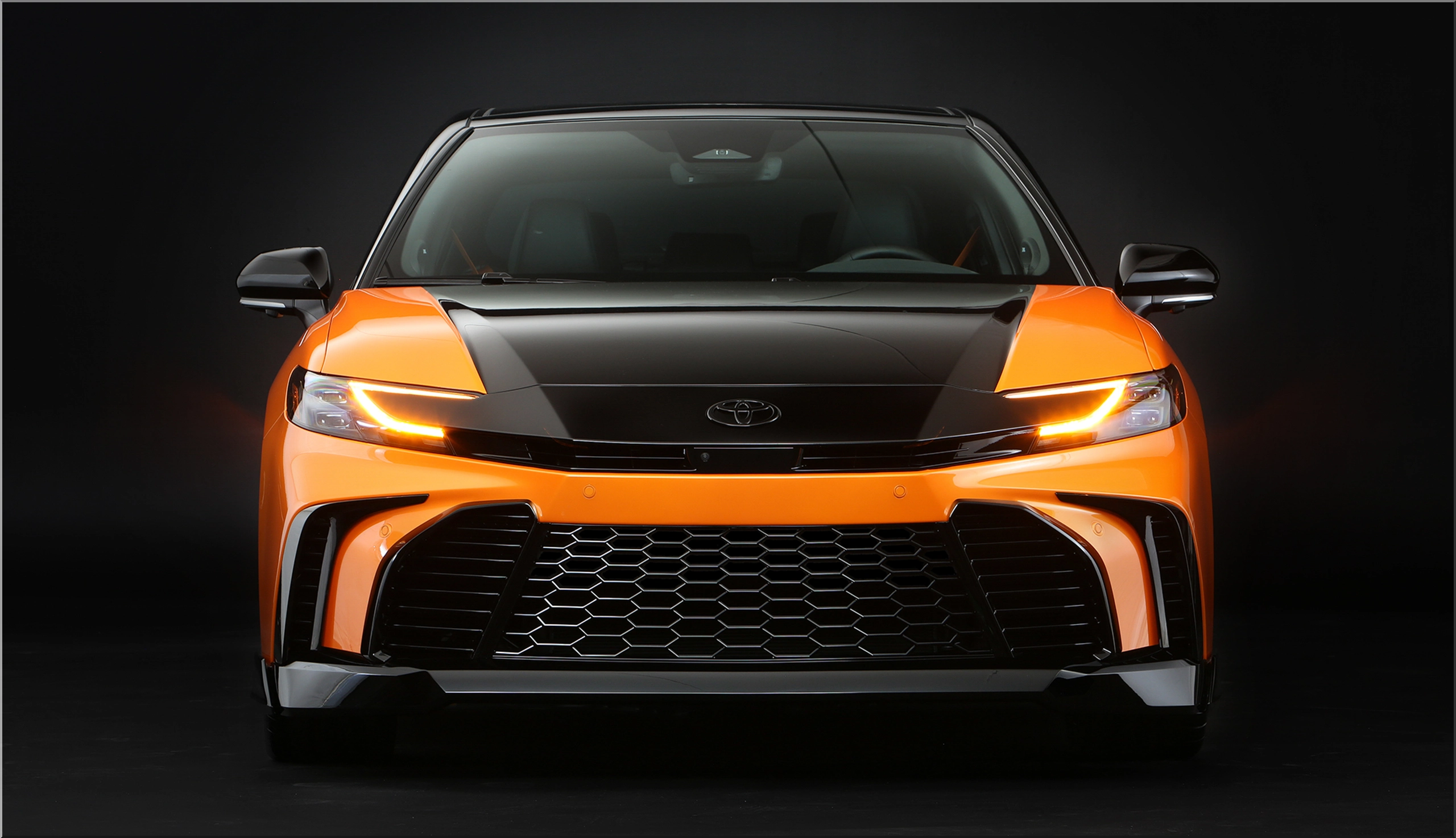
The Toyota Camry GT-S Concept made its debut at the 2025 SEMA Show, signaling Toyota’s intent to keep sedans relevant in an SUV-dominated market. This concept doesn’t rely on fantasy or inflated numbers. It focuses on realistic performance upgrades, production-based engineering, and a clear read on what modern sedan buyers actually want: fun, confidence, and accessibility.
Purpose: From Dealership Floor to Driveway
Built from the 2025 Camry XSE AWD Hybrid, the GT-S Concept demonstrates how performance-inspired design can exist within real-world limits. Toyota’s goal was simple—build a sport sedan that looks production-ready and delivers practical excitement.
Image
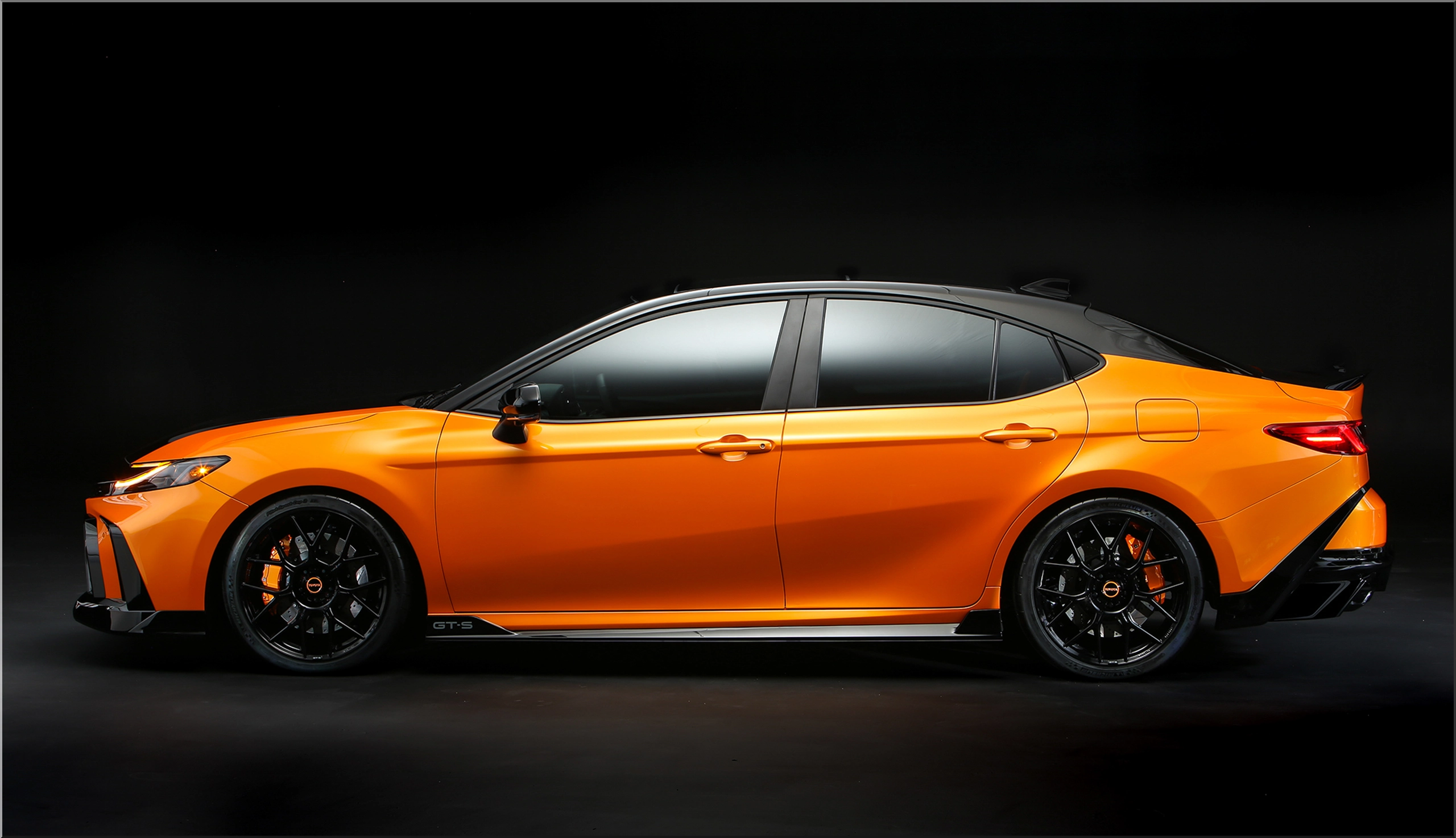
Unlike the overbuilt SEMA show cars that never see a public road, the GT-S maintains its stock 2.5-liter four-cylinder hybrid system with 232 horsepower. That’s the same powertrain customers can buy today, but with upgraded suspension, braking, and exterior aerodynamics that push the Camry’s design toward motorsport territory.
Design Leadership: CALTY’s Real-World Vision
The project came from Toyota’s CALTY Design Research in Ann Arbor, in collaboration with the Research & Development team. Their mission: to create a street-focused performance study that shows what a next-generation Camry XSE could look like if Toyota leaned deeper into its sport sedan roots.
Key exterior changes:
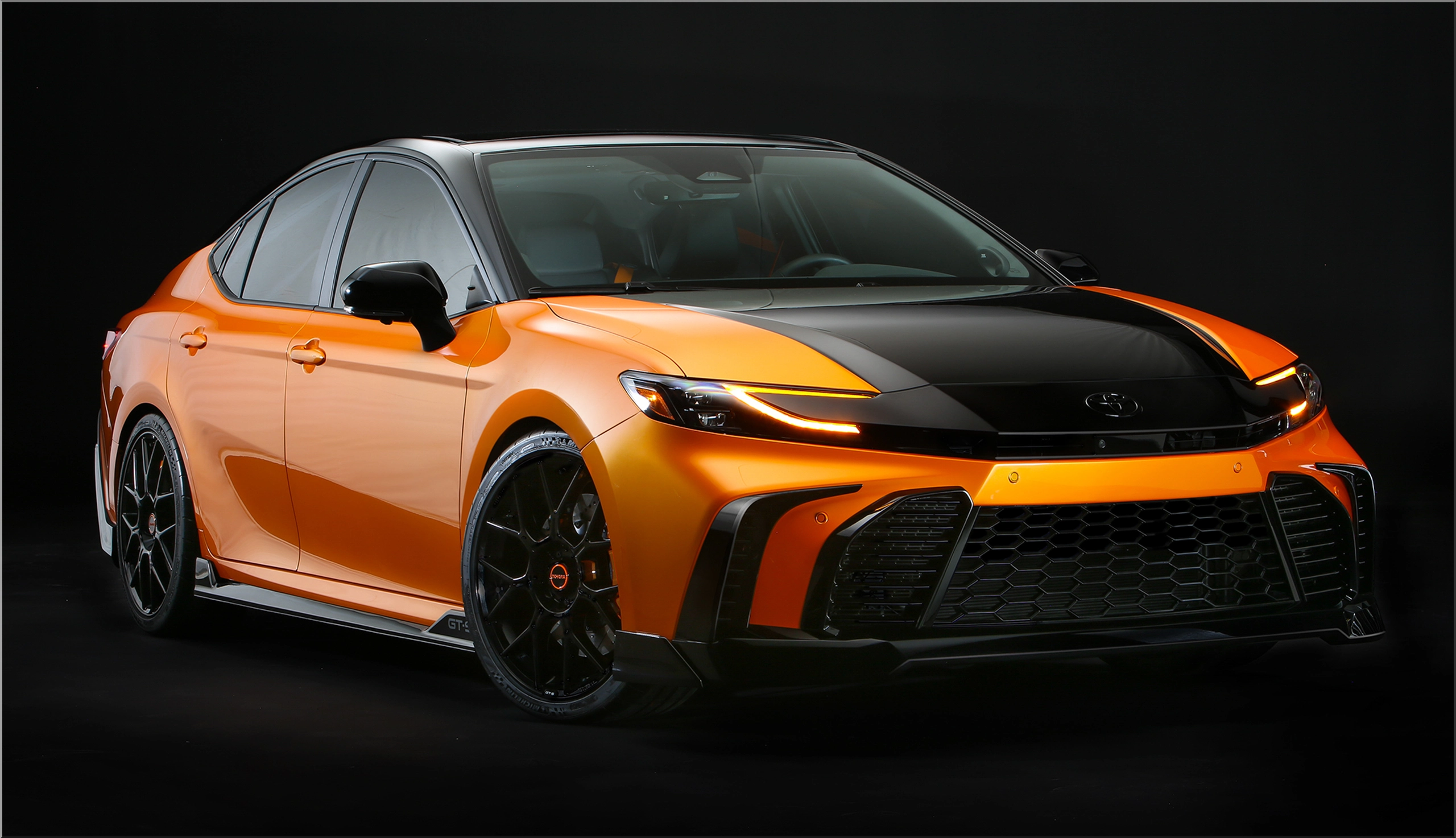
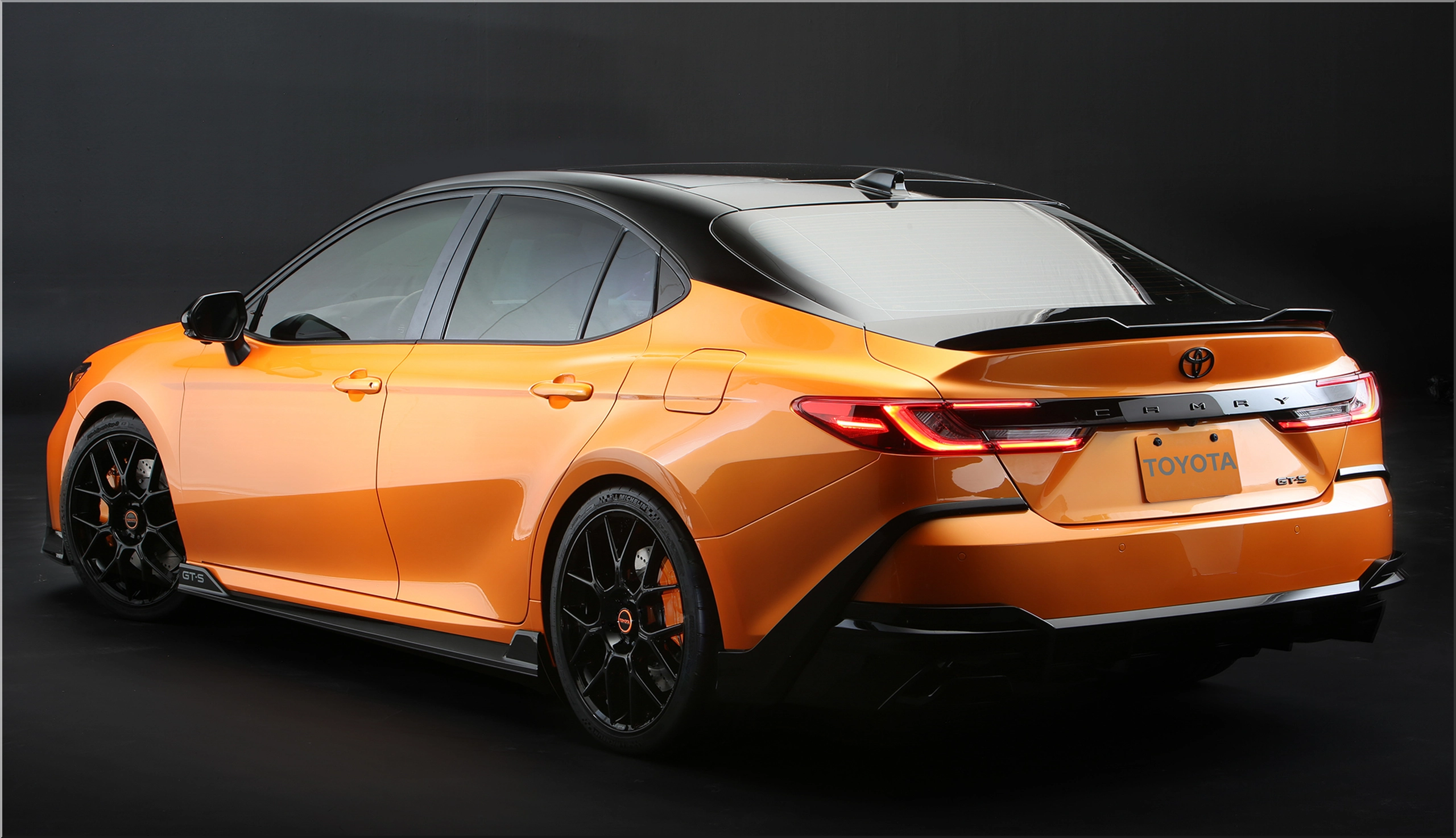
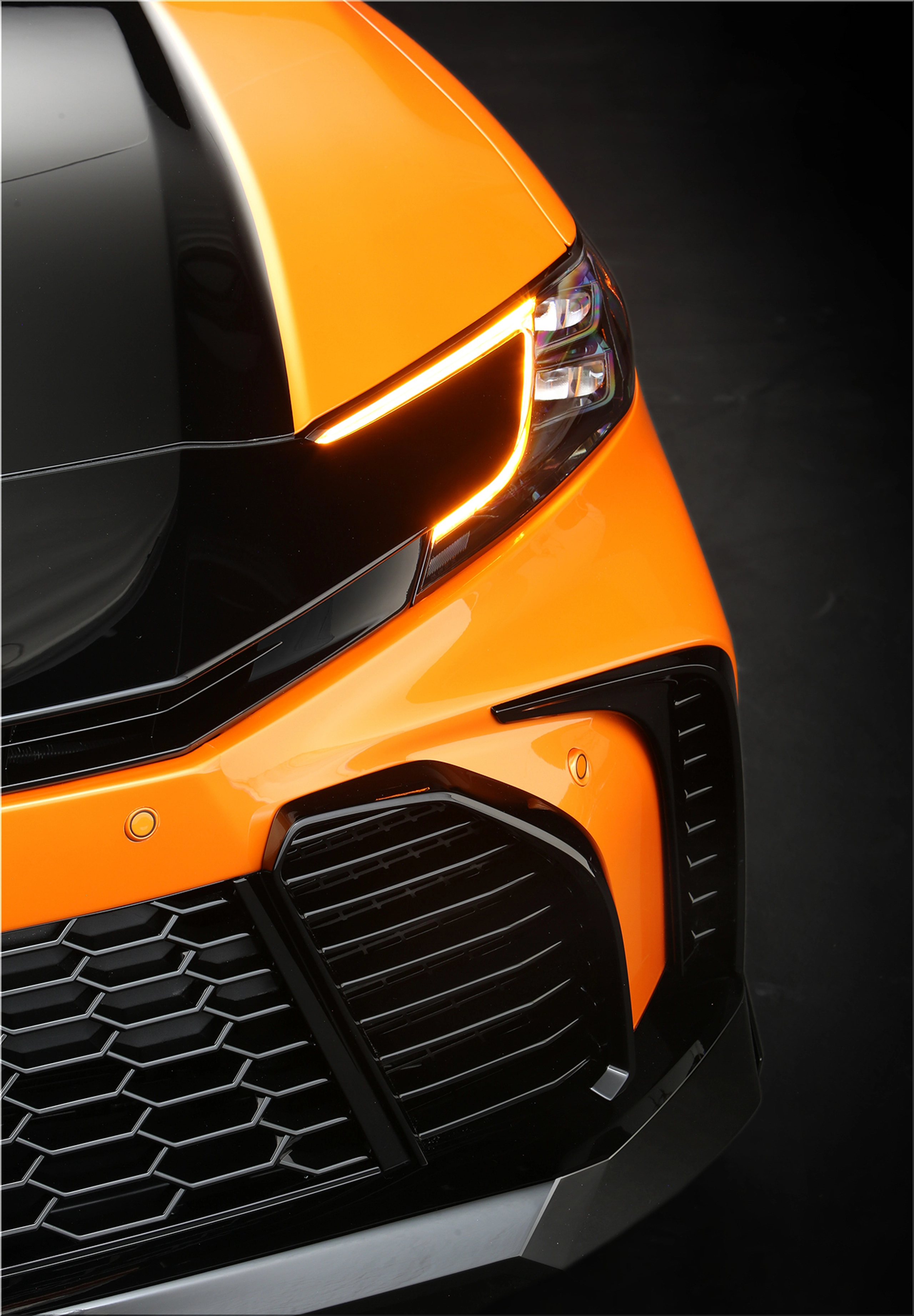
- Aggressive front, side, and rear aerodynamic components
- Custom “Inferno Flare” paint finish
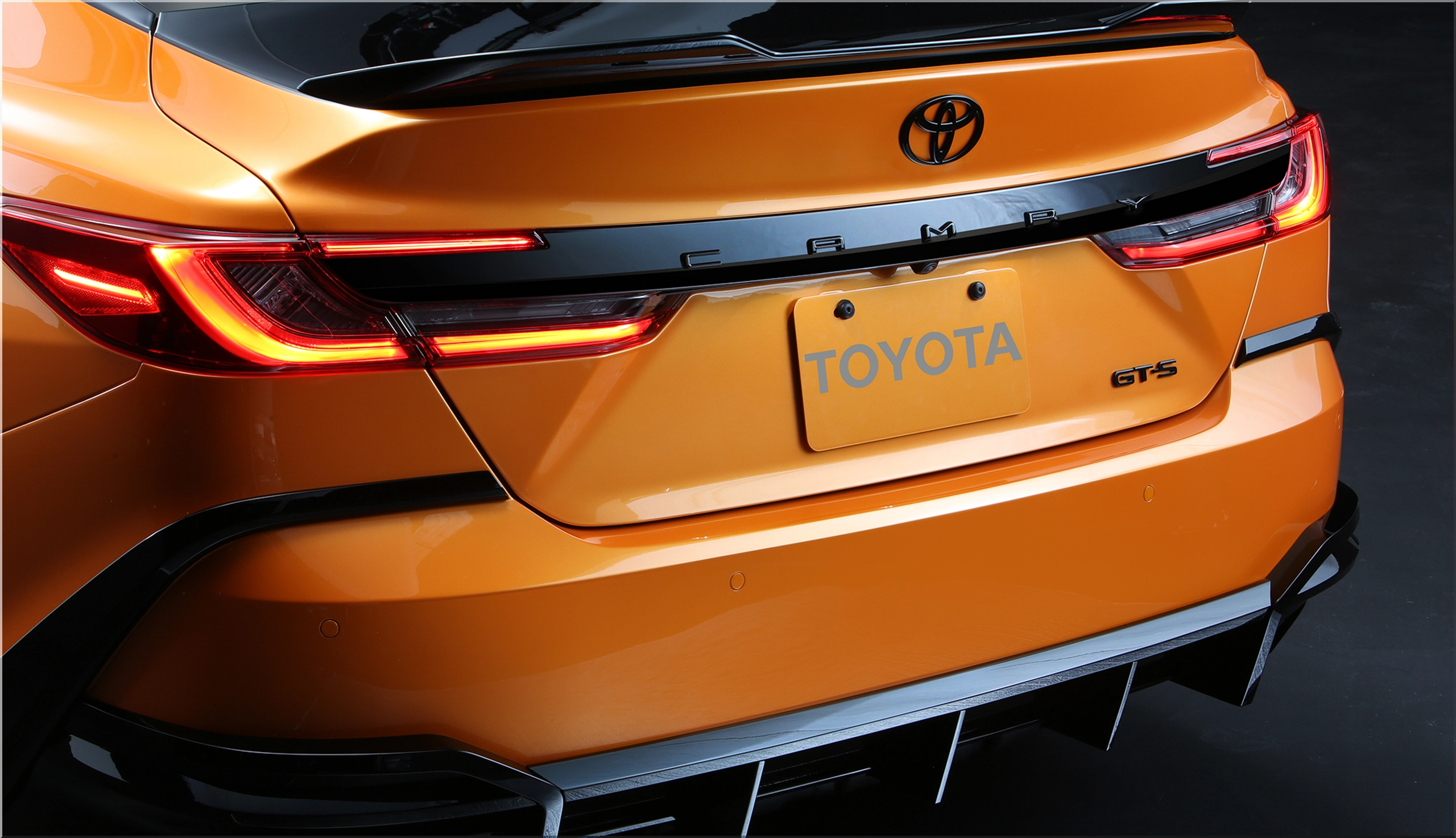
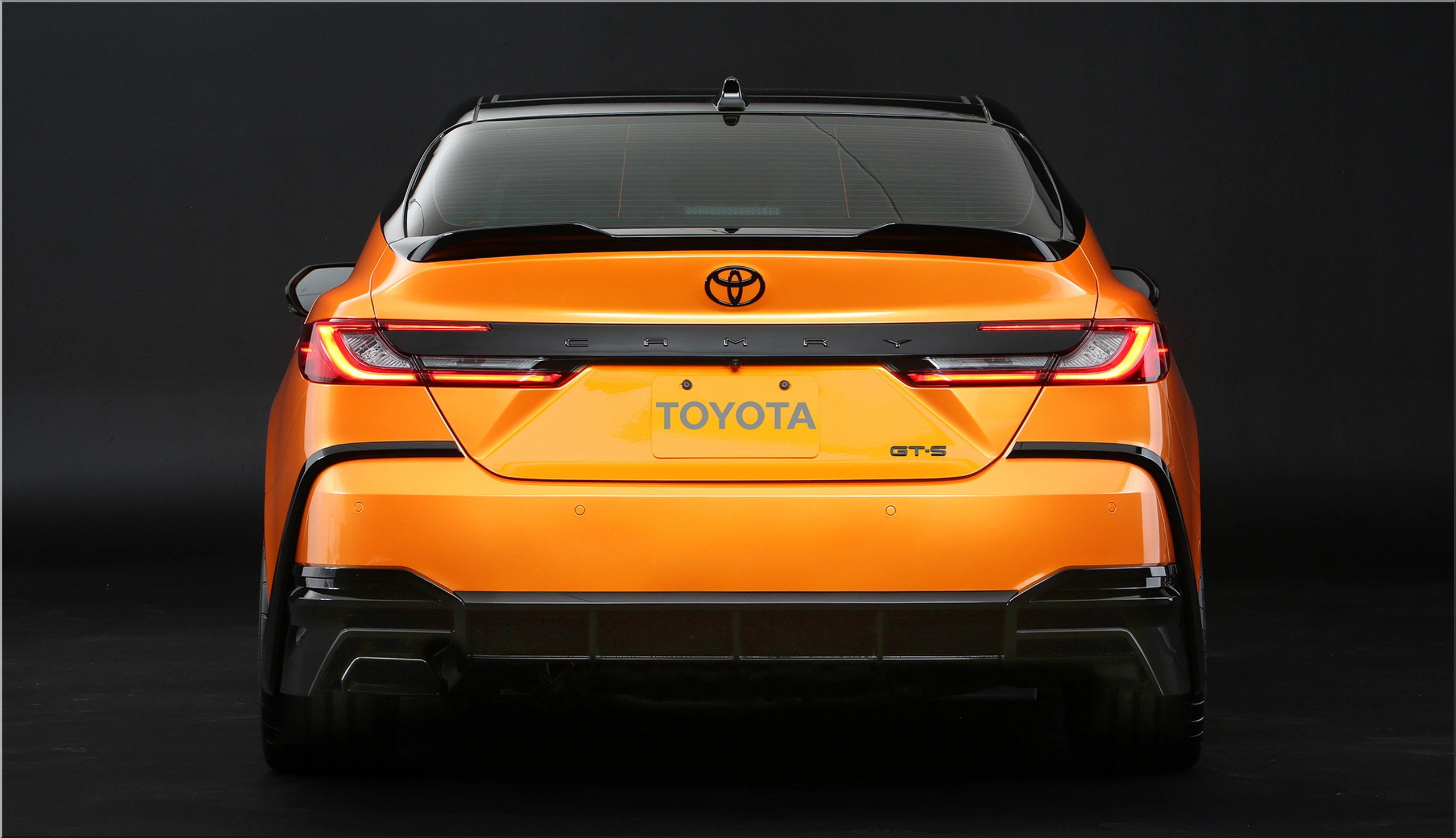
- Reworked rear fascia integrating a performance exhaust system
- Lower stance and wider profile for stronger visual presence
Every surface aims to enhance aerodynamic function, not just aesthetics. Toyota kept the proportions grounded in reality so the GT-S could transition to production without major body revisions.
Performance and Handling Enhancements
The GT-S Concept’s chassis modifications are focused and measurable—real upgrades that improve cornering precision and driver feel.
Suspension and Braking:
- Adjustable coilovers lower the car by 1.5 inches, optimizing balance and stance.
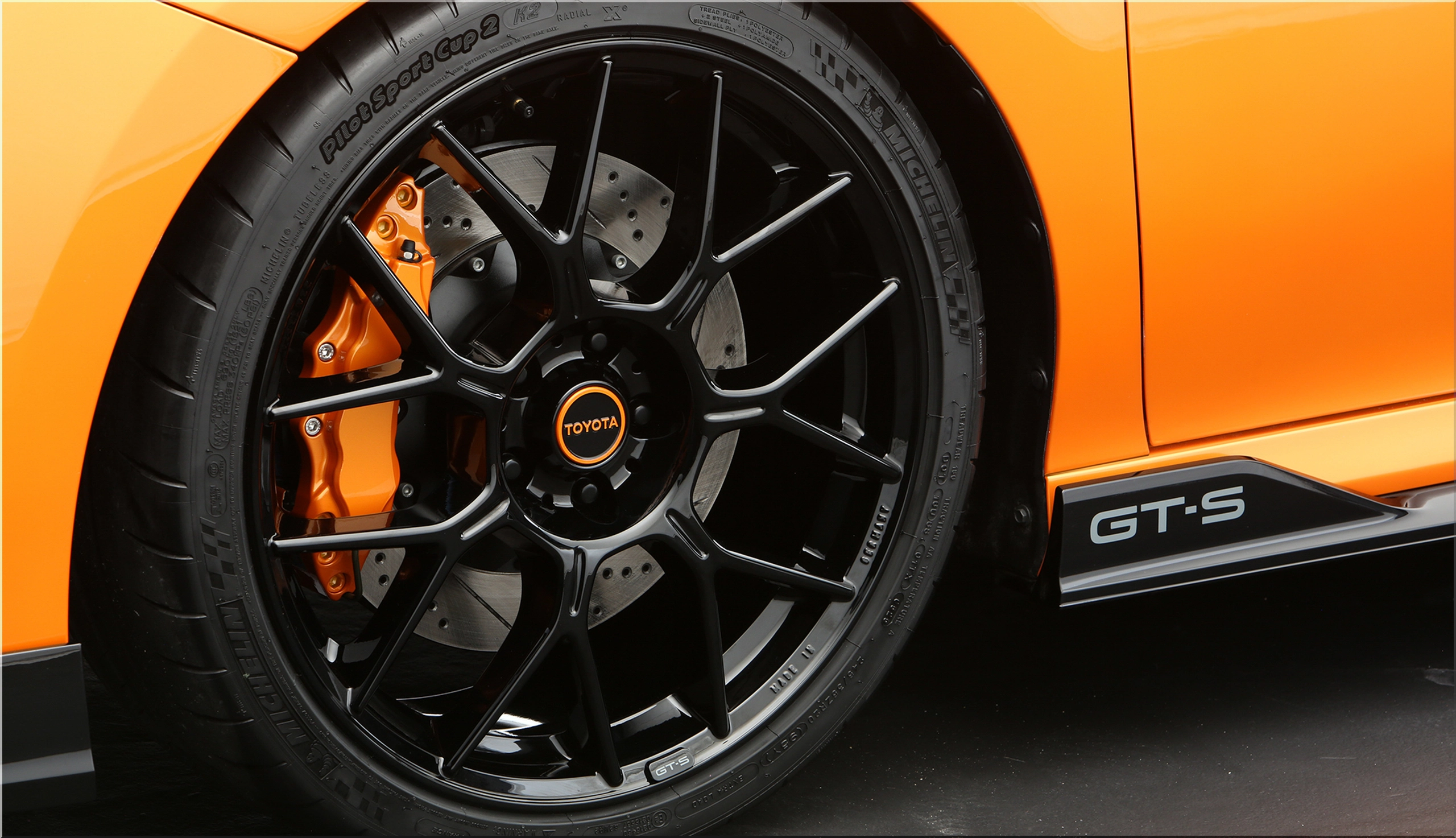
- 8-piston front calipers with 365mm rotors and 6-piston rear calipers with 356mm rotors increase stopping power.
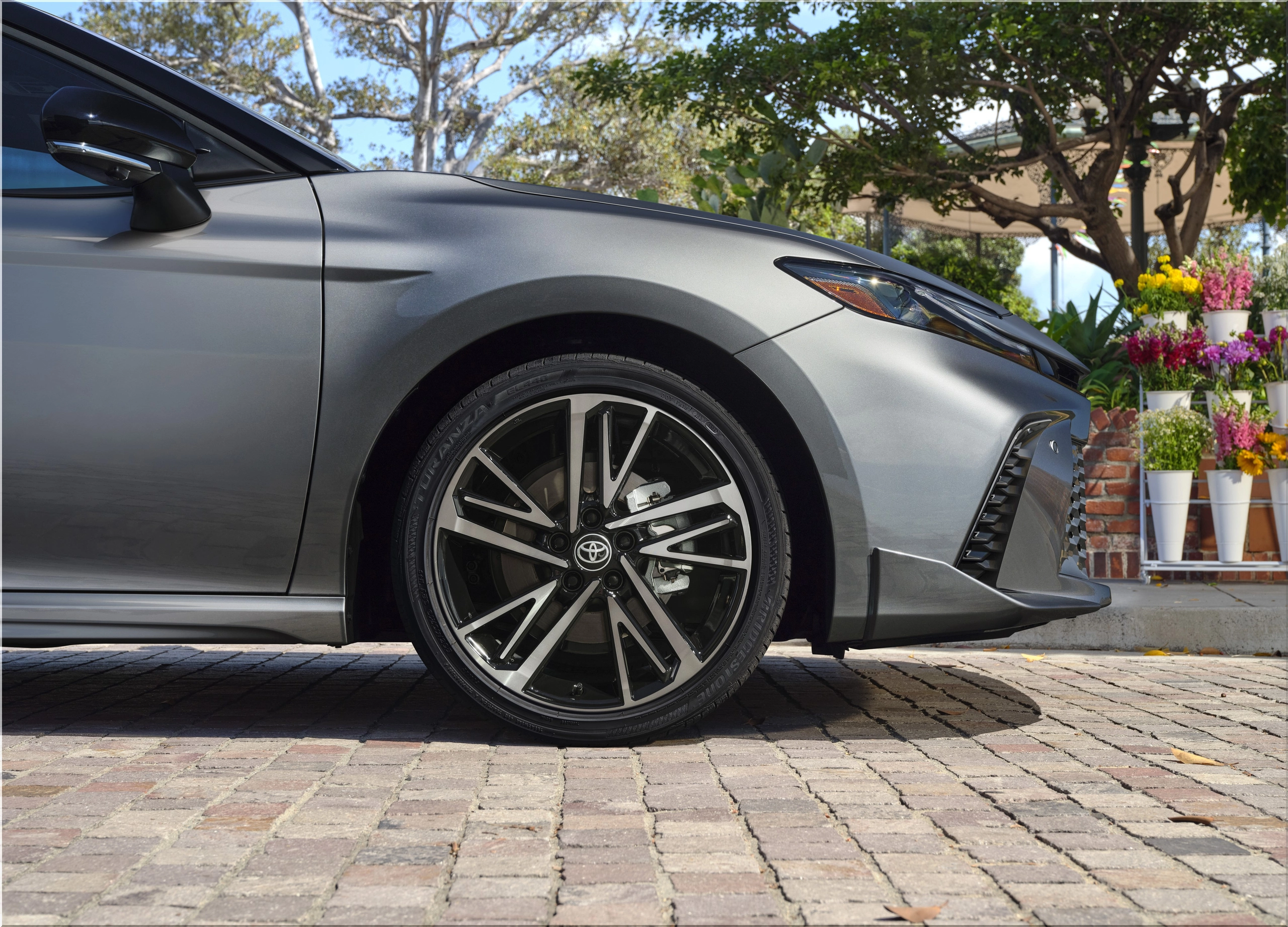
- 20-inch performance wheels paired with 245/35R20 tires improve grip and fill the wheel wells cleanly.
This combination creates a noticeable improvement in mechanical grip and braking confidence, key metrics for any performance sedan. It also ensures that even with hybrid power, the Camry GT-S delivers a stronger connection between driver and road.
Powertrain: Stock Hybrid, Tuned for Realism
Toyota chose not to chase big horsepower numbers. The 232-hp hybrid engine remains untouched, proving that the concept is about handling and character, not excess.
The AWD hybrid system is already known for consistent traction and quick torque distribution. With lower ride height and stiffer suspension tuning, the GT-S benefits from sharper feedback and reduced body roll—traits usually reserved for dedicated sports sedans.
Image
Market Intent: Aspirational but Attainable
Toyota’s design leadership was clear about intent. Kevin Hunter, Executive Design Director for Toyota North America, described the GT-S as “the high-performance hero of the Camry lineup.”
That positioning matters. It implies Toyota wants to test the boundaries of what a realistic Camry sport package could be—something a dealer might actually sell, not just display.
Adam Rabinowitz, Chief Designer at CALTY, emphasized that the concept is a feedback tool. It’s not about one-off showmanship; it’s about understanding what enthusiasts value in a modern hybrid sport sedan—design, stance, and responsiveness.
Reality-Based Performance: A Contrast to Overbuilt Show Cars
Toyota’s Mike Tripp, Group Vice President of Marketing, put it plainly: “This build is intentionally grounded in reality—it’s the kind of car customers can picture themselves driving home.”
That’s a sharp contrast to many SEMA builds that exist only for display. The GT-S is positioned as a real-world performance vision, backed by Toyota’s design and engineering discipline.
Key characteristics that keep it realistic:
- Powertrain unchanged from production Camry
- Suspension and brakes engineered for feasible production adaptation
- Design enhancements that meet manufacturing feasibility standards
This focus makes the Camry GT-S Concept a credible signal of Toyota’s possible production direction for a Camry sport variant.
Toyota’s Broader Electrified Strategy
The GT-S fits within Toyota’s “Powered by Possibility” theme at the 2025 SEMA Show. The company showcased more than two dozen builds across every powertrain platform:
- Gasoline (ICE)
- Hybrid (HEV)
- Plug-in hybrid (PHEV)
- Battery electric (BEV)
- Fuel cell electric (FCEV)
This diversity underscores Toyota’s strategy to advance electrification through multiple technologies, not a single all-electric path. The GT-S shows how Toyota can retain internal combustion appeal while using hybrid systems to maintain efficiency and performance relevance.
Video
Video file
Video title
Toyota Camry GT-S Concept
Realistic Pricing Context
If Toyota were to produce a performance package similar to the GT-S, it would likely slot above the current Camry XSE AWD Hybrid, priced around $35,000 USD.
Considering the coilovers, brake package, and wheels, a production GT-S trim could reach $42,000–$45,000 USD, depending on configuration and material choices.
This pricing keeps it competitive with performance-oriented sedans like:
| Model | Powertrain | Estimated Price (USD) |
|---|---|---|
| Toyota Camry GT-S (Concept-based) | Hybrid AWD, 232 hp | ~$42,000 |
| Honda Accord Sport Hybrid | FWD Hybrid, 204 hp | ~$34,000 |
| Hyundai Sonata N Line | FWD 2.5T, 290 hp | ~$36,000 |
| Mazda6 (if reintroduced) | AWD Inline-6 (est.) | ~$45,000 |
The concept demonstrates Toyota’s ability to modernize the Camry’s identity without abandoning its efficiency and affordability roots.
Consumer Insight: What Toyota Wants to Learn
By showcasing a production-feasible sport sedan, Toyota aims to gauge consumer appetite for performance hybrids. The company wants to understand:
- Would buyers pay more for handling-focused upgrades?
- Do consumers value style and stance over raw horsepower?
- Can hybrid sedans win enthusiasts who’ve migrated to SUVs or EVs?
The GT-S Concept answers these questions through direct engagement at SEMA, one of the few platforms where real-time feedback from enthusiasts, builders, and engineers converges.
Image
What’s Next for the Camry
While Toyota hasn’t announced plans for production, the GT-S serves as a design and engineering benchmark. It proves that sport sedans still have a role—if they balance practicality, hybrid efficiency, and emotional appeal.
Given Toyota’s history of bringing concept-inspired trims to market—like the TRD Camry—it’s reasonable to expect elements of the GT-S to appear in future Camry performance or appearance packages.
Bottom Line
The Toyota Camry GT-S Concept isn’t fantasy. It’s a pragmatic experiment in how to keep sedans engaging and relevant. By grounding its upgrades in achievable engineering, Toyota demonstrates that performance and efficiency can coexist in a single platform.
At a time when many automakers chase extremes—either full electric or oversized SUVs—Toyota is exploring what’s possible in the middle ground: a hybrid sport sedan that looks and drives like it means business.
- Add new comment
- 75 views