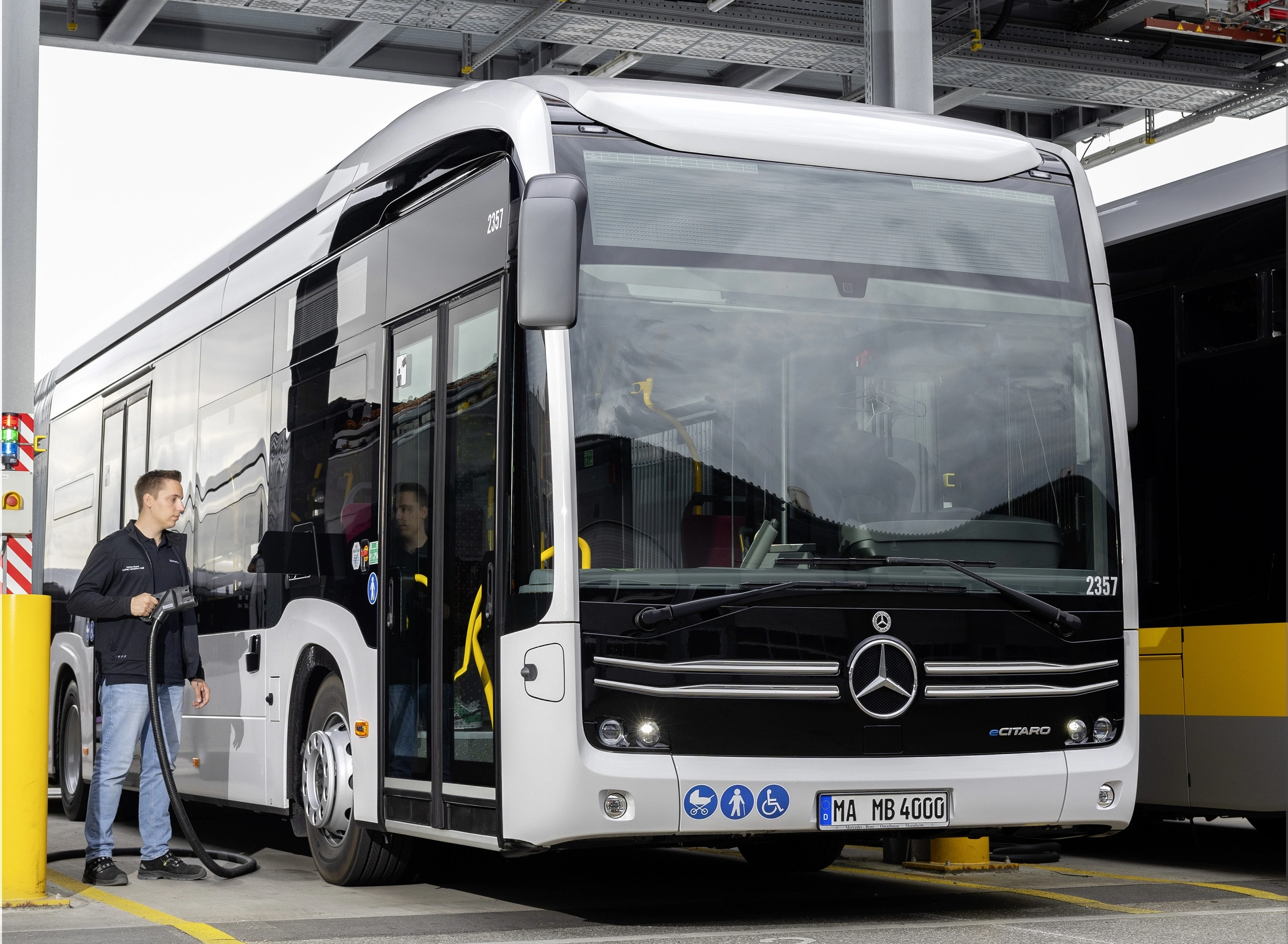
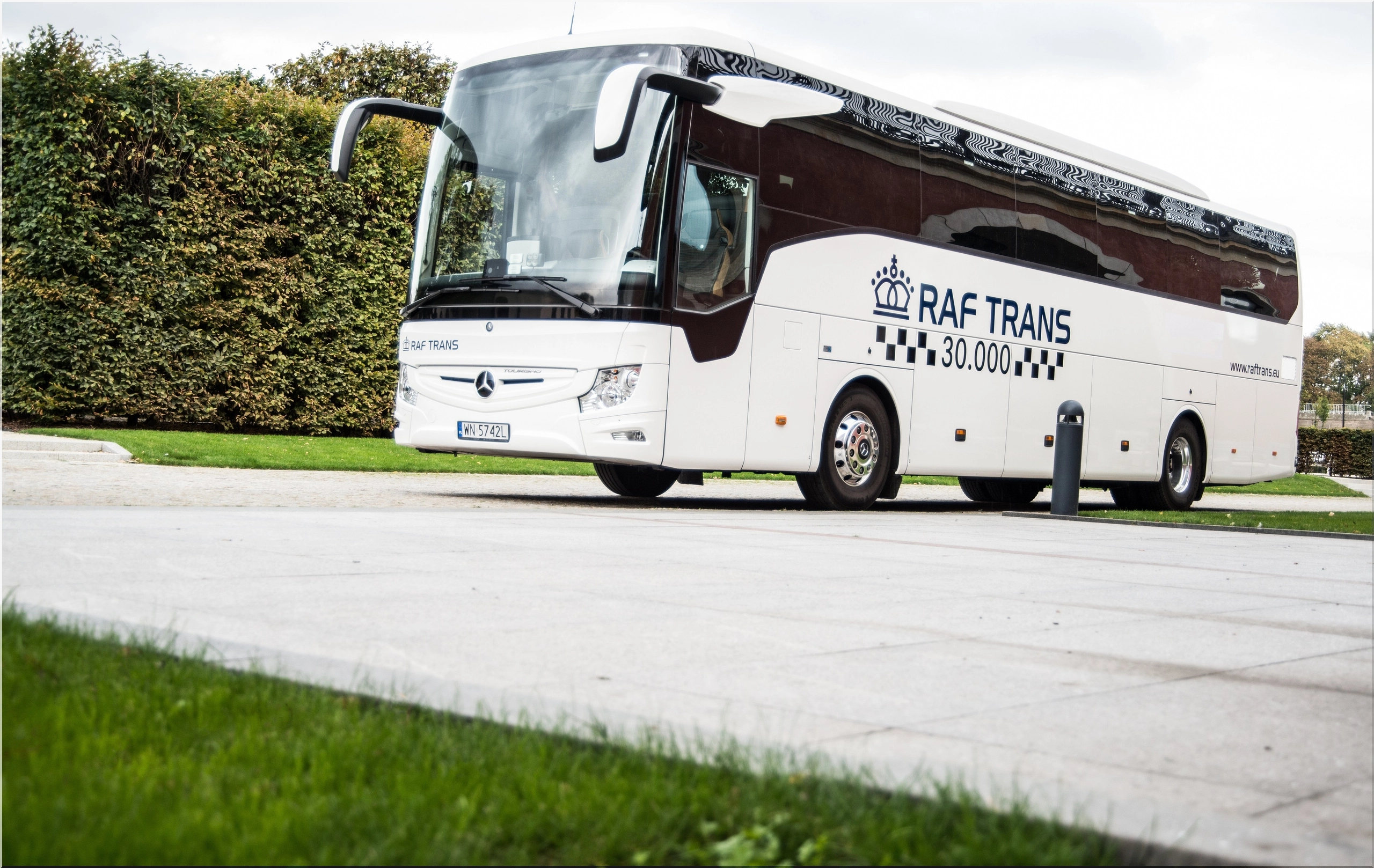
The Mercedes-Benz Tourismo just cleared a serious production milestone. Daimler Buses rolled out the 40,000th Tourismo at the start of 2026, and that figure says plenty about the state of the European coach business.
Coach operators do not buy sentiment. They buy seat yield, fuel discipline, driver support, luggage capacity, and hardware that stays on the road. The Tourismo has kept winning orders because it hits those targets with unusual consistency, from its 0.33 drag coefficient to its broad OM 470 engine range and its steadily expanding set of driver-assistance systems.
Image
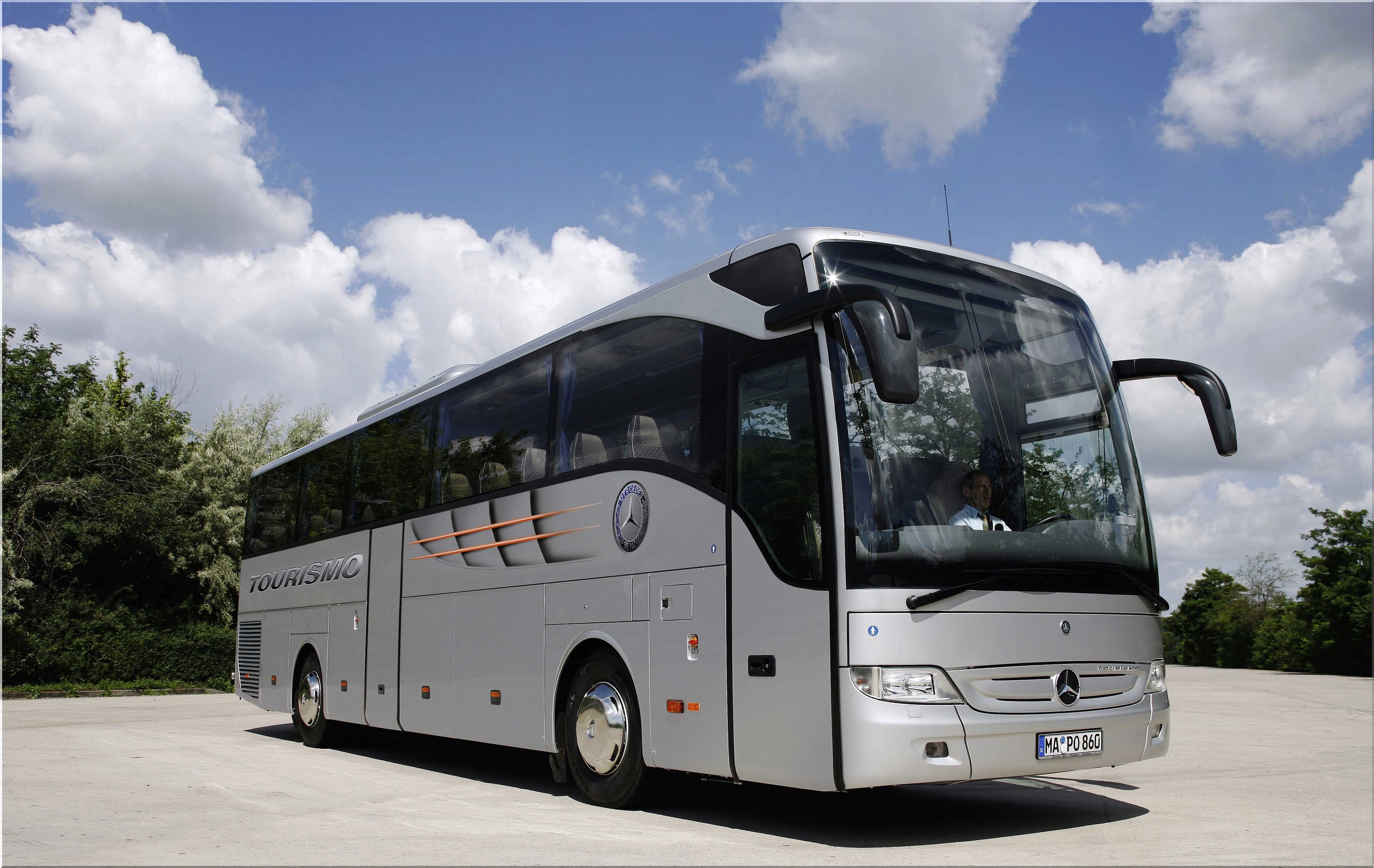
Looking at the data, this coach has moved far past the old formula of a simple high-deck diesel bus with nice seats. The current Mercedes-Benz Tourismo packages Euro VI E diesel power, low-drag bodywork, optional MirrorCam, active safety systems such as Active Brake Assist 6 Plus, and variant spread from roughly 12.3 m to 13.9 m in overall length. That range lets one model line cover long-distance touring, airport shuttle work, employee transport, and line-haul duty.
Why the 40,000-unit mark carries weight
A production total like 40,000 units does not happen by accident in a market as cost-sensitive as European coach transport. Operators keep their coaches for years, fuel bills punish weak aerodynamics, and every insurance claim or minor urban scrape cuts into margin. Daimler Buses has kept the Tourismo relevant by updating the hardware that moves the profit line: powertrain efficiency, visibility, braking assistance, and layout flexibility.
In addition, the milestone lands at a useful time for the brand. The third-generation Tourismo, on sale since autumn 2017, already covered a wide operating spread. The 2023 update pushed the coach further with LED headlamps, MirrorCam, new infotainment, fresh rear lamps, a converter automatic transmission option, and stronger assistance tech.
Here is the short business case behind the sales run:
- Low operating cost starts with aerodynamics and efficient diesel hardware.
- High route flexibility comes from four body variants and multiple axle layouts.
- Driver support now carries real substance through braking, fatigue, camera, and blind-spot systems.
- Passenger value stays strong through roomy luggage bays, easy boarding, climate control, and solid seating density.
How the Tourismo built its sales run
Daimler Buses did not keep one static coach in showrooms for three decades. It kept refining the formula.
| Year | Tourismo milestone | Why it moved the needle |
|---|---|---|
| 1992 | Success story starts with the O 340 | Mercedes-Benz set up the business-class high-deck coach idea that later fed the Tourismo line |
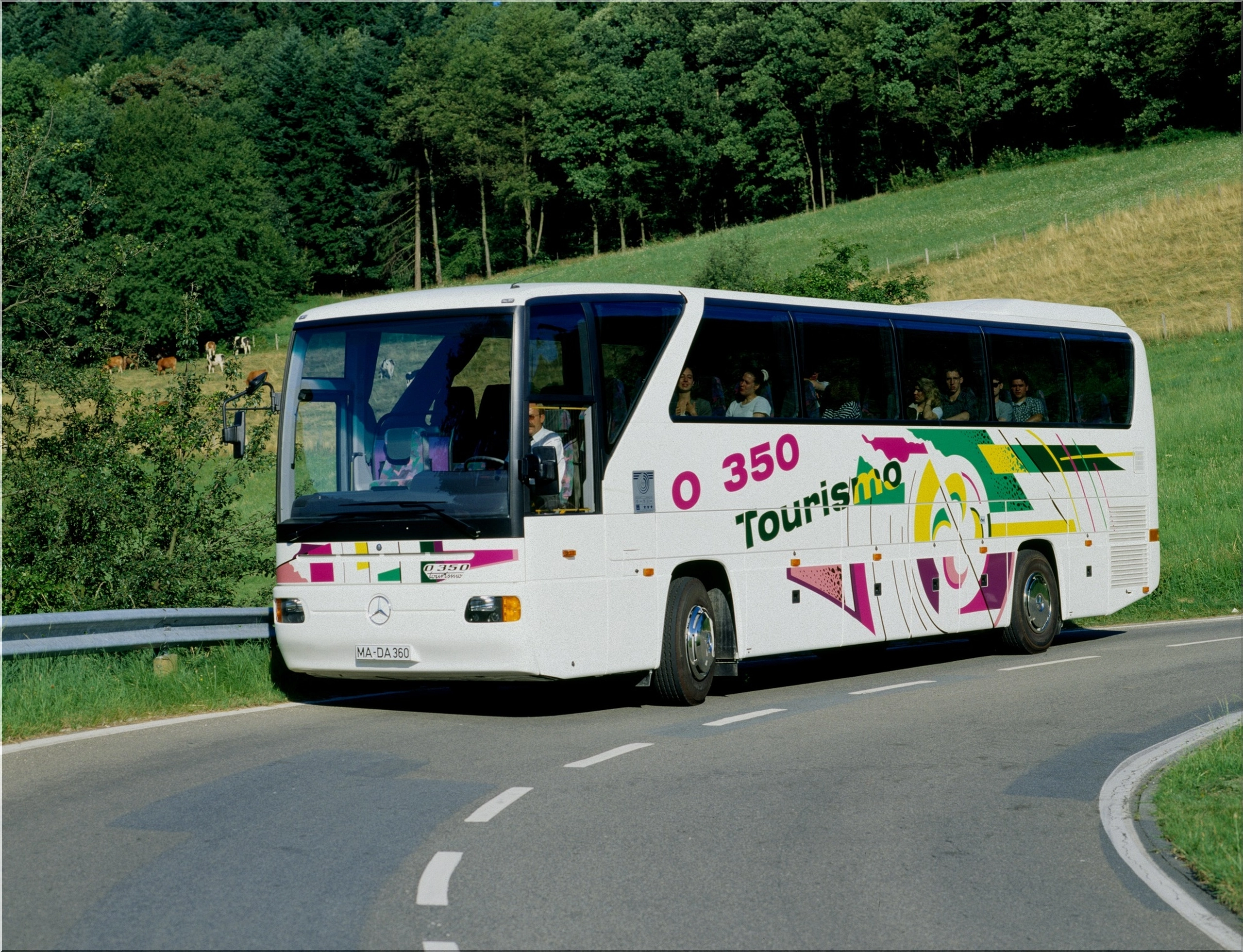
| Mid-1990s | O 350 Tourismo arrives | The coach gains a dedicated model identity and quickly turns into a strong seller |
| 2006 | Second-generation Tourismo debuts | Range expands to 12 m to 14 m, with two- and three-axle layouts and more tailored equipment |
| 2015 | Sales hit 10,000 units | Operators buy into the formula at scale, while safety tech keeps improving |
| 2017 | Third-generation Tourismo launches | Daimler widens the use case with better efficiency, safety, and powertrain choice |
| 2023 | Tourismo Safety Coach update | New assistance systems, MirrorCam, LED lamps, and a lower-speed body-lowering strategy push efficiency and safety further |
| 2026 | 40,000th Tourismo rolls off the line | The model confirms its grip on the European touring-coach segment |
By comparison, many coach lines age into niche status after one or two product cycles. The Tourismo kept its order book active because Daimler Buses kept treating it like a working asset, not a museum piece.
Current Tourismo range: the numbers that shape the buying decision
The present range spreads across four core body formats. That gives operators a clean menu instead of forcing one coach into every job.
| Variant | Length | Width / Height | Standard seats | Max passengers | Luggage volume | Gross vehicle weight |
|---|---|---|---|---|---|---|
| Tourismo | 12,295 mm (484.1 in) | 2,550 / 3,680 mm (100.4 / 144.9 in) | 1/51 | 55 | 9.9 m³ (349.6 cu ft) | 19,500 kg |
| Tourismo M/2 | 13,115 mm (516.3 in) | 2,550 / 3,680 mm | 1/55 | 55 | 12.1 m³ (427.3 cu ft) | 19,500 kg |
| Tourismo M/3 | 13,115 mm (516.3 in) | 2,550 / 3,680 mm | 1/55 | 59 | 9.9 m³ (349.6 cu ft) | 24,750 kg |
| Tourismo L | 13,935 mm (548.6 in) | 2,550 / 3,680 mm | 1/59 | 65 | 12.1 m³ (427.3 cu ft) | 24,750 kg |
Specifically, the two-axle 12.3 m Tourismo fits operators who need a simpler, lighter coach for regular touring and shuttle work. The 13.1 m M/2 adds baggage room without moving into three-axle complexity. The M/3 and L use a trailing axle, and that gives bigger fleets more payload and passenger headroom for longer routes and heavier duty cycles.
From an expert perspective, Daimler chose the variant mix well. A three-axle coach can carry more people and weight, yet the active-steering trailing axle on the longer versions helps keep maneuvering realistic in hotel forecourts, depots, and terminal approaches.
Powertrain, aero, and the real money side
The Tourismo runs with the 10.7-litre OM 470 inline-six in several output levels. Depending on variant and setup, operators can choose 265 kW, 290 kW, 315 kW, or 335 kW, with torque reaching up to 2,200 Nm. Transmission choices include Mercedes-Benz manual boxes, the GO 250-8 PowerShift automated unit, and ZF Ecolife AP in certain configurations.
That spread has a clear logic. Lower-power versions work for lighter route profiles and tighter acquisition budgets. Higher-output versions suit heavier passenger loads, hillier terrain, and schedules that punish weak mid-range pull. The transmission mix also carries purpose: automated gearboxes support motorway touring, while converter automatics help in shuttle and stop-heavy work where smooth take-off and lower driver workload pay back over time.
The body does heavy lifting too. Daimler Buses quotes a 0.33 drag coefficient for the Tourismo, which sits unusually low for a high-deck coach. In addition, the refreshed coach lowers its body by 20 mm at 79 km/h, rather than waiting until 95 km/h as before. That earlier drop trims aero drag through a larger slice of real motorway driving.
Definition: A high-deck coach places the passenger floor above the luggage bays. That layout frees up serious baggage space without making the coach wider, which suits airport work, tour operations, and line service with heavy luggage demand.
Safety tech now drives the sales pitch
The latest Tourismo Safety Coach package changes the buying conversation. Operators still talk fuel and seats first, but insurance exposure and urban incident risk now sit much closer to the top of the list.
| System | What it does | Why operators care |
|---|---|---|
| Active Brake Assist 6 Plus | Warns and can brake for moving or stationary vehicles, plus pedestrians and cyclists at lower speeds | Cuts rear-end risk and adds a layer of protection in mixed traffic |
| Sideguard Assist 2 | Monitors both sides for people, cyclists, and obstacles | Reduces turning incidents in towns and depot exits |
| Frontguard Assist | Watches directly ahead of the coach | Helps where a tall coach creates a blind zone near the nose |
| Attention Assist 2 | Tracks driver attention through camera-based monitoring | Supports fatigue control on long-distance work |
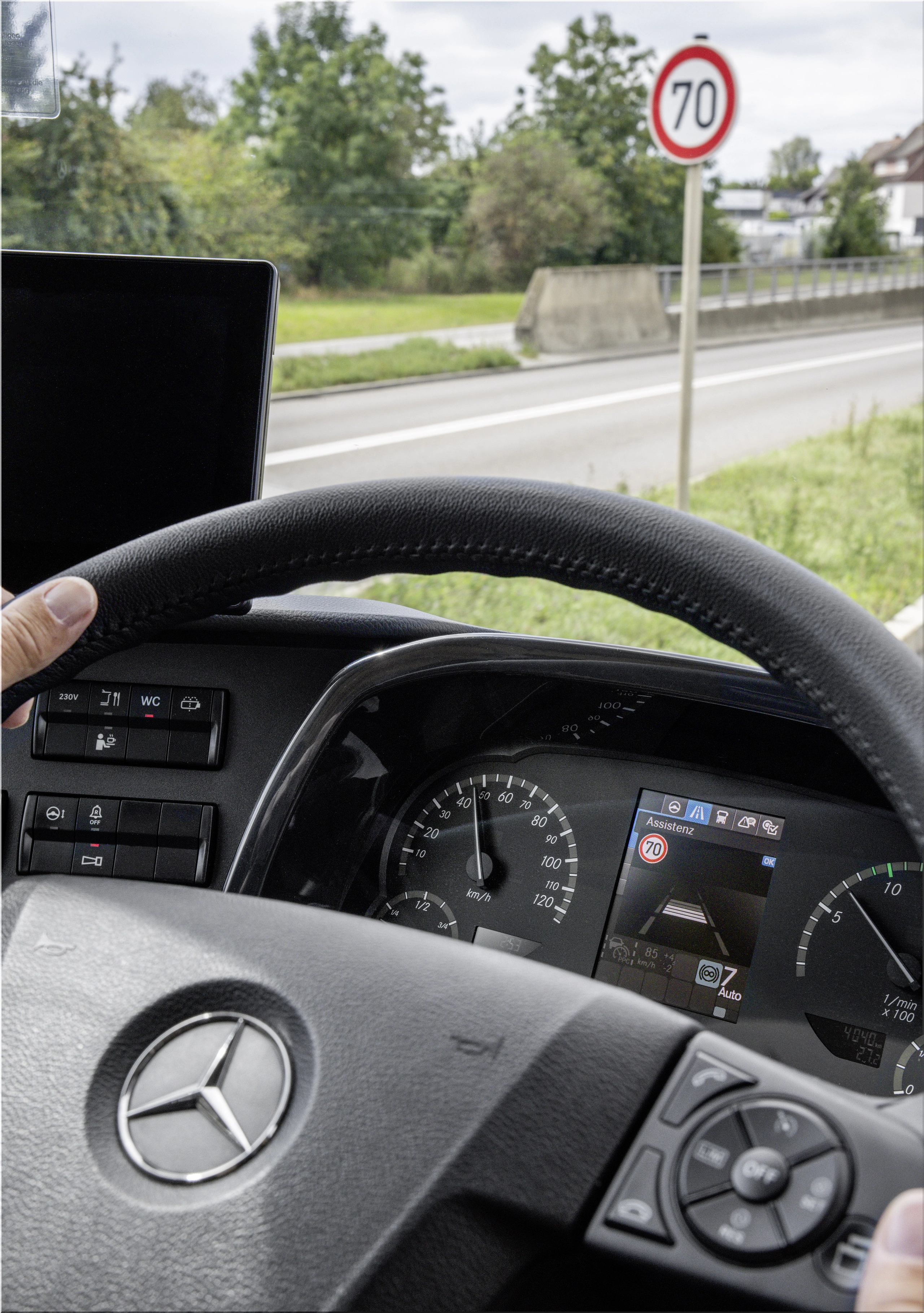
| Traffic Sign Assist | Warns for speed-limit issues | Helps driver discipline on cross-border routes |
| MirrorCam | Replaces mirrors with camera screens on the A-pillars | Improves night view, cuts dirt build-up, and trims frontal area |
Consequently, the Tourismo now sells as a lower-risk asset as much as a comfortable long-distance coach. That shift fits how fleets buy in 2026. They want fewer incidents, less downtime, better driver retention, and hardware that helps newer drivers place a large vehicle with more confidence.
Comfort still closes the deal
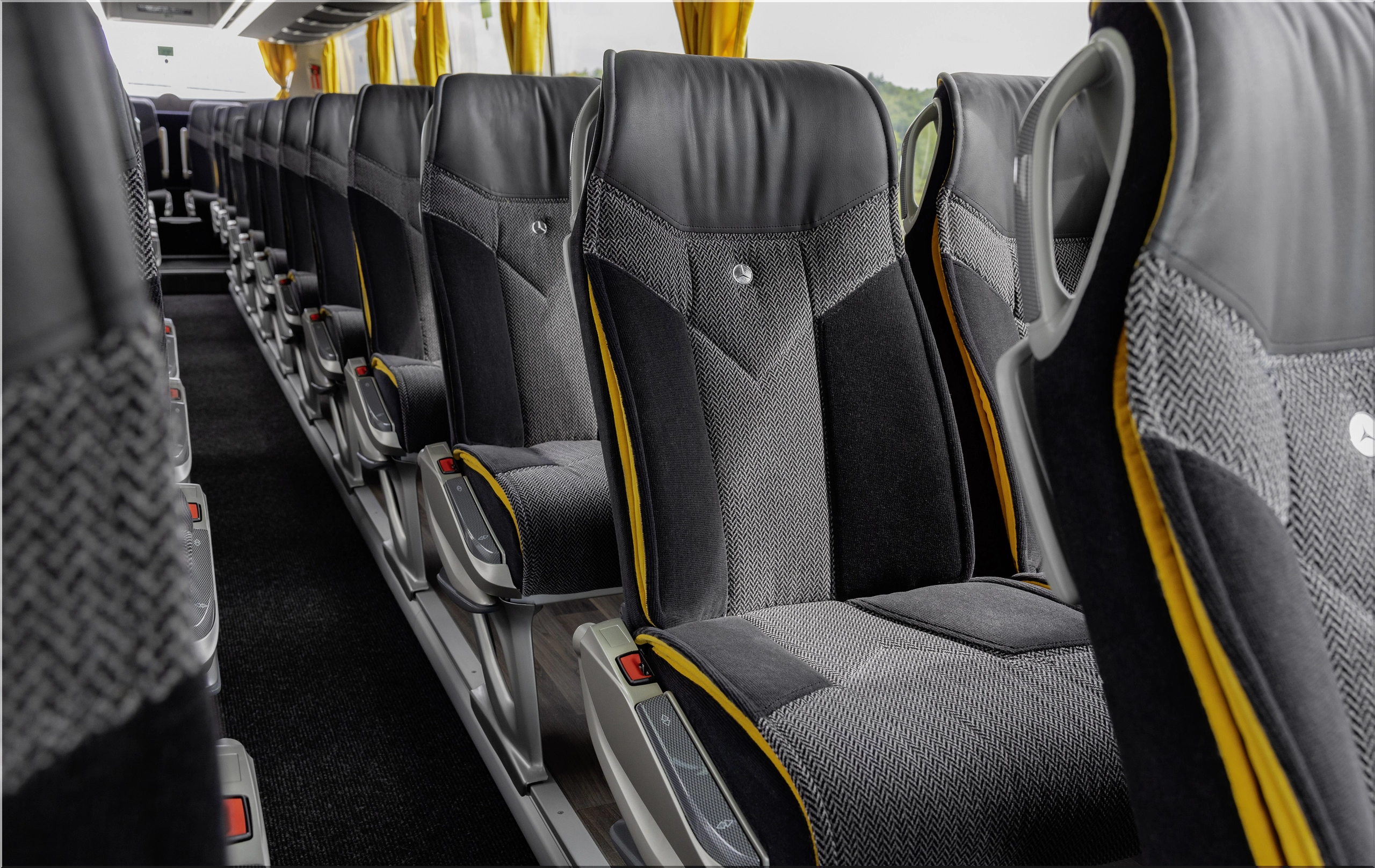
Safety tech gets the headlines, but the coach still has to work for passengers. Daimler backs the Tourismo with easy boarding, a standard kneeling function, double glazing, air conditioning across the range, and luggage volume that stretches from 9.9 m³ to 12.1 m³, plus extra storage up to 1.6 m³.
That mix suits the coach's mission. Long-distance groups want quiet running, stable ride quality, and baggage room that does not force a support vehicle into the plan. Drivers want a cabin that cuts fatigue. Operators want seat density that still feels saleable in brochures.
What now for fleet buyers?
The Mercedes-Benz Tourismo has already proved its point in the market. The next step for a buyer comes down to route math.
Pro-Tips for operators:
- Choose the 12.3 m Tourismo when depot access, route simplicity, and lower weight sit at the top of the brief.
- Step into the M/2 when you need extra baggage room without going to a third axle.
- Pick the M/3 or L when passenger count and heavy-duty touring drive the contract.
- Spec MirrorCam, ABA 6 Plus, and Sideguard Assist 2 early. Those systems shape safety, insurance exposure, and driver confidence every day.
- Treat PPC, the aero package, and the lower-speed body drop as profit hardware, not option-sheet fluff.
The 40,000th coach tells a blunt story. The Mercedes-Benz Tourismo still works because Daimler Buses kept pushing the parts operators actually pay for: efficiency, safety, flexibility, and daily usability. In the coach business, that formula keeps the wheels turning.
- Add new comment
- 230 views