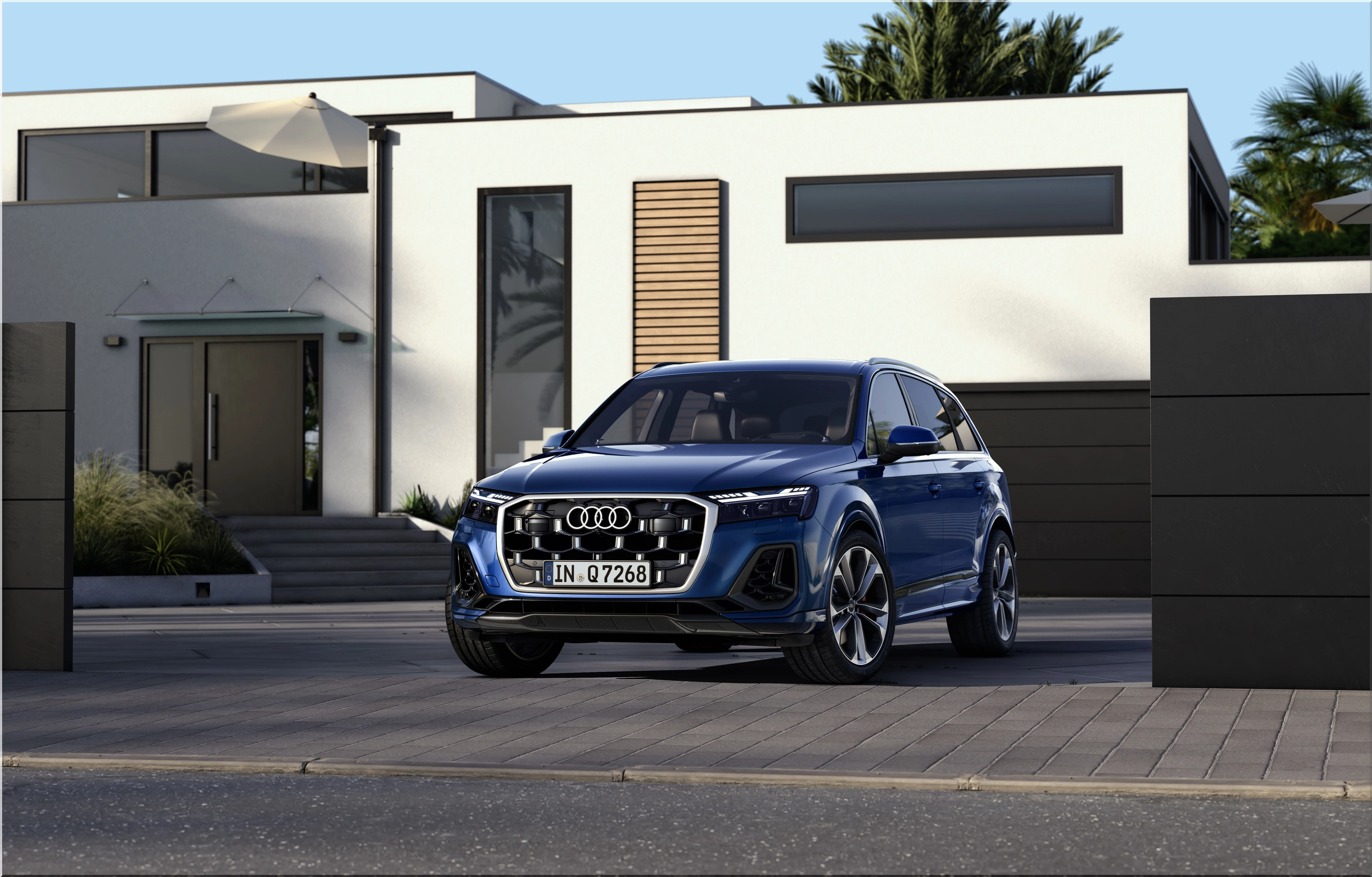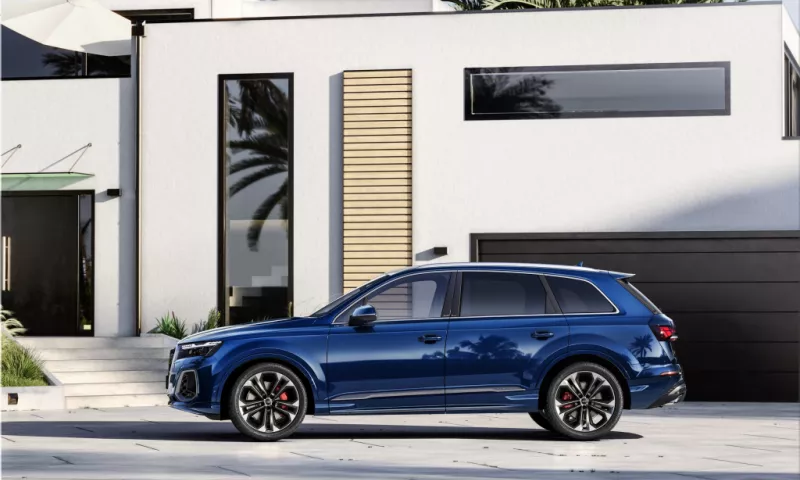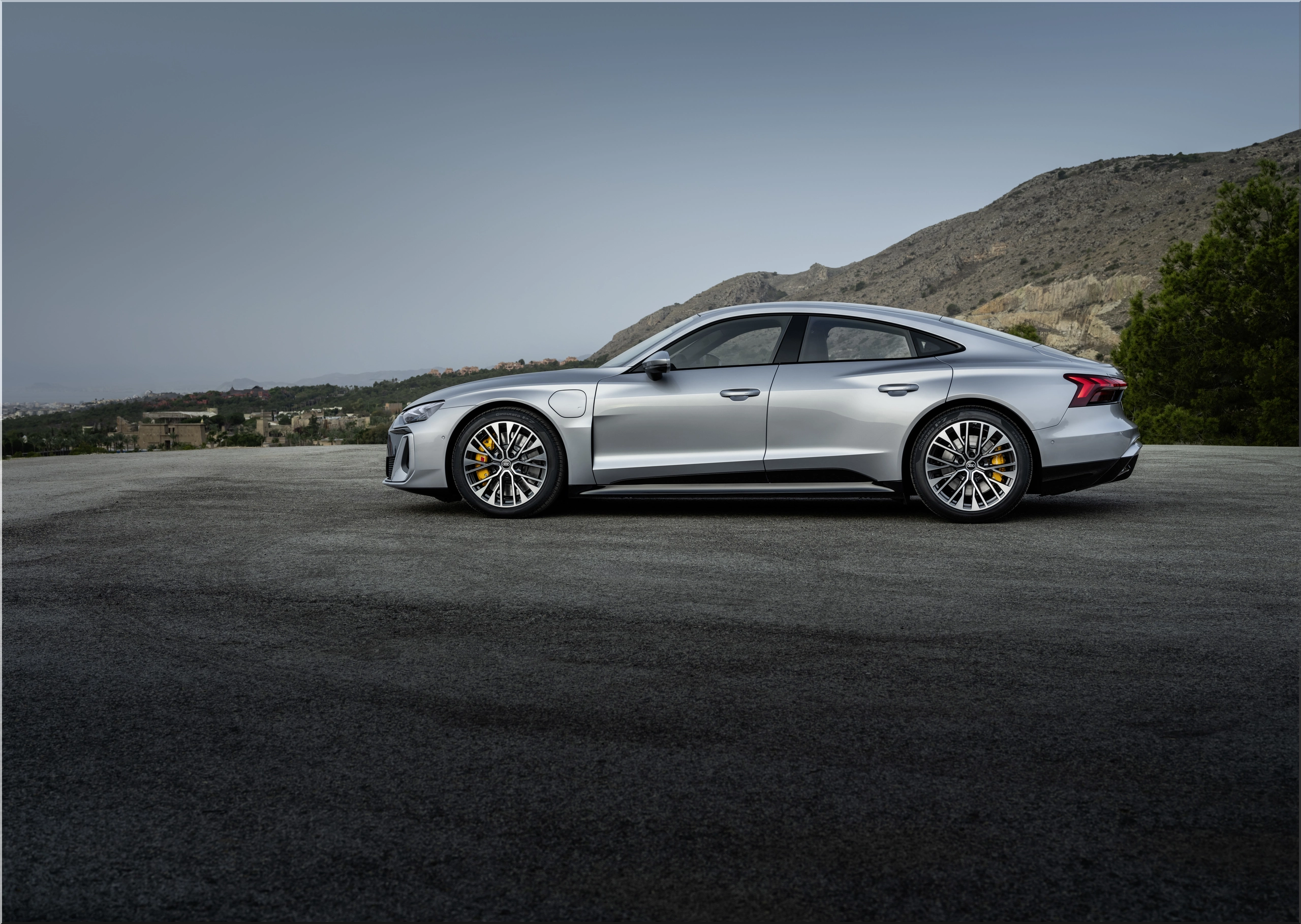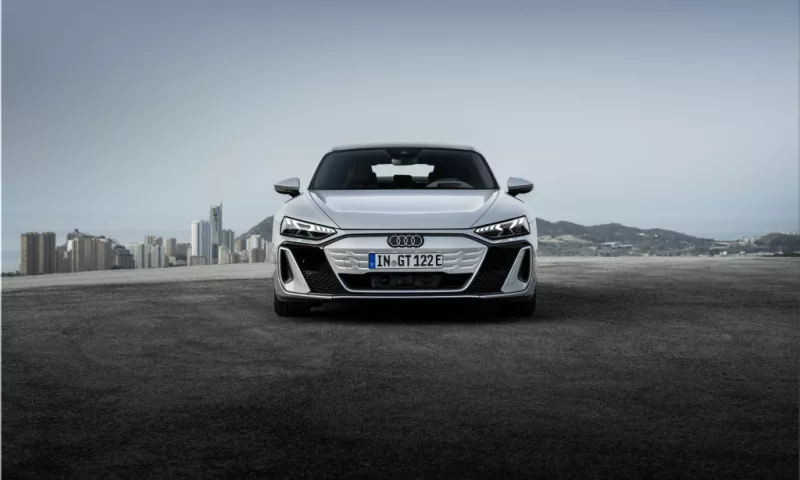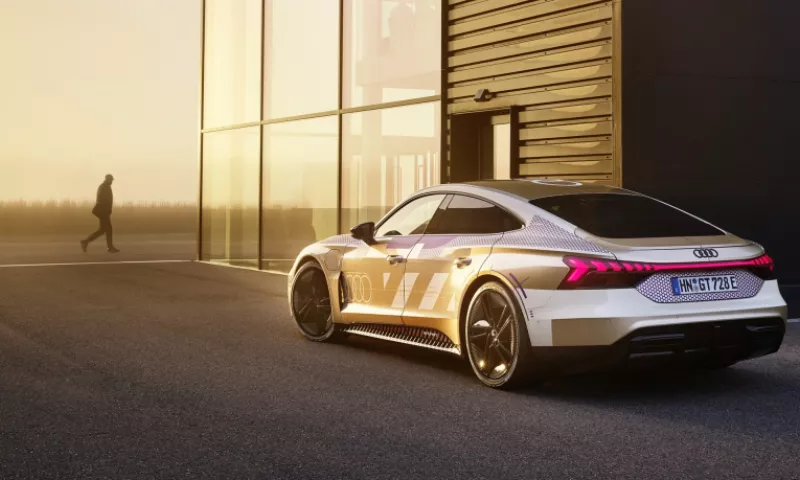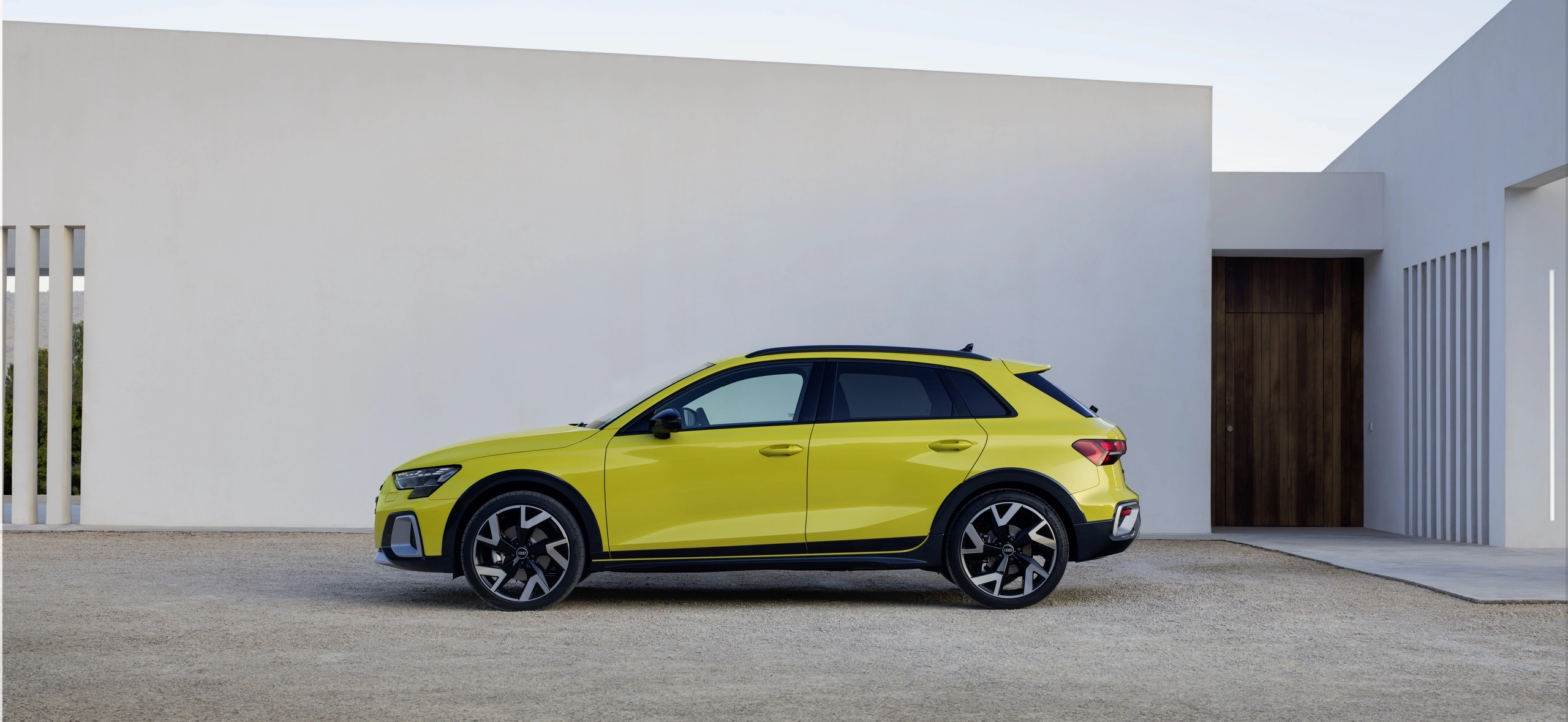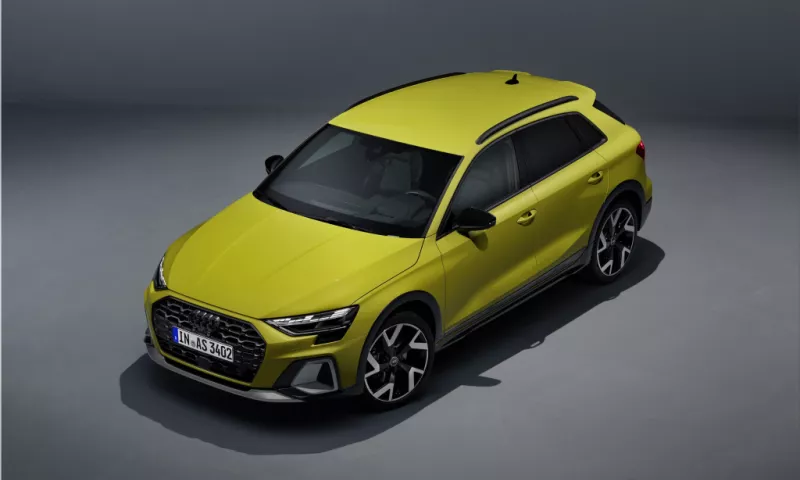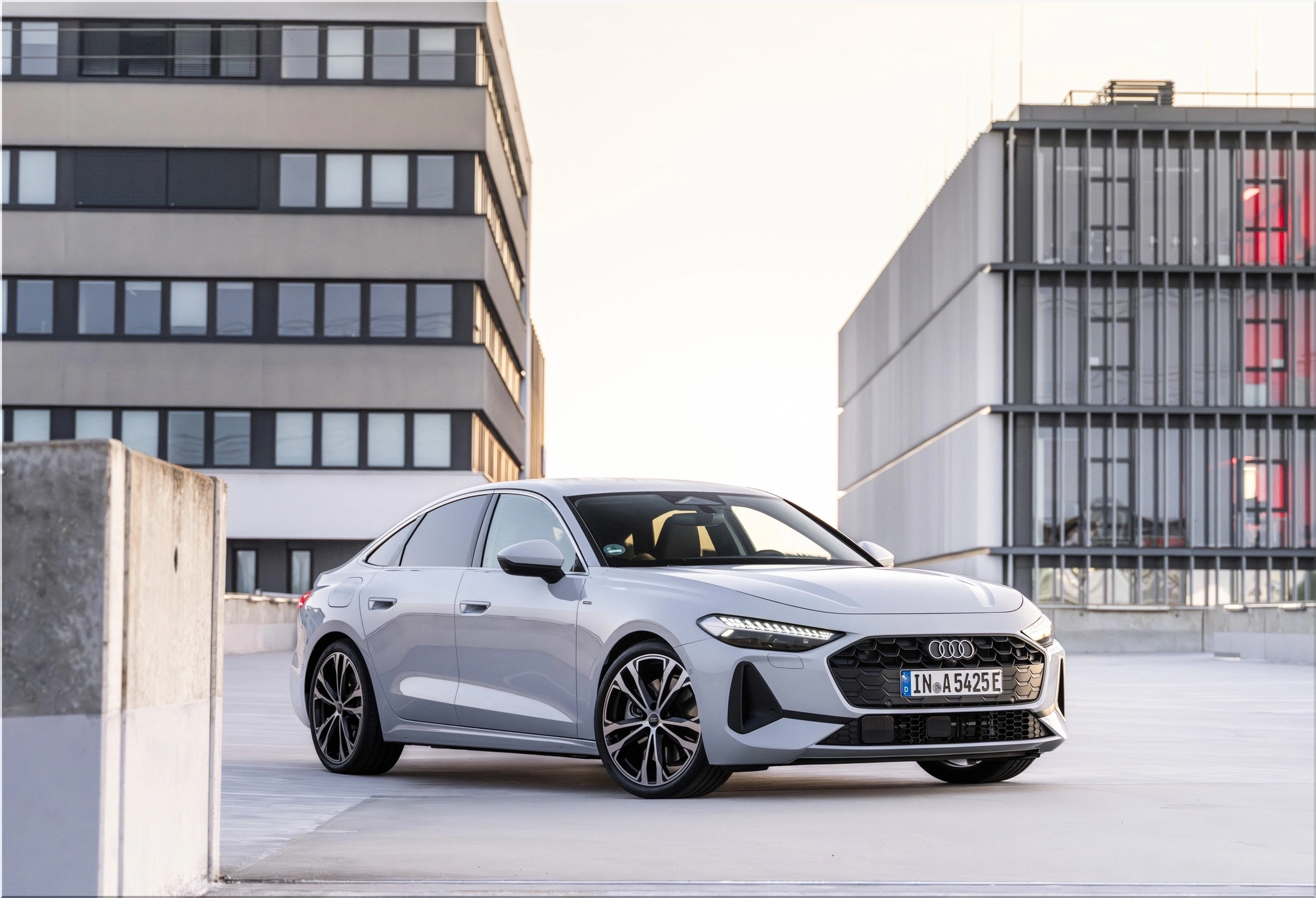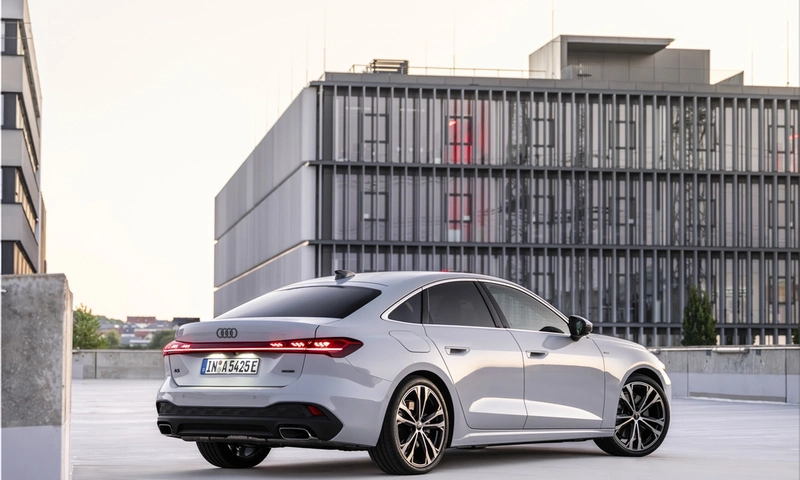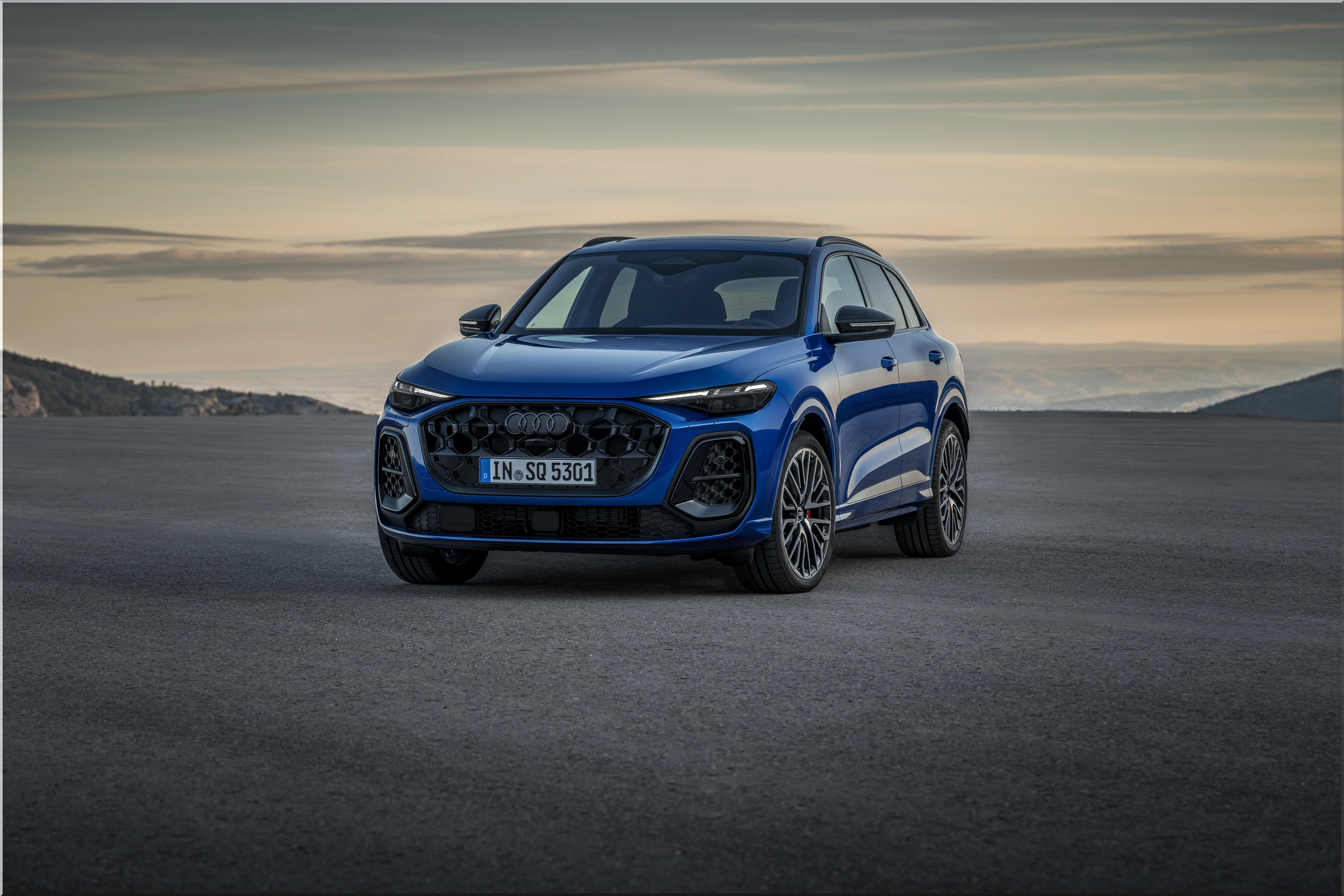
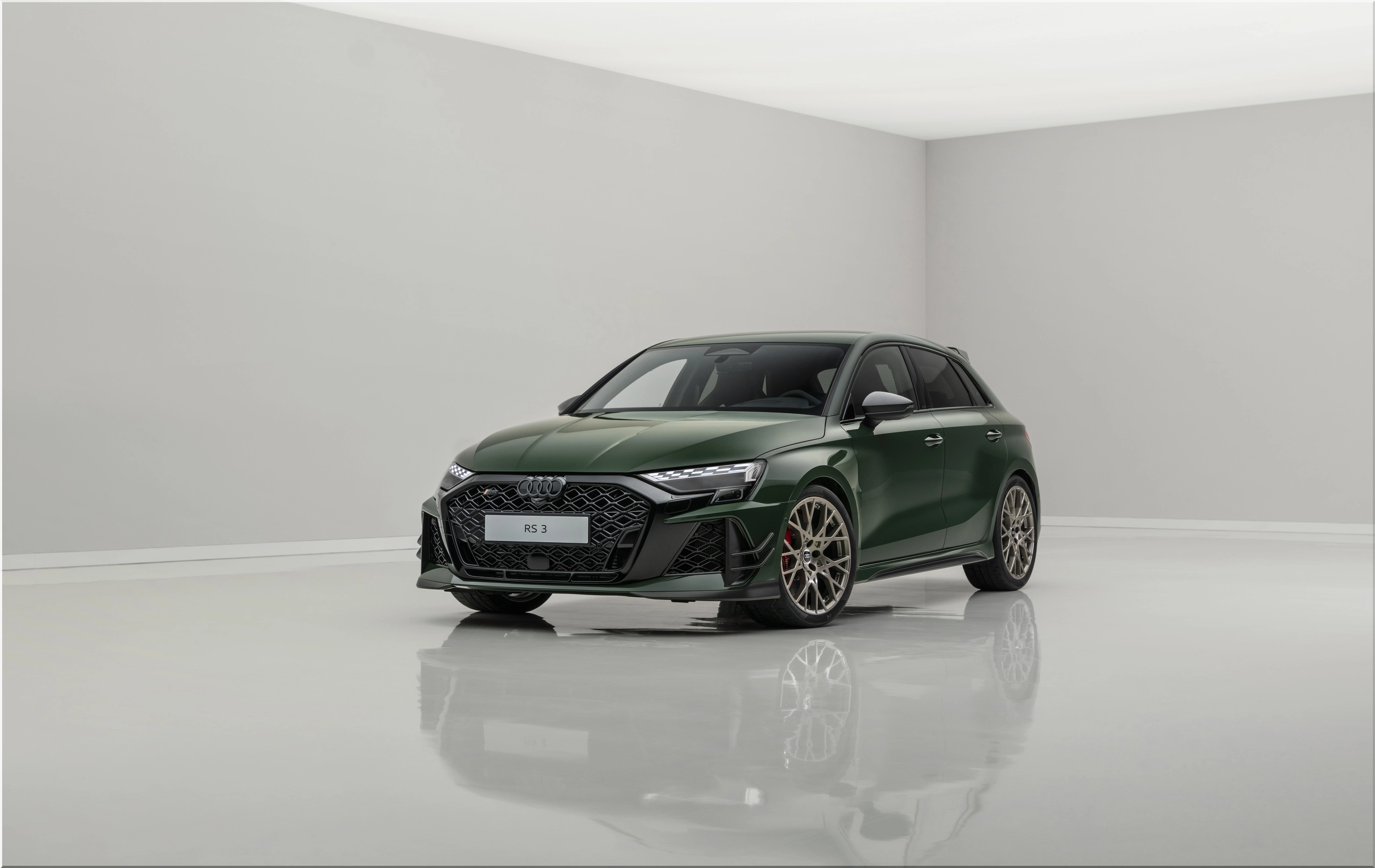
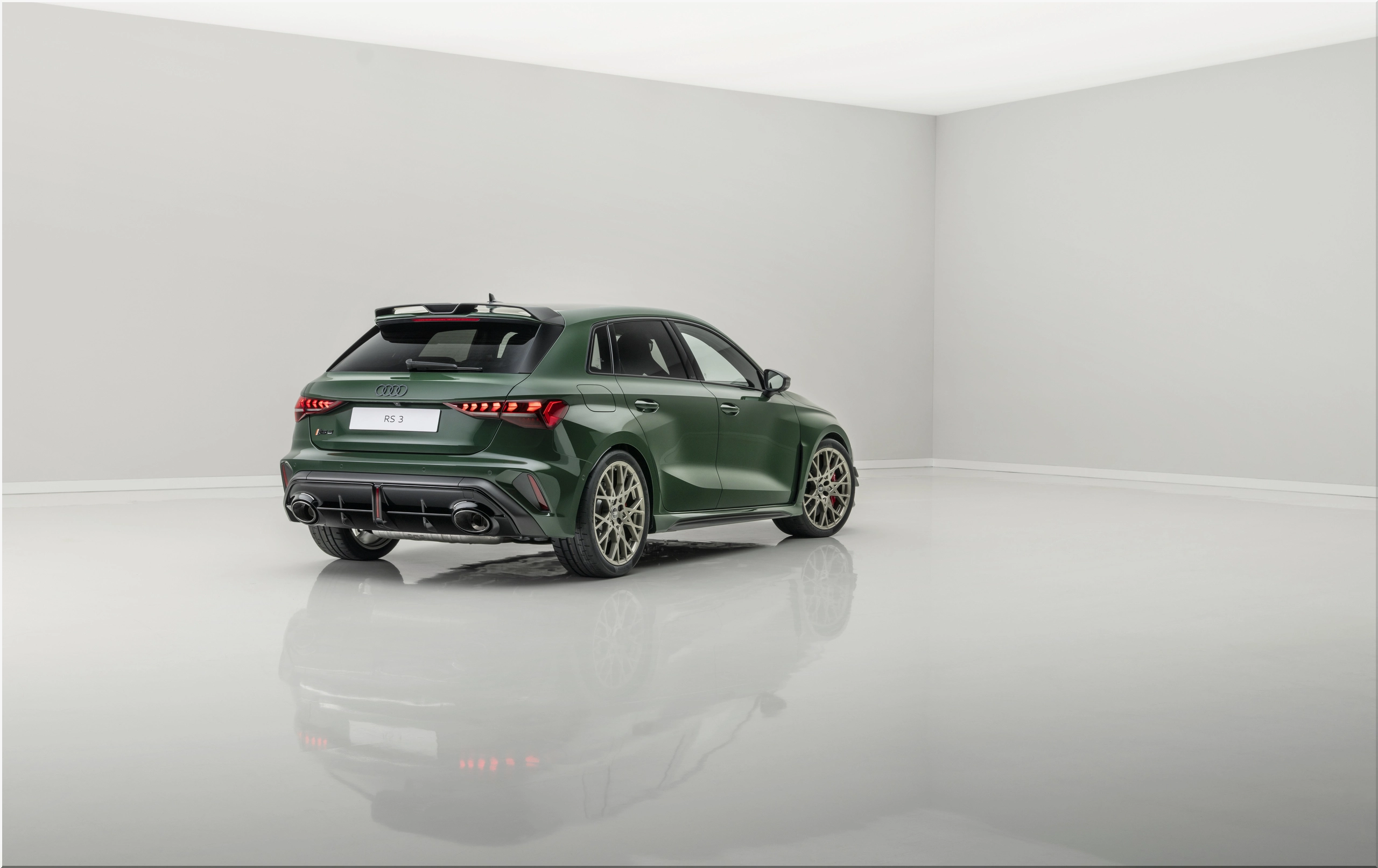
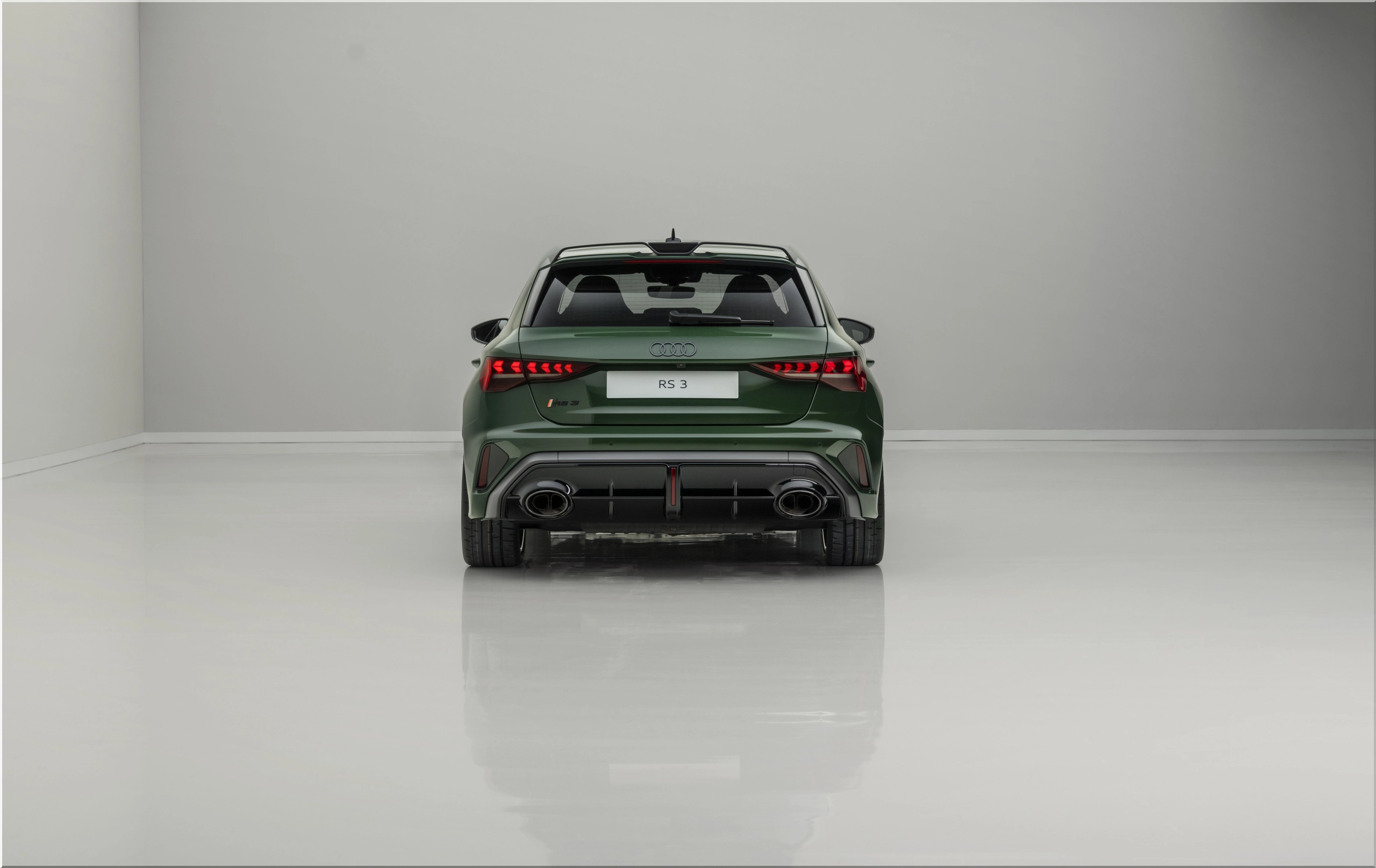
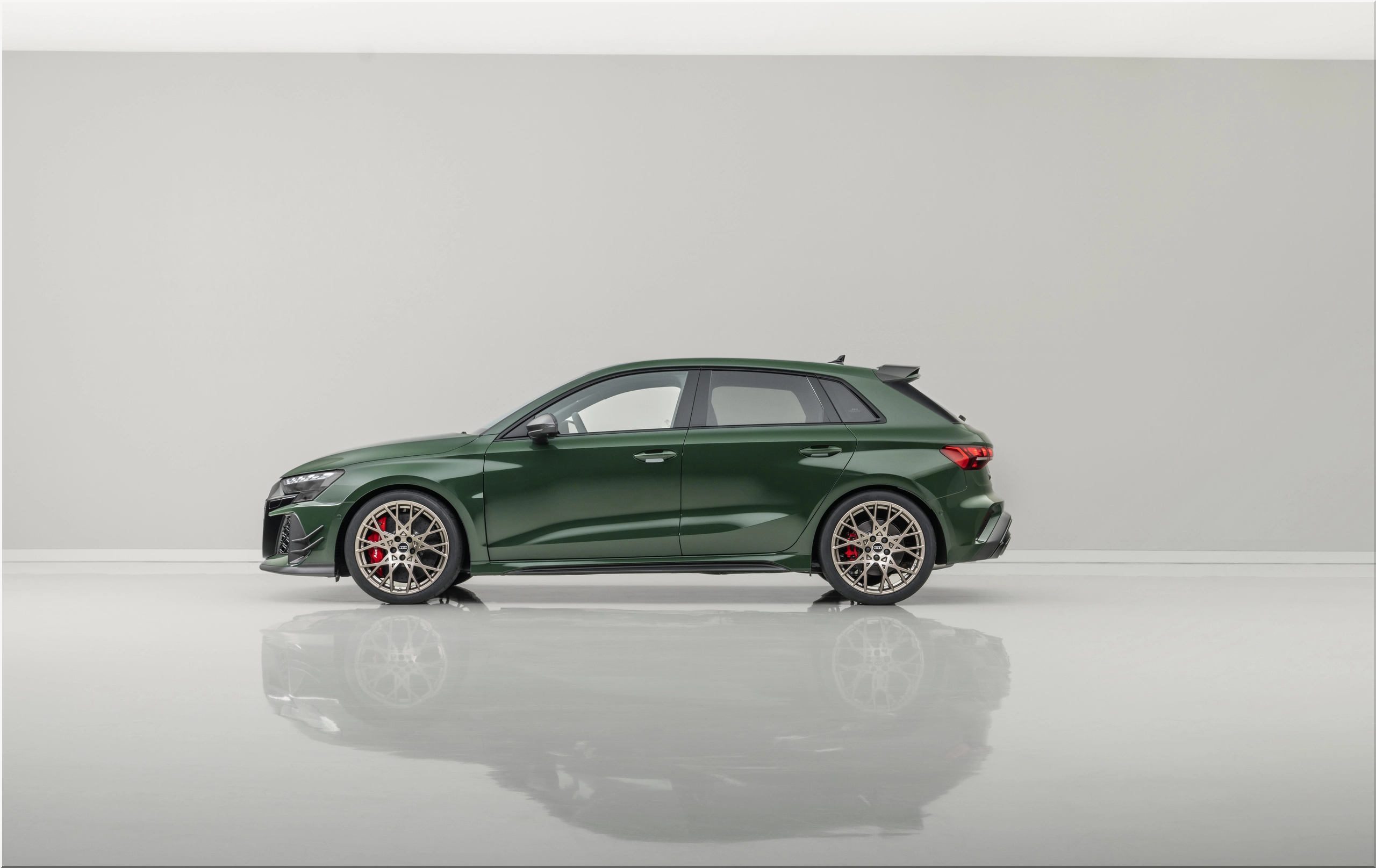
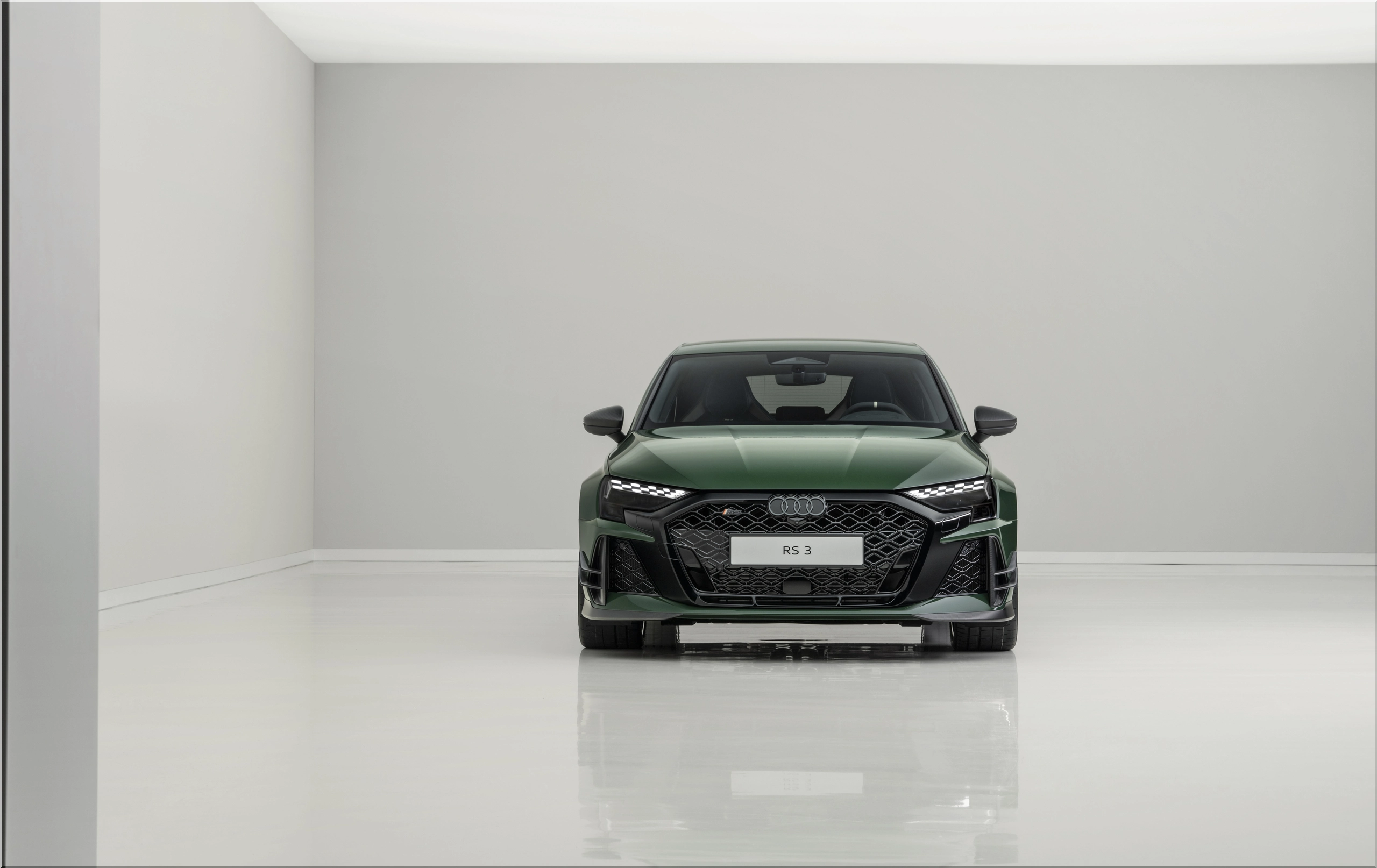
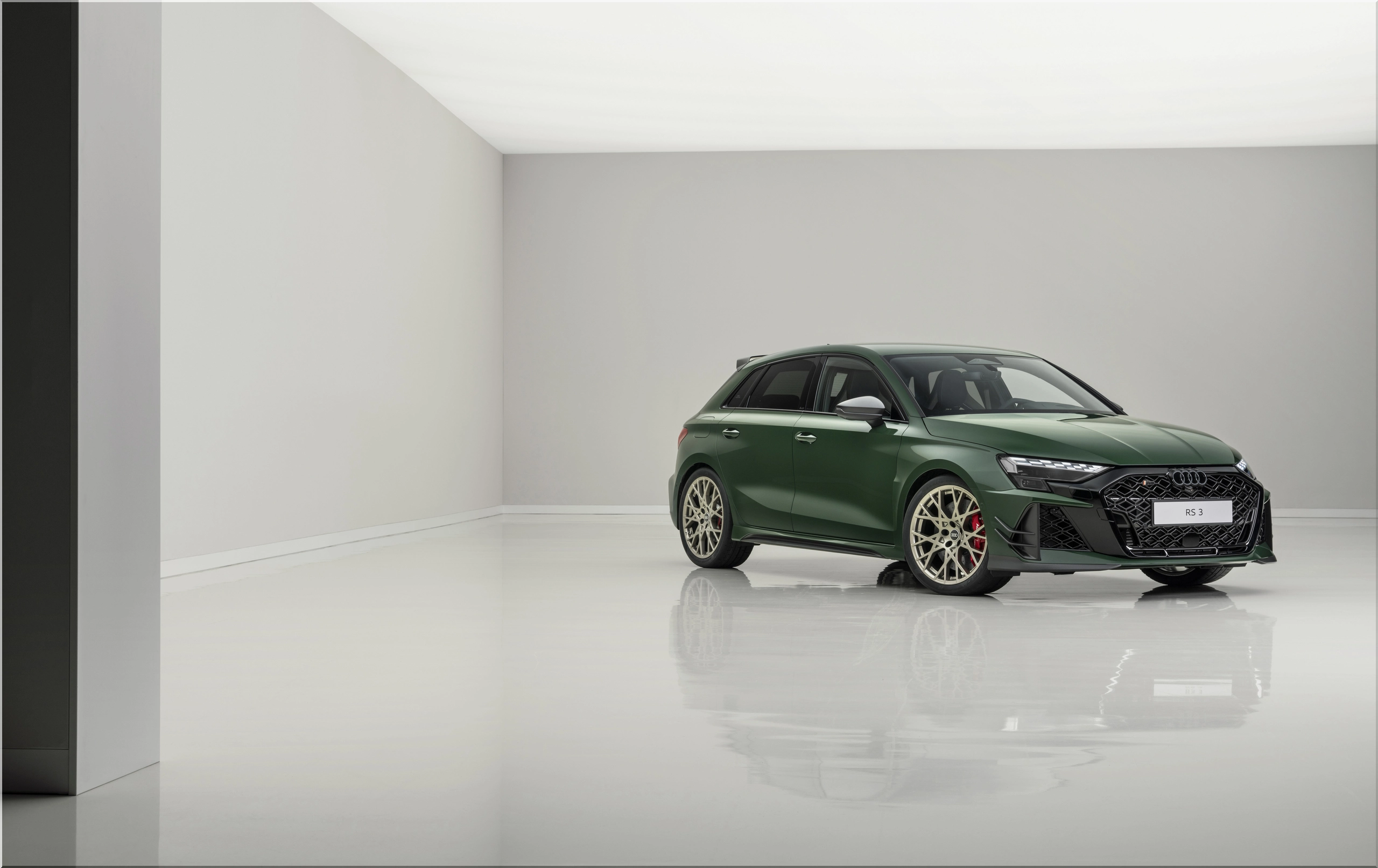
Audi built the Audi RS 3 Sportback competition limited to celebrate 50 years of the brand's five-cylinder engine, and the company did not treat this as a decal package. It capped production at 750 units, gave the car a dedicated adjustable coilover suspension, added a stiffer rear stabilizer, fitted standard ceramic brakes, and pushed top speed to 290 km/h, or about 180 mph.
Image
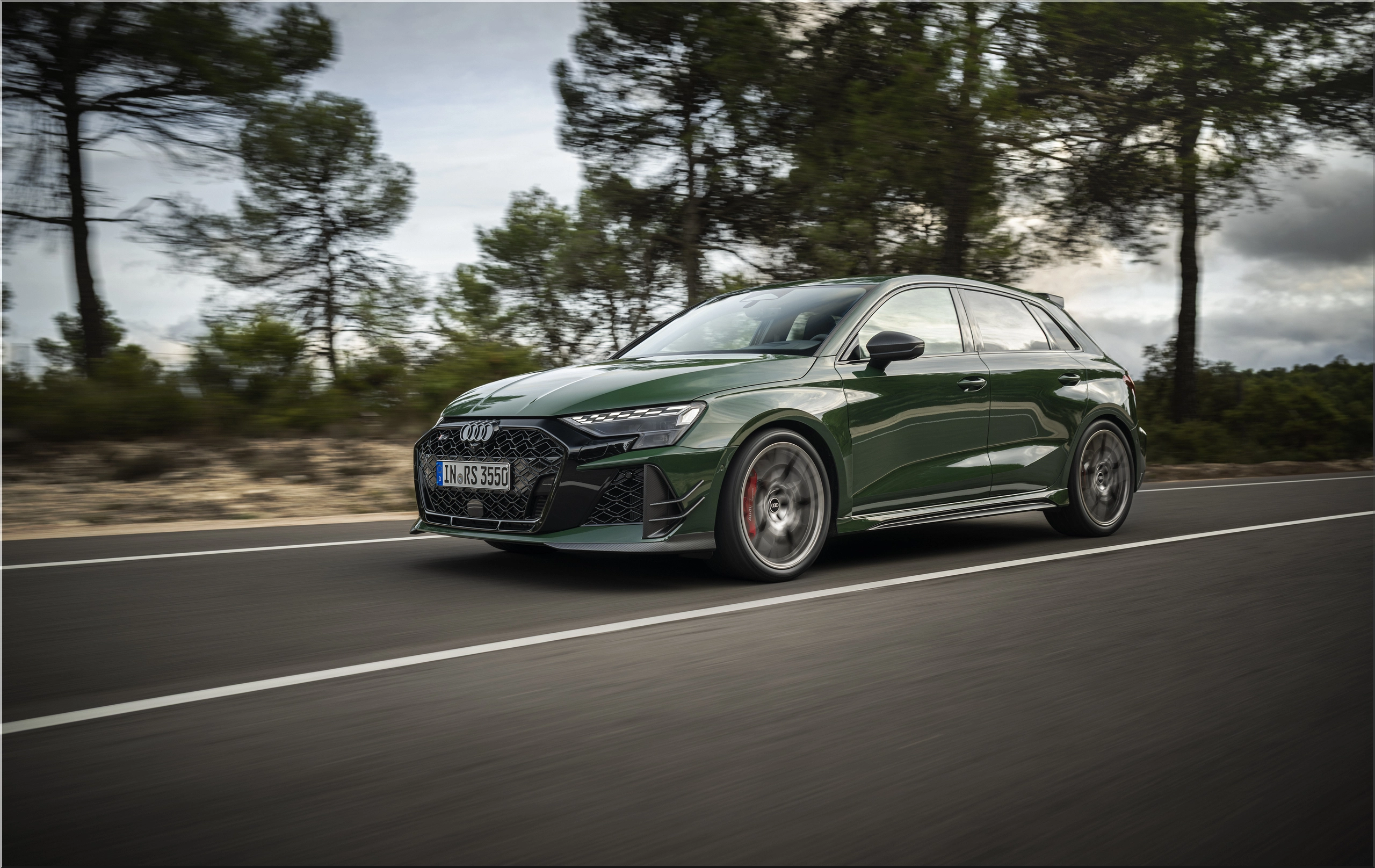
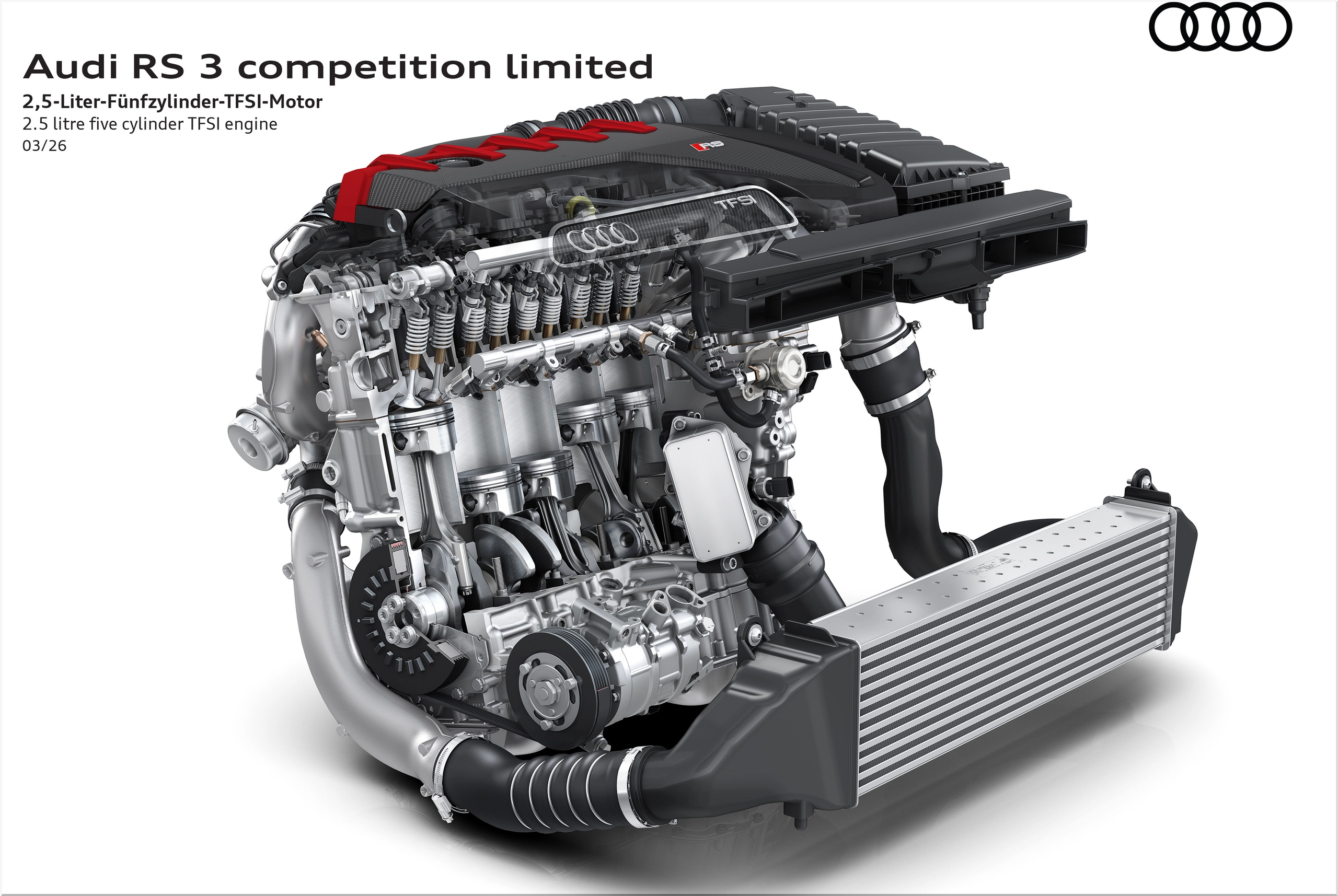
Looking at the data, the hardware list explains why this special edition matters. The 2.5-liter five-cylinder turbo engine still produces 294 kW, which works out to about 394 hp, and 500 Nm, or roughly 369 lb-ft of torque, but Audi backed that output with chassis upgrades that target repeatable grip and sharper body control instead of headline power inflation. That decision makes sense. The standard RS 3 already runs hard. This version focuses on how the car loads the outside rear tire, rotates into a corner, and keeps its dampers cool when the pace rises.
What Makes the RS 3 Competition Limited Different
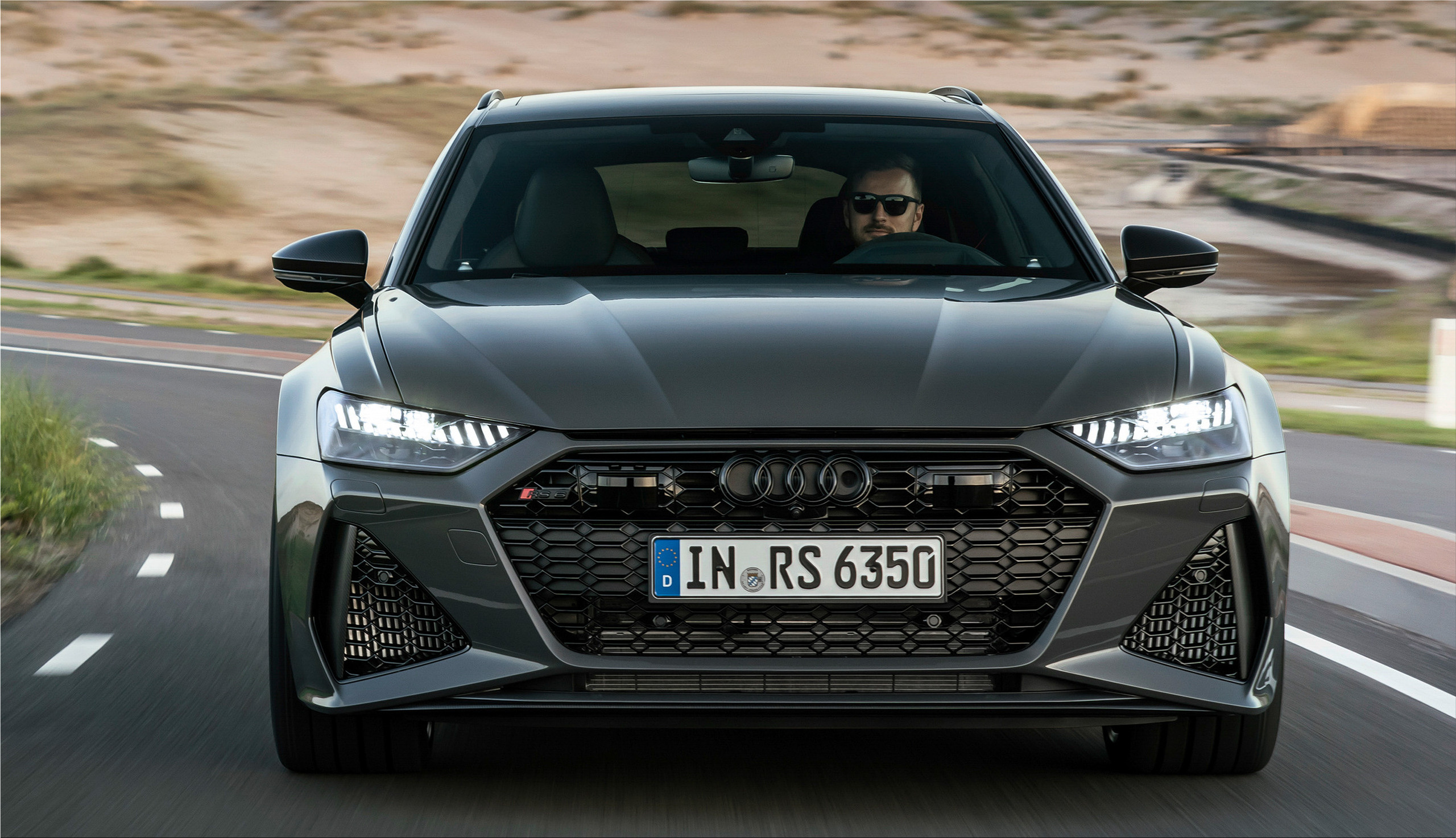
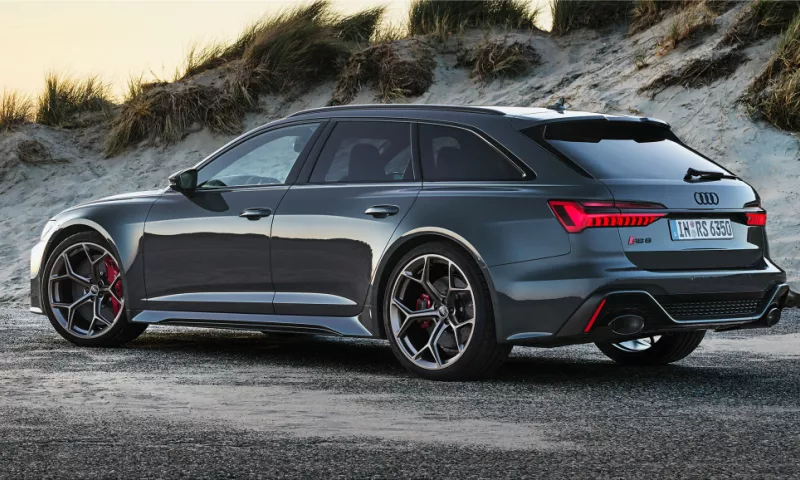
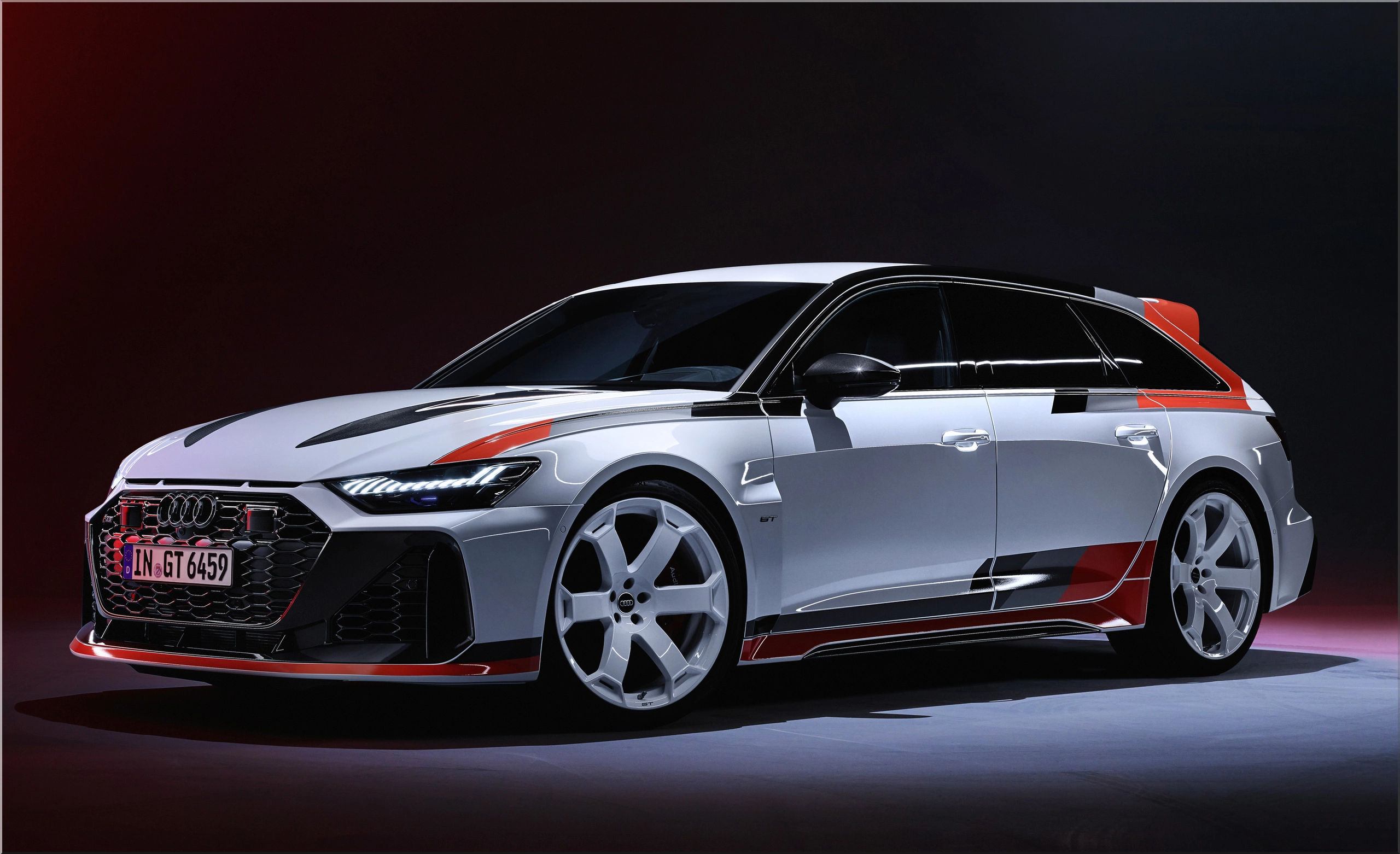
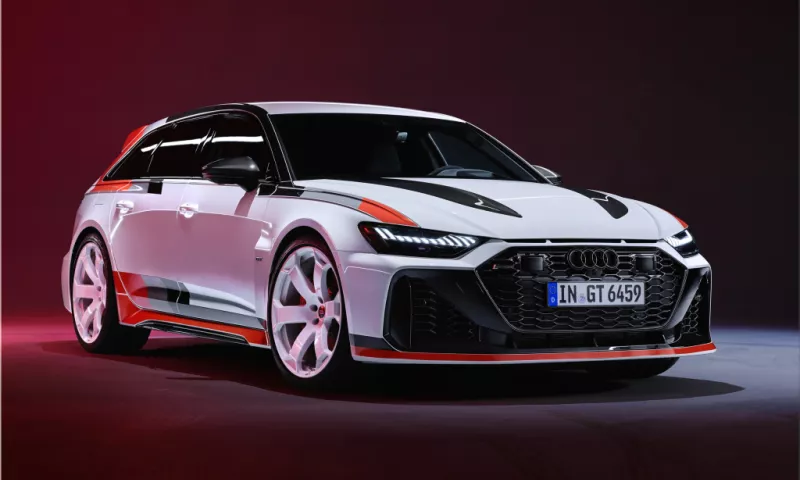
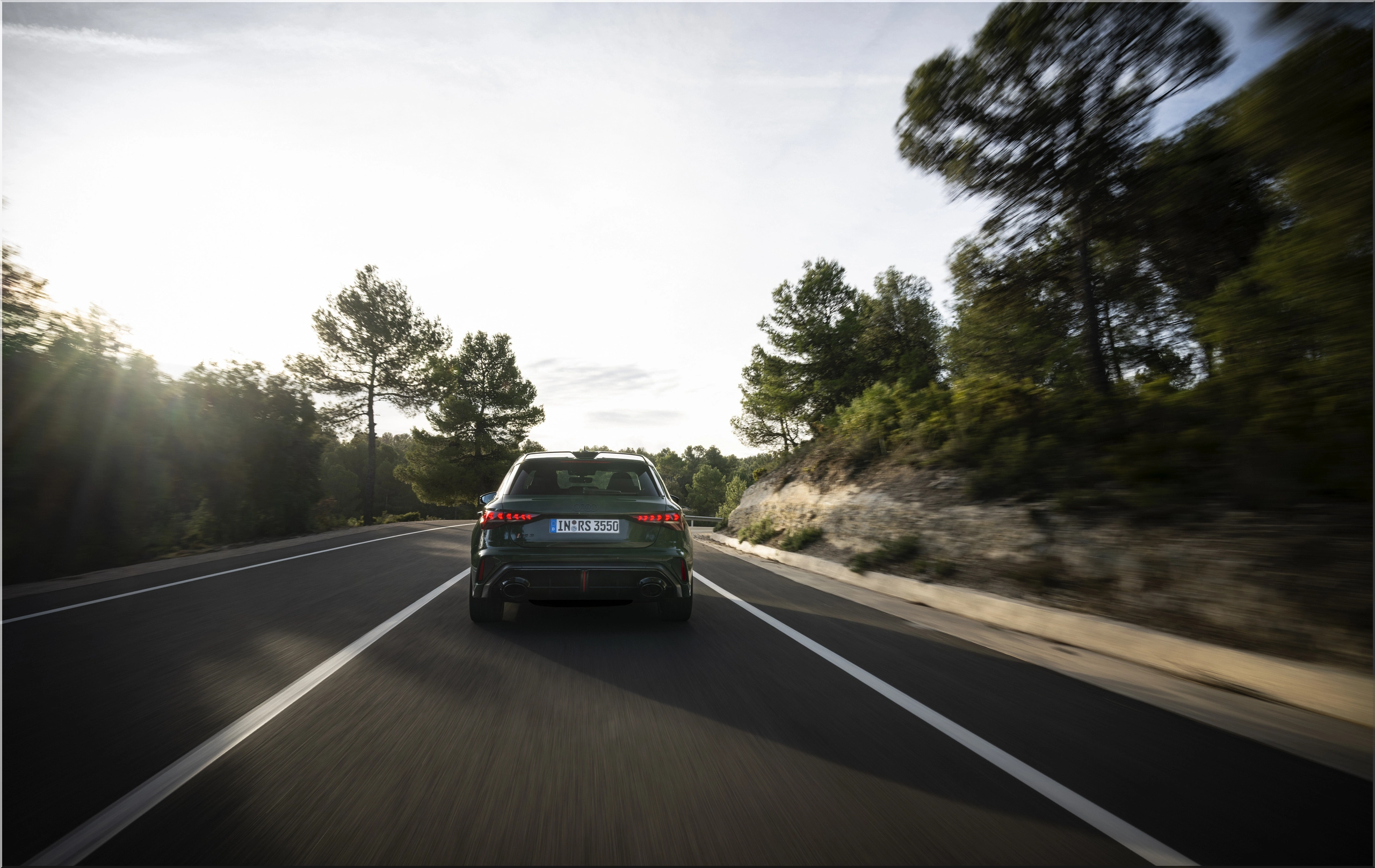
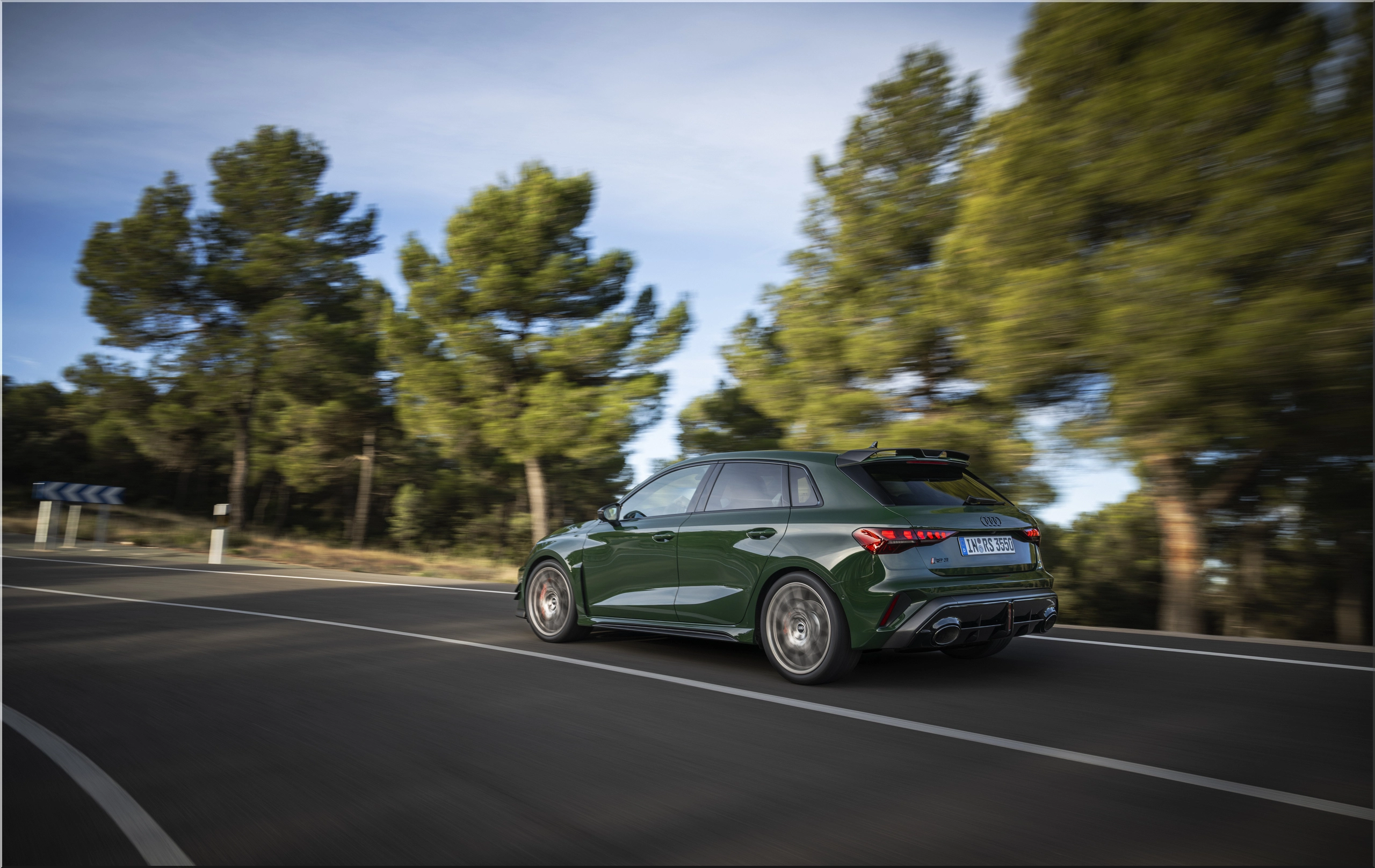
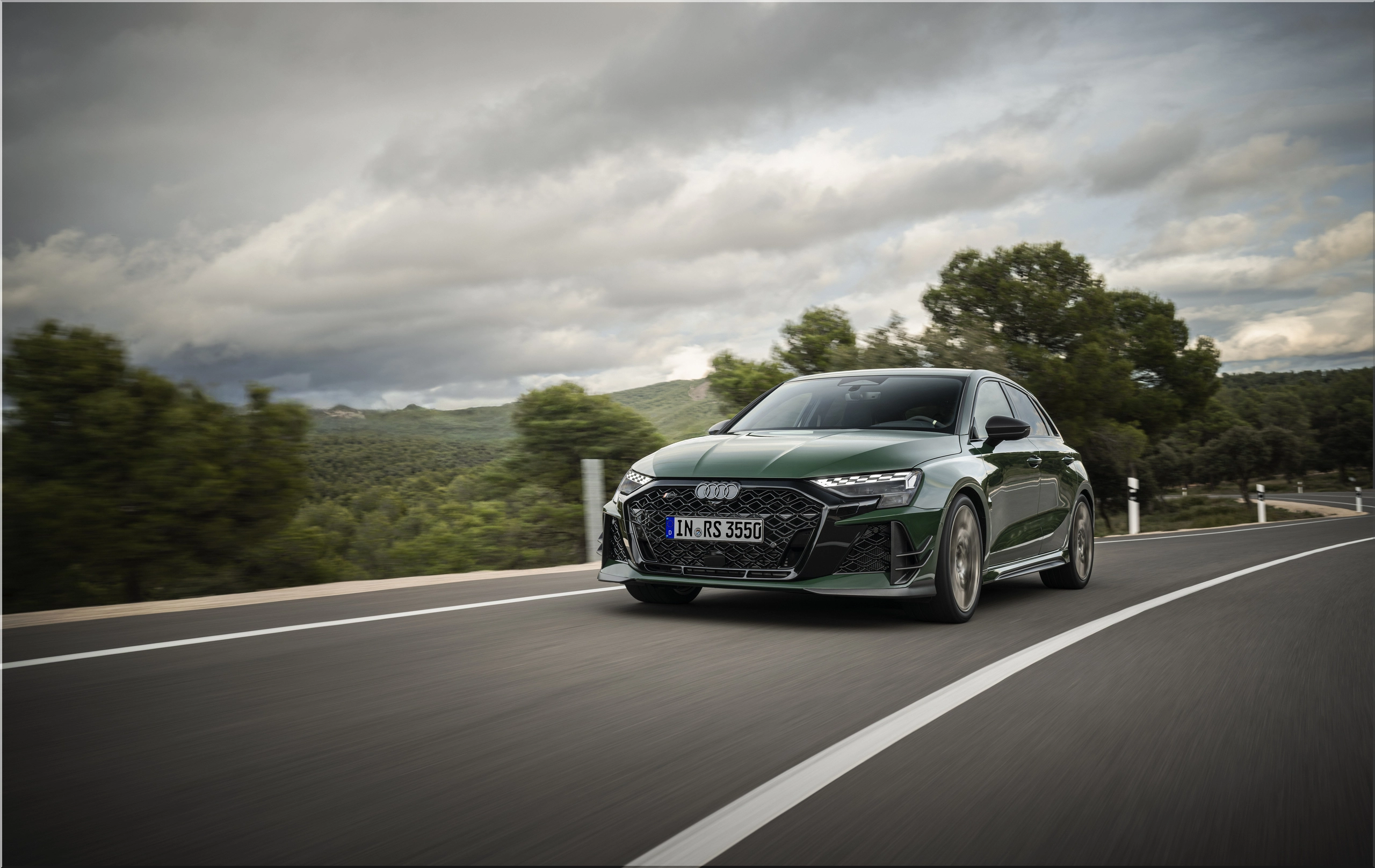
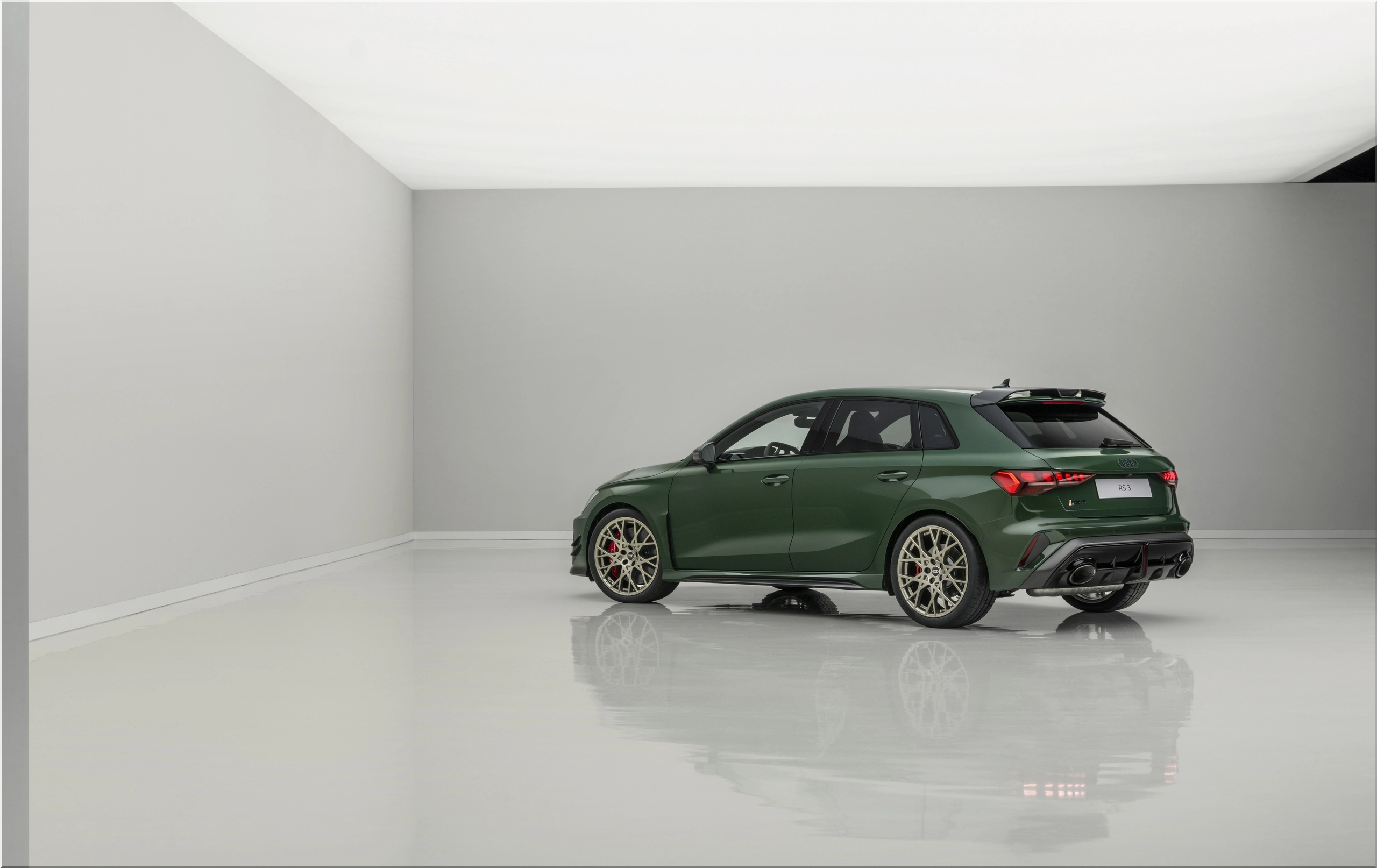
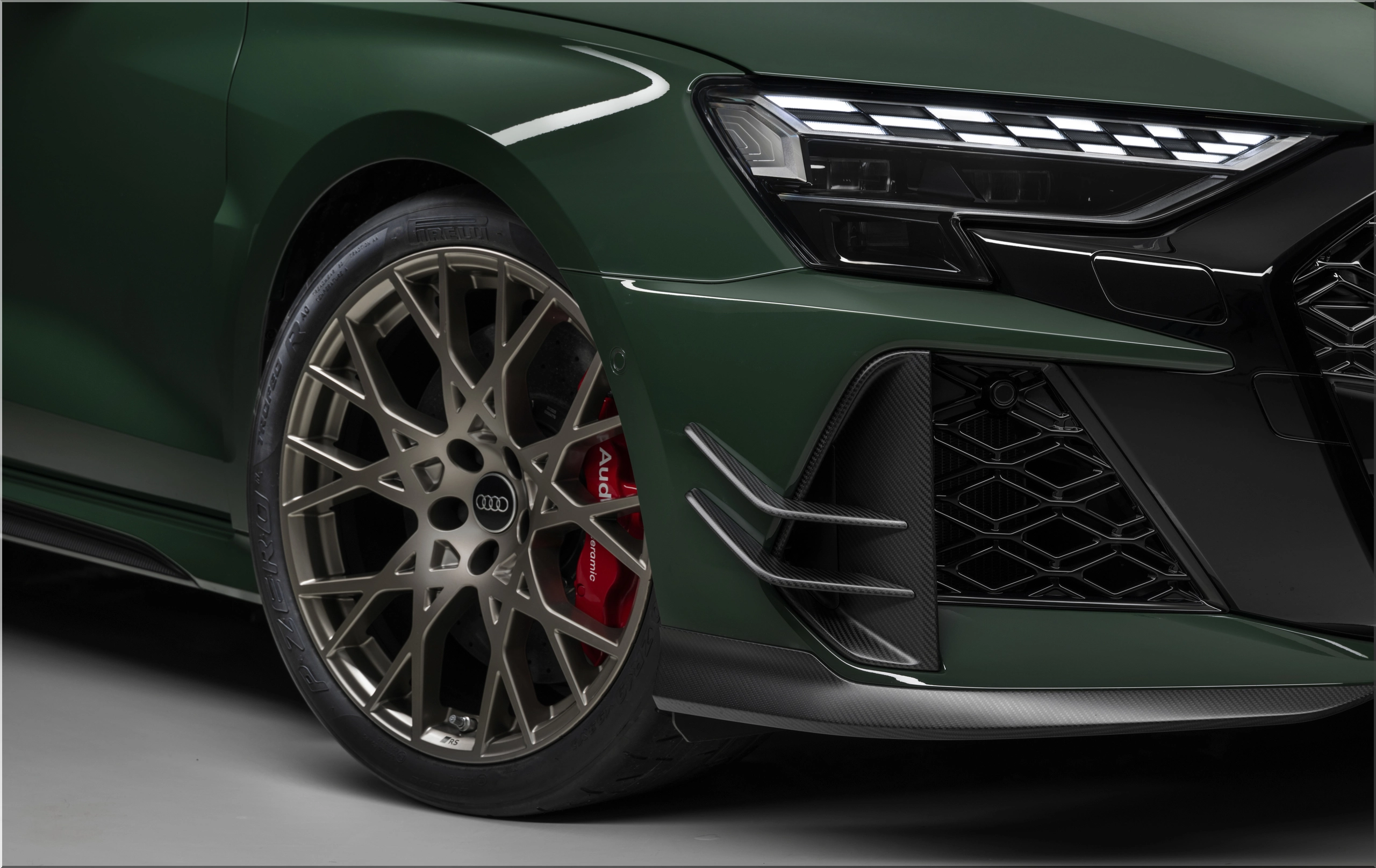
Audi gave the RS 3 Sportback competition limited a more aggressive aero package with stacked front canards, a split front lip, matte carbon mirror caps, matte carbon side skirts, a matte carbon rear spoiler, and carbon trim above the diffuser. In addition, the darkened matrix LED headlights run a 1-2-4-5-3 welcome sequence, which mirrors the five-cylinder firing order.
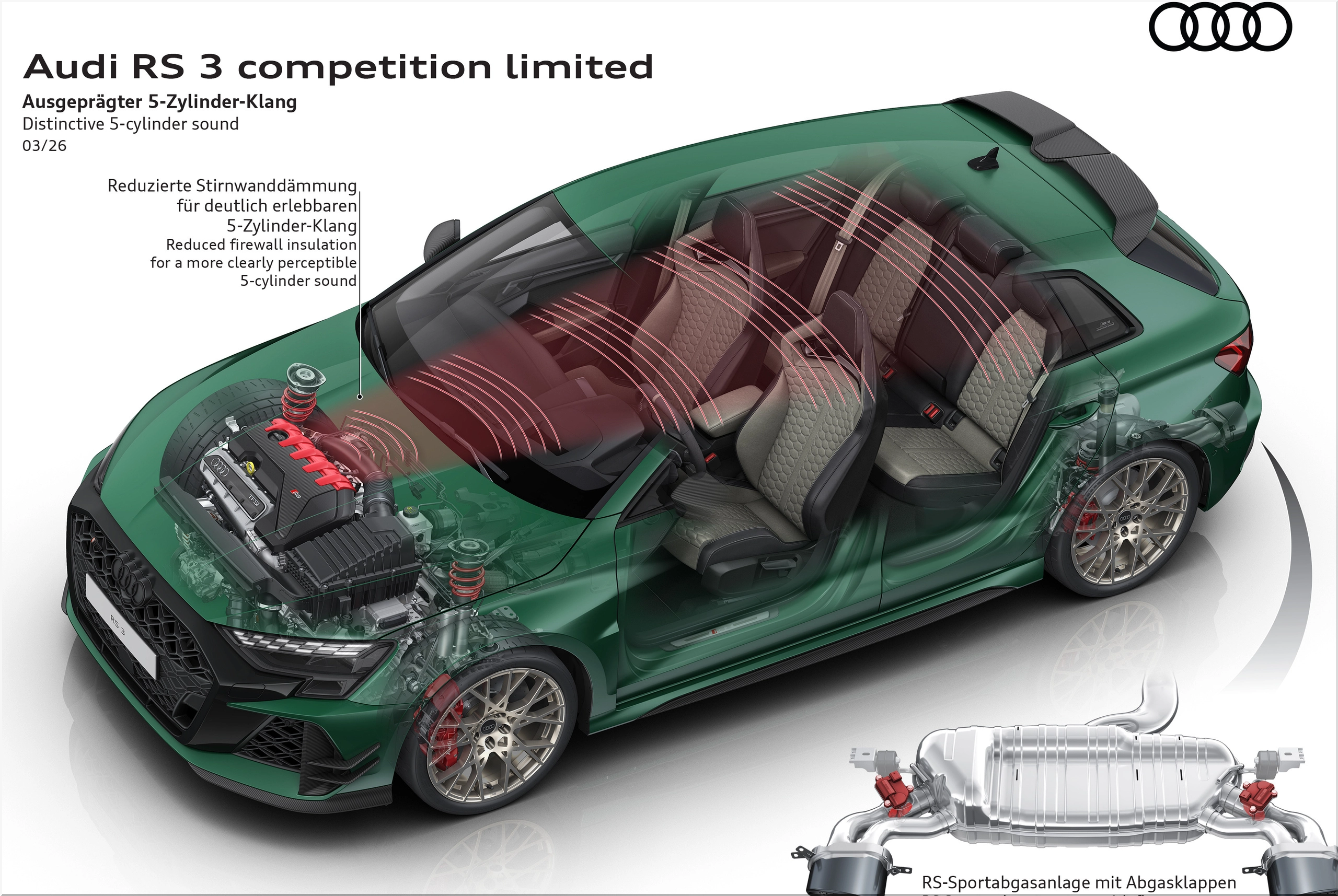
That firing order matters because it shapes the sound as much as the engine's output. Audi also reduced insulation around the firewall and programmed the RS sport exhaust to open its flaps earlier in Dynamic, RS Performance, and RS Torque Rear modes, so occupants hear more of the offbeat five-cylinder pulse inside the cabin.
Core performance data
| Specification | RS 3 Competition Limited |
|---|---|
| Engine | 2.5-liter turbocharged inline-five |
| Output | 294 kW / 394 hp |
| Torque | 500 Nm / 369 lb-ft |
| 0-100 km/h | 3.8 seconds |
| Top speed | 290 km/h / 180 mph |
| Production run | 750 units |
Chassis Engineering That Targets Real Grip
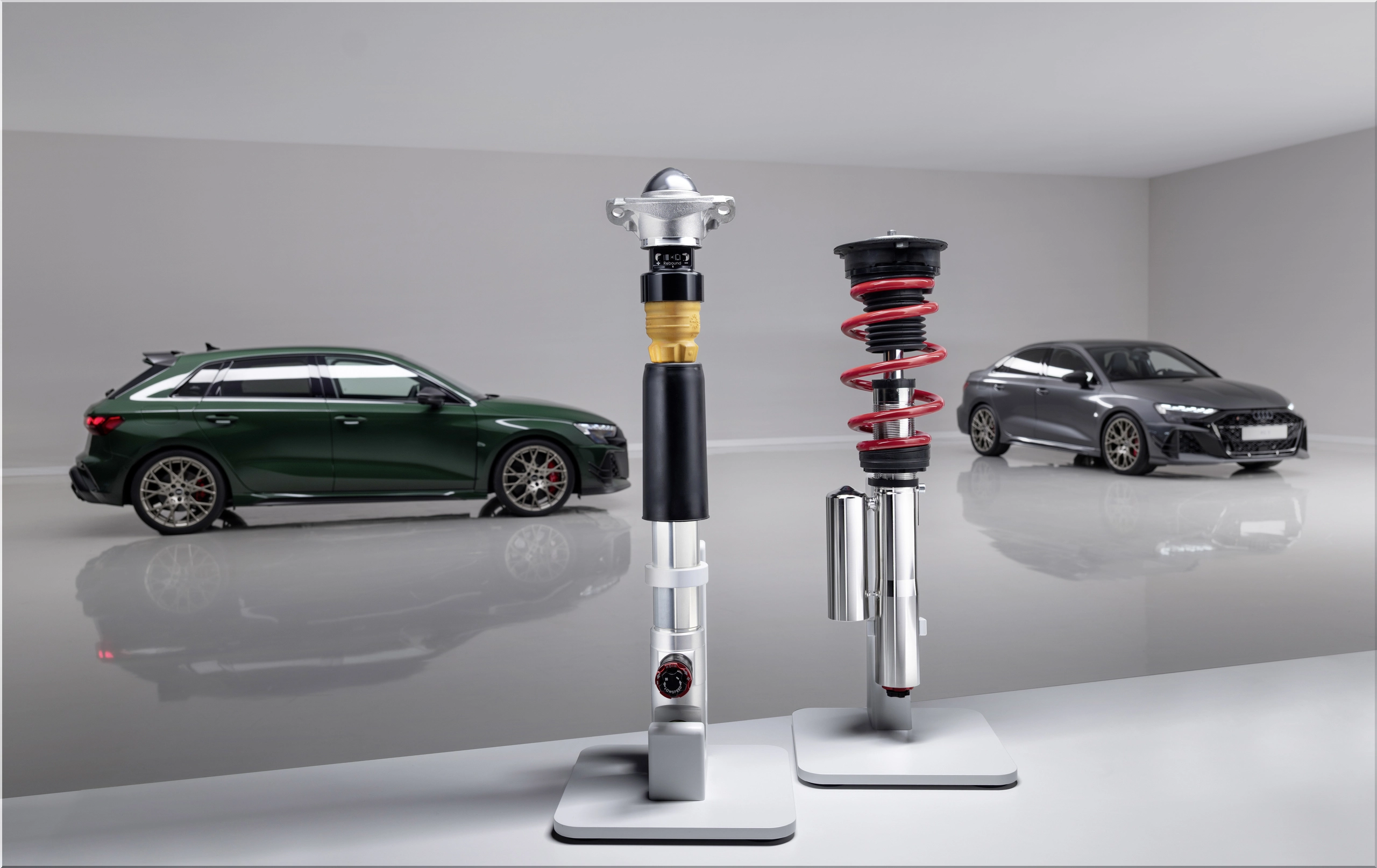
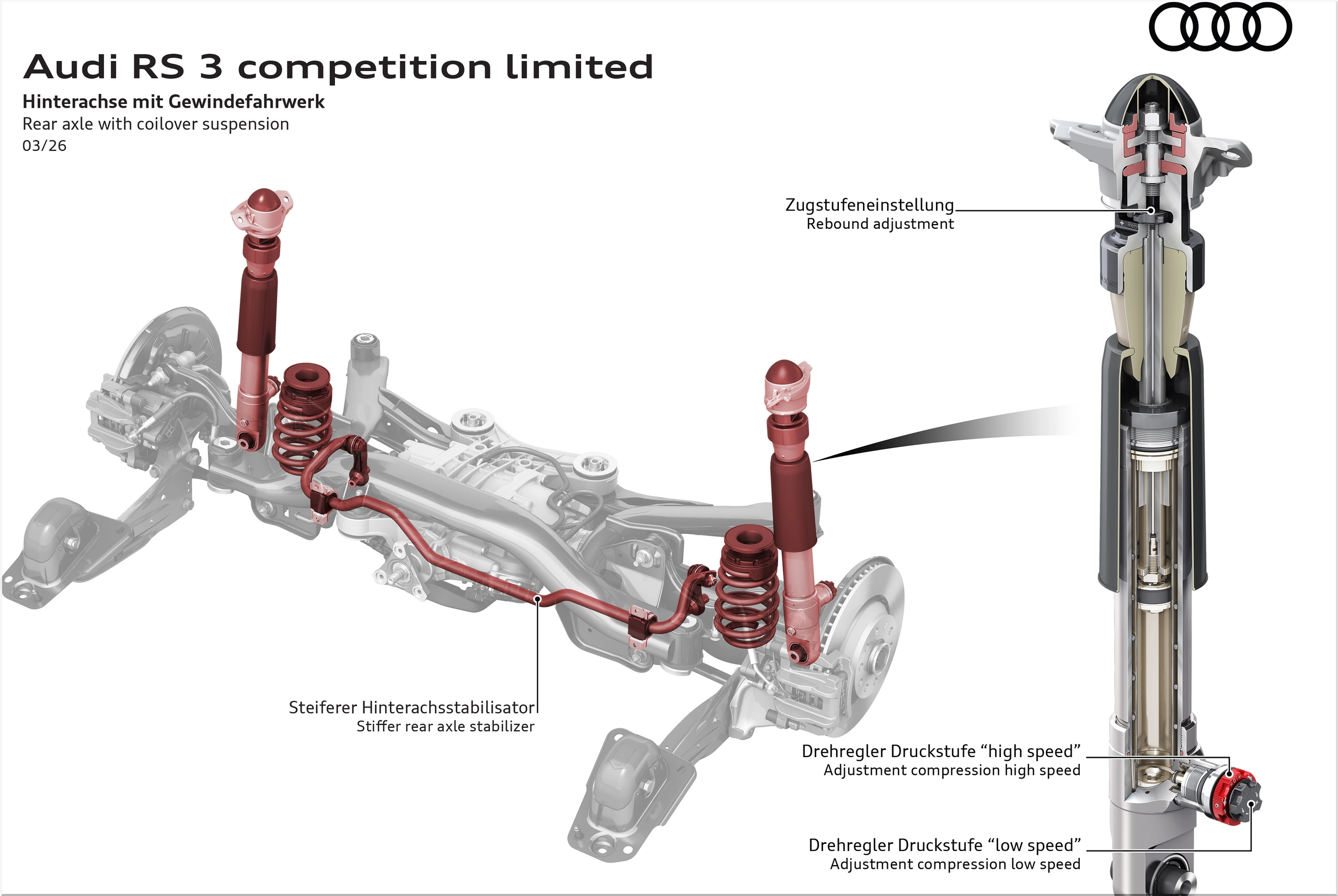
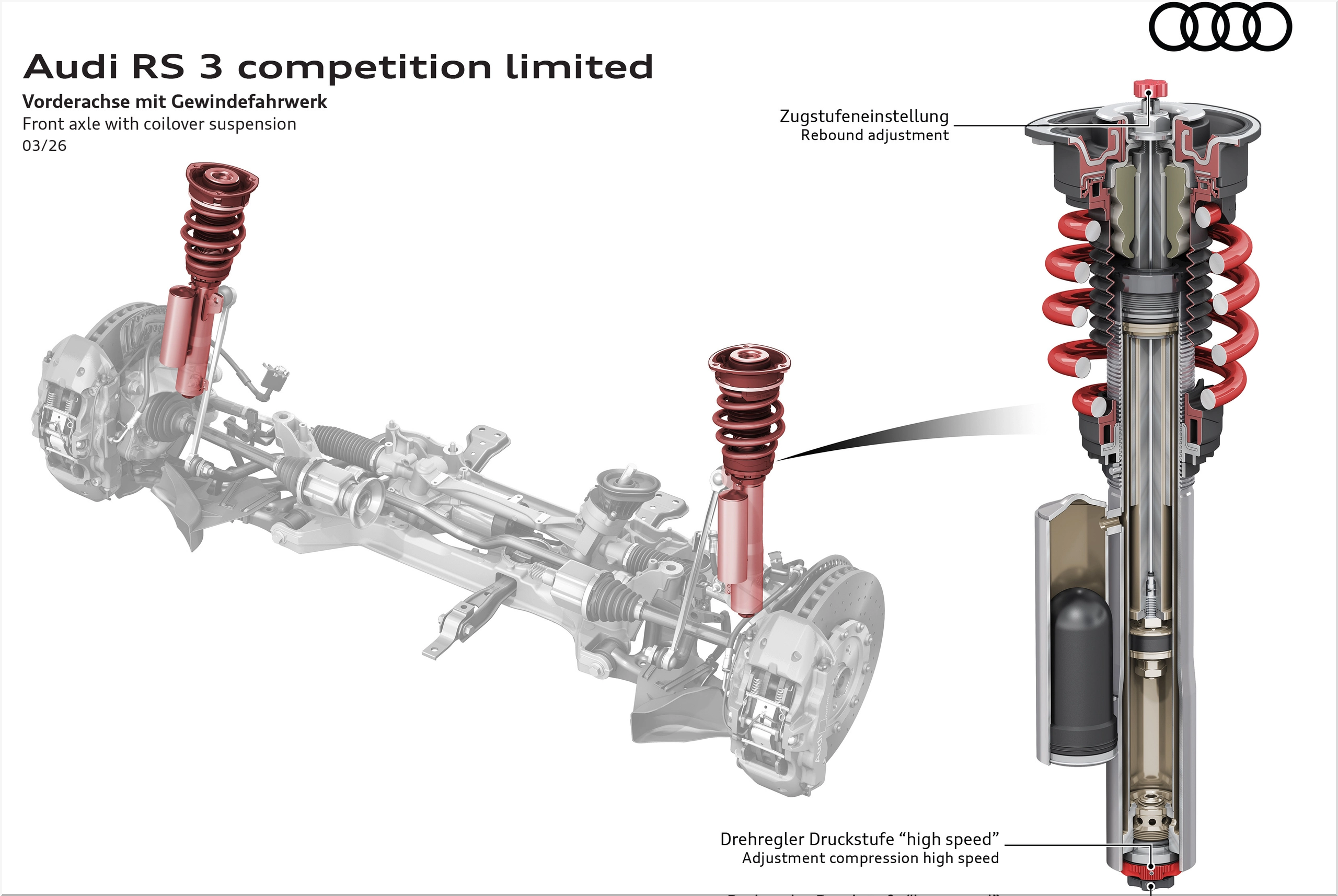
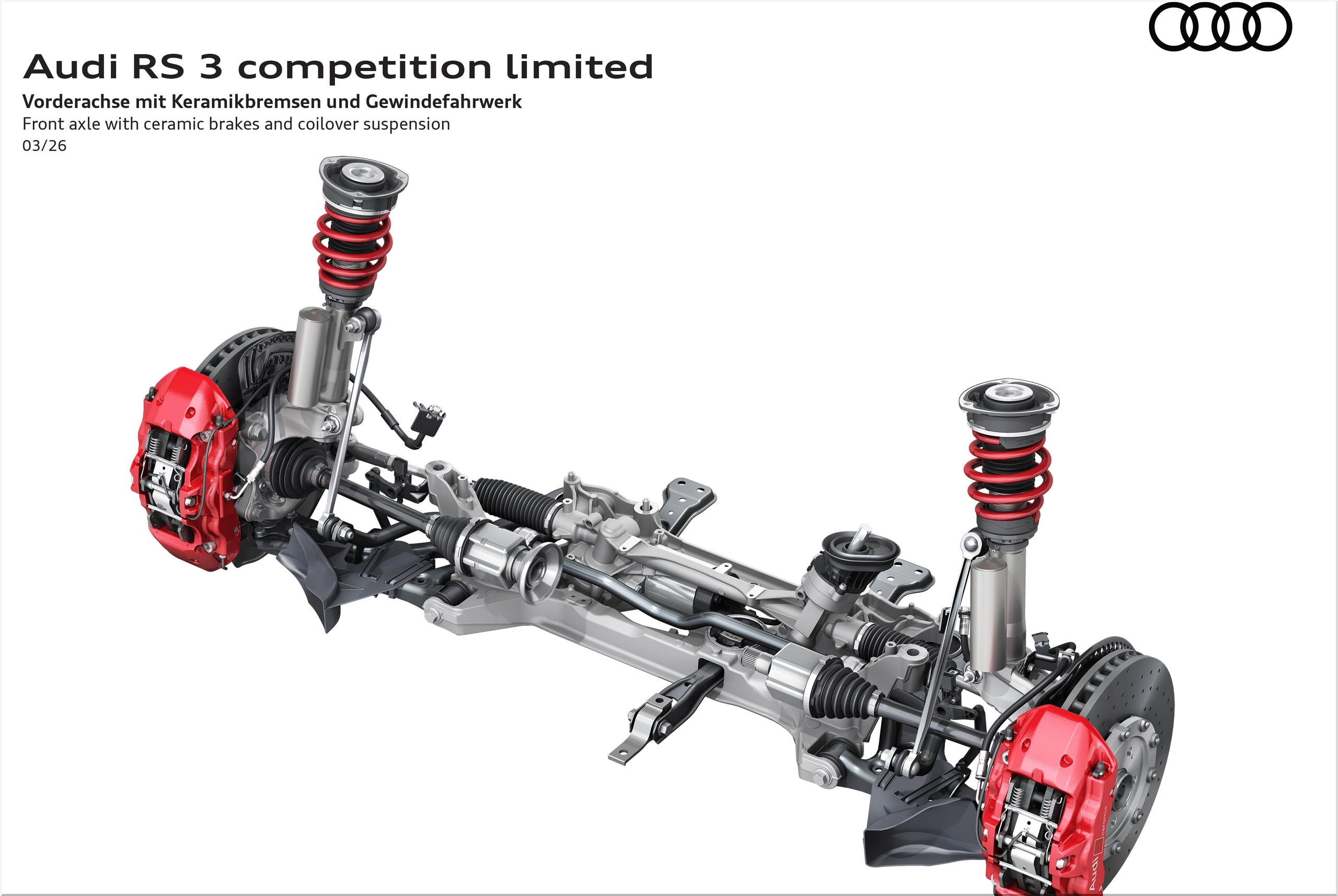
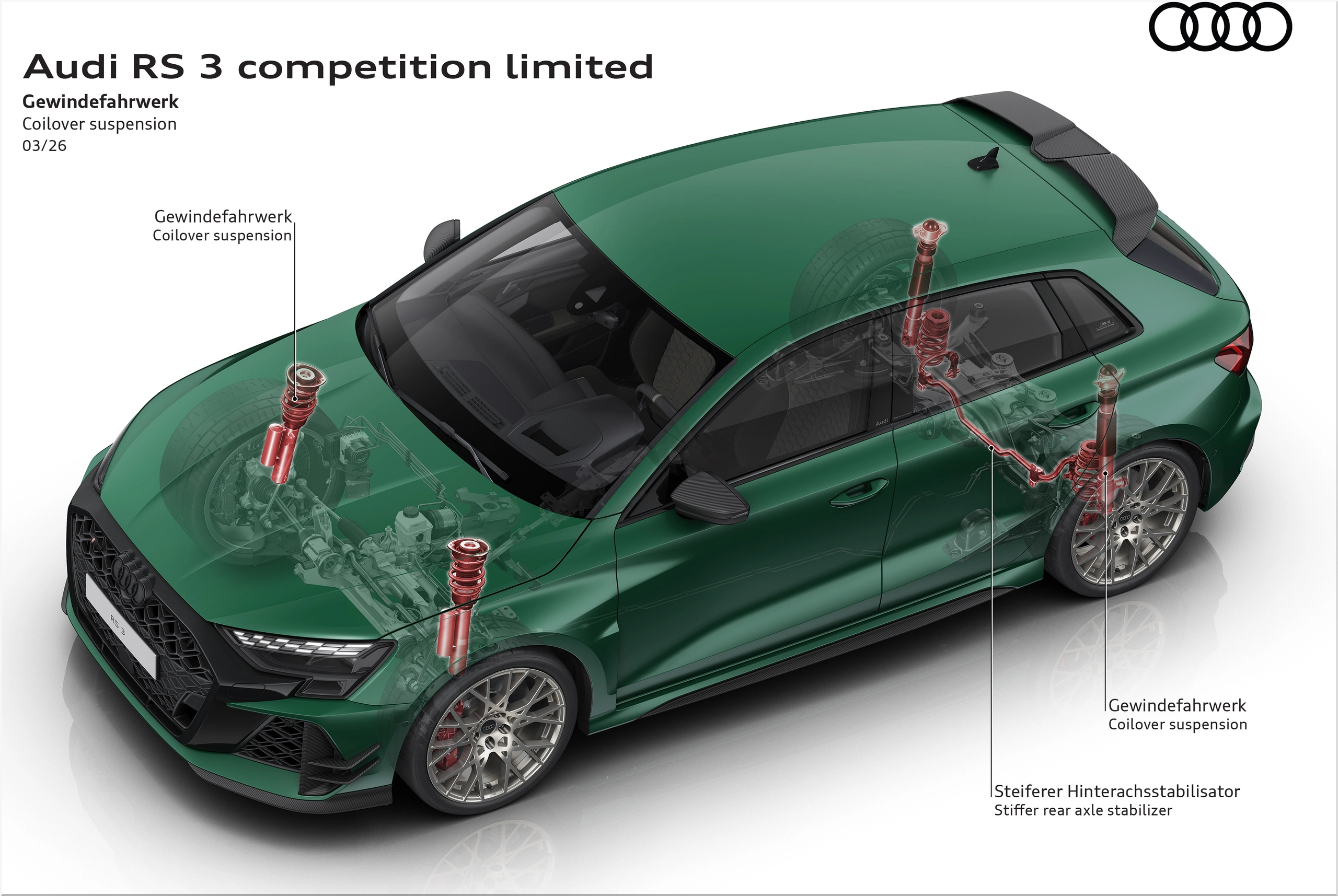
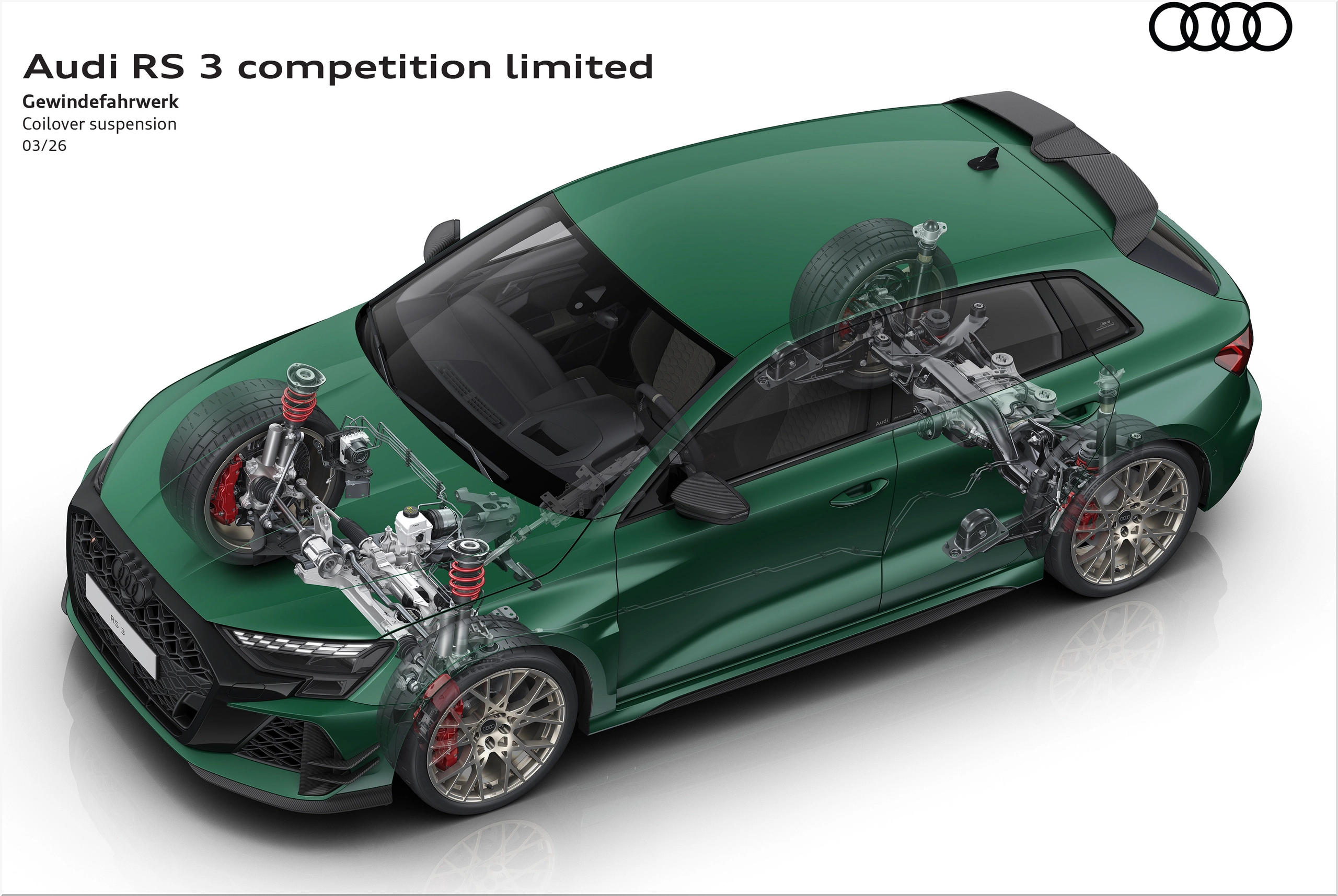
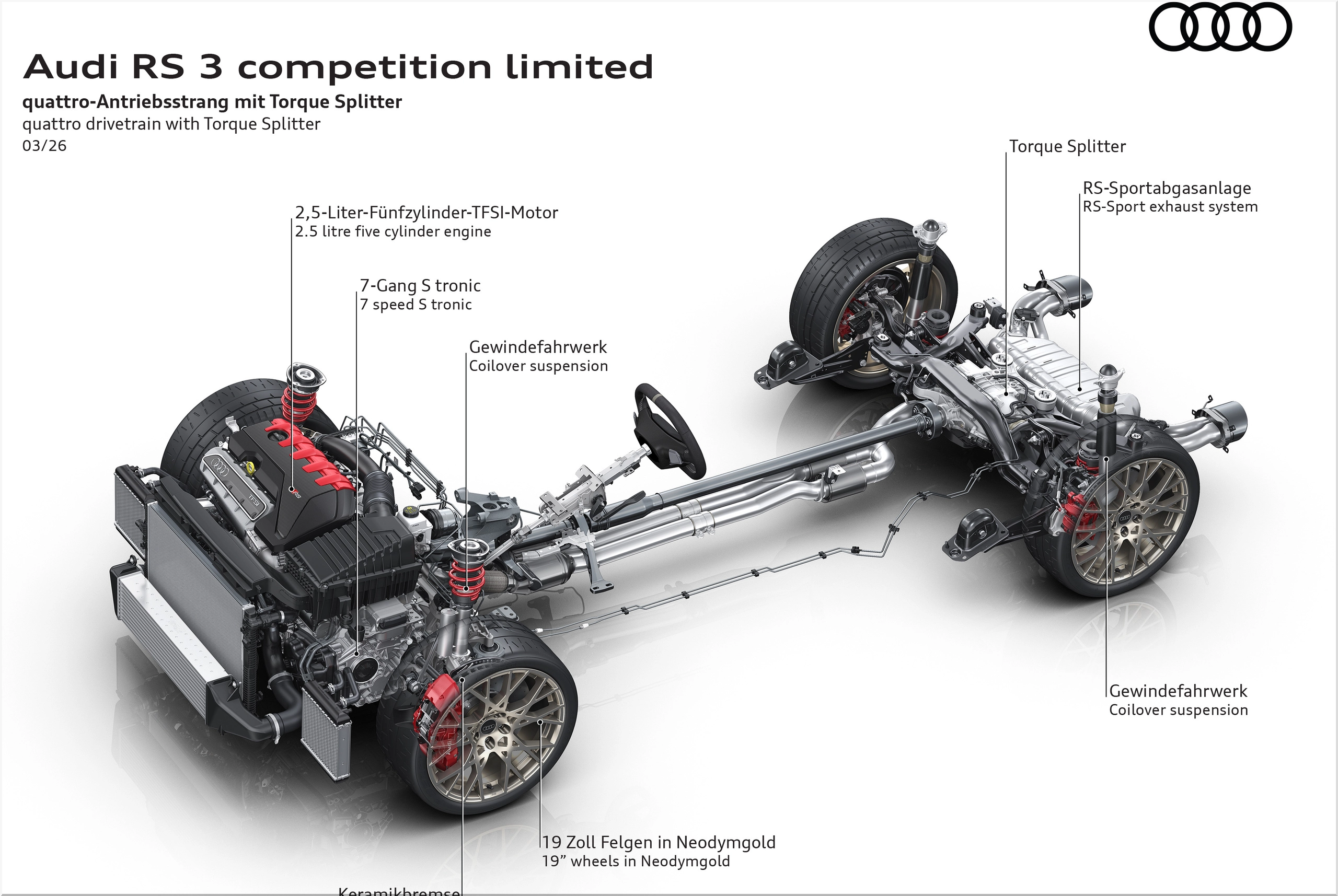
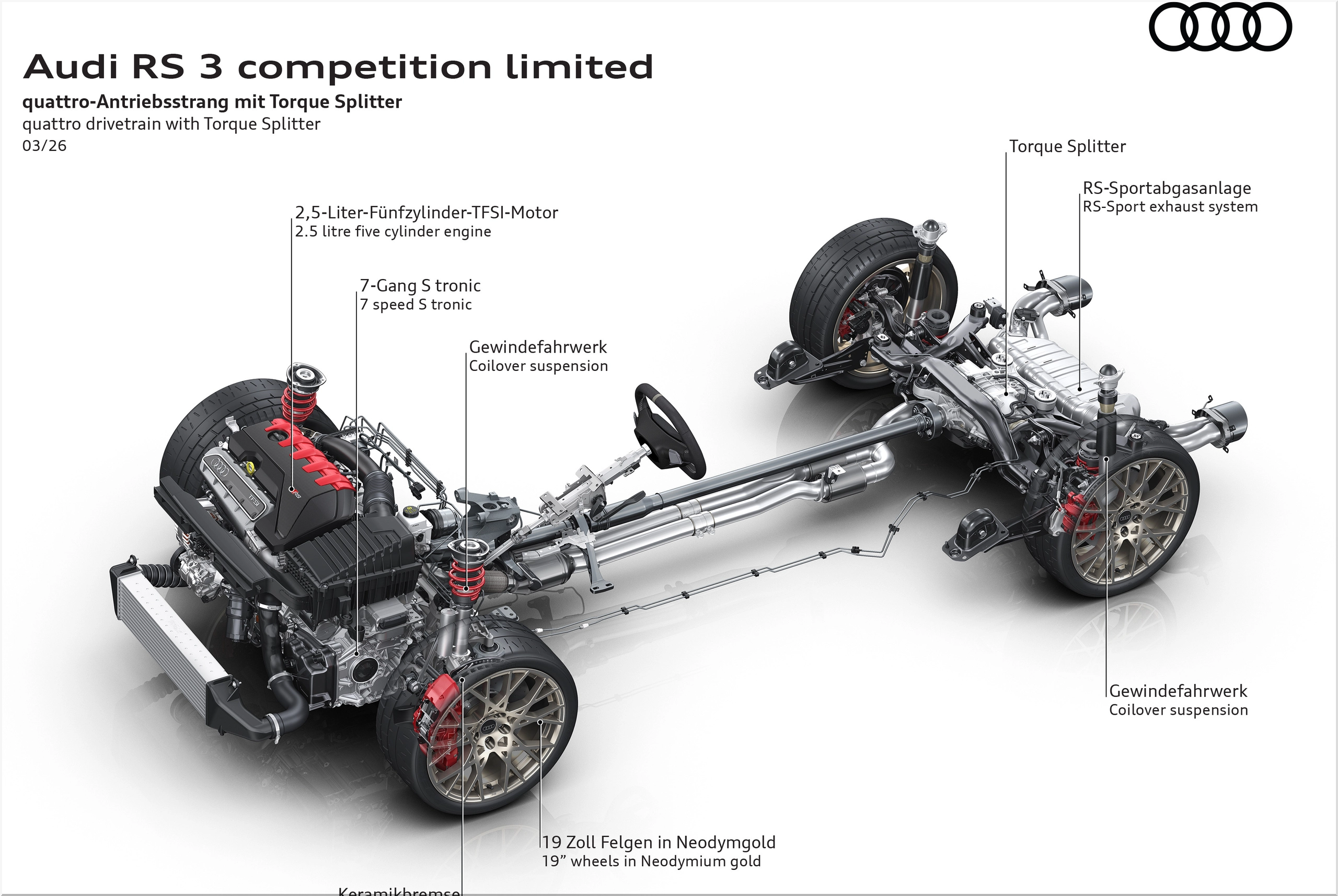
The chassis story carries the most weight here. Audi says this marks the first time an RS 3 gets a coilover suspension, and the dampers use a twin-tube design with stainless steel construction at the front and aluminum at the rear. The front units also use external reservoirs, which help manage heat in the hydraulic fluid during repeated hard driving. Consequently, damping performance should stay more consistent when the road gets rough or the lap count climbs.
Specifically, Audi gives owners three-way adjustment:
- Low-speed compression: 12 steps
- High-speed compression: 15 steps
- Rebound: 16 steps
That spread gives the car a wider operating window than a fixed-rate setup. Low-speed compression tuning affects cornering support and tire contact during weight transfer. High-speed compression changes how the body reacts to bumps and quick steering inputs. Rebound tuning controls how quickly the suspension extends, which shapes precision, body calmness, and ride quality after the initial load.
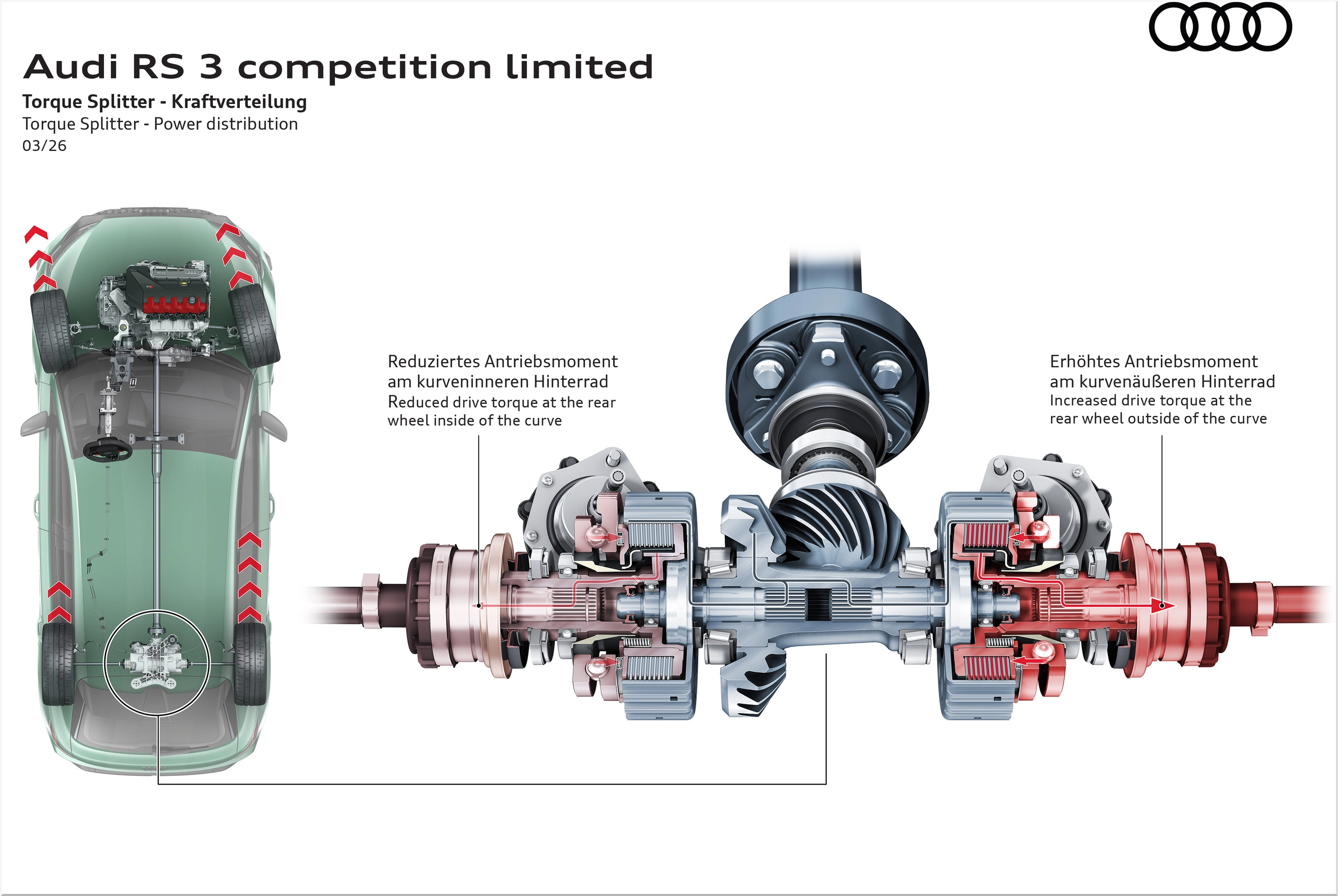
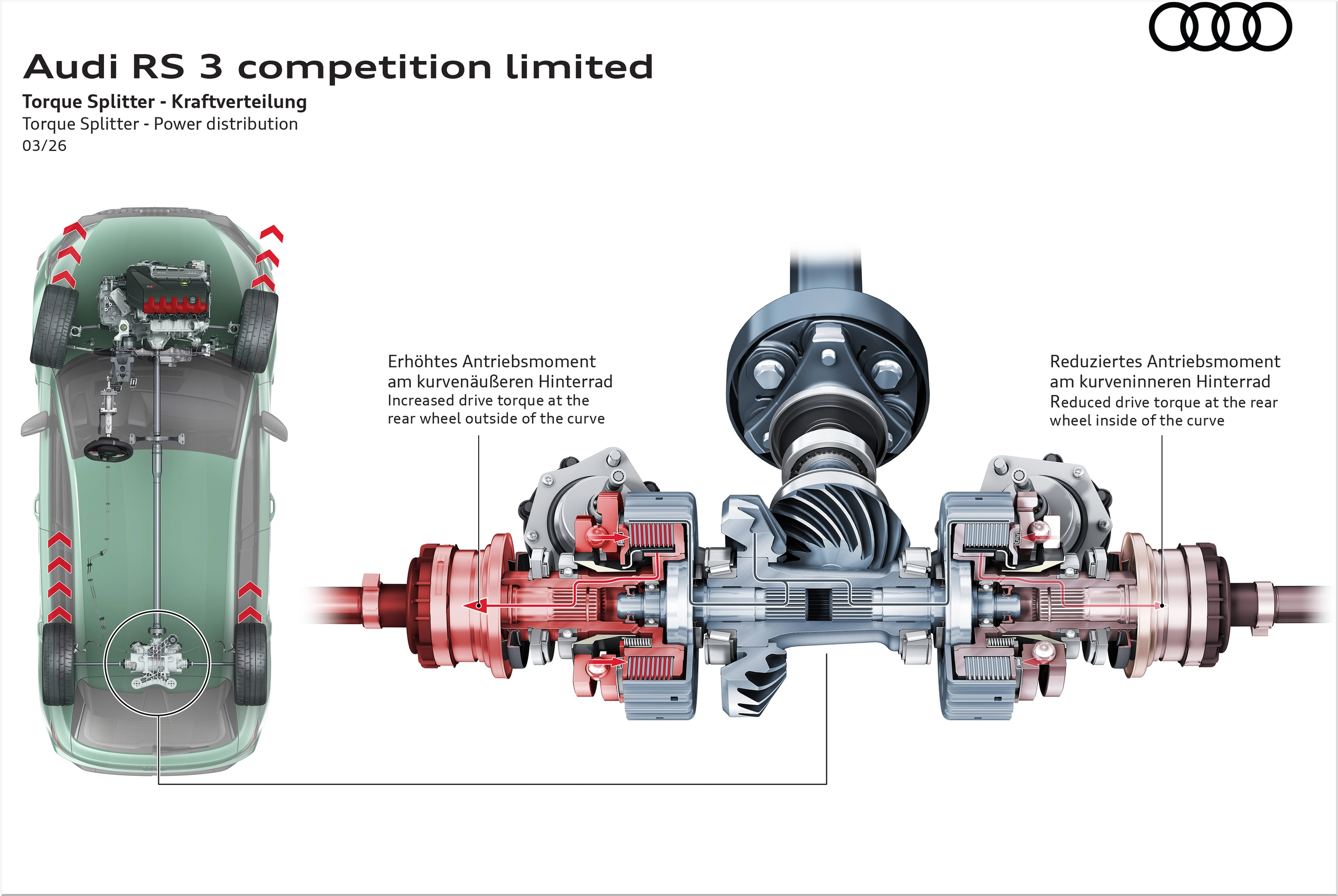
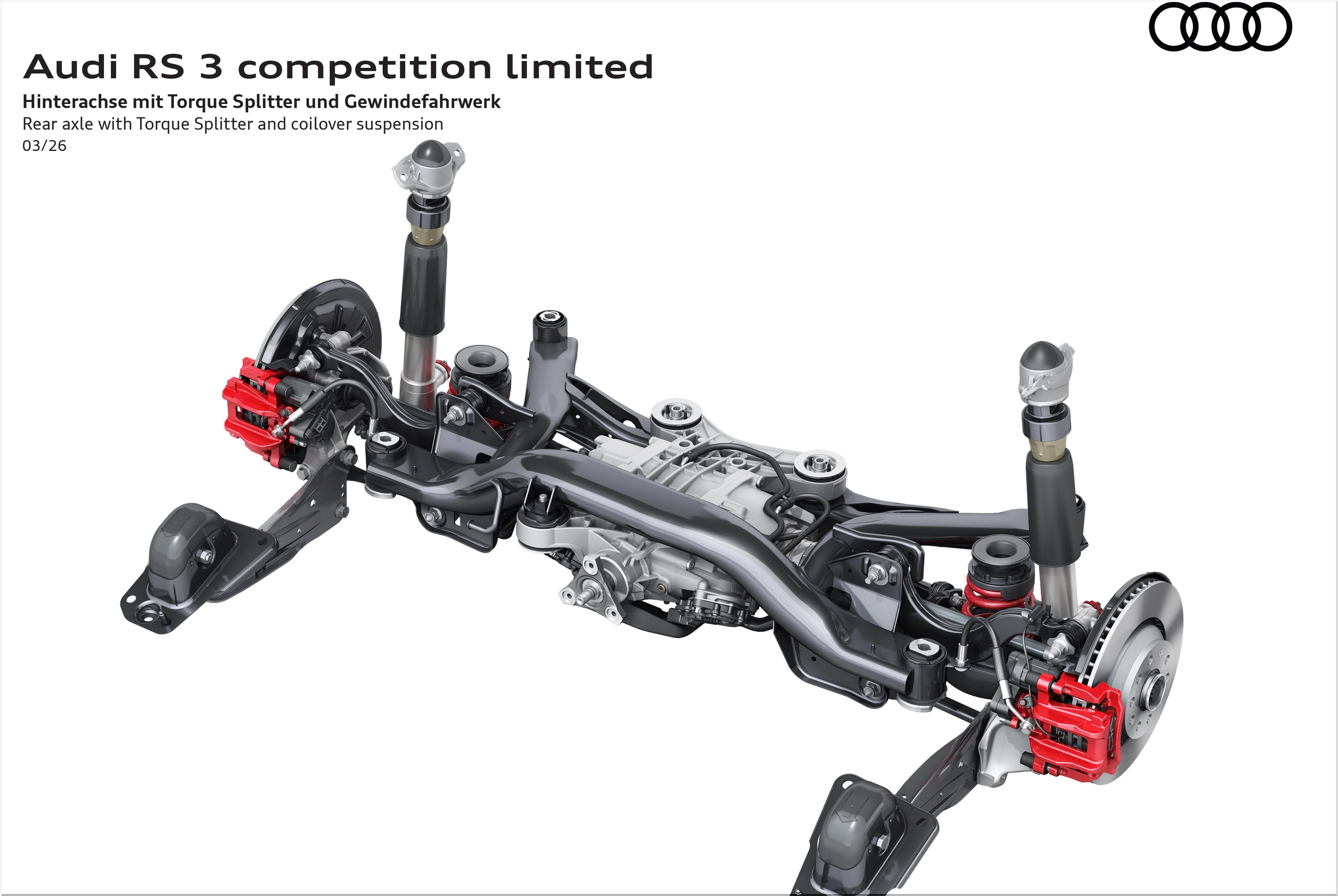
Audi also stiffened the rear with an 85 N/mm tubular stabilizer and increased rear spring rates to 80 N/mm. From an expert perspective, that pairing should help the car hold a tighter line on corner exit and reduce lazy rear-end reactions when the torque splitter sends drive to the outside rear wheel.
Why the Torque Splitter Still Matters
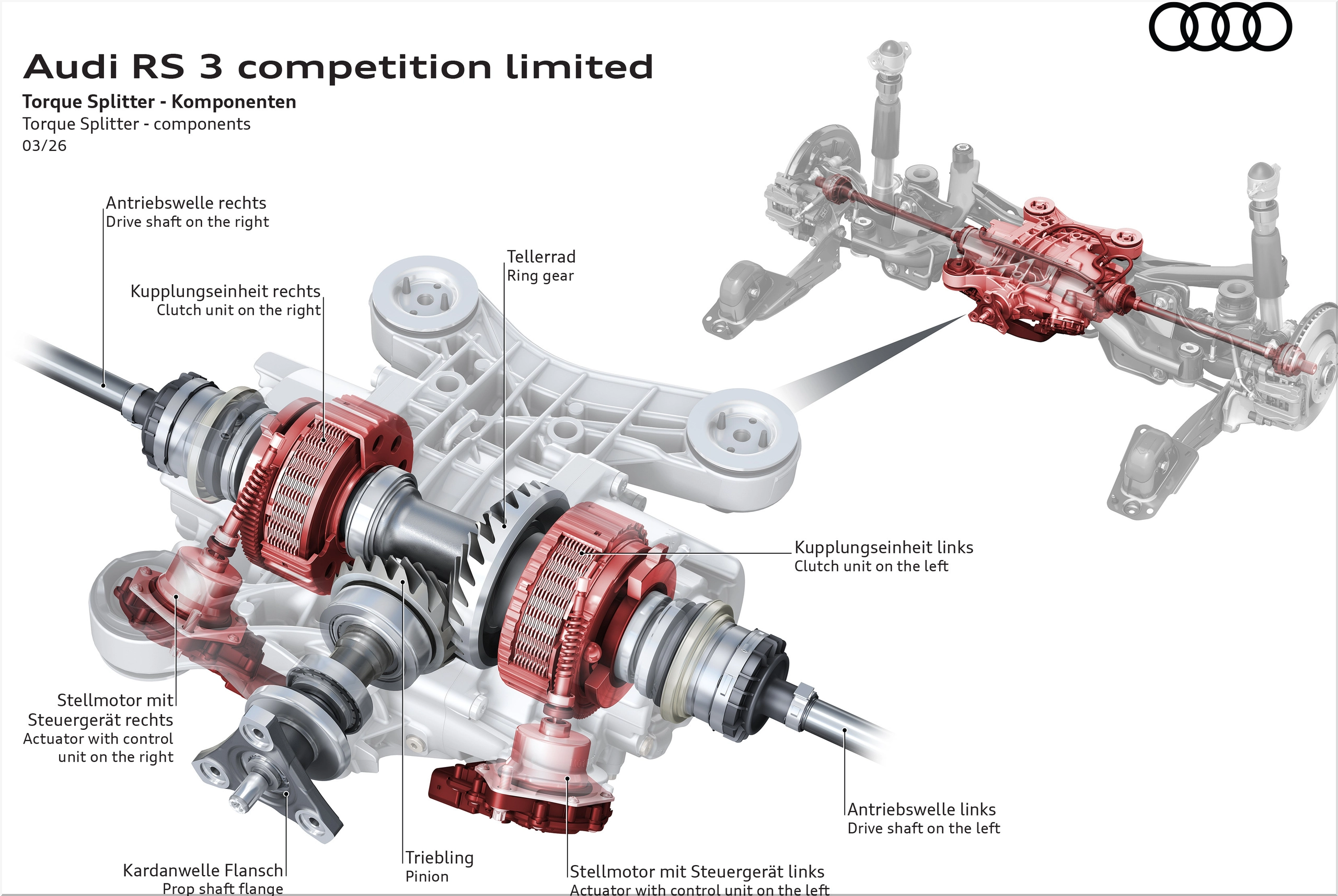
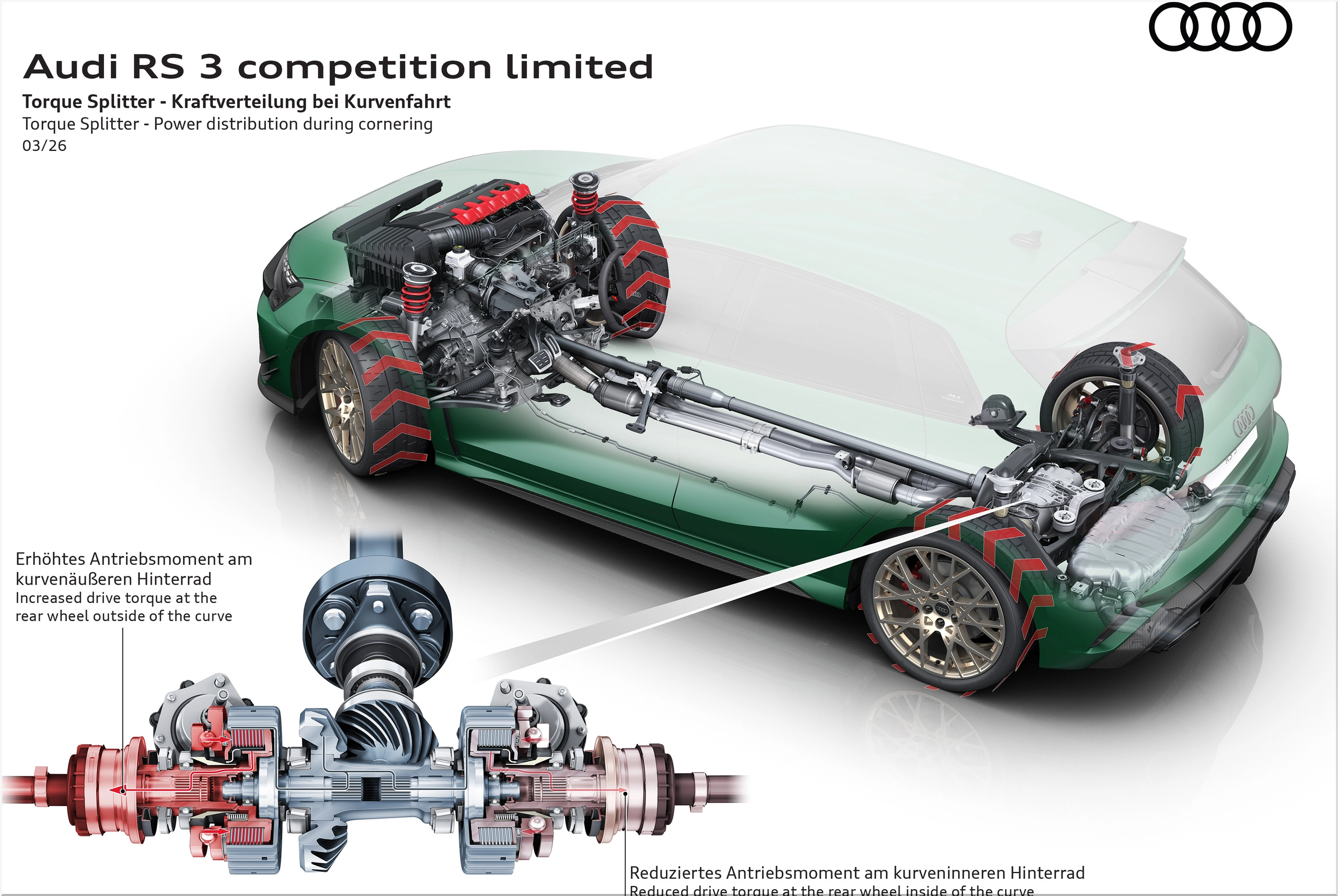
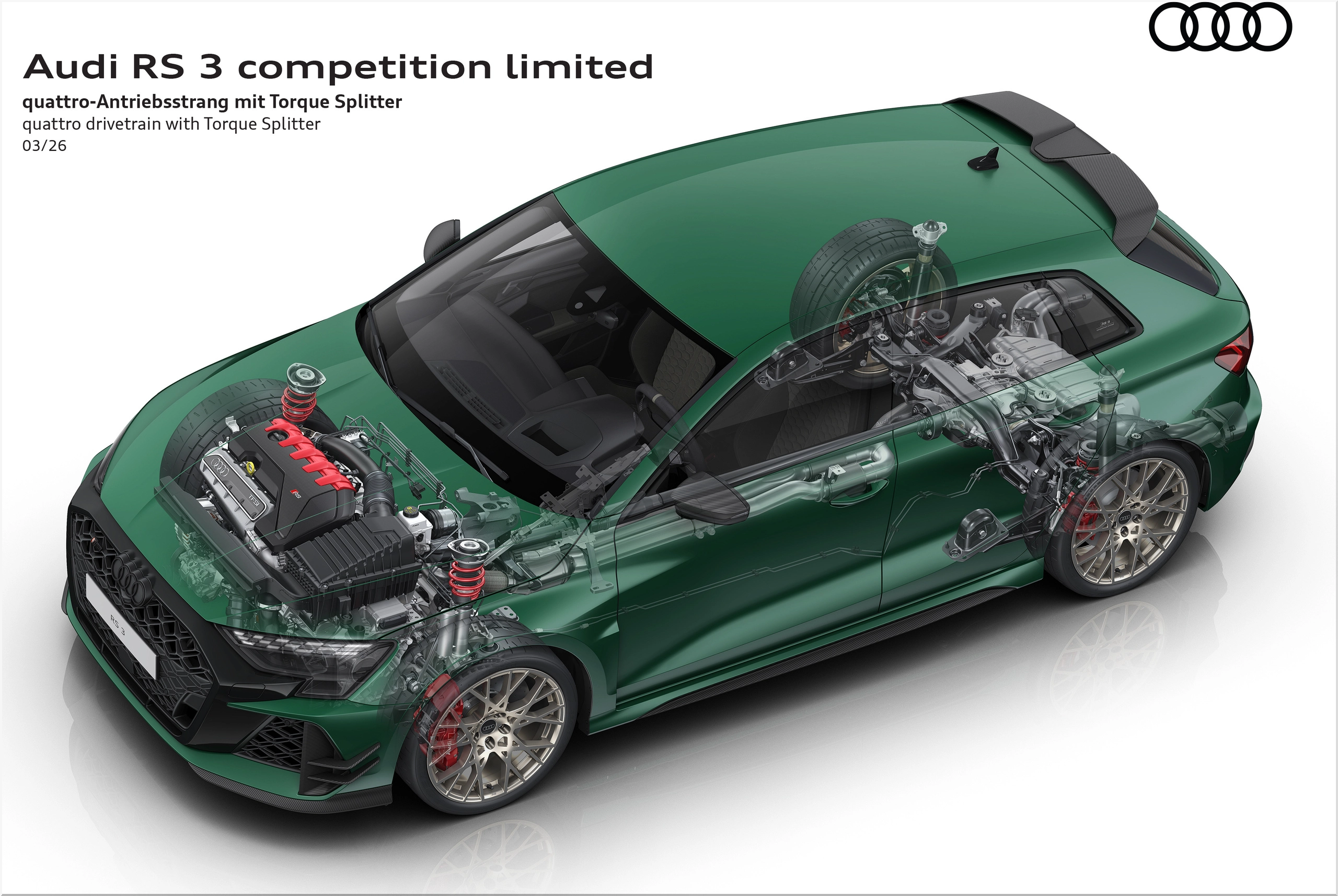
The torque splitter remains one of the RS 3's defining tools. By sending more torque to the outside rear wheel and lightly braking the inside wheel during turn-in, the system helps the car rotate sooner and finish the corner with less push. By comparison, many all-wheel-drive hot hatches still rely too heavily on front-end bite and brake intervention. Audi's setup attacks the line earlier.
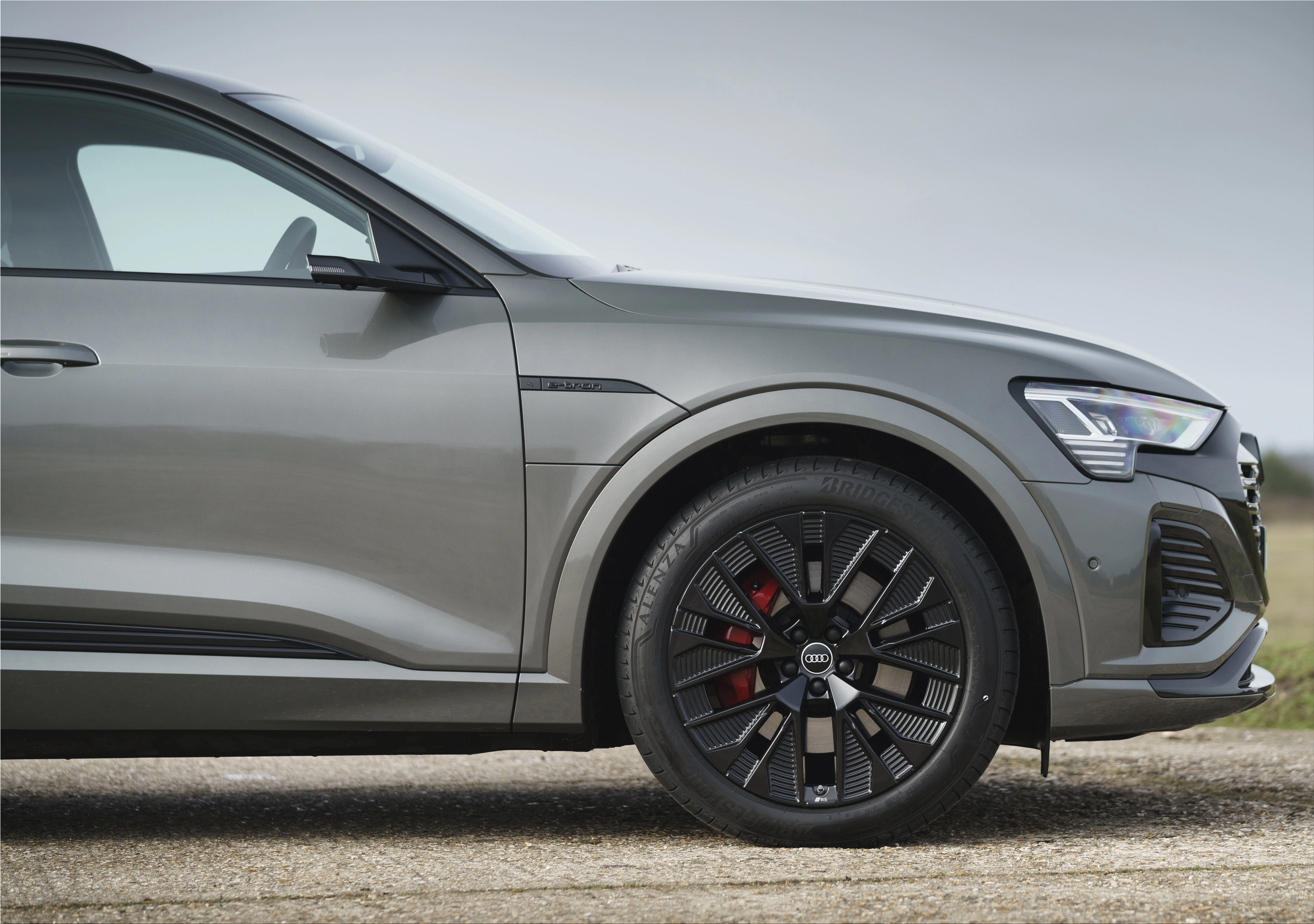
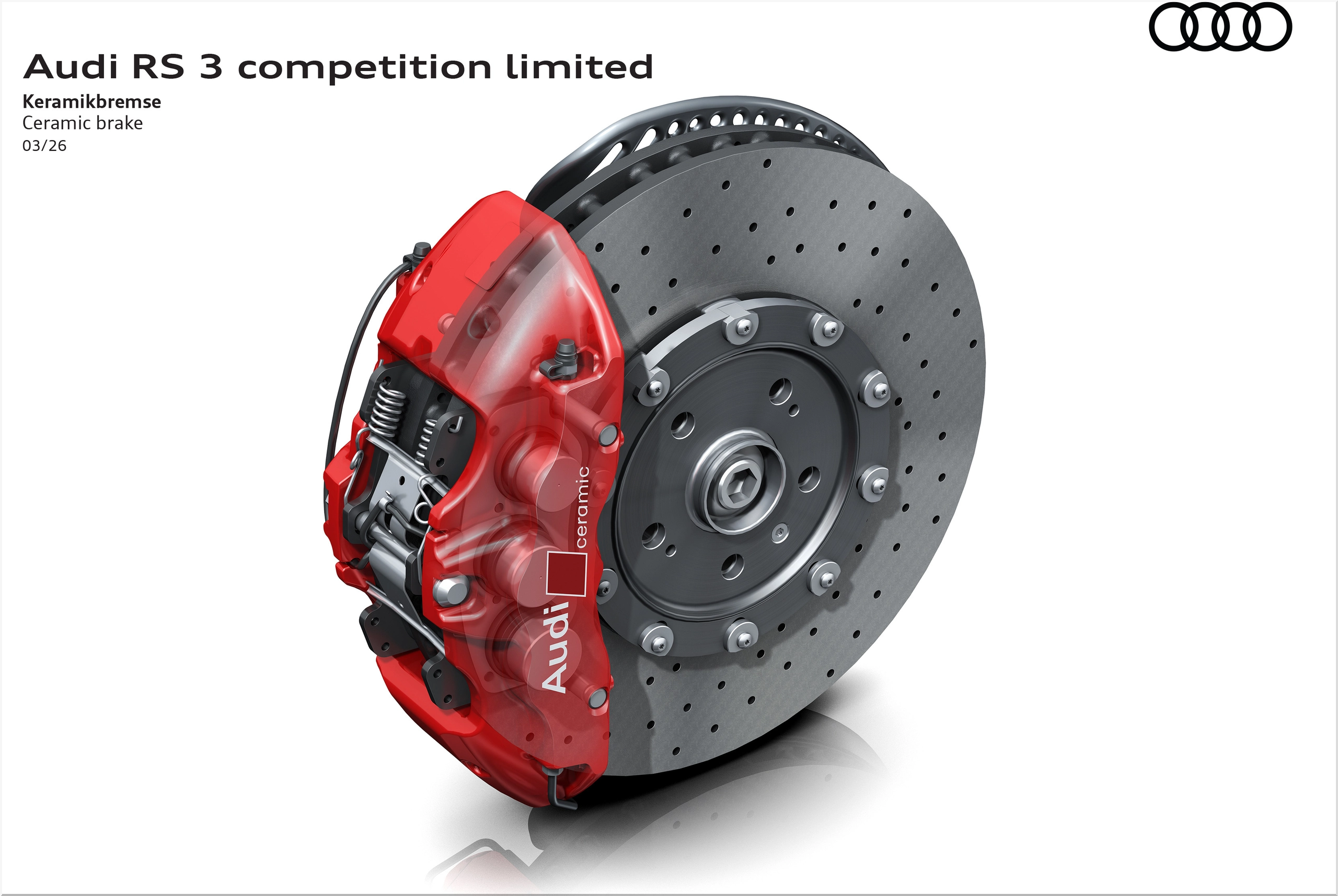
That is why the rest of the package works. The standard ceramic brakes cut unsprung and rotating mass while resisting fade under repeated stops. Optional Pirelli P Zero Trofeo R semi-slicks push the car even closer to track-day territory.
Chassis and equipment table
| Component | Competition Limited spec | Why it matters |
|---|---|---|
| Suspension | Three-way adjustable coilovers | Lets drivers tune body control and ride response |
| Rear stabilizer | 85 N/mm | Adds rear-end support and sharper rotation |
| Rear spring rate | 80 N/mm | Matches the higher roll and damping load |
| Brakes | Standard ceramic brakes with red calipers | Cuts fade and trims weight |
| Rear axle tech | Torque splitter | Sends torque outside to improve corner exit |
| Tires | Optional Pirelli P Zero Trofeo R | Increases dry grip potential |
The Interior Plays the Collector Card
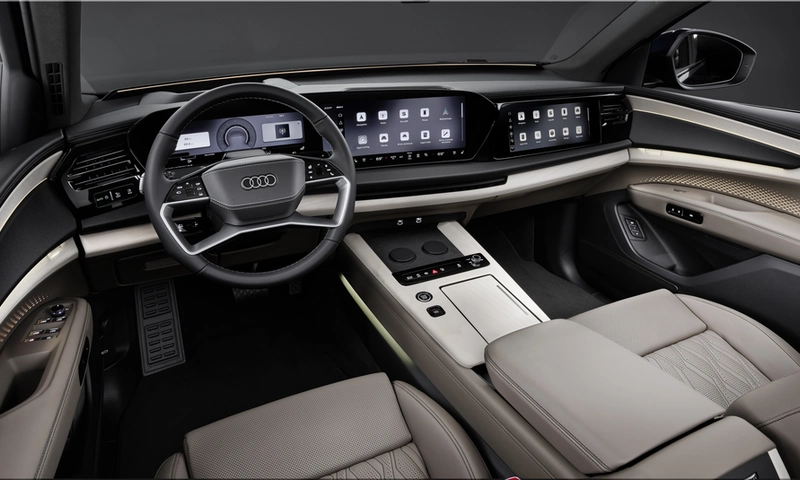
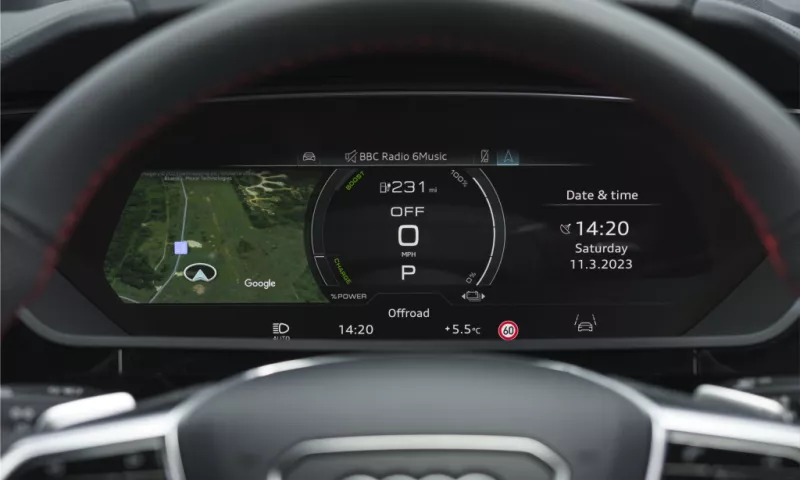
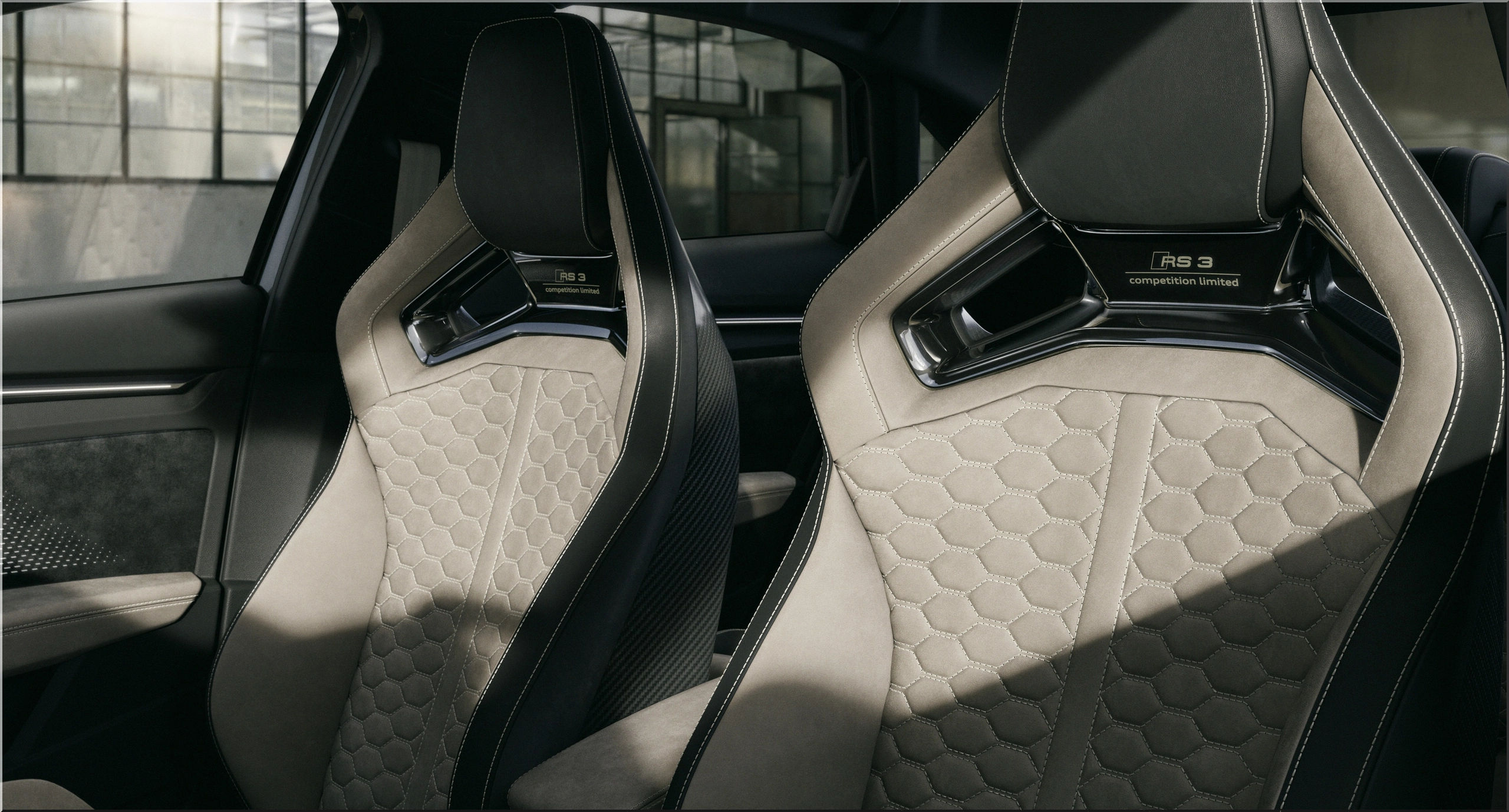
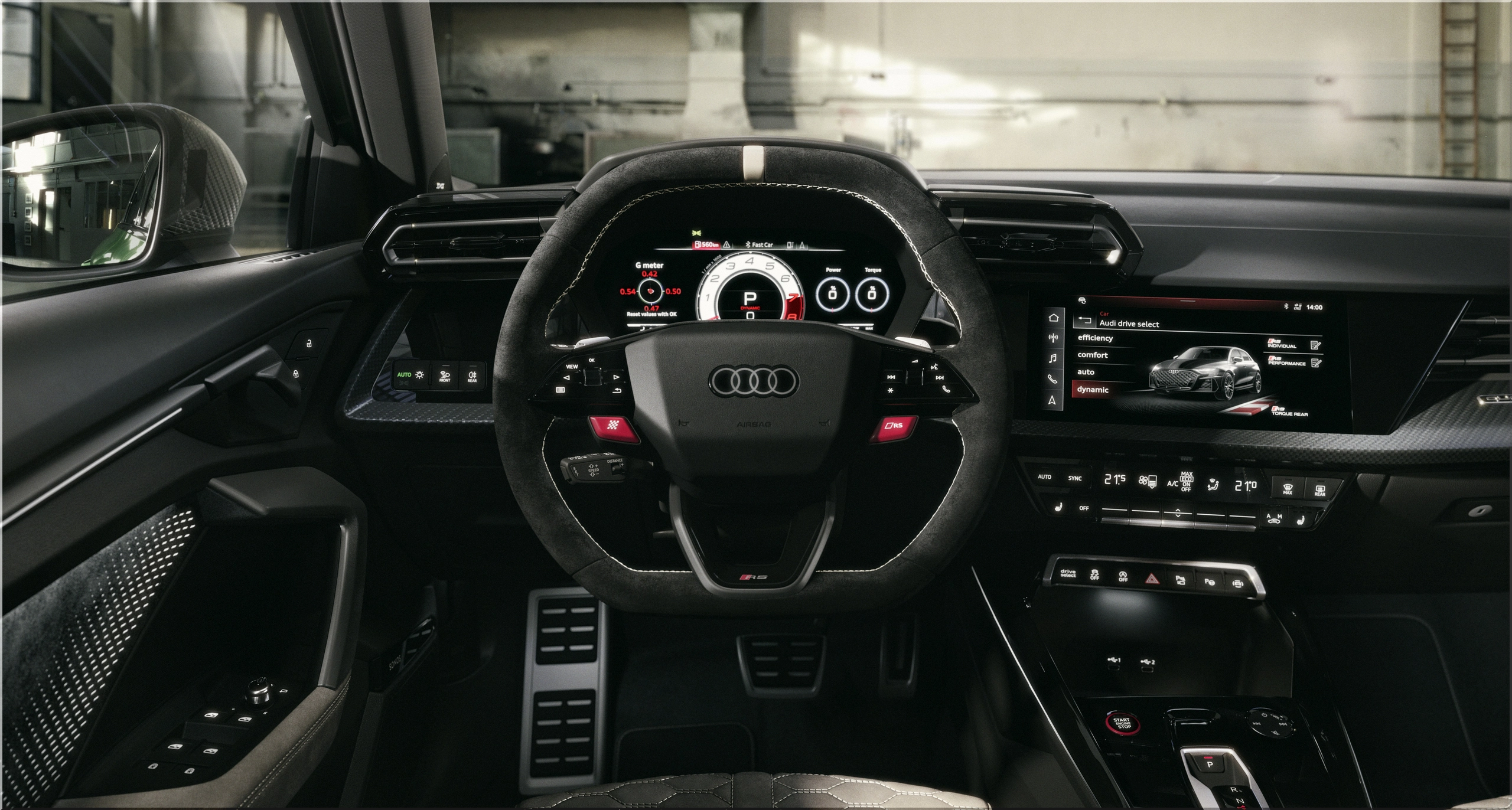
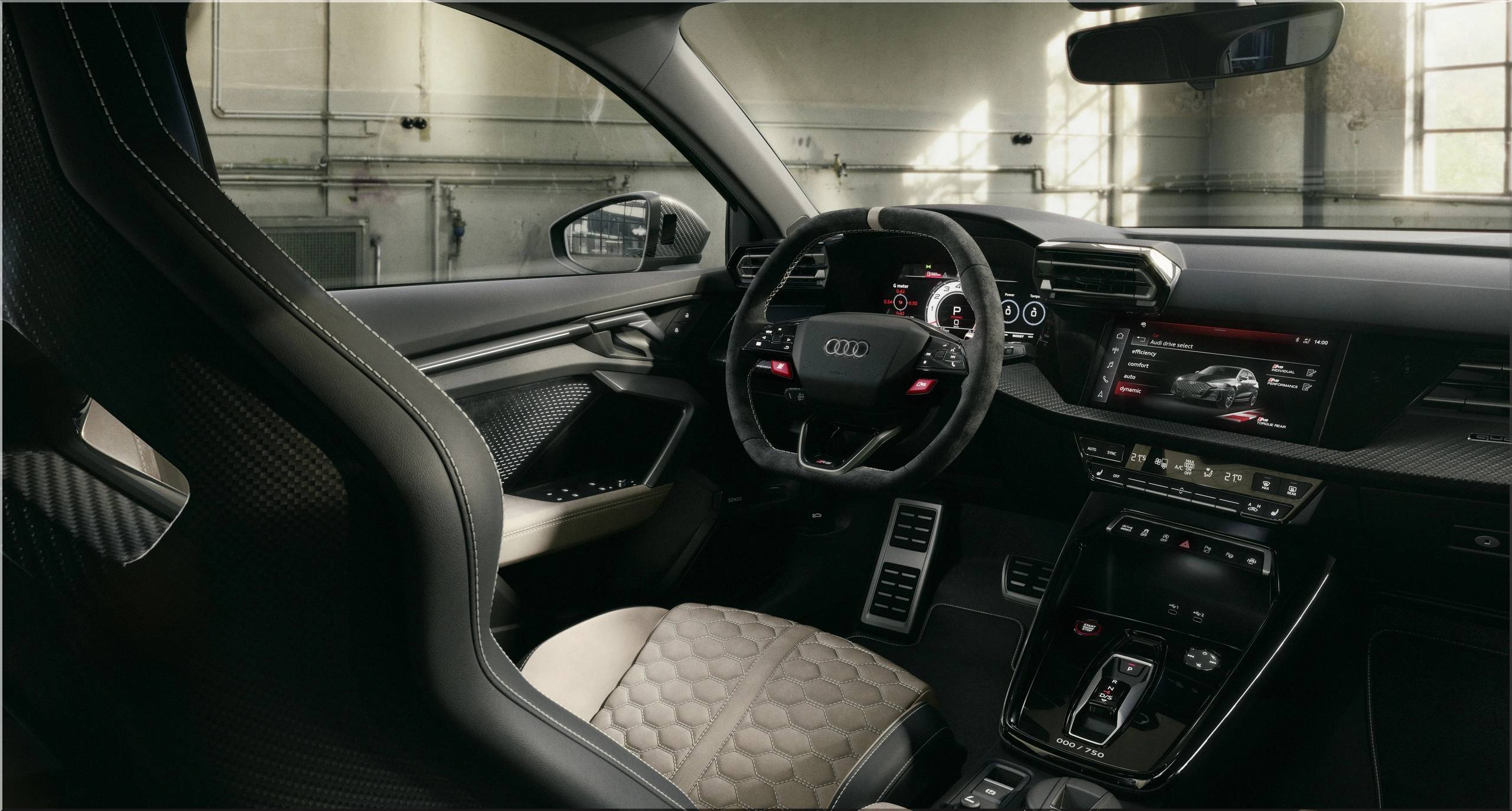
Audi backed the mechanical package with details collectors actually notice. The cabin uses black, Neodymium gold, and Ginger white accents, along with serial numbering on the center console. The RS bucket seats combine black leather with Dinamica microfiber in Neodymium gold, and matte carbon seat backs add more visual intent. The 10.1-inch display shows coolant, torque splitter, brake, engine oil, and transmission oil temperatures, plus tire pressure and tire temperature.
Audi also gives the digital instruments a white background as a nod to the 1994 Audi RS2 Avant, the first RS model with a five-cylinder engine. That kind of historical tie-in lands better when the engineering supports it. Here, it does.
Price, Colors, and What Buyers Actually Get
Audi will offer the car in Daytona Gray, Glacier White matte, and Malachite Green. The German base price starts at about $124,381 for the Sportback and about $126,264 for the Sedan after converting the announced euro prices to U.S. dollars at the ECB reference rate for March 16, 2026.
Sportback vs. Sedan pricing
| Body style | Germany price | Approx. USD |
|---|---|---|
| Audi RS 3 Sportback competition limited | 108,365 euros | $124,381 |
| Audi RS 3 Sedan competition limited | 110,005 euros | $126,264 |
Definition
Low-speed compression damping controls how the suspension reacts to slower chassis movements such as braking, cornering, and weight transfer. Drivers feel it as body support and turn-in discipline.
Pro Tip
Track-focused owners should start with the factory setup manual before adding damping stiffness. Too much low-speed compression can reduce compliance over broken pavement and make the car skip across mid-corner imperfections instead of loading the tire cleanly.

What Now?
Buyers who want the loudest story will chase the Malachite Green RS 3 Sportback competition limited because it pairs the rarest color with the hatch body and the most obvious historical nod to Audi's rally-era five-cylinder machines. Drivers who care more about lap-day tuning should focus on the coilovers, ceramic brakes, and torque splitter. Those are the parts that change how this car attacks a road, not how it looks in a garage.
- Add new comment
- 109 views